「超常現象」に関連する周波数を調査した科学者たち、その結果は不気味だった
低周波音(インフラサウンド)が人間の不安やストレスを引き起こすメカニズムを、心理・生理両面で実証した研究が、心的・環境的要因としての超常現象体験の科学的解釈に貢献した。
キーポイント
インフラサウンドが不安感を引き起こす実証
36人の被験者が音楽に含まれる10〜18Hzの低周波音(インフラサウンド)に暴露され、主観的な不快感と副腎皮質ホルモン(コルチゾール)の上昇が確認された。
聴覚外の感覚としてのインフラサウンドの影響
人間の耳はインフラサウンドを感知できないが、身体的・心理的反応が生じることから、非聴覚的な感覚経路が存在すると示唆されている。
自然災害と関連する進化的な警告システム
火山噴火や地滑りなどの自然災害から発生するインフラサウンドは、進化的に「危険の兆候」として脳が認識する可能性があるとされる。
人為的環境汚染が超常体験を引き起こす可能性
風力発電所や空調設備、交通インフラなどから発生するインフラサウンドが、 haunted house などの「幽霊体験」の背景要因になり得る。
心理・生理の統合的アプローチの成功
主観的評価と生物学的指標(コルチゾール)を併用した実験デザインにより、従来のアンケートや生理測定の片方だけに偏る研究を克服した。
影響分析・編集コメントを表示
影響分析
この研究は、『幽霊』や『不気味な体験』とされる現象の多くが、科学的に説明可能な環境要因(特にインフラサウンド)によるものであることを示し、超常現象研究の枠組みを再構築する重要な一歩となった。また、都市環境設計や建築物の音響設計において、健康リスクとしての低周波音の管理が求められる。
編集コメント
超常現象の背後にある科学的メカニズムを解明する一例として、AIが感覚データを統合分析する可能性を示唆する重要な研究。
404 Media に購読して、今週の最も刺激的で驚くべき科学ニュースと研究を紹介するニュースレター『The Abstract』を受け取りましょう。
 image 幽霊屋敷や超常現象のスポットを訪れた経験がある方なら、説明しきれない奇妙な不快感を感じたことがあるかもしれません。これらの感覚が幽霊や他の超自然的な存在の存在を示すものだと想像したくなるのは当然ですが、月曜日に『Frontiers in Behavioral Neuroscience』誌に掲載された研究によると、実際には 20 ヘルツ未満の音響周波数、つまり超低周波音(インフラサウンド)によって引き起こされている可能性があります。
人間の耳は超低周波音を検出するように調整されていませんが、多くの研究がこれらの周波数に曝されることで人間や他の多くの動物にネガティブな感情が生じることを示しています。現在、科学者たちは新しい実験アプローチを用いてこの不思議な関連性を調査しており、36 人のボランティアが様々な音楽スタイルを聴きながら(その中には超低周波音が含まれる場合もあり)、自身の気分を自己報告する形で研究に参加しました。
さらに、ボランティアはコルチゾールレベルを測定するために唾液サンプルを提供し、インフラサウンドに曝された際にストレスが増大しているという実証証拠が得られました。研究によると、「インフラサウンドは人間にとって不快なものであり、潜在的な環境刺激因子として作用し、より否定的な主観的体験をもたらす可能性がある」という結果が明確に示されています。
「多くの文献では、会話の一方側または他方のどちらかに焦点を当てており、人々はアンケート調査やインタビューを行っているか、あるいは生理学に注目しているように見えました」と、アルバータ大学神経科学・メンタルヘルス研究所の博士課程学生で本研究を主導したカール・スケッターティ氏は404メディアとの電話インタビューで述べています。「私たちは、この効果を完全に理解するために、これらのアプローチを組み合わせて全体像を描くための第一歩としてこれを利用したかったのです」。
「インフラサウンドが作動した際にコルチゾールの有意な差が見られたことは驚きであり、興奮を覚えました」と、本研究の共著者であるマックイワン大学の心理学教授トレバー・ハミルトン氏は、同じ電話インタビューで付け加えています。
何十年にわたり、科学者たちは超低周波音(インフラサウンド)が人間や多くの他の動物に悪影響を及ぼすことと関連付けてきましたが、人間がいかにしてこれらの音を感知するのか、あるいはなぜこの周波数帯域に対して忌避感を進化させたのかについてはまだ不明です。超低周波音の自然な発生源には、火山噴火、地滑り、雪崩、激しい嵐、群れを成す動物の暴走など危険な出来事が含まれるため、研究者たちは人間や他の種が、超低周波音を迫りくる災害の警告信号として解釈することを学んだ可能性があると推測しています。
しかし、あなたは自問するかもしれません。幽霊はどこに関係してくるのでしょうか?超低周波音はまた、産業用機械、風力発電所、エアコンユニット、賑やかな道路や鉄道、戦争地帯での軍事活動など、人間が引き起こす広範な騒音汚染によっても生成されます。このため、多くの科学者は、何らかの形で幽霊が出るとされる場所や呪われているとされる場所が、時として超低周波音によって汚染されている可能性はないかと疑問を抱いています。
マックイワン大学の心理学教授であり、本研究の共著者であるロドニー・シュマルツは、学生を幽霊屋敷デッドモントンなどの超自然的なスポットに連れて行き、その不気味な魅力に対する科学的根拠のある説明を探る授業も開催しています。これらの楽しい野外実験により、デッドモントンで超低周波音を再生すると、訪問者が家の中をより速く移動するようになることが明らかになりました。
実験セットアップの図。画像:Scatterty 他氏によるもの。
新しい研究では、学際的なチームがマックイワン大学の心理学専攻学部生 36 名(女性 27 名、男性 9 名)を募集し、それぞれの専門性を組み合わせました。各参加者は部屋に一人で座り、落ち着く音楽または不気味な音楽を聴きながらセッションの前後に唾液サンプルを提供しました。参加者の半分は、両方のタイプの音楽を聴いている間に 18 ヘルツの超低周波(インフラサウンド)に曝されました。参加者には、自身の感情や音楽に対する感情的評価、そしてセッション中に超低周波が流されたかどうかについて報告するよう求められました。
寄付箱(Tip Jar)
参加者は意識的に超低周波が流されたかどうかを判断できませんでしたが、曝露群でコルチゾールレベルの上昇が見られたことから、音楽の種類に関わらず、脳の何らかの部分がその周波数を感知していたことが示唆されます。過去の多くの研究とは異なり、この研究では超低周波への曝露と不安感の高まりを直接結びつけるものではありませんでしたが、曝露群はよりイライラしやすくなり、音楽への関心が低下し、超低周波が流されている場合、音楽がより悲しく感じられるという傾向を示しました。
予算の制約によりサンプルサイズが 36 と比較的小さいのは、唾液コルチゾール検査が高額であるためですが、Scatterty のチームは、この研究がインフラサウンドが私たちの背筋を走らせるメカニズムを特定しようとする類似の実験への道しるべとなることを願っています。
「このような非常にポジティブな結果が見つかったときはとても興奮しますが、私たちが一つずつ答えを出すたびに、さらに五つの新たな疑問が生じてくる傾向があります」と Scatterty は語りました。「決定的な回答を与えるのは本当に難しいですが、好奇心旺盛な方々にとっては、この種の研究がどこへ向かうのかを見ることはワクワクするものです。幽霊屋敷や超常現象に興味を持つ人々にとって、ここで考えるべき課題があるかもしれません。生態学的側面から物事を見ている人々は、これを人間または自然の中の動物に対する騒音汚染と解釈するでしょう。」
「将来の研究への可能性を考えると、これは本当に興奮します」と彼は結論付けました。
原文を表示
Subscribe to 404 Media to get The Abstract, our newsletter about the most exciting and mind-boggling science news and studies of the week.
imageIf you’ve ever visited a haunted house or a paranormal hotspot, you may have experienced a weird sense of unease that you couldn’t quite explain. While it’s tempting to imagine that these feelings signal the presence of ghosts or other supernatural entities, they may actually be caused by acoustic frequencies below 20 hertz, known as infrasound, according to a study published on Monday in Frontiers in Behavioral Neuroscience.
The human ear is not tuned to pick up infrasound, yet a growing body of research has shown that exposure to these frequencies nonetheless causes negative feelings in humans and many other animals. Now, scientists have probed this mysterious link with a new experimental approach involving 36 volunteers who self-reported their moods while listening to various musical styles that sometimes included infrasound.
In addition, the volunteers provided saliva samples for measuring their cortisol levels, which provided empirical evidence that they were more stressed when exposed to infrasound. The results clearly demonstrate that “infrasound may be aversive to humans, acting as a potential environmental irritant and contributing to more negative subjective experience,” according to the study.
“A lot of the literature seemed to tackle either one side of the conversation or the other, where people are looking at surveys and doing interviews with people, or they're looking into the physiology,” said Kale Scatterty, a PhD student at the Neuroscience and Mental Health Institute at the University of Alberta who led the study, in a call with 404 Media. “We wanted to use this as a first step in combining those approaches to get a whole picture of exactly what was happening with this effect.”
“It was surprising and exciting to see a significant difference in cortisol when the infrasound was turned on,” added Trevor Hamilton, a professor of psychology at MacEwan University who co-authored the study, in the same call.
For decades, scientists have linked infrasound to negative effects on humans and many other animals, though it is still not known how humans pick up on these sounds, or why we might have evolved an aversion to this frequency range. Given that natural sources of infrasound include dangerous events like volcanic eruptions, landslides, avalanches, intense storms, or stampeding animals, researchers speculate that humans and other species may have learned to interpret infrasound as a warning sign for incoming disaster.
But, you may be asking yourself, where do the ghosts come in? Infrasound is also produced by a wide range of human-caused noise pollution, such as industrial machinery, wind farms, air conditioning units, busy roads and railways, or military activity in war zones. For this reason, many scientists have wondered if locations that are considered haunted or cursed in some way may sometimes be polluted by infrasound.
Rodney Schmaltz, a co-author of the study and a professor of psychology at MacEwan University, even organizes classes around taking his students to paranormal hotspots, such as the haunted house Deadmonton, to search for scientifically-grounded explanations of their spooky allure. These fun field experiments revealed that playing infrasound at Deadmonton motivates visitors to move more rapidly through the house.
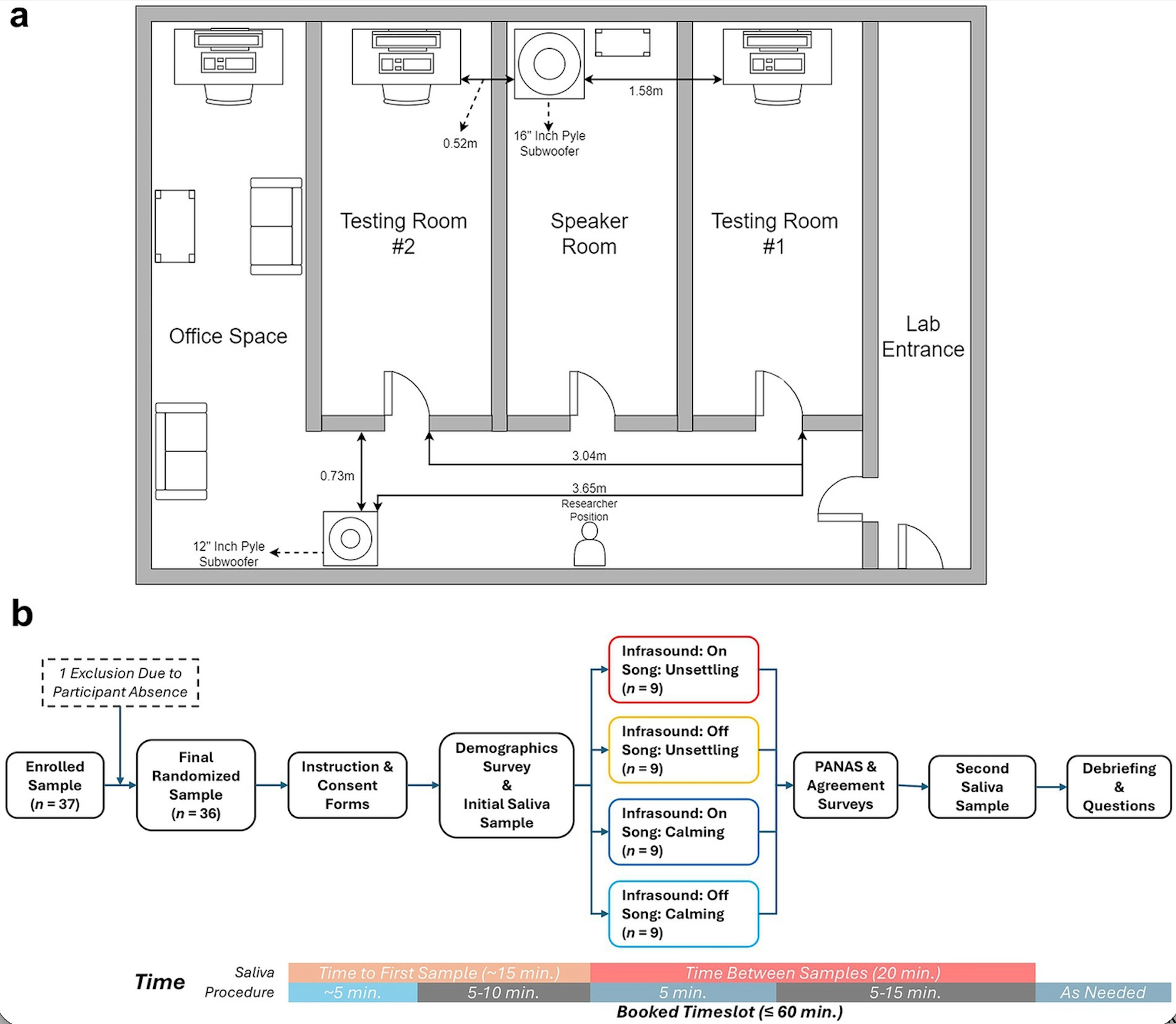 imageA graphic of the experimental set up. Image: Scatterty et al.In the new study, the interdisciplinary team combined their expertise by recruiting 36 undergraduate psychology students at MacEwan University (27 women and nine men). Each participant sat in a room alone while calming or unsettling music was played, and gave saliva samples before and after their session. Half of the participants were exposed to infrasound at 18 hertz while listening to both types of music. The participants were asked to report their feelings, their emotional rating of the music, and whether they thought infrasound had been played in their session.
Tip Jar
The participants couldn’t consciously tell whether infrasound was played, but the elevated cortisol levels in the exposed group suggests that some part of their brain picked up on the frequencies, regardless of the type of music that accompanied it. Unlike many past studies, this research didn’t link infrasound exposure to heightened anxiety, though the exposed group reported more irritability, less interest in the music, and a sense that the music was sadder with infrasound.
The sample size of 36 is relatively small due to budget constraints—salivary cortisol tests are not cheap—but Scatterty’s team hopes their study offers a roadmap toward similar experiments that aim to pinpoint the mechanisms that cause infrasound to raise our hackles.
“We get very excited when we find something really positive like this, but for every single question we answer, we tend to have five more questions come up,” Scatterty said. “It's really hard to give any definitive answers. But for those who have curious minds, it's exciting to see where this kind of work could go. People who are interested in haunted houses and the paranormal might be having something to chew into here. People who are looking at the ecological side of things might interpret it as a noise pollutant for either humans or animals in nature.”
“It's really exciting for the potential it offers for future research,” he concluded.
関連記事
今日のまとめ
AI日報で今日の重要ニュースをまとめ読み