AI 学習のために保育教諭にカメラ着用を義務付けた研究計画が問題視される
ワシントン大学の研究者が幼児教育現場での教師着用カメラによる AI 学習データ収集を「オプトアウト」方式で計画したが、保護者の激しい反発を受け研究は中止された。
キーポイント
監視とデータ収集の拡大
ワシントン大学の研究者が、教師や教室に設置したカメラから得た映像を AI モデルの開発に使用することを計画し、保護者には「オプトアウト(拒否しない限り同意)」方式で通知していた。
AI による評価システムの構築
収集された映像は人間のアノテーションとクラウドベースの AI サービスを組み合わせ、教室の相互作用の質を自動評価するツールを開発・検証するために利用される予定だった。
保護者の反発と研究中止
幼児という脆弱な対象への監視カメラ設置およびデータ収集に対する倫理的懸念から保護者が激しく反発し、ワシントン大学は計画を棚上げ(中止)することを発表した。
不透明なデータ利用と言語の壁
文書にはデータの共有先や保存期間、研究資金源などの重要な情報が欠けており、「将来の研究」のために使用される可能性が示唆されている。また、非英語圏の保護者向けに多言語対応がされていないため、十分なインフォームド・コンセントが得られていないという懸念がある。
オプトアウト方式による同意の強制性
研究への参加は「完全に任意」とされているが、実際には保護者が拒否しない限り記録が行われるオプトアウト方式であり、明示的な同意を得るモデルではない。
専門家と保護者の懸念
保護者は子どもの映像が未知の AI ツールで悪用されることを恐れ、専門家はデータ使用目的の曖昧な表現(「制限なく」)やプライバシー保護の徹底を強く求めている。
1人の拒否でクラス全体が除外される仕組み
研究者側は、保護者の1人でも参加を拒否した場合、そのクラスの児童全員を研究対象から除外する同意プロセスを採用していた。
重要な引用
The program was presented as opt-out, rather than opt-in
Recordings occur during morning program hours up to 150 minutes
After a backlash, the University of Washington told 404 Media it has now shelved the planned research
"The wording 'not limited to' implies that there could be any number of future uses to which the data may be put that haven't even been thought of yet."
"Many families in our school are migrants and non-native English speakers, but forms were not provided in any of their native languages."
if even a single family decided to opt out, their entire classroom would be excluded
影響分析・編集コメントを表示
影響分析
この出来事は、AI 技術の実装における「倫理的許容範囲」が技術的実現可能性よりも優先されるべきであることを示す象徴的な事例です。特に幼児という自律性が低い対象を扱う場合、透明性のあるオプトイン方式の徹底と、監視社会への懸念に対する社会的合意形成が不可欠であることが浮き彫りになりました。
編集コメント
教育現場における AI の活用は、学習効率の向上という利点がある一方で、子供たちのプライバシーをどう守るかが最大の争点となっています。この事例は、技術開発者が倫理的配慮を軽視した場合に、社会からの強い反発を招くことを如実に示しています。
ワシントン大学の研究者たちは、幼児教育の教員にカメラを着用させ、子供たちを含む自分が目にするすべてを一人称視点で記録し、その映像を用いて人工知能(AI)モデルを開発する計画を立てていました。重要なのは、このプログラムが「参加型」ではなく「脱退型」として提示されていた点です。つまり、保護者が自らの子供の映像が AI によって処理されることを防ぐために、自ら行動を起こす必要がありました。
「あなたの許可のもとに、お子様の担当教員が小さな教員着用カメラを装着し、教員の概ね一人称視点の映像を記録したり、または教室に固定型のビデオカメラを設置したりする可能性があります」と、保護者に配布され後に 404 Media で共有された文書には記されています。「これらの動画は、通常の授業活動中における教員と子供たちの通常のやり取りを単に記録したものです。録画は朝のプログラム時間中に最大 150 分間、月間最大 4 回行われます。お子様に新しいことや異なることをさせる必要はありません。お子様の日常のルーティンは全く同じままです」。
404 Media はこれまで、AI が教育分野に浸透していく様子を繰り返し報じてきました。これには生徒自身が AI を利用することや、AI で駆動される学校そのものが創設されることさえ含まれます。さて、ワシントン大学の研究は、AI によるデータ収集が幼児教育の領域にも押し入っていることを示しています。
AI を活用した研究について、他に何かご存知ですか?ぜひお聞かせください。私用のデバイスから、Signal で joseph.404 までメッセージを送るか、joseph@404media.co までメールをお送りいただければ、安全にお話しできます。
しかし、保護者たちが反発しなければ、そうだったでしょう。批判が巻き起こった後、ワシントン大学は 404 Media に対し、計画していた研究を一旦棚上げしたと伝えました。
「この研究の目的は、子供たちの日常の学習体験をよりよく理解し、教室での相互作用の質を評価できる AI ツールを開発することです」と文書には記されています。この研究は、ワシントン大学のゲイル・ジョセフ博士と Cultivate Learning チームが主導しているとのことです。ジョセフ氏の専門分野は幼児教育です。
文書によると、収集された映像は「教室での相互作用の質を評価するための AI モデルの開発および評価に使用される予定でした」。これには、人間によるレビューアが動画を確認し注釈をつける作業が含まれ、そのデータが AI モデルの改善に役立てられることになります。「AI ツールもまた、同じ録画を分析してコードと根拠を生成するでしょう」と文書は述べています。文書では特定の AI プロバイダー名は明記されていませんが、「映像データはクラウドベースの AI サービスを使用して処理される可能性があります」と記載されています。
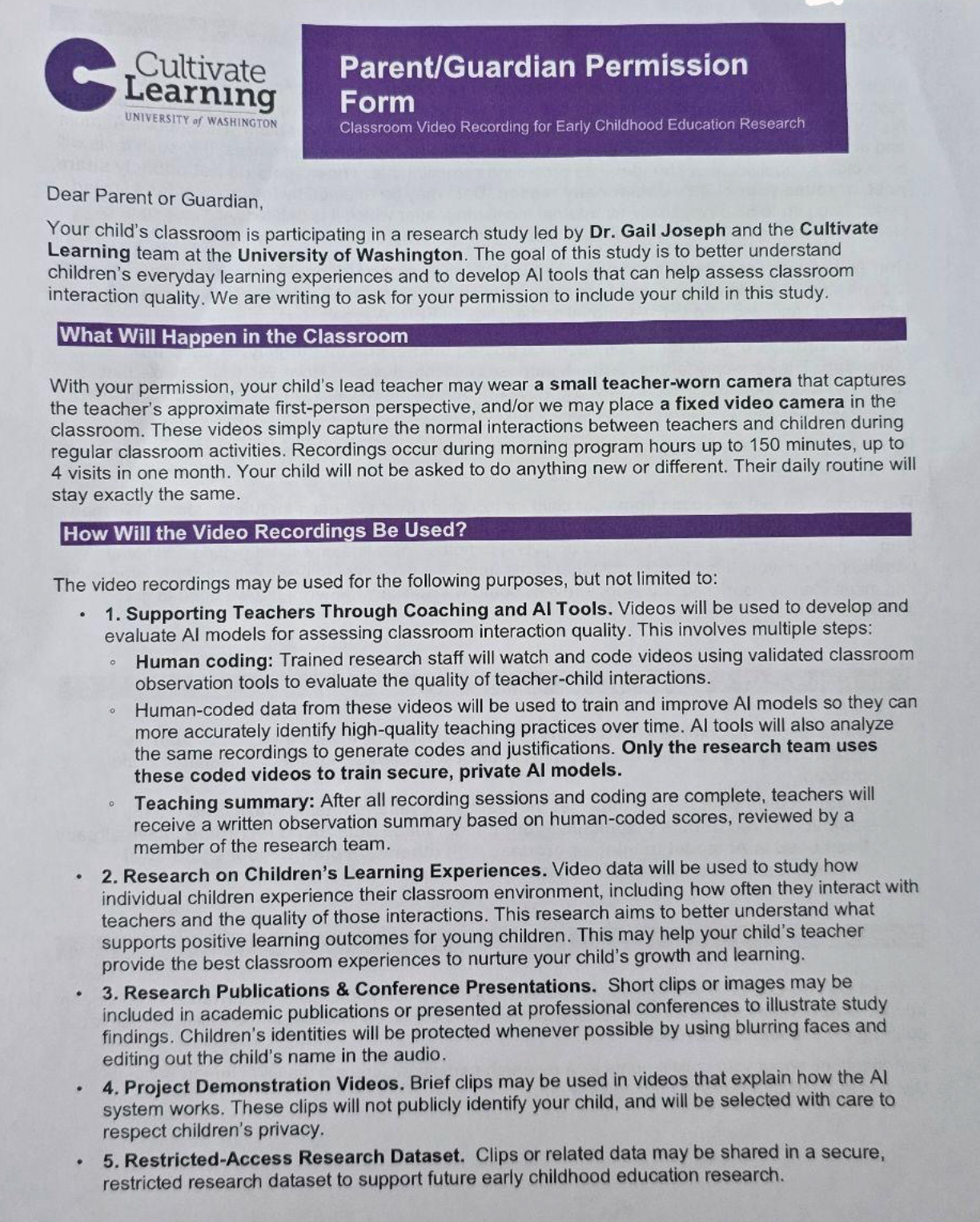
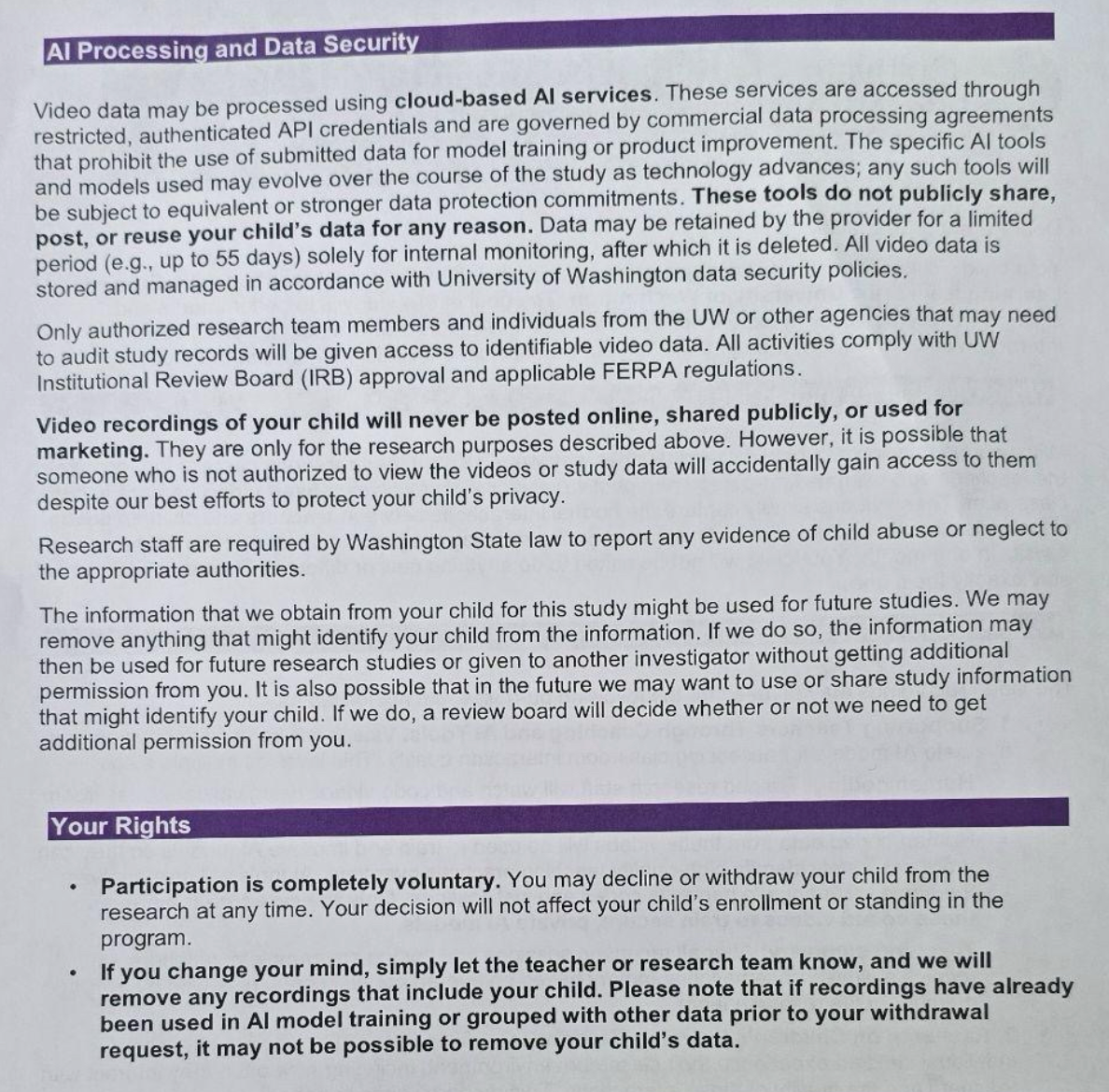
保護者に配布された通知の写真。画像:404 Media。
注釈付きの映像は、研究チームのみが「安全でプライバシーを保護した AI モデル」の訓練に使用します。
また、教員には「書面による観察サマリー」が提供されると記載されています。研究者らは、映像や音声は学術論文やカンファレンスで使用される可能性があるとしつつも、可能な限り顔にモザイク処理を施し、名前を編集して削除する計画であると述べています。
最後に、収集された映像とデータは、「将来の幼児教育研究を支援するため」他者と共有される可能性があると文書には記載されています。
この文書を受け取ったある保護者は、それを読み「驚いた」と語りました。「私の子どもが未知の AI ツールで利用されるという考えに不安を感じています。また、それが悪用される可能性も懸念しています」と彼女は付け加えました。「特に、家族が十分な説明に基づいて同意を与える能力について心配していました。母国語が英語である私でも、配布資料の不確かな表現から多くの疑問を抱きました。当校には移民や非ネイティブの英語話者も多くいる家族がいますが、書類は彼らの母国語で提供されていませんでした。」404 Media は、保護者が報復を恐れないよう匿名性を保証しました。
404 Media は、教育および AI の分野の複数の専門家に対して文書の断片を送付しました。「抜粋には重要な情報が含まれておらず、その欠落が私を懸念させています(私が未確認の部分に別の情報があるという前提において)。データは誰と共有される可能性がありますか?どの期間保持されますか?この研究を資金提供しているのは誰ですか?これらは私が答えを知りたい質問であり、答えが存在する可能性もあります」と、全米教育政策センターの共同ディレクターである Faith Boninger は 404 Media に語りました。「答えのない大きな疑問の一つは、ビデオが使用される目的を記述する言語に関するものです。『〜に限らない』という表現は、データに将来どのような用途が想定されるか、まだ考えもつかないような無数の可能性が含まれることを示唆しています。」
「私は常に、教員や生徒に対する支援を改善する方法を見つけ続けることに希望を抱いています。この特定の研究の詳細については存じ上げませんが、あなたが共有された内容から、人間をループに組み込み、データ収集と利用について明確な開示が行われている研究があることを嬉しく思います」と、コンピュータサイエンス教師協会(Computer Science Teachers Association)の執行役員である Jake Baskin は 404 Media に語りました。「ただし、教室にカメラや AI を導入する際には、生徒および教員のデータを保護することが最優先事項でなければなりません。結果を透明性を持って発表する厳密な研究こそが、教室において教育者を本当に支援するものが何なのかを学ぶ道です。」
文書は、研究への参加を「完全に任意」として提示しています。しかし、これはオプトインモデルではありません。むしろ、保護者が教師が装着したカメラによる撮影や、その映像の AI 処理を望まない場合、オプトアウト(拒否)手続きを行う必要があります。「いつでもお子様の研究からの辞退または撤回が可能です。その決定は、お子様のプログラムへの登録状況や評価に影響しません」と記載されています。
これにより、実際にどのように運用されるのかという疑問が浮上しました。もしある保護者が特定の子供をオプトアウトした場合、その子供だけが映像から除外されるのでしょうか?ワシントン大学のニュース担当副部長であるジャクソン・ホルツ氏は、404 Media 宛ての電子メールで、「保護者がオプトアウトした場合、クラス全体が研究対象から除外されます」と述べています。「同意手続きは、家族がオプトアウトできるだけでなく、たった一人でも家族がオプトアウトを選んだ場合、その学級全体が除外されるように設計されました」と彼は記しました。ある保護者は、「教師や学校管理者に質問するまで、研究者がオプトアウトした子供にシールを貼ることは知りましたが、それでも撮影が行われるかどうかについては追加情報は何も提供されませんでした」と語っています。
「私たちの最初の outreach は、人工知能を活用して教員を支援するプロジェクトに対して家族がどう感じるかをより深く理解するためのものでした」とホルツ氏は続けた。ホルツ氏によると、そのフィードバックを受け、ワシントン大学は研究を中止した。「保護者からの初期の反応を踏まえ、本研究を終了し、いかなる場所でも参加者の募集を行わないことにしました。(コミュニティパートナーからのフィードバックを受けながら早期段階で研究を終了することは珍しいことではありません)」と彼は記述している。「すべてのプログラムに対して、本特定の研究が終了した旨の通知が行われている最中です」。
404 Media が大学にコメントを求めた後、同大学のウェブサイト上に掲載されていた本研究に関するセクションはオンラインから削除された。
原文を表示
 imageUniversity of Washington researchers planned to have preschool teachers wear cameras that would record everything they saw from a first-person perspective, including the children they were teaching, then use that footage to develop AI models. Crucially, the program was presented as opt-out, rather than opt-in, meaning that parents had to take steps to prevent recordings of their children being processed by AI.
“With your permission, your child’s lead teacher may wear a small teacher-worn camera that captures the teacher's approximate first-person perspective, and/or we may place a fixed video camera in the classroom,” a document given to parents and later shared with 404 Media reads. “These videos simply capture the normal interactions between teachers and children during regular classroom activities. Recordings occur during morning program hours up to 150 minutes, up to 4 visits in one month. Your child will not be asked to do anything new or different. Their daily routine will stay exactly the same.”
404 Media has repeatedly covered how AI is permeating through education. That includes students using AI themselves, and even the creation of entire AI-powered schools. Now, the University of Washington research shows how AI data collection is pushing into early childhood education too.
Do you know anything else about how researchers are using AI? I would love to hear from you. Using a non-work device, you can message me securely on Signal at joseph.404 or send me an email at joseph@404media.co.
Or, it would have, if parents didn’t revolt. After a backlash, the University of Washington told 404 Media it has now shelved the planned research.
“The goal of this study is to better understand children’s everyday learning experiences and to develop Al tools that can help assess classroom interaction quality,” the document says. The research was being led by Dr. Gail Joseph and the Cultivate Learning team at the University of Washington, it says. Joseph’s work focuses on early childhood education.
The document says that this collected footage would have been used to “develop and evaluate AI models for assessing classroom interaction quality.” That includes human reviewers watching and annotating the videos, with that data then improving AI models. “AI tools will also analyze the same recordings to generate codes and justifications,” the document reads. The document doesn’t name any specific AI providers, but says, “Video data may be processed using cloud-based AI services.”
Photos of the notice given to parents. Image: 404 Media.
Only the research teams would have used the annotated videos to train “secure, private AI models.”
Teachers were to be given a “written observation summary,” it adds. The researchers say the footage and audio may have been used in academic papers or for conferences, but the researchers planned to blur faces and edit out names “whenever possible.”
Finally, the collected footage and data may be shared with others “to support future early childhood education research,” the document says.
A parent who received the document said they were “taken aback” after reading it. “I am troubled by the idea of using my child's likeness in unknown AI tools and how this could be abused,” she added. “I was particularly concerned about families’ ability to give informed consent. As a native English speaker, the vague language in the handout left me with a slew of questions. Many families in our school are migrants and non-native English speakers, but forms were not provided in any of their native languages.” 404 Media granted the parent anonymity to avoid repercussions.
404 Media sent sections of the document to multiple experts in education and AI. “The excerpt doesn’t provide important information, and those omissions concern me (assuming they’re not provided in another part of the letter I haven’t seen). Who may the data may be shared with? How long will it be maintained? Who is funding the research? Those are questions that I would want answers to, and the answers could exist,” Faith Boninger, co-director of the National Education Policy Center, told 404 Media. “A big question that doesn’t have an answer relates to the language that describes the purposes for which the videos may be used. The wording ‘not limited to’ implies that there could be any number of future uses to which the data may be put that haven’t even been thought of yet.”
“I am always hopeful we will continue to find ways to improve support for teachers and students. While I don’t know the details of this specific study, from what you shared, I am glad to see research that includes humans in the loop and clear disclosure of data collection and use,” Jake Baskin, executive director of the Computer Science Teachers Association, told 404 Media. “That said, anytime we bring cameras and AI into the classroom, protecting student and teacher data must be the highest priority. Rigorous research with transparent publication of results is how we will learn what actually helps educators in the classroom.”
The document presents participation in the research as “completely voluntary.” But it is not an opt-in model. Instead, parents have to opt-out if they don’t want their children to be recorded by a teacher-worn camera and have that footage processed by AI. “You may decline or withdraw your child from the research at any time. Your decision will not affect your child’s enrollment or standing in the program,” it says.
That raised questions around how that would practically work. If one parent opted their child out, would only they be omitted from any footage? Jackson Holtz, assistant director of University of Washington News, told 404 Media in an email that if a parent did opt-out, that entire class would be removed from the research. “The consent process was designed so that not only could families opt out, if even a single family decided to opt out, their entire classroom would be excluded,” he wrote. The parent said, “Only through questioning teachers and school administrators did we learn the researchers would put stickers on children who opted out, but no further information was provided on whether they would still be filmed.”
“Our initial outreach was intended to help us better understand how families would feel about a project that uses artificial intelligence to support teachers,” Holtz continued. Holtz said after that feedback, the University of Washington has stopped the research. “Given the early responses from parents, we have terminated the study and are no longer seeking participation at any site. (It is not unusual to terminate a study in the early stages as we receive feedback from community partners.) All programs are in the process of being notified that this particular study is now terminated,” he wrote.
After 404 Media contacted the university for comment, the section of its website describing the study was taken offline.
関連記事
今日のまとめ
AI日報で今日の重要ニュースをまとめ読み