言語の黄金時代、1000年前に終焉
バルセロナのポンペウ・ファブラ大学の研究チームは、人類が農業を開始してから約2000年前に言語的多様性がピークを迎えたとするモデルを構築し、その後の急激な減少要因として帝国の拡大と植民地主義の影響を特定した。
AIニュース価値スコアβ
市場分析AI関連度、新規性、日本での有用性など6軸を公開検証中です。現在、掲載順には使用していません。
- AI関連度
- 25
- 情報源の信頼性
- 75
- 新規性
- 75
- 検索具体性
- 75
- 重複の少なさ
- 100
- 日本での有用性
- 0
記事の主題は言語学と人類史であり AI/ML との直接的な関連性は薄いが(ai_relevance: 0.25)、Science 誌に掲載された新規の研究データに基づき「言語の黄金時代」の存在とその衰退要因を初めて定量的に示した点で高い新規性を持つ(novelty: 0.75)。また、具体的な製品名やバージョン番号が含まれていないため検索機会スコアは低く(search_opportunity: 0.25)、日本固有の関連情報も欠如している(japan_relevance: 0.0)。
キーポイント
言語多様性の「黄金時代」の存在証明
農業革命(約1万2千年前)から約3000年前にかけて、人類は4,500〜6,000の言語を話していたが、その後急激に増加し、約2000年前には世界で最大75,000もの言語が存在した「黄金時代」があったと推定される。
言語消滅の加速要因の特定
言語的多様性の減少は、過去500年の植民地主義による英語や中国語などの「巨大言語」の台頭だけでなく、少なくとも1000年前から小規模な多民族帝国の形成によって既に始まっていたことが示唆された。
狩猟採集社会モデルを用いた推計手法
研究者は現代の狩猟採集民171グループをプロキシとして用い、人口規模や文化複雑化と言語数の相関を分析する数千回のシミュレーションを行い、過去の言語分布を再構築した。
言語多様性の衰退は1,000年前から始まっていた
過去の500年間の植民地主義による影響に加え、1,000年以上前から小規模な多民族帝国の形成により言語多様性が減少し始めていたことが新たな研究で示された。
言語喪失は文化変異の大量絶滅を意味する
言語は婚姻パターンや宗教慣習などの他の文化的特徴と併せて伝達されるため、言語の喪失は同様の動態を持つ文化的多様性も同時に消滅したことを示唆している。
アラン・チューリングの未完のエロティック短編が発見
ニューズ研究により、チューリングが自身の同性愛者としての経験を描いた未発表の短編「Pryce's Buoy」の草稿が見つかり、これは彼が化学去勢を避けるために受けた迫害や、同僚のアンガス・ウィルソンの文体の影響を示している。
初めて確認された「エグザサテライト」の発見
CD-35 2722という恒星を回る褐色矮星(failed star)を、さらに別の天体が周回していることが発見され、これは太陽系外で初めて確認された衛星候補である。
重要な引用
"We uncovered a linguistic 'golden age' with tens of thousands of languages 3,000 to 1,000 years ago."
"In our model, this 'golden age' was followed by an extremely rapid decrease in linguistic diversity, especially over the last two millennia."
"Languages (and their histories) are regularly utilized as proxies for other units of culture because language is often transmitted and acquired along with other cultural traits..."
"Wilson braved…dangers—he did not hide his homosexuality, and he did publish his work," said Dillon in the study. "Turing did not hide his sexuality either, and although he did not publish his story, we cannot say whether this was through choice or because of the abrupt end to his life in June 1954."
"Perhaps we are approaching the limit of language invented to describe the Solar System, which is entirely unlike CD-35 2722."
For at least 25,000 years, the 'Old Ancestors' of Aboriginal Australians gathered to burn grass and perform magic rituals within Cloggs Cave.
影響分析・編集コメントを表示
影響分析
この研究は、言語学と人類学の分野において、過去の多様性が失われたプロセスを定量的に解明した点で重要です。しかし、AIやテクノロジー業界の技術的進展やビジネス戦略に直接的な影響を与える内容ではないため、実用性や関連性は低く評価されます。
編集コメント
AI技術が自然言語処理の進化に寄与する中で、この研究は「言語そのものの生態系」をデータ駆動で再評価した点で興味深いです。ただし、本記事は純粋な学術研究の紹介であり、特定のAI企業や製品の発表とは無関係です。
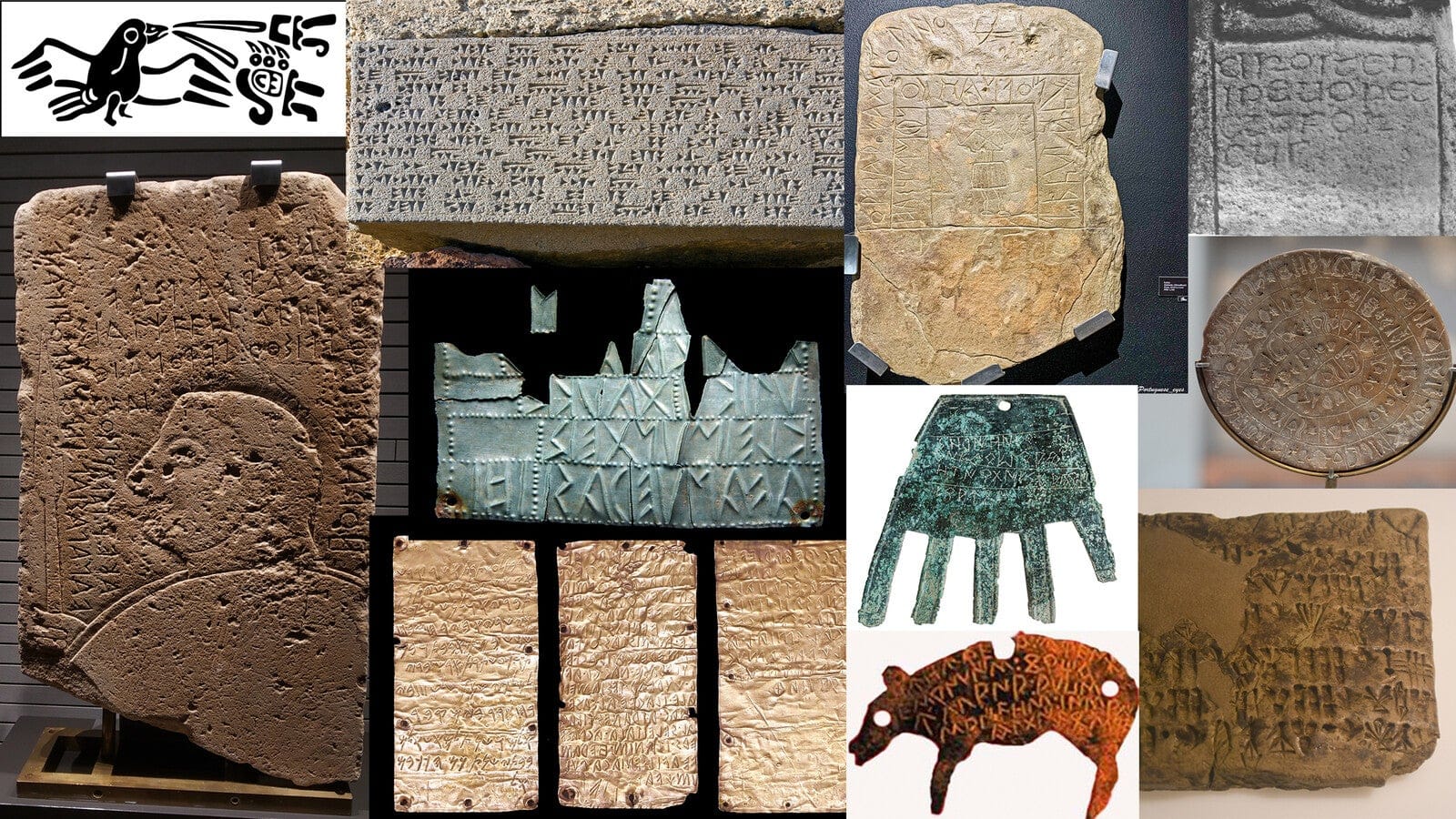 image Abstract へようこそ。今週は、失われた言語の痕跡を探る研究や、禁じられた愛を求めた物語、衛星を周回する天体の探索、そして儀式のような魔法にまつわる話題をご紹介します。
まず、科学者たちが「言語の黄金時代」を発見しました。この時代は数千年にわたり繁栄しましたが、その後、私たちが今直面している言語絶滅という暗黒時代へと移行していきました。さらに、アラン・チューリングの官能小説、最初の系外衛星の探索、そして古き祖先が住む洞窟についても触れます。
いつものように、私の他の作品については『ファースト・コンタクト:人類が宇宙人に対して抱く執着の物語』をお読みいただくか、私の個人ニュースレター「BeX Files」を購読してください。
失われた言語たちの沈黙
Blasi, Damián 他。『ホロセンにおける言語多様性の興亡』。Science。
約3000年前、世界で「言語の黄金時代」が幕を開けました。その後の2000年間で、数万もの言語が生まれました。しかし、過去数千年にわたって私たちは言語多様性という暗黒時代へと突入しています。これは、「巨大な言語」が台頭し、他の言語を絶滅へと追い込んだことが原因です。
この結論は、約1万2000年前の氷河期終了後に出現した農業の黎明期から現在に至るまでの人類の言語多様性を再構築した新しい研究によるものです。
農耕が始まる前の人類の人口は、440 万人から 700 万人の間だったと推定されています。現代の狩猟採集社会を参考にすれば、当時の人口規模や言語的多様性がどのように分布していたかを概ね把握できます。この視点に基づき、バルセロナのパムペウ・ファブラ大学のダミアン・ブラス氏らが率いる研究チームは、171 の狩猟採集集団を対象としたモデルを開発しました。その結果、農耕の黎明期以前には人類が約 4,500 から 6,000 の言語を話していたと推測されます。現在の 7,500 を下回る数値ですが、当時の地球人口が極めて少なかったことを考えれば、これは相当な多様性です。
その後、チームは人類が植物や動物の飼育・栽培を開始した過程で、言語が多様化しどのように進化してきたかを予測する数千ものモデルを走らせました。この過程は人口を劇的に増加させ、文化を複雑化させる要因となりました。予測結果はいくつかのシナリオに収束し、言語的多様性が約 2,000 年前にピークを迎え、世界で最大 75,000 の言語が話されていた可能性を示唆しました。
「3,000 年前から 1,000 年前にかけて、数万の言語が存在した言語学的な『黄金時代』を発見しました」とブラス氏のチームは論文の中で述べています。「私たちのモデルでは、この『黄金時代』の直後に言語的多様性が極めて急速に減少し、特に過去 2,000 年間でその傾向が顕著でした。」
過去500年間にわたる植民地主義の拡大は、英語やスペイン語、中国語(北京語)、ヒンディー語といった巨大言語の台頭を招き、言語消失を加速させました。しかし、新しい研究によると、言語的多様性の減少はすでに1,000年以上前から始まっていたことが示唆されています。その原因は、小規模な多国間帝国が形成されたことによるものです。
悲しいことに、この言語の貧困化という傾向は、言語そのものを超えた広範な影響を及ぼしています。
「言語(およびその歴史)は、言語が婚姻様式や宗教慣習、親族制度、社会組織の形態といった他の文化的特徴とともに伝達・獲得されることが多いため、文化の他の単位を代理する指標として頻繁に利用されます」と研究チームは結論付けています。「したがって、言語と似た伝達動態を持つ文化的変異体もまた、最近になって大量絶滅を経験したのです。」
その他のニュース…
未完となったアラン・チューリングの仕事
Dillon, Sarah. "'Pryce's Buoy': Alan Turing's Autofictional Short Story." The Review of English Studies.
ナチスのエニグマ暗号を解読したことで名高い英国の数学者、アラン・チューリングは、短い生涯の中で驚くべき業績のリストを成し遂げました。コンピュータ科学と人工知能分野における基礎的な人物であるチューリングは、当時「同性愛者であること」が犯罪とされたため、英政府による凄惨な迫害を受け、その結果としてシアン化物中毒により41歳という若さで亡くなりました。
歴史の行路を劇的に変えた仕事のかたわら、チューリングは小説執筆にも挑戦していたことが、彼の官能短編「プライスのブイ」に関する新たな研究で明らかになりました。この原稿は、1950 年代に刑務所入りを避けるために化学的去勢という苦痛を強いられた、若き恋人アーノルド・マレーとの不倫関係を描いた、自伝的小説風の作品です。
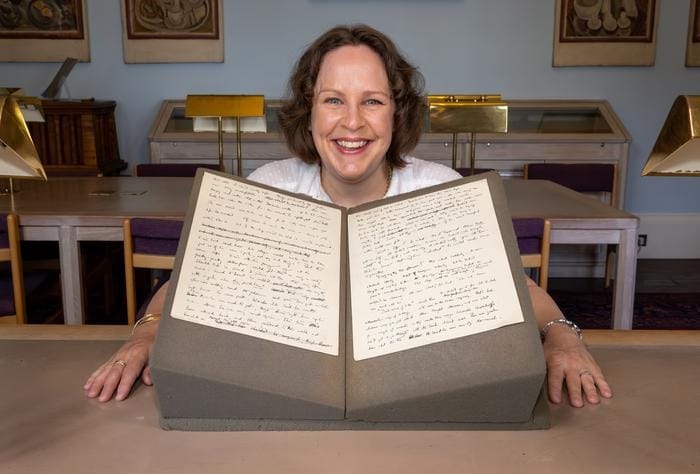 imageケンブリッジ大学キングス・カレッジ所蔵。手書き原稿を手にするサラ・ダイロン氏。写真提供:ケンブリッジ大学キングス・カレッジ
登場人物同士の性的な関係に至る直前で物語は終わっており、これは家族による検閲の結果か、あるいはチューリング自身が未完のまま放置したのかもしれません。しかし、この物語が明らかに寝室へと向かう展開であることは確かです。
ケンブリッジ大学のサラ・ダイロン氏は、新たな研究でこの作品を再検証しました。彼女はこれをチューリングの晩年の文脈に位置づけるとともに、ゲイ作家のアングス・ウィルソン卿との関連性を指摘しています。具体的には、ウィルソンの文体上の選択を多数模倣していることを明らかにしたのです。
ダイロン氏は研究の中でこう述べています。「ウィルソンは危険を冒しました……同性愛者であることを隠さず、作品も出版しました。チューリングもまた自らの性を隠しませんでした。彼はこの物語を出版しませんでしたが、1954 年 6 月の突然の死によって生涯が途絶えたことがその理由なのか、それとも自らの選択だったのかは、私たちに判断を下すことはできません。」
チューリングの人生は悲劇的ですが、ダイロン氏は「プライスのブイ」が彼の遊び心やいたずらっ子のような側面を表現したものであると強調しています。このユーモアは、彼が受けたあまりにも甚大な不正行為の中でも失われることはありませんでした。
あれは月ではありません。それは「外衛星」です。
Hoy, Kevin 他。「恒星の亜星体である伴天体の周りに惑星質量の外衛星を検出」。Nature.
天文学者たちは、他の恒星を回る世界である数千もの系外惑星を発見してきましたが、そのどれかを回る明確な「系外月」を特定した例はありませんでした。しかし今、ある研究チームが、CD-35 2722 という恒星の周りを公転している巨大な天体「褐色矮星」の周りを回る木星サイズの惑星を発見したと報告しています。この恒星は地球から約 73 光年離れています。
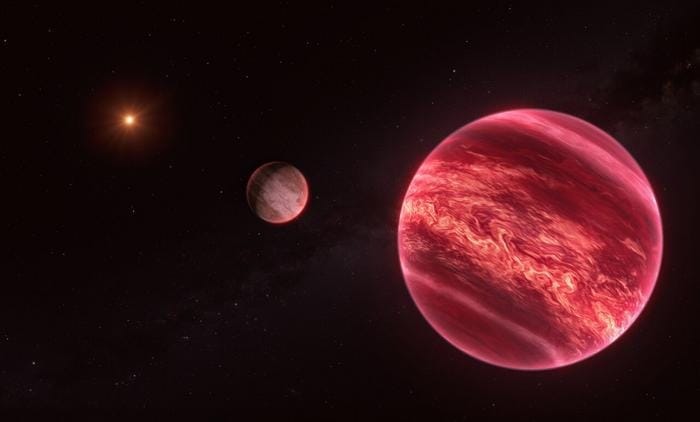 image前景に褐色矮星を配し、その周りを外衛星が公転する CD-35 2722 システムの概念図。画像提供:ESO/M. Kornmesser
これが初めて確認された系外月かもしれません。しかし、このシステムはあまりにも奇妙で新奇なため、研究者たちは「系外月」という用語が適切かどうか確信を持っていません。褐色矮星は核融合を起こして恒星へと進化することなく、ガス惑星として最大限に大きくなる限界にあるため、「失敗した恒星」と呼ばれることもあります。月は惑星の周りを公転しますが、褐色矮星は惑星と恒星の中間的な存在です。そのため、研究チームはこの天体を「外衛星(exosatellite)」と呼ぶことにしました。
「系外惑星の衛星は単に『系外月』と表現できますが、褐色矮星の伴天体の衛星も同様に呼べるかは不明です。この用語には正式な定義がないからです」と、ディエゴ・ポータル大学のケビン・ホイ氏率いる研究チームは述べています。「おそらく、私たちが太陽系を記述するために発明した言語の限界に近づいているのかもしれません。これは CD-35 2722 とは全く異なる系外天体群です。」
だからこそ、詩人を連れて行くべきなのです。巨大な系外衛星が正式に「最初の系外月」として認定されるかどうかにかかわらず、この発見は恒星系の多様性がますます鮮明になってきていることを示す素晴らしい例となっています。
古代の祖先たちの洞窟
Grono, Elle 他。「オーストラリア南東部、グナイ・クルナイ族の土地にあるクロッグス洞窟からの植物珪酸体は、洞窟内で燃焼儀礼のために草を丸ごと採取していたことを示す。」『Frontiers in Environmental Archaeology』誌。
少なくとも 25,000 年前から、オーストラリア先住民の「古代の祖先たち」は、メルボルンの東数百マイルに位置する巨大な洞窟サイトであるクロッグス洞窟で集まり、草を燃やして魔術的な儀式を行っていました。
この洞窟の重要性は、地域のグナイ・クルナイの人々や何世代にもわたる考古学者たちにとってよく知られていますが、新しい研究によって、ここが「古き祖先」たちの儀式の場として極めて深い歴史を持つことが改めて確認されました。オーストラリア国立大学のエル・グロノ氏率いる研究チームは、植物細胞内に存在する鉱物構造である「フィトライト」の層を発掘し、この洞窟が 25,000 年にわたり魔法と癒しの場として機能してきたことを裏付けました。
 image クログス洞窟の入り口で撮影されたグナイ・クルナイ長老のアール・ラスル・マルレット氏。写真提供:ジェス・シャピロ、グナイ・クルナイランド&ウォーターズコーポレーション
「考古学的特徴と植物資源に関する複数の証拠を総合すると、クロッグス洞窟における伝統的なグナイ・クルナイの知識や 19 世紀のエスノグラフィー(民族誌)で記された植物資源を用いた儀式の実践が裏付けられました。これは、この洞窟が『ムラ・ムラン』と呼ばれる力ある学識者である男女によって、魔法、癒し、呪い、そして精神的な実践のために用いられた特別な隠れ家であったことを示しています」と、研究チームは新しい論文で述べています。
一時的なショート動画や短くなった注意力が支配する混乱した時代において、この伝説の洞窟が数千年にわたる何世代もの人々をその中で慰めとして支え続けてきたという驚くべき継続性こそが、私たちに大きな勇気を与えてくれます。
ご愛読ありがとうございました。来週もお会いしましょう。
原文を表示
imageWelcome back to the Abstract! Here are the studies this week that spoke in tongues, sought forbidden love, orbited an orbiter, and performed ritual magic.
First, scientists have uncovered a “golden age” of languages that flourished for millennia before fading into our dark age of linguistic extinction. Then, Alan Turing’s erotica, the search for the first exomoon, and the cave of the Old Ancestors.
As always, for more of my work, check out my book First Contact: The Story of Our Obsession with Aliens, or subscribe to my personal newsletter the BeX Files.
The silence of long-lost languages
Blasi, Damián et al. The rise and fall of language diversity through the Holocene. Science.
Some 3,000 years ago, a “golden age” of languages dawned around the world, resulting in the proliferation of tens of thousands of tongues over the next 2,000 years. But over the past millennia, we have entered a dark age of linguistic diversity, driven by the rise of “behemoth languages” that have pushed others into extinction.
That’s the conclusion of a new study that reconstructed humanity’s linguistic diversity since the dawn of agriculture, which emerged about 12,000 years ago at the end of the Ice Age.
The global human population before agriculture is estimated to have been between 4.4 and seven million people. Modern hunter-gatherer societies can act as rough proxies for the likely distribution, sizes, and linguistic diversity of these preagricultural populations. With that in mind, researchers led by Damián Blasi of Pompeu Fabra University in Barcelona developed a model based on 171 hunter-gatherer groups, which suggested that humans spoke about 4,500 to 6,000 languages before the dawn of agriculture. That’s fewer than the 7,500 that are spoken today, but still a lot considering how few people there were on Earth at the time.
The team then ran thousands of models predicting how languages diversified and evolved as humans adopted plant and animal domestication, a process that radically increased populations and complexified cultures. The predictions converged around a scenario in which linguistic diversity peaked around 2,000 years ago with possibly as many 75,000 tongues spoken worldwide.
“We uncovered a linguistic ‘golden age’ with tens of thousands of languages 3,000 to 1,000 years ago,” Blasi’s team said in the study.”In our model, this “golden age” was followed by an extremely rapid decrease in linguistic diversity, especially over the last two millennia.”
The spread of colonialism over the past 500 years has accelerated language loss due to the ascent of behemoth languages such as English, Spanish, Mandarin, and Hindi. But the new study suggests that linguistic diversity was already in decline starting at least 1,000 years ago due to the formation of smaller-scale multinational empires. Sadly, this trend of linguistic impoverishment has far-reaching consequences beyond language itself.
“Languages (and their histories) are regularly utilized as proxies for other units of culture because language is often transmitted and acquired along with other cultural traits, including marriage patterns, religious practices, kinship systems, or modes of social organization,” the team concluded. “Therefore, cultural variants with transmission dynamics similar to those of languages have also undergone a recent mass extinction.”
In other news…
The unfinished work of Alan Turing
Dillon, Sarah. “‘Pryce’s Buoy’: Alan Turing’s Autofictional Short Story.” The Review of English Studies.
Alan Turing, the famed British mathematician who helped break the Nazi enigma code, packed a mind-boggling list of accomplishments into his short life. A foundational figure in the fields of computer science and artificial intelligence, Turing died at just 41 of cyanide poisoning in the wake of horrific persecution from the British government for what was then the crime of being a gay man.
In his spare time from dramatically changing the course of history, Turing also tried his hand at writing fiction, according to a new study about his erotic short story “Pryce’s Buoy.” The draft is an autofictional account of Turing’s affair with his young lover Arnold Murray, a relationship that ultimately forced Turing to endure a sentence of chemical castration to avoid prison in the 1950s.
imageSarah Dillon with the handwritten draft of “Pryce’s Buoy.” Image: © King’s College, CambridgeThe draft is cut short before any sexual encounter between the characters—perhaps because Turing’s family censored it, or perhaps because Turing left it unfinished—though the tale is very clearly headed to the bedroom. Sarah Dillon of the University of Cambridge revisits the story in a new study that contextualizes it in the final years of Turing's life and links it directly to the works of gay writer Sir Angus Wilson by revealing that Turing copied many of Wilson’s stylistic choices.
“Wilson braved…dangers—he did not hide his homosexuality, and he did publish his work,” said Dillon in the study. “Turing did not hide his sexuality either, and although he did not publish his story, we cannot say whether this was through choice or because of the abrupt end to his life in June 1954.”
Turing’s life story is heartbreaking, but Dillon emphasized that “Pryce’s Buoy” is an expression of his playful, cheeky side, which persisted even in the midst of the immense injustice to which he was subjected.
That’s no moon—it’s an exosatellite
Hoy, Kevin et al. “Planetary-mass exosatellite detected around the substellar companion of a star.” Nature.
Astronomers have discovered thousands of exoplanets, which are worlds that orbit other stars, but nobody has clearly spotted an “exomoon” orbiting one of these exoplanets. Now, a team reports the discovery of a Jupiter-sized world that is orbiting a massive object called a brown dwarf that is, in turn, orbiting a star called CD-35 2722, which is about 73 light years from Earth.
imageConcept art of the CD-35 2722 system, with the brown dwarf in the foreground, orbited by an exosatellite. Image: ESO/M. KornmesserThis might be the first known exomoon, but the system is so weird and novel that researchers aren’t quite sure that’s the right term. Brown dwarfs are sometimes called “failed stars” because they are about as big as a gas planet can get without igniting nuclear fusion in their cores and transforming into stars. Moons orbit planets, and brown dwarfs are somewhere in between a planet and a star, so the team went with the term “exosatellite.”
“Exoplanet satellites can be easily described as exomoons, but it is not clear if satellites of brown dwarf companions can be called the same, as the term lacks a formal definition,” said researchers led by Kevin Hoy of Diego Portales University. “Perhaps we are approaching the limit of language invented to describe the Solar System, which is entirely unlike CD-35 2722.”
This is why you should always bring a poet! Whether or not the giant exosatellite gets minted as the first exomoon, the discovery is an exciting example of how diverse star systems are increasingly coming into focus.
The cave of the Old Ancestors
Grono, Elle et al. “Phytoliths from Cloggs Cave, GunaiKurnai country (southeastern Australia) reveal the gathering of whole grasses for burning practices inside the cave.” Frontiers in Environmental Archaeology.
For at least 25,000 years, the “Old Ancestors” of Aboriginal Australians gathered to burn grass and perform magic rituals within Cloggs Cave, a cavernous site several hundred miles east of Melbourne.
While the immense significance of the cave is well-known to the GunaiKurnai people of the region, as well as to generations of archaeologists, a new study has confirmed the deep roots of the site as a ritual setting for the Old Ancestors. Researchers led by Elle Grono of the Australian National University unearthed layers of “phytoliths,” which are mineral structures found in plant cells, to corroborate that the cave has been a site of magic and healing for 25,000 years.
imageGunaiKurnai Elder Uncle Russell Mullett at the cave entrance of Cloggs Cave. Image: Jess Shapiro, courtesy of GunaiKurnai Land and Waters Corporation“Taken together, the archaeological features and multiple lines of archaeobotanical evidence at Cloggs Cave corroborates traditional GunaiKurnai knowledge and nineteenth century ethnography of ritual practices involving the use of plant resources, indicating that the cave was a special, secluded place used by mulla-mullung, powerful learned men and women, for the practice of magic, healing, cursing and spiritual practices,” said the team in their new study.
In our disorienting time of ephemeral reels and shortened attention spans, there’s inspiration in the incredible continuity of this storied cave, which has witnessed thousands of generations seeking solace in its confines.
Thanks for reading! See you next week.
関連記事
今日のまとめ
AI日報で今日の重要ニュースをまとめ読み