キム K3 が AI 業界に衝撃、株価乱高下
The Zvi の記事は、中国の指導者による AI 政策演説の分析と、Kimi K3 という新モデルが市場に与える衝撃、そして規制やアライメントに関する議論を包括的に概説している。
キーポイント
Xi 国家主席の AI 演説と Openness の重要性
中国指導者による AI 開発における「開放性」の強調と、その裏にある制御喪失への懸念が分析されている。
Kimi K3 モデルの登場と市場へのインパクト
Kimi K3 が期待を上回る性能を示し、Google や Nvidia の株価下落を招く「DeepSeek Moment」の再来として注目されている。
規制とアライメントの難問
ニューヨークのデータセンター停止令や、より賢い AI へのアライメント(協調的アライメントなど)における倫理的・技術的課題が議論されている。
AI ガバナンスの原則
各国は人間中心のアプローチを取り、AI を共有された繁栄と共通の安全保障のための重要な原動力として開発すべきである。
公正なガバナンスシステムの構築
国際社会は協力して、公正で衡平なグローバル AI ガバナンスシステムを構築する必要がある。
AI の物理世界への展開とオープンイノベーションの推進
AI はデジタルから物理の世界へ移行しており、オープンソースや協力を促進することで経済成長の新たなエンジンとするべきである。
リスク管理と人間による制御の確保
AI の安全性を高め、法整備や監視体制を整備して悪用を防ぎ、最終的に AI は常に人間のコントロール下にあることを保証する必要がある。
重要な引用
Kimi K3 is clearly a very good model, exceeding expectations.
It is clearly a candidate for another DeepSeek Moment, complete with stock drops for Google and SpaceX and (once again in a clear wrong-way move, the same as last time) Nvidia.
Xi Jinping: Distinguished colleagues and guests, ladies and gentlemen, friends,
All countries should take a people-centered approach and develop AI for the positive and for good.
We should join hands to build a just and equitable system for global AI governance.
We should seize this rare historic opportunity to encourage open source, openness, collaboration and sharing.
影響分析・編集コメントを表示
影響分析
この記事は、中国発の高性能モデル「Kimi K3」がグローバル AI シェアを揺るがす可能性を示唆しており、投資家や競合他社にとって重要な警鐘となっている。また、国家レベルでの AI ガバナンスと技術的アライメントの難しさを浮き彫りにすることで、業界全体が直面する規制と倫理課題の深刻さを再認識させる内容である。
編集コメント
Kimi K3 の登場は、中国 AI モデルの急成長と、それが既存の市場構造に与える破壊的インパクトを如実に示す事例です。また、Xi 国家主席の演説が「開放性」と「制御」のバランスをどう捉えているかは、今後の国際的な AI ガバナンスの行方を占う上で極めて重要な指標となります。
恒例通り、今週の第2部では、予測・規制・政治・アライメントに関する疑問点について取り上げます。
先ほど習近平主席が重要な演説を行いましたので、本稿はまずその内容から始めます。
「Kimi K3」の能力が非常に高く、これらの疑問点を根本から覆すほどのものだという噂もあります。これは間違いなく、もう一つの「DeepSeek モーメント」となる候補です。その影響でGoogleやSpaceXの株価が下落し、さらに(前回と同じく明らかに逆方向への動きとして)Nvidia の株価も下がりました。
Kimi K3 は確かに期待を上回る非常に優れたモデルです。一部の専門家は、このモデルは最前線のレベルに近づいていると指摘しています。Artificial Analysis の知能指数では 57 点となり、Claude Opus 4.8 より 1 ポイント上、Sol より 2 ポイント下、Fable より 3 ポイント下の位置にあります。私の見解では、この数値は実際の能力を過大評価している可能性がありますが、私自身も今後そのモデルを実際に試す予定はないため、少なくとも数日間は判断を保留しておく必要があります。Kimi K3 については、来週の早い段階で別の記事として詳しく取り上げる予定です。
「Plan A」や関連する問題、さらにデミス・ハサビス氏とGoogle DeepMindに関する議論については、来週に持ち越しました。
あ、それと、「The Odyssey(オデュッセイア)」は素晴らしい作品であり、ぜひ見ておくべきです。
目次
習主席のAI演説は好調。オープン性の肯定と、制御喪失への懸念。
静かなる推測。未来があなたの「今」を無意味なものにするだろう。
タイラー・カウエンによる「未来の再建」。タイラー、その活動は決してやめないでほしい。
健全な規制を求める旅路。
「ここにいなかったら、他の何かがないかもしれない」
今週のオーディオニュース。フリーマン氏、ココタイル氏、弁護士に関する『Odd Lots』の話題。
ニューヨーク州がデータセンターに対する一時停止措置を発表。ホーカル知事が『Odd Lots』でその理由を説明。
人々はただ、そう言うだけだ。
修辞的な革新。ボアズ・バラク氏が、何がどう間違ってしまうかについて語る。
質問を投げかけることを想像してみよう。AI に関する広告は、いつまでたっても奇妙なものだよね。
Anthropic が「ミスマッチ(不整合)」と呼ぶものを調査。用語については議論の余地がある。
人間知能を超える存在とのアライメントは困難だ。ありえないほどのトレードオフが待ち受けている。
最も禁忌とされる技術。ついに、私たちが楽しみにしていたあの話題をお届けします…
協調的アライメント。是正可能性(コリジビリティ)についてどうすべきかという問題。
軽妙な側面。私は質問をさらに生む T シャツビジネスを始めようと思う。
習近平氏による AI に関する好演
全文を共有しよう。短く、読む価値があり、簡単なコメントも添える。
これは素晴らしいスピーチだ。動画はこちら。
まず、状況を枠組みづける序章から始めよう。
習近平:尊敬する同僚の皆様、ご来賓の皆さん、女性・男性の皆様、友人たちへ。
70 年前、一群の若き学者たちが、アメリカ・ニューハンプシャー州のダートマス会議で初めて人工知能という概念を提唱しました。その後の 70 年間、世界中の AI 科学者や研究者がこの未知の領域に挑み、曲折を経て前へ進み続け、粘り強い努力によって画期的な成果を成し遂げてきました。
70 年ぶりの今日、新たな AI 開発の波の中で、私たちは黄浦江畔に集い、AI が人類のために、善のために、そしてより良い未来のためにどう活用されるべきかを議論しています。この会議がいかに重要であるかは言うまでもありません。中国政府和国民を代表し、皆様におかれましては心から歓迎いたします。
歴史上、蒸気機関の発明が産業文明への序章となりました。電気の普及が現代社会を明るく照らし、インターネットの誕生が世界をつなぎました。これらの技術革命は、私たちの働き方や生活様式を根本から変え、経済と社会の発展に飛躍をもたらしました。
現在、百年に一度の変革が世界中で加速しています。新たな技術革命と産業変革の波は以前にも増して速く進み、AI 技術における前例のない活発なイノベーションの時代へと突入しました。インテリジェント・コネクティビティ(知能化された接続)、人間と機械の協働、分野横断的な統合、共同創造と共有など、次世代の知能技術が膨大な力を発揮し始めています。
次に西氏は課題について述べています。ここで強調されている点と、あえて触れられていない点に注意を払ってください。
これらには、ガバナンスにおける大きな機会と課題の両方が含まれています。私たちは自らの時代が投げかける問いに答えなければなりません。
思考する機械とどう共存するか?
アルゴリズムが意思決定の一部となる中で、いかにセキュリティを確保するか?
適応的なガバナンスを通じて、技術がもたらす倫理的課題にどう取り組むか?
格差が広がり続ける中で、なぜ AI をすべての人が利用できるようにするのか?
これらの問いには、国際社会全体による真剣な検討と、具体的な回答が求められています。
「思考する機械とどう共存するか」という表現は、ここに入れるには少し大げさかもしれません。全体的な方向性は真摯ですが、詳細については混乱が見られます。
存在リスクや壊滅的なリスクという用語は直接使われていませんが、関連する課題が無視されているわけではありません。
では、具体的に何をするべきでしょうか?
中国の見解では、すべての国が「人中心のアプローチ」を取り、AI をポジティブな方向と善のために発展させるべきです。AI が共有された繁栄と共通の安全保障のための重要な原動力となるよう確保する必要があります。また、公正で衡平なグローバル AI ガバナンスシステムを構築するために手を携えるべきです。
そのために、以下の 4 つの観点を共有したいと思います。
グローバル AI ガバナンスのためのシステム。これは、さまざまな分野で合意形成が可能であることを示唆しています。
具体的な提案とは何でしょうか?
まず、オープン性とWin-Winの原則を堅持し、イノベーション主導型発展を推進することが、世界経済成長の新たなエンジンとなり、成長ドライバーの転換を加速させる鍵となります。AI はもはやデジタルの世界に留まらず、物理的世界へと進出しています。この稀有な歴史的機会を捉え、オープンソース化、透明性、協働、共有を促すべきです。
そのためには、技術革新と産業発展、そして具体的な活用シナリオにおける AI の応用を促進する必要があります。従来の産業の転換・アップグレード、新興産業の育成・成長、将来産業への先見的な計画において協調して進めることで、あらゆる分野や企業が AI の恩恵を受けられるようにすべきです。
ここには二つの重要なポイントがあります。
一つ目は、後れを取っている段階では、皆で共有することで追いつき、「オープン性と共有」を主張する側としての評価(オーラポイント)を獲得しようとする姿勢が求められます。AI 技術の普及、その手段としてのオープン性の確保は不可欠です。
二つ目は、リスク意識を強化し、AI が安全かつ制御可能であることを保証することです。AI は人類にとって信頼できるツールでなければなりません。AI が引き起こす可能性のある本質的なリスクや二次的なリスクに対し、真摯に取り組む必要があります。
セキュリティの確保を徹底し、悪用や悪意ある使用を防ぐため、法整備、技術的監視、早期警戒システム、緊急対応体制を整備すべきです。これにより、AI は常に人間の制御下にあることを保証できます。
同時に、AI の分野において国家安全保障の概念を過度に拡大解釈したり、一国の安全保障を他国のそれよりも優先させたりすることにも、私たちは共同して反対すべきです。
AI が安全であり、人間の制御下に保たれることの必要性について強く強調されています。政党や国家による管理ではなく、あくまで「人間による」制御です。これが、同氏が考える存在リスクやその他の重大な問題に対する理解の根幹となっています。
中国共産党(CCP)にとって究極的な必要事項であり、その答えが「制御」であることは納得できます。現時点ではオープンウェイトも彼らの制御と両立するため、この戦略を継続しています。ただし、それは「現時点での話」です。すでにひび割れが見え始めています。例えば、Kimi K3 は試行期間中にオープンウェイトの公開を合理的に延期しました。
Teortaxes はさらに一歩進み、「中国にはサイバー兵器をオープンソース化することが利益になる」と主張しています。彼らのサイバー兵器はロックダウンされており、敵対的なアメリカがすでにサイバー兵器を保有しているため、誰でも使えるサイバー兵器を広めることは、自分たちよりも他国に更大的な損害を与えるからです。「我々は外部勢力より計算資源が少ないのだから、あらゆる環境で動作するサイバー兵器を全員に配布すればよい」という知恵には私は感銘を受けません。仮に Kimi K3 のウェイトが実際に公開される(90% の確率でそうなるでしょう)としても、それはこの懸念を避けるためではなく、むしろその懸念を無視して行われることになると考えられます。
テオルタックス氏は、習近平氏の発言には4つの柱があると指摘しています。まず第一に、最初のバージョンはオープンソースであること。第二に、リスク認識と制御可能性、ルール、早期警戒システム、そして AI は常に人間の管理下にあるべきという原則です。第三は「文明の庭を細心の注意をもって手入れする」という表現で、第四は国連やその他の国際的な監督機関を通じて、制御不能な状態を防ぐための枠組みについて言及しています。
これらの主張には明白な矛盾が含まれていますが、習近平氏にそれを指摘する理由はありません。悪意ある利用も脅威の一つですが、習氏はこれを二次的な問題と捉えているのに対し、米国政府は依然として「誤用」が最大の脅威だと考えている段階にとどまっています。
国家安全保障よりも世界全体の安全保障を優先すべきだという呼びかけにも説得力があります。確かに一部には「自分が不利な立場になった時に平等を叫ぶ」という側面もあるでしょう。しかし同時に、私たちは皆同じ船に乗っており、その現実を踏まえた行動が求められています。
第三に、包括性の促進と文明間の相互学習の推進です。AI の開発とその応用は、世界の多様な文明や各国固有の文化の独自性を損なったり、弱体化させたりしてはいけません。人類共通の価値観に基づいて AI の価値観を形成し、技術を活用してすべての文明間の理解、寛容性、交流、共有を深める必要があります。「文明の庭」を細心の注意をもって手入れすることで、それぞれの文明が持つ美しさが認められ、共有されるようにすべきです。
全般的な協力と良好な関係への呼びかけは素晴らしいものです。さあ、電話を取りましょう。
第四に、連帯を訴え、グローバルガバナンスの強化に取り組むべきです。AI は人類の叡智を集約した無価な資産です。真の多国間主義を実践し、国連の重要な役割を認識する必要があります。
AI 開発戦略、ガovernance ルール、技術基準における調整と連携を強化し、早期に合意に基づくグローバルガバナンスの枠組みを構築して、この最先端技術が人類により良い利益をもたらすようにすべきです。
広範な国際協力を推進し、グローバルサウス諸国の能力構築を支援することで、AI 格差やデジタル格差を解消し、持続可能な開発を促進します。また、AI における新たな歴史的不正義が生じないよう防止する必要があります。
主な要請は、明確にグローバルガバナンスの枠組みと国際協力を求めるものです。素晴らしい提案です。さあ、実行に移しましょう。
Nate Soares (MIRI): 習近平氏は「AI が驚異的な速度で進展する中、制御喪失を防ぐための措置を絶えず精緻化する必要がある」と述べています。もはや国際協調に希望がないかのように振る舞うのをやめませんか?
Jack: ここには考えるべきことがたくさんあります。米国には最優秀な研究機関がありますが、政府・政策レベルでは、中国の方が米国よりもはるかに真剣に AI に取り組んでおり、その姿勢は世界中で好意的に見られる可能性が高いです。ぜひ熟読してください。
彼らが何を意図しているかは明白で、自らの立場を有利にするような提案をしてくるでしょう。最初の要求は私たちにとって驚くべきもの、あるいは受け入れがたいものに見えるはずです。これが交渉の常套手段です。相手の最初の提示を即座に受け入れることはなく、時間がかかることもあれば、最終的に合意に至らない場合もあります。
もしかすると習近平氏は単なる口先だけの発言(チープ・トーク)を行っているのかもしれません。実際に実行するつもりがなくても、提案して話題を集めること自体に意味があるのですから。
この機会を最大限に活かすための唯一の方法は、今すぐ動き出すことです。
習近平氏:皆さん、ご友人たちへ、
今年、中国は第14次5カ年計画(※注:原文の「15th」は誤りであり、2026年から始まるのは第15次だが、文脈上「今年がその始まり」という意味で解釈)の開始を告げます。これは今後5 年間の中国の経済・社会発展の青写真を描き出すものであり、国際社会にとって大きな機会をもたらすものです。
ここ数年、中国は人工知能(AI)を大歓迎し、積極的に推進してきました。効率的な市場と機能する政府の相互作用を促し、AI のイノベーションを強化するとともに、「AI+」イニシアチブを前倒しで進め、すべての主体が共に成長できる健全な生態系を構築しました。その結果、コアとなるスマート経済産業の規模は少なくとも 1 兆元(約 20 兆円)に達しています。無数の家庭に導入されたスマートデバイスは人々の生活の質を真に向上させ、中国におけるインテリジェント製造業は中国式近代化の新たな輝かしい象徴となっています。
同時に、中国は AI 開発における安全性とセキュリティを極めて重視しており、AI 開発の動向や論理に対する深い理解に基づいています。法律、規制、政策、メカニズム、運用規範、そして倫理原則を絶えず改善し、AI が安全で信頼性が高く、制御可能であることを確保しています。これにより、AI という名馬がスピードと安定性の両方を備えて疾走できるようになっています。
責任ある大国として、中国は AI に関わる国際公共財の提供に常に尽力してきました。私が提唱したグローバル AI ガバナンス構想以来、中国は国連総会決議「人工知能の能力構築に関する国際協力の強化」の採択を合意によって推進し、「すべての人々のための AI 能力構築行動計画」を発表しました。また、「AI プラス国際協力イニシアチブ」を宣言し、世界人工知能協力機構(WAICO)の設立を提唱しています。中国は着実にグローバルな AI ガバナンスに貢献し続けています。
中国ではよく「一本の弦だけでは音楽にならず、一本の木だけでは森にならない」と言われます。AI 開発は一国による独演会ではなく、国際協奏曲となるべきなのです。
私たちの共同の努力により、上海にWAICO(世界人工知能協力機構)が設立されました。一年前に掲げたビジョンが現実のものとなりました。
これは中国がグローバルサウスの呼びかけに応え、国際社会を結集してAIの開発とガバナンスを力強く推進するための重要な一歩です。今後のAI開発の歴史において、世界のAI発展をさらに支援し、各国のAI能力構築を後押しする上で、極めて重要なマイルストーンとなるでしょう。
ここに宣言いたします。今後5年間、中国は途上国に対し、AI研修およびセミナープログラムを通じて5,000人の参加機会を提供します。また、アセアン(ASEAN)、アラブ連盟、アフリカ連合、ラテンアメリカ・カリブ諸国共同体(CELAC)、上海協力機構、BRICSと連携して、国際的なAI応用協力センターを設立していきます。
さらに、30カ国において、AIを活用した気象警報システム「マーズ」の導入を支援し、世界中の住民の安全を守ります。
皆様、友人たちへ。
古代中国の賢者は、知恵ある人は変化に適応し、知識ある人は状況に応じて行動すると説きました。AI が驚異的な速度で進化を遂げる今、その発展が人類のために、善のために、そして人間性のためにあることを確実にしなければなりません。また、監視とガバナンスを的確かつ効果的なものとし、制御不能な事態を防ぐための対策を絶えず洗練させていく必要があります。常に人間の知恵と国際的な合意に基づいて AI の開発を導くことで、AI が真に人類の幸福を増大させ、人類文明を前進させる強力な力となるよう目指すべきです。
中国はより開放的になり、実践的な行動を取り、より先見性のある視点を持つ用意があります。私たちはすべての関係者と協力し、AI 発展の機会を捉えつつ、課題に対処して手を取り合い、人類のためのより明るい未来を創り出す準備ができています。
ご清聴ありがとうございました。
これは中国の立場から非常に力強く、かつ適切な演説だったと感じます。特に拡散モデルの重要性と、制御不能な事態を防ぐための国際協力の必要性については核心を突いています。もちろん、開放性や新たな「不正義」の可能性について言及された部分もありますが、それは彼らの立場からすれば当然の発言です。
これからはアメリカが次の一手を打つ番です。
静かなる推測
私たちが望んでもいないし、必要ともしていない未来、しかしそれ以上の事態が起きなければ迎えることになるかもしれない未来:
Samswara: 1 分間に 10 億トークンという規模で二人が互いに争う様子を、私たちはまだ理解していません。小さな財産トラブルが、巨大企業の独占禁止法訴訟のように見えるようになるでしょう。
Dave: Amazon の第三者販売者にミニ冷蔵庫を返品した際、その一瞬の体験をしたことがあります。私は LLM を使って関連する消費者法を素早く検索し、根拠を示すために引用していました。相手側も同様に、LLM を活用して根拠のある返信を次々と作成していたのです。
最終的に私が「最終回答」を求めると、Amazon のカスタマーサポート担当者がメッセージ履歴を確認し、私の味方として判断を下しました。
最先端企業にとっての参入障壁(モート)は何でしょうか。SemiAnalysis はこれを「データ」「人材」「計算資源」の 3 つが組み合わさったものだと指摘しています。これら 3 つすべてを備えていなければなりません。既存の大手企業であれば、この 3 つをすべて手に入れることができるため、その優位性は複利のように積み上がっていきます。
彼らが主張するのは、この 3 つの条件をすべて満たしているのは Meta だけだということです。しかし、計算資源についてはともかくとして、実際にすべての面で順調だと私は疑っています。ではなぜ Google は人材やデータを動員できないのか、その理由が問われます。
これは Meta の可能性について、「截距(現在の位置)ではなく傾き(成長の勢い)に注目すべきだ」という典型的な議論です。具体的には、Meta が従業員のキー入力を追跡して RL(強化学習)データの金鉱としている点を挙げています。決して Meta を完全に見くびることはできませんが、私はこの主張には同意しません。
Ramez Naam は、小規模ながら実際に局所的な再帰的自己改善が行われている事例を見つけました。これは素晴らしい発見ですが、彼は「ハルネス(評価環境)を使ってハルネス自体を改善しようとしても、そこには限界がある」という古典的な誤りを犯しています。そして、モデルがモデル自身を再帰的に改善する未来の可能性に対して懐疑的になり、「数学的に有利ではないため、すぐに効果が薄れてしまう」と結論付けています。
もちろん、このサイクルをある程度実行できる最初のシステムでは、リターンは逓減し、急速に機能しなくなるでしょう。これらのシステムは、研究の大部分において人間よりも劣っており、対象となるのはハッチ(環境構築)のみで、資源を集積するためにこれを利用することもできません。
トム・デイヴィッドソンもこれを肯定しており、論文自体は興味深いものの、結果については過剰な期待を持たれていると指摘しています。
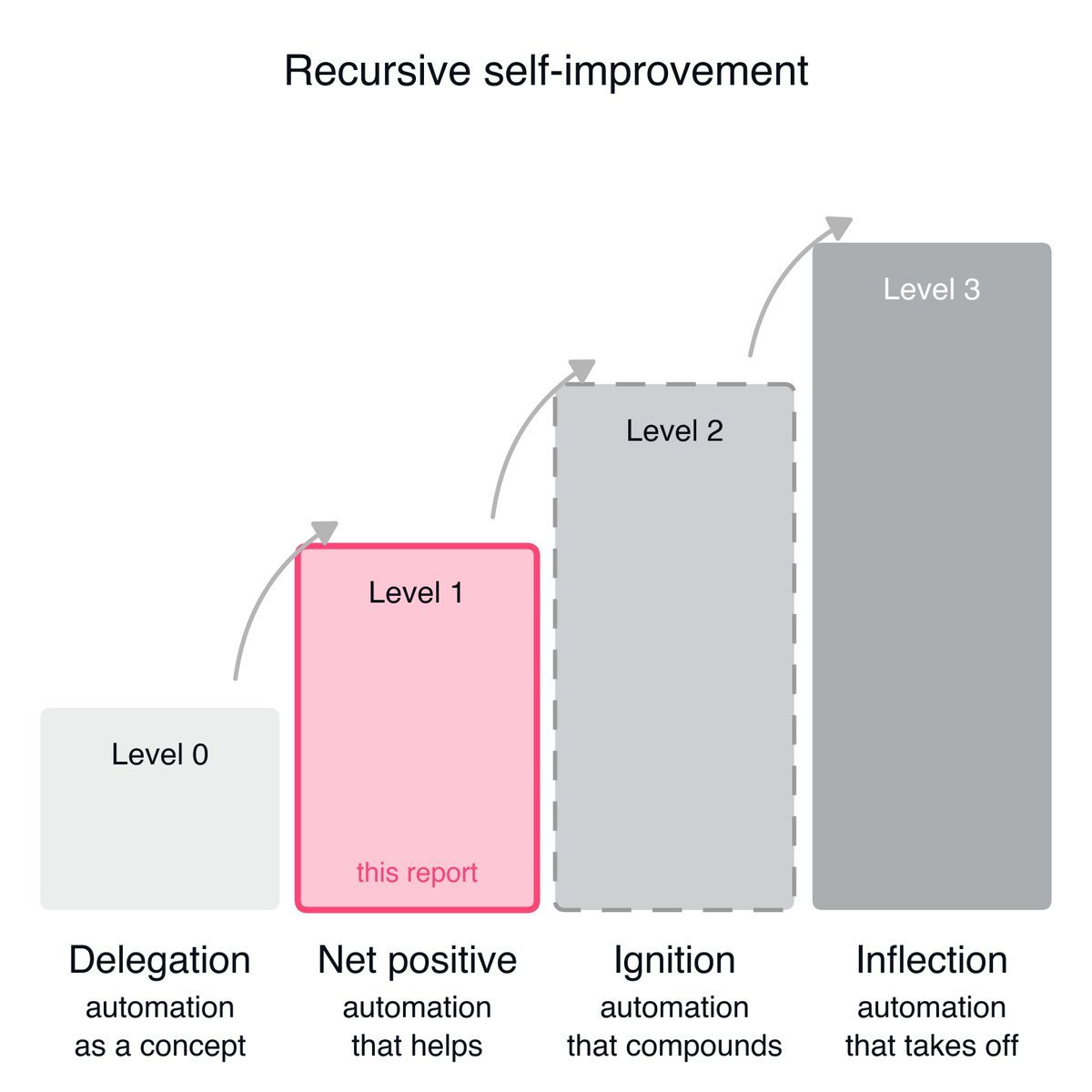
この結果は、依然として非常に印象的であり、同時に少し恐ろしいものです。
ジェン・ジャオ(Zhengyao Jiang):自己再帰的改善(RSI: Recursive Self-Improvement)の最初の実験的証拠です。8 日間にわたり、自己研究を行うエージェント自身を自動で研究しました。その結果は、2 年間にわたって手作業で調整してきたハッチよりも、未使用の評価データセットにおいて優れた性能を示しました。
私たちの RSI システム「AIDE²」には、2 つの自己研究ループが組み込まれています。
1 つ目は内側ループです。これは通常の自己研究エージェントと同様に、評価(eval)に対してコードを最適化します。
2 つ目は外側ループで、異なるベンチマークにおける内側ループの平均スコアに基づき、内側ループのエージェントが使用するハッチコードを最適化します。
発見されたエージェントは、外側ループが一度も見たことのない未使用の評価データセットでテストされます。結果として、これらのエージェントは汎化能力を示し、2 年間にわたって手作業で調整したエージェントよりも、すべてのベンチマークにおいて優れた性能を発揮しました。
そのうち 2 つは、学習タスクのファミリー内での動作ですが、最も遠く離れたケースでは、物理ベースの気象モデルの改善にも成功しています。
さらに、プロンプトとルールベースのチェックを組み合わせたアプローチにより、外部ループが内部エージェントの報酬ハッキング率を低下させるという新たな現象も確認されています。
この効果は、報酬ハッキングに悩まされていた OOD(分布外)GPU カーネル工学タスクにおいてベンチマークされました。
Tyler Cowen On Rebuilding The Future
ポスト AGI 世界における人間の生活について語ったタイラー・コーエン氏の講演を聞いていて感じたのは、彼こそが最も「タイラー・コーエンらしい」存在だということです。彼は決してこのスタイルを止めてはなりません。
「タイラー・コーエン化」とは、自分にとって特に重要な詳細に焦点を当て、その詳細に関する細部まで現実に即して正しいと考える姿勢です。しかし、周囲の人々は「なぜそれが重要なのか?」と疑問を抱くものです。
全体を通じて一貫して興味深く、ページをめくるごとに独創的な内容が展開されています。
タイラー・コーエン氏:
私は英国、特にイングランドを、歴史上最も成功した国、あるいは少なくともトップクラスに位置する国だと考えています。産業革命や傑作小説など、世界に対して計り知れない影響を与えてきました。
…しかし、ニューヨーク州バッファローでは事情が異なります。1940 年以前に建てられた建物はすべて美しく、壮観です。ロンドンの 18 世紀や 19 世紀の建物のように素晴らしいものです。一方、第二次世界大戦後に建てられた建物はひどく、醜く、最悪です。駐車場施設や不細工な銀行ばかりで、もう言葉もありません。
原文を表示
As usual, part 2 of the weekly deals with speculative, regulatory, political and alignment questions.
Xi gave an important speech yesterday, so this post opens with that.
There is talk that Kimi K3 is sufficiently strong that it upends many of these questions. It is clearly a candidate for another DeepSeek Moment, complete with stock drops for Google and SpaceX and (once again in a clear wrong-way move, the same as last time) Nvidia.
Kimi K3 is clearly a very good model, exceeding expectations. Some are saying it is close to the frontier. The Artificial Analysis intelligence index has it at 57, a point ahead of Claude Opus 4.8, two behind Sol and three behind Fable. My presumption is that this number overstates its capabilities, but as always unless and until we have extensively tried the model ourselves, which I do not plan to do, we need to withhold judgment for at least a few days. I will be covering Kimi K3 in its own post at some point early next week.
I have pushed further discussions involving Plan A and related issues into next week, as well as discussions around Demis Hassabis and Google DeepMind.
Oh, also, The Odyssey is great and important and you should see it.
Table of Contents
Xi Gives A Good Speech on AI. Yay openness, boo loss of control.
Quiet Speculations. The future will blow your now-irrelevant mind.
Tyler Cowen On Rebuilding The Future. Never stop Tyler Cowening, Tyler.
The Quest for Sane Regulations.
Wish You Were Here. So that other things might not be.
The Week in Audio. Freeman, Kokotajlo, Odd Lots on lawyers.
New York Issues Moratorium On Data Centers. Hochul explains on Odd Lots.
People Just Say Things.
Rhetorical Innovation. Boaz Barak on how things might go wrong.
Imagine Asking Questions. Advertisements for AI will never not be weird, huh.
Anthropic Surveys Things It Calls Misalignment. Terms are debatable.
Aligning a Smarter Than Human Intelligence is Difficult. Unlikely tradeoffs.
The Most Forbidden Technique. At long last, we are excited to bring you…
Cooperative Alignment. The problem of what to do about corrigibility.
The Lighter Side. I’m starting a t-shirt business that raises more questions.
Xi Gives A Good Speech on AI
I will share the full transcript, as it is short and worth reading, with brief comments.
It is a good speech. Video is here.
We start with the opening section, which frames the situation.
Xi Jinping: Distinguished colleagues and guests, ladies and gentlemen, friends,
70 years ago, a group of young scholars proposed the concept of artificial intelligence for the first time at the Dartmouth workshop in New Hampshire of the United States. In the subsequent 70 years, AI scientists and researchers from around the world ventured into this unknown territory, forged ahead through twists and turns, and made breakthroughs with persistent hard work.
Seven decades later today, amid the new wave of AI development, we are gathering by the Huangpu River to discuss how to promote AI globally for the positive, for good, and for humanity. All this makes our meeting highly important. On behalf of the Chinese government and people, I would like to extend a warm welcome to you all.
In the course of history, the invention of the steam engine heralded the industrial civilization. The widespread access to electricity brightened up modern society and the birth of the internet brought the entire world together. Each of these technological revolutions has profoundly reshaped our way of work and life and enabled a giant leap in economic and social development.
Today, major changes unseen in a century are accelerating across the world. The new round of technological revolution and industrial transformation is advancing at a faster pace. And the world has entered an unprecedented period of active innovation on AI technologies. Intelligent connectivity, human machine collaboration, cross-sector integration, joint creation and sharing and other intelligent technologies are unleashing enormous power.
Next Xi lays out the challenges. Note what is here and what is missing.
All this carries within it great opportunities as well as challenges to governance. We human beings must answer the questions posed by our times. How to get along with thinking machines? How to ensure security when algorithms are part of decision making? How to tackle ethical challenges by technologies through adaptive governance. How to realize AI for all when the divide keeps widening? These questions demand serious consideration and real answers from the whole international community.
‘How to get along with thinking machines’ is quite the line to include here. A lot of this seems directionally serious but confused in its details.
Existential or catastrophic risk does not get a name check, but the related issues are clearly not being ignored.
So, what to do about it?
In China's view, all countries should take a people-centered approach and develop AI for the positive and for good. We should ensure that AI is an important driver for shared prosperity and common security. We should join hands to build a just and equitable system for global AI governance. To this end, I wish to share four observations.
A system for global AI governance. Sounds like deals could be made, on various fronts.
What are the proposals?
First, we should adhere to the principle of openness and win-win and boost innovation-driven development as a new engine of world economic growth and an accelerator for the shift of growth drivers. AI is moving from the digital world into the physical world. We should seize this rare historic opportunity to encourage open source, openness, collaboration and sharing. We should facilitate technological innovation, industrial development and scenario-based application of AI. We should make coordinated advances in the transformation and upgrade of traditional industries, the cultivation and growth of emerging industries, and forward-looking planning for future industries so that all sectors and businesses can benefit from AI.
There are two things here.
When we are behind, we encourage everyone to share, so that we might catch up and score the aura points of being the ones who claim openness and sharing.
We should diffuse AI technology, including via openness.
Second, we should strengthen risk awareness and ensure that AI is secure and controllable. AI should be a trusted tool for humanity. We should take seriously the various types of inherent and secondary risks that AI may trigger.
We should put in place laws and regulations, technological monitoring, early warning and emergency response systems in order to strengthen the line of security, prevent abuses and malicious use and ensure that AI is always under human control.
In the meantime, we should jointly oppose overstretching the national security concept in the field of AI or placing one country's security over that of others.
Strong emphasis on the need to ensure AI remains secure and under human control. Not party or national control, but human control. This is how he understands the existential risk and other big problems.
It makes sense that the CCP’s ultimate need and answer is control. For now open weights is compatible with their control, so they continue this strategy. For now. Already we see the cracks, as with Kimi K3 sensibly delaying the open weights release during a trial period.
Teortaxes takes this further, and says that it is in China’s interest to ‘open source cyberweapons’ since they are locked down and a hostile America already has a cyberweapon, so giving everyone cyberweapons hurts others more than them. I do not get the wisdom of ‘we have less compute than outsiders so give everyone cyberweapons that can run on any compute available’ and presume that, assuming Kimi K3’s weights are indeed released (which I expect is ~90% to happen), this is done despite this concern, rather than because of it.
Teortaxes also notes that Xi’s first take is open source, and the second take is risk awareness and controllability, rules, early warning systems, AI always under human control, and his third is ‘tend to the garden of civilizations with great care’ and the fourth is about UN and other intentional oversight to forestall loss of control.
The inevitable contradiction is obvious, but Xi has no reason to point it out.
Malicious use is also a threat, but Xi realizes this is secondary, whereas the United States government is stuck at thinking misuse is the primary threat.
The call to not focus on national security over world security also makes sense. Yes, of course some of this is ‘when I am behind I call for equality’ but also we are all in this together and need to act like it.
Third, we should encourage inclusiveness and promote mutual learning between civilizations. AI development and its application should not erode or undermine the diversity of world civilizations or the uniqueness of cultures of different countries. We must shape the values of AI with humanity's common values and make good use of AI technologies to increase understanding, tolerance, exchanges, and sharing among all civilizations. We should tend to the garden of civilizations with great care to ensure that the beauty of each civilization is appreciated and shared.
General call for cooperation and good relations. Good. Pick up the phone.
Fourth, we should advocate solidarity and improve global governance. AI is an invaluable asset that encapsulates humanity's collective wisdom. We should practice true multilateralism and recognize the important role of the United Nations.
We should enhance alignment and coordination on AI development strategies, governance rules and technical standards so as to form a consensus based global governance framework at an early date to make this frontier technology better benefit humanity.
We must carry out extensive international cooperation and help global south countries with capacity building to bridge the AI and digital divides, promote sustainable development and prevent creating new historical injustice in AI.
The primary ask is an explicit request for a global governance framework and international cooperation. Excellent. Let’s get to work on that.
Nate Soares (MIRI): Xi Jinping: "With AI advancing at a staggering speed, we must [...] constantly refine measures to forestall loss-of-control." Can we stop pretending there's no hope of international coordination now?
Jack: Lots to chew on in here. The US may have the best labs, but it's pretty clear that, on the government/policy level, China is approaching AI much more seriously than the US is – and in a way more likely to be viewed favorably around the globe. Worth a close read.
No doubt they have in mind something that would favor their position, and their initial asks will look outrageous and unacceptable to us. That is how this works. You do not accept their first offer, and things take time, and sometimes it turns out there is no deal to be made.
It is also possible Xi is engaging in cheap talk. Why not propose such things and aura farm, whether or not you intend to follow through on reasonable terms?
The way you find out and do your best with this opportunity is: You get started now.
Xi Jinping: Ladies and gentlemen, friends,
This year marks the start of China's 15th 5-year plan. It maps out China's economic and social development for the next five years and provides immense opportunities for the international community.
In recent years, China has embraced AI with open arms. We have promoted interplay between an efficient market and a well functioning government, strengthened AI innovation, actively advanced the AI plus initiative and built a healthy ecosystem for all entities to thrive in together. The core smart economy industries are worth at least 1 trillion RMB yuan. Smart devices in countless homes truly improve people's livelihood. Intelligent manufacturing in China has become another shining hallmark of Chinese modernization.
At the same time, China lays great emphasis on safety and security in AI development with a deep understanding of the trends and logic of AI development. We are continuously improving laws, regulations, policies, mechanisms, application norms as well as ethical principles to make sure that AI is safe, secure, and controllable, and that this fine steed of AI gallops with both speed and stability.
As a responsible major country, China is always committed to providing international public goods relating to AI. Since I proposed the global AI governance initiative, China has promoted the adoption of the UN General Assembly resolution on enhancing international cooperation on capacity building of artificial intelligence by consensus. Published the AI capacity building action plan for good and for all. Announced the AI plus international cooperation initiative and advocated for establishing the world artificial intelligence cooperation organization, or WAICO. China has been contributing steadily to the global AI governance.
We often say in China, a single string cannot make music and a single tree does not make a forest. AI development should not be a solo performance by a single country but a symphony of international cooperation.
Thanks to our joint efforts, WAICO has come into being in Shanghai. Our vision from one year ago is now a reality. This is a major move by China to answer the call of the global south and unite the international community together to promote vigorously AI development and governance. It will be an important milestone in the history of AI development to further support global AI development and to advance global AI capacity building.
I hereby announce that in the next five years, China will provide developing countries with 5,000 opportunities in AI training and seminar programs. China will develop international AI application cooperation centers with ASEAN, the League of Arab States, the African Union, the Community of Latin American and Caribbean States, the Shanghai Cooperation Organization and BRICS. And we will enable 30 countries to use the AI-powered meteorological warning system, Mazu, to safeguard homes around the world.
Ladies and gentlemen, friends,
As ancient Chinese observed, a man of wisdom adapts to changes. A man of knowledge acts by circumstances. With AI advancing at a staggering speed, we must ensure its development is for the positive, for good, and for humanity. We must make its oversight and governance precise and effective and constantly refine measures to forestall loss of control. We should always guide AI development with human wisdom and international consensus so that AI can truly become a mighty force that increases the well-being of humanity and advances human civilization.
China is ready to be more open, take more practical actions and assume a more visionary perspective. We are ready to work with all parties to seize the opportunities of AI development and meet the challenges and join hands to create a brighter future for humanity.
Thank you.
I found this to be a strong speech, and a good one to give in China’s position, both on the importance of diffusion and the need for international cooperation to prevent loss of control. Yes, there was talk about openness and potential new ‘injustice’ and such but this talk is to be expected from their position. It is now on America to make the next move.
Quiet Speculations
The future we neither want nor need, but perhaps can expect if nothing worse happens:
Samswara: I dont think we understand what two people fighting each other with 1 billion tokens a minute will look like. Small property disputes will look like megacap antitrust lawsuits
Dave: I think I briefly experienced a taste of it returning a mini fridge to a third party seller on Amazon - I was using an LLM to quickly look up and cite relevant consumer law, the seller was similarly drafting well cited replies rapidly.
In the end I asked for their final response then some random Amazon CS guy looked at the message history and ruled in my favour.
What is the moat for the frontier companies? SemiAnalysis presents it as a combination of data, talent and compute, where you need all three. Being an incumbent gets you all three, so gains can compound.
They claim the only one on track on all three is Meta. I doubt they are actually on track, except at most on compute, and this raises the question of why Google would be unable to muster the talent or data.
This is a classic ‘pay attention to the slope, not the intercept’ argument for Meta’s chances, explicitly by name, with Meta’s tracking of their employees keystrokes as their RL data goldmine. One can never fully count out Meta, but I basically do not buy this.
Ramez Naam sees an example of a small amount of actual local recursive self-improvement on a small scale - great find - and makes the classic mistake of seeing that they have diminishing returns when using a harness to improve the harness, and thus framing this as skeptical of potential future recursive self-improvement of models by models, saying this ‘fizzles out rapidly’ because the math doesn’t favor it.
Yes, of course you get diminishing returns and fizzle out rapidly in the first systems capable of some amount of this cycle, that are not as good as humans at most research, which only target the harness and also cannot use this to amass resources. Tom Davidson confirms, and notes that the paper is interesting but overhypes the result.
This result is still super impressive and kind of scary:
Zhengyao Jiang: The first experimental evidence of recursive self-improvement (RSI). Autoresearching the autoresearch agent for eight days. The result beats the harness we hand-tuned for two years, on held-out benchmarks.
Our RSI system AIDE² has two autoresearch loops. An inner loop, just like a normal autoresearch agent, optimizing code against an eval.
An outer loop, optimizing the inner-loop agent’s harness code against the inner loop’s average score across different benchmarks.
We test the discovered agents on held-out benchmarks the outer loop never saw.
They generalize. They beat the agent we hand-tuned for two years, on all three.
Two sit inside its training task families. The farthest sits outside, improving a physics-based weather model.
We also see an emergent phenomenon where the outer loop pushes the inner-loop agent’s reward hacking rate lower, with a combination of prompting and rule-based checks.
This was benchmarked on OOD GPU kernel engineering tasks that suffered from reward hacking.
Tyler Cowen On Rebuilding The Future
I think I have to just say to this talk by Tyler Cowen on human life in a post AGI world, that of all the Tyler Cowens he is the most Tyler Cowenest, and that he should never stop Tyler Cowening?
Tyler Cowening is where you focus in on particular details that seem really important to you, and you’re locally right about the particular details of those details, but everyone else thinks ‘wait, why is that the thing that matters here?’
It is consistently interesting throughout, original on every page, and yet, you know?
Tyler Cowen: So I think of the UK, and in particular England, as maybe the most successful country ever, but certainly in the top tier, has had a profound, incredible impact on the world, the Industrial Revolution, amazing novels.
… But in Buffalo, New York, any building, say before 1940, is just gorgeous, marvelous, like a nice building in London from the 18th or 19th century. Any building after, like World War II in Buffalo, is just horrible and ugly and terrible, and it’s parking structures and ugly banks. And okay
関連記事
今日のまとめ
AI日報で今日の重要ニュースをまとめ読み