GitHub のエージェント計画に関する Kyle Daigle とのインタビュー
GitHub COO のKyle Daigleは、AI エージェントによるコード生成量の急増(2026 年に 1400%)がインフラに与える圧力と、人間中心の社会契約を維持するための GitHub の戦略的対応について語った。
キーポイント
AI エージェントによるコード量爆発とインフラ負荷
2026 年に AI エージェントによるコード生成量が前年比 1400% 増加し、人間速度を前提とした既存の GitHub インフラに多大な圧力をかけている。
CI/CD とオープンソースコミュニティへの影響
アイデアが即座にビルドされる環境下で CI/CD が追いつけるか、また AI 生成の低品質コード(slop)によるフラッドからメンテナをどう守るかが課題となっている。
GitHub の進化:エージェント用 OS への転換
GitHub は単なるコードホスティングから、AI エージェントが企業運営やプルリクエストレビューを行うための「オペレーティングレイヤー」へと進化しようとしている。
内部ワークフローと新ツールの活用
マイクロスキル、WorkIQ、MCP などの新機能や、Copilot デスクトップ/CLI、クラウドエージェントを活用した文脈分析による意思決定プロセスが紹介された。
マイクロスキルと既存ワークフローへの統合
GitHub は大規模な「メガスキル」から、小さな原子的な「マイクロスキル」へ移行し、新しいツールを強制するのではなく Slack や Teams などの既存のワークフローに AI を組み込む戦略を採用している。
元開発者リーダーの優位性とコードへの回帰
AI の時代において、技術的バックグラウンドを持つリーダーが独自のアドバンテージを持ち、Kyle Daigle 氏自身も AI によって数年ぶりにコーディング活動に戻ることができている。
GitHub Actions の計算層としての進化
GitHub Actions は単なる CI/CD ツールを超え、ウェブフックや API を通じた任意コード実行機能を持つ汎用コンピューティングレイヤーへと進化し、AI エージェントの基盤となっている。
重要な引用
growing 1400% in 2026, it marked a new era that was both extremely exciting and challenging for GitHub.
Can open source maintainers survive floods of AI-generated slop contributions?
how GitHub itself has to scale.
Why GitHub rolls out AI through existing workflows instead of forcing new tools
Massive 'mega-skills' are giving way to small, atomic micro-skills
I have an expanded role now. I've been working at GitHub for thirteen years and doing all things developer.
影響分析・編集コメントを表示
影響分析
この記事は、AI エージェントが単なる補助ツールから開発プロセスの中心となり、ソフトウェア開発の規模と速度そのものを変容させる転換点を示しています。GitHub がインフラの限界に直面し、人間と AI の協働を再定義しようとする姿勢は、業界全体が「コード生成量」の管理と「品質保証」の新たな基準を迫られることを意味します。
編集コメント
2026 年という未来のデータを用いた分析は、AI エージェントによる開発スピードの加速が現実味を帯びつつあることを示唆しており、インフラ設計やコミュニティガバナンスの抜本的見直しが必要不可欠な状況であることを浮き彫りにしています。
AI エンジニアの世界博覧会のプレゼンティングスポンサーとして、再びマイクロソフトと協力できることを嬉しく思います!今日は MS Build からライブ配信を行い、No Priors の仲間たちや、唯一無二のサティア・ナデラ氏との特別なクロスオーバーポッドに参加します。しかし、今回のインタビューでは遠慮はせず、皆様のお心に浮かんでいる稼働率(uptime)や Copilot に関する切実な質問をすべてお伺いしました。それでは始めましょう!
ほぼ 20 年にわたり、GitHub はソフトウェアの拠点であり、オープンソースとクローズドフローの両方が、コミット、プルリクエスト、レビュー、アクションなどを通じて流れてきた場所です。
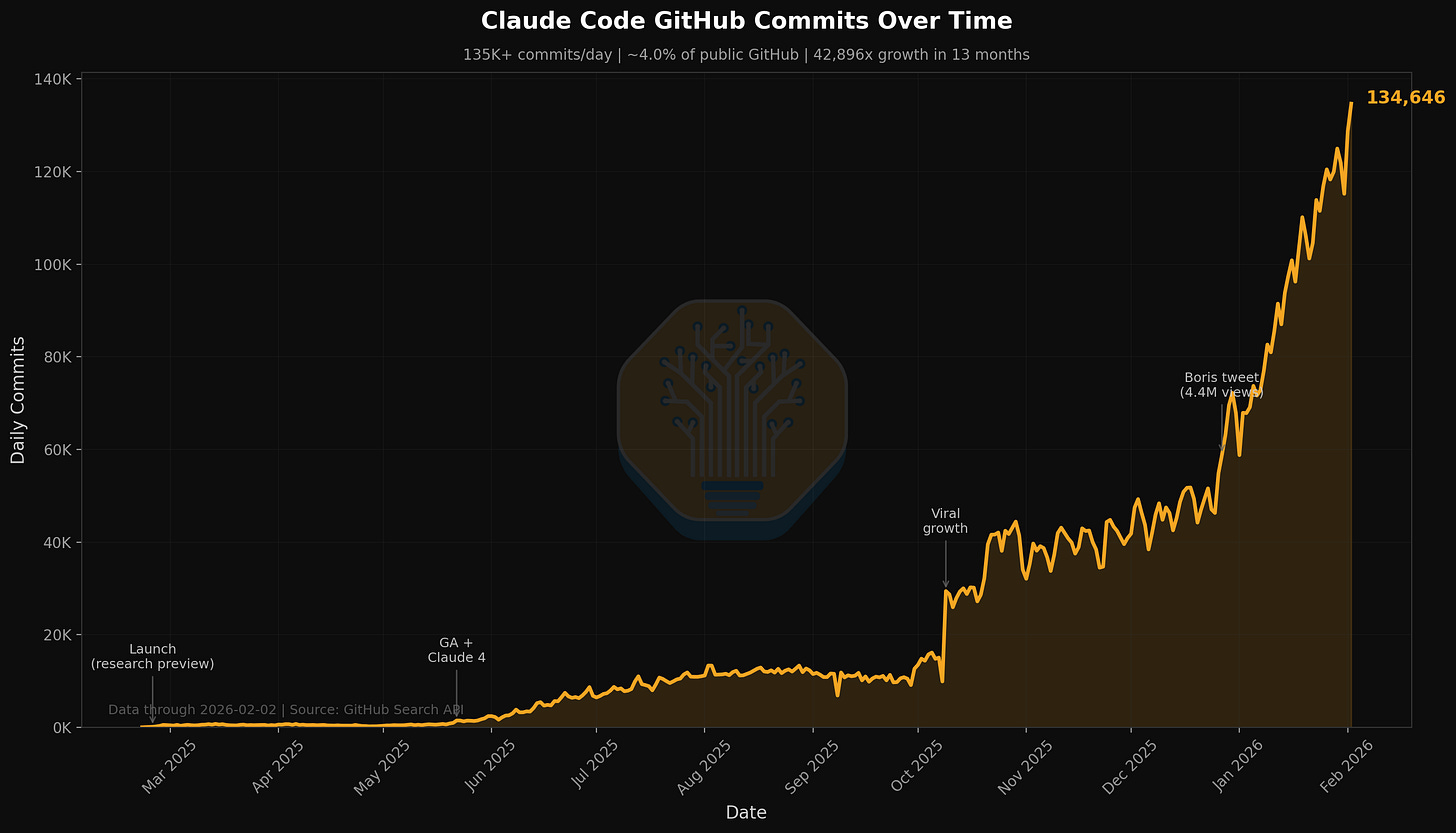
このエコシステムは、オープンソースのメンテナやコントリビューターがコミュニティのために継続してコードをリリースし続けることで繁栄しました。しかし、コーディングエージェントが大規模な量のコードをリリースするようになり(2026 年に 1400% 成長)、GitHub にとっては極めてエキサイティングであると同時に挑戦的な新たな時代が始まりました。
@mojombo, "username":"kdaigle","name":"Kyle Daigle","profile_image_url":"https://pbs.substack.com/profile_images/1775869471074258944/GJGhWau0_normal.jpg","date":"2026-04-10T12:33:00.000Z","photos":[{"img_url":"https://pbs.substack.com/media/HFiCnT1akAM2OHh.jpg","link_url":"https://t.co/QsejdrIJtG"}],"quoted_tweet":{},"reply_count":16,"retweet_count":18,"like_count":243,"impression_count":21934,"expanded_url":null,"video_url":null,"belowTheFold":false}" data-component-name="Twitter2ToDOM">
これらのエージェントはより多くの人々がより多くのプロジェクトをリリースするのを支援しますが、同時に GitHub インフラのあらゆる次元において、コードがリリースされる量、その頻度、コードにコミットする人の数、そして基本的にはすべての次元で桁違いの倍数という形で、コードがリリースされる基準値(floor)を大幅に引き上げることになります。
私たちの Valuemule ポッド(Pod)
現在、GitHub はもともと人間が開発者として人間の速度で動くことを前提に設計されたインフラに対して、必然的にさらなる負荷に直面しています。その結果、非常に公的な注目を集める稼働率の状況が生じています。
そこで浮かび上がるのは、現在のコード関連システムが AI が生成するものを吸収できるのかという問いです。すべてのアイデアがビルドになる中で、CI/CD(継続的インテグレーション/継続的デリバリー)は追いつけるでしょうか?オープンソースのメンテナは、AI によって生成された質の低い貢献(slop)の洪水に耐え抜くことができるのでしょうか?GitHub はエージェントのためのオペレーティングレイヤーとなる一方で、ソフトウェアにおける人間の社会的契約を維持できるのでしょうか。
これらの問いに答えるのに最適な人物こそが、GitHub の COO(最高執行責任者)である Kyle Daigle です。今回のエピソードでは、彼が swyx とともに、AI が単にコードの補完を行うだけでなく、企業の運営方法やオープンソースの仕組み、プルリクエストのレビュープロセス、そして GitHub 自体のスケーリング方法までを変え始めた際に何が起きるのかを解き明かします。
GitHub の内部 AI ワークフローについて深く掘り下げます:マイクロスキル、WorkIQ、MCP、Slack、Teams、メール、Copilot ワークフロー、新しい Copilot デスクトップアプリ、CLI、クラウドエージェント、そして Kyle が次に何をすべきかを決定する前に社内の文脈を遡って確認するためにエージェントをどのように活用しているかについてです。Kyle はまた、GitHub のウェブフック、API、Actions、npm、Dependabot、Semmle を構築してきた歴史を振り返り、なぜ AI エラが GitHub を新たな形で崩壊させているのか、どうして Actions が汎用計算層へと進化し、コード補完の後の Copilot がどのような姿になるのかについて考察しています。
フル動画ポッドキャスト
私たちが議論する内容:
GitHub 全体における Kyle の拡大した役割
長年にわたるリーダーシップ職を経て、なぜ AI が Kyle を再びコーディングに戻らせたか
なぜ GitHub は新しいツールを強制するのではなく、既存のワークフローを通じて AI を展開するのか
WorkIQ、MCP、Slack、Teams、メール、そして社内の文脈としての GitHub
巨大な「メガスキル」がなぜ小さく原子的なマイクロスキルへと置き換わりつつあるか
AI が要約、コミュニケーション、マーケティング、アナリスト業務をどう変えるか
元開発者であるリーダーシップ層が AI エラにおいてなぜ独自の優位性を持つ可能性があるのか
Kyle の「土曜日の 15 エージェント」ワークフロー
CRO/CFO チーム向けに Kyle がどのように AI 生成の経営陣プレゼンテーションを構築したか
AI がチーフ・オブ・スタッフの役割を変えるが、人間の業務を排除しない理由
GitHub Actions、ウェブフック、任意コードの実行、そして安全なエージェント計算
npm の買収、サプライチェーンセキュリティ、2FA(二要素認証)、トークンの無効化
スロップフォーク、ベンダリング、そして AI エージェントが依存関係管理を変えるかどうか
PR の大半がエージェントから来るようになった時、プルリクエストはどのような姿になるのか
プロンプトリクエスト、保証、AI レビュー、そしてオープンソースへの信頼
AI によって構築の障壁が低下した際に、「開発者」としてカウントされるのは誰か
GitHub Spark、ローコード、そして GitHub がなぜコードを隠さないのか
コミット数の 14 倍成長、Actions の負荷、データベース、モノレポ、および可用性
補完から CLI、デスクトップアプリ、クラウドエージェント、SDK へと進化していく Copilot
コンテキスト、メモリ、ルール、そして GitHub を「Kyle が望むように動作させる」こと
アンビエント AI、OpenClaw、エンタープライズセキュリティ、そしてエージェントのための新しい OS
swyx が Microsoft の AI 未来について Satya Nadella に尋ねるべきこと
Kyle Daigle
LinkedIn: https://www.linkedin.com/in/kyledaigle
X: https://x.com/kdaigle
タイムスタンプ
00:00:00 イントロダクション
00:03:36 なぜ AI が Kyle を再びコーディングさせたのか
00:07:04 AI で GitHub を運用する:WorkIQ、MCP、Slack、Teams、そしてスキル
00:15:39 元開発者によるリーダーシップの黄金時代
00:17:31 土曜日の 15 エージェントと AI 生成されたエグゼクティブ業務
00:20:20 AI がチーフ・オブ・スタッフの役割をどう変えるか
00:21:45 GitHub の歴史:Actions、npm、Webhooks、そしてオープンソース
00:28:45 スロップフォーク(Slop Forks)、ベンダリング、および AI による依存関係管理
00:33:57 プルリクエスト、プロンプトリクエスト、そしてエージェント生成コードへの信頼
00:41:21 GitHub Stars、2 億人以上の開発者、そして新しい AI ビルダーの波
00:45:15 GitHub Spark、ローコード、そしてなぜ GitHub は依然としてコードを表示するのか
00:47:38 GitHub の最も困難な時代:14 倍の成長、信頼性、およびスケール
00:59:21 CI/CD および自動化のための計算層としての Actions
01:02:04 GitHub Copilot の現状と未来
01:08:24 環境 AI、バックグラウンドエージェント、および SDLC(ソフトウェア開発ライフサイクル)の未来
01:13:09 OpenClaw、エンタープライズセキュリティ、そしてエージェントのための新しい OS
01:18:03 ビルド発表、WorkIQ、FoundryIQ、そして Microsoft のコンテキスト
01:21:41 swyx が Satya に何を尋ねるべきか
トランスクリプト
導入:GitHub と Microsoft における Kyle Daigle の役割拡大
Swyx [00:00:00]: GitHub の COO(最高経営責任者)である Kyle Daigle 氏をお迎えしました。ようこそ。
Kyle [00:00:07]: こんにちは、お招きいただきありがとうございます。
Swyx [00:00:08]: あなたは単に GitHub の CEO ではありません。多くの人々がそう認識しています。しかし、新しい役割も担っていますね。
Kyle [00:00:11]: はい、現在、私の役割は拡大されています。私は GitHub で 13 年間働き、開発者向けのあらゆる業務に従事してきました。私自身も開発者として入社しました。そして今、Microsoft の開発者向け CMO(最高マーケティング責任者)としても責任を負っています。つまり、開発者への学びや情熱、彼らとの協働方法、コミュニケーションの取り方、製品を市場に投入する方法について得た知見はすべて、より広範な Microsoft エコシステムにも持ち込まれ、Microsoft の製品を使用している、あるいは長年にわたる GitHub で得たような類似した体験を望んでいるすべての開発者を支援しています。ある意味ではこれは異なる役割ですが、同時に、GitHub で培った経験に基づいて構築されたものでもあります。要するに、真実を語り、誠実であり、人々に使い方を示し、製品自体が語るようにするという姿勢です。今やそのアプローチを Microsoft 全体で実践しているのです。
Swyx [00:01:09]: これは Build と同時期にリリースする予定です。あなたには多くの計画があるようですが、適切なタイミングでそれらに触れることもできるでしょう。面白い点の一つとして、COO でありながら CMO も兼任している人に出会うのはほとんどないと思います。あなたは非常に外向的で、公の場でも自信を持っているように見えます。それは稀有なことです。実際に自分自身を COO と捉えていますか?あなたの役割とは何でしょうか?
GitHub の開発者から COO/CMO へ:プラットフォーム構築と GitHub の運営
Kyle [00:01:33]: 私にとっては、少し面白いことでした。肩書きはいつも、— 私には少し奇妙に感じられてきました。私は GitHub に開発者として入社しました?私が書いたコードの多くは
Swyx [00:01:46]: それを思い出してください。あなたはバックエンドを書いたのですか?
Kyle [00:01:48]: 私は古い写真を見ていました。人々が GitHub の構築方法や、GitHub でのビルドについて話していた頃のことです。私はウェブフック(webhooks)を構築し、API を開発するチームと連携し、プラットフォーム層を構築しました。2018 年まで、GitHub と統合されるあらゆる機能は私が構築するか、エンジニアリングチームを率いていました。これが私の情熱の始まりであり、人々が何かを作り、それを顧客に届けるのを支援することでした。開発者として、開発者のために作ることは非常にユニークな体験でした。私の役割が拡大するにつれ、それは単なる開発者だけでなく、エンタープライズ顧客やビジネスリーダーとも対話し、これら二つの異なるメッセージを翻訳する層となる能力へと発展しました。そして、その長い年月を通じて、GitHub は常に非常にユニークな運営を行ってきました。パンデミック以降、リモートワークは GitHub が 2008 年に設立された当時ほど新しいものではありませんでした。しかし、リモートチームをうまく運営するためのすべての専門知識が、より大きな役割へと発展し、最終的には Microsoft による買収後、GitHub がこれまで通り運営される方法を問う COO(最高経営責任者)の役割となりました。
私にとって、私はまだコードを書いています。コーディングが好きですが、常に問題となるのは「人」です。自社の従業員をサポートすることは難しい課題であり、開発者やエンタープライズ購入者に、私たちが何を作っているのか、なぜそれが重要なのかを伝えることもまた難しい課題です。これらは非常に異なるメッセージだからです。COO、CMO(最高マーケティング責任者)、そして開発者の役割をミックスして働くことが、私が GitHub に長く留まり続ける理由だと考えています。
AI ワークフローのリーダーシップ:コミット、レトロスペクティブ、そしてコンテキスト
Swyx [00:03:40]: なんと、あなたのコミット数が増えているようです。これは何でしょうか?何が起きているのでしょうか?
Kyle [00:03:45]: ルイは私をかなり激しく指摘しました。そこで、お察しの通り、2013 年〜2014 年の開発者としての私の姿から始まり、管理職へ、そして最終的に COO(最高経営責任者)の役割へと移行するまでの過程をご覧いただけると思います。私が今見せているのは、AI のおかげで再びコーディングに没頭している私です。マーケティングと事業運営、そしてコーディングの間にある課題を結びつけることと同様に、非常に異なる問題をつなぐエージェントやワークフロー(workflow:業務の流れ)を構築することが、この変化を牽引していると私は感じています。つまり、その一部はソフトウェアの作成ですが、多くは私をサポートするために多様なデータソースを接続することです。しかし、これは完全に私が AI の側面に取り組んでいることであり、私たちのツールや他社のツールを試している最中です。非技術的なリーダーのために構築していますが、私は技術者であり、多くの非技術的な上司が単なる呼び出しと応答(call and response)以上の方法でこれらのツールを活用できるかどうかが焦点です。つまり、AI を使わなければならないのです。そのため、誰もが ChatGPT や Copilot、Claude などを使っています。しかし、本当に私がどのように役立つかを理解するためには、「ブログ記事を書く必要がある」「単純な例を示す必要がある」といったレベルの話ではありません。人々にワークフローを見つける手助けをすることこそが重要です。「今日はすべての PR(プルリクエスト)を確認してほしい」「オンラインで公開したすべてのコンテンツを確認してほしい」「過去 3 か月の活動を振り返ってほしい。Obsidian のノートからこの話題に関する言及を探し出し、職場での通訳記録も確認して」といった指示です。私たちは Teams を使用しているので、WorkIQ を使ってその MCP サーバー(Model Context Protocol server:モデル文脈プロトコルサーバー)を呼び出し、すべての通訳記録を取得し、Slack のメッセージもすべて確認した上で、今週のメッセージングが実際には何だったのかという計画を立ててほしいのです。これは私にとって不可能なことでした。なぜなら、私が感じているように、今回の発表の多くは実際には前進することではなく、再帰的なループ(recursive loop:自己言及的な循環)を後方へ向けて行うことだからです。私は常に最初に何が起こったかを振り返り、「先週何をしていたか?何がうまくいき、何が失敗したか?」と尋ねます。そして「今後 3〜4 日間で、この振り返りを踏まえて何を調整すべきか?」と尋ねます。このように過去を振り返りつつ少し未来を見据えるアプローチこそが、特に非技術的な人にとって非常に価値があると感じています。なぜなら、LLM(大規模言語モデル)はパターンを見つけ出し、それらを抽出し、数日や短い期間に限定してその回顧的評価を適用することに非常に優れているからです。私が構築し、公開した一連のアプリや内部ツール(internal tools:社内向けツール)もこれらに含まれます。私は新しい GitHub Copilot アプリ、ワークフロー機能を備えたデスクトップ版アプリを使用しています。ラップトップを開くたびに、私のためにワークフローが実行されています。これは非常に多様な機能であり、もちろんすべては GitHub に集約されます。
Swyx [00:06:47]: もちろん。その場所、つまりそこにコンテンツがホストされています。ねえ、あなたに聞くべきことがあまりにも多いです。私は AI を使って会社を運営する方法について最後に聞こうと思っていました。でも、一つだけ、もう一度掘り下げてお聞きします。あなたは先週の出来事を振り返って、何が起きたかを理解していると仰っていました。「私たち」とおっしゃる時、それは 3000 人のことを指しているのですよね?どうやって実現されているのでしょうか。
社内での AI 導入:スキル、CLI、そして企業コンテキスト
Kyle [00:07:09]: 私たちがエンジニアリング部門以外でも AI の展開を始めた頃のことを考えると、私が特に情熱を注いだのは、「誰も仕事のやり方を変える必要がない方法でこれを行うこと」でした。新しいツールを教える必要はないし、何か新しく学ぶことを強いるつもりもありません。そこで私たちはいくつかのツールを試しましたが、ほとんどが機能しませんでした。なぜなら、ユーザーに導入してもらい、使い方を教えなければならないからです。私たちが実際にたどり着いたのは、社内専用の「スキル(skills)」セットを構築することでした。各チームに独自のスキルセットがあり、非技術系のスタッフにも CLI(コマンドラインインターフェース)を配布しています。そして本質的には、私たちが執筆しているすべてのコンテンツへのアクセス権限を与えています。つまり、GitHub、Teams、メール、Slack などが対象となります。具体的には、Teams はビデオチャットに使用されます。
Swyx [00:08:03]: Teams と Slack ですか?
Kyle [00:08:04]: はい、私たちはコミュニケーションのために Teams を使いますが、チャットには使いません。W-we— GitHub は長い歴史がありますよね。私たちは常に
Swyx [00:08:13]: あと Slack もです
Kyle [00:08:14]: ChatOps や、すべてが Slack に組み込まれていることについて話しています。すべてのコマンド、すべてのフローがそうです。
Swyx [00:08:18]: ですから、あなたが買収されてからもう 8 年になるかどうかはわかりませんが、
Kyle [00:08:22]: 私たちはまだ
Swyx [00:08:23]: Slack を使っているのですか?
Kyle [00:08:23]: それは私たちにとって目的別に設計されたツールであり、現実問題として、そこから移行するのは非常に莫大なコストがかかると思います。なぜなら、すべてのツールがそのパラダイムに組み込まれているからです。両者にはそれぞれ長所と短所がありますが、全く同じように機能するわけではありません。私たちはまだ多くの異なるツールを使用しています。必要なのは目的別に設計されたツールだからです。
Swyx [00:08:47]: 同様のことは、おそらくマイクロソフトの他の部門には当てはまらないでしょうね。
Kyle [00:08:50]: たとえば、さまざまなチームがそれぞれ
Swyx [00:08:53]: 独自の判断を下しています
Kyle [00:08:54]: さまざまな方法があります。重要なのは、あなたが何を実現しようとしているかです。私たちは使用するあらゆるツールで作業を行っており、すべてのコンテキストと新しい WorkIQ MCP サーバーへのアクセスを全員に提供しています。これは M365 のような環境で生活している方にとって非常に素晴らしいものです。私はこれら逆向きの質問をすべて投げかけることができます。リモートで働くチームにとって、これは極めて重要です。オフィスにいないと見落としがちになることが多く、私たちは世界中に散在しています。そのため、多くの場合、過去を振り返ることが中心となります。そして、これらの発見や業界レポート(例えば、今朝、今日、昨日の出来事など)は、自動的に GitHub の Issues や Discussions に投稿されます。少量の自動化が実行され、アプリを使用します。あるいは、このタスクを実行するために GitHub Actions をアジェンティック・ワークフローとして利用することもあります。その後、GitHub へプッシュし、会話を継続していきます。したがって、私たちが通常行うのは、非技術的な側面における「振り返り」と「先読み」です。もちろん、これらの多くの人々にとっては、アプリを構築し、GitHub Pages にプッシュしたり、どこかにホストしたりすることも含まれます。しかし、本質は、誰もがその力を得られるようにすることです。「これを理解するには 1 週間かかるだろう」と思っていたものが、「よし、スキルを構築した。リポジトリに置こう。このスキルをみんなで共有し、CLI または新しいアプリを使って実行しよう」という形になります。
マイクロスキルとメガスキル:GitHub が職場で AI をどう活用しているか
Swyx [00:10:26]: 承知しました。チームマネジメントや生産性に関する話題に直結すると思います。多くの人が、さまざまなレベルの LLM(大規模言語モデル)による精神的な混乱を経験しているように思えます。スキルの肥大化をどう管理するか?つまり、誰もが自分なりの得意分野を持っており、それを組織内の他の同僚たちに広めようとしているのですよね。当然、社内でスキルインフルエンサーとなった人物は、一種の AI リーダーとして浮上することになります。そのような方々は存在するのでしょうか。
Kyle [00:10:50]: 確かにいますよ。
Swyx [00:10:52]: そして、それはきっと混沌としているに違いありませんね。ええ、その通りです。
Kyle [00:10:54]: 私には、現実には2つの側面があるように思えます。まず一つ目は、かつては「完璧で美しく巨大なスキル」というものが存在し、それが実際には何もかもを担うかのような時代が終焉を迎えると考えています。なぜなら、しばらくの間、毎日すべてのツイートで「このワークフロー全体を行うために、完璧に管理されたスキルをダウンロードしてください」といった内容だったからです。そして今、私が先週チームと話し合ったように、私たちはむしろ「非常にマイクロなスキル」について議論しています。これらは私たちに一つのことを非常にうまく行うためのものです。一方、「この完全なレポートを作成する」というようなスキルは、もはや私たちの側には存在しません。実際には、任意のMCPサーバー(Model Context Protocol サーバー)に対して最も重要なマーケティング情報を特定するような単一のスキルが求められています。「これが最も重要なものだ」というようにです。多くのツールを縫い合わせて巨大な出力を生み出すことよりも、むしろ重要です。なぜなら、そうすると数週間、数ヶ月が過ぎ、状況は変化し、微調整したくなるからです。
Swyx [00:11:58]: それは脆いですね。
Kyle [00:11:58]: 巨大なスキルに頼りすぎて、破綻してしまったらどうしようもないのです。だから今、私たちは実際に使っているレゴブロックについて話しており、その組み立て説明書は私たちが皆で協力して作っていくものだと考えています。一方、多くのAIスキルは長らく、あの「巨大な説明書」スタイルのものだったように思います。
Swyx [00:12:15]: ポステルの法則については、かなり深く考えてきました。この用語が皆さんにとって意味をなすかどうかはわかりませんが、要するに「受け入れる側では寛容に、出力する側では厳格に」という考え方です。これはスキルに対する良い枠組みの原則だと私は思います。もちろん、これは私の GitHub 上のスキルに関するものです。GitHub のリポジトリには特別なリポジトリがあるように、誰もが何かしらの特別扱いを受けるべきではないでしょうか?「/skills」を何らかの形で具体化し、全員に特別なプレゼンテーションを提供すべきだと感じています。とにかく、要は、何でもダウンロードして転記し、その後、一つのことに特化した原子的なスキルを組み合わせて、他のスキルを呼び出すようなオーケストレーション・スキルへとつなげることができます。私の理解で合っていますか?
Kyle [00:12:56]: 私もそう思います。
Swyx [00:13:00]: 何でも要約する。
Kyle [00:13:01]: 私が考えるに、私はコミュニケーション、PR(パブリックリレーションズ)、アナリスト関係、マーケティング、顧客活動を担当しており、それぞれの文脈によって要約の仕方は全く異なります。なぜなら、アナリスト向けの要約は、おそらく顧客会議やエンゲージメントのための要約とは大きく異なるからです。つまり、土曜日に私が使用するツールや、私個人のために使うスキルについて話す際の違いがここにあるのです。はい、それらはそれぞれ原子レベルの実用的なツール、あるいはスキルを持っており、その上で Kyle は X に注目します。しかし、仕事においてマーケターやコミュニケーション担当者を支援する話をしている場合、それは「これが良い要約のあり方である」という原子レベルの原則があり、そしてこれは
原文を表示
I’m excited to work with Microsoft once again as the presenting sponsors of the AI Engineer World’s Fair! We’ll streaming live from MS Build today for a special crossover pod with our friends at No Priors and the one and only Satya Nadella. However we did not hold back with this interview - we asked all the burning questions about uptime and Copilot that we know you have in your minds. Lets go!
For almost two decades, GitHub has been the home of software, where both open source and closed flow, through commits, pull requests, reviews, actions, etc.
@mojombo, ","username":"kdaigle","name":"Kyle Daigle","profile_image_url":"https://pbs.substack.com/profile_images/1775869471074258944/GJGhWau0_normal.jpg","date":"2026-04-10T12:33:00.000Z","photos":[{"img_url":"https://pbs.substack.com/media/HFiCnT1akAM2OHh.jpg","link_url":"https://t.co/QsejdrIJtG"}],"quoted_tweet":{},"reply_count":16,"retweet_count":18,"like_count":243,"impression_count":21934,"expanded_url":null,"video_url":null,"belowTheFold":false}" data-component-name="Twitter2ToDOM">
This ecosystem flourished as open-source maintainers and contributors would continue shipping code for the benefit of the community. However as coding agents began to ship mass quantities of code - growing 1400% in 2026, it marked a new era that was both extremely exciting and challenging for GitHub.
While these agents help more people ship more projects, they also significantly increase the floor of how much code is shipped, how often it is shipped, how many people commit code, and basically orders of magnitude multiples in every dimension of GitHub infrastructure:
our valuemule pod
Now GitHub inevitably experiences more pressure on their infrastructure which was originally designed around human developers moving at human speed. This has resulted in a very publicly notable uptime story:
So it begs the question of whether current systems around code can absorb what AI produces. Can CI/CD keep up when every idea becomes a build? Can open source maintainers survive floods of AI-generated slop contributions? Can GitHub preserve the human social contract of software while becoming the operating layer for agents?
Which brings us to the perfect person to answer these questions: GitHub COO Kyle Daigle. In this episode, he joins swyx to unpack what happens when AI doesn’t just autocomplete code, but starts changing how companies operate, how open source works, how pull requests get reviewed, and how GitHub itself has to scale.
We go deep on GitHub’s internal AI workflows: micro-skills, WorkIQ, MCP, Slack, Teams, email, Copilot workflows, the new Copilot desktop app, CLI, cloud agents, and how Kyle uses agents to look backwards across company context before deciding what to do next. Kyle also reflects on GitHub’s history building webhooks, APIs, Actions, npm, Dependabot, and Semmle, why the AI era is breaking GitHub in new ways, how Actions became a general-purpose compute layer, and what Copilot becomes after code completion.
Full Video Pod
We discuss:
Kyle’s expanded role across GitHub
How AI got Kyle coding again after years in leadership
Why GitHub rolls out AI through existing workflows instead of forcing new tools
WorkIQ, MCP, Slack, Teams, email, and GitHub as company context
Why massive “mega-skills” are giving way to small, atomic micro-skills
How AI changes summarization, communications, marketing, and analyst work
Why former developers in leadership may have a unique advantage in the AI era
Kyle’s “15 agents on Saturday” workflow
How Kyle built an AI-generated executive presentation for CRO/CFO teams
Why AI changes the chief of staff role without removing the human work
GitHub Actions, webhooks, arbitrary code execution, and secure agent compute
The npm acquisition, supply-chain security, 2FA, and token invalidation
Slop forks, vendoring, and whether AI agents change dependency management
What pull requests become when most PRs come from agents
Prompt requests, vouching, AI review, and trust in open source
What counts as a “developer” when AI lowers the barrier to building
GitHub Spark, low-code, and why GitHub refuses to hide the code
14x commit growth, Actions load, databases, monorepos, and availability
Copilot’s evolution from completion to CLI, desktop app, cloud agents, and SDK
Context, memory, rules, and making GitHub “act like Kyle wants it to act”
Ambient AI, OpenClaw, enterprise security, and the new operating system for agents
What swyx should ask Satya Nadella about Microsoft’s AI future
Kyle Daigle
LinkedIn: https://www.linkedin.com/in/kyledaigle
X: https://x.com/kdaigle
Timestamps
00:00:00 Introduction
00:03:36 Why AI Got Kyle Coding Again
00:07:04 Running GitHub with AI: WorkIQ, MCP, Slack, Teams, and Skills
00:15:39 The Golden Age for Former Developers in Leadership
00:17:31 15 Agents on Saturday and AI-Generated Executive Work
00:20:20 How AI Changes the Chief of Staff Role
00:21:45 GitHub’s History: Actions, npm, Webhooks, and Open Source
00:28:45 Slop Forks, Vendoring, and AI Dependency Management
00:33:57 Pull Requests, Prompt Requests, and Trust in Agent-Generated Code
00:41:21 GitHub Stars, 200M+ Developers, and the New AI Builder Wave
00:45:15 GitHub Spark, Low-Code, and Why GitHub Still Shows the Code
00:47:38 GitHub’s Hardest Era: 14x Growth, Reliability, and Scale
00:59:21 Actions as the Compute Layer for CI/CD and Automation
01:02:04 The State and Future of GitHub Copilot
01:08:24 Ambient AI, Background Agents, and the Future of the SDLC
01:13:09 OpenClaw, Enterprise Security, and the New OS for Agents
01:18:03 Build Announcements, WorkIQ, FoundryIQ, and Microsoft Context
01:21:41 What Should swyx Ask Satya?
Transcript
Introduction: Kyle Daigle’s Expanded Role at GitHub and Microsoft
Swyx [00:00:00]: We’re here with Kyle Daigle, COO of GitHub. Welcome.
Kyle [00:00:07]: Hey, thanks for having me.
Swyx [00:00:08]: You’re not just CEO of GitHub. People know you as that. You have a new role.
Kyle [00:00:11]: So I have an expanded role now. I’ve been working at GitHub for thirteen years and doing all things developer. Joined as a developer myself. And now, I’m also responsible as the CMO of Developer for Microsoft. And so all the kind of learnings and passion for developers and how we work with them and how we communicate and how we bring our products to market, we’re also bringing that expertise to the broader Microsoft ecosystem and helping every developer that uses a Microsoft product or would like to have a sort of similar experience that they’ve had with GitHub over the years. So it’s a different role in some ways, but it’s also just building on the experience that I’ve had at GitHub of just sort of tell the truth, be authentic, show people how to use it and then let the products speak for themselves. Now just doing that with, all of Microsoft.
Swyx [00:01:09]: We’ll be releasing this in conjunction with Build. You got lots of stuff planned, and we can sort of touch on that whenever it’s appropriate. I think one of the interesting things is I rarely meet a COO who’s also a CMO. I think you’re a very outward facing and you’re very confident publicly. That’s rare. Do you actually view yourself as COO? What’s What is your thing?
From GitHub Developer to COO/CMO: Building the Platform and Operating GitHub
Kyle [00:01:33]: I think for me, it’s been funny. The titles have always been, a— have always felt a little strange to me. I joined GitHub as a developer? I wrote so much of the
Swyx [00:01:46]: Let’s bring that up. You wrote the back ends?
Kyle [00:01:48]: I was going through, I was going through, some old photos, when folks were talking about how things were being built or how there was a build GitHub. I built, webhooks and worked with teams building the API, built the platform layer. Anything that integrated with GitHub, up until really twenty eighteen, I built or ran the engineering teams. And that’s kind of where my the beginning of my passion always was helping people build things, deliver them to, their customers. And so being a developer, building for developers was always super unique. In a— I think as my role expanded, it became my ability to talk to not just developers, but also enterprise customers or business leaders and have this translation layer. And then through all those years, GitHub has always operated pretty uniquely. Post-pandemic, working remotely was not as novel as it was when GitHub started in two thousand and eight. But all that expertise of running remote teams, doing it well, became this sort of bigger role, ultimately turning into the COO role of how do we operate GitHub in the way that GitHub’s always operated after the Microsoft acquisition. And kind of so on from there. So like for me, I think the— I’ve, I still code. I love coding but the problem has always been, people. It’s a much harder problem to both support our own employees, a harder problem to communicate to developers and enterprise buyers what we’re building why it matters, ‘cause those are two very different messages. And so getting to work in the mix of COO, CMO, also just being a dev, I think is what’s kept me at GitHub for so long.
AI Workflows for Leadership: Commits, Retrospectives, and Context
Swyx [00:03:40]: Apparently, you have— your commits have gone up. What’s this? What’s going on?
Kyle [00:03:45]: Rui’s called me out pretty aggressively. So I think— as you can imagine, right, you can see my normal era of being a dev In the twenty thirteen, twenty fourteen era, and then moving into management, and then ultimately the COO role. I think what you see there is me, really getting back to coding thanks to AI. I— similar to, attaching problems between how to market and how to operate a business and how to code, I find, building agents and workflows that are connecting very disparate problems to be what’s driving this. So that’s, some of it’s writing software. A lot of it is, connecting a ton of a different data sources to, help me out. But that is completely me really diving in on the AI side in trying out our tools, trying out everyone’s tools, But building for me, building for the non-technical leader, though I’m technical and how we’re, able to use these tools more than just the simple, call and response that I think a lot of the non-technical, your employers, you have to get— you have to use AI, and so everyone uses, ChatGPT or Copilot or Claude or whatever. To really get into, how is this going to help me out, it— I find that it’s not the I need to write a blog post, I need to those simple examples. Helping people find the workflows of, “Okay, I need you to go through all the PRs today. I need you to go through everything that we’ve posted online. I need you to go through what we did the last three months. Go through all of my Obsidian notes for any mentions of this then go through my transcripts at work.” We use, Teams, so, using WorkIQ, go call that MCP server, grab all the transcripts, go through all the Slack, and then build me out the plan of, what this week’s messaging actually was. That’s something that was, impossible because for me, I find AI in a what most of this launch here is actually, less building forward. It’s actually, a recursive loop backwards. I’m always looking at what had happened first. Go back through the week and tell me what we did, what worked, what didn’t work? And then tell me in the next three or four days-What would you tweak based on this sort of like looking backwards and then looking ahead a little bit? I find that to be so much more valuable, especially for like non-technical, because that retrospection is actually LLMs are very good at that. Like finding all the patterns, pulling them out, and then applying that retrospection to just a couple of days or just like a short period of time. Is all a bunch of apps that I’ve built and launched a bunch of, internal tools. I use the new, GitHub Copilot app, the desktop app with workflows. Every time I crack open my laptop, it’s running workflows for me. It’s just a ton of different stuff and of course, it all ends up on, it all ends up on GitHub.
Swyx [00:06:47]: Of course. That’s where, that’s where, stuff is hosted. Man, there’s so much to ask you. I was going to leave the how do you run a company with AI thing at the end. I have to ask one— double click one thing. You said, you are looking back at the week. You’re, you’re understanding what happens. When you say we That’s three thousand people. How?
Rolling Out AI Internally: Skills, CLIs, and Company Context
Kyle [00:07:09]: I think when we started rolling out AI internally beyond engineering, right? One of the things that I was really, passionate about is like we have to do this in a way where no one has to change how they work. I don’t want to have to teach you a tool. I don’t want to have to teach you something new. And so for us, we tried out a few tools. Most of them don’t work because I got to get you on board? I got to teach you how to use it. What we’ve actually ended up doing is we’ve built like a set of skills internally. We have we each have our set of skills, and we’ve just been distributing even to the non-technical folks, the CLI. And then effectively, we’re just giving it access to like read about everything that we’re writing. So that’s for us, that’s usually GitHub, Teams, Email, and Slack. So Teams for, video chat, generally speaking.
Swyx [00:08:03]: Teams and Slack?
Kyle [00:08:04]: so we use Teams for video communication, but we don’t use it for chat. W-we— GitHub for a long history, right? We’re always
Swyx [00:08:13]: Also Slack
Kyle [00:08:14]: Talking about ChatOps and like everything is built into Slack. Like every command, every flow.
Swyx [00:08:18]: So even though you have been acquired for I don’t know, eight years now
Kyle [00:08:22]: we still
Swyx [00:08:23]: You still use Slack?
Kyle [00:08:23]: it’s a purpose-built tool for us, and I think the reality is that moving off of it would be so bluntly expensive? Simply because all the tooling is, baked in with that paradigm. And they both have their pros and cons but they don’t work the same way at all. We still use a bunch of different tools Because it’s the purpose-built tools that We need. And then
Swyx [00:08:47]: Well, the same doesn’t go for the rest of Microsoft, presumably.
Kyle [00:08:50]: like the like various teams like operate
Swyx [00:08:53]: They make their own decisions
Kyle [00:08:54]: Various ways. I think it just matters what you’re trying to what you’re trying to do. But we do we do work across kind of every tool that we use, and then by giving everyone access to all of that context and the new WorkIQ MCP server, which is quite cool if you do live in the M365 like world. I can ask it all these backwards-facing questions, and it’s incredibly important for our teams that are working remotely. There’s a lot of stuff you miss when you’re not in an office, and we are spread out all over the world. So most of that is looking back. And then we post, we post either auto-automatically into GitHub issues or discussions, these sorts of like findings or like our industry reports. Like what’s happening this morning, today, yesterday. A little automation gets run. We’ll use the app. We might use GitHub Actions like with, our agentic workflows just to go do that run, and then we push it into GitHub, and w-we keep having a conversation. So usually for us, it’s about that sort of like looking back, looking forward on the non-technical side. And then of course for a lot of those folks, it’s also building an app, pushing it to GitHub pages or pushing it somewhere to host it et cetera. But it’s just like enabling everyone with that power of it’s going to take me a week to figure this out. Instead, we’re going “Okay I built a skill. Let’s put it into a repo. We’ll all share that skill together, and then we’ll use the CLI or now the app-” “just to run it.”
Micro Skills vs. Mega Skills: How GitHub Uses AI at Work
Swyx [00:10:26]: All right. I think, I think we’re going straight into like the team management and productivity thing. I think a lot of people are getting various levels of LLM psychosis. How do you manage the bloat of skills? Like everyone Has their thing, and they’re Like trying to promote it to the rest of their peers in their org, right? And obviously, whoever becomes a skill influencer internally becomes like an AI leader, right? Of sorts. I assume you have those.
Kyle [00:10:50]: like I think we have
Swyx [00:10:52]: And I assume it’s a mess a Yeah.
Kyle [00:10:54]: there’s like I— like I think the reality is there’s two pieces. Like first is I think that we’re ending the era of these like massive, beautiful, perfect skills that are just like not any of those things. ‘cause for a while, right every tweet every day is like go download the skills, the perfectly managed thing to do this entire workflow. And I think that like what we’ve found and what— I was just with my team, this week, and we were talking about the skill side, and we’re really talking about these like incredibly micro skills that are just doing one thing for us very well Versus a skill that’s going to do I said, that full report. That doesn’t really exist on our side anymore. It’s usually how do— like a single skill that’s going to identify the most important marketing information given any MCP server. Like this is the most important thing. Less about stitch a bunch of tools together and have it produce this mega output because then weeks go by, months go by, things change, and you want to tweak
Swyx [00:11:58]: It’s brittle
Kyle [00:11:58]: Your mega skill and you’re screwed? You can’t do that. And so now we’re really just talking about the Legos we’re using and just letting the instruction book be something we’re all putting together. Whereas I think a lot of AI skills for a while have been that mega instruction book style.
Swyx [00:12:15]: I’ve, thought a lot about Postel’s law. I don’t know if that’s a term that is, means things to folks. It’s the idea that you should be liberal in what you accept and strict in what you output, right? And I think that’s like a good framing principle for skills. This is my skills, obviously on GitHub. I feel like everyone should have like how like some repos In GitHub are special repos? I feel like we should sort of reify the slash skills and everyone like give it some kind of special presentation. Anyway, so, yeah, this is one of those like download Download anything, transcribe anything, and then you can string together the atomic skills that do one thing well Into like some kind of orchestration skill that calls other skills. I assume, does that match?
Kyle [00:12:56]: I like I think so. I think that the
Swyx [00:13:00]: Summarize anything.
Kyle [00:13:01]: Like I think the- For me, summarizing something for I do communications and PR and analyst relations and marketing and customer activities, and so my summarize everything is very different for each one of those like Contexts. What ‘Cause if I’m summarizing something for an analyst, that’s a very different thing than, probably how I’m going to summarize something for like a customer meeting or an engagement. So that’s I think like the difference when we’re talking about the like the tools I might use on Saturday or the skills I might use on a Saturday when it’s just for Kyle. Yeah, those are kind of like they have an atomic actual tool underneath or maybe skill, and then Kyle cares about X. But I think when we’re talking about work and enabling the the marketers, communicators there, it’s the atomic, this is what good summarization is, and then this is
関連記事
今日のまとめ
AI日報で今日の重要ニュースをまとめ読み