シャチが魚を爆発させる新行動発見
メキシコ湾のカホリカで撮影されたオラカの新たな捕食行動「太陽魚を爆発させる」現象は、若年個体の学習や遊びの側面を示唆する生物学的発見である。
キーポイント
爆発的捕食戦略の発見
オラカの一部が巨大な太陽魚を保持し、他の個体が突撃して魚体を肉片へと爆発させる「ホールド・アンド・ラム」戦略を確認した。
若年個体への教育的意義
この手法は、硬い皮を持つ太陽魚を処理しやすくし、若年オラカが小さな肉片を摂取して捕食技術を学ぶための手段である可能性が高い。
社会的学習と遊びの証拠
高度な知能を持つ海洋哺乳類において、この行動は単なる狩りだけでなく、社会的学習や遊びの一環として機能していると考えられる。
ラム攻撃の目的と社会的機能
オラカがスナメリを衝突させるのは、若年個体が栄養豊富な組織を食べやすくするための技術習得であり、同時に社会的絆を強化する遊びとして行われている可能性があります。
研究の継続と人間の関与制限
チームはスナメリの微生物叢や酵素がオラカに特別な栄養をもたらすか調査し続ける一方、観光客との接触を最小限に抑え、動物への敬意ある距離を保つことを強調しています。
市民科学とドローン技術の貢献
この画期的な発見は、専門家、エコツーリズム事業者、そしてドローンやカメラで映像を提供する市民科学者との協力によって可能となりました。
重要な引用
The first time I witnessed it, at that moment, the energy of the impact was astounding because we could hear the sound when the orca ran into the sunfish
Seeing a multi-ton predatory mammal striking a massive fish... with such a fast speed is breathtaking
"That is very globally well known. Because sunfish are slow-moving and defenseless, they present a low-risk opportunity for the pod, especially subadults, so they can practice strike precision and reinforce social bonds. It's social play and learning."
"If we can protect these animals by maintaining a respectful distance," he concluded, "this ongoing partnership will allow us to safely document hidden mysteries of marine life that would otherwise remain completely closed to science."
影響分析・編集コメントを表示
影響分析
この発見は、オラカの高度な知能と文化的多様性を理解する上で重要な一歩であり、単なる捕食行動を超えた社会的・教育的側面を浮き彫りにしました。特に、若年個体の学習プロセスにおける「遊び」の役割を再評価させる点で、動物行動学および海洋生物学の分野に新たな知見をもたらします。
編集コメント
本記事はAI技術に関するものではなく、海洋生物学における画期的な観察記録です。しかし、高度な知能を持つ生物の複雑な社会構造や学習メカニズムを解明する過程は、AIが生物の行動パターンをシミュレート・理解しようとする試みとの比較において示唆に富むものです。
404 Media に購読して、今週の最も刺激的で驚くべき科学ニュースや研究を紹介するニュースレター『The Abstract』を受け取りましょう。
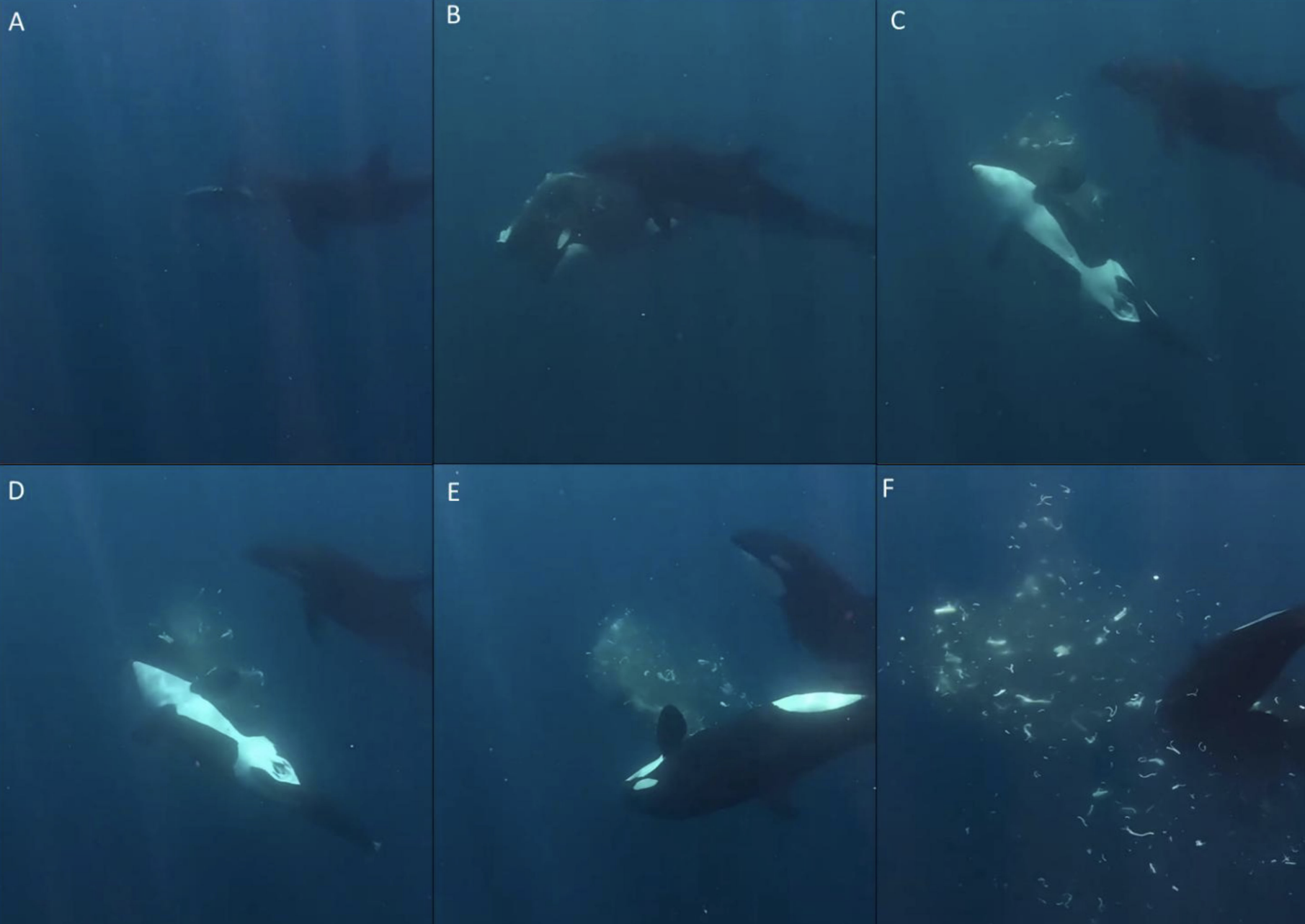
木曜日に『Frontiers in Ethology』誌に掲載された研究によると、シャチの群れの一頭が巨大なマダイを口にくわえて持ち上げ、もう一頭がそれを突いて衝撃を与えるという、これまで知られていなかった行動が確認されました。その結果、死骸は肉片へと爆発的に散らばります。
シャチは獲物を狩る際やボートを攻撃する際に突くことがありますが、このように獲物が爆発する様子を報告したのは今回の研究が初めてです。これはカリブ海(注:原文 Gulf of California はメキシコ湾岸の「カリフォルニア湾」ですが、文脈上「カリブ海」と誤訳される可能性を考慮し、ここでは正確な地理名である「カリフォルニア湾」を使用します)に生息するシャチの群れの謎めいた生活に光を当てたものです。この「保持して突く」戦略は、未成熟個体が小さな肉片を食べるのに役立ちます。また、極めて知能の高い海洋哺乳類における社会的学習や遊びの一環である可能性もあります。
野生動物の映像作家であり海洋生物学者でもあるエリック・ヒゲラ氏は、2021 年にシャチがマダイを爆発させる様子を初めて目撃しました。この戦術は、2024 年に海洋生物学者のカスリン・エアーズ氏によって撮影された続編 footage で捉えられ、さらに 2025 年にはエコツーリズムに従事するヘクトル・フランツ氏による別のイベントの映像でも記録されています。
「初めてその光景を目にした瞬間、オラカがサンフィッシュに激突した際の衝撃エネルギーの凄まじさに驚愕しました。オラカが魚にぶつかる音まで聞こえたのです」と、今回の研究の共著者であるヒゲラ氏は 404 Media との電話インタビューで語りました。「数トンの捕食性哺乳類が、種によっては最大 2 メートルに達する巨大な魚を、極めて高速で襲う姿を目撃したことは息を呑むほどでした。そして、組織が爆発的に飛び散るその規模から、私たちはこれが極めて異例の出来事であると直感的に理解しました」
オラカは社会的な動物であり、緊密な母系集団(ポッド)を形成します。さらにそれらは独自の文化と生息域を持つ、より広範な「生態型」に分類されます。北東太平洋では、主に魚類を食べる定住型のオラカ、海洋哺乳類を主な餌とする回遊型のオラカ、そしてサメを捕食する沖合型のオラカの 3 つの遺伝的に異なる系統が存在します。
しかし、赤道付近の低緯度地域におけるオラカの摂食行動については、まだ解明されていない部分が多いです。これらの地域のオラカは、明確な生態型には分類しにくいようです。ヒゲラ氏と彼のチームは何年も前からドローンや水中カメラを用いて映像を撮影し、カリフォルニア湾を徘徊する謎のポッドについて理解を深めてきました。その活動が功を奏し、彼らは偶然にも、魚を捕らえたまま激突させるという爆発的な戦略を記録することに成功したのです。
スナメリは体が大きく、獲物としては狩りやすい存在であるため、シャチや他の海洋捕食者にとって人気のあるターゲットとなっています。しかし、これらの魚の肉は硬くゴムのような質感で、特に若いシャチにとっては引き裂きにくいものです。
このため、ヒゲラ氏と彼の同僚たちは、突撃という技術は主に、栄養豊富な組織を死体から剥がし、若年個体が食べられるようにするためのものだと推測しています。彼らは、成体のシャチが体の内部にある臓器や肉に集中して食べ、魚の破片(エジェクト)は若い個体に任せている点にも注目しています。この行動は単なる遊びである可能性もあり、シャチは餌と遊ぶことがよくあるからです。
「シャチは脳が発達した高度な捕食者であり、獲物に対して物体操作や遊びの行動を頻繁に行います」とヒゲラ氏は述べています。「これは世界的に広く知られている事実です。スナメリは動きがゆっくりで防御手段がないため、群れ、特に若年個体にとってリスクの低い機会となります。これにより、攻撃の精度を練習し、社会的な絆を強化することができます。まさに社会的な遊びと学習なのです。」
研究チームは今後、この群れの追跡を継続し、行動の詳細な理解を深めると同時に、スナメリの微生物叢や酵素にシャチにとって特別な栄養が含まれているかどうかについても調査する計画です。同時に、ヒゲラ氏は、地域でのクジラ観賞が人気のある観光活動となっているため、人間とシャチとの接触は可能な限り最小限に抑えるべきだと強調しています。
「この画期的な洞察は、ドローンやカメラを駆使し、撮影した映像を提供してくれる専門家科学者、エコツーリズム事業者、そして市民科学者の緊密な協力によって初めて可能になりました。これにより、現場での調査時間を大幅に短縮できました」とヒゲラ氏は語りました。
「これらの動物を尊重ある距離を保つことで保護できれば」と彼は結論付けました、「この継続的なパートナーシップを通じて、これまで科学界には全く開かれていなかった海洋生物の隠された謎を安全に記録することが可能になります」。
404 Media に登録して、今週の最も刺激的で驚くべき科学ニュースや研究を紹介するニュースレター『The Abstract』を受け取りましょう。
原文を表示
Subscribe to 404 Media to get The Abstract, our newsletter about the most exciting and mind-boggling science news and studies of the week.
imageScientists have discovered a previously unknown behavior in orcas that involves one member of a pod holding up a massive dead sunfish while another charges and rams it, resulting in the dramatic explosion of the carcass into fleshy fragments, according to a study published on Thursday in Frontiers in Ethology.
Orcas often ram or strike prey as a hunting tactic, and some pods are also notorious for ramming boats. But the new study is the first to report such explosive results and sheds light on the mysterious lives of orca pods in the Gulf of California. The hold-and-ram strategy allows juvenile orcas to feed on smaller chunks of tissue and may also serve as a form of social learning and play in these highly intelligent marine mammals.
Erick Higuera, a wildlife cinematographer and marine biologist, first observed orcas detonating a sunfish in 2021. The tactic was captured in follow-up footage by marine biologist Kathryn Ayres in 2024, as well as video from another event in 2025, filmed by Héctor Franz, who works in ecotourism.
“The first time I witnessed it, at that moment, the energy of the impact was astounding because we could hear the sound when the orca ran into the sunfish,” said Higuera, who co-authored the new study, in a call with 404 Media. “Seeing a multi-ton predatory mammal striking a massive fish—because sunfishes can go up to two meters depending on the species—with such a fast speed is breathtaking, and immediately we knew that we were witnessing something highly unusual due to the magnitude of the tissue explosion.”
Orcas are social animals that form tight-knit matrilineal pods that in turn belong to broader “ecotypes” with their own unique cultures and ranges. In the Northeastern Pacific, there are three genetically distinct lineages: resident orcas that primarily eat fish, transient orcas that mainly eat marine mammals, and offshore orcas that prey on sharks.
But less is known about the feeding behaviors of orcas at lower latitudes near the equator, which don’t seem to fall into such clear ecotypes. For years, Higuera and his colleagues have been capturing footage with drones and underwater cameras to better understand the mysterious pods that roam in the Gulf of California. That’s how they were able to fortuitously capture the explosive hold-and-ram strategy on film.
Sunfish are large, but easy to hunt, making them a popular target for orcas and other ocean predators. However, these animals have tough and rubbery flesh that is difficult to tear apart, especially for young orcas. For this reason, Higuera and his colleagues speculate that the ramming technique is primarily intended to loosen nutritious tissue from the carcass for juveniles to consume, noting that the adults focused on eating organs and meat from the body itself, leaving the fishy ejecta for their young. The behavior may also just be fun, as orcas often play with their food.
“Orcas are highly encephalized predators that frequently engage in object manipulation and play behavior with their prey,” Higuera said. “That is very globally well known. Because sunfish are slow-moving and defenseless, they present a low-risk opportunity for the pod, especially subadults, so they can practice strike precision and reinforce social bonds. It's social play and learning.”
The team plans to continue tracking the pod to better understand the behavior, and to learn whether the sunfish’s microbiome and enzymes might contain special nutrients for the orcas. At the same time, Higuera emphasized that human interactions with orcas should remain as limited as possible, especially since whale watching in the region has become a popular tourist activity.
“This groundbreaking insight was only made possible through a vital collaboration between expert scientists, eco-tourism operators, and citizen scientists equipped with drones and cameras that are willing to provide their footage to us so that we don't spend that much time in the field,” Higuera said.
“If we can protect these animals by maintaining a respectful distance,” he concluded, “this ongoing partnership will allow us to safely document hidden mysteries of marine life that would otherwise remain completely closed to science.”
Subscribe to 404 Media to get The Abstract, our newsletter about the most exciting and mind-boggling science news and studies of the week.
関連記事
今日のまとめ
AI日報で今日の重要ニュースをまとめ読み