KTern.AI が Amazon Bedrock AgentCore を活用し、SAP 向けエージェント AI を構築した方法
KTern.AI は Amazon Bedrock AgentCore と Strands Agents SDK を活用し、SAP 変革の複雑なワークフローを自律的に処理するエージェンティック AI プラットフォームを構築した。
キーポイント
SAP 変革における自律型 AI エージェントの導入
従来の SaaS から、数ヶ月から数年にわたるプロジェクト全体で状態を保持し、複数ドメインを調整する自律型 AI エージェントへ進化させた。
Amazon Bedrock AgentCore と Strands Agents SDK の活用
独自インフラの構築不要で、永続的なコンテキスト管理と堅牢なセキュリティを実現するために AWS の最新基盤を採用した。
自動化による変革プロセスの加速
逆エンジニアリングからコード分析、例外マイニングまでを自律的に実行し、変革期間を 7 倍速化し、総作業量を 24% 削減する成果を出した。
エンタープライズ規模での信頼性とセキュリティ
厳格なコンプライアンス境界内での運用を可能にし、人間のコンサルタントだけではスケーリングが困難な領域を AI が補完する体制を整えた。
影響分析・編集コメントを表示
影響分析
この記事は、大規模なエンタープライズシステム(特に SAP)の変革において、AI エージェントが単なる補助ツールから自律的な業務実行主体へと進化したことを示す重要な事例です。AWS の最新基盤技術を活用することで、複雑なビジネスロジックとセキュリティ要件を満たしつつ、スケーラブルな AI 実装が可能になる道筋を提示しており、業界全体の DX 戦略に影響を与える可能性があります。
編集コメント
SAP 変革という極めて複雑な領域において、自律型 AI エージェントが実際に機能する実装例を示しており、技術的な実現可能性とビジネス価値の両面で示唆に富んでいます。AWS の最新基盤を活用したアプローチは、他社も同様の大規模プロジェクトで応用可能な標準的なパターンとなり得るでしょう。
本記事では、SAP デジタルトランスフォーメーションプラットフォームである KTern.AI が、Amazon Bedrock AgentCore を活用して、エンタープライズ規模の SAP 変革ワークロードに対応可能な AI エージェントを構築・展開した方法についてご紹介します。これらのエージェントは、逆エンジニアリング、標準適合(fit-to-standard)、コード分析から、財務および販売プロセスにおける例外マイニングに至るまでのワークフローを自律的にオーケストレーションします。その結果として、カスタムエージェントインフラストラクチャを必要としない自動化が実現されました。
SAP デジタルトランスフォーメーションは、企業が取り組むことができる中で最も複雑で、かつリスクの高いイニシアチブの一つです。これらは数ヶ月から数年にわたり展開され、ビジネスプロセスやカスタムコード間に複雑な相互依存関係が存在し、人間のカンサルタントだけではスケーリングが困難なドメイン専門知識を必要とします。KTern.AI では、これらの変革をより迅速かつ予測可能にするシステムを長年にわたって構築してきました。アジェンティック AI への移行は、この使命におけるこれまでのところ最も大きな飛躍です。
従来のソフトウェア・アズ・ア・サービス(SaaS)プラットフォームから、次世代のエージェント型 AI プラットフォームへと進化させることは、長期にわたるエンタープライズプログラム全体で複数の専門化されたエージェントを調整することを意味しました。各エージェントは、永続的なコンテキスト、安全なツールアクセス、そして本番環境レベルの信頼性を持って動作します。私たちはこのシステムを Amazon Bedrock AgentCore 上で構築し、Strands Agents SDK を利用しました。この記事では、どのようにアーキテクチャを設計したか、どのようなエージェントを構築したか、そして顧客にとってどのような成果があったかを詳しく解説します。
KTern.AI の概要
KTern.AI は SAP Spotlight パートナーであり、SAP 認定のデジタルトランスフォーメーション・アズ・ア・サービス(DXaaS)プラットフォームです。同社は、5 つの自動化ストリームであるデジタルマップ、デジタルプロジェクト、デジタルプロセス、デジタルラボ、そしてデジタルマインにおいて、SAP S/4HANA の移行、システム変換、およびデジタルトランスフォーメーションプログラムを加速します。独自の組織的ナレッジ知能エンジンが、何年にもわたる SAP 変換のパターンとベストプラクティスをシステムにエンコードしており、データ駆動型のハイパーオートメーションと組み合わせることで、全体で必要な作業量を 24% 削減し、7 倍のスピードで変換を実現します。
課題
KTern.AI のプラットフォームが成熟するにつれ、真に自律的な SAP トランスフォーメーションには、単発の AI インタラクション(対話)を超えたものが必要となりました。エージェントは数ヶ月から数年にわたるプロジェクト全体で推論を行い、複数のドメインを同時に調整し、厳格なエンタープライズセキュリティおよびコンプライアンスの境界内での運用が求められます。
いくつかの相互に関連する課題が存在しましたが、これらはカスタムインフラストラクチャ(基盤)の寄せ集めではきれいに解決できないものでした。
- スケーラブルな永続的コンテキスト。エージェントは数百回の対話にわたって状態を保持し、過去の意思決定を参照し、プロジェクトのライフサイクル全体を通じて累積的なコンテキストを構築する必要がありましたが、セッションごとにリセットされるものではありません。目標は「すべてのコンテキスト」ではなく「適切なコンテキスト」です。不要なコンテキストでエージェントを過負荷にすると、処理速度が低下し、コストが増大し、ハルシネーション(幻覚)のリスクが高まります。
- 安全かつガバナンスされたツール統合。SAP API、顧客企業のエンタープライズ・リソース・プランニング (ERP) システム、プロセス・リポジトリ、および KTern.AI データストアへのリアルタイムアクセスには、企業セキュリティチームが責任を持てる認証済みで監査可能な接続が必要でした。
- マルチテナンシーと設定駆動型の柔軟性。各顧客は独自のプロセス、例外、ビジネスルールを持つ孤立したテナントとして実行されます。エージェントは、各デプロイごとにエンジニアがカスタムコードを書くことなく、テナント単位で構成可能である必要があります。
- 動的スケーラビリティ。迅速な SAP アセスメントでは数時間だけ少数のエージェントが稼働しますが、大規模なエンタープライズ移行では、何ヶ月にわたって数十個のエージェントが継続的に稼働します。
- 本番環境レベルの観測性。詳細なログ、トレース、メトリクスなしでマルチエージェント・ワークフローをデバッグすることは、企業環境では現実的ではありません。すべてのエージェントの意思決定とツール呼び出しは追跡可能である必要があります。
AgentCore 以前、アプリケーションは私たちが構築して運用していた自己管理型のコンテナスタック上で動作していました。機能はしていましたが、インフラストラクチャの維持にエンジニア時間を費やすことになり、それは私たちの核心的な差別化要因である「SAP トランスフォーメーションを理解するエージェントを設計すること」とは何の関係もありませんでした。
ソリューション概要
KTern.AI のアジェンティック AI プラットフォームは、Strands Agents SDK を用いて Amazon Bedrock AgentCore 上に構築されました。中核となる原則は関心の明確な分離です:SAP ドメインの知見は KTern.AI のレイヤーに保持され、インフラストラクチャに関するすべての懸念事項(ホスティング、スケーリング、メモリ、ツールアクセス、アイデンティティ、観測性)は AgentCore に委譲されます。
すべてのエージェントは、カスタムオーケストレーションコードを一切記述することなく設定を通じてデプロイされます。各エージェントの動作は、そのプロンプト、ツールバインディング、およびオーケストレーションパターンによって定義されます。新しいエージェントは、インフラストラクチャのプロビジョニングやパイプラインエンジニアリングを必要とせず、4〜6 時間で本番環境に到達します。私たちはワークロードに応じて Strands のマルチエージェントパターンを使用しています:並列な発見にはスウォーム(群れ)、逐次的なフェーズにはワークフロー、条件付きパイプラインにはグラフです。
アーキテクチャ
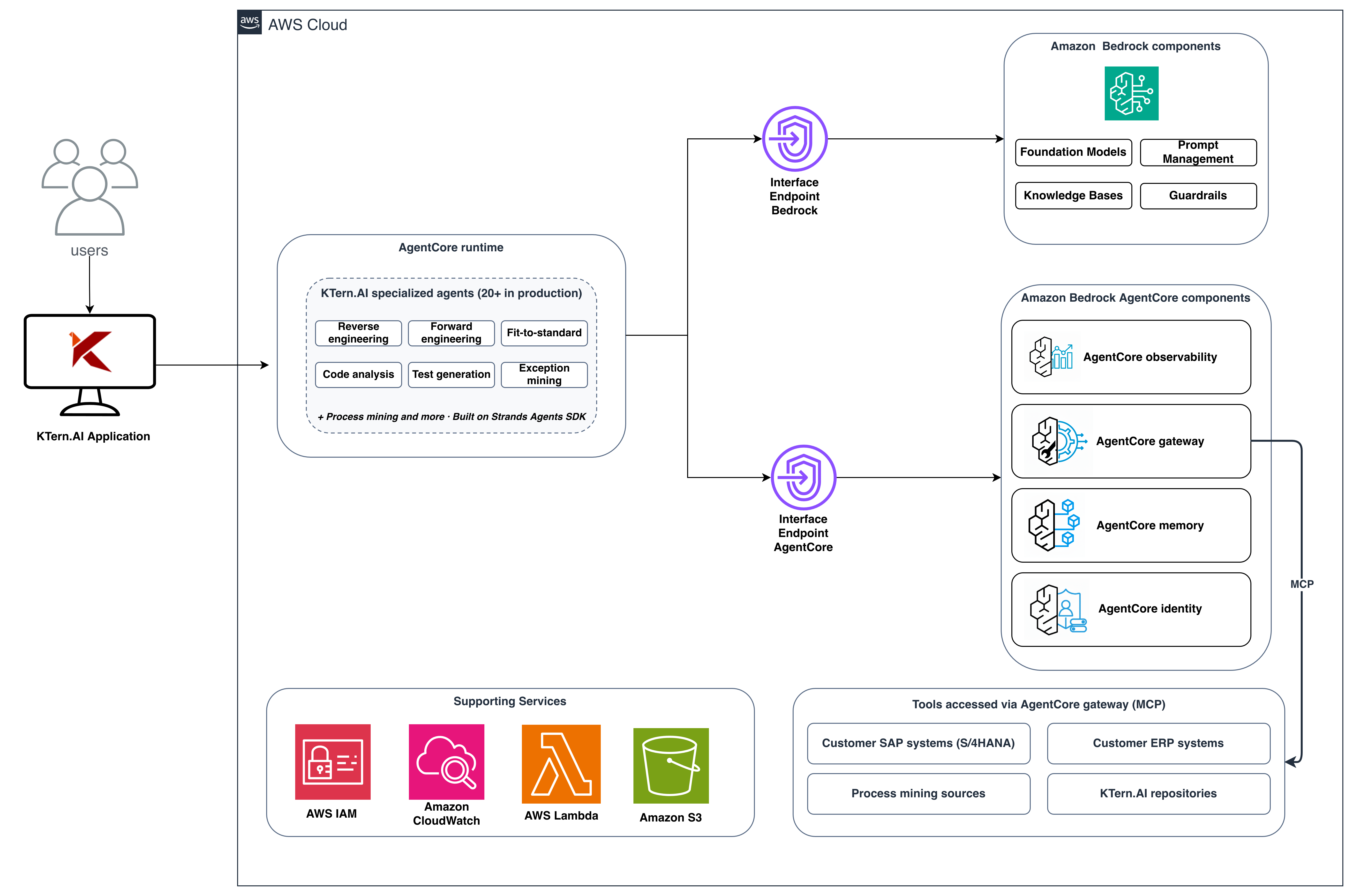
*図 1. Amazon Bedrock AgentCore 上の KTern.AI のアジェンティック AI アーキテクチャ。*
アーキテクチャはクライアント層から内側へと流れます。エンタープライズユーザーは KTern.AI プラットフォームを通じて変換リクエストを提出します。これらのリクエストは、エージェントオーケストレーション層へルーティングされ、そこで専門的なエージェントが AgentCore runtime 上で実行されます。このランタイムでは完全なセッション分離が行われるため、ある顧客のコンテキストは他の顧客にはアクセスできません。各エージェントは、認証された SAP API、顧客 ERP システム、および KTern.AI のリポジトリへの接続を管理する AgentCore ゲートウェイ Model Context Protocol (MCP) レイヤーを通じて外部ツールを呼び出します。エージェントは、AWS PrivateLink によって駆動される仮想プライベートクラウド(VPC)インターフェースエンドポイントを経由して、Amazon Bedrock および AgentCore にプライベートにアクセスするため、トラフィックはパブリックインターネット上を通過しません。
エージェントが呼び出されると、AgentCore のメモリはプロジェクトに関連する永続的なコンテキストを取得して更新し、セッションを超えてプロセスの決定、コードパターン、蓄積された洞察を保持します。AgentCore のアイデンティティ機能は、エージェントとツールに対する認証と最小権限アクセスを強制します。すべてのアクションとモデル応答は AgentCore による観測によってキャプチャされ、ログ、メトリクス、トレースとして Amazon CloudWatch に送信されます。基盤となる部分では、Amazon Bedrock がモデルへのアクセスを提供し、Anthropic の Claude ファミリーモデルを含みます。Amazon Simple Storage Service (Amazon S3)、AWS Lambda、および AWS Identity and Access Management (IAM) が広範なシステムを支えています。
結果と成果
Amazon Bedrock AgentCore 上のエージェント AI プラットフォームへの移行は、KTern.AI の顧客にとって何が可能になるかを変えました。本番環境では、KTern.AI のエージェントが SAP プロジェクト全体の期間を 45% 短縮し、調査と評価の時間を 60〜70% 削減しました。また、財務および営業上の例外の 90% を自律的に検出し、毎月 480 時間のエンジニアリング時間を回復させました。かつては大規模なコンサルタントチームと数ヶ月にわたる手動分析を必要としていた SAP 変革が、現在は大幅に自動化されています。これらの数値は、KTern.AI が本番環境の SAP 変革エンゲージメント全体で実施した内部測定に基づいています。
開発速度
AgentCore を導入する前は、新しいエージェント機能を開発するには、オーケストレーション、メモリ管理、ツールアクセス、アイデンティティ、監視のためのカスタムインフラを構築する必要があり、エージェントあたり最低でも 2〜3 週間を要していました。構成駆動型のアプローチにより、このオーバーヘッドが解消されました。
- 最初の生産環境向けエージェントは、4〜6 時間でデプロイされ、設定のみで動作し、カスタムのオーケストレーションコードはゼロ行です。これは開発サイクルを 85% 削減したことになります。
- インフラ構築に要する時間が 95% 短縮されました:プロビジョニングも不要、カスタムパイプラインエンジニアリングも不要です。
- 新しいエージェントは設定デプロイを通じて、その日に生産環境へリリースされます。
運用効率
インフラを AWS が管理することで、運用体制が強化される一方でコストも削減されました。
- 生産環境でのエージェント稼働率は 99.8% を維持しています。
- 以前運用していた自己管理型のコンテナスタックと比較して、インフラコストが 70% 削減されました。
- 毎月 480 エンジニアリング時間を確保できました(フルタイムのエンジニア 3 名分に相当)。これらはすべてエージェントの知能向上と新機能開発に再投資されています。
SAP トランスフォーメーションへの影響
アジェンティック自動化の複合的な価値は、顧客成果において最も明確に表れています。
- SAP プロジェクト全体の期間を平均 45% 短縮。
- 歴史的にプロジェクト初期予算の最大シェアを占めていた発見・評価フェーズにおいて、その時間を 60〜70% 削減。
- 分析フェーズにおけるマニュアルによる専門知識保有者(SME)およびコンサルタントへの依存度を最大 60% 削減。
- 自動生成されたテストケースの初回合格率が 82% に達。
- Finance および Sales モジュールにおける運用上の例外の 90% を、例外マイニングエージェントが自律的に特定。
- より早期かつ包括的なリスク特定により、ポスト・ゴー・ライブ後のサポートインシデントを 40% 削減。
リスク低減と品質
スピード向上は、品質が保たれて初めて意味を持ちます。アジェンティック AI は、KTern.AI が支援する変換の整合性と信頼性を高めました。
- リバースエンジニアリングおよびカスタムコード分析エージェントが、技術的負債や移行リスクを、それが下流の費用のかかる問題に増幅する前に早期に浮き彫りにします。
- エージェント駆動型の標準化アプローチにより、どのコンサルタントチームが関与するかに関わらず、プロジェクト間の品質ばらつきを低減します。
- 集中型プロンプト管理により、エージェント展開全体でバージョン管理、ロールバック、一貫したガバナンスを提供します。
- エージェント構成、オーケストレーションパターン、モデル選択に対する設定駆動型のテストは、デプロイオーバーヘッドなしに継続的な改善を可能にします。
Amazon Bedrock AgentCore の構成要素
KTern.AI のプラットフォームは、6 つの AgentCore 機能を活用しています。AgentCore ランタイムがエージェントをホストし、AgentCore メモリがプロジェクトの文脈を保持し、AgentCore ゲートウェイがツールを接続し、AgentCore アイデンティティがアクセスを管理し、AgentCore オブザーバビリティが動作を追跡し、AgentCore 評価が品質を測定します。以下の各セクションでは、KTern.AI がそれぞれをどのように活用しているかを説明します。
AgentCore ランタイム
最初の生産環境向けエージェントのデプロイには、インフラストラクチャコードをゼロから記述するだけで 4〜6 時間かかりました。AgentCore ランタイムが、計算リソースのプロビジョニング、スケーリング、および同時並行する顧客環境間でのセッション分離を担当しました。マルチテナントの分離は組み込まれており、自社で設計・実装・監査する必要はありませんでした。
AgentCore メモリ
SAP 変革プロジェクトは、調査、設計、テスト、切り替えの各フェーズにわたり 12〜18 ヶ月間実施され、数百回にわたるエージェントとの対話が行われます。AgentCore メモリにより、当社のエージェントはこれらの期間を通じてプロジェクトの文脈を保持できます。これには、カスタムコードのインベントリ、プロセスに関する意思決定、例外のパターンなどが含まれますが、独自のメモリインフラストラクチャを構築する必要はありませんでした。エージェントは、毎回ゼロから始めるのではなく、完全なプロジェクト履歴をすべての対話に引き継ぎます。
AgentCore gateway (MCP)
KTern.AI のエージェントは、リアルタイムで生きた SAP 環境、顧客の ERP API、プロセスマイニングソース、分析リポジトリにアクセスする必要がありますが、このリストは顧客ごとに拡大し続けています。MCP の AgentCore ゲートウェイ実装により、カスタム統合コードではなく設定を通じて新しいツールを登録できるようになりました。例外マイニングエージェントは、ゲートウェイを通じて顧客システム内の財務および販売データに直接到達します。
AgentCore identity
エンタープライズのセキュリティチームは、SAP 環境に触れるすべてのシステムを厳しく審査します。AgentCore identity により、各エージェントに対して最小権限アクセスを実現し、ツールの呼び出しに関する完全な監査証跡を提供でき、顧客の既存のアイデンティティインフラストラクチャとも互換性があります。これにより、セキュリティチームは、当社側でカスタムのアクセス制御作業を行うことなく、本番環境でのエージェント承認に自信を持って臨むことができました。
AgentCore observability
Amazon CloudWatch と OpenTelemetry を活用した AgentCore observability 以前は、多段階のエージェント障害をデバッグするには、手作業で断片化されたシステム間のログを相関させる必要がありました。現在は、最初の要求から各エージェントの意思決定、ツール呼び出しを経て最終的な応答に至るまでの問題を数分で追跡できます。この可視性が、99.8% のエージェント稼働率を支えています。
AgentCore の評価
品質の一貫性は初期の懸念事項でした。特に、精度が本番導入リスクに直結するテストケース生成エージェントにおいては顕著です。各エージェントごとに評価ハーンを構築するのではなく、KTern.AI 固有の SAP テストケースを用いた AgentCore 評価サイクルを実行しています。本番導入時だけでなく、設定変更のたびに評価を行うことで、82% の初回パス成功率を維持し、モデル駆動型の挙動変化を早期に検知します。
KTern.AI のエージェントネットワーク
KTern.AI は、生産環境で 20 以上の専門化されたエージェントを運用しています。各エージェントは SAP 変換ライフサイクルの特定のドメインを担当しています。これらは設定を通じて構築され、その振る舞いはプロンプト、ツールバインディング、およびオーケストレーションパターンによって定義されます。執筆時点では、顧客シナリオに応じて 50 以上のエージェント構成を維持しています。これらの成果を牽引するコアエージェントは以下の通りです。
リバースエンジニアリングエージェント
リバースエンジニアリングエージェントは、顧客の既存 SAP ランドスケープに対する深層的な自動分析を実行します。カスタム ABAP コード、ユーザーエクジット、拡張機能、設定、およびプロセス変種をスキャンし、現状のインベントリを構築します。かつてコンサルタントに数週間かかっていた作業が、今ではそのごく一部で完了します。この出力は、移行影響や近代化パスに関する推論のための共有基盤として、下流のエージェントへと引き継がれます。
フォワードエンジニアリングエージェント
現在の状態のマッピングが完了した後、フォワードエンジニアリングエージェントは、その洞察をクリーンコアに準拠したターゲットアーキテクチャ、標準的な統合パターン、移行準備完了のコードに変換します。デジタルコアには標準機能のみを残し、拡張機能は外部化するといったクリーンコア原則を適用して、維持すべきもの、リファクタリングすべきもの、廃止すべきものを推奨します。この 2 つのエージェントが連携することで、S/4HANA 移行における設計およびブループリント作成の工数を削減する、リバースからフォワードへの連続パイプラインが形成されます。
フィット・トゥ・スタンダードエージェント
フィット・トゥ・スタンダードエージェントは、顧客のビジネスプロセスを SAP の標準プロセスと比較評価し、カスタマイズがどの時点で乖離しているかを特定して代替案を推奨します。これは変革プロジェクトにおいて最もコンサルタント依存度の高い活動の一つであり、通常、機能コンサルタントが数百ものプロセスを手作業でレビューする必要があります。このエージェントはその分析をスケールして自動化し、このフェーズに必要な SME(専門知識を持つ者)の時間を最大 60% 削減します。
カスタムコード分析エージェント
カスタム ABAP コードは、S/4HANA 移行における最大のリスク要因の一つです。カスタムコード分析エージェントは、移行互換性、非推奨 API の使用状況、パフォーマンスリスク、近代化の可能性について、フルスケープの環境を評価します。その後、各オブジェクトを複雑度に基づいて分類し、優先順位付けされた修正ガイダンスを提供します。この早期可視性は、エンゲージメント全体でポスト・ゴー・ライブ後のサポートインシデントが 40% 削減される主な要因となっています。
テストケース生成エージェント
テストは SAP トランスフォーメーションにおいて最もリソース集約的なフェーズの一つです。テストケース生成エージェントは、ビジネスプロセスフロー、カスタムコード分析の出力、および設定データから実行可能なテストケースを自動化します。これにより、手動での作成では到底及ばないカバレッジで、テストデータ、期待される結果、検証基準を含むスクリプトを生成します。その初回実行成功率は 82 パーセントに達しています。
プロセスマイニングエージェント
プロセスマイニングエージェントは、SAP のイベントログ(調達から支払まで、受注から入金まで、記録から報告までなど)を分析し、プロセスが実際にどのように運用されているかを、設計された通りとは対比して明らかにします。静的なドキュメントでは見えない逸脱、ボトルネック、手戻りループ、自動化の機会を特定し、トランスフォーメーション中の再設計優先順位付けや、本番導入後の継続的な健全性モニタリングのための根拠を提供します。
例外マイニングエージェント
財務および販売における運用上の例外(照合できない請求書、ブロックされた発注伝票、未処理の信用貸方伝票、請求に関する例外など)は通常、事後対応で見つかります。例外マイニングエージェントは、FI、CO、SD、MM モジュール全体でこれらを能動的に特定し分類します。本番環境では、これらの例外の 90 パーセントが現在自律的に検出されており、手作業による負担を削減し、ビジネスへの影響が生じる前に解決を支援しています。
Lessons learned
Amazon Bedrock AgentCore で 20 以上の本番環境用エージェントを構築した経験から、エンタープライズユースケース向けに信頼性の高いアジェンティック AI を構築するために必要なものが明確になりました。他の独立系ソフトウェアベンダー(ISV)や SaaS ビルダーにとって、これらの教訓が私たちのアプローチを最も形作りました。
- コードではなく設定から始めること。カスタムのオーケストレーションロジックを書く衝動に駆られるたびに、設定ベースの同等物がより迅速に構築でき、保守も容易であることが証明されました。設定主導でいることが、エージェントごとのデプロイを数週間から数時間に圧縮する要因となりました。
- メモリアーキテクチャは第一級の設計判断です。長期実行されるエンタープライズワークフローでは、メモリスキーマの設計が、エージェントが経験豊富なコンサルタントのように推論するか、それとも毎回ゼロから始めるかを決定します。これはコンテキストエンジニアリングです:エージェントが適切に推論できるように十分な文脈を提供しつつ、過負荷にならないようにすることです。最初のプロンプトを書く前にメモリを設計してください。
- 初日から観測(Observability)を実装すること。分散トレーシングなしではマルチエージェントシステムは目に見えない方法で失敗するため、最初のデプロイから観測性を確保することで、数時間のデバッグが数分に短縮され、
原文を表示
In this post, learn how KTern.AI, an SAP digital transformation platform, used Amazon Bedrock AgentCore to build and deploy AI agents ready for enterprise-scale SAP transformation workloads. These agents autonomously orchestrate workflows from reverse engineering, fit-to-standard, and code analysis to exception mining in Finance and Sales processes. The result is automation without custom agent infrastructure.
SAP digital transformations are among the most complex, high-stakes initiatives an enterprise can undertake. They span months or years, involve intricate interdependencies across business processes and custom code, and demand domain expertise that is hard to scale with human consultants alone. At KTern.AI, we have spent years building a system that makes these transformations faster and more predictable. Our move to agentic AI is the most significant leap in that mission to date.
Evolving from a traditional software as a service (SaaS) platform into a next-generation agentic AI platform meant orchestrating multiple specialized agents across long-running enterprise programs. Each agent operates with persistent context, secure tool access, and production-grade reliability. We built that system on Amazon Bedrock AgentCore using the Strands Agents SDK. This post walks through how we architected it, which agents we built, and the outcomes for our customers.
Overview of KTern.AI
KTern.AI is an SAP Spotlight Partner and SAP-certified Digital Transformation as a Service (DXaaS) platform. It accelerates SAP S/4HANA migrations, system conversions, and digital transformation programs across five automation streams: Digital Maps, Digital Projects, Digital Process, Digital Labs, and Digital Mines. A proprietary institutional knowledge intelligence engine encodes years of SAP transformation patterns and best practices into the system, and combined with data-driven hyperautomation it delivers 7x faster transformations with a 24 percent reduction in overall effort.
The challenge
As KTern.AI’s platform matured, truly autonomous SAP transformation required more than single-turn AI interactions. Agents had to reason across projects spanning months or years, coordinate across multiple domains at once, and operate within strict enterprise security and compliance boundaries.
Several interlocking challenges no patchwork of custom infrastructure could cleanly solve stood in the way:
- Persistent context at scale. Agents needed to retain state across hundreds of interactions, reference historical decisions, and build cumulative context over the full project lifecycle, not reset with every session. The goal is the right context rather than all of it. Overloading an agent with excess context slows it down, raises cost, and increases the chance of hallucination.
- Secure, governed tool integration. Real-time access to SAP APIs, customer enterprise resource planning (ERP) systems, process repositories, and KTern.AI data stores required authenticated, auditable connections that enterprise security teams could stand behind.
- Multi-tenancy and configuration-driven flexibility. Each customer runs as an isolated tenant with its own processes, exceptions, and business rules. Agents had to be configurable per tenant without engineering writing custom code for every deployment.
- Dynamic scalability. A rapid SAP assessment might engage a handful of agents for a few hours. A full enterprise migration runs dozens of agents continuously over months.
- Production-grade observability. Debugging multi-agent workflows without detailed logs, traces, and metrics in enterprise environments isn’t viable. Every agent decision and tool invocation needed to be traceable.
Before AgentCore, the application ran on a self-managed container stack we built and operated ourselves. It worked, but it consumed engineering time on infrastructure that had nothing to do with our core differentiation: designing agents that understand SAP transformation.
Solution overview
We built KTern.AI’s agentic AI platform on Amazon Bedrock AgentCore using the Strands Agents SDK. The core principle is a clean separation of concerns: SAP domain intelligence lives in KTern.AI’s layer, while every infrastructure concern (hosting, scaling, memory, tool access, identity, and observability) is delegated to AgentCore.
Every agent deploys through configuration with zero custom orchestration code. Each agent’s behavior is defined by its prompt, tool bindings, and orchestration pattern. A new agent reaches production in 4-6 hours, with no infrastructure provisioning or pipeline engineering. We use Strands multi-agent patterns by workload: swarm for parallel discovery, workflow for sequential phases, and graph for conditional pipelines.
Architecture
*Figure 1. KTern.AI’s agentic AI architecture on Amazon Bedrock AgentCore.*
The architecture flows from the client layer inward. Enterprise users submit transformation requests through the KTern.AI platform. Those requests route to the agent orchestration layer, where specialized agents run on AgentCore runtime with full session isolation, so one customer’s context isn’t accessible to another. Each agent invokes external tools through the AgentCore gateway Model Context Protocol (MCP) layer, which manages authenticated connections to SAP APIs, customer ERP systems, and KTern.AI’s repositories. Agents reach Amazon Bedrock and AgentCore privately over virtual private cloud (VPC) interface endpoints powered by AWS PrivateLink, so traffic stays off the public internet.
As agents are invoked, AgentCore memory retrieves and updates persistent context tied to the project, preserving process decisions, code patterns, and accumulated insights across sessions. AgentCore identity enforces authentication and least-privilege access for agents and tools. Every action and model response is captured by AgentCore observability and sent as logs, metrics, and traces to Amazon CloudWatch. At the foundation, Amazon Bedrock provides model access, including Anthropic’s Claude family of models. Amazon Simple Storage Service (Amazon S3), AWS Lambda, and AWS Identity and Access Management (IAM) support the broader system.
Results and outcomes
The shift to an agentic AI platform on Amazon Bedrock AgentCore changed what’s possible for KTern.AI’s customers. In production, KTern.AI’s agents cut overall SAP project timelines by 45 percent and reduced discovery and assessment time by 60–70 percent. They also surface 90 percent of Finance and Sales operational exceptions autonomously and reclaimed 480 engineering hours per month. SAP transformations that once required large consultant teams and months of manual analysis are now substantially automated. These figures reflect KTern.AI’s internal measurements across its production SAP transformation engagements.
Development velocity
Before AgentCore, building a new agent capability meant assembling custom infrastructure for orchestration, memory, tool access, identity, and monitoring, a minimum of 2–3 weeks per agent. The configuration-driven approach removed that overhead.
- First production agent deployed in 4–6 hours, configuration-only, with zero lines of custom orchestration code. That’s an 85 percent reduction in development cycle.
- Infrastructure setup time reduced by 95 percent: no provisioning, no custom pipeline engineering.
- New agents ship to production same-day through configuration deployment.
Operational efficiency
With infrastructure managed by AWS, the operations posture improved while costs fell.
- 99.8 percent agent uptime sustained across production deployments.
- 70 percent reduction in infrastructure costs versus the self-managed container stack we previously operated.
- 480 engineering hours per month reclaimed (equivalent to three full-time engineers), all reinvested in agent intelligence and new capabilities.
SAP transformation impact
The compounding value of agentic automation is clearest in customer outcomes.
- 45 percent average reduction in overall SAP project timelines.
- 60–70 percent reduction in discovery and assessment time, the phase that historically consumed the largest share of early project budget.
- Up to 60 percent reduction in manual subject matter expert (SME) and consultant dependency during analysis phases.
- 82 percent first-pass success rate on automatically generated test cases.
- 90 percent of operational exceptions in Finance and Sales modules autonomously identified by exception mining agents.
- 40 percent reduction in post-go-live support incidents driven by earlier, more comprehensive risk identification.
Risk reduction and quality
Speed gains matter only when quality holds. Agentic AI improved the consistency and reliability of the transformations KTern.AI supports.
- Reverse engineering and custom code analysis agents surface technical debt and migration risk early, before it compounds into expensive downstream problems.
- Standardized agent-driven approaches reduce quality variance across projects, independent of which consultant team is engaged.
- Centralized prompt management provides version control, rollback, and consistent governance across agent deployments.
- Configuration-driven testing of agent configurations, orchestration patterns, and model selections supports continuous improvement without deployment overhead.
Amazon Bedrock AgentCore components
KTern.AI’s platform uses six AgentCore capabilities. AgentCore runtime hosts the agents, AgentCore memory preserves project context, AgentCore gateway connects tools, AgentCore identity governs access, AgentCore observability traces behavior, and AgentCore evaluations measures quality. The sections that follow describe how KTern.AI uses each one.
AgentCore runtime
Deploying our first production agent took 4–6 hours, with zero infrastructure code. AgentCore runtime handled compute provisioning, scaling, and session isolation across simultaneous customer environments. Multi-tenant isolation came built in, not something we had to design, implement, and audit ourselves.
AgentCore memory
SAP transformation projects run 12–18 months across discovery, design, testing, and cutover, with hundreds of agent interactions. AgentCore memory let our agents retain project context across them, including custom code inventories, process decisions, and exception patterns, with no memory infrastructure to build. Agents carry full project history into every interaction rather than starting from scratch.
AgentCore gateway (MCP)
KTern.AI’s agents need real-time access to live SAP environments, customer ERP APIs, process mining sources, and analytical repositories, and that list grows with every customer. The AgentCore gateway implementation of MCP let us register new tools through configuration rather than custom integration code. Exception mining agents reach Finance and Sales data directly in customer systems through the gateway.
AgentCore identity
Enterprise security teams scrutinize every system that touches their SAP landscape. AgentCore identity gave us least-privilege access per agent, full audit trails of tool invocations, and compatibility with customers’ existing identity infrastructure. That gave security teams the confidence to approve agents for production without custom access-control work from us.
AgentCore observability
Before AgentCore observability with Amazon CloudWatch and OpenTelemetry, debugging a multi-step agent failure meant correlating logs across disconnected systems by hand. Today we trace issues from the initial request through every agent decision and tool call to the final response in minutes. That visibility underpins our 99.8 percent agent uptime.
AgentCore evaluations
Quality consistency was an early concern, especially for the test case generation agent where accuracy affects go-live risk. Rather than build evaluation harnesses per agent, we run cycles using AgentCore evaluations with KTern.AI-specific SAP test cases. Evaluating on every configuration change, not only at launch, sustains an 82 percent first-pass success rate and flags model-driven behavior shifts early.
KTern.AI’s agent network
KTern.AI operates over 20 specialized agents in production, each owning a discrete domain of the SAP transformation lifecycle. They’re built through configuration, with behavior defined by prompts, tool bindings, and orchestration patterns. As of this writing we maintain over 50 agent configurations across customer scenarios. The core agents driving these outcomes follow.
Reverse engineering agent
The reverse engineering agent performs deep automated analysis of a customer’s existing SAP landscape, scanning custom ABAP code, user exits, enhancements, configurations, and process variants to build a current-state inventory. Work that once took consultants weeks now completes in a fraction of the time. Its output feeds downstream agents as a shared foundation for reasoning about migration impact and modernization paths.
Forward engineering agent
After the current state is mapped, the forward engineering agent converts those insights into clean-core-aligned target architectures, standard integration patterns, and migration-ready code. It applies clean-core principles (keep only standard functionality in the digital core, externalize extensions) to recommend what to retain, refactor, or retire. Together the two agents form a continuous reverse-to-forward pipeline that cuts design and blueprinting effort on S/4HANA migrations.
Fit-to-standard agent
The fit-to-standard agent evaluates a customer’s business processes against SAP standard processes, identifying where customizations diverge and recommending alternatives. This is one of the most consultant-intensive activities in any transformation, normally requiring functional consultants to review hundreds of processes by hand. The agent automates that analysis at scale, with up to 60 percent reduction in the SME time this phase requires.
Custom code analysis agent
Custom ABAP code is one of the biggest risk factors in any S/4HANA migration. The custom code analysis agent assesses the full landscape for migration compatibility, deprecated API usage, performance risk, and modernization potential. It then classifies each object by complexity with prioritized remediation guidance. This early visibility is a primary driver of the 40 percent reduction in post-go-live support incidents across engagements.
Test case generation agent
Testing is one of the most resource-intensive phases of SAP transformation. The test case generation agent automates executable test cases from business process flows, custom code analysis outputs, and configuration data. It produces scripts with test data, expected outcomes, and validation criteria at a coverage manual authoring cannot match. It achieves an 82 percent first-pass execution success rate.
Process mining agent
The process mining agent analyzes SAP event logs (purchase-to-pay, order-to-cash, record-to-report, and others) to surface how processes actually run versus how they are designed. It identifies deviations, bottlenecks, rework loops, and automation opportunities invisible in static documentation, providing evidence to prioritize redesign mid-transformation and continuous health monitoring post-go-live.
Exception mining agent
Operational exceptions in Finance and Sales (unmatched invoices, blocked purchase orders, open credit memos, billing exceptions) are usually found reactively. The exception mining agent proactively identifies and classifies them across FI, CO, SD, and MM modules. In production, 90 percent of these exceptions are now surfaced autonomously, cutting manual effort and supporting resolution before business impact.
Lessons learned
Building over 20 production agents on Amazon Bedrock AgentCore sharpened our view of what it takes to build agentic AI reliably for enterprise use cases. For other independent software vendors (ISVs) and SaaS builders, these lessons shaped our approach most.
- Start with configuration, not code. Each time we were tempted to write custom orchestration logic, a configuration-based equivalent proved faster to build and easier to maintain. Staying configuration-driven is what compressed per-agent deployment from weeks to hours.
- Memory architecture is a first-class design decision. In long-running enterprise workflows, memory schema design determines whether agents reason like experienced consultants or start from scratch every session. This is context engineering: bringing enough context for the agent to reason well, without overloading it. Design memory before writing the first prompt.
Instrument from day one. Multi-agent systems fail in ways that are invisible without distributed tracing, so observability from the first deployment turns hours of debugging into minutes, and the
関連記事
今日のまとめ
AI日報で今日の重要ニュースをまとめ読み