解決:行方不明のメガロドンの謎
スミソニアン研究所の研究チームは、インドネシアのフローレス島で発見された「ホビット人」が火を操り大型動物を狩っていたという従来の説を否定し、彼らはコモドオオトカゲに捕食された象類の死骸を食料としていた可能性が高いと結論付けた。
キーポイント
狩猟・火使用説の否定
従来の説であったホビット人が大型動物(ステゴドン)を狩り、火を使って調理していたという仮説に対し、新しい分析により疑問が投げかけられた。
コモドオオトカゲによる捕食の証拠
発掘された骨骸に付着した痕跡や、低栄養部位のみが残されている事実から、死体は主にコモドオオトカゲによって処理されたと推定される。
ホビット人の生存戦略
短小な体格が長距離走や投擲に適さないため、彼らは大型動物を狩るのではなく、他者の捕食後に残された死骸(スカベンジング)を生のまま摂取していたと結論付けられた。
失われたメガロドンの椎骨化石の再発見
1989年に移動中に紛失したとされていたメガロドン(Otodus megalodon)の椎骨化石がデンマーク国立歴史博物館で再発見され、正式にカタログ登録されました。
推定される最大サイズと記録
約1080万年前の個体由来で直径9インチあるこの化石は既知最大のサメの椎骨であり、メガロドンが全長80フィート(約24メートル)以上に成長した可能性を裏付けています。
巨大衛星群による天文学への悪影響
今後170万基の衛星打ち上げ計画は画像撮影を妨害し、光汚染や電波干渉を引き起こすため、天体観測に壊滅的な打撃を与える恐れがある。
夜空の消失と文化的損失
規制がない場合、数世代にわたって見られてきた夜空が人間が生きているうちに失われ、伝統的な星空鑑賞という文化も消滅する可能性がある。
影響分析・編集コメントを表示
影響分析
この研究は、人類の進化史における「ホビット人」の生態や生存戦略に関する従来の理解を大きく書き換えるものであり、彼らが高度な知性や技術を持っていたという見方を修正する重要な証拠となる。ただし、これは古生物学・人類学の分野に限定された発見であり、AI やテクノロジー業界への直接的な影響は現時点では見られない。
編集コメント
本記事は AI テクノロジーに関するニュースではなく、人類の起源や古代生物に関する学術的な発見を取り上げたものです。AI アナリストとしての視点からは直接的な技術的インパクトはありませんが、科学的研究手法の進歩を示す事例として記録されます。
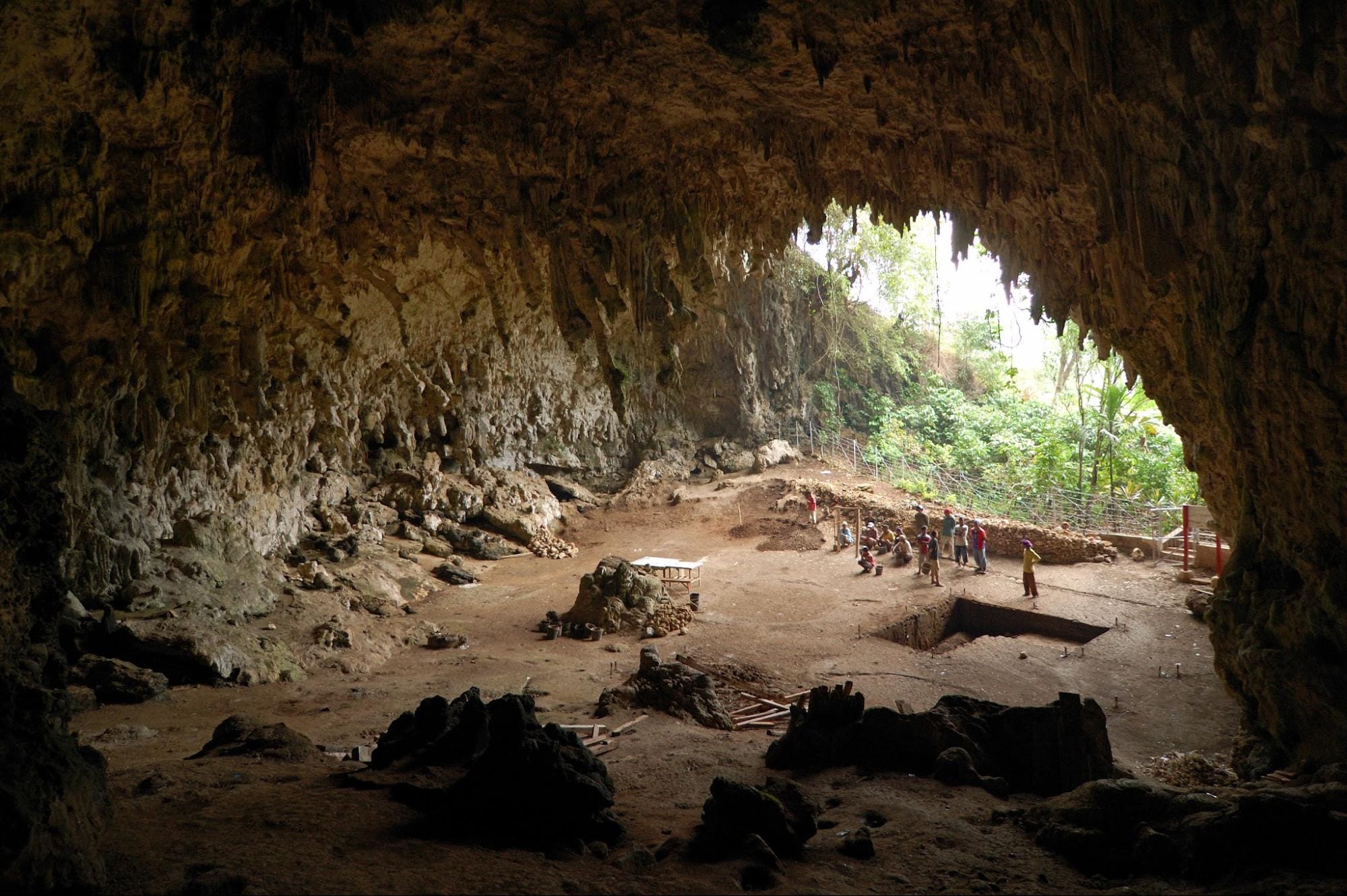 image Abstract へようこそ!今週の研究では、失われた世界を垣間見たり、80 フィートの魚を捕らえたり、星々よりも輝いたり、科学的独立を宣言したりしました。
まず、謎めいた絶滅した人類の親族たちは、かつて考えられていたほど先進的ではなかった可能性があり、その発見は彼らの系統に関する手がかりとなります。次に、古生物学の忘れ物預り所からの宝石、メガコンステレーション(巨大星座)対恒星コンステレーション(恒星群)、そして「アメリカ合衆国の科学史 250 年」を垣間見ることができますか?
いつも通り、私の他の作品については、著書『ファースト・コンタクト:宇宙人への執着の物語』をチェックするか、私の個人ニュースレター『BeX Files』に購読してください。
彼らの心には疑いありませんが、腕の届く範囲には疑問があります
Veatch, E. Grace 他。『Liang Bua の埋没学的分析は Homo floresiensis の行動と技術的能力を明らかにする』。Science Advances。
遥か昔、緑豊かな熱帯の島で、「ホビット」と呼ばれる人々の集団が洞窟に入り、ドラゴンの獲物をあさりました。これはトールキンの物語ではありません。インドネシアのフローレス島に 100 万年以上わたりコモドオオトカゲと共に生息していた低身長の人類親族 Homo floresiensis に関する新しい研究の結論です。
その小柄な3.5フィートの身長から俗に「ホビット」と呼ばれる H. floresiensis は、約127万年前にフローレス島に到達し、約5万年前の現代人の到来とほぼ同じ時期に姿を消しました。
このホビットたちは、膨大な Liang Bua 洞窟で発見された絶滅した象の近縁種であるステゴドンの焼けた骨や解体された骨に基づき、その祖先の可能性や火の使用・大型動物狩猟能力について多くの議論を呼んできました。同洞窟には多数のホビットの遺骸も含まれています。
現在、研究者たちはホビットが狩人であり火を操る存在であったという説に疑問を投げかけ、代わりに彼らはコモドオオトカゲによって既に殺されたステゴンの死体を食料として利用していた可能性が高いと示唆しています。確かにホビットは解体具を用いて骨に痕跡を残していますが、研究チームは彼らが肉を生で消費したと結論付けています。一方、焼けた遺骸は後に到着した現代人によるものと考えられています。
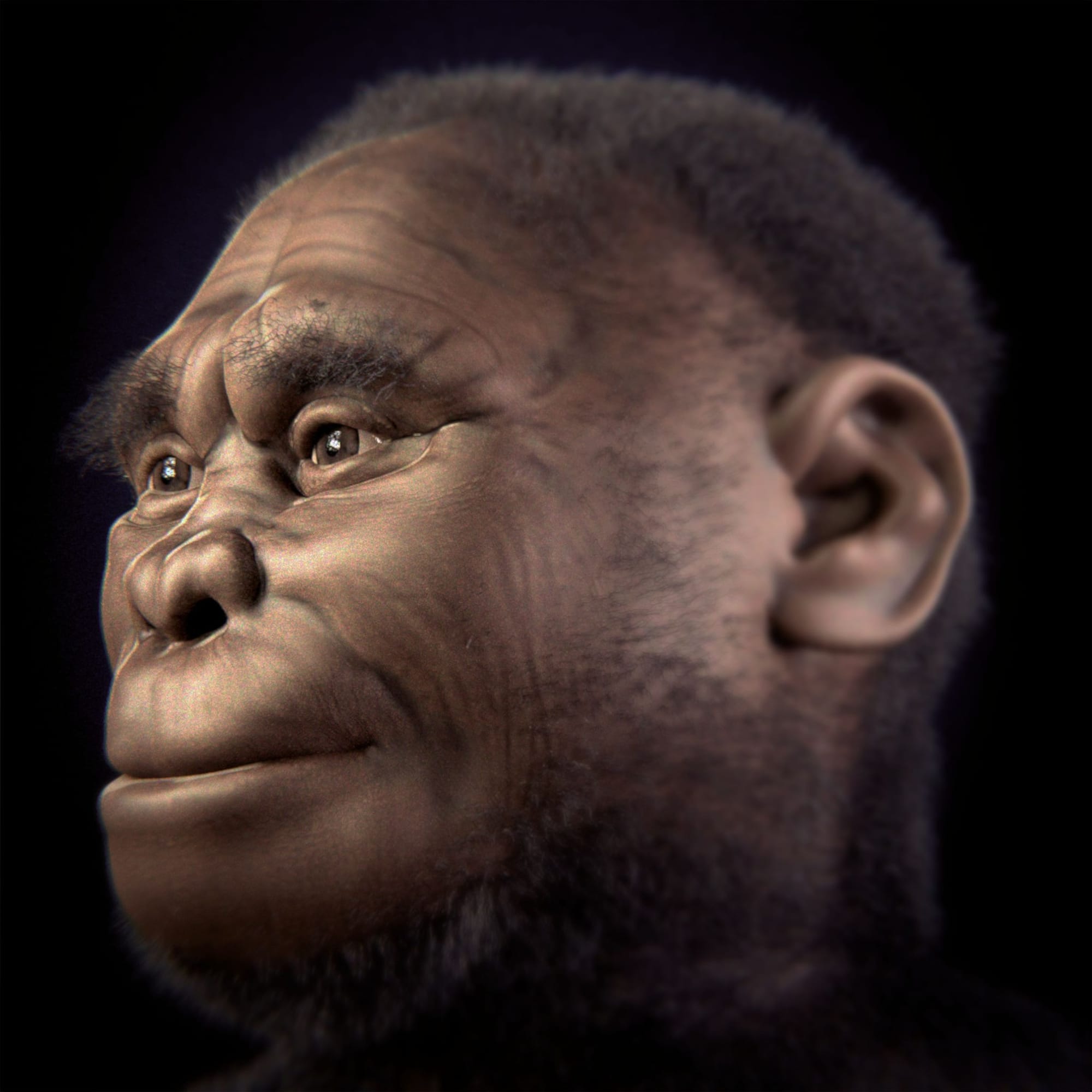 imageホモ・フローレシエンシス(Homo floresiensis)の顔面再構成画像。画像提供:Cicero Moraes 他。「コモドオオトカゲがこれらの遺骸に最初にアクセスし、低価値な部位のみを H. floresiensis が拾い集めることになった可能性が高い」と、スミソニアン国立自然史博物館のエ・グレース・ヴィッチ博士らが率いる研究チームは述べています。同チームはさらに、「ホビットの身体比率は、走ったり投げたりする能力に不向きであり、その結果、大型動物を狩る行為(従来の意味における)が非常に困難だった」と付け加えています。
これらの人々がメリー・ブランディバックを知らないのは当然かもしれません。彼はアンガマルの魔女王を倒す手助けをしましたから。真面目な話、この研究はホビットたちの謎めいた系統を解明する上で重要な示唆を与えます。それは、彼らが火を起こしたり大型動物狩りを達成しなかったホミニン(人類)の子孫である可能性を示唆しているからです。
チームはまた、ゾウの近縁種がリアン・ブアに引き寄せられた理由は、「暑さからの避難や水・塩・ミネラル源を求めて」だけでなく、「亡くなった個体たちを悼む場所」としてだった可能性もあると指摘しています。悲しみにくれる象類、ハーフリング(ホビット)、そして毒を持つドラゴン?これだけで、中つ国信者になりたくなるでしょう。
その他のニュース…
解決:行方不明のメガロドンの事件
島田健修ら著『デンマークの鮮新世後期グラム層から絶滅した巨大歯目サメ、オドゥス・メガロドン(Otodus megalodon)の関連する巨大椎骨の再発見と、その古生物学的意義および種としての最大可能サイズに関する考察』Palaeontologia Electronica.
大切な財布や家宝、あるいは絶滅した巨大サメの背骨などをなくした経験はありますか?誰もが一度はあるでしょう。しかし後者については科学者たちから朗報があります:史上最大のサメであり映画『メガロドン』の主人公でもあるメガロドンの椎骨が、1989 年に施設間移動中に所在不明となった後、ついに再発見されたのです。
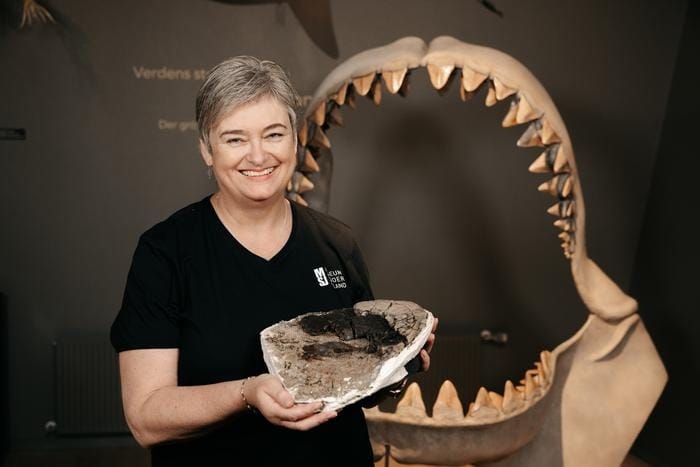 imageデンマークのグラム層から産出した、絶滅した巨大歯目サメオドゥス・メガロドン(Otodus megalodon)の 1,080 万年前の椎骨化石標本を手に持つメット・エルストルップ博士。背景には再構成された O. megalodon の顎モデルが映っている。画像提供:デンマーク南部ユトランド博物館「デンマーク国立自然史博物館([National History Museum of Denmark])の注意深い収集管理者が、椎骨標本の小さな一部を最近再発見しました。これは現在正式に NHMD 157890 として登録されています」と、デポール大学のケンシュ・シマダ氏率いる研究チームは述べています。「私たちは、行方不明と思われていたこの標本の再発見について報告するものです。」
1100万年前に生息していたメガロドンに属する NHMD 157890 が再発見されたことで、この動物は最大で約24メートル(80フィート)、あるいはそれ以上に成長し得たことが確認されました。
この化石の直径は約23センチ(9インチ)あり、「現在知られている最大のサメの脊椎標本であり、おそらく記録に残る非四足動物の脊椎としては最大のものである」とされています。
再び、殺戮を繰り返すサメが7月4日の週末直前に現れました。私たちは幸運なことに、『ジョーズ』のサメとは異なり、このメガロドンはすでに完全に死んでいます。
空をあなたから奪うことはできない…ああ待て、いやどうでもいいか
Hainaut, O. R. 「大型または明るい衛星群が観測に与える影響:背景天空の明るさを含む。」Astronomy & Astrophysics.
メガロドンの時代は終わりました。巨大衛星群の時代が到来しました。宇宙は急速にこれらの膨大な衛星ネットワークによって埋め尽くされつつあり、天文学者たちは夜空への視界への影響について警鐘を鳴らしています。
新しい研究において、ある科学者は今後間もなく170万基以上の衛星を打ち上げる現在の計画が、「衛星が画像の撮影を妨害(フォトボム)し、光害や電波干渉を引き起こすため、天体観測に壊滅的な影響を与える」と警告しています。
特に懸念されているのは、SpaceX が提案する大型軌道上データセンターや、夜間に地球へ太陽光を提供することを目的としたスタートアップ企業 Reflect Orbital が提案する鏡のような衛星など、極めて明るい物体です。
「SpaceX の Orbital Data Center のような大規模な星座は、裸眼で見える数千もの衛星を上空に配置することになります。これは暗い空に見える自然の星の数に匹敵します」と Hainaut 氏は述べています。「Reflect Orbital は 2030 年までに金星より明るい衛星を 100 基以上、2035 年には 1,000 基以上を生み出すでしょう……光汚染の激しい地域では、夜間に人工衛星しか実際に見ることができなくなる可能性があります」
「天文学以外にも、軌道の混雑、宇宙ゴミ、そして打ち上げや再突入に伴う大気汚染への懸念を招きます」と彼は付け加えました。さらに、これらの巨大星座は、数万年にわたる伝統的な空の観測という文化横断的な実践さえも妨げます。このインフラに対する規制措置がなければ、何世代にもわたり私たちが眺めてきた夜空は、私たちの人生の中で消滅してしまうかもしれません。
半世紀と 250 年(semiquincentennial)
Wellerstein, Alex 他。「アメリカの科学 250 年」。Science.
バーベキュー。花火。そして 250 年にわたる、野放図で壮観な、そしてしばしば不適切な科学。7 月 4 日の独立記念日に脳を刺激する何かをお探しなら、今週の Science の特別号をご覧ください。これはアメリカの科学的遺産をこの半世紀と 250 年(semiquincentennial)に振り返るものです。
「ここで執筆している学者たちは、アメリカの科学史におけるパラドックスに直面することを恐れず、6 つの注目すべき局面の複雑さに向き合っています。それとは、マンハッタン計画、奴隷化された人々が初期の農業知識にもたらした認識されていない貢献、シリコンバレーの台頭、バイオテクノロジーの登場、優生学運動、そして宇宙開発プログラムです」と、サイエンス誌の書籍・文化編集者であるヴァレリー・トンプソンは述べています。
「その過程で、科学愛好家、批評家、そしてその間のすべての人々に、アメリカの科学事業の過去と未来、ならびに民主主義、代表性、研究に対する国家支援に関する関連する諸問題について考察を促しています」
ぜひご検討ください。来週お会いしましょう。
原文を表示
imageWelcome back to the Abstract! Here are the studies this week that glimpsed a bygone world, caught an 80-foot fish, outshone the stars, and declared scientific independence.
First, a mysterious group of extinct human relatives were probably not as advanced as once thought, a finding that sheds light on their possible lineage. Then: a gem from the paleontological lost-and-found, megaconstellations versus stellar constellations, and oh-say-can-you-see 250 years of American science history?
As always, for more of my work, check out my book First Contact: The Story of Our Obsession with Aliens, or subscribe to my personal newsletter the BeX Files.
I do not doubt their hearts, just the reach of their arms
Veatch, E. Grace et al. ‘Taphonomic analysis at Liang Bua reveals the behavioral and technological capabilities of Homo floresiensis.” Science Advances.
A long time ago on a lush tropical island, a population of “hobbits” ventured into a cave to scavenge the kills of dragons. This is not a Tolkien tale—it’s the upshot of a new study about the short-statured human relative Homo floresiensis, which lived for more than a million years on the Indonesian island of Flores alongside Komodo dragons.
Colloquially known as hobbits for their short 3.5-foot stature, H. floresiensis arrived on Flores about 1.27 million years ago and vanished around the same time as the arrival of modern humans some 50,000 years ago.
The hobbits have inspired much debate over their possible ancestry and whether they were capable of making fires or hunting big game, based on the discovery of charred and butchered bones of the extinct proboscidean (elephant relative) Stegodon in the expansive Liang Bua cave, which also contains many hobbit remains.
Now, researchers have cast doubt on the hobbits as hunters and fire-wielders, suggesting instead that they likely scavenged Stegodon carcasses that had already been killed by Komodo dragons. Though the hobbits left marks on the bones with butchering tools, the team concluded that they consumed the flesh raw. The charred remains, meanwhile, were likely left by late-arriving modern humans.
imageA facial reconstruction of Homo floresiensis. Image: Cicero Moraes et al“Komodo dragons likely had primary access to these remains leaving behind only low-utility elements for H. floresiensis to scavenge,” said researchers led by E. Grace Veatch of the National Museum of Natural History, Smithsonian Institution. The team added that the bodily proportions of the hobbits are “unconducive for running and throwing that would make the act of hunting large game (in the traditional sense) quite difficult.”
I guess these people have never seen Merry Brandybuck help take down the Witch-king of Angmar. In all seriousness, the study has implications for unraveling the mysterious lineage of these hobbits, as it may mean they descended from hominins that never achieved fire making or big-game hunting.
The team noted that the elephant relatives may have been attracted to Liang Bua not just to “seek relief from heat and/or for sources of water, salt, and minerals” but as “a place to mourn deceased individuals.” Grieving proboscideans, halflings, and venomous dragons? It’s enough to make one a Middle Earth truther.
In other news…
SOLVED: The case of the missing megalodon
Shimada, Kenshu et al. Rediscovery of the associated gigantic vertebrae of the extinct megatooth shark, Otodus megalodon, from the Upper Miocene Gram Formation in Denmark, and comments on its paleobiological significance and the maximum possible size of the species” Palaeontologia Electronica.
Ever misplace an important item like a wallet, or heirloom, or the backbone of an extinct giant shark? We’ve all been there. But scientists have good news on the latter front: a long-lost vertebrae of a Megalodon—the biggest shark in history and star of The Meg—has been rediscovered after it went missing in 1989 during a move between facilities.
imageDr. Mette Elstrup holding a 10.8-million-year-old vertebral fossil specimen of the extinct megatooth shark, Otodus megalodon, from the Gram Formation of Denmark featured in the new study, and a reconstructed O. megalodon jaw model in the background. Image: Museum of Southern Jutland, Denmark“An attentive collection manager at [National History Museum of Denmark] recently rediscovered a small portion of the vertebral specimen, which is now formally cataloged as NHMD 157890,” said researchers led by Kenshu Shimada of DePaul University. “We report on the rediscovery of the specimen, which was thought to be lost.”
The resurfacing of NHMD 157890, which belonged to a Megalodon that lived nearly 11 million years ago, confirms that this animal could have grown as large as 80 feet, perhaps even bigger.
The fossil measures nine inches across, making it “the largest shark vertebral specimen known to date, and quite possibly even the largest non-tetrapod vertebrae ever recorded.”
Once again, a killer shark has arrived just before the Fourth of July weekend. We’re lucky that, unlike the shark from Jaws, this Meg is very dead.
They can’t take the sky from you…oh wait nvm
Hainaut, O. R. “Large or bright satellite constellations Effects on observations, including background sky brightness.” Astronomy & Astrophysics.
The age of the Megalodon is over. The time of the megaconstellation has come. Space is rapidly becoming populated by these immense satellite networks, prompting astronomers to raise alarms about their impact on our view of the night sky.
In a new study, a scientist warns that current plans to launch upward of 1.7 million satellites in the near future would “have a devastating impact on astronomical observations” because satellites “photo-bomb” images and also produce light pollution and radio interference.
Of particular concern are extremely bright objects, such as the large orbital data centers proposed by SpaceX or the mirror-like satellites proposed by the startup Reflect Orbital, which aims to provide sunlight to Earth at nighttime.
“A large constellation such as SpaceX’s Orbital Data Center…would place thousands of satellites above naked-eye visibility—comparable to the number of natural stars visible in a dark sky,” Hainaut said. “Reflect Orbital would produce more than 100 Venus-bright satellites by 2030 and over 1,000 by 2035…In light-polluted regions, one could effectively see only artificial satellites at night.”
“Beyond astronomy, they raise concerns about orbital crowding, space debris, and atmospheric pollution from launches and re-entries,” he added. What’s more, these megaconstellations also get in the way of traditional skywatching, a cross-cultural practice that dates back tens of thousands of years. Without regulatory measures on this infrastructure, the night sky that we’ve gazed upon for countless generations may have vanished within our lifetimes.
The semiquin-science-tennial
Wellerstein, Alex et al. “American science at 250.” Science.
Cookouts. Fireworks. And 250 years of wild, spectacular, and frequently ill-advised science. If you’re looking for some Fourth of July brainfood, check out this week’s special issue of Science which reflects on America’s scientific legacy on this semiquincentennial.
“The scholars writing here do not shy away from grappling with paradoxes in US science history, confronting the complexities of six notable moments: the Manhattan Project, the unrecognized contributions of enslaved people to early agricultural knowledge, the rise of Silicon Valley, the advent of biotechnology, the eugenics movement, and the space program,” said Valerie Thompson, the books and culture editor of Science.
“In doing so, they invite science lovers, critics, and everyone in between to contemplate the past and future of the US scientific enterprise and related questions about democracy, representation, and state support for research.”
Happy contemplating! See you next week.
関連記事
今日のまとめ
AI日報で今日の重要ニュースをまとめ読み