AI エージェントがデータサイエンス業務をどう変革するか:2026 年の展望
この記事は、2026 年にデータサイエンスの現場で AI エージェントが人間の専門家と対等なパートナーとして機能し、反復作業を自動化して戦略的思考に集中できる未来像を描く。
キーポイント
AI エージェントの定義と役割
受動的な LLM と異なり、目標を理解し、推論を行い、自律的にタスクを実行・学習する能動的な「デジタル同僚」としての AI エージェントが定義される。
データサイエンス職の代替ではない
AI による自動化は人間の役割を奪うものではなく、複雑な処理を代行することで人間が高次な戦略立案や問題解決に注力できる環境を作る。
具体的な業務フローの変革
モデルの精度向上などの目標に対し、アルゴリズムのテスト、特徴量エンジニアリング、検証までを自律的に行い、結果を報告するワークフローが実現する。
AI エージェントによる自動化の具体例
データクリーニング、特徴量エンジニアリング、モデル選択とハイパーパラメータ調整などの手作業を AI が代行し、人間の生産性を向上させる。
データサイエンティストの役割変化
タスクを実行する立場から戦略を指揮する立場へ移行し、ビジネス課題の定義や結果の評価といった高次な業務に集中することが求められるようになる。
2026年のデータサイエンスのトレンド:エージェントワークフローへの移行
2023年が生成AIによるテキスト作成、2024年がコード生成だったのに対し、2026年は「アジェンティック・ワークフロー」が主流となり、データ前処理などの反復作業を自動化する時代になる。
役割分担の変化:人間は定義とレビューに集中
人間は問題の定義やステークホルダーとの対話、そしてエージェントによる結果のレビュー・改善指示に注力し、データクリーニングやモデリングなどの実行タスクは専門化されたAIエージェントが並列処理する。
影響分析・編集コメントを表示
影響分析
この記事は、AI エージェントの進化が単なるツールの自動化を超え、組織内の役割分担そのものを変容させる可能性を示唆しています。データサイエンス業界においては、基礎的な実装業務から解放された専門家がより高度な意思決定やビジネスインパクトにリソースを割くことで、業界全体の生産性と戦略的価値が向上する転換点となるでしょう。
編集コメント
2026 年という近未来の予測において、AI エージェントが「代替」ではなく「拡張」として機能する点を強調しており、現場の不安を払拭しつつ、具体的な業務変革の方向性を示す有益な記事です。
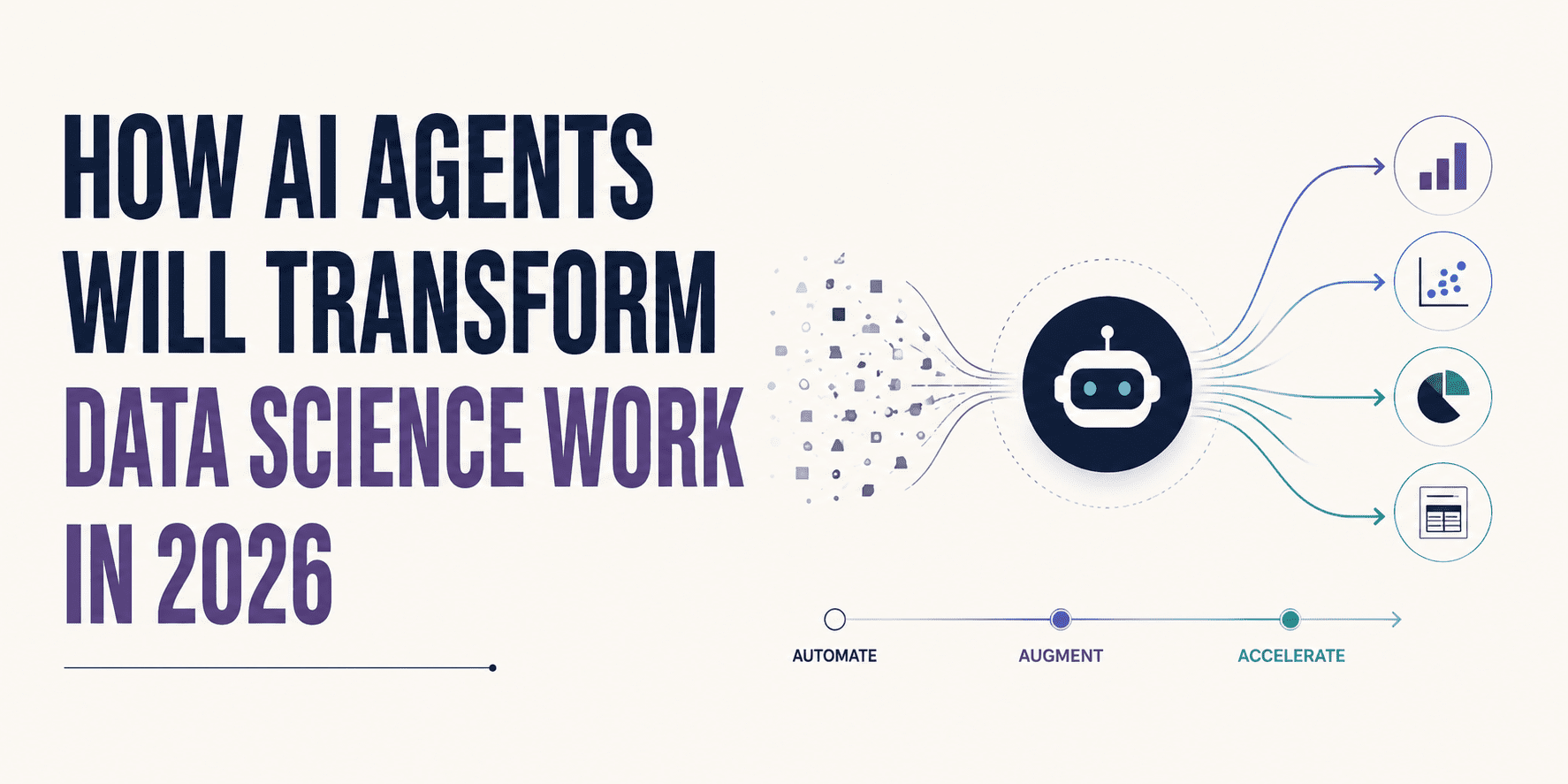 image**
# イントロダクション
データサイエンスの世界は急速に変化しています。もし 2026 年にこの分野でのキャリアを始めたばかりなら、消火ホースから水を飲もうとしているような感覚を抱くかもしれません。Python**の習得やクラウドコンピューティングの理解、そして最新の機械学習モデルへの追従など、処理すべきことが多すぎます。
しかし、すべてを変える可能性を秘めた新しいトレンドが台頭しています。それはあなたの仕事を難しくするのではなく、これまで以上にあなたを有能にするものです。私たちが話しているのは、AI エージェントの台頭です。
ロボットが世界を支配するという過剰な期待は忘れましょう。2026 年において、AI エージェントはデータサイエンティストにとって完璧なチームメイトになると予想されています。彼らはあなたに代わるのではなく、仕事の難しい部分を処理し、機械には到底できない高レベルの戦略立案や問題解決に集中できる環境を提供します。
では、2026 年の AI エージェントの未来はどうなるのでしょうか?これらのデジタルな同僚がデータサイエンスのワークフローをどのように再構築するかについて議論していきましょう。
# AI エージェントとは具体的に何か?
**
未来を語る前に、「AI エージェント」という言葉が何を指すのかを明確にする必要があります。
標準的な AI ツール、例えば大規模言語モデル(LLM)を、非常に賢いが受動的な参考書だと考えてみてください。質問すると答えが返ってきます。しかし、AI エージェントはより能動的な若手同僚のようなものです。自律システムであり、以下を行うことができます:
- データ、コード、そして目標を理解する
- 目標達成のための最善の方法について推論する
- 自ら行動してタスクを完了する
- 結果から学習し、次回により良く行う
データサイエンスの文脈において、エージェントは単にコードスニペットを生成するだけではありません。「顧客離脱モデルの精度を向上させる」といった目標を与えられ、異なるアルゴリズムを試したり、新しい特徴量をエンジニアリングしたり、結果を検証したりして、発見内容を報告してくることも可能です。
# データサイエンスは将来 AI に置き換えられるのか?
これは分野における初心者(および専門家)にとっての百万ドル級の質問です。短い答えは「いいえ」です。実際、データサイエンスにおける AI エージェントは、人間のデータサイエンティストを価値のないものにするのではなく、むしろより価値あるものにする可能性が高いでしょう。
歴史はこのパターンを示しています。表計算ソフトが会計士を置き換えたわけではありません;彼らを速くし、手作業の加算ではなく財務戦略に集中できるようにしました。同様に、AI エージェントはデータサイエンスにおける「人手による労働」を自動化します。これには以下が含まれます:
- データクリーニング:エージェントは、データセット内の欠損値、外れ値、および不整合を自動的に検出して修正できます。
- 特徴量エンジニアリング:既存のデータからモデルのパフォーマンスを向上させる可能性のある新しい特徴量を提案したり、作成したりすることも可能です。
- モデル選択とハイパーパラメータ調整:あなたが数日かけてテストを実行する代わりに、エージェントは体系的に数十種類のモデルタイプや設定を試して、最も優れたパフォーマンスを発揮するものを見つけます。
人間のデータサイエンティストの役割は、タスクを実行する者から戦略を指揮する者に変わります。あなたはビジネス上の課題を定義し、文脈を提供し、結果を評価します。エージェントが重労働を担当します。2026 年のデータサイエンス業界では、これらの AI エージェント(AI エージェント)を管理・協働できる専門家が求められ、技術的な監督能力とビジネスの知見を融合させた人材が重視されます。
データサイエンスにおける 2026 年のトレンドとは?エージェント型ワークフローへの移行
もし 2023 年が生成 AI によるテキスト作成の年で、2024 年がコード生成の年だったとしたら、2026 年は「*エージェント型ワークフロー*」の年となります。
典型的なプロジェクトを想像してみてください。過去には、データの準備(有名な「データ・ワングリング」)に時間を 80% 費やすこともありました。しかし 2026 年には、汚れたデータセットをエージェントに渡し、「時系列分析の標準的な慣行に従ってこのデータをクリーニングし、実行したすべての手順を文書化してください」といった指示を出すだけで済みます。
この変化は作業のスピード全体を変えます。2026 年のトレンドをリードするデータサイエンスワークフローは、以下のようなものになるかもしれません:
- 問題定義(あなた): ステークホルダーと会合し、ビジネス上のニーズを理解します。
- オーケストレーション(あなたとエージェント): 「プロジェクトマネージャーエージェント」に高レベルの目標を指示します。このエージェントはプロジェクトをサブタスクに分解し、専門的なエージェント(例:「データクリーニングエージェント」、「EDA エージェント」、「モデリングエージェント」など)に委任します。
- 実行(エージェント): 専門的なエージェントが並列で作業を行い、データの準備、分析、初期モデリングを担当します。進捗をログに記録し、問題(データ品質の問題など)をフラグ付けし、結果を保存します。
- レビューと改善(あなた): エージェントのレポート、生成されたコード、候補モデルをレビューします。フィードバックを提供したり、異なるアプローチを求めたり、結果を受け入れたりします。
- デプロイメントとモニタリング(あなたとエージェント): モデルが承認されると、「デプロイメントエージェント」がそれをパッケージ化して本番環境に導入し、パフォーマンスを監視するダッシュボードを設定します。エラーが発生し始めたらアラートを送信します。
これは、AutoML や ChatGPT といったツールの論理的な発展であり、これらが統合されて一貫性のある自律システムとなっています。
# 2026 年の AI はどのようなものか?協働パートナーとしての進化
**
では、2026 年の AI はどのようなものになるのでしょうか?それは単なるツールではなく、むしろパートナーとなるでしょう。データサイエンスの初心者にとってこれは朗報です。構文エラーに数時間立ち塞がれる代わりに、エラーを修正するだけでなく、なぜそれが起きたのかを説明し、学習を助けるエージェントが現れます。アルゴリズムの海で迷子になる代わりに、データの具体的な詳細に基づいて最善の前進策を提案してくれる推論パートナーがそばにいることになります。
これは成功に必要なスキルを変化させます。統計や機械学習の基礎を理解する必要がある点は依然として変わりませんが、最も重要なスキルは次のようになります:
- 批判的思考:エージェントの結果がビジネス文脈において妥当かどうかを判断できますか?
- コミュニケーション:AI エージェントに解決させる問題を明確に定義できますか?
- 判断力:どのエージェント生成ソリューションが真に倫理的で、公平かつ堅牢ですか?
# 結論
2026 年の AI エージェントの台頭は、データサイエンティストにとっての終焉を意味するものではありません。むしろ、強力なパートナーシップの始まりを示すものです。反復的で技術的なタスクを自動化することで、AI エージェントは人間の創造性を解放し、より大きな視点に集中させることができます——正しい質問をする、新しいソリューションを革新する、そして実際のビジネスインパクトを推進するなどです。**
スキルを構築する際は、このグループのディレクターになることに焦点を当ててください。データの言語を話し、その原則を理解し、何よりも新しい AI チームメンバーを率いる方法を学ぶことが重要です。データサイエンスの未来は人間か機械かのどちらかではなく、人間と機械が協力して働くものです。
参考文献およびさらに読むべき資料**
- 大規模言語モデルとその機能について
- 自動化された機械学習 (AutoML)
- データ前処理についてさらに学ぶ
Shittu Olumide は、最先端の技術を活用して説得力のある物語を構築することに情熱を持つソフトウェアエンジニアでありテクニカルライターです。細部への鋭い眼と複雑な概念を簡素化する才能を持っています。Shittu はまた Twitter でも活動しています。
原文を表示
**
# Introduction
The world of data science moves fast. If you are just starting your journey in 2026, you might feel like you're trying to drink from a firehose. Between mastering Python**, understanding cloud computing, and keeping up with the latest machine learning models, it is a lot to handle.
But there's a new trend on the rise that promises to change everything — not by making your job harder, but by making you more capable than ever before. We are talking about the rise of AI agents.
Forget the hype about robots taking over. In 2026, AI agents are expected to become the perfect teammates for data scientists. They won't replace you; they will handle the difficult parts of the job, allowing you to focus on the high-level strategy and problem-solving that machines simply cannot do.
So, what is the future of AI agents in 2026? Let us discuss how these digital peers will reshape the data science workflow.
# What Exactly Is an AI Agent?
**
Before we look into the future, we need to clarify what we mean by an "AI agent."
Think of a standard AI tool, like a large language model (LLM), as a very smart but passive reference book. You ask it a question, and it gives you an answer. An AI agent, however, is more like a proactive junior colleague. It is an autonomous system that can:
- Understand your data, your code, and your goals
- Reason about the best way to achieve a goal
- Act on its own to complete tasks
- Learn from the results to do better next time
In the context of data science, an agent is not just generating code snippets. It can be tasked with an objective like "improve the accuracy of the customer cancellation model" and then go off to test different algorithms, engineer new features, and validate the results, reporting back to you with its findings.
# Will Data Science Be Replaced by AI in the Future?
This is the million-dollar question for every beginner (and expert) in the field. The short answer is no. In fact, AI agents in data science will likely make human data scientists more valuable, not less.
History has shown us this pattern. Spreadsheets did not replace accountants; they made them faster and allowed them to focus on financial strategy rather than manual addition. Similarly, AI agents will automate the "manual labor" of data science. This includes:
- Data Cleaning: The agent can automatically detect and fix missing values, outliers, and inconsistencies in your dataset.
- Feature Engineering: It can suggest or even create new features from existing data that might improve how your model performs.
- Model Selection and Hyperparameter Tuning: Instead of you spending days running tests, an agent can systematically try dozens of model types and settings to find the best performer.
The human data scientist's role changes from being a doer of tasks to a director of strategy. You define the business problem, provide the context, and evaluate the results. The agent handles the heavy lifting. The data science job market in 2026 will prize professionals who can manage and collaborate with these AI agents, blending technical oversight with business competence.
# What Is the Trend in Data Science in 2026? Shifting to Agentic Workflows
If 2023 was about generative AI writing text and 2024 was about generating code, then 2026 is the year of the "*agentic workflow*."
Imagine a typical project. In the past, you might spend 80% of your time just getting the data ready (the famous "data wrangling**"). In 2026, you will simply hand your messy dataset to an agent with instructions like, "Clean this data according to standard practices for time-series analysis, and document every step you take."
This shift changes the entire speed of work. Here's how a trendsetting data science workflow might look in 2026:
- Problem Definition (You): You meet with stakeholders to understand the business need.
- Orchestration (You and Agent): You task a "Project Manager Agent" with the high-level goal. This agent then breaks the project down into subtasks and delegates them to specialized agents (e.g. a "Data Cleaning Agent," an "EDA Agent," a "Modelling Agent").
- Execution (Agents): The specialized agents work in parallel, handling data preparation, analysis, and initial modelling. They log their progress, flag any issues (like data quality problems), and store their results.
- Review and Refinement (You): You review the agent's report, the generated code, and the candidate models. You provide feedback, ask for a different approach, or accept the results.
- Deployment and Monitoring (You and Agent): Once a model is approved, a "Deployment Agent" packages it and puts it into production, setting up dashboards to monitor its performance and alert you if it starts to throw errors.
This is the logical advancement of tools like AutoML and ChatGPT, combined into a cohesive, autonomous system.
# What Will AI Be Like in 2026? Becoming a Collaborative Partner
**
So, what will AI be like in 2026? It will be less of a tool and more of a partner. For a beginner data scientist, this is great news. Instead of being blocked for hours by a syntax error, you will have an agent that can not only fix the error but also explain why it happened, helping you learn. Instead of feeling lost in a sea of algorithms, you will have a reasoning partner that can suggest the best path forward based on the details of your data.
This changes the skills required to succeed. While you still need to understand the fundamentals of statistics and machine learning, your most important skills will become:
- Critical Thinking: Can you tell if the agent's results make sense in a business context?
- Communication: Can you clearly define problems for your AI agents to solve?
- Judgment: Which agent-generated solution is truly the most ethical, fair, and robust?
# Conclusion
The rise of AI agents in 2026 will not spell the end for data scientists. Instead, it marks the beginning of a powerful partnership. By automating the repetitive and technical tasks, AI agents will free up human creativity to focus on the bigger picture — like asking the right questions, innovating new solutions, and driving real business impact.
As you build your skills, focus on becoming the director of this group. Learn how to speak the language of data, understand the principles, and most importantly, learn how to lead your new AI teammates. The future of data science is not human or machine; it is human and machine, working together.
References and Further Reading**
- Large Language Models and How They Function
- Automated Machine Learning (AutoML)
- Learn More About Data Wrangling
Shittu Olumide is a software engineer and technical writer passionate about leveraging cutting-edge technologies to craft compelling narratives, with a keen eye for detail and a knack for simplifying complex concepts. You can also find Shittu on Twitter.
関連記事
今日のまとめ
AI日報で今日の重要ニュースをまとめ読み