古代の王女は武器使いだったと判明
エジプトの古代王女たちの遺骨を分析した結果、彼女らが単なる象徴的な存在ではなく、弓や武器を実際に使用していた戦士であったことが科学的に証明された。
キーポイント
古代王女の武勇実態の解明
アメンエムハト2世の娘ら(イタ、ヘンメトなど)の遺骨分析により、弓矢や武器の使用による筋骨格の変化が確認され、彼女らが実際に戦闘に参加していたことが判明した。
性別役割に関する既存概念の覆し
長年「古代エジプトでは女性に武器は象徴的にのみ陪葬された」と考えられていたが、骨格の非対称性や筋肉の肥大化などの証拠から、この見解が誤りであることが示された。
高度な科学分析手法の適用
研究者は骨格学的分析、X線イメージング、先進的な分光法を用いて遺体を再検討し、生前の身体的負荷と武器使用の痕跡を客観的に特定した。
古代の戦士女性の実証
武器の埋葬品は単なる象徴ではなく、骨格の非対称性や筋肉肥大などの身体的適応から、実際に武器を扱っていたことが示唆されています。
インカ帝国の生贄死因の再考
15 世紀の Capacocha 儀式で殺害された少年は、低体温症や絞殺ではなく、頭部への鈍器による外傷が死因である可能性が高いと判明しました。
生贄の遠征と国家的意義
犠牲者たちは数か月にわたる巡礼の旅を経て高地に運ばれ、その過程や埋葬の厳粛さはインカ国家統治における重要な意味を示しています。
動物の戦闘準備行動
チンパンジーやアリ、キツツキなど多様な種が、敵対グループへの監視、パトロール、匂いマーカーの確認など、人間と驚くほど類似した戦略的な戦闘準備を行うことが研究で明らかになった。
重要な引用
Pronounced muscle attachments across the mummified upper limbs 'indicates repetitive, high-intensity actions consistent with archery and weapon use'
Rather than purely symbolic objects, these items appear to have been actively used, as reflected in skeletal adaptations such as asymmetry, muscle hypertrophy, and metacarpal modification.
The Boy of Cerro El Plomo... was likely killed by blunt force trauma to the head, and not by hypothermia or strangulation as previously proposed.
Chimpanzees surveil rivals from hilltops, patrol perimeters, and march in single file.
The origin of Cretaceous-Palaeogene impactor revealed by nickel isotopes.
"Our study highlights the extraterrestrial origin of the K-Pg mass extinction and the isotopes of nickel as a well-suited tool to characterise the nature of extraterrestrial material on Earth."
影響分析・編集コメントを表示
影響分析
この記事は、AI やテクノロジー業界に直接的な影響を与えるものではありませんが、科学的手法(骨格分析)を用いて歴史的偏見を覆す事例として、データ駆動型の歴史解釈の重要性を示しています。考古学や人類学の分野では、従来の定説を科学的証拠によって更新するプロセスの好例であり、学術的な文脈での意義は高いです。
編集コメント
本記事は考古学的発見に関するものであり、AI やテクノロジー企業の動向とは直接関係ありません。ただし、科学的データを用いて長年の定説を覆すプロセスは、どの分野においても客観的証拠の重要性を示唆しています。
Abstract へようこそ。今週紹介する研究は、矢を放ち、生贄を捧げ、戦いの準備をし、そしてその衝撃に耐えたものたちです。
まず、古代の王女たちが武器と共に埋葬されていたという事実があります。彼らはそれらを使いこなせたのでしょうか?もちろん可能です!次は、恐ろしいインカの儀式、動物同士の格闘ゲーム、そして恐竜を絶滅させた謎についてお話しします。
いつもの通り、私の他の作品については『ファースト・コンタクト:宇宙人への執着の物語』をお読みいただくか、私の個人ニュースレター「BeX Files」にご登録ください。
死のディズニープリンセスたち
Hashesh, Zeinab 他。「中王国後期(紀元前 1850〜1700 年頃)のダシュール遺跡から出土した王家の骨格遺体の生物考古学的再評価」。『Frontiers in Environmental Archaeology』誌。
約 4,000 年前に生きたエジプトの王女たちは、優れた弓使いであり、ムチや短剣といった他の致命的な武器も扱っていたことが、新たな研究によって明らかになりました。この研究はミイラ化した骨格を再検討し、古代世界における性別に関する既存の常識を覆すものです。
1 世紀以上にもわたり、考古学者たちはエジプト・ダシュールのネクロポリス(墓地)にあるアメンエムハト 2 世ピラミッド複合体に埋葬された古代王家の遺体について謎解きに追われてきました。
そのうち 4 体のミイラは、ファラオであるアメンエムハト 2 世の娘たちとして特定されています。名前はイタ王女、ヘンメット王女、イタワレト王女、そしてサスアトホルメリト王女です。
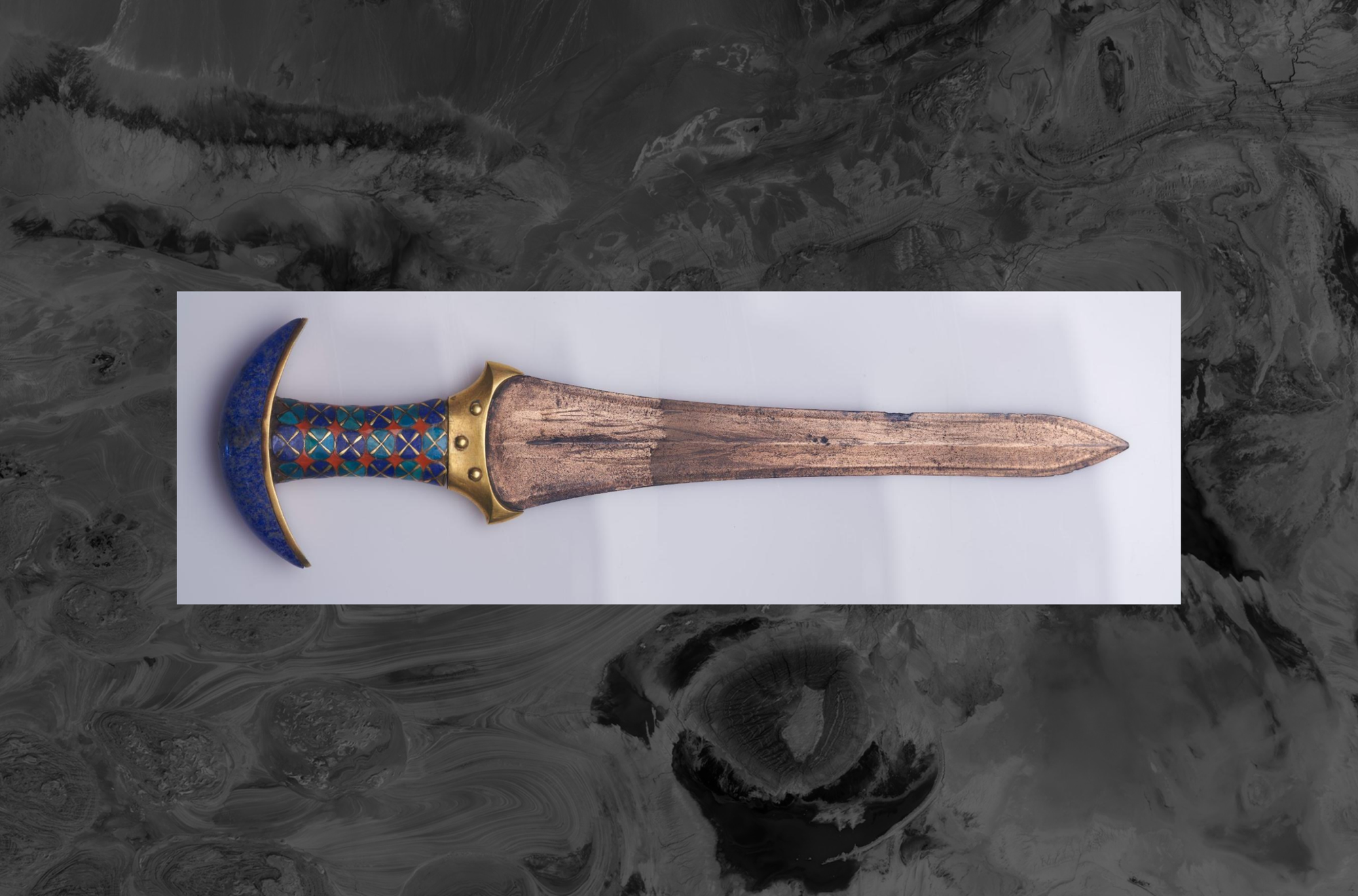
これらの女性たちは、弓やメイス(棍棒)といった武器と共に埋葬されていました。これらは通常、男性の墓で見つかる副葬品です。イタ王女の場合は、さらに見事な短剣も一緒に納められていました。
もう一组の王室関係者であるヌブ・ホテプ王女と彼女の父であるホル王も、同じ複合施設に武器と共に埋葬されており、今回の研究対象となりました。
墓から発見された武器が、単なる象徴的な意味合いで選ばれたのか、それとも生前に実際に使用されていたのかについては議論が続いていました。この疑問に答えるため、研究者たちは骨学的分析、X 線撮影、そして高度な分光分析法を用いて、ミイラ化した遺体を入念に再調査しました。
その結果、これら全員が弓や近接武器の反復使用に伴う身体的な負荷の痕跡を示していることが判明しました。これはホル王だけでなく、5 人の王女たちも武器を自在に操る能力を持っていたことを示唆しています。
ベニ・スエフ大学のゼインブ・ハシェシュ氏率いる研究チームは、「ミイラ化した上肢に見られる顕著な筋肉の付着部は、弓矢や武器の使用に特徴的な、反復的で高強度の動作を示している」と述べています。
「この証拠は、女性埋葬品における武器の機能に関する長年の議論に直接寄与するものです」と研究チームは続けています。「これらは単なる象徴的な物体ではなく、骨格に見られる非対称性、筋肉肥大、手根骨の変化といった適応から見て、実際に使用されていた可能性が高いです。ヌブ・ホテプ王女はその好例で、埋葬品に矢が見られることと、彼女の骨格変化が一致しているからです。」
つまり、これらの女性たちは、伝統的なお姫様物語で描かれるような「助けを待つ身の上の弱い者」ではなかったようです。腕を露出したままミイラ化されている点からも、彼女たちが実際に武器を携えていたことが示唆されます。
その他ニュース…
犠牲となった子供たちの最期
Silva-Pinto, Verónica 他。「生贄への巡礼:アンデス西部のカパコチャのメカニズム、原因、および死亡時期」『Science Advances』
ミイラ関連の話題から完全に離れるわけではありません。別の新しい研究で、科学者たちは15世紀にインカ帝国で行われた「カパコチャ」と呼ばれる儀式の一部として生贄とされた3人の若者の遺体を改めて調査しました。
バレンシア大学のベロニカ・シルバ・ピント氏率いる研究チームは、犠牲に選ばれた人々は「純粋さと卓越した美しさから選抜され、故郷のコミュニティから連れ去られたか、あるいは地元の当局によって差し出された」ものであり、「聖なる山頂へと長い最後の旅路を歩み、そこで儀式的に殺害された」と述べています。
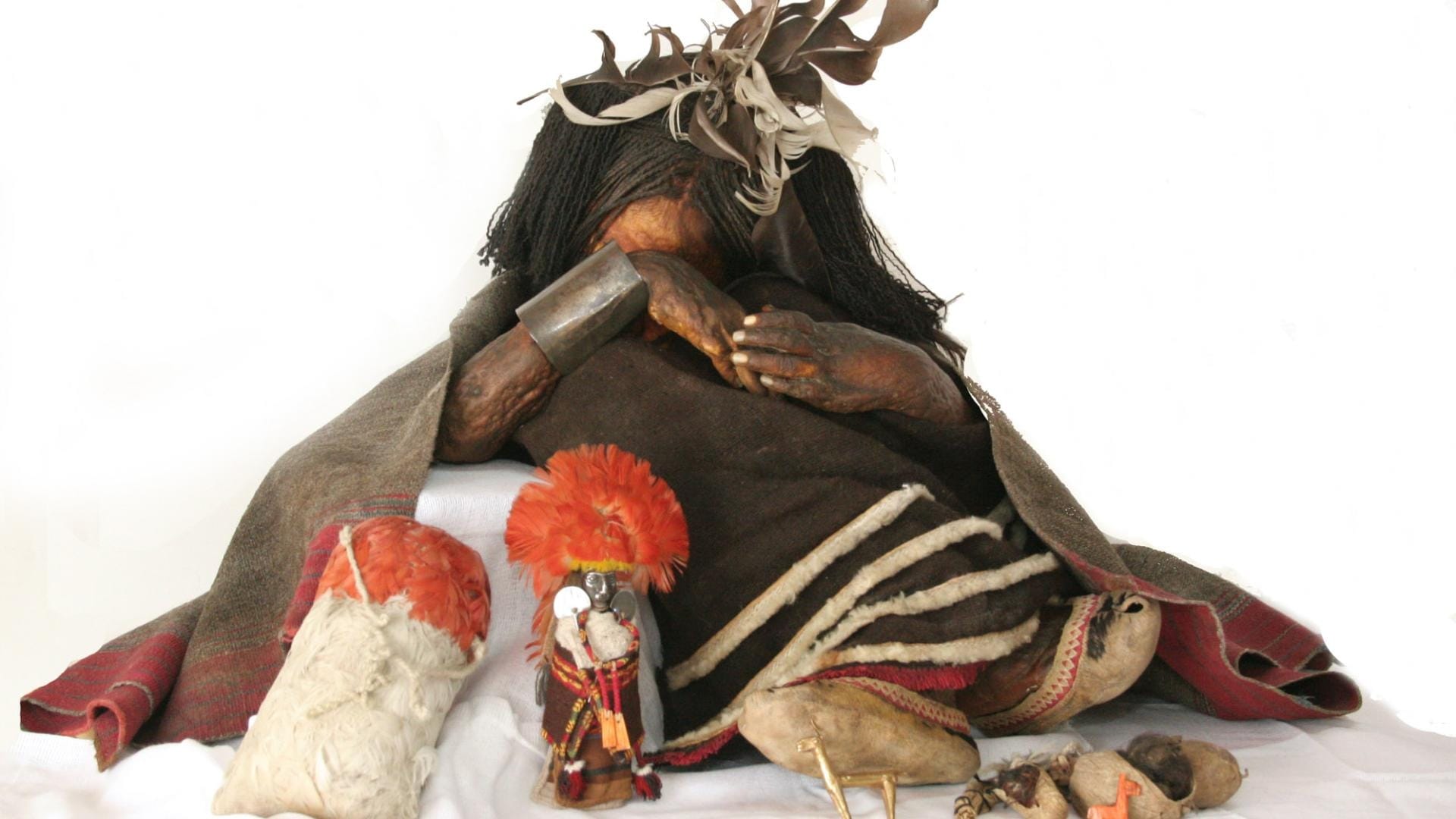 imageケロ・エル・プローモの少年。画像提供:シルバ=ピント、ベロニカら
今回の調査結果により、標高約 5,500 メートル(約 18,000 フィート)で発見された 8 歳ほどの「ケロ・エル・プローモの少年」は、低体温症や絞殺ではなく、頭部への鈍器による外傷が原因で死亡した可能性が高いことが明らかになりました。高度な画像解析を用いた研究では、この損傷が「先端が丸みを帯びた石製の星型メイス(棍棒)」によって引き起こされたものではないかと推測されています。
一方、ケロ・エスメラルダ遺跡から発見された 9 歳と 18 歳の女性 2 名については、絞殺説が有力視されていましたが、死因は依然として特定できていません。
3 例すべてにおいて、犠牲者は遠い故郷から連れてこられ、殺害されるまでに数ヶ月にわたる旅を強いられたことが、遺体に含まれる元素の同位体分析によって明らかになっています。これらの巡礼にかけられた莫大な労力と、死後に特別な衣装や姿勢で慎重に配置された遺体の様子は、インカ帝国における「カパコチャ(Capacocha)」が国家運営や宇宙観においていかに重要な役割を果たしていたかを示しています。
動物たちの戦争の芸術
Arbon, Josh & Radford, Andrew. "Pre-emptive behavior in a landscape of intergroup conflict." Trends in Ecology & Evolution.
人間は戦争という破滅的な習慣に陥りがちですが、少なくとも軍事上の苦難を味わうのは私たちだけではありません。アリからキツツキ、チンパンジーに至るまで多様な種が、成功のために慎重な準備を要する暴力的な集団間紛争に関与しています。
科学者たちは現在、動物たちがどのように戦闘に備えているかについて包括的なレビューを取りまとめました。これは「我々自身の紛争の祖先に関する洞察を得るため」の一環として行われた新しい研究によるものです。
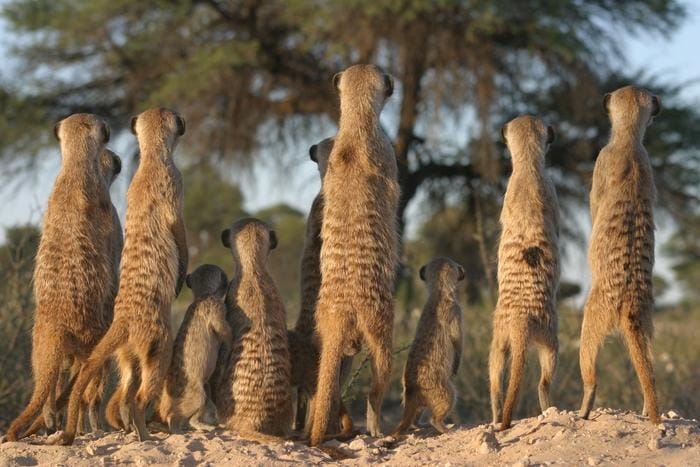 image 外部の脅威に直面して集まるマーモットの群れ。画像提供:ブリストル大学のアンディ・ラッドフォード氏。
多くの動物の行動は、我々人間と驚くほど似ています。チンパンジーは丘の上からライバルを監視し、境界線の巡回を行い、一列で移動します。また、敵対勢力の戦力を把握するために、時間をかけて匂い印を注意深く確認する姿もよく見られます。
ブリストル大学のジョシュ・アーボン氏とアンドリュー・ラッドフォード氏は、「アカネムシクイ(*Melanerpes formicivorus*)などは、数日や数週間後に役立つ社会的な情報を得るため、他グループの争いを聞き耳を立てようと、相当な距離を移動します」と述べています。
しかし、最も印象的な事前準備を行うのはネバダ州に生息するシロアリです。彼らは「糞の砦」を築き、より大規模なコロニーからの侵入を防ぐ壁としています。人間が銃から核兵器、ドローンに至るまで、あらゆる精巧な武器を発明してきたのに、なぜ最も究極の障害物である「糞のバリケード」を見落としてしまったのでしょうか?
殺人的な炭素質コンドライトの謎
Makhatadze, Georgy V. et al. "The origin of Cretaceous-Palaeogene impactor revealed by nickel isotopes." Science Advances.
死の姫君、生贄、そして広範囲にわたる戦争。最後に少し明るい話題を:地球上の生命のほとんどが絶滅した終末的な出来事です。
6,600 万年前に地球に衝突し、当時の動植物の約 75% を絶滅させた白亜紀 - 古第三紀(K-Pg)大量絶滅を引き起こした、恐竜を絶滅させた隕石という長年の謎に、改めて光を当ててみましょう。
この「死をもたらす巨大な物体」が何なのかについては、数十年にわたり科学者たちが議論を続けてきました。これはチクシュルーブ衝突体として知られています。しかし現在、ある研究チームがメキシコのユカタン半島にある衝突クレーター周辺に埋め込まれたニッケル同位体を分析することで、その正体が「炭素質コンドライト」と呼ばれる小惑星の一種である可能性を特定しました。
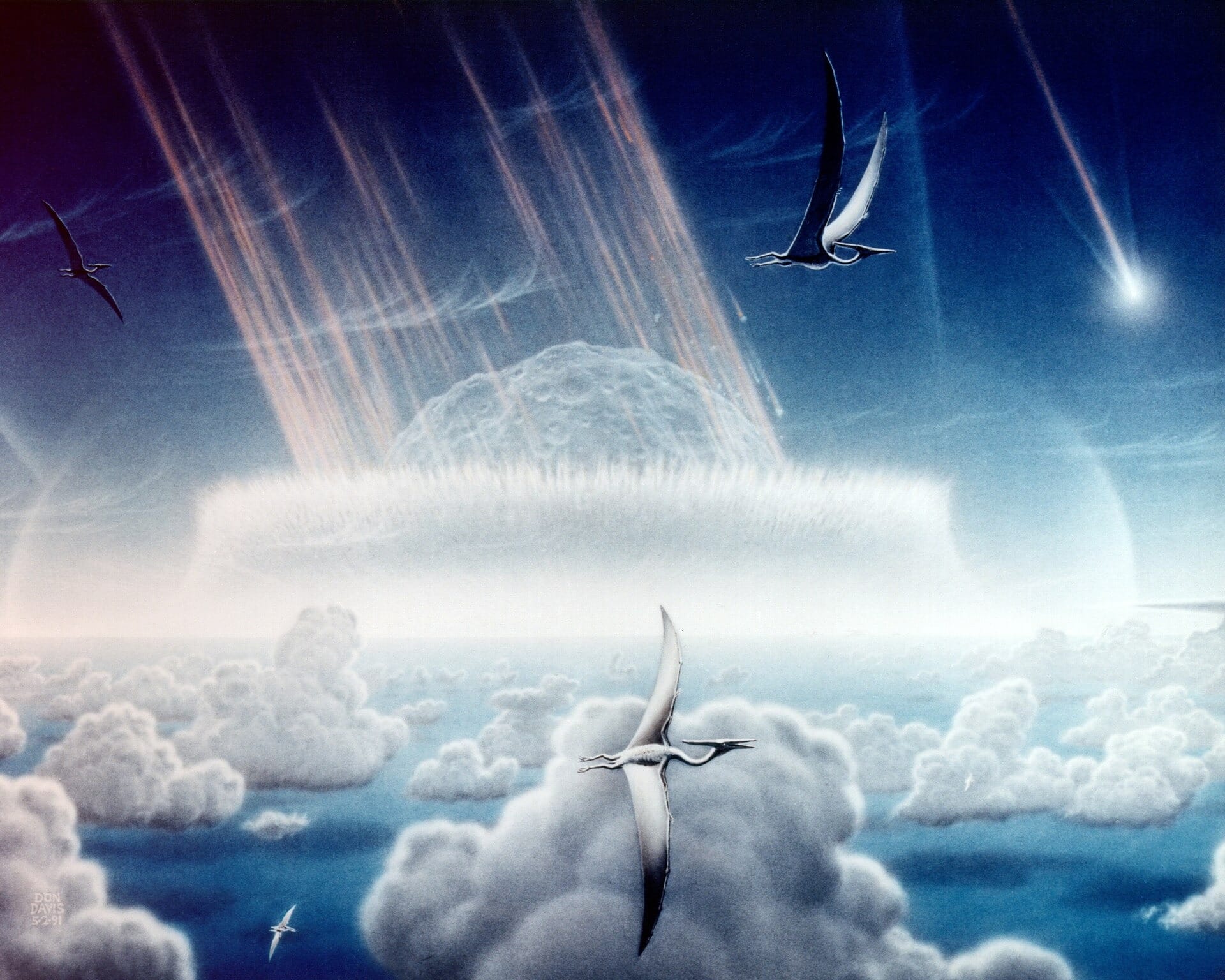 imageチクシュルーブ衝突体と、まもなく襲われる犠牲者たちを描いたコンセプトアート。画像提供:ドナルド・E・デイビス
パリ・シテ大学のジョルジ・V・マハタゼ氏率いる研究チームは、「原始隕石には地球の地殻に比べてニッケルの含有量が高く、かつ特徴的な同位体組成を示すため、衝突体が炭素質コンドライトであるという特定が可能だ」と述べています。
「本研究は、K-Pg 大量絶滅の地外起源を浮き彫りにするとともに、ニッケル同位体が地球に到達した地外物質の性質を特定する有力な手段であることを示しました」と研究チームは結論付けています。「さらに、この発見は隕石衝突と大量絶滅の関連性に関するさらなる研究への扉を開くものです」。
ミイラ、戦争、そして終末。そんな要素が揃ったビーチブック(夏休み読書)としてお楽しみください。
ご愛読ありがとうございました!来週もお会いしましょう。
原文を表示
imageWelcome back to the Abstract! Here are the studies this week that loosed arrows, made sacrifices, prepared for battle, and took the hit.
First, a bunch of ancient princesses were buried with weapons. Did they know how to use them? You bet! Then: a deadly Inca ritual, animal war games, and the mystery of the dinosaur-killer.
As always, for more of my work, check out my book First Contact: The Story of Our Obsession with Aliens, or subscribe to my personal newsletter the BeX Files.
Disney princesses…OF DEATH
Hashesh, Zeinab et al. “Bioarcheological Reassessment of Dahshur Royal Skeletal Remains from the late middle kingdom (c. 1850 to 1700 BCE).” Frontiers in Environmental Archaeology.
Egyptian princesses who lived nearly 4,000 years ago were skilled archers and likely handled other deadly weapons, including maces and daggers, according to a new study that revisits their mummified bones and upends expectations about gender in the ancient world.
For more than a century, archaeologists have puzzled over the remains of ancient royals entombed in the Amenemhat II pyramid complex located in Egypt’s Dahshur necropolis.
Four of these mummified bodies have been identified as the daughters of the pharaoh Amenemhat II, known as Princess Ita, Princess Khenmet, Princess Itaweret, and Princess Sathathormeryt.
These women were buried with weapons, including bows and maces, which are grave goods normally found in male burials; Princess Ita’s tomb also contained a stunning dagger. Another pair of royals, Princess Noub-Hotep and her father King Hor, are buried in the same complex with weapons in their graves, and were also part of the study.
The presence of weaponry in the graves has led to a debate over whether the items were selected for symbolic purposes, or if the women used them in life. To resolve this question, researchers conducted a thorough re-examination of the mummified remains using osteological analysis, X-ray imaging, and advanced spectroscopy.
The results revealed that all of these individuals showed signs of bodily strain associated with repeated use of bows and melee arms, suggesting that not only King Hor, but the five princesses, knew their way around a weapon.
Pronounced muscle attachments across the mummified upper limbs “indicates repetitive, high-intensity actions consistent with archery and weapon use,” said researchers led by Zeineb Hashesh of the University of Beni-Suef.
“This evidence directly informs long-standing debates about the function of weapons in female burials,” the team continued. “Rather than purely symbolic objects, these items appear to have been actively used, as reflected in skeletal adaptations such as asymmetry, muscle hypertrophy, and metacarpal modification. Princess Noub-Hotep provides a particularly clear example, where skeletal changes align with the presence of arrows in her burial.”
In other words, these women don’t appear to have been the damsels in distress depicted in traditional princess stories. The mummification of their bare arms hints that they did, in fact, bear arms.
In other news…
The last days of the sacrificial children
Silva-Pinto, Verónica et al. “Pilgrimage to sacrifice: Mechanisms, causes, and time of death of the Western Andean Capacocha of the Southern Tawantinsuyu.” Science Advances.
We’re not wrapped up with the mummy beat just yet. In another new study, scientists took a fresh look at the mummified bodies of three young victims of human sacrifice in the Inca empire, who were ritually killed as part of a ceremony called the Capacocha in the 15th century.
“Selected for their perceived purity and exceptional beauty, the individuals chosen for sacrifice were either taken from their home communities or offered by local authorities” and “undertook a long, final journey to sacred mountain summits, where they were ritually killed,” said researchers led by Verónica Silva Pinto of the University of València.
imageThe Boy of Cerro El Plomo. Image: Silva-Pinto, Verónica et alThe results revealed that the Boy of Cerro El Plomo, a child of about 8-years-old discovered at an elevation of nearly 18,000 feet, was likely killed by blunt force trauma to the head, and not by hypothermia or strangulation as previously proposed. Using advanced imaging, researchers discovered a cranial lesion that may have been inflicted by “a blunt-lobed lithic star-shaped mace,” according to the study.
Meanwhile, the team found that two female victims found at Cerro Esmeralda, aged roughly 9 and 18, had an indeterminate cause of death, despite strangulation being put forward as the likely explanation.
In all three cases, the victims were brought from distant homelands and traveled for several months prior to their killings, according to isotopic analysis of the elements in their remains. The enormous effort invested in these pilgrimages, combined with the careful placement of the bodies in special costumes and poses after death, demonstrate the significance of the Capacocha in Inca statecraft and cosmology.
The art of war for animals
Arbon, Josh & Radford, Andrew. “Pre-emptive behavior in a landscape of intergroup conflict.” Trends in Ecology & Evolution.
Humans have a rather catastrophic habit of getting into wars, but at least we aren’t alone in our military misery. A diverse array of species—from ants, to woodpeckers, to chimpanzees—also engage in violent intergroup conflicts that require careful preparation for success.
Scientists have now helpfully pulled together a comprehensive review of how animals ready themselves for battle in part “to provide insights into our own conflict ancestry,” according to their new study.
imageA group of meerkats standing together in the face of an outside threat. Image: Andy Radford, University of BristolMany behaviors are eerily similar to our own: Chimpanzees surveil rivals from hilltops, patrol perimeters, and march in single file. It is also common for animals to invest a lot of time and energy into sizing up their opponent’s force, including by carefully monitoring scent marks.
Some animals “travel considerable distances to eavesdrop on the contests of other groups to gather social information that is used only days or weeks later, as seen in acorn woodpeckers (Melanerpes formicivorus),” said study authors Josh Arbon and Andrew Radford of the University of Bristol.
But by far the most memorable prep work comes from the Nevada termite, which erects “faecal fortresses” as barriers to intrusion by larger colonies. For all the fancy weaponry we’ve devised as humans—from guns, to nukes, to drones—how did we overlook the ultimate obstacle: poop barricades?
The case of the killer carbonaceous chondrite
Makhatadze, Georgy V. et al. “The origin of Cretaceous-Palaeogene impactor revealed by nickel isotopes.” Science Advances.
Deadly princesses, human sacrifice, widespread warfare. Let’s close with something lighter: The apocalyptic extinction of almost all life on Earth. It’s time to revisit the longstanding mystery of the dinosaur-killing space rock that smashed into our planet some 66 million years ago, causing the Cretaceous-Paleogene (K-Pg) mass extinction that wiped out about 75 percent of all animal and plant life at the time.
For decades, scientists have debated the nature of this epic deathbringer, which is known as the Chicxulub impactor. Now, a team has narrowed down the possible source to a class of asteroid called carbonaceous chondrites by studying nickel isotopes embedded around the impact crater in Mexico’s Yucatán Peninsula.
imageConcept art of Chicxulub impactor and its soon-to-be victims. Image: Donald E. Davis The identification of the impactor as a likely carbonaceous chondrite “is possible given nickel’s high abundance in primitive meteorites compared to the Earth’s crust and the distinct isotope compositions they record,” said researchers led by Georgy V. Makhatadze of Université Paris Cité.
“Our study highlights the extraterrestrial origin of the K-Pg mass extinction and the isotopes of nickel as a well-suited tool to characterise the nature of extraterrestrial material on Earth,” the team concluded. “Finally, it opens the door for further research into the connection between the impact and the mass extinction.”
Mummies, war, and doomsday. You’re welcome for the beach reads.
Thanks for reading! See you next week.
関連記事
今日のまとめ
AI日報で今日の重要ニュースをまとめ読み