政府、スパイ技術購入情報の閲覧を困難に
米国政府が、政府機関が購入する電話ハッキング技術や位置データなどの監視ツール情報を公開するFPDS.govのアクセスを制限した。
Source Article
元記事を日本語で読む
本文に関係しない購読案内、埋め込み通知、サイト内プロモーションは除いています。
 image無機質な灰色の配色と矩形が入れ子になったデザインは、インターネットの初期を彷彿とさせるかもしれませんが、FPDS.govは、米国政府機関がどのような強力な監視ツールを購入しているかを追跡するための最重要リソースの一つでした。電話ハッキング技術から大量の位置データ、さらにはPalantirの導入まで、あらゆる情報が含まれていました。
むしろ、それは素晴らしいツールであり、私自身を含む無数の調査の基盤となっていました。なぜなら水曜日、政府はこのサイトを閉鎖したからです。その代替となる、アンクル・サムをブランドに掲げた別サイト「SAM.gov」は、率直に言って使い物にならず、移民関税捜査局(ICE)を含む政府機関が納税者の税金を何に使っているかを確実に把握することを、明らかに困難にしています。
「FPDSは少し扱いにくい面もありましたが、そのシンプルで旧式なインターフェースは非常に機能的で堅牢でした。政府活動のあらゆる側面はいずれ契約に関わるものであり、多くの調査ジャーナリストや研究者が、政府が何を購入し、誰が販売し、それらの契約がどう関連しているかを素早く知るために最初に使うツールでした」と、Electronic Frontier Foundationの調査部門責任者、デイブ・マースは語っています。
あなたはGSA(連邦調達庁)で働いていますか?それともこの変更の影響を受ける契約業者ですか?ぜひ話を聞かせてください。仕事用ではない端末から、Signal(joseph.404)で安全にメッセージを送るか、joseph@404media.co にメールをしてください。
私はFPDSを使って以下のことを明らかにしてきました:ICEが「既知の集団の完全なターゲット分析」作業のためにPalantirに数千万ドルを支払ったこと(その後、Palantir内部からのリークにより、同社のICE向け新規作業が明らかになりました)、税関国境警備局(CBP)がオンライン投稿の「感情と情緒」を検出するAIソフトウェアに数百万ドルを費やしたこと、そして人々の旅行履歴の大規模で令状なしのデータベースへのアクセスを購入した複数の機関を特定したことです。
FPDSは、非常に良い意味で極めて基本的な仕様でした。例えば「Clearview AI」と入力すれば、その顔認識企業に言及するすべての政府契約が表示されました。これにはClearview AI自体との契約だけでなく、その技術を再販し、品目説明に「Clearview AI」を含む大手政府請負業者との契約も含まれます。政府の調達データを深く掘り下げると、監視技術が企業から直接機関に販売されるのではなく、政府と継続的な関係を持つ企業によって販売されていることが多いとわかります。
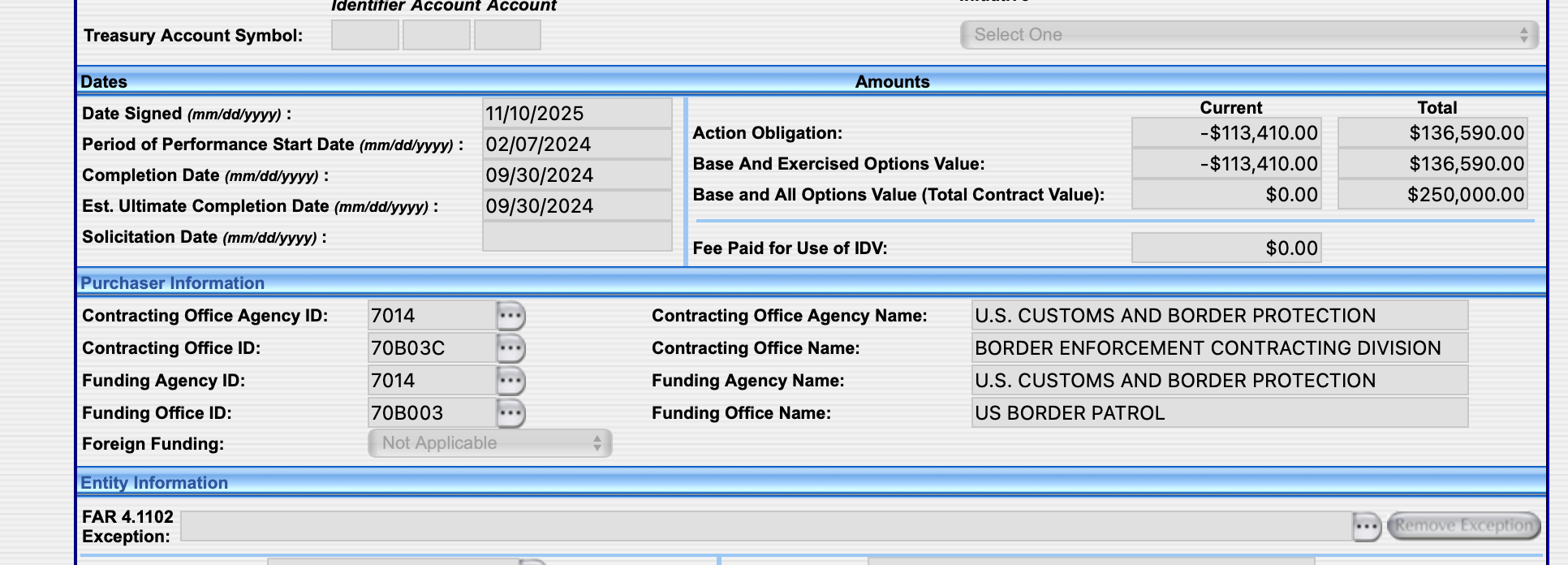 imageFDPS.govの検索結果画面。そしてFPDSが結果を表示すると、一目で必要な情報を得るのが信じられないほど簡単でした。各結果は単一の矩形で、契約先企業、購入機関、そして私にとって重要な、調達品の大まかなカテゴリー(「コンピュータ関連サービス」など)が表示され、技術ジャーナリストとして調査すべきかどうかを瞬時に判断できました。FPDSはまた、SAM.govに表示される前に新しい契約を掲載していました。
FPDSは連邦調達庁(GSA)が運営していました。狙いはFPDSをSAM.govに統合し、多くの異なるサイトではなく、請負業者や一般市民が利用する単一のプラットフォームを提供することでした。
私もSAM.govを頻繁に使います。ただし、単一の目的のためです:政府機関が将来購入する可能性のあるものを探すためです。このサイトでは、機関が情報提供依頼(Requests for Information)を投稿し、関心のある監視技術の種類を示すことがあります。これは契約や購入ではなく、彼らが何を求めているかの指標です。
問題は、SAM.govが機関が実際に購入したものを探すにはひどいツールだということです。FPDSで明確な結果を返した検索が、SAM.govではすぐには使えません。表示させるには、いくつかの不明瞭な設定を調整する必要があるかもしれません。一部の結果にはログインが必要です(FPDSは不要でした)。他の結果では、ログインしていない方が良い場合すらあります。結果は、技術関連かどうかなどの購入カテゴリーをすぐには表示しません。雑多な情報の塊から、特定の機関で結果をフィルタリングする必要がありますが、フィルターは不安定で、時々機能しません。そして、これらすべては、探しているデータがSAM.govを通じてアクセス可能な場合に限られます。
機関と請負業者を結びつけるあるサイトが最近指摘したように、FPDSは「長年、連邦契約活動の主要な記録庫であり、SAM.govには決して移行されない数百万件の契約アクションを含んでいました」。今ではおそらく移行されるでしょうが、それはSAMの検索の問題を解決しません。
また、誰かが404 MediaのSlackチャンネルにSAM.govのリンクを貼るたびに、共同創設者でジャーナリストのサム・コールに通知が届きます。「私は興奮します…誰かが私と話したいんだと思って。そしてそれがSAM.govのリンクだとわかるんです」と、彼女は木曜日に私に話しました。
ジャーナリストや研究者の仕事が、SAM.govでは絶対に不可能だというわけではありません。しかし、今週まで私たちが使っていた完全に機能していたシステムと比べれば、これは間違いなく透明性の低いシステムです。
原文を表示
imageIt might look like something from the early days of the internet, with its aggressively grey color scheme and rectangles nested inside rectangles, but FPDS.gov is one of the most important resources for keeping tabs on what powerful spying tools U.S. government agencies are buying. It includes everything from phone hacking technology, to masses of location data, to more Palantir installations.
Or rather, it was an incredible tool and the basis for countless of my own investigations and others. Because on Wednesday, the government shut it down. Its replacement, another site called SAM.gov with Uncle Sam branding, frankly sucks, and makes it demonstrably harder to reliably find out what agencies, including Immigration and Customs Enforcement (ICE), are spending tax payers dollars on.
“FPDS may have been a little clunky, but its simple, old-school interface made it extremely functional and robust. Every facet of government operations touches on contracting at one point, and this was the first tool that many investigative journalists and researchers would reach for to quickly find out what the government is buying and who is selling it, and how these contracts all fit together,” Dave Maass, director of investigations at the Electronic Frontier Foundation, told me.
Do you work at GSA? Or are you a contractor impacted by this change? I would love to hear from you. Using a non-work device, you can message me securely on Signal at joseph.404 or send me an email at joseph@404media.co.
I’ve used FPDS to reveal ICE paid Palantir tens of millions of dollars for work on “complete target analysis of known populations” (which then led to a leak from inside Palantir describing the company’s new work for ICE); figure out Customs and Border Protection (CBP) spent millions of dollars on software that uses AI to detect “sentiment and emotion” in online posts; and identify the multiple agencies that bought access to a massive, and warrantless, database of peoples’ travel histories.
FPDS was very basic, in a very good way. You could type in something like “Clearview AI” for example, and it would show all the government contracts that mentioned the facial recognition company. That included both contracts with Clearview AI, but also ones with larger government contractors that were reselling the technology and included “Clearview AI” in the item description. Often when digging through government purchasing data you’ll find some surveillance technology is not sold to agencies by the company directly, but by firms that have ongoing relationships with the government.
imageA search result from FDPS.gov.Then when FPDS displayed the results, it was incredibly easy to get the information you wanted at a glance. Each result was a single rectangle which showed the company that the contract was with, the agency buying the product, and, importantly for me, the broad category of product. This often included things like computer-related services, letting me very quickly figure out whether, as a technology journalist, that is something I should look into. FPDS also displayed new contracts before they appeared in SAM.gov.
The General Services Administration ran FPDS. The idea was to bring FPDS into SAM.gov, so there aren’t a bunch of different sites but a single platform for contractors or the public to explore.
I do use SAM.gov a lot too. But for a singular purpose: to find what agencies might buy in the future. On that site, agencies often post Requests for Information in which they signal the sort of spy tech they are interested in. It’s not a contract or sale, but an indication of what they want to get their hands on.
The thing is, SAM.gov is awful for finding what agencies have actually bought. Searches that would return clear results in FPDS are not available immediately in SAM.gov. You may have to tweak some obscure setting to get them to display. You might need to be logged in for some results (FPDS didn’t require this); for other results, it seems better to actually not be logged in. The results do not immediately show the category of the purchase, such as whether it was technology related or not. You have to filter the results by a specific agency if you don’t want just a bunch of noise, but the filters appear finicky and sometimes don’t work. And all of that is only if the data you’re searching for is surfaceable at all through SAM.gov.
As one site that connects agencies and contractors wrote recently, FPDS “has long been the master repository of federal contract activity, containing millions of contract actions that NEVER hit SAM.gov.” Now, maybe they will, but that doesn’t solve SAM’s search issues.
Also, whenever someone pastes a SAM.gov link into 404 Media’s Slack channel, co-founder and journalist Sam Cole gets a notification. “I get excited… someone wants to talk to me. Then it’s SAM.gov ,” she told me on Thursday.
The work of journalists and researchers certainly won’t be impossible with SAM.gov. But it is absolutely a less transparent system than the perfectly good one we had until this week.
関連記事
今日のまとめ
AIデイリーブリーフで今日の重要ニュースをまとめ読み