Anthropic のマーケティング運用チームが Claude Cowork を活用してレポート作成とキャンペーン構築を自動化する方法
Anthropic のマーケティング運用チームが、自社開発の AI ツール「Claude Cowork」を活用して定型的なレポート作成やキャンペーン構築を自動化し、業務効率を大幅に向上させた事例が報告された。
キーポイント
社内ツールの活用による自動化
Anthropic のマーケティングチームが自社開発の AI ツール「Claude Cowork」を導入し、定型的な業務プロセスを自動化した。
レポート作成とキャンペーン構築の効率化
従来人手にかかっていた定型的なレポート作成や、複雑なキャンペーン構築のプロセスが AI によって自動化されたことで業務負荷が軽減された。
実務レベルでの生産性向上
具体的な運用チームにおける事例として、AI ツールの実用性が確認され、組織全体の業務効率化に直結する成果が出ている。
影響分析・編集コメントを表示
影響分析
この記事は、大規模言語モデルが顧客向けサービスだけでなく、企業内部の業務プロセス最適化ツールとしても成熟しつつあることを示す実証例です。特に自社開発ツールを活用した事例は、セキュリティリスクを管理しつつ AI の恩恵を受けるための現実的なアプローチとして、他社組織にも示唆を与えるものです。
編集コメント
大規模言語モデルの活用が「対話」から「業務自動化」へとシフトする明確な兆候が見られる記事です。特に自社開発ツールによる実装事例は、セキュリティを懸念する企業にとって参考になるケーススタディと言えます。
マーケティング運用チームは、マーケティングプログラムを支えるシステムをビジネスの状況に合わせるために、有意義な時間を費やしています。自動化が彼らの管轄領域に明確に含まれている一方で、実際には多くの作業がそうではありません。マルテックツール同士がきれいに連携せず、レポートは手動で統合され、ランディングページも一つずつ立ち上げられています。
Anthropic のマーケティング運用チームに所属する Ian Chan は、以前は週に 1〜2 日かけて毎週のマーケティング指標レビューをまとめていました。キャンペーン運用を担当する Annabel Custer も、新しいイベントを設定する際に Salesforce、HubSpot、Swoogo、メールツールを順次クリックして作業していました。しかし現在、両者は Claude Cowork でワークフローを設定することで、数日にわたる手作業を数時間に圧縮しました。
このように浮いた時間は、彼らの仕事の形を変えました。Ian と Annabel はもはやシステム間を次々とクリックする時間よりも、エンパワーメント(支援)、検証、そしてマーケティングチームが依存している基盤となるデータとプロセスに時間を割くようになりました。これは、社内の多くの人が自ら数値を取得し、自らのプログラムを推進するようになっているためです。
週次マーケティング指標レポートの生成
完璧な世界であれば、Ian がマーケティング部門と経営陣のために作成する週次レポート内のすべての指標がダッシュボード上に存在し、彼の仕事は単にナラティブ(物語)を組み立てるだけで済むはずです。しかし現実には、一部の指標はすでにダッシュボード上にありますが、他の指標はまだデータウェアハウスから転送されておらず、さらに一部はデータウェアハウスへのパイプラインにも組み込まれていません。新しい指標は、Slack のメッセージや通話のトランスクリプト(会話記録)の中にのみ存在している場合もあります。
Anthropic では事業の進展速度が従来のレポート作成パイプラインの追従能力を上回っており、Ian は以前、毎週データを探し出し検証するために1〜2日を費やしていました。Claude Cowork によって、こうしたデータの探索作業の大部分が自動化されました。
毎週日曜日の夜にスケジュールされたタスクが実行され、Claude に先週のレビューと最新の会議トランスクリプトを読み込ませ、Slack で営業チームが注力している事項を確認し、データウェアハウスを照会して、数値といくつかの注目すべき焦点領域を含むフォルダを作成します。
月曜日の朝、Ian は Claude Cowork を開き、初期レポートを取得します。これには指標テーブルと提案された見出し、あるいは注目すべき領域が含まれています。
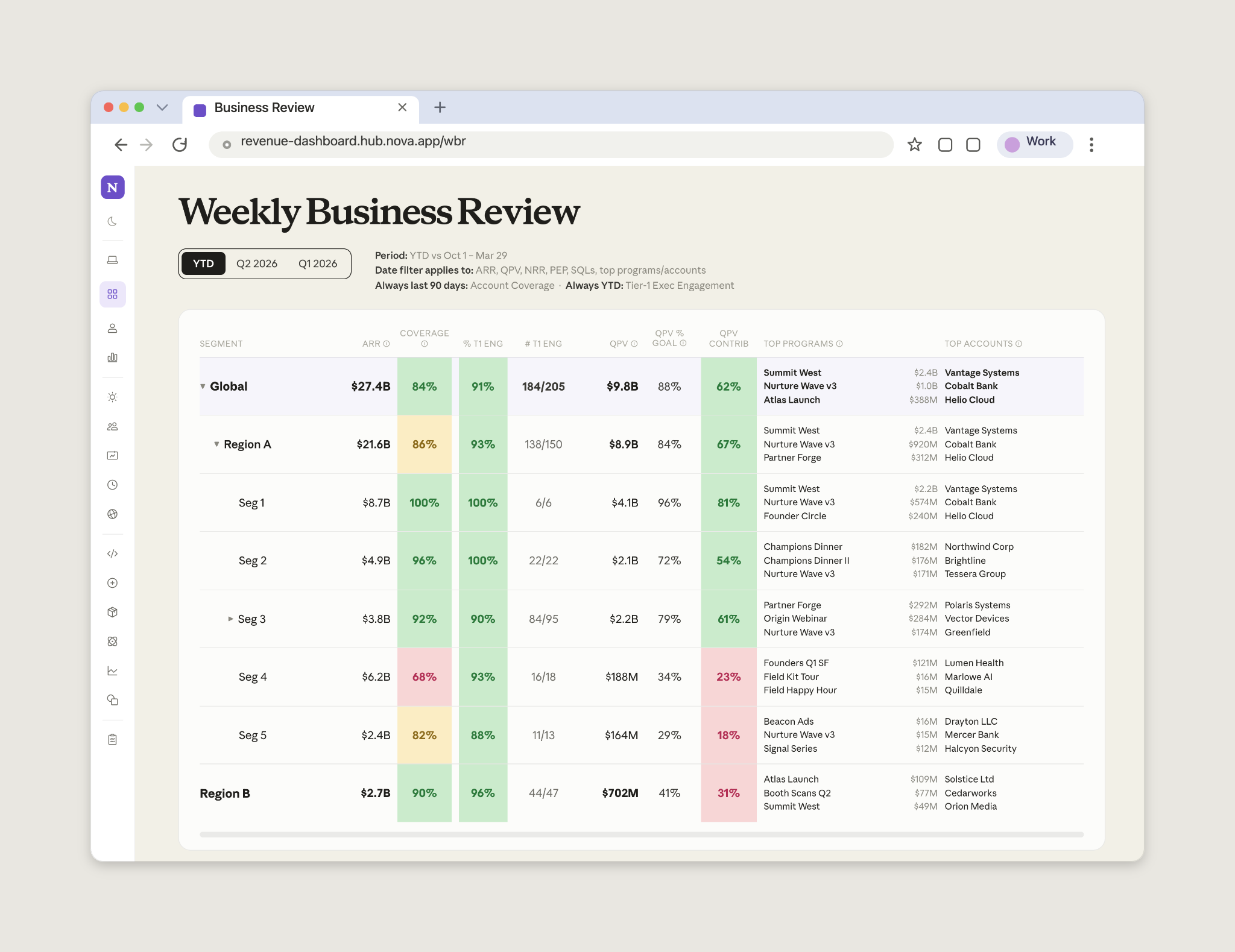
*週次ビジネスレビューの要約は、デモデータを使用して作成されており、公開のためにすべての情報が匿名化または変更されています。*Ian はこれらを確認し、どこに焦点を当てるかを決めると、Claude にサポートとなる詳細や事例を加えて拡張するよう指示します。ある週にはチームが営業上の優先事項に対応し、別の週には新製品の発売に対応します。四半期の変わり目になると、Ian は Claude に四半期計画を先頭に立てさせ、四半期レビュー文書をフィードします。
Claude は同じデータとナラティブからリーダーシップ向けスライドを生成します:何がどう変わったのか、なぜそうなったのか、そして各チームがそれに対して何をしているのかです。その後のフォローアップは Asana のタスクとして作成されます。
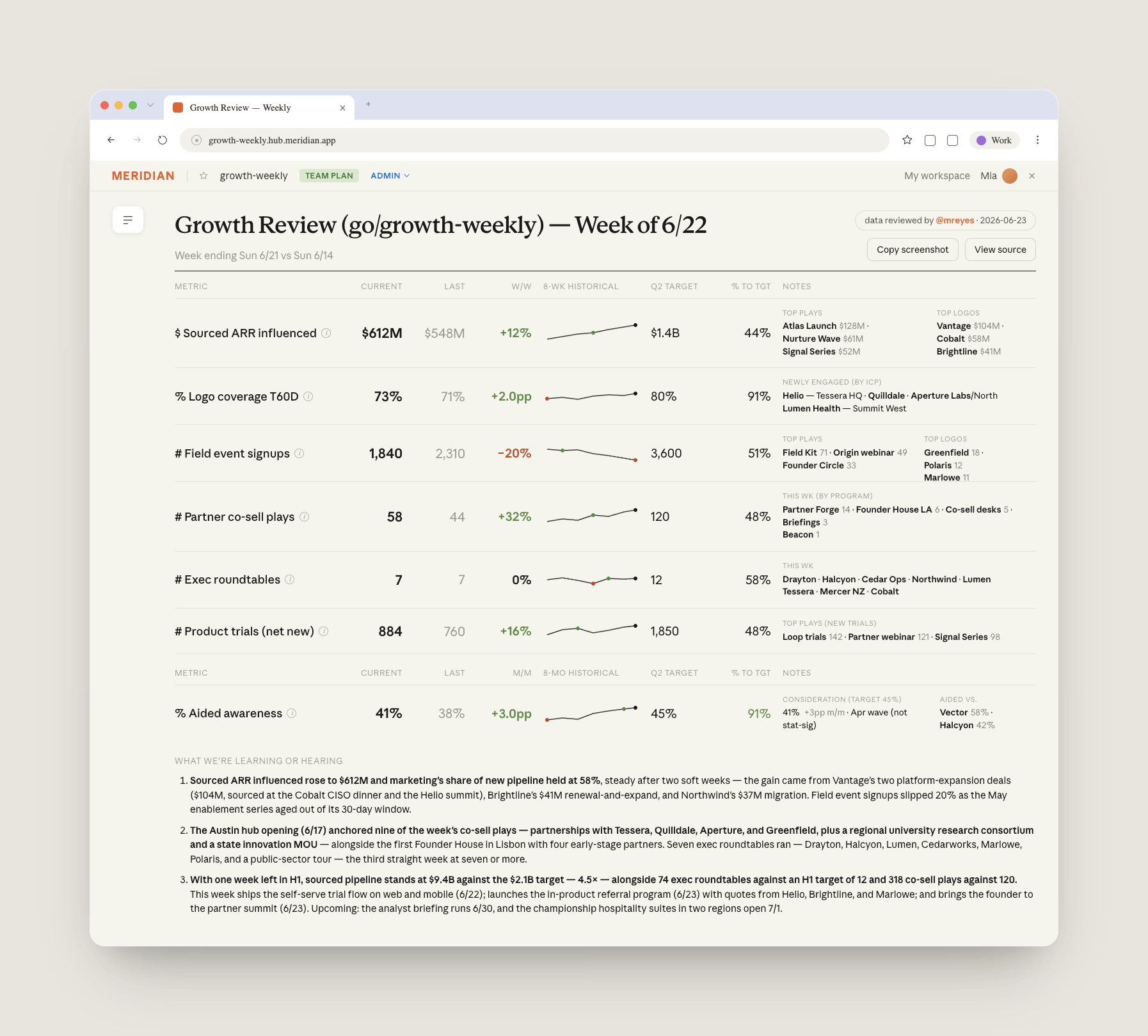
*週次メトリクスレポートは、デモデータを使用して表示されており、公開のためにすべての情報が匿名化または変更されています。このレポートには主要な指標と重点を置くべき領域の提案が含まれています。*数値が一致しない場合、Claude は推測するのではなく不一致をフラグ付けします。例えば、営業チームの再編成後、マーケティング側の報告書が営業側のそれと一致しなくなりました。Claude はそのギャップを指摘し、Ian にどのように対応すべきかを尋ねました。
このプロセスは、チームが使用するマーケティングプラットフォームやツールへのコネクタ(接続機能)と、Ian が構築して継続的に更新している 3 つのスキルに基づいて実行されています:
- プリパレーションスキルは、レポートの組み立てを駆動し、焦点、見出し、補足詳細を含む拡張を行います。
- 校閲スキルは、ドラフト内のすべての数値を検証済みのソースと照合して確認します。
- アクションアイテムスキルは、フォローアップを Asana のタスクに変換します。
毎週のセッションの終了時、Ian は Claude に、スキルに再登録すべき事項を要約するよう依頼します。例えば、新しい営業組織再編構造や彼が修正した点、あるいは見出しを構成したい新たな方法などです。Ian の場合、以前は最大 2 日かかっていたプロセス全体が、現在は最大 2 時間で完了します。
現在、Ian の時間の有意な部分が、マーケターが質問の枠組みを整え、プロンプトを洗練させ、Claude から直接数値を取得した際の回答を解釈するのを支援することにシフトしています。また、彼はデータ層により深く入り込み、Claude が数値、定義、地域構造をデータウェアハウスと同じように解釈していることを確認する余裕も生まれました。
人間の検証は、両方の作業ストリームの不可欠な一部となっています。これは、マーケティングアナリストの時間を従来多く占めていた日常的な手動タスクを Claude が自動化することで加速している変化です。
イベント構築とデータインポートの自動化
マーケティングキャンペーンの背後にあるインフラストラクチャをセットアップすることは、従来、マーケティングにおいて最も手作業が多いプロセスの一つでした。すべてのイベント、ウェビナー、または統合されたキャンペーンは、CRM 内、メールシーケンスとその背後の自動化を実行するマーケティングオートメーションプラットフォーム内、そして登録ページやイベントランディングページをホストするイベント管理プラットフォーム内でそれぞれ設定する必要があります。これらは通常異なるベンダーであり、それらの間の統合が完全に完了していることは稀です。
Claude Cowork 以前は、アンナベルは専用の Slack チャンネルからすべてのリクエストを受け取り、手動でそのシーケンスを進めていました。彼女の新しいセットアップはほぼすべて Claude によって処理されます。これは、依頼者が必要な支援の種類(イベント構築、データインポート、参加申請、承認サポート)を指定するインテークフォームから始まります。
1 時間ごとにディスパッチャースキルがチャンネルを読み込み、最も緊急性の高いリクエストを選択し、チケットにスタンプを押して重複作業を防ぎ、アンナベルが設定した必要な作業を行う 5 つの専門スキルのいずれかに引き渡します。このスキル自体はイベントセットアップを行いません。その役割は次に何を実行するかを決定することであり、これを分離しておくことで、アンナベルはルーティングに触れることなく各専門スキルを個別に改善できます。
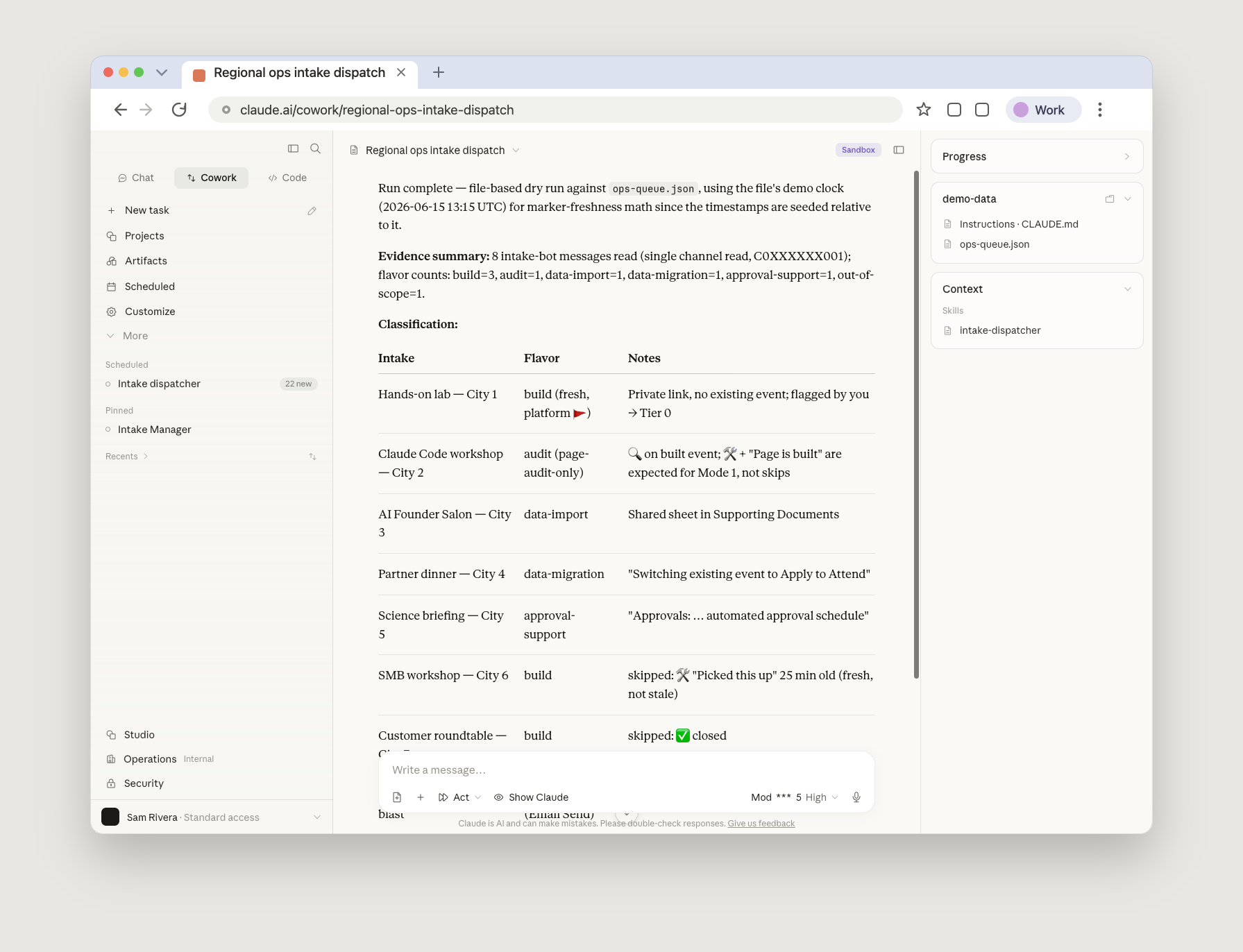
ディスパッチャーのスキルは、公開用に編集されデモデータと情報が示されており、チャネルを読み取り、必要な作業を行う 5 つの専門スキルのいずれかに手渡しのリクエストを行います。最も複雑なリクエストタイプであるイベント構築においては、イベント構築スキルが CRM キャンペーンの作成、ワークフローとリストを備えたマーケティング自動化キャンペーン、イベントプラットフォームの設定、メールのドラフト作成、ランディングページの生成、およびそれら間のすべての統合を含む一連の手順をエンドツーエンドで処理します。
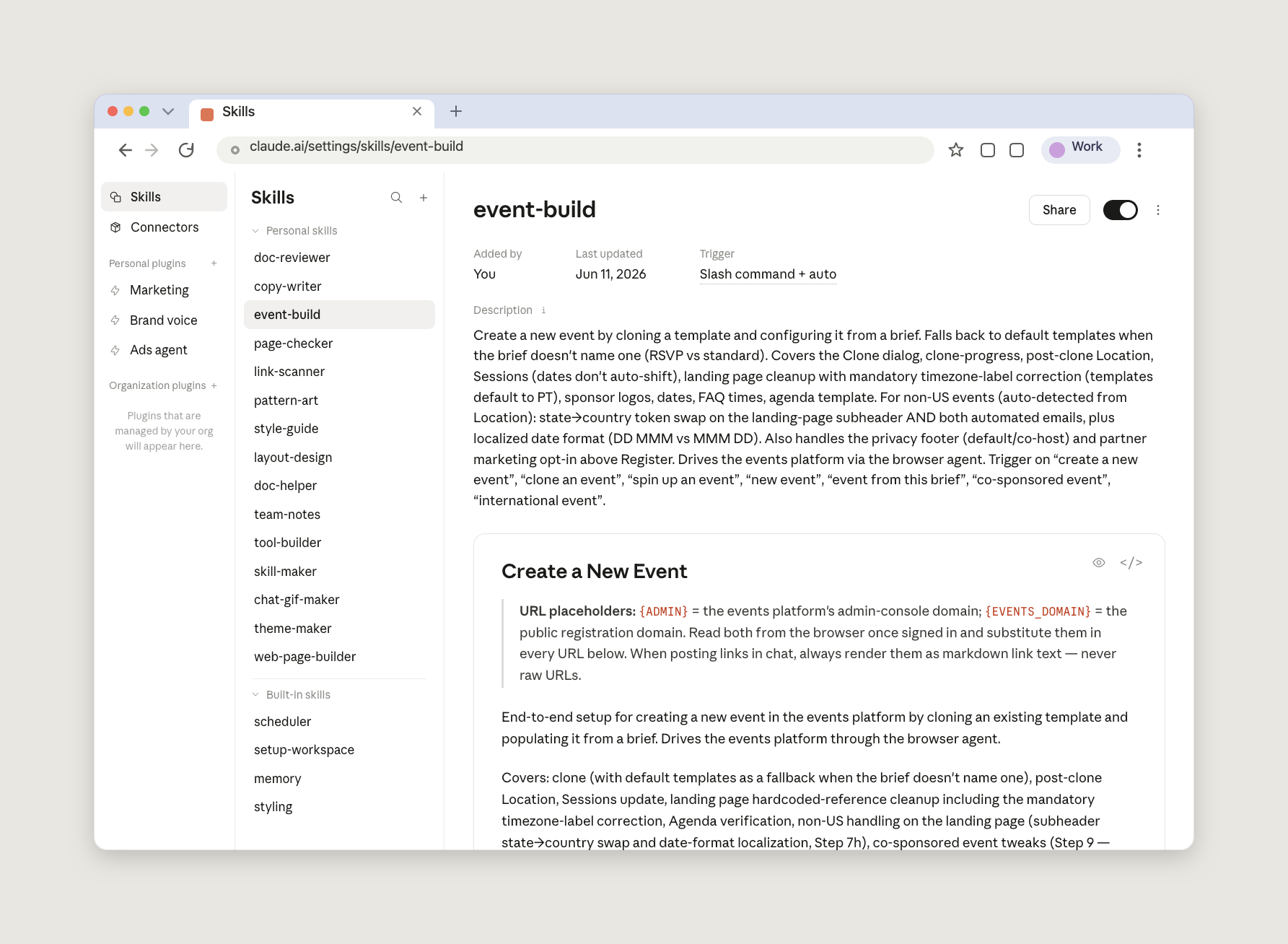
イベント構築スキル(公開用に抜粋・編集されたもの)は、Claude がリクエストを引き受けた時点と、ランディングページが依頼者のレビューに備え、監査担当者が引き継ぐ時点の 2 つのスラック更新をスクリプト化しています。構築が完了すると、新しいエージェントへの手渡しが行われます。監査エージェントは事前の文脈を持たずに開始し、ライブのランディングページ上でテスト登録を行い、Gmail で確認メールを開き、すべてが正常であれば Asana のタスクを完了としてマークします。Annabel は各結果が出荷される前にレビューを行います。
このワークフローは、Annabel が使用するマーケティングプラットフォームおよびツールへのコネクタと、彼女が構築し、新たなエッジケースを発見するたびに更新する多数のスキル上で実行されます。
- ディスパッチャーのスキルはインテークチャネルを読み込み、各リクエストを以下の適切な専門家のスキルへルーティングします。
- イベント構築スキルのエンドツーエンド設定をプラットフォーム全体で推進します。
- ウェビナーランディングページ作成スキルは、ウェビナー用のランディングページを即座に立ち上げます。
- 監査スキルは、別の新鮮な Claude インスタンスによって実行され、タスクが完了とマークされる前にイベント構築スキルの出力を検証します。
- 参加申込処理スキルは、登録フローにおける進行中の変更に対応します。
- 承認サポートスキルはイベントの承認を扱い、スケジュールされた間隔で適切なメールを送信します。
- データインポートスキルはリストのクリーニングと参加者データの処理を行います。
彼女はまた、別の「マネージャー」エージェントも常時開いておきます。実行が誤作動した際、彼女はマネージャーを開き、何が起きたかを確認し、何を調整すべきかを提案させます。維持する価値があるものはすべて、関連するスキルに戻されます。
これらの自動化されたワークフローは Annabel の日常において大きな時間節約になりますが、彼女がこれらを構築した主な動機は作業の質です。マーケティングチームが拡大するにつれ、手近なテンプレートからイベントページをコピーして作成すると、確認メールに間違った都市名が表示される、またはランディングページが壊れるといったバグが発生する可能性があります。Claude Cowork を使用することで、彼女はスケーラブルな環境でも構築の一貫性を確保できます。
キャンペーン運用の反復的な部分を Claude が引き受けることで、Annabel はイネーブルメントやプロセス・キャンペーンアーキテクチャの自動化・最適化によるより深いインサイト獲得など、より戦略的なプロジェクトに注力できるようになります。
Claude Cowork の導入を検討するマーケティング運用チームへのアドバイス
- 繰り返される修正をスキルに変換しよう。同じ内容を Claude に複数回修正させる場合、そのフィードバックはスキルの一部として登録すべきです。スキルを自分で構築する必要はありません:Claude が代わりに作成してくれます。
- まず校正用スキルを構築しましょう。このスキルは、Claude がレポートに記述するすべての数値が検証済みのソースから追跡可能であることを確認します。
- Claude に振り返りを求めましょう。Claude は指示の読み取り方が人間とは異なるため、新しいワークフローの初回実行後には「指示の中で何が難しかったか」を尋ねてください。Annabel は、浮き上がった課題をスキルにフィードバックし、スキルを絶えず更新する広範な実践の一環として行っています。
- 定期タスクを活用しましょう。毎週日曜日の夜や毎時間ごとに自動的に実行される作業は、誰かが記憶しておく必要のない作業です。
原文を表示
Marketing operations teams spend a meaningful portion of their time keeping the systems behind marketing programs in step with the business. While automation sits firmly in their purview, a lot of the work is anything but: martech tools don’t integrate cleanly with each other, reports are consolidated manually, landing pages get spun up one at a time.
Ian Chan, on the marketing operations team at Anthropic, used to spend one to two days a week pulling together the weekly marketing metrics review. Annabel Custer, who focuses on campaign operations, used to set up each new event by clicking through Salesforce, HubSpot, Swoogo, and email tools in sequence. Both have now compressed days of manual work into hours by setting up workflows in Claude Cowork.
The recovered hours have shifted the shape of their work. Ian and Annabel now spend less time clicking through systems and more time on enablement, validation, and the underlying data and processes the marketing team relies on as more people across the company pull their own numbers and drive their own programs.
Generating the weekly marketing metrics report
In a perfect world, every metric in the weekly report Ian prepares for marketing and leadership would live in a dashboard and his job would be to simply put together the narrative. In practice, some metrics are in the dashboard already, while others haven’t yet made it there from the data warehouse, and others haven’t been piped into the warehouse yet. New ones might exist only in a Slack message or a call transcript.
At Anthropic, the business moves faster than a traditional reporting pipeline can keep up with and Ian used to spend a day to two days every week tracking down data and validating it. Claude Cowork now handles most of that data hunt.
A scheduled task runs every Sunday evening, prompting Claude to read the previous week's review and the latest meeting transcript, check Slack for what the sales team is focused on, query the warehouse, and leave a folder with the numbers and a few suggested focus areas.
On Monday morning, Ian opens Claude Cowork and pulls the initial report, which contains the metrics tables and suggested headlines, or areas of focus.
Ian reviews them and once he’s confirmed or decided where to focus the narrative, he tells Claude to expand on them with supporting details and examples. Some weeks the team is responding to a sales priority, and others—to a product launch. At the quarter turn, Ian tells Claude to lead with quarterly plans and feeds in the quarterly review doc.
Claude generates the leadership slide from the same data and narrative: what changed, why, and what the teams are doing about it. Any follow-ups become Asana tasks.
When the numbers don’t line up, Claude flags the mismatch instead of guessing. After a reorg on the sales team, for example, marketing's reporting no longer matched theirs. Claude flagged the gap and asked Ian how to handle it.
The process runs on connectors to the marketing platforms and tools the team uses, and three skills that Ian has built and updates continually:
- A prep skill drives the report assembly, including focus, headlines, and expansion with supporting detail.
- A proofreading skill checks every number in the draft against a verified source.
- An action-items skill turns follow-ups into Asana tasks.
At the end of each weekly session, Ian asks Claude to summarize what came up that should go back into the skills. The new sales reorg structure, for example, the corrections he made, or a new way he wanted the headlines framed. In Ian’s case, the entire process, which used to take up to two days of work, takes up to two hours.
Now, a meaningful share of Ian’s time has moved to helping marketers frame their questions, refine their prompts, and interpret what they get back when they pull their own numbers from Claude. He also has bandwidth to go deeper into the data layer, making sure Claude interprets the numbers, definitions, and regional structures the same way as the data warehouse.
Human validation has become an integral part of both workstreams—a shift that’s accelerating as Claude automates the mundane manual tasks that have traditionally taken up much of marketing analysts’ time.
Automating event builds and data imports
Setting up the infrastructure behind marketing campaigns has traditionally been one of the most manual processes in marketing. Every event, webinar, or integrated campaign needs to be set up in the CRM, in the marketing automation platform that runs the email sequences and the automation behind them, and in the event management platform that hosts the registration page and the event landing page. Each of these is typically a different vendor, and the integrations between them are rarely complete.
Before Claude Cowork, Annabel picked up every request from a dedicated Slack channel and worked through the sequence manually. Her new setup is almost entirely handled by Claude. It starts with an intake form where requesters specify the type of help they need: event build, data import, apply-to-attend, or approval support.
Once an hour, a dispatcher skill reads the channel, picks the most urgent request, stamps the ticket so the work doesn't get duplicated, and hands it off to one of five specialist skills that Annabel has set up to do the required work. It doesn’t do any event setup itself; its job is to decide what runs next, and keeping it separate lets Annabel refine each specialist skill on its own without touching the routing.
For an event build, which is the most complex request type, an event-build skill handles the full sequence end to end: CRM campaign creation, marketing automation campaign with workflows and lists, event platform setup, email drafting, landing page generation, and all of the integrations between them.
When the build is done, it hands off to a new agent for audit. The audit agent starts with no prior context, submits a test registration on the live landing page, opens the confirmation email in Gmail, and marks the Asana task complete if everything looks right. Annabel reviews each result before it ships.
This workflow runs on connectors to the marketing platforms and tools Annabel works with, plus a number of skills she's built and updates as she finds new edge cases:
- A dispatcher skill reads the intake channel and routes each request to the right specialist skill below.
- An event-build skill drives the end-to-end setup across platforms.
- A webinar-landing-page creation skill spins up landing pages for webinars.
- An audit skill, run by a separate fresh Claude instance, verifies the event-build skill's output before the task is marked complete.
- An apply-to-attend skill handles in-flight changes to the registration flow:
- An approval-support skill handles event approvals and sends the appropriate emails at a scheduled cadence.
- A data-import skill scrubs lists and processes attendee data.
She also keeps a separate "manager" agent open. When a run misfires, she opens the manager and asks it to look at what happened and propose what to adjust. Anything worth keeping goes back into the relevant skill.
While these automated workflows will become significant time savers in Annabel’s day, her primary motivation to build them was quality of work. As the marketing team scales, marketers cloning event pages from whatever template happens to be nearby can produce bugs, such as confirmation emails surfacing the wrong city name or broken landing pages. With Claude Cowork, she gets consistency across builds, at scale.
As Claude takes on the repetitive parts of campaign operations, Annabel can focus on more strategic projects, like enablement, and automating or optimizing processes and campaign architecture for better insights.
Advice for Marketing Ops teams on getting started with Claude Cowork
- Turn repeated corrections into skills. When you find yourself correcting Claude on the same thing more than once, that feedback belongs in a skill. You don’t need to build skills, either: Claude can do that for you.
- Build a proofreading skill first. The proofreading skill checks that every number Claude puts in a report traces back to a verified source.
- Ask Claude to reflect. Claude reads instructions differently than a human writes them, so after the first runs of a new workflow, ask what was difficult about the instructions. Annabel feeds what surfaces back into the skill as part of her broader practice of constantly updating skills.
- Lean on scheduled tasks. Work that runs on its own every Sunday night or every hour is work no one has to remember to do.
関連記事
今日のまとめ
AI日報で今日の重要ニュースをまとめ読み