AI コーディングエージェントがコミットメッセージを変える
Cline Blog は、バージョン管理やコードレビューに続いて、AI コーディングエージェントがコミットメッセージの書き方にも変化をもたらしていることを指摘した。
Source Article
元記事を日本語で読む
本文に関係しない購読案内、埋め込み通知、サイト内プロモーションは除いています。

数年おきに、コードの書き方やワークフローに静かなる変化が訪れます。バージョン管理は「作業を保存する」考え方を、コードレビューは「可読性」への意識を、CI/CD は「テスト」のあり方を変えてきました。そして今、AI コーディングエージェントが、これまでほとんど意識されてこなかったものを変えようとしています。それがコミットメッセージです。
あなたのコミット履歴には、新たな読み手が現れました。その相手は、かつてのチームメイトたちよりもずっと慎重に、そして深く読んでいます。
これが日常でどう影響するか見てみましょう。Cline に「直近のコミットで行ったリファクタリング手法を続けて」と指示したとします。すると Cline は最近のコミット履歴を確認し、「fix」「updates」「more changes」「final fix」「actual final fix」というメッセージに遭遇します。「具体的に何を続ければいいのか?」「どのアプローチだったのか?」エージェントには追跡できる文脈がありません。生じた差分(diff)だけから意図を推測するしかありません。
では、別のシナリオを考えてみましょう。コミットメッセージがこうなっていたとします。
「UserService を async/await パターンへリファクタリング」「OrderService にも同じ非同期リファクタリングを適用」「新しい非同期動作に対応したテストを更新」
作業自体は同じです。しかし、Cline はパターン、範囲、そして方向性を把握できます。これにより、追加の説明なしに残りのサービスにもリファクタリングを継続して実行できるのです。
これは架空の話ではありません。アジェンシー AI の時代において、コミットがあなたに味方するか、それとも敵になるかの分岐点です。
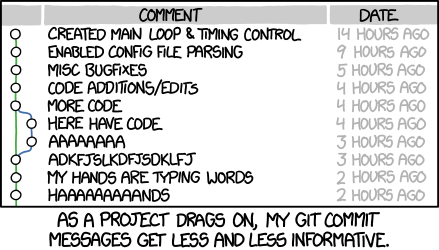
コミット管理が崩壊したときに何が起こるか、XKCD #1296 はよく表しています。「不具合の修正」「コード追加」「あああ」といったメッセージや、永遠に続く「手が文字を打っている最中」などです。https://imgs.xkcd.com/comics/git_commit.png
長年にわたり、私たちはコミットメッセージを一人の読者向けに書いてきました。それは人間によるレビューアーと、将来の保守担当者です。『コンピュータプログラムの構造と解釈』で示された古典的な助言も、コミットには当てはまります。「半年後のチームメイトが理解できる内容を書く」「コードレビュー時に役立つように書く」「変更の背景にある理由を説明する」。
その助言は今でも正しいですが、もはや十分ではありません。
AI コーディングエージェントは、あなたのコミット履歴を文脈として読みます。Cline の @git-changes 機能を使ったり、特定のコミットハッシュを参照したりすると、コミットメッセージがそのまま AI プロンプトに渡されていることになります。エージェントはそれらを解析し、推論して、コードベースの進化を理解します。曖昧なコミットメッセージは、チームメイトにとって役に立たないだけでなく、エージェントがあなたのコードベースを理解する上で盲点となるのです。
エージェントは単に文脈を待っているだけではありません。自らそれを利用して判断を下します。
Cline に「これまで確立したパターンに従って」とか「この移行を続けて」と指示すると、Cline は直近のコミット履歴から、そのパターンが具体的に何を指すのかというシグナルを読み取ります。これらのシグナルの質が、エージェントが出力する結果の良し悪しに直結します。
人間にもエージェントにも役立つコミットとは何か
基本となる枠組みはシンプルです。「何が変わったか」「なぜ変わったのか」「どこに影響があるか」の 3 点です。
違いを比較してみましょう。単に「認証コードを変更」と書いただけでは、Cline は変更があったことは知っても、次にどうすべきかの方向性が掴めません。一方、「セキュリティ監査の要件に基づき、JWT へ認証リファクタリングを行う」と記せば、アーキテクチャ上の判断理由と動機が明確になり、他の場所にある同様の認証パターンも同じ道筋をたどるべきだという指針になります。
前者はトークンを無駄遣いし、追加のプロンプトが必要になりますが、後者はエージェントが自らの力であなたの推論を拡張できるようにします。
重要なのは「意図」です。「JWT を使用するように認証をリファクタリングする」と書けば方向性が伝わりますが、「認証コードを変更する」だけではほとんど何も伝わりません。Cline が関連するコードに遭遇した際、同じパターンに従うべきか放置すべきかを判断するのは、この「意図」の記述です。
「なぜ」も同様に重要です。「セキュリティ監査の要件に基づき JWT へ移行中」と明記すれば、Cline は一貫して適用できる根拠を得られます。これがなければ、エージェントはすべての決定を孤立した偶然のものとして扱ってしまいます。
スコープ(範囲)を明確にすることで、衝突を防げます。「すべての API エンドポイントでエラー形式を統一する」といったコミットメッセージは、広範な変更が進行中であることを示します。Cline はこれを見て、関連コードに触れる際には注意深く扱い、矛盾するパターンを導入しないように判断できます。
こうしたシグナルを含むコミットであれば、エージェントは推測をやめてあなたの作業を拡張し始めます。逆に、明確なシグナルがない場合、あなたが時間を割いて誤解を正す必要が生じます。これは、明確なコミットがあれば防げたはずの時間です。
#### 怠慢なコミットの現実的なコスト
Cline に「このパターンを続ける」「これまで使っているアプローチに従って」と指示すると、エージェントは文脈を得るために直近のコミットを検索します。あいまいなコミットメッセージでは、エージェントは意図を推測せざるを得ません。その結果、試行錯誤が増え、トークン使用量も増え、修正作業も多くなります。結局のところ、明確なコミットで事前に伝わったはずの内容を、わざわざ説明するために時間を費やすことになります。
良いコミットは、AI を活用した開発における「力率の向上装置」になります。エージェントがたどるべき物語や、拡張できる推論の糸口を与えてくれるからです。一方、悪いコミットは、まさにシームレスな協働を望む瞬間に摩擦を生み出します。
これは Conventional Commits の採用や、すべての変更に対して長文を書くことを求める話ではありません。重要なのは「信号密度」です。明確な意図を持つ 2 行のコミットは、1 語だけのコミットよりも常に優れています。小説のような文章は必要ありません。有能だが字句通りの協働者にとって、あなたが何をしたのか、そしてなぜそうしたのかを理解するのに十分な文脈があればそれで十分です。
シンプルなフレームワークです。何が変わり、なぜ変わったのか、そして何が影響を受けるのか。小さな変更なら 1 行で、大きな変更なら短い段落で表現すれば十分です。重要なのは形式美ではなく、明確さです。
コミット履歴はもはや単なる開発インフラの一部に過ぎません。人間向けの監査証跡であるだけでなく、AI ツールが積極的に参照する文脈そのものなのです。この事実を踏まえて扱いましょう。
Cline の「変更の解説」機能を使えば、さらに威力を発揮します。これは git diff に対して行内形式で解説を提供する機能です。コミットメッセージに明確な意図があれば、解説もより詳細になります。Cline は単に変更箇所を伝えるだけでなく、コミットメッセージに含まれる推論と結びつけて説明できるのです。曖昧なコミットは、曖昧な解説しか生み出しません。
ぜひ Cline の git 連携機能を使って、コミットメッセージがどのように AI による文脈に変換されるかを確認してください。直近のコミットを @[commit-hash] で参照し、Cline があなたの記述をどう解釈するかを観察してみましょう。自分のコミットがワークフローを助けているのか、それとも邪魔になっているのかを素早く判断できる有効な手段です。
AI を活用した開発や、新しい現実に対応するためにワークフローをどう変えているかについて、Discord や Reddit のコミュニティで体験談を共有してください。
原文を表示
imageEvery few years, something shifts in how we write code and our workflows quietly adapt. Version control changed how we think about saving work. Code review changed how we think about readability. CI/CD changed how we think about testing. Now AI coding agents are changing something we barely think about at all: commit messages.
Your commit history has a new audience. And that audience is reading more carefully than most of your teammates ever did.
Here's what that looks like day to day. You ask Cline to "continue the refactoring approach from the last few commits." Cline pulls up your recent commit history and finds: "fix", "updates", "more changes", "final fix", "actual final fix". What exactly should it continue? What was the approach? The agent has no thread to follow, so it's left guessing intent from raw diffs alone.
Now imagine the alternative. Your commits read:
"Refactor UserService to async/await pattern", "Apply same async refactor to OrderService", "Update tests for new async behavior". Same work. But now Cline sees the pattern, the scope, and the direction. It continues your refactor across the remaining services without you having to explain anything twice.
This isn't a hypothetical. It's the difference between commits that work for you and commits that work against you in the age of agentic AI.
imageXKCD #1296 captures what happens when commit hygiene breaks down: "Misc bugfixes", "More code", "Aaaaaaaa", and the immortal "My hands are typing words."https://imgs.xkcd.com/comics/git_commit.png
For decades, we've written commit messages for one audience: human reviewers and future maintainers. The classic advice from Structure and Interpretation of Computer Programs applied to commits too. Write something your teammate can understand six months from now. Write something that helps during code review. Write something that explains the "why" behind the change.
That advice is still correct. But it's no longer complete.
AI coding agents now read your commit history as context. When you use Cline's @git-changes feature or reference a specific commit hash, your commit messages are literally being fed into AI prompts. The agent parses them, reasons about them, and uses them to understand your codebase's evolution. A vague commit message isn't just unhelpful to your teammates, it's a blind spot in your agent's understanding of your codebase.
Agents don't just passively receive context. They actively use it to make decisions. When you ask Cline to "follow the pattern we've established" or "continue this migration," it uses your recent commits for signals about what that pattern actually is. The quality of those signals directly impacts the quality of the agent's output.
What makes a commit useful to both humans and agents
The framework is straightforward: what changed, why it changed, and what it affects.
Consider the difference. "Change auth code" tells Cline something was modified but gives it no direction. "Refactor auth to JWT per security audit requirement" tells it the architectural decision, the motivation, and that similar auth patterns elsewhere should follow the same path. One commit burns tokens and requires follow-up prompting. The other lets the agent extend your reasoning on its own.
Intent matters most. "Refactor auth to use JWT" communicates a direction. "Change auth code" communicates almost nothing. When Cline encounters related code later, intent is what tells it whether to follow the same pattern or leave it alone.
The "why" matters just as much. "Migrating to JWT per security audit requirement" gives Cline a rationale it can apply consistently. Without it, the agent treats every decision as isolated and arbitrary.
Scope prevents collisions. "Update all API endpoints to return consistent error format" signals a broad, in-progress change. Cline knows to be careful when touching related code rather than introducing a conflicting pattern.
When commits carry this kind of signal, agents stop guessing and start extending your work. When they don't, you spend time correcting misinterpretations that clear commits would have prevented.
The practical cost of lazy commits
When you ask Cline to "continue this pattern" or "follow the approach we've been using," it searches your recent commits for context. Vague commits force the agent to guess at intent. This leads to more iterations, more token usage, and more corrections. You end up spending time explaining what you meant when clear commits would have communicated it upfront.
Good commits become force multipliers for AI-assisted development. They give the agent a narrative to follow, a thread of reasoning it can extend. Bad commits create friction at exactly the moment you want seamless collaboration.
This isn't about adopting Conventional Commits or writing paragraphs for every change. It's about signal density. A two-line commit with clear intent beats a one-word commit every time. You don't need novels. You need enough context that a capable but literal-minded collaborator can understand what you did and why.
A simple framework: what changed, why it changed, what it affects. You can express this in a single line for small changes or a short paragraph for larger ones. The goal isn't ceremony; it's clarity.
Your commit history is now part of your development infrastructure. It's not just an audit trail for humans, but it is context that your AI tools actively consume. Treat it accordingly.
This becomes even more powerful with Cline's Explain Changes feature, which provides inline explanations of any git diff. When your commits have clear intent, the explanations are richer; Cline can tell you not just what changed, but connect it to the reasoning in your commit messages. Vague commits produce vague explanations.
Try using Cline's git integration features to see how your commit messages translate into AI context. Reference a recent commit with @[commit-hash] and watch how Cline interprets what you wrote. It's a fast way to see whether your commits are helping or hurting your workflow.
Join our community on Discord or Reddit to share your experiences with AI-assisted development and how you're adapting your workflows for this new reality.
関連記事
今日のまとめ
AIデイリーブリーフで今日の重要ニュースをまとめ読み