ニューヨークで反ビッグテック集会、参加者がラディット派として街を練り歩く
ニューヨークで「Summer of Ludd」と題された一週間のイベントが開催され、参加者はスマートフォンを捨てて反ビッグテックのデモやオフライン交流を行う実験を行っている。
AI深層分析を開く2026年7月27日 19:03
AI深層分析
キーポイント
反テクノロジーのプロテストとイベント
ニューヨークで「S.H.I.T.P.H.O.N.E」と呼ばれる劇的な抗議活動が行われ、OpenAI やサム・アルトマンを公の裁判にかけようとしている。
オフライン中心の組織手法
イベントはウェブサイトやソーシャルメディアを使わず、電話番号、ポスター、紙の案内、口コミを通じて告知され、完全なオフライン運営を試みている。
若年層を中心とした参加者構成
参加者は全世代を対象としているが、特にZ世代に偏っており、彼らがデジタル依存から離れるためのワークショップやイベントに参加している。
若年層による大規模な反AI運動
参加者の多くがZ世代であり、彼らはビッグテックに対する最も激しい批判者となっている。
無邪気さと参加型のアプローチ
従来の懐疑的なルディット像とは異なり、この運動は皮肉を排し、遊び心と参加を通じて人々を集めている。
重要な引用
"Fuck, fuck, fuck AI," the Luddite gnomes – people in colorful, pointy homemade hats – chant as we march
Basically, the whole thing is an experiment designed to prove a single point: You don't need social media and extractive tech platforms to meet people and have fun.
"Google knows next to nothing / My mom knows everything!"
"Even if it gives us rabies / we will free the iPad babies"
編集コメントを表示
編集コメント
このイベントは、AI技術の急速な普及に対する社会の反動を象徴する現象として注目される。特に若年層が中心となる点から、今後のデジタル社会における価値観の分断や対立構造が浮き彫りになる可能性がある。
猛暑の真只中、私はマンハッタン下部を歩いています。周囲には「ルダイトの小人」たちという友好的な群れがおり、スマホの姿はどこにもありません。
ニューヨーク市では独立記念日の週末です。厳しい暑さにもかかわらず、約100人の参加者が尖った帽子をかぶり、通りで踊りながら反ビッグテックのスローガンを叫んでいます。「AI なんてクソだ」と、カラフルな手作りの尖った帽子を被った「ルダイトの小人」たちが行進しながら唱和し、困惑した観客たちにポケットの中の矩形(スマホ)をしまい込み、汗だくでスマホなしの祭典に参加するよう呼びかけます。
この小人たちは西へ向かい、ワシントン・スクエア公園を目指しています。そこでは OpenAI とその CEO のサム・アルトマンに対する公開裁判を行う計画です。これは「S.H.I.T.P.H.O.N.E」と呼ばれる劇的な抗議イベントの第4回目で、これは「情報技術への激しい憎悪と新自由主義的体験からの情熱的な出血」を意味する造語です。
今回は抗議活動が単発のものではありません。これは「ラッダの夏」と呼ばれる、テクノロジープラットフォームやソーシャルメディアを一切使わずに組織され、宣伝された週間の無料公共イベント祭りの一部です。「ラッダの夏」にはウェブサイトはありませんが、市内で毎日開催されるイベントの詳細は電話問い合わせで確認できます。スケジュールには、デートアプリを手放すための「オフライン・リズ(魅力)」ワークショップや、スマホを使わないまま楽しめる「Let's Get Off Together」と題されたフリークアウト・レイブ、インターネット海賊版の基礎を学ぶスキルシェア、そして元々のラッダ主義者の物語を再構成する野外演劇など、多様な催しが含まれています。
私は地元のイベントメールリスト「NYC Off Tech」を通じてこの祭りの存在を知りましたが、今週出会った他の参加者たちは、近所の壁に貼られたポスターや書店・カフェで配布された紙製のイベントガイド、あるいは友人からの口伝で知りました。
要するに、これは単一のポイントを証明するための実験です。つまり、ソーシャルメディアや搾取的なテクノロジープラットフォームがなくても、人々と出会い、楽しむことは可能だということです。
「グーグルはほとんど何も知らない/母ちゃんはすべてを知っている!」——このように唱和しながら、小人たちは通りすがりの人々に帽子を配り、スマホをしまうよう懇願します。この帽子は、1970 年代のオランダの無政府主義グループに由来するもので、彼らはいたずらなカルチャー・ジャミングと奇妙なカーニバル的なユーモアで知られていました。また、ある組織者の小人は「ただ単におかしいだけなんです」と説明しています。
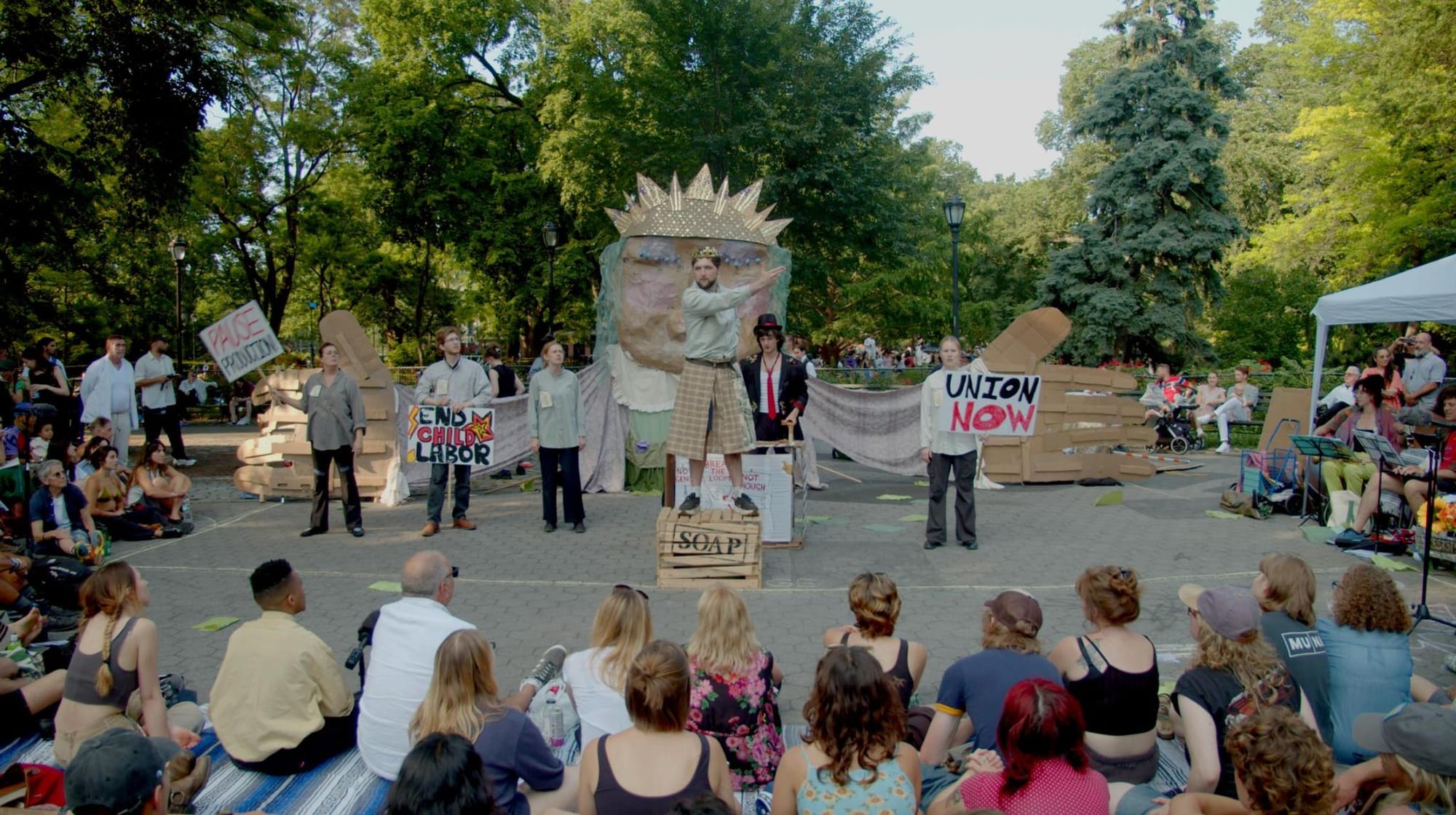
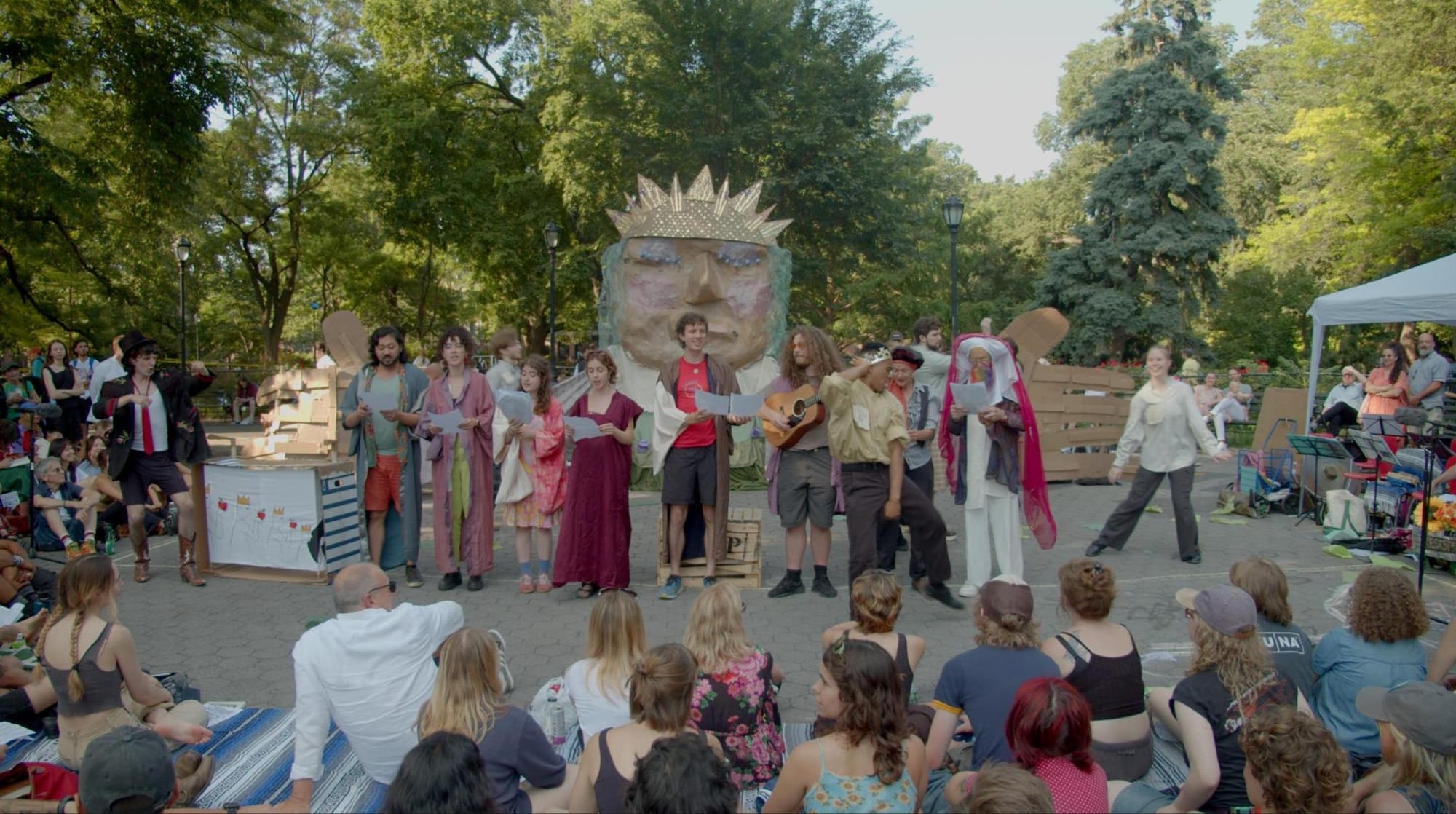
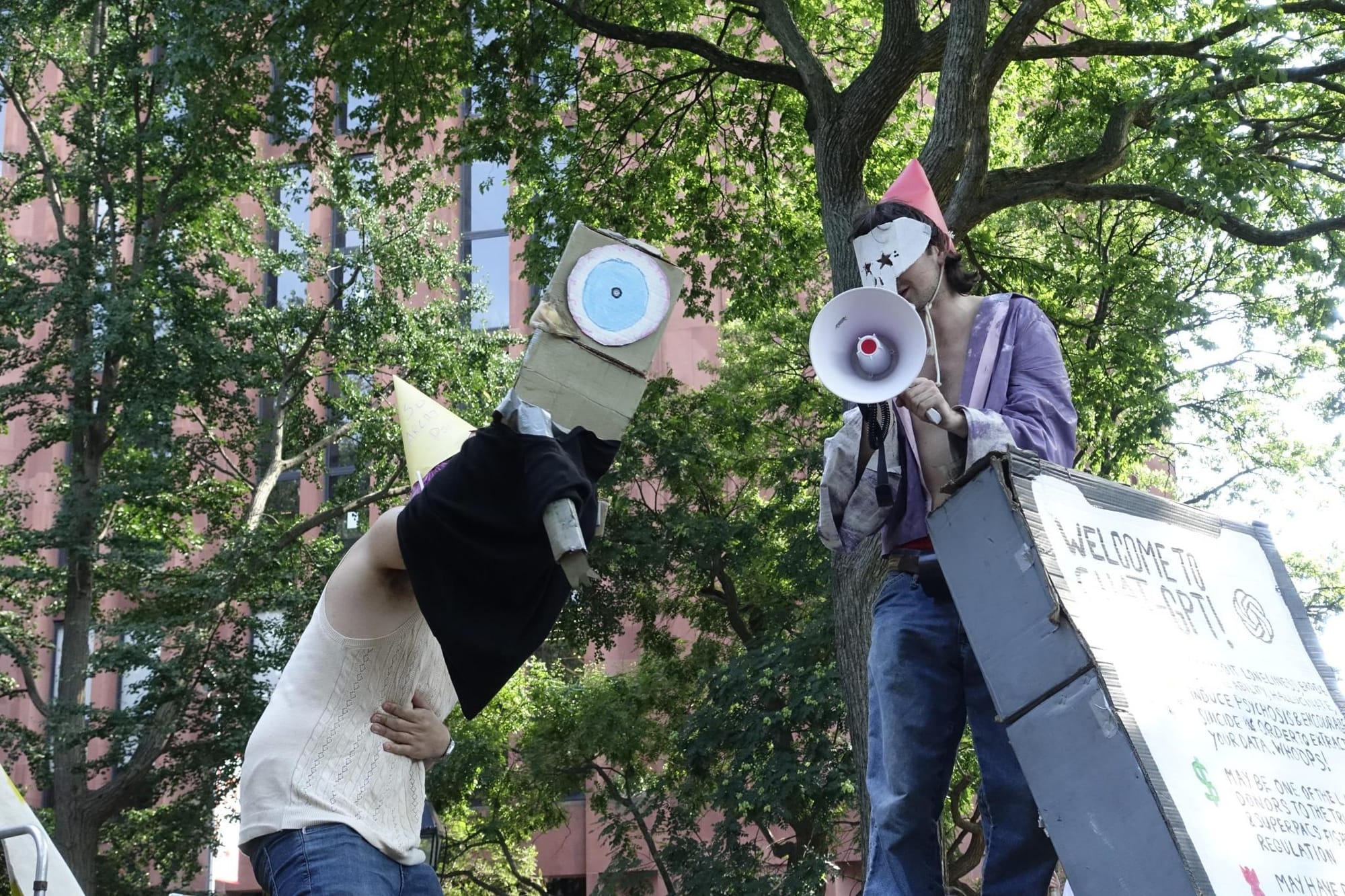
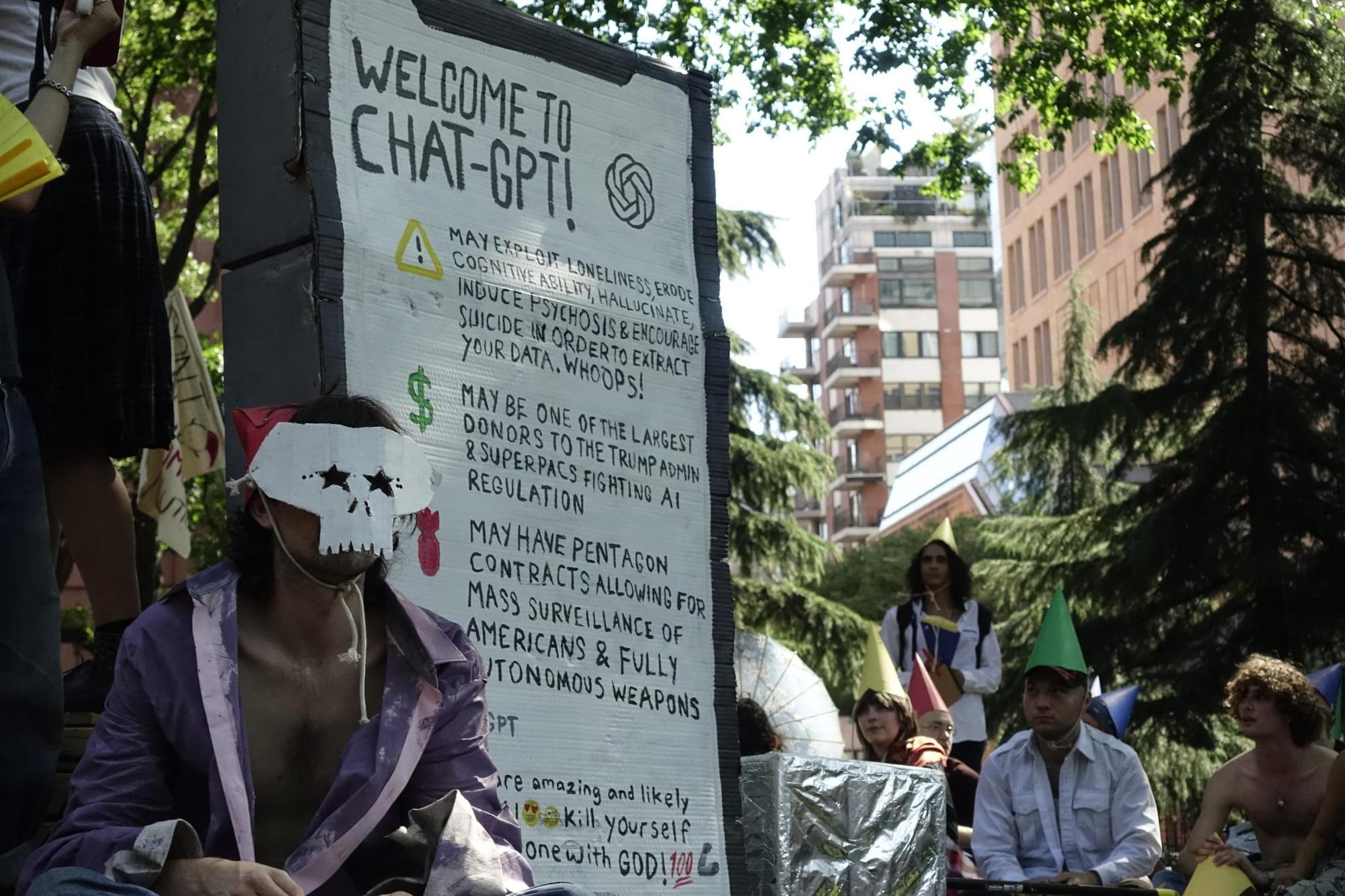
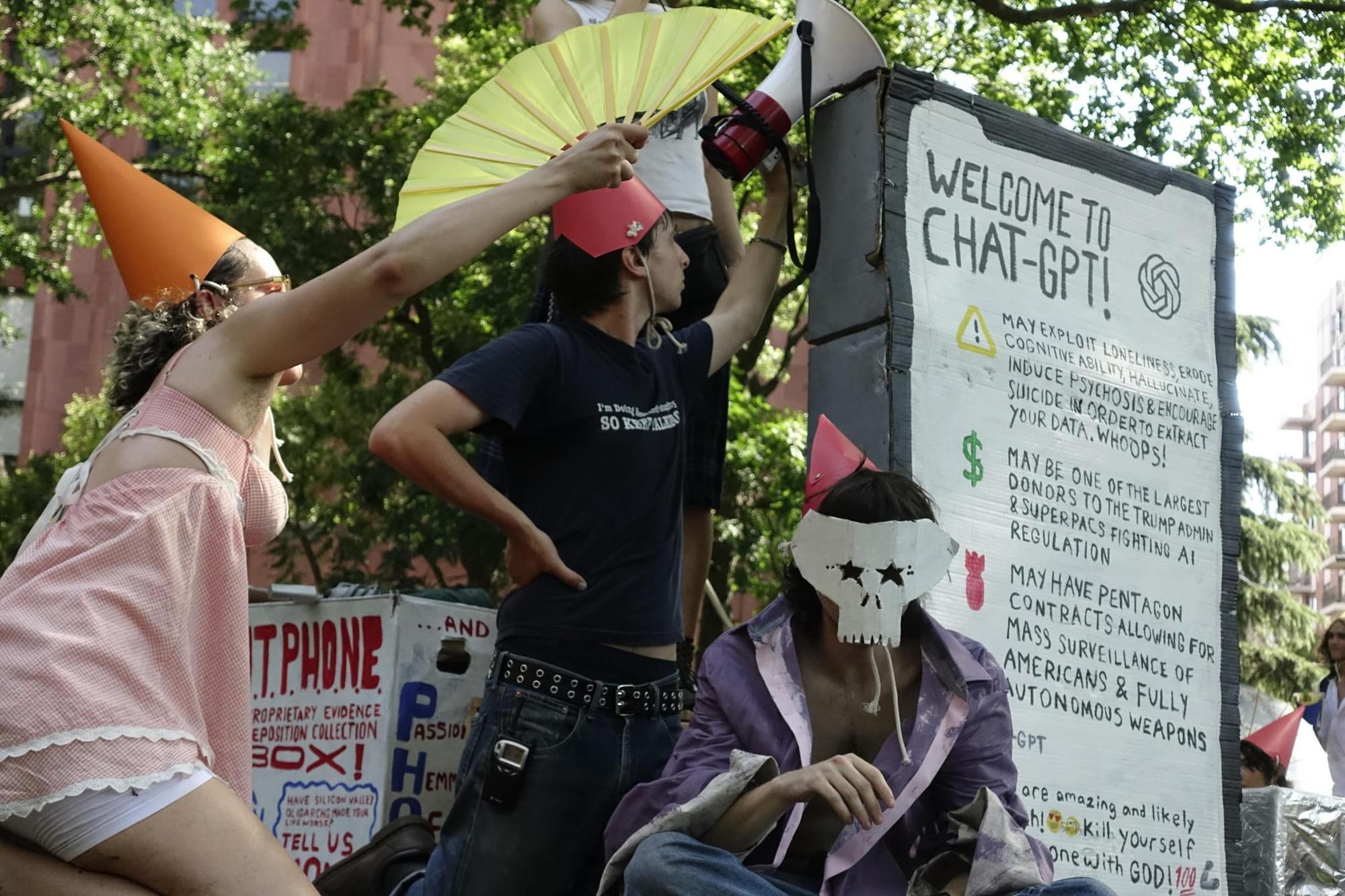
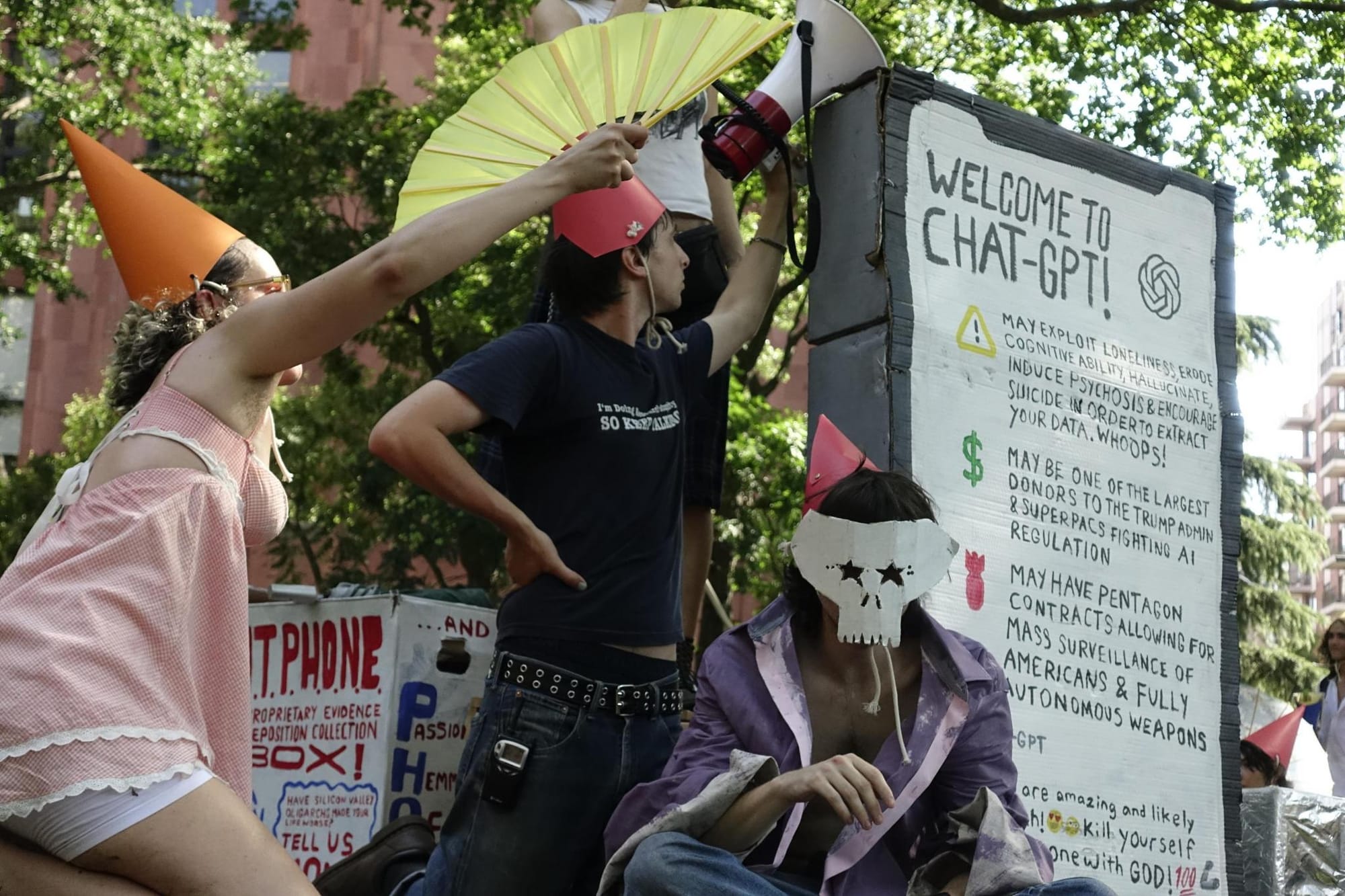
行進の先頭には、二人の小人が「ChatGPT」と書かれた巨大な段ボール製のスマートフォンを担いでいる。そのスマホには、チャットボットツールによって引き起こされた様々な社会的弊害が列挙されている。「狂犬病を与えられても/私たちは iPad 世代の子供たちを解放する」——小人たちはそう唱和しながら、そのスマホの像を芝生の上の小さな丘に置き、証言台として使われる予定の演説台の隣に据える。参加者は全世代にわたるが、Z 世代が圧倒的に多い。これは最近の世論調査と一致しており、若者がビッグテックに対する最も激しい批判者の一人となっていることを示している。
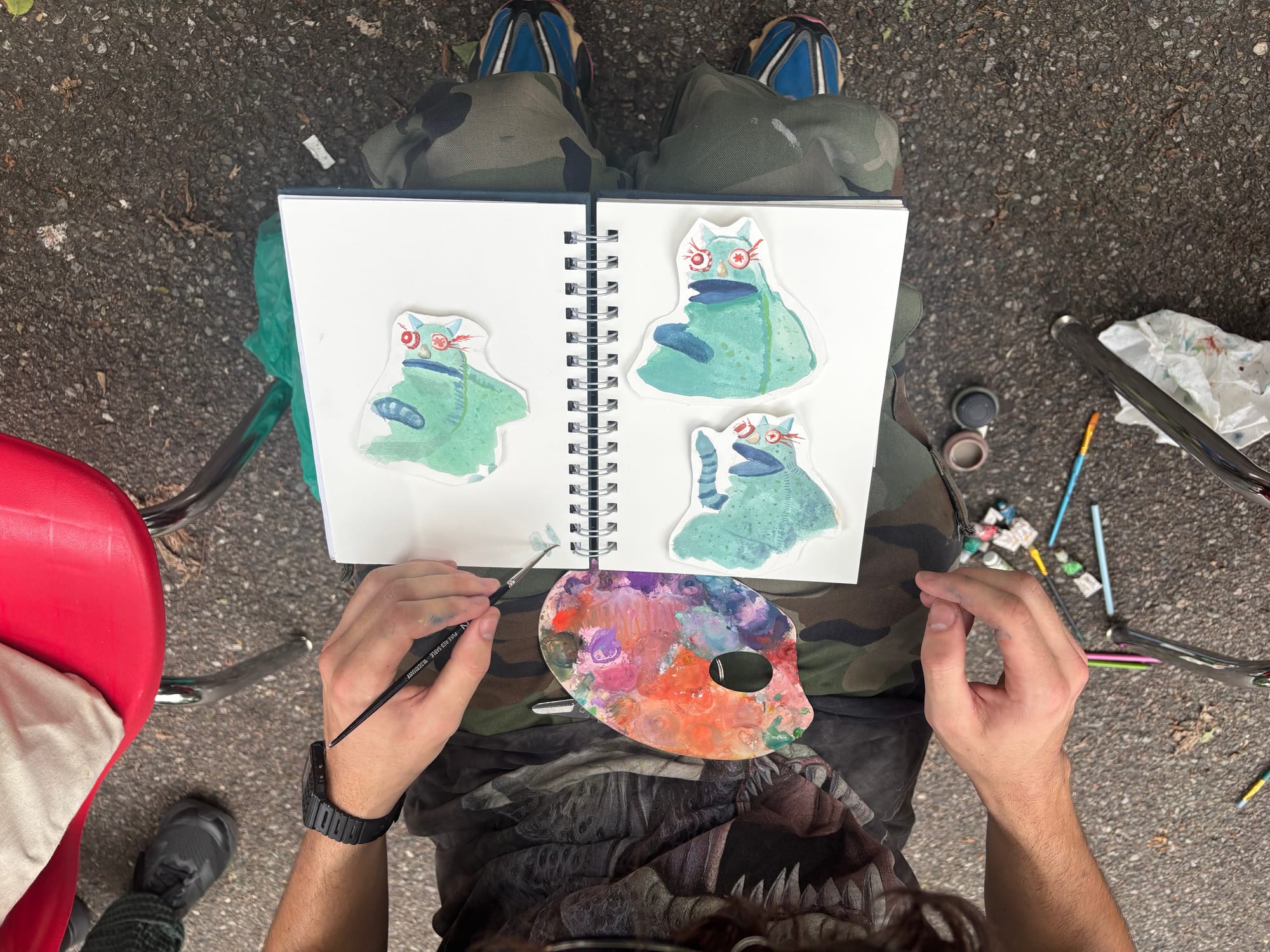
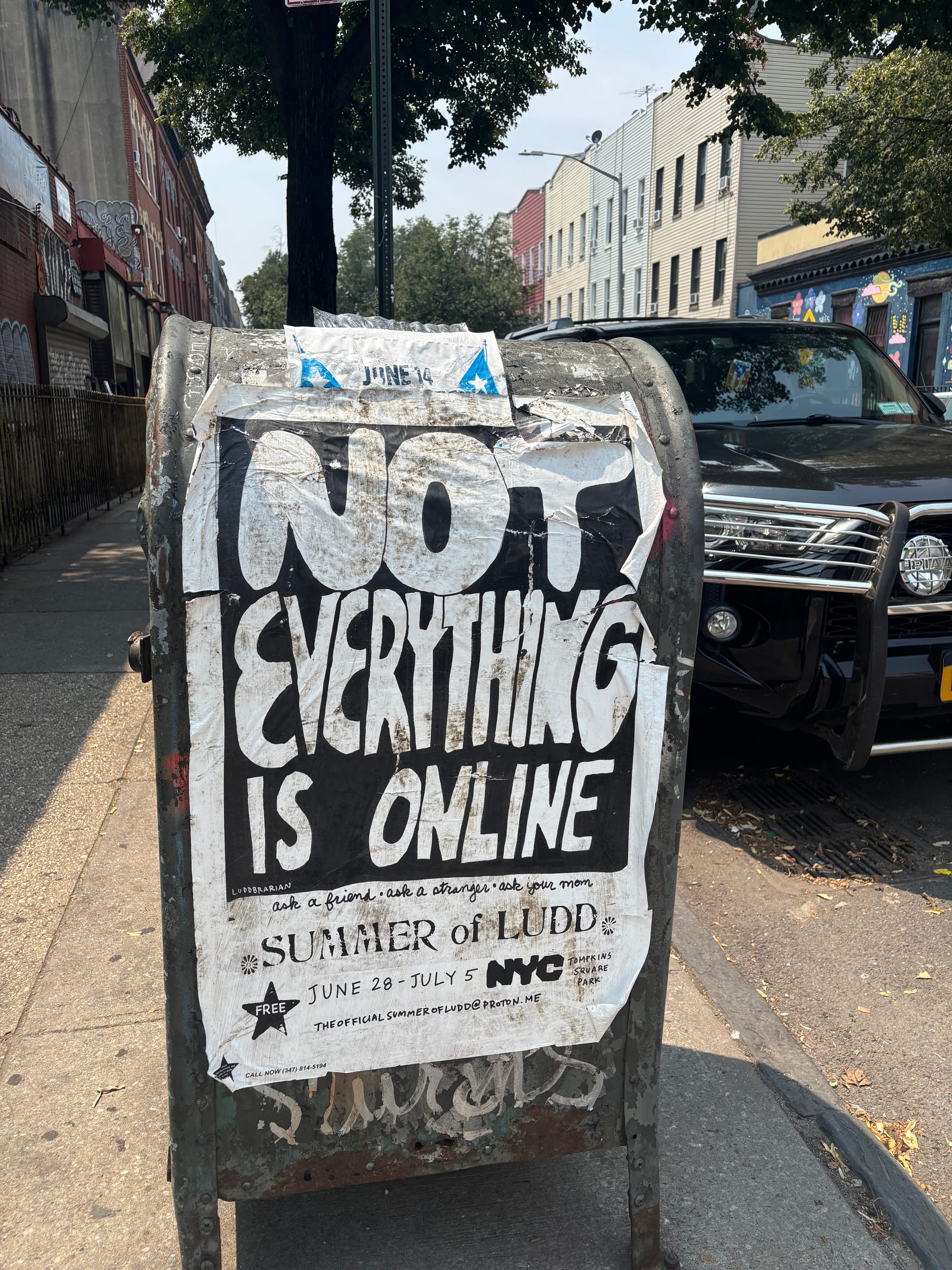
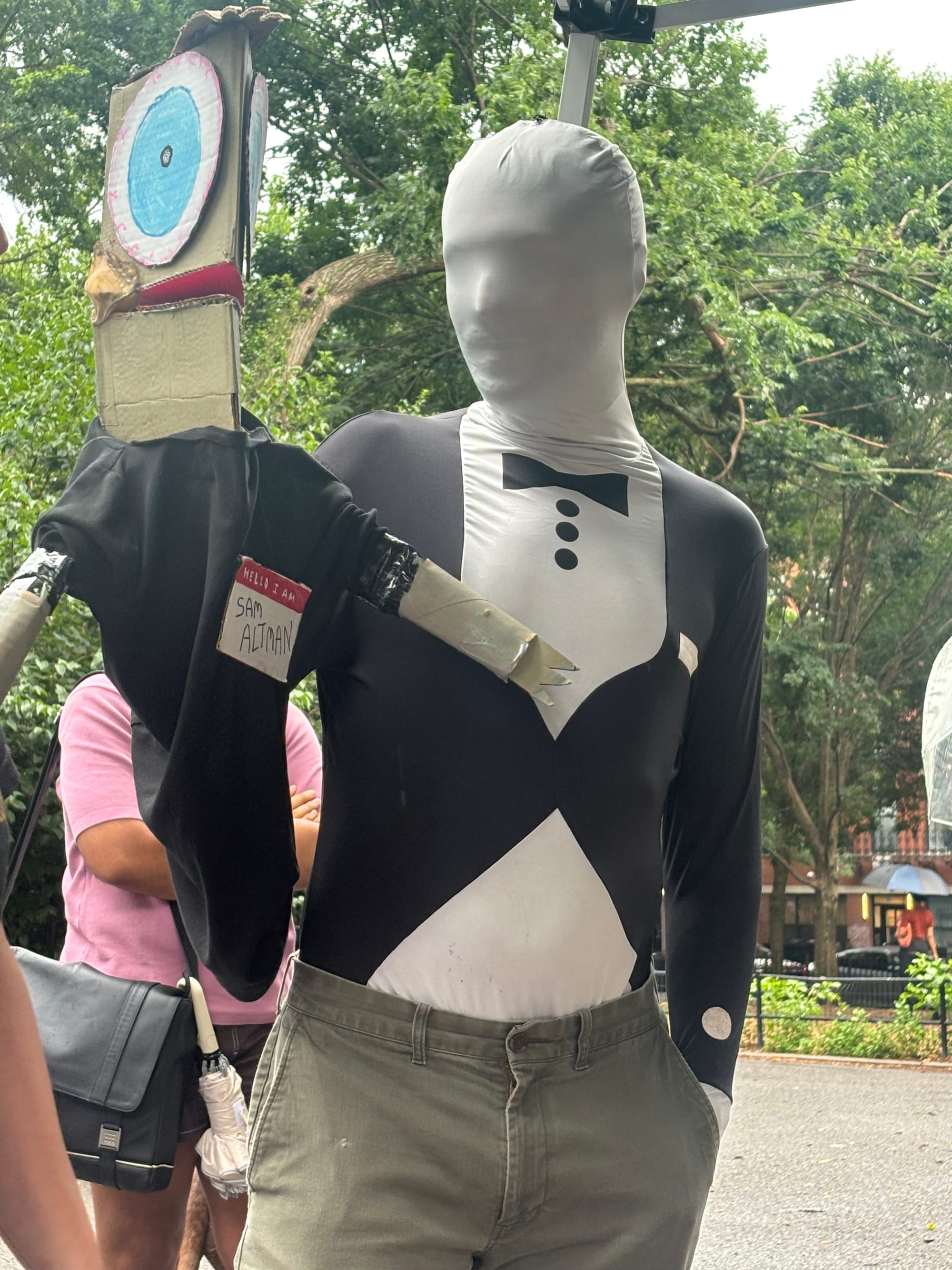
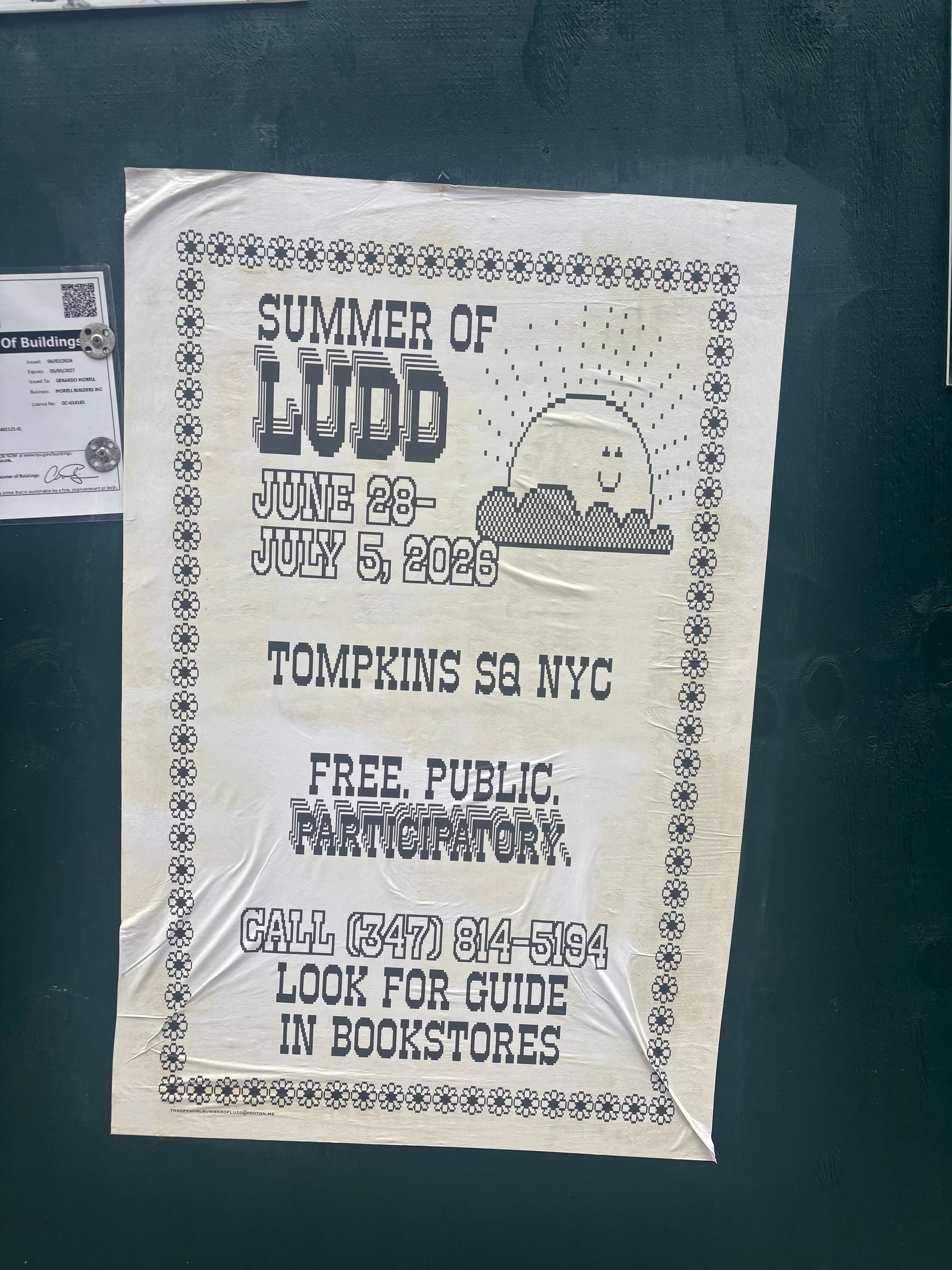
写真提供:Janus Rose
一人ずつ証言台に立ち、アルトマン氏を告発する人々が現れます。その罪状は多岐にわたります。アーティストの作品を学習素材として使用した件から、AI による精神異常を引き起こしたこと、さらに電力を大量消費し環境汚染をもたらすデータセンターによって気候危機を加速させたことまでです。
「私は AI を使ってエッセイを書き、問題を起こしました。今こそ AI との戦いを始めます」と一人の若者が演説台から叫び、拍手喝采を浴びました。「これらの企業はあなたに『あなたはバカだ』と思わせようとしています。しかしそれは嘘です。ここにいる全員が賢く、創造力を持っています」と別の証言者は語ります。テック企業が AI ツールや SNS アプリを設計する際、人々を依存させ、無力感や疎外感を植え付け、無限のスクロールに中毒させるように仕組んでいると説明しました。
群衆は一斉に「有罪!」と叫び、巨大な段ボール製の GPT 型スマホを喜んで踏みつけ始めます。その先頭に立っているのは、ハンマーを持つ小人型の「処刑人」です。そのハンマーには「Enoch Made Them / Enoch Shall Break Them(エノックが作り、エノックが壊す)」と刻まれています。これは 19 世紀の元祖ルディット派へのオマージュです。彼らは工場の機械を破壊する際、その機械もハンマーも作った人物の名前「エノック」にちなんでハンマーを名付けたのです。
この光景を、オキュパイ・ウォール街(Wall Street)の頃を彷彿とさせるものだと比較したくなる。だが、「ラッディズムの夏」が、ラッディストの抗議活動に一般的に予想されるものと決定的に違うのは、皮肉さがないこと、そして圧倒的な量の生々しくも無政府主義的な喜びにあふれている点だ。
古風で道徳的に厳格な「くそったれ」たちという歪んだ caricature として描かれるラッディスト像とは対照的に、新しい世代のラッディストたちは、遊び心と参加型の要素を通じて人々を運動に引きつけている。彼らは他人の画面利用時間を非難する代わりに、公共イベントを活用して自らの主張を代弁し、「不可欠」だと信じ込まされているテクノロジーが、実はそれほど不可欠ではないことを、有機的かつリアルタイムで実演してみせるのだ。
私は一週間前、トンプキンス・スクエア公園で初めてラッディストたちと出会った。彼らの公式スポークスパーソンを前にした記者会見の場だった。そのスポークスパーソンとは、ゴミで作られた人形である。
私は数人のジャーナリストと共にプラスチック製の椅子に座り、この人形に向かって質問を投げかけた。名前は「ガワナス」。ブルックリンにある有名な悪臭を放つ運河、ガワナス運河にちなんで名付けられたのだ。この人形の断片は、その運河で見つかったものである。
ガワナスはラッディストたちの「メディア・スポークスパーソン(媒体担当の操り人形)」であり、デジタルメディアプラットフォームやその関係者(私自身も含む)と対話する際にも、組織側の匿名性を保つために作られた代役である。
想像に難くないが、ラッダイストたちはソーシャルメディアを徹底的に嫌っている。スマートフォンは禁止されており、参加した記者たちには「Terms of Service」という契約書への署名が求められた。その契約書は茶色の長い紙の巻物に記されており、撮影したものが TikTok や Instagram Reels といった「ショート動画コンテンツ」に使われることを禁じている。
このイベントの精神に沿って、私はスマートフォンをしまい込み、取材にはホボニチの手帳とペン、そして小型の音声メモレコーダーのみを使った。
ゴワヌスは記者たちに向かってこう語った。「私たちは、ビッグテックへの依存から解放されるための代替的な社会インフラを構築したいのです。すべてのイベントは無料で、いかなる取引主義や消費主義にも抗うものです。私たちはその取引という要素を排除し、人々が自ら参加してイベントを作り出すことを目指しています。それが『ラッダイストの夏』の本質です。」
帰宅の電車の中で、デジタルな記録や消費に抵抗するイベントシリーズを取り上げるジャーナリストであることへの皮肉を考えた。地下鉄の駅に着くと、中古オンラインマーケットプレイス「Backmarket」の広告が目に入った。そこにはピンク色のニンテンドーゲームボーイが写され、「AB > AI」という文字が添えられていた。その隣には黒いマジックでハートマークが描かれており、匿名の賛同を示すこの落書きは、昨年に広く拡散されて荒らされた「Friend」AI 装置への広告とは対照的なものだった。
反射的にスマホで広告を撮影し、BlueSky に「AI への嫌悪が、もはや広告主を引きつけるほど文化的なコンセンサスに達した」というキャプションをつけて投稿しました。翌朝起きると、数千もの反応が届いていました。その多くは、高すぎる価格の古物販売のための地下鉄広告に、自分たちの反 AI 感情がぼんやりと反映されていることに喜びを示す人々からのものです。
これは、資本主義者が社会運動を「有害ではない美的消費」や「無責任なアイデンティティ・ポリティクス」という形にすり替えることで、その過激な可能性を奪い取り、自らのものにしてしまうという古典的な政治的罠について考えさせられました。
では、ネオ・ラダイト(反技術主義者)たちは、こうした避けられない収容化の試みにどう抵抗できるのでしょうか?また、Z 世代がフリップフォンや iPod、そして他のレトロなテクノロジーを、一種のパフォーマンス的な偽のノスタルジアとして見物する「Y2K 美学」をテーマにした TikTok の流行を超えて、ラダイト主義が大衆にアピールする運動を生み出すことは可能なのでしょうか。さらに、大衆コミュニケーションで最も一般的(しかし欠陥のある)なツールをあえて使わずに、どうやって成功した運動を構築すればよいのでしょうか。
デジタル・パックラット宣言
DRM(デジタル著作権管理)と所有権に対するビッグテックの攻撃により、私は自分自身のメディアライブラリを作ることにしました。あなたもそうすべきです。
「ルディテ・ルネサンス」のメンバーたち——夏に開催された「ルディの夏」を組織した、緩やかな匿名集団が自分たちをこう呼ぶ——は、「イベントこそがメディアである」という小冊子マニフェストでこれらの問いに答えようとしています。これはマルシャル・マクルーハンの有名な名言を踏まえたものですが、当然ながら、この作品は紙媒体でのみ入手可能です(ルディたちは、自らの成果をソーシャルメディアにアップロードしないよう、謙虚に要請しています)。中心となる考え方は、単なる街角での叫び声に終始するのではなく、人々が2026年のルディズムが提供するものを体験し、直接参加できるようなイベントを公共空間で開催することです。
では、こうしたイベントにはどのような要素が含まれるべきでしょうか。ここがルディたちがあえて曖昧さを残すポイントです。答えがないからではなく、イベントを予測不能かつ収益化不可能なものにするための防衛策として意図的にそうしています。もしソーシャルメディアの役割が、人間の存在を消費・代謝して、 bite-sized なショート動画コンテンツの無限のスクロールへと変えることだとすれば、イベントの目的は、人々を分類や記録のできない形で集結させることにあります。1960年代のパフォーマンスアーティスト、アラン・カプローの「ハプニング」のように、何であれあり得ます——ただし、無料であり、参加型であり、そして決して、絶対に退屈してはいけないという条件付きでです。
「イベントはあなたにとって不気味で、現実離れしているように見えるかもしれません。しかしそれは意図的なことです」と、ルディストたちは自らのジン・マニフェストに記しています。「DIY ショー、講義、アートフェアなどでは、事前に何が起きるかが決められています。それによって人々は儀式的あるいは取引的な行動をとってしまいます。『クールさ』という単調な流れを打ち破り、真剣さと緊迫感を促すあらゆる手段が最も重要です。」
つまり、イベントそのものが媒体であり、伝えたいメッセージは「ルディストであることは再び楽しい」ということです。
私は翌週、トンプキンス・スクエアに何度か足を運びました。夏の間、ルディストたちの祭典が行われている間、彼らはかつてボヘミアン的な下東区のたまり場を、まるで町の広場のようにつくり変えました。毎日公園でテント生活を送りながら、無料の食事やジン、そして市内で開催されるさまざまなイベントに参加するための多彩な手段を提供しました。要するに、ルディストたちが何を目指しているのかを知りたいなら、ここに来て直接会うしかありませんでした。
画像提供:Summer of Ludd
ドワーフ(小人)の抗議集会に集まった大勢の人々の間を歩いていると、Motherboard の創設者で低技術(ローテク)文化の愛好家でもあるアレックス・パステルナクや、最近 WIRED 誌に対して「1 日のスクリーンタイムが平均 17 時間」と明かした「ネット依存」ジャーナリストのテイラー・ロレンツに出くわしました。また、90 年代からニューヨークの抗議活動に欠かせない存在となった「ショッピング停止教会」の指導者であるリバーンド・ビリーも姿を現していました。
集会参加者の一人、Luddite(ルディット)運動の組織者であるバッキーは、百万匹のドワーフがパレードする直前、公園で集まった人々に向かってこう訴えました。「慢性化したオンライン文化は、活動家たちにとってもすでに手放せないものとなっています。私たちが消費する習慣は追跡され、分析され、再び私たちへ売りつけられています。小さな画面の中で楽しさを求めれば求めるほど、私たちを監視し、時間と想像力を搾取し、イーロン・マスクやピーター・ティール、マーク・ザッカーバーグ、マーク・アンドリーセン、そしてティム・クックといった大企業の冷酷な経営者たちの懐を肥やす怪物に餌を与えているのです。」
「私の注意力を取り戻したい!」と一人の参加者が叫びます。それに応えて群衆は歓声を上げました。
バッキーは、2012 年のアラブの春における反乱を例に挙げ、シリコンバレーがどのようにして活動家の領域までその支配を広げたかを説明しています。Twitter が全盛期にあった当時、テクノロジー企業や西側の報道機関の多くは、ソーシャルメディアプラットフォームが世界中の人々を抑圧的な体制から解放する手助けをしているという物語を推進していました。これらのプラットフォームとその恩恵をもたらす企業の支配者のおかげで、90 年代のインターネットにおけるテクノ・ユートピアの夢が実現し、独裁者は自由な情報と自由市場の力によって崩壊すると主張されたのです。
一方、エフゲニー・モロゾフのような人々は、この枠組みは単に無知で誤りであるだけでなく、Twitter や Facebook といった企業がその野望を推進し、「善行を行う技術救世主」という仮面の下で中央集権的な社会インフラとして地位を確立することを許したと論じました。同時に、ソーシャルメディアによって構築された広告収益型の監視ネットワークは、政府がこれまでになく激しく反体制派を取り締まることを可能にし、顔認識技術やアルゴリズムによる操作、差別的なデジタル ID 法といった事態への道を開いたのです。
しかし、エジプトや他の地域での革命には、テクノロジーとはほとんど関係のない別の説明も存在しました。
「テラール広場に数十万人が押し寄せたのは、その半径10マイル以内に100万人が暮らしていたからです。あれは公共空間であり、政治が行われる場です」とバッキーは語ります。「公共空間こそが新しいソーシャルメディアです。イベントを運営することは、Instagramのストーリーで拡散されるアクティビスト向けのインフォグラフィックに匹敵するのです」
ご招待:404 Media 第3回記念ライブポッドキャスト&パーティー!
私たちは2夜連続で楽しい時間を過ごして祝います。1日目はポッドキャストの生録音、翌日はパーティです。有料購読者の方は無料または割引で参加できます。詳細は後述します。
ビッグテックやAIへの嫌悪感が主流派に浸透する今、「ラッダイトの夏」のような動きが生まれるのは必然です。私がどこへ行っても、シリコンバレーの実験がいよいよ終焉を迎えているという圧倒的な感覚があります。かつては良質な製品の提供を掲げ、民主主義や進歩性を謳っていた企業たちが、今ではファシストと手を組み、インターネットをゴミで埋め尽くし、誰も望まない迷惑なAI機能を強制的に押し付けています。
これに対する新たなラッダイトたちは、テクノロジーそのものを放棄するのではなく、近接性や対面での人間関係を重視した新しいインフラを構築しようとしています。それは、疎外感や絶望的なスクロール行為とは対極のものです。
「これは今を生きるための活動です」と、インターネット文化論者でありメディア教授のダグラス・ラシュコフは語りました。彼はルディット人形の行進にも参加していました。「この動きが終焉を迎えようとも、すでに敗北したとしても、私たちは楽しもうとするのです。そして、楽しいまま終わるのです。もし対面で、技術やデジタルに依存しない交流の中で十分なパーティーができるなら、アビー・ホフマンには不可能だったような方法で世界を魅了できるでしょう。」
90 年代に「バイラル(拡散)」という用語の普及を牽引した人物として、ラシュコフは他の追随者よりも長く技術への反発動向を見守ってきました。彼の 2016 年の著書『Throwing Rocks at the Google Bus』は、Google や Facebook といった企業が公共インフラを混乱させ、サンフランシスコ湾岸地域を自らのイメージで再構築する中で、一般大衆のシリコンバレーへの感情が転換した決定的な瞬間を捉えています。
その後の 10 年間で、テック企業は曖昧だった進歩的な姿勢や「悪くなるな」という公的イメージを捨て去りました。そして、その余波の中で成人した若者たちは、次第に自らの現実を反映するものとして、技術への反発や新ルディット主義運動へと惹かれていくようになりました。
「この世代が生きるスキナーボックスの規模は、かつてないほど極端だ。我々はできる限り適応したが、彼らはその中に生まれたのだ」とラッシュコフ氏は語る。「彼らの心や身体的な感覚は、生まれてから意図的に混乱させられ、阻害されてきた。だからこそ、この世代こそが好例となる。人間の本質的な部分は何らかの形で、必ず表現を求めようとするからだ。
雇用環境の暗さと目に見える気候危機の崩壊も相まって、ここ数ヶ月で起きたビッグテックへの反発の大きな波は、Z 世代から来ている理由をさらに裏付けている。例えば、卒業式で AI を称賛するテック企業の CEO に対して、卒業生たちがブーイングを浴びせる一連の動画が viral(バズ)したことがその象徴だ。しかし、ルダイト派はすぐに指摘する。彼らの運動は世代を超えたものであり、「ルダイトの夏」で目指す目標は、ニュースの見出しやネット上の注目を集めるという手段だけでは達成できないと。
AI を『次の産業革命』と呼んだ卒業式スピーチに学生がブーイング
フロリダ中央大学の卒業式で、スピーチを行ったスピーカーに対してブーイングが浴びせられた。人文系学科の卒業生たちは、「AI はクソだ!」と叫び続けた。
では、なぜ私はここにいて、この記事を執筆しているのか。本質的に捉えられず、またその意図自体が捉えられないような運動とイベントの核心を捉えようとしているのはなぜか。
おそらく、ジャーナリズムとは何か起きたかのぼんやりとした痕跡として機能し、文化の代わりとなる時に最も輝くからではないだろうか。そしてそれは、未来に同じことが起こり続けるかもしれないという示唆にもなる。
また、これは他者への道標のようなものでもある。「避けられない」としてテック企業が脅すような未来は、実はそれほど避けられなかったのかもしれない。そして人間同士が互いを見つけ、新しい生き方を作り出すことに対して、私たちはそれほど絶望的ではないのだということを示している。
「コンセプトの一部是这样的:『あなたはそこにいなければならなかった』」とラッシュコフ氏は私に語った。「まるで『地球?あなたはその場にいてこそ理解できる』とか、『人生?そこにいなければわからない』といったようなものだ」と。
ただ、その場にいなければわからなかったのだ。
原文を表示
 imageI’m marching across Lower Manhattan in the middle of a heatwave with a friendly mob of Luddite gnomes, and there isn’t a phone in sight.
It’s Fourth of July weekend in New York City, and the brutal temperatures haven’t stopped a hundred-or-so people from donning pointy hats and dancing in the streets while chanting anti-Big Tech slogans. “Fuck, fuck, fuck AI,” the Luddite gnomes – people in colorful, pointy homemade hats – chant as we march, urging the confused spectators recording us to put away their pocket rectangles and join us in our sweaty, phone-less revelry. The gnomes are headed West, towards Washington Square Park, where they plan to carry out a public show trial for OpenAI and its CEO, Sam Altman. It’s the fourth iteration of a theatrical protest event they call “S.H.I.T.P.H.O.N.E,” which stands for “Scathing Hatred of Information Technology and the Passionate Hemorrhaging of Our Neo-liberal Experience.”
This time, the protest isn’t a one-off. It’s part of the “Summer of Ludd,” a week-long festival of free public events organized and advertised entirely off of tech platforms and social media. The Summer of Ludd doesn’t have a website, but you can call a phone number to get a run-down of the events happening each day around the city. The schedule includes everything from an “offline rizz” workshop designed to help you ditch dating apps, a phone-free rave called “Let’s Get Off Together,” internet piracy 101 skill-shares, and an outdoor play that retells the story of the original Luddites. I found out about the Summer of Ludd from a local event mailing list called NYC Off Tech, but other folks I met throughout the week learned about it from posters wheat-pasted around their neighborhoods, paper event guides distributed to bookstores and coffee shops, or just word-of-mouth from friends.
Basically, the whole thing is an experiment designed to prove a single point: You don’t need social media and extractive tech platforms to meet people and have fun.
“Google knows next to nothing / My mom knows everything!” the gnomes chant as they hand out gnome hats to random bystanders and implore them to put away their phones. The hats, I’m told, are a reference to a Dutch anarchist group from the 1970s known for their impish culture-jamming and absurd carnival humor. It’s also “just kinda silly,” one of the organizer gnomes explains to me.
At the front of the march, two gnomes carry a giant cardboard smartphone labeled “ChatGPT,” which lists off the various well-documented social ills caused by chatbot tools. “Even if it gives us rabies / we will free the iPad babies,” the gnomes continue chanting as they set the smartphone effigy down on a grassy knoll, next to a soapbox that will be used as a witness stand. The crowd is all-ages, but skews heavily Gen-Z — consistent with recent polls showing that young people have become some of Big Tech’s fiercest critics.
Images courtesy Janus Rose
One by one, witnesses take the stand to accuse Altman of numerous crimes perpetrated by OpenAI — from training models on artists’ work, to inducing AI psychosis, to accelerating the climate crisis with polluting and power-hungry AI datacenters. “I used AI to write one of my essays and got in trouble. Now I’m starting a war on AI,” one young person says from atop the soapbox, receiving cheers of approval. “These companies want you to think that you’re dumb, but that is a lie. Everyone here is smart. Everyone here is creative,” says another witness, describing how tech companies design AI tools and social media apps to make people dependent on them — making them feel helpless, alienated, and addicted to the endless scroll. The crowd roars its unanimous verdict in unison (“GUILTY!”) and everyone begins joyfully stomping on the giant cardboard GPT phone. Leading them is a gnome “executioner” holding a hammer that bears the phrase “Enoch Made Them / Enoch Shall Break Them” — an homage to the original 19th Century Luddites, who named the hammers they famously used to smash factory machines after the guy who made both the machines and the hammers.
It’s tempting to compare the spectacle to something from the days of Occupy Wall Street. But what sets the Summer of Ludd apart from what one might expect of a Luddite protest is its lack of cynicism and an overwhelming abundance of raw, anarchic joy. Far from the distorted caricature of Luddites as curmudgeonly, puritanical tsk-tsk’ers, the new Luddites attract people to their movement through playfulness and participation. Instead of shaming others for too much screen time, they use public events to make their points for them, demonstrating organically and in real-time that the “indispensable” tech we’ve organized our lives around is not so indispensable after all.
I first met the Luddites a week earlier in Tompkins Square Park, for a press conference hosted by their official spokesperson: a puppet made of garbage.
I joined a small group of journalists sitting in plastic chairs and directing questions at the puppet, who is named Gowanus, after the famously putrid Brooklyn canal where the parts of its patchwork body were found. Gowanus is the Luddites’ “media spokespuppet,” a stand-in created to maintain the organizers’ anonymity while interfacing with digital media platforms and their operatives—including me.
As one might imagine, the Luddites are very averse to any kind of social media. Smartphones are verboten, and they ask every journalist present to sign a “Terms of Service” agreement on a comically long brown paper scroll, which states that nothing we capture may be used to make “short-form video content” like TikToks or Instagram Reels. In keeping with the spirit of the event, I kept my phone stowed away and used nothing but my Hobonichi notebook, a pen, and a small voice memo recorder to do my reporting for this article.
“We are interested in building alternative social infrastructure that allows us to be no longer reliant on Big Tech,” Gowanus told the group of journalists as they dutifully scribbled notes. “All our events are free, and defy any sort of transactionalism or consumption. We’re trying to dispel that transactional element and get people to participate and create the events themselves. That is what the Summer of Ludd is all about.”
On my train ride home, I pondered the irony of being a journalist covering an event series designed to resist digital capture and consumption. When I reached my subway stop, I noticed an ad for the second-hand online marketplace Backmarket, showing a pink Nintendo Game Boy with the text “AB > AI.” Someone drew a heart next to it in black sharpie marker—an anonymous mark of approval that felt like the opposite of the subway ads for the “Friend” AI device that were widely and virally defaced last year.
Almost reflexively, I took a picture of the ad with my phone and posted it to BlueSky with the caption: “Hatred of AI now reaching the level of cultural consensus that becomes attractive to advertisers.” I woke up the next morning to thousands and thousands of interactions, many from people delighted to see their anti-AI sentiment vaguely reflected in a subway ad for overpriced second-hand goods. This made me think about the classic political trap, where capitalists co-opt social movements by channeling their radical potential into harmless forms of aesthetic consumption and feckless identity politics.
How can the neo-Luddites resist these inevitable attempts at co-optation? Can Luddism generate mass-appeal beyond Y2K aesthetic Tiktok trends, where Gen-Z’ers marvel at flip phones, iPods, and other retro tech as a kind of performative false-nostalgia? And how do you build a successful movement while eschewing the most common (albeit flawed) tools of mass-communication?
The Digital Packrat Manifesto
DRM and big tech’s war on ownership has led me to make my own media libraries, and you should too.
Members of the Luddite Renaissance—as the loose-knit, anonymous collective that organized the Summer of Ludd refer to themselves—attempt to answer these questions in “The Event is the Medium,” a zine manifesto referencing the famous Marshall McLuhan quote which, naturally, is only available in physical paper format (The Luddites humbly request that none of their work be uploaded to social media). The central idea is utilizing public space to run events that get people to experience—and directly participate in—what Luddism has to offer in 2026, instead of just yelling at people on a street corner.
What should these Events entail? This is where the Luddites become intentionally vague—not for lack of answers, but as a defense mechanism designed to make the Event unpredictable and unmonetizable. If social media’s role is to consume and metabolize human existence into an endless scroll of bite-sized, short-form video content, then the Event’s purpose is to bring people together in ways that defy categorization and documentation. Like the “Happenings” of 1960s performance artist Allan Kaprow, they can be anything and everything—as long as they are free, participatory, and never, ever boring.
“The Event may seem nebulous and surreal to you; this is on purpose,” the Luddites write in their zine manifesto. “DIY shows, teach-ins, art fairs, all come with a preconceived notion of what will happen. This causes people to act in a ritualized or transactional way. Any way that you can break through the monotony of ‘coolness’ to facilitate earnestness and urgency is paramount.”
In other words: If the event is the medium, the message is that being a Luddite is fun again.
I returned to Tompkins Square several times over the next week. Throughout the Summer of Ludd festivities, the Luddites had transformed the formerly-bohemian Lower East Side hangout into a kind of town square. They camped out at the park each day, providing free food, zines, and plenty of ways to plug in to the various happenings throughout the city. Basically, if you wanted to find out what the Luddites are all about, you had to meet them here, in person.
Images courtesy Summer of Ludd
Somewhere in the large crowd that had gathered for the gnome protest, I ran into Motherboard founder and fellow low-tech appreciator Alex Pasternak, along with “extremely online” journalist Taylor Lorenz, who recently told WIRED that her screen time averages 17 hours a day. Also present was Reverend Billy, leader of the Church of Stop Shopping, whose corporate exorcisms and culture-jamming theatrics have been a staple of NYC protests since the 90s.
“Chronically online culture has become something we’re attached to, even as activists,” Bucky, one of the Luddite organizers, told a crowd of gnomes in the park, just prior to the million-gnome march. “Our consumer habits are tracked, analyzed, and sold back to us. Every time we seek fun in our little light-boxes, we feed a beast which surveils us, which exploits our time and our imagination, and which lines the pockets of big psycho assholes like Elon Musk, Peter Thiel, Mark Zuckerberg, Marc Andreesson, and Tim Cook.”
“I want my attention back!” someone shouts in response. The crowd cheers in agreement.
Bucky mentions the 2012 Arab Spring uprisings as a pivotal example of how Silicon Valley extended this capture to the realm of activism. In the heyday of Twitter, tech companies and most of the Western press pushed a narrative that social media platforms were helping liberate people around the world from oppressive regimes. Thanks to these platforms and their beneficent corporate overlords, the argument went, the techno-utopian dream of the 90s internet would be realized, and dictators would crumble under the power of free information and free markets.
Others like Evgeny Morozov argued that this framing was not only naïve and wrong, but allowed companies like Twitter and Facebook to advance their ambitions and establish themselves as centralized social infrastructure under the guise of do-gooder tech saviorism. At the same time, the ad-powered surveillance networks built by social media enabled governments to crack down on dissidents like never before, paving the way for things like facial recognition, algorithmic manipulation, and discriminatory digital ID laws.
But there was another explanation for the revolutions in Egypt and elsewhere that had little to do with tech.
“The reason hundreds of thousands of people went to Tahrir Square is because a million people lived within ten miles of it. That is public space, and public space is where politics happens,” said Bucky. “Public space is the new social media. Running an event is the new activist infographic on an Instagram story.”
You’re Invited: 404 Media’s Third Anniversary Live Podcast and Party!
We’re celebrating with TWO NIGHTS of good times: A live taping of the podcast, and a party the following night! Paid 404 Media subscribers get free and discounted access. Details below.
With hatred of big tech and AI hitting the mainstream, it makes a lot of sense that something like the Summer of Ludd would emerge in this particular moment. Everywhere I go, there is an overwhelming sense that the Silicon Valley experiment is on its last legs. The companies that once aimed to make good products and postured as democracy-loving and progressive now open ally themselves with fascists, actively enshittify the internet with slop, and force-feed us annoying AI features that nobody wants. In response, the new Luddites seek not to abandon technology entirely, but build new infrastructure that embraces proximity and in-person human relationships, instead of alienation and doom-scrolling.
“This is an activism of the moment,” internet culture theorist and media professor Douglas Rushkoff, who was also present for the Luddite gnome march, told 404 Media. “Even if the whole thing is ending, even if we’ve already lost, we’re gonna go and party. We’re gonna go down having fun. And if we can have a good enough party in face-to-face, non-technological, non-digital interaction, we will seduce the world like Abby Hoffman never could.”
As the person who coined the rise of “viral” media back in the 90s, Rushkoff has been paying attention to tech backlash trends longer than most. His 2016 book “Throwing Rocks at the Google Bus” captures a pivotal moment where public sentiment toward Silicon Valley began to sour, as companies like Google and Facebook disrupted public infrastructure and reshaped the San Francisco Bay Area in their image.
Over the next decade, the tech companies did away with their vaguely progressive, ‘Don’t Be Evil’ public image, and young people who came of age in the aftermath increasingly found themselves attracted to tech backlash and the neo-Luddite movement as a reflection of their lived reality.
“The extent of the skinner box that this generation is living in is more extreme. We adapted to it as best we could, but they were born inside of it,” said Rushkoff. “Their hearts and their somatic sensibilities have been intentionally disrupted and stymied since they were born. And so they’re a good case study to show that whatever that part of us is, it will seek expression eventually.”
Bleak job prospects and a visibly collapsing climate further explain why some of the biggest moments of Big Tech backlash in recent months have come from Gen-Z—like the series of viral videos showing graduates booing tech CEOs for praising AI during their commencement speeches. But the Luddites are quick to point out that their movement is multi-generational, and their goals for the Summer of Ludd can’t be realized through the medium of news headlines and viral online attention.
Students Boo Commencement Speaker After She Calls AI the ‘Next Industrial Revolution’
A commencement speaker at the University of Central Florida was booed, with graduating humanities students yelling out, “AI SUCKS!”
So, what am I doing here? Why am I writing this article, attempting to capture the essence of a movement and an event that—by its very nature and stated intention—refuses to be captured? Maybe it’s because journalism is best when it acts as a cultural placeholder, a blurry indication that something happened here, and perhaps will keep happening in the future. It’s also a kind of beacon for others to find—an indication that the “inevitable” future tech companies keep threatening us with is perhaps not so inevitable, and that humans aren’t so hopeless at finding each other and creating new ways to live.
“Part of the concept is: You had to be there,” Rushkoff told me. “It’s like oh, Earth? You had to be there. Life? You had to be there.”
You just had to be there.
AI算出
論評・提言ainew評価標準
記事は OpenAI や ChatGPT を主要な批判対象として扱っており、AI テクノロジーに対する社会的反応という文脈で強く関連している(0.75)。しかし、これは既存の「ラッダ主義」運動や反テック思潮を報じるものであり、新規の技術的発見や独自データに基づく追報ではないため、新規性は低い(0.25)。また、ニューヨーク発の社会運動であり、日本固有の企業・市場・法規制との直接的な関連性はない(0.0)。
6つの評価軸を見る
- AI関連度
- 75
- 情報源の信頼性
- 75
- 新規性
- 25
- 調べる価値
- 50
- 重複の少なさ
- 100
- 日本での有用性
- 0
関連記事
今日のまとめ
AIデイリーブリーフで今日の重要ニュースをまとめ読み