実用的な制約デコーディングの入門ガイド:KDnuggets が解説
本記事は、大規模言語モデルが指定されたデータスキーマや正規表現に厳密に従うよう強制する「実用的制約デコーディング」の仕組みと、有限状態機械を用いたロジットマスク技術について解説している。
AI深層分析を開く2026年7月28日 23:30
AI深層分析
キーポイント
実用的制約デコーディングの定義
構造化生成やガイド付きデコーディングとも呼ばれ、トークン選択段階でモデルが指定されたスキーマや文法から外れた出力を行えないようにするエンジニアリング戦略である。
従来のプロンプト手法との違い
単に「JSON を出力して」と頼むような確率的なアプローチではなく、プロンプトとテキスト生成を連続したプログラムとして扱い、特定の文字列をロックダウンする点で本質的に異なる。
有限状態機械による制御機構
推論プロセス開始前に目標制約をコンパイルして有限状態機械を構築し、各ステップで許可されたトークンのリスト(ホワイトリスト)を提供する仕組みを採用している。
ロジットベクトルへのマスク適用
モデルが生成した生のスコアベクトルに対して、ホワイトリストに含まれないトークンのロジットを負の無限大(-inf)に設定することで、不正な出力を数学的に不可能にする。
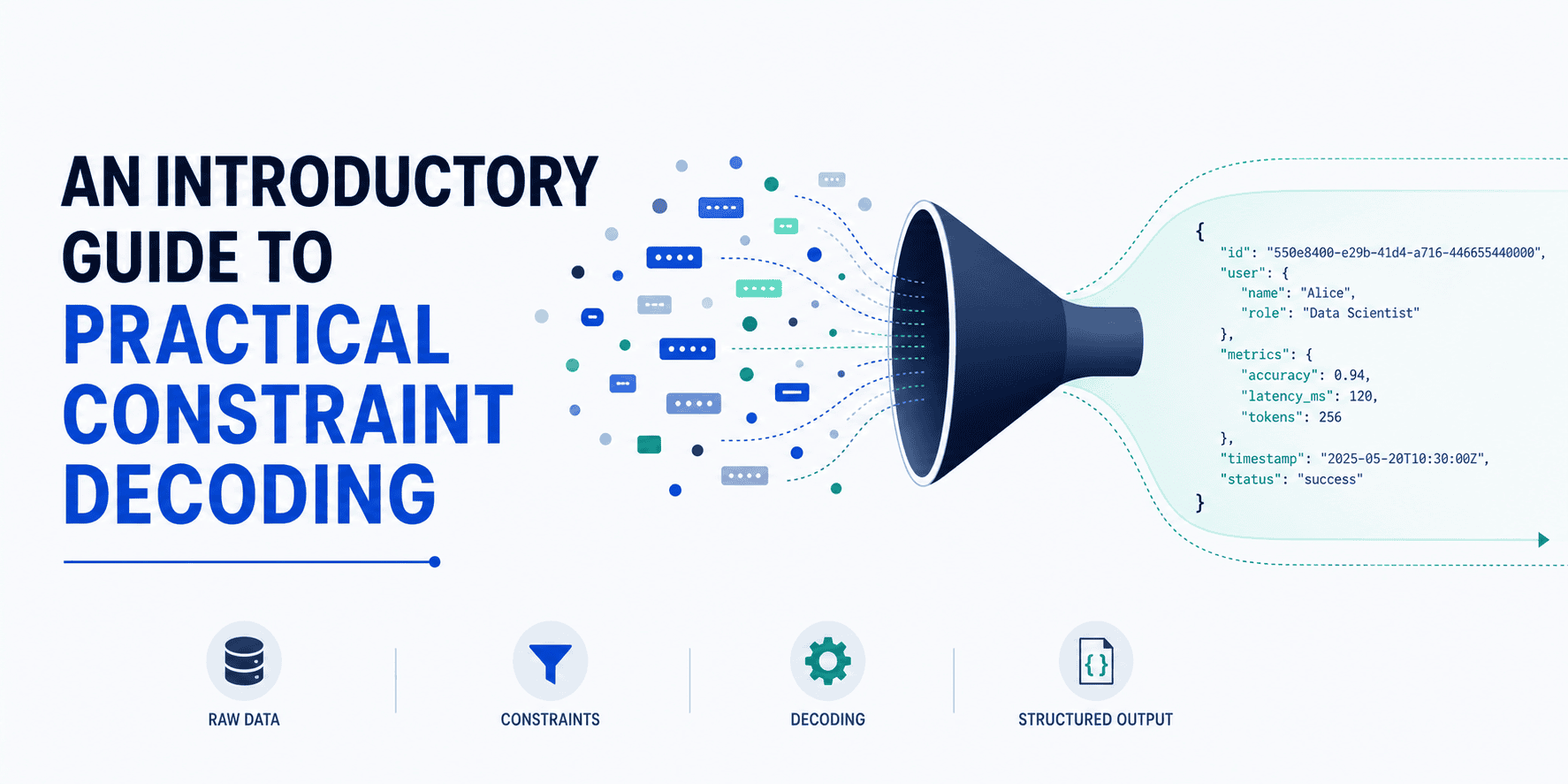
制約デコーディングの仕組み
生成プロセスに有限状態機械を組み込み、許可されたトークンのみを残すことでモデルの出力を構文に強制する。
重要な引用
Practical constraint decoding, also known as structured generation or guided decoding, encompasses the engineering strategies to force a large language model (LLM) to generate text outputs that strictly abide by a specified data schema, grammar, or regular expression (regex) at the token selection stage.
Constraint decoding makes it mathematically impossible for the LLM to deliver anything outside the defined constraints.
At a given inference step, the finite state machine evaluates the current state and provides a list of allowed next tokens.
This makes it possible to lock down certain characters that are key to maintaining a certain required syntax, allowing the model to "fill in the blanks" in between.
編集コメントを表示
編集コメント
本記事は、LLM の出力制御においてプロンプトエンジニアリングの限界を補う技術的アプローチを明確に提示している。実装コストと効果のバランスを理解する上で、開発者にとって有益な基礎知識となる内容である。
Source Article
元記事を日本語で読む
本文に関係しない購読案内、埋め込み通知、サイト内プロモーションは除いています。
 image**
はじめに
実践的制約デコーディング(構造化生成や誘導デコーディングとも呼ばれる)は、大規模言語モデル(LLM)がトークン選択の段階で、指定されたデータスキーマ、文法、または正規表現(regex)に厳密に従うテキスト出力を生成するように強制するためのエンジニアリング戦略を指します。
この記事では実践的制約デコーディングの入門ガイドを通じて、"マークダウンを含めずに有効な JSON を出力してください" といったモデルへの頼み込みは不要になります。制約デコーディングを使えば、LLM が定義された制約の範囲外に何かを生成することを数学的に不可能にできます。
実践的制約デコーディングはどのように動作するのか?
一般的な LLM の生成プロセスが、プロンプトを入力すればモデルが求める出力を返すかもしれない(あるいは返さないかもしれない)という"信仰"に基づく行為であるのに対し、実践的制約デコーディングはこれとは微妙に異なるアプローチを取ります。これはプロンプトとテキスト生成を、独特なインターリーブされたプログラムとして捉えます。これにより、特定の構文を維持するために重要な文字列をロックダウンし、モデルがその間の空白を"埋める"ことを可能にします。
もう少し詳しく見ていきましょう。LLM が応答の次のトークンを出力する際、まず手元の語彙にあるすべての可能なトークンに対応する生のスコアベクトル、つまり logits を生成します。これには通常、数千もの選択肢が含まれます。
しかし、実用的な制約デコーディングを使用する場合、推論プロセスが始まる前に何かが起こります。有限状態機械が構築され、ターゲットとなる制約(例えば Python の Pydantic モデルを通じて)がコンパイルされます。特定の推論ステップにおいて、この有限状態機械は現在の状態を評価し、許可された次のトークンのリストを提供します。この「ホワイトリスト」は LLM の生の logits ベクトルに対してマスクとして機能し、リストに含まれないすべてのトークンについてはその logit 値を負の無限大(Python では -inf)に設定されます。
マスキング処理の後、モデルは通常の softmax 正規化とサンプリングプロセスを続行します。温度、top-p、top-k などのパラメータに基づき、「生き残ったトークン」の中から最も確率の高いものを選択して生成します。
このプロセスを数千語に及ぶ大規模な語彙全体に適用すると、モデルの推論速度が大幅に低下するのではないかと思うかもしれません。しかし、安心してください。実際にはそうなりません。最新の Python ライブラリは、LLM の語彙が静的であることを利用し、ユーザーが入力を始める前に事前コンパイルを行います。その結果、状態機械が語彙全体を参照する必要がなくなり、レイテンシのオーバーヘッドも劇的に削減されます。
では、実用的な制約付きデコーディングを実装するための現在のゴールドスタンダードは何でしょうか?それは間違いなく outlines ライブラリです。このライブラリを使えば、Pydantic モデルや JSON スキーマ、正規表現を事前学習済みモデルのラッパー版に直接渡すことができます。これにより、生成される出力に対する自由度が制限され、構造化された結果を得ることが可能になります。
# 例
実際にコードを見てみましょう。まずは outlines をインストールします。
pip install outlines[transformers]
次に、具体的な実装です。
from pydantic import BaseModel
import outlines
from transformers import AutoTokenizer, AutoModelForCausalLM

class UserProfile(BaseModel):
    name: str
    age: int
    is_active: bool

model_name = "TinyLlama/TinyLlama-1.1B-Chat-v1.0"

llm = AutoModelForCausalLM.from_pretrained(model_name)
tokenizer = AutoTokenizer.from_pretrained(model_name)

model = outlines.from_transformers(llm, tokenizer)
result = model("Extract the user: John is a 34 year old pilot.", UserProfile)

print(result)
出力結果は以下のようになります。
{"name": "John", "age": 34, "is_active": true}
この例では、outlines ライブラリを使って事前学習済みモデルとそのトークナイザーをラップし、ユーザーが定義したカスタムクラス(Pydantic の BaseModel を継承する UserProfile)で定義された JSON オブジェクトの出力に制約を加える方法を示しました。
まとめ
実用的な制約付きデコーディングには、いくつかのトレードオフがあります。それらを見ていきましょう。
強み:
- 正しく使用すれば、構文が常に正しいことを 100% 保証でき、コード内でブロックを解析する手間がなくなります。
- プロンプトに必要なトークン数を劇的に削減できます。例えば、モデルに正しい JSON オブジェクトの形式を示すために、多くのトークンを消費する few-shot(少サンプル)例を提示する必要がなくなります。
- 小規模モデルの民主化にも貢献します。通常は JSON 生成タスクで失敗してしまう可能性のある「10 億パラメータ」という超小型モデルでも、制約付きデコーディングを使えば信頼性の高いデータ構築ツールとして活用できます。
限界:
- LLM が「回答できない」と伝える必要がある場合でも、スキーマが整数の出力を強制すれば、LLM は無理に整数を返すことになります。これはエッジケースにおいてモデルの誠実性を損なう要因となります。
- Pydantic スキーマを初めて LLM に適用する際、有限状態機械(FSM)を構築するために数秒間のフリーズが発生し、最初の処理は大幅に遅くなる可能性があります。ただし、2 回目以降の実行ではスムーズに進みます。
本記事では、実用的な制約付きデコーディング(Constraint Decoding)について解説します。特定の LLM 駆動の状況においてなぜこれが不可欠なのか、その仕組み、そして現在最も広く採用されている解決策である「outlines」ライブラリについて紹介します。また、具体的な使用例も示します。
イバン・パロマーレス・カラスコサ(Iván Palomares Carrascosa)氏は、AI、機械学習、ディープラーニング、LLM 分野のリーダーであり、ライター、スピーカー、アドバイザーとして活躍しています。彼は、実社会で AI を効果的に活用する方法を他者に指導・トレーニングする活動を行っています。
原文を表示
**
# Introduction
Practical constraint decoding**, also known as structured generation or guided decoding, encompasses the engineering strategies to force a large language model (LLM) to generate text outputs that strictly abide by a specified data schema, grammar, or regular expression (regex) at the token selection stage.
With the introductory guide to practical constraint decoding in this article, you'll no longer need to beg your model to "output valid JSON without including any markdown", just to cite an example. Constraint decoding makes it mathematically impossible for the LLM to deliver anything outside the defined constraints.
# How Does Practical Constraint Decoding Work?
**
While the typical LLM generation process works as an "act of faith" in which you pass a prompt to the model and it might output exactly what you are looking for (or might not), practical constraint decoding takes a subtly distinct approach. It deems the prompt and the text generation as a unique, interleaved program. This makes it possible to lock down certain characters that are key to maintaining a certain required syntax, allowing the model to "fill in the blanks" in between.
Shall we go into a bit more detail? When an LLM outputs the next token of its response, it initially produces a vector of raw scores, or logits — one for every possible token in the vocabulary at hand. This typically entails thousands of possible options to choose from.
But when using practical constraint decoding, something happens earlier, before the inference process starts: a finite state machine is built, whereby a target constraint is compiled — for instance, through a Pydantic model in Python. At a given inference step, the finite state machine evaluates the current state and provides a list of allowed next tokens. This "white list" is used as a mask on the LLM's raw logits vector**, such that for every token outside that list, its logit is set to negative infinity, i.e. -inf in Python.
After the masking process, the model keeps running its softmax normalization and sampling process as usual (based on parameters like temperature, top-p, or top-k) on the "surviving tokens" to eventually select the most probable one and generate it.
It may sound like applying this process to an entire vocabulary spanning many thousands of words might significantly slow down model inference. The good news: it doesn't. Modern Python libraries take advantage of the LLM's vocabulary being static and pre-compile it before the user starts typing their prompt. The state machine won't need to look up the entire vocabulary, and latency overhead is brought down drastically.
So, what is the current gold standard for implementing practical constraint decoding? Arguably, the outlines library has earned this distinction. It allows us to define and pass Pydantic models, JSON schemas, or regex directly to a wrapped version of a pre-trained model, thus constraining its freedom in generating outputs.
# Example
**
Let's walk through an example. First, install outlines:
pip install outlines[transformers]Now onto the code:
from pydantic import BaseModel
import outlines
from transformers import AutoTokenizer, AutoModelForCausalLM
class UserProfile(BaseModel):
name: str
age: int
is_active: bool
model_name = "TinyLlama/TinyLlama-1.1B-Chat-v1.0"
llm = AutoModelForCausalLM.from_pretrained(model_name)
tokenizer = AutoTokenizer.from_pretrained(model_name)
model = outlines.from_transformers(llm, tokenizer)
result = model("Extract the user: John is a 34 year old pilot.", UserProfile)
print(result)Output:
{"name": "John", "age": 34, "is_active": true}This example showed how to use the outlines library to wrap a pre-trained model along with its tokenizer, and constrain it to output JSON objects defined by the custom class we defined — named UserProfile and inheriting Pydantic's BaseModel.
# Wrapping Up
Practical constraint decoding has a series of trade-offs. Let's look at some of them.
Strengths:
- If used correctly, it provides a 100% guarantee for correct syntax, removing the need for parsing blocks in your code.
- It helps drastically save tokens in your prompts, no longer requiring token-consuming few-shot examples to show the model what a correct JSON object should look like, for instance.
- It contributes to the democratization of small models, turning a "tiny" 1B-parameter model that would otherwise jeopardize JSON generation use cases into an infallible data constructor.
Limitations:
- If the LLM needed to say it cannot answer something, but the schema forces it to output an integer, for instance, it will do so, making it no longer honest in edge cases.
- On the first run of a Pydantic schema against an LLM, there may be a freeze of a few seconds to build the finite state machine, making the first run considerably slower — although subsequent ones will be smoother.
This article introduces practical constraint decoding, unveiling why it is necessary in certain LLM-driven situations, how it works, and what the most widely adopted solution in the current landscape is: the outlines library. An example of its use is likewise provided.
Iván Palomares Carrascosa** is a leader, writer, speaker, and adviser in AI, machine learning, deep learning & LLMs. He trains and guides others in harnessing AI in the real world.
AI算出
技術分析ainew評価標準
AI モデルの出力制御という核心的なトピックであり、具体的なライブラリと実装手法を提示しているが、既存の概念の解説・まとめであるため新規性は中程度。日本固有の情報や企業事例は含まれていない。
6つの評価軸を見る
- AI関連度
- 100
- 情報源の信頼性
- 50
- 新規性
- 50
- 調べる価値
- 75
- 重複の少なさ
- 100
- 日本での有用性
- 25
関連記事
今日のまとめ
AIデイリーブリーフで今日の重要ニュースをまとめ読み