Chrome、AI 検出によるバグ増加で更新頻度向上へ
Google は AI による脆弱性検出の増加に対応するため、Chrome の更新頻度を週 2 回へ拡大し、ユーザーへの負担を減らす非再起動型更新システムの導入を検討している。
AI深層分析を開く2026年7月31日 04:51
AI深層分析
キーポイント
AI 検知によるバグ修正数の急増
Google によると、大規模なセキュリティ AI モデルがソフトウェアの脆弱性を高速で発見した結果、最近の Chrome リリースにおけるバグ修正数が過去 23 リリース合計を上回る水準に達している。
更新頻度の拡大と非再起動型システムの開発
Google は現在の 2 週間サイクルから週 2 回の更新へ移行するパイロットプログラムを開始し、ユーザーの作業を妨げないための非再起動型パッチ展開技術の開発を進めている。
AI 活用攻撃への対抗策としての即時対応
悪意のあるアクターも AI を利用して脆弱性を発見する速度が向上しているため、Google はブラウザを常に最新状態に保つことで、AI 駆動型攻撃に対する防御力を高めることを目指している。
重要な引用
The number of bug fixes in Chrome releases has skyrocketed in recent months because AI is detecting so many flaws.
Google is also working on ways to get those updates rolled out without bothering you as much.
編集コメントを表示
編集コメント
AI がセキュリティリスクを特定する速度が人間を超えたことで、ソフトウェアのライフサイクル管理そのものが再定義されつつある。ユーザーは頻繁な更新に慣れる必要がある一方、非再起動型技術の実現は次世代ブラウザ体験の鍵となるだろう。
Source Article
元記事を日本語で読む
本文に関係しない購読案内、埋め込み通知、サイト内プロモーションは除いています。
Google はブラウザのセキュリティにおいて、Chrome を通じて迅速なリリースモデルを先駆けて導入しました。しかし現在、AI によるセキュリティ分析の進展に伴い、このアップデート方針を見直す必要があると Google は述べています。
同社によると、最近の Chrome リリースに含まれるバグ修正数が急増しています。その背景には、AI が数多くの脆弱性を検出しているという事情があります。今後、より頻繁なアップデートが行われるようになる可能性がありますが、Google は同時に、ユーザーに大きな負担をかけずにこれらの更新を適用する方法も開発中です。
Google はこのほど、Chrome の主要なマイルストーンビルドである Chrome 149(6 月初旬)と Chrome 150(数週間後)の 2 つを相次いでリリースしました。これら 2 つのアップデートで修正されたバグの総数は 1,072 に上り、過去 23 リリース分の合計を超えています。
これは、ソフトウェアの脆弱性を光速で探知できる大規模なサイバーセキュリティ AI モデルの影響によるものです。発見された脆弱性の一部は深刻なものもあり、その中には Chrome のコードベースに 13 年間も潜伏していたバグが含まれていました。もしこれが悪用されていれば、攻撃者は Chrome のサンドボックスを回避し、ブラウザからローカルファイルへのアクセスを可能にしてしまう恐れがありました。
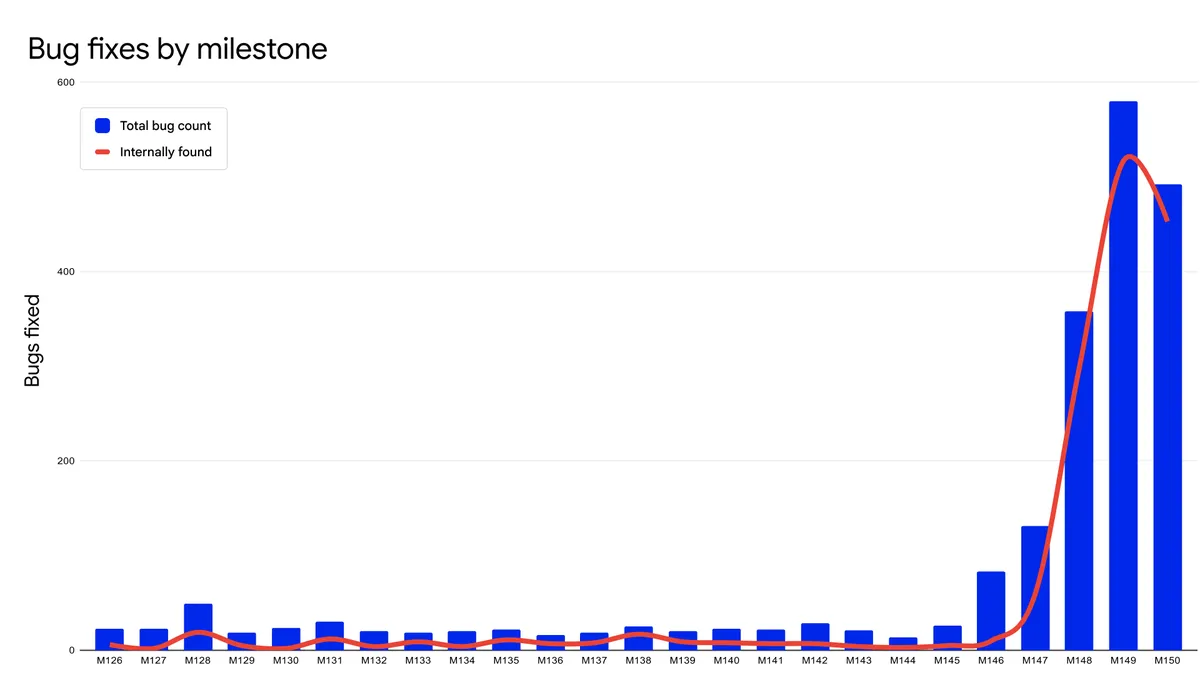
最近の Chrome ステーブル版のマイルストーンで修正されたセキュリティバグの数。
クレジット:Google
脆弱性の発見数が劇的に増加する中、Google は悪意のある攻撃者もソフトウェアの欠陥をより早く特定するようになることを懸念しています。同社の目標は、Chrome のインストールが常に最新の状態、あるいはそれに極めて近い状態を保つことです。そのための第一歩として、2026 年初めに発表された 2 週間ごとの更新サイクルがありますが、現在は週に 2 回 Chrome を自動更新するシステムの試験運用も開始しています。これによりパッチの配布をより迅速化し、AI を活用した攻撃への脅威に対してブラウザが常に備えられるようにします。
記事全文を読む
コメント
原文を表示
With Chrome, Google pioneered the rapid release model for browser security. Now, Google says updates may need to change in the face of AI security analysis. According to the company, the number of bug fixes in Chrome releases has skyrocketed in recent months because AI is detecting so many flaws. We could be looking at more frequent updates soon, but Google is also working on ways to get those updates rolled out without bothering you as much.
Google has released two major Chrome milestone builds recently—Chrome 149 in early June and Chrome 150 just a few weeks later. These two updates had a total of 1,072 bug fixes, which is more than the previous 23 releases combined. Such is the impact of giant cybersecurity AI models that can probe software for vulnerabilities at light speed. Some of these vulnerabilities were serious, too, with one bug hiding in the Chrome codebase for 13 years. If it had been exploited, an attacker could have bypassed the Chrome sandbox to make the browser access local files.
Number of security bugs fixed in recent Chrome Stable release milestones.
Credit:
With the vastly higher rate of vulnerability identification, Google is worried bad actors will also be able to identify software flaws faster. Its goal is to ensure your Chrome install is always up to date or as close to it as possible. The first step toward that is the two-week update cycle the company announced earlier in 2026, but it's now piloting a system that would update Chrome twice per week. This would get patches out the door faster, ensuring that browsers are ready for the threat of AI-fueled attacks.
Read full article
Comments
AI算出
主要ニュースainew評価標準
記事は AI がセキュリティ分析に与えた影響(バグ修正数の急増)と、Google の対応策(再起動不要の更新など)という具体的な技術的・政策的変更を中核としており、新規性が高い。ただし、対象が Google Chrome というグローバル製品であり、日本固有の規制や企業事例が含まれていないため、日本の関連性は限定的となる。
6つの評価軸を見る
- AI関連度
- 75
- 情報源の信頼性
- 75
- 新規性
- 75
- 調べる価値
- 75
- 重複の少なさ
- 100
- 日本での有用性
- 25
関連記事
今日のまとめ
AIデイリーブリーフで今日の重要ニュースをまとめ読み