ChatGPT に新機能:個人向けファイナンス体験の提供開始
OpenAI は、米国在住の ChatGPT Pro ユーザー向けに、金融機関アカウントを安全に連携し、個別の文脈に基づいた家計管理や分析を提供する新機能をベータ版としてリリースした。
キーポイント
機能の概要と対象者
米国在住の ChatGPT Pro ユーザーを対象に、金融アカウントを安全に連携し、支出の可視化や文脈に基づいた質問への回答を行う新機能をベータ版として提供開始した。
技術的基盤と連携範囲
GPT-5.5 の推論能力を活用し、Plaid を介して 12,000 以上の金融機関との接続をサポートしており、今後は Intuit のサポートも追加予定である。
利用方法とデータ管理
サイドバーの「Finances」からまたは「@Finances」というコマンドでアカウント連携を開始でき、ユーザーはデータのコントロール権を保持したまま利用可能である。
重要な引用
Now you can securely connect your financial accounts, see a dashboard of where your money is going, and ask ChatGPT questions grounded in your financial context – all while staying in control of your data.
Recent advances in GPT‑5.5 make ChatGPT stronger at reasoning through the complex, context-dependent questions that personal finance often requires.
ChatGPT can help you stay informed and feel more confident managing your finances, but it is not a replacement for professional financial advice.
影響分析・編集コメントを表示
影響分析
この発表は、生成 AI が単なる情報検索やチャットから、個人の生活データと深く統合された実用的なアシスタントへと進化することを示す重要な転換点です。特に金融分野におけるプライバシー保護と利便性の両立を試みたアプローチは、他社製品へのプレッシャーとなり、業界全体の「コンテキスト認識 AI」の標準化を加速させる可能性があります。
編集コメント
OpenAI が自社の推論モデルの進化を背景に、金融という高リスク・高関与領域への本格参入を開始しました。プライバシーと利便性のバランス設計が今後の普及の鍵となります。
本日、米国在住の ChatGPT Pro ユーザー向けに、ChatGPT における新しい個人金融体験のプレビュー版をリリースいたします。これにより、安全にお金の管理口座を接続し、お金の使途を示すダッシュボードを確認したり、あなたの金融文脈に基づいた質問を ChatGPT に投げかけたりすることが可能になります。すべてのプロセスでデータのコントロール権はあなたが保持します。私たちは、実際の利用状況から学び、体験を改善し、慎重に拡大していくために、まずは小規模なグループを対象にプレビューを開始しています。
お金は私たちの住む場所、下す決断、愛する人へのケア、そして想像する未来など、人生のほぼすべての側面に影響を与えます。しかし、現在の金融管理では、現状を把握するために複数の口座やアプリ、カード、ローン、スプレッドシートを組み合わせる必要があり、その結果としても全体像を把握したり、次に何をすべきかを知ったりすることが難しい場合があります。
人々はすでに ChatGPT に助けを求めており、毎月 2 億人以上が予算管理、投資に関する質問、異なる選択肢の比較、将来の目標に向けた計画などのために ChatGPT を利用しています。最新の GPT-5.5 の進化により、ChatGPT は個人金融でしばしば必要となる複雑で文脈依存型の問いに対して、推論能力をさらに強化しました。
あなたの金融口座が接続されることで、ChatGPT はその推論能力と、あなたの実際の金融状況や、あなたが共有した目標・ライフスタイル・優先事項を組み合わせて分析できます。これにより、パターンを発見し、トレードオフを理解し、よりパーソナライズされた包括的な方法で大きな決断に向けた計画を立てることが可能になります。今後は以下のような質問も可能です:
ChatGPT は、財務状況に関する情報を入手し、資金管理に対する自信を高めるお手伝いをしますが、専門家の金融アドバイスに代わるものではありません。
本日より、米国在住の Pro ユーザー向けに、Web および iOS 版 ChatGPT で金融アカウントを連携させる機能を段階的に展開します。対象となる金融機関は 12,000 以上です。Plus ユーザーへの展開前に初期利用からの学習と改善を行い、最終的にはすべてのユーザーにご利用いただけることを目指しています。
はじめに
*金融情報の連携*
はじめに、ChatGPT のサイドバーから「Finances」を開き、「Get started(始める)」を選択するか、ChatGPT 内のどこからでも「@Finances, connect my accounts」と入力して会話を開始してください。
その後、ChatGPT が Plaid を介してアカウントを安全にリンクする手順をご案内します。Intuit のサポートも近日追加予定です。認証が完了すると、ChatGPT はデータの同期と分類を開始しますが、これには数分かかる場合があります。
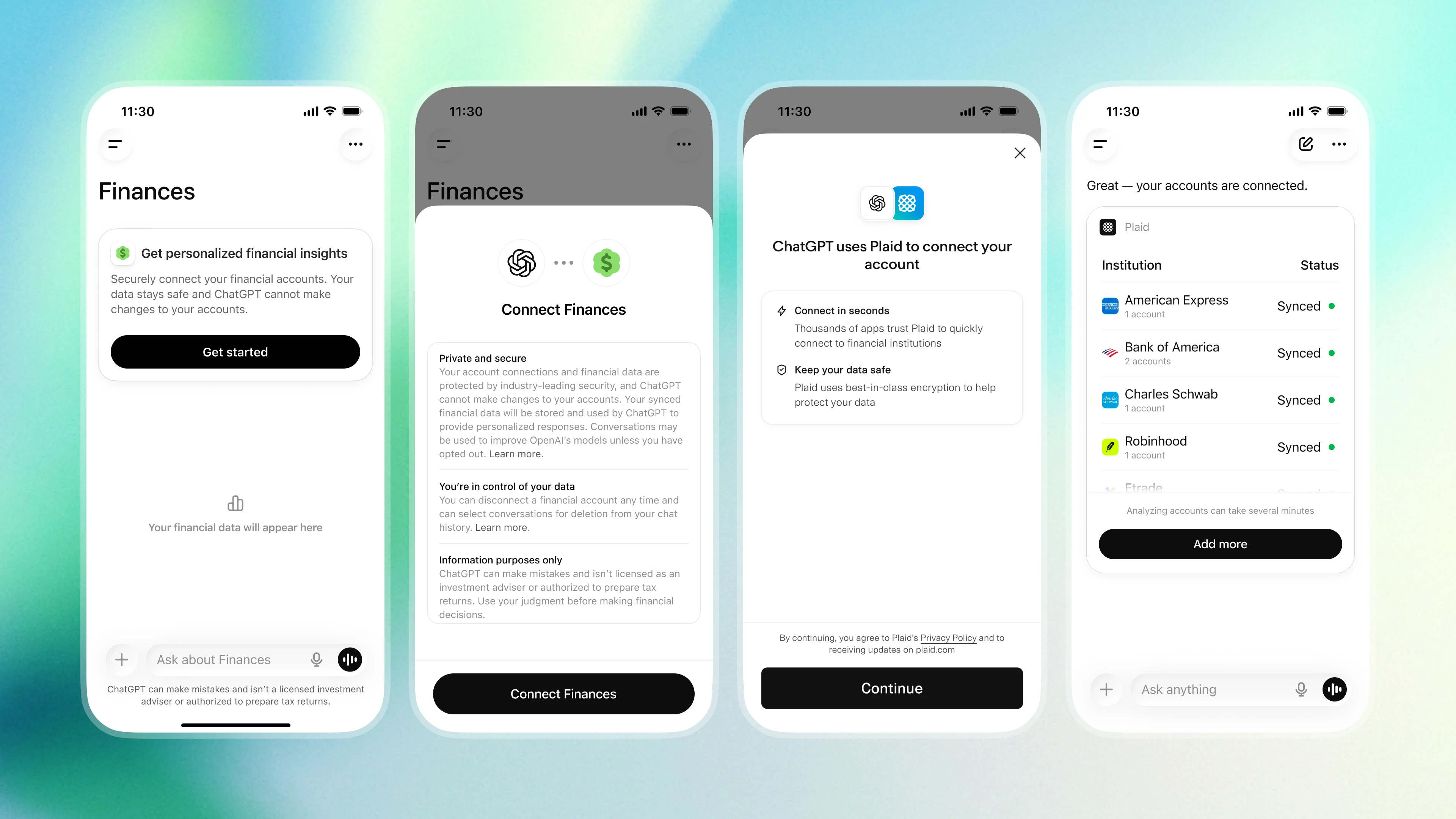
アカウントの同期が完了すると、ポートフォリオのパフォーマンス、支出、サブスクリプション、今後の支払いなど、現在の状況を最新の状態で見渡せるダッシュボードが表示されます。
接続された口座以外にも、住宅ローンや貯蓄目標、計画している大きな購入など、金融生活に関する重要な文脈を共有することができます。例えば、ChatGPT に「来年の初めに車を買うために貯金をしています」とか、「両親から借りたローンの残額がまだ [X 円] あります」と伝えることができます。ChatGPT はその文脈をあなたの「Financial memories(財務メモリー)」に保存し、今後の会話に役立てます。
このより広範な文脈こそがこの体験を有用にする要素の一部であり、各質問を孤立して扱うのではなく、ChatGPT はあなたの口座、目標、そしてすでに共有された情報を結びつけることで支援します。その結果、アドバイスはより個人的で包括的なものになります。
財務が接続されると
@Finances 次の数ヶ月でもっと少し貯金するための計画を立ててください。
私は最近の支出、定期的な請求、キャッシュフローのパターンを確認し、厳しい予算ではなく、実践的な「もう少し貯める」計画に変換します。
これが私が次の数ヶ月で使用する計画です。5 月はまだ早いので、主に 2 月~4 月のデータと、5 月からの現在の支出を基準にしています。
年収 110,000 ドルの場合、目標は生活が過度に制限されたものにならないようにすることです。通常の支出カテゴリ間でより一貫性を作り出し、月末になる前に貯金が行われるようにすることが目的です。
最近の最大の柔軟な支出レバー(調整可能な要素)は以下の通りです:
分野
2 月 1 日~5 月 9 日の支出
示唆されること
食料品・家庭用品
約 2,150 ドル
正常だが、週ごとの目標を設定して厳しくする価値あり
ショッピング
約 1,250 ドル
特にターゲット、アマゾン、衣料品購入の機会としては好機です
交通費
約 1,450 ドル
ガソリン、駐車場、ライドシェア、車関連費用が積み重なります
外食・飲み物
約 1,620 ドル
完全にカットせずとも実行可能な範囲です
サブスクリプションと請求書
約 420 ドル
金額は小さいですが整理しやすい項目です
ターゲット:月額でさらに 500〜750 ドルの節約が可能
小さな楽しみをすべて排除しようとするところから始めるべきではありません。最大の成果が得られるのは、外食、ショッピング、交通費、そして食料品購入のペース配分です。
1. 外食:月額 450 ドルで上限を設定
外食は支出がいつの間にか膨らみやすい分野の一つです。テイクアウトやコーヒー、週に数回の外食も可能にする現実的な上限を月額 450 ドルに設定します。
期待される節約額:月額 150〜250 ドル。
シンプルなルールとして活用しましょう:週に 2〜3 回だけ外食し、残りはすべて食料品購入で済ませるのです。
2. ショッピング:月額 300 ドルで上限を設定
ショッピング自体は極端な行為ではありませんが、アマゾン、ターゲット、衣類、家庭用品の追加購入などを通じて、気づかないうちに月額 500〜700 ドルに膨れ上がるカテゴリーです。8 月までを目標に月額 300 ドルの上限を設定します。
期待される節約額:月額 150〜250 ドル。
シンプルなルールとして活用しましょう:75 ドルを超える購入は、買う前に必ず 24 時間待機するのです。
3. 交通費:月額の上限を設定
ガソリン、駐車場、車のメンテナンス、そして occasional なライドシェア利用を合わせると、一時的には大きく感じなくても、予算項目として大きくなりがちです。真の緊急時や必要な修理を除き、月額 400 ドルを交通費の目標とします。
期待される節約額:月額 100〜200 ドル。
私が使うルール:ライドシェアは深夜、悪天候、荷物を運ぶ場合、または 25 分以上の時間節約になる場合に利用します。それ以外は運転、徒歩、公共交通機関の利用、あるいは事前計画をデフォルトとします。
4. 食料品:厳格な食事制限ではなく週ごとの目標を設定する
食料品や生活必需品は必要不可欠なので、「悪い支出」として扱うべきではありません。ただし、週ごとの食料品予算を約 125 ドル〜150 ドル に設定し、平日の途中での利便性重視の追加購入を避けるようにします。
期待される節約額:月 100 ドル〜150 ドル。
5. サブスクリプション:小規模な整理のみ
定期的な請求は大きな金額ではありませんが、確認する価値はあります。ストリーミングサービス、アプリ、ニュース配信、フィットネス関連、クラウドストレージ、各種メンバーシップなどです。1〜2 つ解約することで 月 20 ドル〜50 ドル の節約になる可能性があります。有益ですが、主要な戦略というわけではありません。
月次節約計算式**6 月〜8 月:
レバーレッジ(効果の最大化)
月間目標
外食上限額
+$200
ショッピング上限額
+$200
交通費キャップ
+$150
食料品ペース配分
+$125
サブスクリプション整理
+$30
合計潜在節約額
約月 705 ドル
計画を定着させるため、まず 月額 500 ドル を自動で貯蓄口座へ振り替えます。その後、外食やショッピング、交通費が予算より少なかった場合に限り、追加の 200 ドル〜250 ドル を達成目標(ストレッチゴール)として扱います。
最良の計画バージョン:月額 500 ドルの自動貯蓄を設定し、外食を月 450 ドルまで、ショッピングを月 300 ドルまでに制限し、交通費に上限を設け、週ごとの食料品目標を用いて、計画が制約ではなく現実的なものと感じられるようにする。
回答から行動へ:Intuit などのエコシステムパートナーと共に
ChatGPT のビジョンは、単に質問に答えるだけでなく、ユーザーが金融生活の改善に向けた行動を起こせるよう支援することであり、そのために Intuit などの信頼できるエコシステムパートナーと連携して取り組んでいます。例えば、クレジットカードの推薦を受け取ることから承認確率を理解し、申請を行うことまで、あるいは株式売却の税務影響について質問することから、信頼できる税額見積もりを取得し、Intuit が提供する生身の現地税理士とのセッションをスケジュールすることまでが、すべて ChatGPT 内で完結します。
あなたの情報をプライバシーとセキュリティで守る
あなたの金融データは機密情報です。私たちはこの体験を構築するにあたり、あなたのプライバシーを尊重し、あなたが自分の情報のコントロール権を持つことを保証しています。
アカウントを接続すると、ChatGPT はあなたの残高、取引、投資、負債にアクセスして、財務状況を可視化したり、質問にお答えしたりすることができます。ただし、完全な口座番号を見ることはできず、アカウントに変更を加えることもできません。
金融アカウントと ChatGPT の間の会話は、ChatGPT 全体で選択したモデル学習設定に従います。この設定はいつでも 設定 > データコントロール (新しいウィンドウで開く) で変更できます。
あなたの情報は常にあなたがコントロールします:
- アカウントの切断:設定 > アプリ > 金融から、または金融ページからいつでも金融アカウントを切断できます。一度切断すると、同期されたアカウントデータは OpenAI のシステム内から 30 日以内に削除されます。アカウントを切断しても、ChatGPT の会話履歴内の金融情報には影響しませんが、個別の会話はいつでも削除可能です。
- 金融メモリの削除:ChatGPT は、目標、義務、またはお金の状況に関する文脈など、あなたが共有する重要な詳細を記憶し、ChatGPT を通じた今後の金融対話をより関連性が高く、パーソナライズされたものにするよう支援します。これらは「金融メモリ」として保存されます。これは金融対話に特化して情報を提供するために特別に設計されたメモリの一種です。これらのメモリはいつでも金融ページから表示または削除できます。
- 一時チャット:一時チャットを使用する場合、ChatGPT は接続されている金融アカウントにはアクセスしません。一時チャットは履歴に表示されません。
精度と品質のために設計・評価済み
接続された金融アカウントを備えた対話は、ChatGPT の最新の推論モデルである GPT‑5.5 Thinking にデフォルトで設定されています。
金融に関する質問は個人的であり、複雑で、文脈に強く依存します。有益な回答を得るには、その人の収入、支出、残高、債務、目標、タイミングを考慮するとともに、不確実性や仮定について明確にし、追加情報が必要となる場合についても言及する必要があります。
これらの瞬間に ChatGPT が人々をどの程度支援できているかをよりよく理解するために、私たちは専門家と共同で策定した基準に基づき、回答の質を総合的に評価できる内部ベンチマークを構築しました。主要機関の 50 名以上の金融専門家に協力いただき、この体験を検証し、困難な個人向け財務タスクにおける ChatGPT のパフォーマンスに格付けを行いました。
GPT-5.5 Thinking は、複雑な個人向け財務タスクにおいて先行モデルを上回ります。ChatGPT Pro ユーザーが利用可能な GPT-5.5 Pro が、最も優れた総合パフォーマンスを達成しています。
- 困難な財務タスク全体における個人向け財務ベンチマークスコア。これは専門家が評価した回答の質と回答の正確性を加重合成したものであり、数値が高いほど優れています。Finances のデフォルトモデルである GPT-5.5 Thinking は、ベンチマーク全体で 100 点満点中 79 点を記録しました。GPT-5.5 Pro は 82.5 点でした。
このベンチマークにより、進捗を測定するより明確な方法が得られ、ChatGPT が複雑な個人向け財務タスクをどのように処理するかについては、今後も継続的に改善していきます。
ChatGPT Pro コミュニティのテスターからの声
「ChatGPT で私の財務情報を連携させたことで、実際に実行可能な現実的な月次計画を立てて住宅ローンを完済する方法がわかりました。」
—Richard K. Sohn, PsyD(心理学者)
原文を表示
Today we’re releasing a preview of a new personal finance experience in ChatGPT to Pro users in the U.S. Now you can securely connect your financial accounts, see a dashboard of where your money is going, and ask ChatGPT questions grounded in your financial context – all while staying in control of your data. We’re starting with a preview to a smaller group so we can learn from real-world use, improve the experience, and expand thoughtfully.
Money touches nearly every part of life: where we live, what decisions we make, how we care for loved ones, what future we imagine. But managing finances today often means piecing together accounts, apps, cards, loans, and spreadsheets just to know where things stand. Even then, it can be hard to see the full picture or know what to do next.
People are already turning to ChatGPT for help: more than 200 million people come to ChatGPT every month for budgeting, questions about their investments, comparing different paths, planning for future goals, and more. Recent advances in GPT‑5.5 make ChatGPT stronger at reasoning through the complex, context-dependent questions that personal finance often requires.
With your financial accounts connected, ChatGPT can combine that reasoning with your real financial context and what you’ve shared about your goals, lifestyle, and priorities, helping you spot patterns, understand tradeoffs, and plan for big decisions in a way that feels more personal and complete. Now you can ask questions like:
ChatGPT can help you stay informed and feel more confident managing your finances, but it is not a replacement for professional financial advice.
Starting today, we’re rolling out the ability for Pro users in the U.S. to connect their financial accounts in ChatGPT on web and iOS, with support for more than 12,000 financial institutions. We’ll learn and improve from early use before rolling it out to Plus, with the goal of making it available to everyone.
How to get started
*Connect your financial information*
To get started, open Finances from the sidebar in ChatGPT and select ‘Get started’ or start a conversation from anywhere in ChatGPT by saying ‘@Finances, connect my accounts’.
ChatGPT will then guide you through securely linking accounts through Plaid, with Intuit support coming soon. After you authenticate, ChatGPT will begin syncing and categorizing your data, which may take a few minutes.
Once your accounts are synced, you can see a dashboard that gives you an up-to-date view of where you stand across portfolio performance, spending, subscriptions, upcoming payments, and more.
Beyond connected accounts, you can share important context about your financial life, like a mortgage, a savings goal, or a major purchase you’re planning for. For example, you might tell ChatGPT: “I’m saving up to buy a car early next year” or “I still owe my parents [X amount] for the loan they gave me.” ChatGPT can save that context to your Financial memories to inform future conversations.
That broader context is part of what makes this experience useful – instead of treating each question in isolation, ChatGPT can help connect the dots across your accounts, your goals, and what you’ve already shared, so the guidance is more personal and complete.
With Finances connected
@Finances Help me come up with a plan to save a little bit more in the next few months.
I’ll look at recent spending, recurring charges, and cash-flow patterns, then turn that into a practical “save a little more” plan rather than a harsh budget.
Here’s the plan I’d use for the next few months. May is still early, so I’m anchoring this mostly on February–April plus the May-to-date spending.
At a $110K salary, the goal is not to make life feel overly restricted. It’s to create more consistency across normal spending categories so saving happens before the month gets away from you.
Your biggest flexible spending levers recently are:
Area
Feb 1–May 9 spend
What it suggests
Groceries & household
~$2,150
Normal, but worth tightening with a weekly target
Shopping
~$1,250
Good opportunity, especially Target/Amazon/clothing runs
Transportation
~$1,450
Gas, parking, rideshare, and car costs add up
Dining & drinks
~$1,620
Very actionable without cutting it entirely
Subscriptions & bills
~$420
Small, but easy cleanup
Target: save an extra $500–$750/month
I would not start by trying to eliminate every small pleasure. Your biggest wins are dining, shopping, transportation, and grocery pacing.
1. Dining: cap at $450/month
Dining has been one of the easiest places for spending to drift. I’d set a realistic cap of $450/month, which still leaves room for takeout, coffee, and a few meals out.
Expected savings: $150–$250/month.
Use a simple rule: pick 2–3 meals out per week, then default to groceries for the rest.
2. Shopping: cap at $300/month
Shopping is not extreme, but it’s the kind of category that can quietly turn into $500–$700 months through Amazon, Target, clothes, and household extras. I’d set a $300/month cap through August.
Expected savings: $150–$250/month.
Use a simple rule: anything over $75 waits 24 hours before buying.
3. Transportation: set a monthly ceiling
Between gas, parking, car maintenance, and occasional rideshare, transportation can become a bigger budget item than it feels in the moment. I’d set a $400/month transportation target, excluding true emergencies or required repairs.
Expected savings: $100–$200/month.
The rule I’d use: rideshare is for late nights, bad weather, carrying things, or when it saves 25+ minutes. Otherwise default to driving, walking, transit, or planning ahead.
4. Groceries: use a weekly target, not a strict diet
Groceries and household basics are necessary, so I wouldn’t treat this as “bad spending.” But I would set a weekly grocery target of about $125–$150 and try to avoid extra midweek convenience runs.
Expected savings: $100–$150/month.
5. Subscriptions: small cleanup only
The recurring charges are not where the big money is, but they’re still worth checking: streaming, apps, news, fitness, cloud storage, and memberships. Canceling one or two might save $20–$50/month. Useful, but not the main plan.
The monthly savings formula**For June–August:
Lever**
Monthly target
Dining cap
+$200
Shopping cap
+$200
Transportation ceiling
+$150
Grocery pacing
+$125
Subscription cleanup
+$30
Total potential
~$705/month
To make it stick, I’d automate $500/month to savings first. Then treat the extra $200–$250 as the stretch goal when dining, shopping, or transportation comes in lighter.
Best version of the plan: auto-save $500/month, cap dining at $450, cap shopping at $300, set a transportation ceiling, and use weekly grocery targets so the plan feels realistic instead of restrictive.
From answers to action, with ecosystem partners like Intuit
The vision for ChatGPT is to go beyond answering questions to help users take action towards improving their financial lives, and we’re working with trusted ecosystem partners like Intuit to do this. For example, a user could go from getting a credit card recommendation to understanding their approval odds and submitting an application, or from asking about tax implications of a stock sale to getting a trusted tax estimate and scheduling a session with a live, local tax expert, powered by Intuit and all inside ChatGPT.
Keeping your information private and secure
Your financial data is sensitive, and we have built this experience to respect your privacy and ensure that you’re in control of your information.
When you connect your accounts, ChatGPT can access your balances, transactions, investments, and liabilities to help visualize your finances or answer your questions. It cannot see full account numbers or make any changes to your accounts.
Your conversations with connected financial accounts follow the same model training settings you choose across ChatGPT. You can change this setting anytime in Settings > Data controls(opens in a new window).
You are always in control of your information:
- Disconnecting accounts: You can disconnect your financial accounts at any time in Settings > Apps > Finances, or from the Finances page. Once disconnected, your synced account data will be deleted from OpenAI’s systems within 30 days. Disconnecting an account will not affect financial information in your ChatGPT conversation history, but you can delete individual conversations at any time.
- Deleting financial memories: ChatGPT can remember key details you share, like goals, obligations, or context about your money, to make future financial conversations across ChatGPT more relevant and personalized. These are saved as financial memories, a dedicated type of memory used specifically to inform financial conversations. You can view or delete them at any time from the Finances page.
- Temporary chats: When you use temporary chats, ChatGPT won’t access your connected financial accounts. Temporary chats will not appear in your history.
Designed and evaluated for accuracy and quality
Conversations with connected financial accounts default to GPT‑5.5 Thinking, our latest reasoning model in ChatGPT.
Financial questions are personal, complex, and highly context-dependent. A helpful response needs to account for someone’s income, spending, balances, debts, goals, and timing, while being clear about uncertainty, assumptions, and when more information is needed.
To better understand how well ChatGPT serves people in these moments, we built an internal benchmark that helps us evaluate response quality holistically based on criteria developed with experts. We worked with over 50 finance professionals across leading institutions to evaluate this experience and grade ChatGPT’s performance on challenging personal finance tasks.
GPT‑5.5 Thinking outperforms earlier models on complex personal finance tasks. GPT‑5.5 Pro, available for people on ChatGPT Pro, achieves the best overall performance.
This benchmark gives us a clearer way to measure progress, and we will continue to improve how ChatGPT handles complex personal finance tasks over time.
What our ChatGPT Pro community testers are saying
“Connecting my finances in ChatGPT helped me figure out how to pay off our mortgage with a realistic monthly plan I could actually follow.”
—Richard K. Sohn, PsyD, psychologist
関連記事
今日のまとめ
AI日報で今日の重要ニュースをまとめ読み