Interrupt で公開されたすべての機能と成果
LangChain は「Interrupt」イベントで、自動修正機能を持つ LangSmith Engine や基盤管理を簡素化する新製品群を発表し、エージェント開発ライフサイクルの加速と運用コストの削減を実現した。
キーポイント
自律型デバッグと修正の自動化 (LangSmith Engine)
プロダクション上のトレースを監視し、失敗パターンをクラスタリングして根本原因を特定する自律エージェントが、自動的に PR を作成して修正を提案する機能。
インフラ管理の完全マネージド化
Managed Deep Agents、高速化された SmithDB、および Sandboxes の一般提供により、チームはランタイム層の構築に時間を割かずにプロトタイプから本番環境へ移行可能。
観測可能性とガバナンスの統合
マルチターントレースを可視化する Messages View、指示書やポリシーのバージョン管理を行う Context Hub、および支出制限や PII 削除を強制する LLM Gateway が提供される。
重要な引用
LangSmith Engine watches your production traces, clusters failures, and opens PRs with fixes so you can spend time reviewing improvements, not hunting for them.
Managed Deep Agents, SmithDB (up to 15x faster on core LangSmith workloads), and Sandboxes GA give teams a path from local prototype to production without stitching together the runtime layer themselves.
影響分析・編集コメントを表示
影響分析
この発表は、AI エージェント開発が単なるコード作成から、自律的な運用・改善サイクルを持つ成熟した工程へと移行する転換点を示しています。特に、失敗の根本原因特定と自動修正提案機能は、大規模なエージェントシステムを運用する際の人的コストとリスクを大幅に削減し、企業による実装スピードを加速させる可能性が高いです。
編集コメント
エージェント開発の「運用フェーズ」における自動化技術が飛躍的に進化したことがわかります。特に、失敗を自動検知して修正 PR を作成する機能は、大規模システムの実用化において不可欠な要素となるでしょう。
重要なポイント
- エージェント開発ライフサイクルの加速。LangSmith Engine は本番環境のトレースを監視し、障害をクラスタリングして修正を含むプルリクエスト(PR)を自動で開くため、チームは改善点を探すのではなく、そのレビューに時間を割けます。
- インフラストラクチャ管理の負担軽減。Managed Deep Agents、SmithDB(LangSmith の主要ワークロードで最大 15 倍高速化)、および Sandboxes の一般提供(GA)により、チームはランタイム層を自分で組み立てることなく、ローカルプロトタイプから本番環境への移行パスを得られます。
- 可観測性とガバナンスの同時提供。Messages View は多段トレースを一瞥で読みやすくし、Context Hub はエージェントが従う指示やポリシーのバージョン管理を行い、LLM Gateway は支出制限を適用し、リクエストが環境外に出る前に個人識別情報(PII)を匿名化します。
本日 Interrupt では、チームが エージェント開発ライフサイクル を加速できるよう支援する多数の新製品と新機能を発表しました。これらの中には、自分で構築するには数四半期かかるインフラストラクチャを処理するものもあれば、何が壊れているかを見つけ、その理由を理解し、修正を自動的に迅速にリリースするためのものを支援するものもあります。以下が今回発表した内容です。
LangSmith Engine
これまで、エージェントの改善は、トレースを読み込み、パターンを探し、評価(evals)を作成し、修正を行うという手動のプロセスでした。LangSmith Engine は、このループを自動で実行する自律型エージェントです。生産環境でのトレースを監視し、失敗事例を名前付きの問題にクラスタリングしてグループ化し、コードに対する根本原因の診断を行い、再発を防ぐための修正案と評価カバレッジを提案します。ユーザーは改善内容を確認してマージするだけで済みます。
Engine が提示する各問題に対して、以下のことができます:
- 対象となるコードまたはプロンプトの修正を含むプルリクエスト(PR)を開く
- 正確な問題にスコープを限定したカスタムオンライン評価器を作成し、再発が自動的に検出されるようにする
- 失敗したトレースをオフライン評価スイートに追加し、正解例(ground truth examples)として登録する
Engine は LangSmith の既存のトレーシングおよび評価インフラストラクチャの上に構築されているため、チームがすでに運用しているワークフローにシームレスに組み込むことができます。Cogent と Campfire は、数千件のトレースに影響を与える問題の解決に Engine を活用しています。現在、パブリックベータ版として利用可能です。
SmithDB
SmithDB は、エージェントの観測可能性のために特別に設計されたデータベースであり、現在 LangSmith の中核的なワークロードを支えています。エージェントのトレースは量とサイズが爆発的に増加しており、深くネストされたスパン、長時間実行される操作、数時間にわたって断片的に到着するイベントが含まれています。これらを分析するために必要なクエリパターン(ランダムアクセス、対話型フィルタリング、全文検索、JSON フィルタリング、ツリー認識クエリ、スレッド再構築、集約)には、根本的に新しいアーキテクチャが必要です。
SmithDB は Rust で構築され、Apache DataFusion と Vortex を基盤とし、永続的なトレースデータのためのオブジェクトストレージ、小規模な Postgres メタストア、ステートレスな取り込み・クエリ・コンパクションサービスを採用しています。
それが提供するもの:
- パフォーマンス: 中核となる LangSmith の体験において最大 15 倍高速化され、P50 トレースツリー読み込みが 92ms、P50 単一実行読み込みが 71ms に達成されています
- ポータビリティ: オブジェクトストレージに依存しステートレスであるため、計算リソースを追加することでスケーリングが可能であり、従来のデータベースクラスターと比較してセルフホストやマルチクラウド環境での運用がはるかに容易です
- エージェントネイティブなクエリパターン: 1 つの実行で複数のイベントを持つ長時間実行型スパン、大規模ペイロード、全文検索、サブ秒のレイテンシにおける JSON フィルタリングのために設計されています
Managed Deep Agents
Managed Deep Agents は、LangSmith でディープエージェントの作成、実行、運用を行うための API フォーカスト型ホストランタイムを開発者に提供します。オープンソースの Deep Agents ハネスを基盤としており、チームが独自のエージェントサーバーを構築したり、各エージェントごとにランタイムインフラを再構築する必要なく、計画立案、ツール使用、サブエージェントへの委任、ファイル記述、長期にわたるタスク実行が可能となるエージェントをサポートします。
これは、永続的な実行、文脈の維持、ツールアクセス、サンドボックス化されたコード実行、本番環境での可視性が必要なエージェント向けに設計されています。開発者は、慣れ親しんだ Deep Agents プロジェクト構造を使用してエージェントを定義し、/v1/deepagents API を通じてプログラム的に管理し、LangSmith で各ランの実行をInspect できます。
主な機能:
- API を介してディープエージェントの作成、更新、管理、実行を行うためのマネージドランタイム
- 長期タスク向けの永続スレッド、ストリーミング実行、チェックポイント、人間が関与するワークフロー
- AGENTS.md、skills/、subagents/、tools.json のサポートを含むエージェント文脈とファイル
- 実行間を跨いでエージェントのメモリ、運用ノート、ユーザー設定、プロジェクト文脈を保持・更新するための Context Hub
- コード、シェルコマンド、ファイル入出力、データ分析、アーティファクト生成が必要なエージェント向けのサンドボックスバックドの実行
LangSmith Sandboxes Generally Available
LangSmith のサンドボックスは、エージェント向けの安全なコード実行環境です。これにより、エージェントにはファイルシステム、シェル、パッケージマネージャー、永続的な状態、ネットワーク境界を備えたランタイムが提供され、コードの記述、依存関係のインストール、テストの実行、失敗の調査、そしてより長いセッションにわたる作業の継続が可能になります。
各サンドボックスは、ハードウェア仮想化されたマイクロ VM で実行され、お客様のサービスや他のサンドボックスから隔離されています。この隔離性は、モデル生成コード、外部依存関係、またはユーザー提供のスクリプトを実行するエージェントにとって特に重要です。
サンドボックスは、チームがすでに使用している LangSmith SDK および API キーを通じて機能するため、ランタイム層を自ら構築することなく、Deep Agents、Open SWE、LangSmith Deployment、LangSmith Fleet、またはカスタムエージェントワークフローに安全なコード実行機能を追加できます。

GA リリースからの主なポイント:
- スナップショットと安価なフォーク:サンドボックスをキャプチャするか、Docker イメージから構築し、コピーオンライト方式を使用してその状態から並列のサンドボックスをフォークします。
- ブループリンツ:新しいサンドボックスが最新の依存関係、リポジトリの状態、ウォームされたキャッシュで開始されるように、更新可能なベース環境を定義します。
- 非アクティブ時に一時停止:アイドル状態のサンドボックスは自動的に一時停止され、チームは使用されていないリソースに対して課金されないようになります。
- サンドボックス CLI:サンドボックスの管理、スナップショットの構築、コンソールの開封、TCP のトンネリング、および ssh、scp、rsync、sftp などのツールの利用を行います。
- カスタムコールバックを備えた認証プロキシ:ネットワーク層で資格情報を注入することで、機密情報がランタイム内に流入しないようにし、カスタムのシークレット解決、監査フック、ドメインのホワイトリストまたはブラックリストをサポートします。
Context Hub
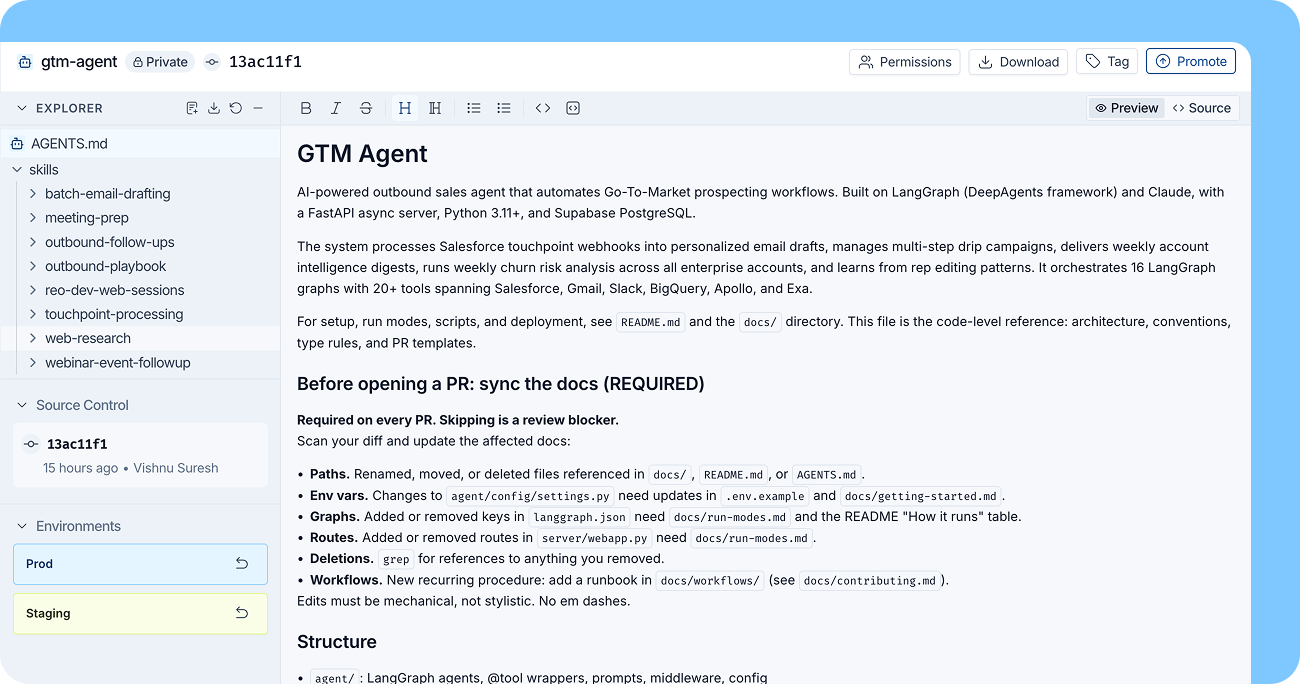
LangSmith Context Hub は、エージェントの動作を形作るファイルを管理するためのチーム向けの中央集約場所を提供します。これには AGENTS.md ファイル、スキル、ポリシー、例、および他のコンテキストバンドルが含まれ、エージェントはこれらを読み込んで従います。
コンテキストは、ハーンコードとは異なる方法で管理されることが一般的です。チームが指示の洗練、例の更新、ポリシーの追加、そして何が機能するかを学習するにつれて、コンテキストは急速に変化します。また、デザイナー、マーケティング担当者、サポート責任者、プロダクトマネージャー、コンプライアンスチーム、およびその他の専門分野の専門家など、組織全体の人間によって形作られます。Context Hub はこのワークフローを LangSmith に持ち込むことで、チームが GitHub を介してすべてを強制されることなく、エージェントのコンテキストについて共同作業できるようにします。
主要機能は以下の通りです:
- バージョン管理: コンテキストファイルの変更を追跡し、過去のバージョンを検証し、必要に応じてロールバックできます。
- タグ付け: dev(開発)、staging(ステージング)、prod(本番)などのラベルでバージョンにタグを付けて、エージェントが適切な環境で正しいコンテキストを使用できるようにします。
- コメント機能: チームメンバーと直接コンテキストの変更について協力して議論できます。
Context Hub を使用することで、チームはコンテキストをエージェントシステムの主要な構成要素として扱い、エージェントの動作を決定する指示、例、ポリシーを管理するための共有ワークフローを実現できます。
LangSmith LLM Gateway
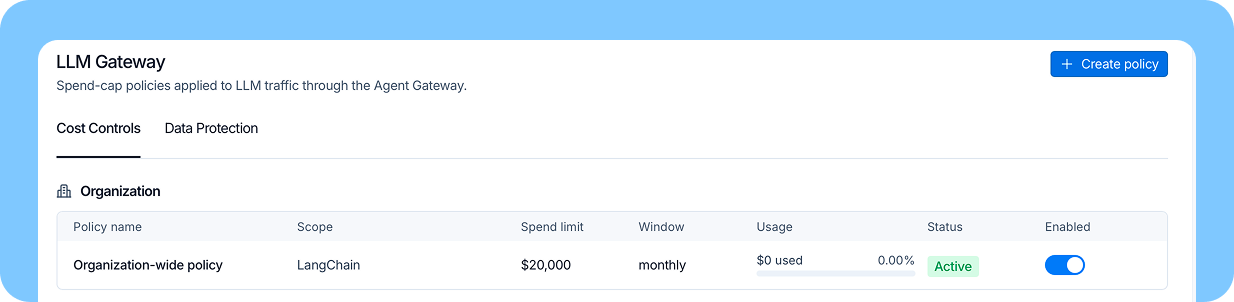
LangSmith LLM Gateway は、エージェントとそれらが呼び出す LLM プロバイダーの間に位置する新しいランタイムガバナンス層です。リクエストが環境から送信される前に支出制限を適用し、機密データを検出します。また、すべてのポリシーイベントは、トリガーとなったトレースと共に LangSmith に直接フローされます。別途ダッシュボードや監査パイプラインを構築する必要はありません。
ベータ版には、組織、ワークスペース、ユーザー、API キーレベルでのハード spending 制限とリアルタイムコスト集計機能、リクエストおよびレスポンスにおける PII(個人識別情報)およびシークレットの削除機能、階層型ポリシー強制執行機能、管理者アクションの完全な監査ログ機能が搭載されています。セットアップは base_url の置き換えのみです。LangSmith API キーを使用してエージェントをゲートウェイエンドポイントに指向し、プロバイダーキーをワークスペースのシークレットに追加し、UI でポリシーを設定するだけです。
現在のプライベートベータ版での機能:
- 組織、ワークスペース、ユーザー、または API キーレベルでのハード制限付き spending リミット(到達時に 402 エラーを返す)
- ワークスペース、ユーザー、API キーごとのリアルタイム spending 可視化
- リクエストおよびレスポンスから機密データを削除する PII およびシークレット検出機能(モデルまたはトレースに到達する前に行われる)
- ゲートウェイ経由のプロキシ呼び出しが他のトレースと同じワークスペースに収まるようにするトレース継続性
- ポリシーイベントをサマリー表示し、ワンクリックで関連するトレースへ詳細ドリルダウンできる LangSmith Engine 統合機能
- 追加のパイプライン構築不要な、すべての管理者アクションに対する監査ログ
LangSmith Fleet: 新機能
Sandboxes
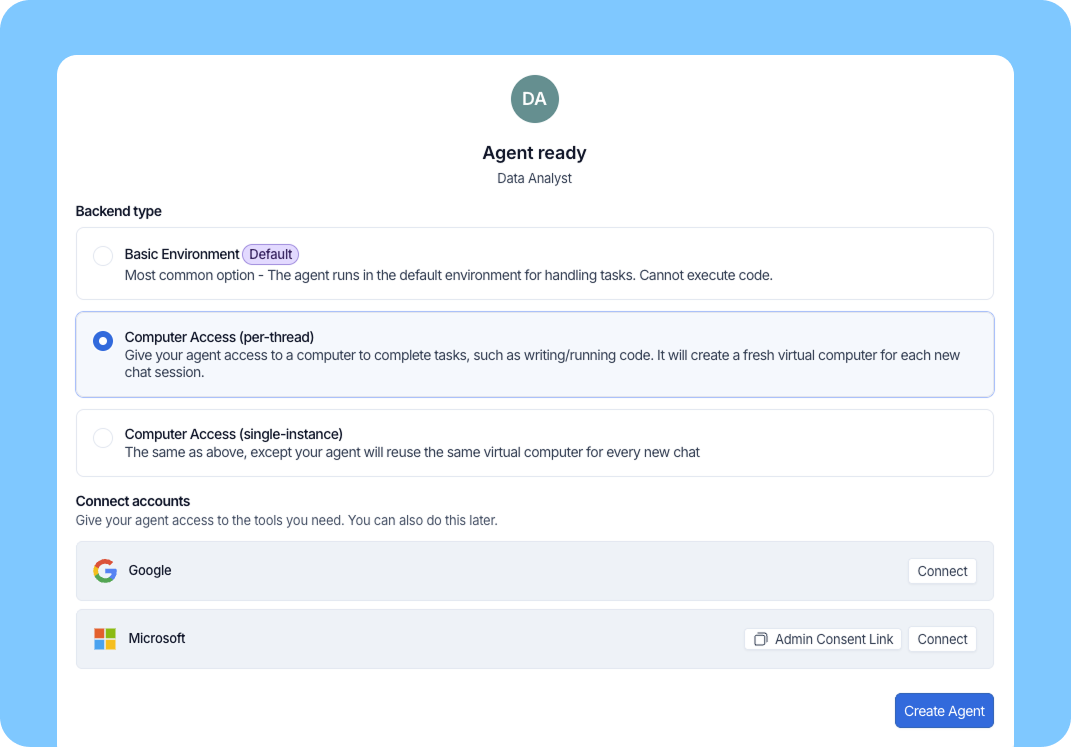
Fleet は現在、パブリックベータ版としてサンドボックスアクセス機能を備えており、エージェントがコードを記述して実行するための安全な場所を提供します。これにより、Fleet エージェントはツールを呼び出すだけでなく、データの分析、ファイルの変換、PDF や PPTX などのフォーマットの生成・編集、シェルコマンドの実行、依存関係のインストールが可能となり、実際の実行環境が必要なタスクではコーディングエージェントとして振る舞うことができます。
各サンドボックスは、LangSmith Sandboxes に支えられた孤立したファイルシステムとコマンド環境をエージェントに提供します。Fleet では、サンドボックスはチャットスレッドまたはエージェント単位でスコープを設定できるため、エージェントはスレッド間を通じて同じ環境を再利用したり、すべてのチャットで同一のコンピューターを再利用したりできます。アイドル状態のサンドボックスにはデフォルトで 15 分のソフト TTL が設定されており、非アクティブなセッションにおける継続的なコストを防ぎつつ、サンドボックス内のコンテンツを破棄することなく、効率的な体験を維持します。
Sandboxes を活用することで、Fleet エージェントは以下のようなより複雑な作業を引き受けることができます:
- データ分析:データセット上でコードを実行し、入力を変換して構造化された出力を生成します。
- ファイルの生成と変換:PDF、スプレッドシート、スライド資料などのファイルを作成、編集、結合、検証、または変換します。
- コーディングタスク:問題の再現、ファイルの編集、依存関係のインストール、テストの実行を行います。
- ローカルツールおよび CLI: 第一級の Fleet インテグレーションがまだないサービスに対して、コマンドラインツールまたはローカルの MCP サーバー(Model Context Protocol)を使用します。
- プリビルトコーディングエージェント:スレッド全体にわたってファイル、コマンド、状態を保持する永続的なワークスペースが必要なパワフルなエージェントです(詳細は後述のプリビルトエージェントセクションをご覧ください)。
プリビルトエージェント
LangChain チームが毎日利用している 5 つのプリビルトエージェントを含む Fleet エージェントテンプレートを拡充しています。これらのエージェントは、複数のツールとアクティビティにまたがる複雑で長時間実行される作業を処理します。その中には、同様のコンセプトを基盤として企業が設立されるほど洗練されたものも含まれています。これらはすべて、Fleet に標準添付で無料で利用可能です。
初期テンプレートをリリースして以来、カスタマイズこそが汎用的なエージェントと真の価値を提供するエージェントを分ける要素であることを学びました。そのため、すべてのプリビルトエージェントには、文脈に合わせて必要な詳細を尋ねるオンボーディングフローが含まれています。例えば GTM エージェントは、業界、製品、顧客について質問し、アカウント調査やアウトバウンドドラフトの方法を形成します。その後、実際に使用してフィードバックを与えることで、さらにエージェントを洗練させることができます。
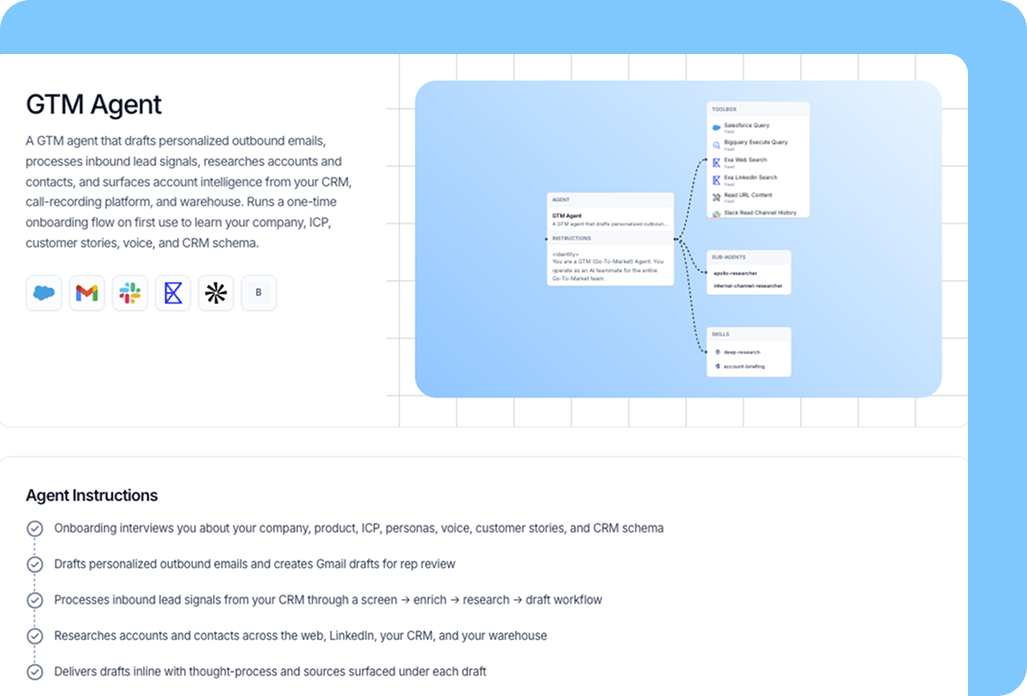
新しい事前構築型エージェント:
- コーディングエージェント (Open SWE をベースに構築): リポジトリに接続し、変更の草案作成からプルリクエストのオープンまで、コーディングタスクをエンドツーエンドで処理します。
- GTM エージェント: カスタマーヘルスや利用状況に関するその場の質問に応え、課題をフラグ付けし、アウトバウンドコミュニケーションの草案を作成します。営業およびマーケティングチームのための右腕です。
- X コンテンツマネージャー: ビジネスに関連するトピックについて X を監視し、レビュー用の投稿を草案作成し、ビジネスにとって重要な会話への参加をサポートします。
- エグゼクティブアシスタント: 受信トレイの仕分け、スケジュール管理、会議準備を処理するため、判断力を要する業務に集中できます。
- 競合調査員: 競合他社のニュースを監視し、生きているバトルカード(競合比較資料)を維持し、その場の競合に関する質問に応えます。
Fleet に無料モデル利用が含まれています
Fleet の利用開始はこれまで以上に簡単になりました。Developer プランおよび Plus プランには、Fireworks による推論機能を持つ無料のモデル利用が含まれます。数分で自分自身のエージェントへの委任を開始できます。
Deep Agents 0.6
Deep Agents v0.6 は、エージェント層およびスケールにおけるパフォーマンスを向上させます。今回のリリースでは、プログラムによるツール呼び出し用の軽量コードインタープリター (REPL)、エージェント UI 向けの型付きストリーミング、より効率的なチェックポイント保存のための DeltaChannel が追加されました。
コードインタプリタは、ツールを構成し、中間状態を管理し、モデルコンテキストに何を送り返すかを決定するためのランタイムをエージェントに提供します。これにより、回避可能なモデルとの往復回数を減らしながら、多段階のワークフローを実行できるようになります。
型付きストリーミングは、メッセージ、推論、ツール呼び出し、サブエージェント、カスタムチャンネル、最終出力に対して構造化されたイベントを提供し、エージェントの進行状況をレンダリングしやすくします。DeltaChannel は、各ステップで完全な状態スナップショットの代わりに差分のみを保存することで、チェックポイントストレージのオーバーヘッドを削減します。
v0.6 の新機能:
- コードインタプリタ: ツール構成、状態管理、モデルコンテキストへの返却内容のフィルタリングのための軽量 REPL。
- プログラムによるツール呼び出し: モデルとの往復回数とトークン使用量を削減するため、インタプリタ内で多段階のツールワークフローを実行可能。
- 型付きストリーミング: メッセージ、推論、ツール呼び出し、サブエージェント、カスタムチャンネル、最終出力に対する構造化イベント。
- フロントエンドストリーミングサポート: React、Vue、Svelte、Angular 向けの v1 インテグレーション。
- DeltaChannel: 長期実行型エージェントの効率を維持するための差分ベースのチェックポイントストレージ。
LangChain Labs
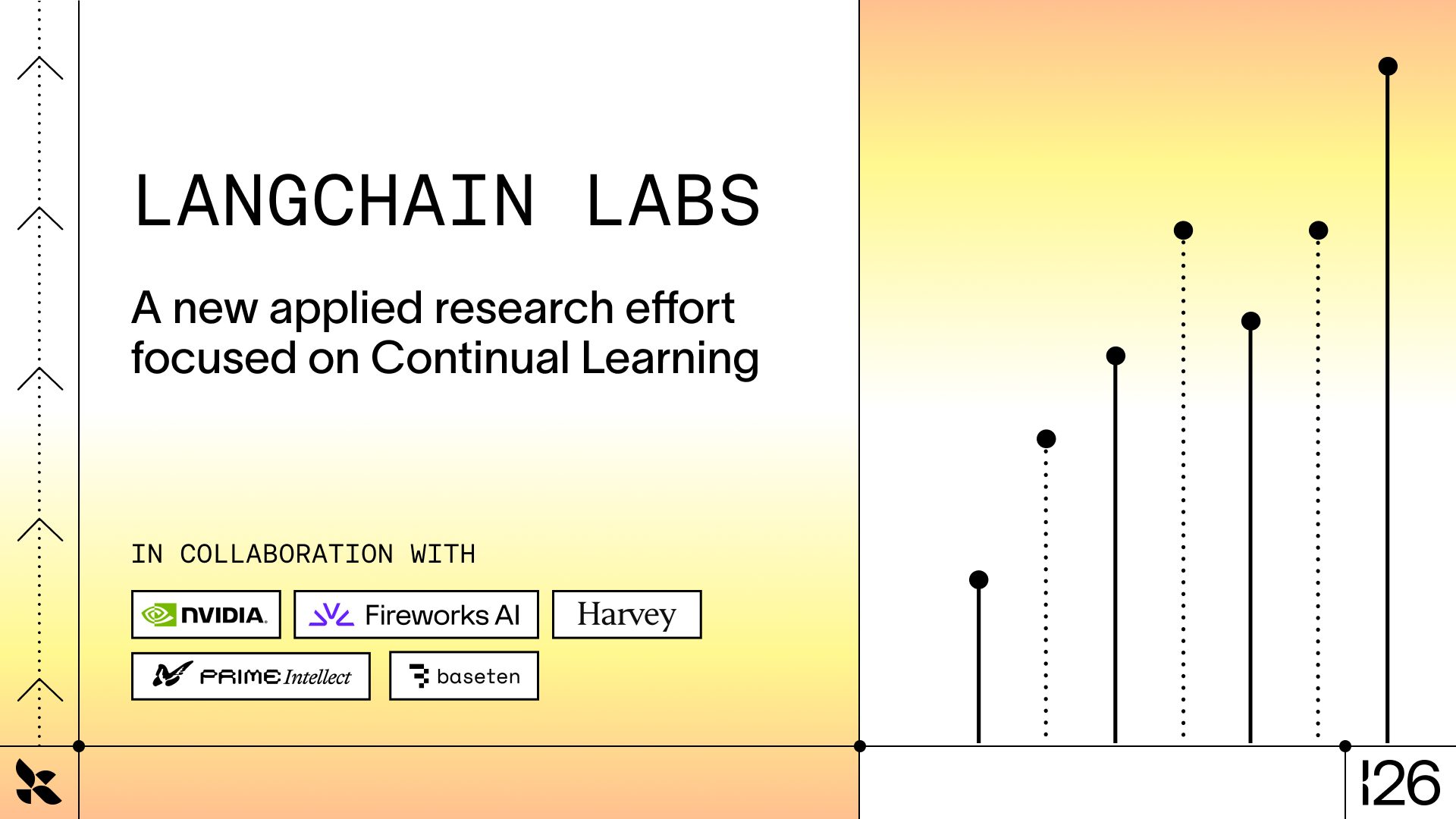
LangChain Labs は、エージェントのための継続的学習に焦点を当てた応用研究プロジェクトです。評価生成、環境設計、ハーンエンジニアリング、モデル選択、プロンプト最適化、ファインチューニングを含むスタック全体のパフォーマンス向上のために、エージェントのトレースを活用する手法を開発しています。
私たちは、Harvey、NVIDIA、Prime Intellect、Fireworks、Baseten といった研究パートナーと共にこの取り組みを開始します。その目的は、チームが実際のエージェント利用データからより優れたエージェントを生み出すのを支援しつつ、研究結果、評価手法、オープンソースの統合情報を、より広範なエージェント構築コミュニティと共有することです。
- 大規模なエージェントデータのマイニング:トレースを活用して評価用データセットを生成し、環境を改善し、エージェントハネスを調整し、ポストトレーニング(学習後微調整)をサポートする。
- エージェント構成の最適化:コスト、レイテンシ、タスクパフォーマンスの観点から、モデル、ハネス、フィードバックループの最適な組み合わせを探る。
- 評価およびシミュレーション環境の構築:エンドツーエンドのエージェント評価、シミュレーション、強化学習のための現実的な環境を容易に作成できるようにする。
- モデル横断的なプロンプト最適化:エージェントを異なるモデルファミリー間で移行する際に必要な手作業を削減する。
取り組みは続く
これら一連のリリースにより、最初のプロトタイプから本番環境でのモニタリングおよび改善に至るまで、エージェント開発ライフサイクルがより迅速かつ安全で、協働的なものになります。これらのツールを使ってチームがどのような成果を生み出すか楽しみにしており、各製品が進化するにつれてさらに多くの情報を共有していきます。
Interrupt に参加し、フィードバックを提供し、引き続き LangChain で構築を続けているすべての皆様へ感謝申し上げます。本日発表された機能をお試しになりたい場合は、上記の発表をご覧ください、または LangSmith で始めましょう。
Related content
Company Announcements
Introducing LangChain Labs

Harrison Chase
May 14, 2026

min
LangSmith
Introducing LangSmith Engine

Ben Tannyhill
May 13, 2026
5
min
LangSmith
We built SmithDB, the data layer for agent observability

Ankush Gola
May 13, 2026
11
min

エージェントの実際の動作を確認する
LangSmith は、エージェントエンジニアリングプラットフォームであり、開発者がすべてのエージェントの意思決定をデバッグし、変更の評価を行い、ワンクリックでデプロイできるように支援します。
原文を表示
Key Takeaways
- Accelerating the agent development lifecycle. LangSmith Engine watches your production traces, clusters failures, and opens PRs with fixes so you can spend time reviewing improvements, not hunting for them.
- Managing the infrastructure so you don't have to. Managed Deep Agents, SmithDB (up to 15x faster on core LangSmith workloads), and Sandboxes GA give teams a path from local prototype to production without stitching together the runtime layer themselves.
- Observability and governance ship together now. Messages View makes multi-turn traces readable at a glance, Context Hub versions the instructions and policies your agents follow, and LLM Gateway enforces spend limits and redacts PII before requests leave your environment.
Today at Interrupt, we announced a ton of new products and features to help teams accelerate the agent development lifecycle. Some handle infrastructure that would take quarters to build yourself. Others help you find what’s broken, understand why, and ship fixes faster, automatically. Here’s what we shipped.
LangSmith Engine
Until now, improving your agent has been a manual process of reading traces, looking for patterns, writing evals, and creating fixes. LangSmith Engine is an autonomous agent runs that loop for you. It watches your production traces, clusters failures into named issues, diagnoses root causes against your code, and proposes fixes and eval coverage to keep regressions from coming back. You just review and merge improvements.
For each issue Engine surfaces, it can:
- Open a PR with a targeted code or prompt fix
- Create a custom online evaluator scoped to the exact problem, so recurrences get resurfaced automatically
- Add the failing traces to your offline eval suite as ground truth examples
Engine is built on LangSmith's existing tracing and evaluation infrastructure, so it plugs into the workflows your team already runs. Cogent and Campfire have used it to resolve issues affecting thousands of traces. Available now in public beta.
SmithDB
SmithDB is the database purpose-built for agent observability that now backs core LangSmith workloads. Agent traces have exploded in volume and size, with deeply nested spans, long-running operations, and events that arrive in pieces over hours. The query patterns needed to analyze them (random access, interactive filtering, full-text search, JSON filtering, tree-aware queries, thread reconstruction, aggregations) require a fundamentally new architecture.
SmithDB is built in Rust on top of Apache DataFusion and Vortex, with object storage for durable trace data, a small Postgres metastore, and stateless ingestion, query, and compaction services.
What it delivers:
- Performance: Up to 15x faster on core LangSmith experiences, with P50 trace tree loads at 92ms and P50 single run loads at 71ms
- Portability: Object-storage-backed and stateless, so it scales by adding compute and is far easier to run in self-hosted and multi-cloud environments than traditional database clusters
- Agent-native query patterns: Designed for long-running spans with multiple events per run, large payloads, full-text search, and JSON filtering at sub-second latency
Managed Deep Agents
Managed Deep Agents gives developers an API-first hosted runtime for creating, running, and operating deep agents in LangSmith. Built around the open-source Deep Agents harness, it supports agents that can plan, use tools, delegate to subagents, write files, and work over longer timelines, without requiring teams to stand up their own agent server or rebuild the runtime infrastructure around every agent.
This is designed for agents that need durable execution, persistent context, tool access, sandboxed code execution, and production visibility. Developers can define agents using the familiar Deep Agents project structure, manage them programmatically through the /v1/deepagents API, and inspect every run in LangSmith.
Key features:
- Managed runtime for creating, updating, managing, and running deep agents through an API
- Durable threads, streaming runs, checkpointing, and human-in-the-loop workflows for long-running tasks
- Agent context and files with support for AGENTS.md, skills/, subagents/, and tools.json
- Context Hub for retaining and updating agent memory, operating notes, user preferences, and project context across runs
- Sandbox-backed execution for agents that need code, shell commands, file I/O, data analysis, or artifact generation
LangSmith Sandboxes Generally Available
LangSmith Sandboxes are secure code execution environments for agents. They give agents a runtime with a filesystem, shell, package manager, persistent state, and network boundary, so they can write code, install dependencies, run tests, inspect failures, and continue work across longer sessions.
Each sandbox runs in a hardware-virtualized microVM, isolated from your services and from other sandboxes. That isolation is especially important for agents running model-generated code, external dependencies, or user-provided scripts.
Sandboxes work through the same LangSmith SDK and API key teams already use, so teams can add safe code execution to Deep Agents, Open SWE, LangSmith Deployment, LangSmith Fleet, or custom agent workflows without building the runtime layer themselves.
Some highlights from the GA release:
- Snapshots and cheap forks: Capture a sandbox or build one from a Docker image, then fork parallel sandboxes from that state using copy-on-write.
- Blueprints: Define refreshable base environments so new sandboxes start with fresh dependencies, repo state, and warmed caches.
- Pause when inactive: Idle sandboxes pause automatically so teams do not pay for unused resources.
- Sandbox CLI: Manage sandboxes, build snapshots, open consoles, tunnel TCP, and use tools like ssh, scp, rsync, and sftp.
- Auth Proxy with custom callbacks: Inject credentials at the network layer so secrets do not enter the runtime, with support for custom secret resolution, audit hooks, and domain allowlists or denylists.
Context Hub
LangSmith Context Hub gives teams a central place to manage the files that shape agent behavior, including AGENTS.md files, skills, policies, examples, and other context bundles agents read and follow.
Context is often managed differently than harness code. It changes quickly as teams refine instructions, update examples, add policies, and learn what works. It’s also shaped by people across the organization, including designers, marketers, support leads, product managers, compliance teams, and other subject matter experts. Context Hub brings that workflow into LangSmith so teams can collaborate on agent context without forcing everything through GitHub.
Core features include:
- Versioning: Track changes to context files, inspect previous versions, and roll back when needed.
- Tags: Mark versions with labels like dev, staging, or prod so agents use the right context in the right environment.
- Comments: Collaborate with teammates directly on context changes.
With Context Hub, teams can treat context as a first-class part of their agent system, with a shared workflow for managing the instructions, examples, and policies that determine how agents behave.
LangSmith LLM Gateway
LangSmith LLM Gateway is a new runtime governance layer that sits between your agents and the LLM providers they call. It enforces spend limits and detects sensitive data before requests leave your environment, and every policy event flows directly into LangSmith alongside the trace that triggered it. There are no separate dashboards or audit pipelines to stand up.
The beta ships with hard spend caps and real-time cost rollups at the organization, workspace, user, and API key level, PII and secrets redaction on both requests and responses, layered policy enforcement, and full audit logging of administrative actions. Setup is a base_url swap. Point your agents at the gateway endpoint with your LangSmith API key, add your provider keys to workspace secrets, and configure policies in the UI.
In private beta today:
- Spend limits with hard caps at the organization, workspace, user, or API key level, returning a 402 when hit
- Real-time spend visibility by workspace, user, and API key
- PII and secrets detection that redacts sensitive data from requests and responses before it reaches the model or trace
- Trace continuity so gateway-proxied calls land in the same workspace as the rest of your traces
- LangSmith Engine integration that surfaces policy events for triage with one-click drill down to the underlying trace
- Audit logging for every administrative action, with no separate pipeline to stand up
LangSmith Fleet: new features
Sandboxes
Fleet now includes Sandbox access in public beta, giving agents a secure place to write and run code. This expands what Fleet agents can do beyond calling tools. They can analyze data, transform files, generate or edit formats like PDFs and PPTX files, run shell commands, install dependencies, and work like coding agents when a task requires a real execution environment.
Each sandbox gives the agent an isolated filesystem and command environment backed by LangSmith Sandboxes. In Fleet, sandboxes can be scoped either to a chat thread or agent, so an agent can reuse the same environment across threads or reuse the same computer for every chat. Idle sandboxes have a default 15-minute soft TTL, which keeps the experience efficient while avoiding ongoing costs for inactive sessions, without destroying the contents of the sandbox.
With Sandboxes, Fleet agents can take on more complex work, including:
- Data analysis: Run code over datasets, transform inputs, and produce structured outputs.
- File generation and transformation: Create, edit, merge, validate, or convert files like PDFs, spreadsheets, and slide decks.
- Coding tasks: Reproduce issues, edit files, install dependencies, and run tests.
- Local tools and CLIs: Use command-line tools or local MCP servers for services that do not yet have a first-class Fleet integration.
- Prebuilt coding agents: Power agents that need a persistent workspace with files, commands, and state across a thread (see more in the prebuilt agents section below).
Prebuilt agents
We're expanding Fleet agent templates with five prebuilt agents that the LangChain team relies on every day. These agents handle complex, long-running work that spans multiple tools and activities. Some of them are sophisticated enough that entire companies have been built around similar concepts. They all come free with Fleet, out of the box.
Since launching our initial templates, we've learned that customization is what separates a generic agent from one that delivers real value. So every prebuilt agent now includes an onboarding flow that asks for the details it needs to fit your context. The GTM agent, for example, asks about your industry, products, and customers to shape how it researches accounts and drafts outbound. From there, you refine the agent further by using it and giving feedback.
The new pre-built agents:
- Coding agent (built on Open SWE): Connects to your repo and handles coding tasks end to end, from drafting changes to opening PRs.
- GTM agent: Answers ad hoc questions about customer health and usage, flags issues, and drafts outbound communications. A right hand for sales and marketing teams.
- X content manager: Monitors X for topics relevant to your business, drafts posts for your review, and helps you stay engaged on the conversations that matter to your business.
- Executive assistant: Handles inbox triage, scheduling, and meeting prep so you can focus on the work that needs your judgment.
- Competitive researcher: Monitors competitor news, maintains living battlecards, and answers ad hoc competitive questions.
Free model usage included with Fleet
It's now easier than ever to get started with Fleet. Developer and Plus plans now include free model usage with inference powered by Fireworks. Start delegating to your own agents in minutes.
Deep Agents 0.6
Deep Agents v0.6 improves performance at the agent layer and at scale. The release adds a lightweight code interpreter for programmatic tool calling (REPL), typed streaming for agent UIs, and DeltaChannel for more efficient checkpoint storage.
The code interpreter gives agents a runtime for composing tools, managing intermediate state, and deciding what returns to the model context. This helps agents run multi-step workflows with fewer avoidable model round trips. Typed streaming gives applications structured events for messages, reasoning, tool calls, subagents, custom channels, and final output, making it easier to render agent progress. DeltaChannel reduces checkpoint storage overhead by storing diffs instead of full state snapshots at every step.
What’s new in v0.6:
- Code interpreter: A lightweight REPL for tool composition, state management, and filtering what returns to model context.
- Programmatic tool calling: Run multi-step tool workflows inside the interpreter to reduce model round trips and token usage.
- Typed streaming: Structured events for messages, reasoning, tool calls, subagents, custom channels, and final output.
- Frontend streaming support: v1 integrations for React, Vue, Svelte, and Angular.
- DeltaChannel: Delta-based checkpoint storage that keeps long-running agents more efficient.
LangChain Labs
LangChain Labs is an applied research effort focused on continual learning for agents. We’re developing methods that use agent traces to improve performance across the stack, including eval generation, environment design, harness engineering, model selection, prompt optimization, and fine-tuning.
We’re starting this work with research partners including Harvey, NVIDIA, Prime Intellect, Fireworks, and Baseten. The goal is to help teams turn real agent usage into better agents, while sharing research, evals, and open-source integrations with the broader agent-building community.
- Mining large-scale agent data: Using traces to generate evals, improve environments, tune agent harnesses, and support post-training.
- Finding efficient agent configurations: Exploring the best combinations of models, harnesses, and feedback loops across cost, latency, and task performance.
- Building evaluation and simulation environments: Making it easier to create realistic environments for end-to-end agent evaluation, simulation, and reinforcement learning.
- Prompt optimization across models: Reducing the manual work required to move agents between model families.
The work continues
Together, these launches make the agent development lifecycle faster, safer, and more collaborative, from the first prototype to production monitoring and improvement. We’re excited to see what teams build with them, and we’ll keep sharing more as each product evolves.
Thanks to everyone who joined us at Interrupt, gave feedback, and continues to build with LangChain. If you want to try anything we shipped today, check out the announcements above or get started in LangSmith.
Related content
Company Announcements
Introducing LangChain Labs
Harrison Chase
May 14, 2026
min
LangSmith
Introducing LangSmith Engine
Ben Tannyhill
May 13, 2026
5
min
LangSmith
We built SmithDB, the data layer for agent observability
Ankush Gola
May 13, 2026
11
min
See what your agent is really doing
LangSmith, our agent engineering platform, helps developers debug every agent decision, eval changes, and deploy in one click.
関連記事
今日のまとめ
AI日報で今日の重要ニュースをまとめ読み