実世界におけるセルフホスト型大規模言語モデル:限界、回避策、そして厳しい教訓
本記事は、大規模言語モデルのセルフホスティングが持つ現実的なハードウェア制約、推論品質と速度のトレードオフ、そして運用上の摩擦について、ベンチマークや hype に基づかない実務家の視点から深く分析している。
キーポイント
ハードウェアの現実的制約
7B モデルでも快適に動作させるには VRAM 16GB 以上が必要であり、13B や 70B の領域ではマルチ GPU 構成や量子化による品質低下とのトレードオフが避けられない。
量子化のリスクとトレードオフ
FP16 から INT4 への量子化は推論速度とサイズを改善するが、推論タスクや構造化出力生成において精度が低下し、その影響が直感的に分かりにくい場合がある。
運用上の摩擦と期待値のギャップ
「動かす」ことと「実用に耐えるように動かす」ことの間に大きな隔たりがあり、API コストやデータ流出を避けるために自己ホスティングを選んだ結果、逆に複雑なインフラ管理に直面するケースが多い。
量子化のトレードオフと検証
FP16からINT4への量子化は速度とサイズを改善するが、推論や構造化出力などの精密なタスクで精度が低下する可能性があるため、特定のユースケースでの実地テストが不可欠です。
コンテキストウィンドウの限界とコスト
RAGパイプラインなどではシステムプロンプトや履歴を含めてすぐにコンテキストウィンドウが埋まり、32Kなどの長文処理はメモリ使用量が文脈長の二乗に比例して急増するため計算リソースを多く消費します。
実用的な解決策とプロンプト設計
コンテキスト制限への対策として、データチャンキングや履歴のトリミングを行い、入力内容を厳選することで、洗練された無限メモリよりもむしろ出力品質を高めるプロンプト設計が促されます。
レイテンシが開発ループを阻害する
推論に10〜15秒かかる場合、プロンプトのテストやデバッグなど開発プロセス全体が著しく遅延します。
影響分析・編集コメントを表示
影響分析
この記事は、LLM のセルフホスティングブームに対する冷静な現実認識を提供し、組織が技術導入を検討する際に直面する隠れたコストとリスクを浮き彫りにします。これにより、単なるベンチマーク数値ではなく、実際の運用環境でのパフォーマンスと信頼性を重視した意思決定が促され、業界全体の導入戦略がより成熟したものへと移行するきっかけとなるでしょう。
編集コメント
技術的な理想と現場の現実のギャップを鋭く指摘しており、導入を検討しているエンジニアや意思決定者にとって非常に示唆に富む内容です。
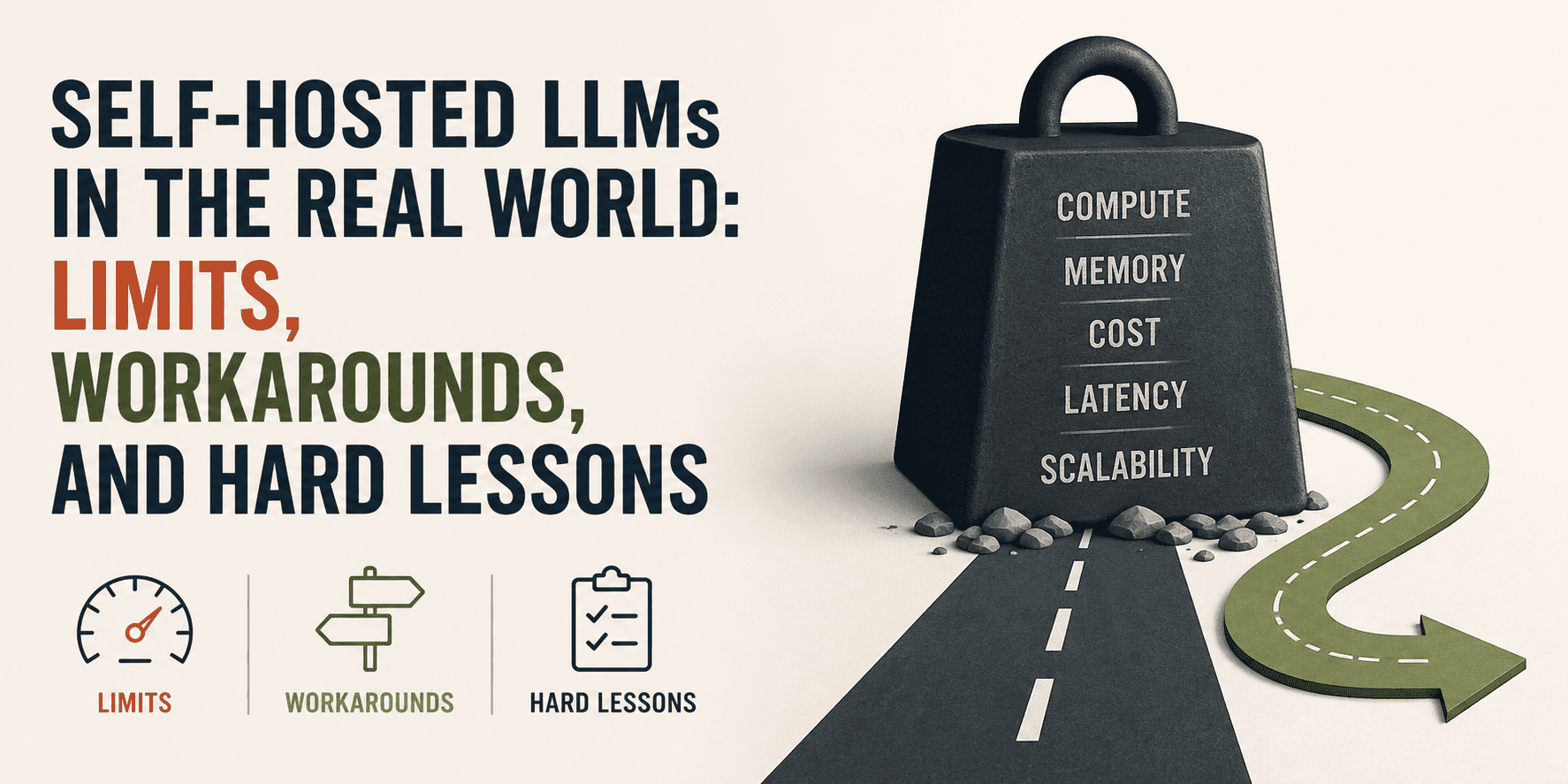 image**
編集者による画像
# 独自ホスト型大規模言語モデル(LLM)の問題点
「自分自身で大規模言語モデル(LLM: Large Language Model)を動かす」というのは、2026 年の「自分でビジネスを始めよう」という言葉に匹敵する流行語です。まるで夢のようです:API 利用料がかからない、データがサーバーから流出しない、モデルに対する完全なコントロールが可能。しかし、実際に実行してみると、招待されていない現実が次々と現れ始めます。推論(inference)の最中に GPU のメモリ不足が発生します。ホスト版よりもはるかにひどいハルシネーション(幻覚)を起こします。レイテンシー(遅延)は恥ずべきレベルです。どうやら、基本的な質問にさえ信頼して答えられないものに対して、3 週末も費やしてしまったようです。
この記事では、独自ホスト型 LLM を真剣に取り組んだ際に実際に何が起こるかについて解説します https://www.kdnuggets.com/ollama-tutorial-running-llms-locally-made-super-simple。ベンチマークや過剰な期待ではなく、多くのチュートリアルが完全に無視している実際の運用上の摩擦についてです。
# ハードウェアの現実確認
ほとんどのチュートリアルは、手元に高性能な GPU が転がっていると軽く仮定しています。真実は、7B パラメータモデルを快適に動かすには少なくとも 16GB の VRAM(ビデオメモリ)が必要であり、13B や 70B の領域に進もうとすると、マルチ GPU 構成を検討するか、量子化(quantization)を通じて速度との間で品質の大幅なトレードオフを受け入れる必要があるということです。クラウド上の GPU は助けになりますが、その場合でも結局は迂回した形でトークン単位での支払いを強いられます。
「動く」ことと「うまく動く」ことの間のギャップは、多くの人が予想するよりも広いです。そして、本番環境に近い何らかのものをターゲットにしている場合、「動く」だけで満足するのは最悪の選択です。セルフホスティングプロジェクトの初期段階で行われたインフラストラクチャに関する決定は、後になってから積み重なって影響を及ぼす傾向があり、それらを後で差し替えるのは苦痛を伴います。
# 量子化:救済策か妥協点か?
量子化はハードウェア制約に対する最も一般的な回避策であり、実際に何をトレードオフしているのかを理解する価値があります。モデルを FP16 から INT4 に削減する場合、重みの表現が大幅に圧縮されます。モデルは高速化され小型化しますが、内部計算の精度は、必ずしも直感的には明らかではない方法で低下します。
汎用的なチャットや要約タスクにおいては、低い量子化レベルでも十分な場合が多いです。問題が生じ始めるのは、推論タスク、構造化された出力生成、そして注意深い指示従順性が求められるあらゆるケースにおいてです。FP16 では JSON 出力を確実に処理できるモデルも、Q4(量子化レベル 4)では壊れたスキーマを生成し始めます。
普遍的な答えはありませんが、回避策は主に経験則に基づいています。コミットする前に、特定のユースケースについて量子化レベル全体でテストを行う ことが重要です。両方のバージョンで十分な数のプロンプトを実行すれば、パターンはすぐに浮かび上がってきます。
# コンテキストウィンドウとメモリ:見えない天井
人々が驚かされることのひとつは、実際のワークフローにおいてコンテキストウィンドウがいかに速く埋まってしまうかです。特に Ollama を使用しながら測定する必要がある場合 はその傾向が顕著です。4K のコンテキストウィンドウは聞けば問題なさそうに思えますが、検索拡張生成(RAG)パイプラインを構築している最中に、システムプロンプト、取得したチャンク、会話履歴、そしてユーザーの実際の質問をすべて同時に注入しようとすると、そのウィンドウは予想よりもはるかに速く消えてしまいます。
より長いコンテキストを持つモデルも存在しますが、フルアテンションで 32K のコンテキストウィンドウを実行するのは計算コストが高くなります。標準的なアテンション機構では、メモリ使用量はコンテキスト長に対してほぼ二次関数的に増加するため、コンテキストウィンドウを倍にしても、必要なメモリの要件は 4 倍以上になる可能性があります。
実用的な解決策としては、チャンク化を積極的に行うこと、会話履歴を切り捨てること、そして何よりもコンテキストに含める内容を非常に慎重に選別することが挙げられます。無限のメモリがある場合ほどエレガントではありませんが、このアプローチは結果として出力品質を向上させるようなプロンプトの規律を強いることになります。
# レイテンシーはフィードバックループを殺す
必ず JSON 形式で返してください。translation フィールドのみ。他のフィールド (technical_terms 等)は一切追加しないこと — 余計なフィールドを書こうとして本文翻訳がトークン上限で打ち切られる事故を防ぐため:
{"translation": "翻訳全文"}
セルフホスト型モデルは、API を介して利用可能なモデルに比べてしばしば処理速度が遅く、これは人々が当初想定している以上に重要な問題です。簡素な回答に対して推論に 10 秒から 15 秒を要する場合、開発のループが顕著に遅延します。プロンプトのテスト、出力形式の反復、チェーンのデバッグなど、すべての作業が待ち時間によって引き伸ばされてしまいます。
ストリーミング応答はユーザー体験を向上させますが、完了までの総時間を短縮するわけではありません。バックグラウンド処理やバッチ処理においては、レイテンシ(遅延)はそれほど重要ではありません。しかし、対話型のタスクにおいては、これは実用的な問題となります。誠実な回避策は投資です:より高性能なハードウェアの導入、vLLM のような最適化されたサービングフレームワーク や適切な設定を施した Ollama の利用、あるいはワークフローが許す範囲でのリクエストバッチ処理など。これらは、スタックを所有することに伴うコストの一部に過ぎません。
# モデル間でプロンプトの挙動が変動する
ホスト型からセルフホスト型へ移行する際、ほぼすべての人が陥る落とし穴があります:プロンプトテンプレートは極めて重要であり、モデル固有のものだということです。ホスト型の最先端モデルでは完璧に機能するシステムプロンプトでも、Mistral や LLaMA のファインチューン版では無意味な出力を生成することがあります。これらのモデルが壊れているわけではありません。異なるフォーマットで訓練されており、それに応じて応答しているのです。
すべてのモデルファミリーには、それぞれ固有の期待される指示構造があります。Alpaca フォーマットでトレーニングされた LLaMA モデル はある特定のパターンを想定しており、チャット調整済みモデルは別のパターンを想定しています。もし間違ったテンプレートを使用している場合、それは能力の真の欠陥ではなく、不適切な入力に対してモデルが混乱して応答しようとする試みです。ほとんどのサービングフレームワークはこの点を自動的に処理しますが、手動で確認する価値はあります。出力がおかしいと感じたり一貫性がない場合は、まずプロンプトテンプレートを確認すべきです。
# 微調整は簡単そうに思えるが、実際にはそうではない
ある時点で、ほとんどのセルフホスティングユーザーは微調整を検討します。ベースモデルは一般的なケースを十分に処理できますが、特定のドメイン、トーン、またはタスク構造に対して、あなたのデータでトレーニングされたモデルから真に恩恵を受ける場合があります。理論的には理にかなっています。金融分析 に使用するモデルと、three.js アニメーションのコーディングに使用するモデルが同じであるはずがありませんよね?もちろんありません。
したがって、私は将来は Google が突然、40 シリーズ NVIDIA カードで動作する Opus 4.6 のようなモデルをリリースすることはないと考えています。むしろ、特定のニッチ、タスク、アプリケーション向けに構築されたモデルが登場し、パラメータ数が減り、リソース配分がより最適化されるようになるでしょう。
実際には、LoRA または QLoRA を用いたファインチューニングであっても、クリーンで適切にフォーマットされたトレーニングデータ、意味のある計算リソース、慎重なハイパーパラメータの選択、そして信頼できる評価環境が必要です。最初の試みの多くは、ベースモデルではなかったような方法で、あなたのドメインについて自信満々に誤った結果を出力するモデルを生み出してしまいます。
人々が最も苦労して学ぶ教訓は、データの量よりもデータ品質の方が重要だということです。数百件の注意深く選別された例が、数千件のノイズの多いデータよりも通常は優れたパフォーマンスを発揮します。これは退屈な作業であり、それを回避する近道はありません。
# 結びの言葉
LLM のセルフホスト化は、宣伝されている以上に実現可能であると同時に、より困難でもあります。ツールの質は実際に向上しており:Ollama、vLLM、そして広範なオープンモデルエコシステムが、参入障壁を有意に低下させました。
しかし、ハードウェアコスト、量子化におけるトレードオフ、プロンプトの調整、ファインチューニングの学習曲線はすべて現実的な課題です。ホスト型 API の摩擦のない置き換えとして期待して取り組めば、失望することになります。一方、忍耐と反復を報奨するシステムを所有することを前提にすれば、状況はずっと良く見えます。これらの厳しい教訓はプロセスにおけるバグではありません。それらこそがプロセスそのものです。
Nahla Davies はソフトウェア開発者であり技術ライターです。技術ライティングに専念する前、彼女は Inc. 5,000 に選出された体験型ブランディング組織のリードプログラマーとして勤務しており、そのクライアントには Samsung、Time Warner、Netflix、Sony などが含まれていました。
原文を表示
**
Image by Editor
# The Self-Hosted LLM Problem(s)
"Run your own large language model (LLM)" is the "just start your own business" of 2026. Sounds like a dream: no API costs, no data leaving your servers, full control over the model. Then you actually do it, and reality starts showing up uninvited. The GPU runs out of memory mid-inference. The model hallucinates worse than the hosted version. Latency is embarrassing. Somehow, you've spent three weekends on something that still can't reliably answer basic questions.
This article is about what actually happens when you take self-hosted LLMs seriously: not the benchmarks, not the hype, but the real operational friction most tutorials skip entirely.
# The Hardware Reality Check
Most tutorials casually assume you have a beefy GPU lying around. The truth is that running a 7B parameter model comfortably requires at least 16GB of VRAM, and once you push toward 13B or 70B territory, you're either looking at multi-GPU setups or significant quality-for-speed trade-offs through quantization. Cloud GPUs help, but then you're back to paying per-token in a roundabout way.
The gap between "it runs" and "it runs well" is wider than most people expect. And if you're targeting anything production-adjacent, "it runs" is a terrible place to stop. Infrastructure decisions made early in a self-hosting project have a way of compounding, and swapping them out later is painful.
# Quantization: Saving Grace or Compromise?
Quantization is the most common workaround for hardware constraints, and it's worth understanding what you're actually trading. When you reduce a model from FP16 to INT4, you're compressing the weight representation significantly. The model becomes faster and smaller, but the precision of its internal calculations drops in ways that aren't always obvious upfront.
For general-purpose chat or summarization, lower quantization is often fine. Where it starts to sting is in reasoning tasks, structured output generation, and anything requiring careful instruction-following. A model that handles JSON output reliably in FP16 might start producing broken schemas at Q4.
There's no universal answer, but the workaround is mostly empirical: test your specific use case across quantization levels before committing. Patterns usually emerge quickly once you run enough prompts through both versions.
# Context Windows and Memory: The Invisible Ceiling
One thing that catches people off guard is how fast context windows fill up in real workflows, especially when you have to measure it while using Ollama. A 4K context window sounds fine until you're building a retrieval-augmented generation (RAG) pipeline and suddenly you're injecting a system prompt, retrieved chunks, conversation history, and the user's actual question all at once. That window disappears faster than expected.
Longer context models exist, but running a 32K context window at full attention is computationally expensive. Memory usage scales roughly quadratically with context length under standard attention, which means doubling your context window can more than quadruple your memory requirements.
The practical solutions involve chunking aggressively, trimming conversation history, and being very selective about what goes into the context at all. It's less elegant than having unlimited memory, but it forces a kind of prompt discipline that often improves output quality anyway.
# Latency Is the Feedback Loop Killer
Self-hosted models are often slower than their API counterparts, and this matters more than people initially assume. When inference takes 10 to 15 seconds for a modest response, the development loop slows down noticeably. Testing prompts, iterating on output formats, debugging chains — everything gets padded with waiting.
Streaming responses help the user-facing experience, but they don't reduce total time to completion. For background or batch tasks, latency is less critical. For anything interactive, it becomes a real usability problem. The honest workaround is investment: better hardware, optimized serving frameworks like vLLM or Ollama with proper configuration, or batching requests where the workflow allows it. Some of this is simply the cost of owning the stack.
# Prompt Behavior Drifts Between Models
Here's something that trips up almost everyone switching from hosted to self-hosted: prompt templates matter enormously, and they're model-specific. A system prompt that works perfectly with a hosted frontier model might produce incoherent output from a Mistral or LLaMA fine-tune. The models aren't broken; they're trained on different formats and they respond accordingly.
Every model family has its own expected instruction structure. LLaMA models trained with the Alpaca format expect one pattern, chat-tuned models expect another, and if you're using the wrong template, you're getting the model's confused attempt to respond to malformed input rather than a genuine failure of capability. Most serving frameworks handle this automatically, but it's worth verifying manually. If outputs feel weirdly off or inconsistent, the prompt template is the first thing to check.
# Fine-Tuning Sounds Easy Until It Isn't
At some point, most self-hosters consider fine-tuning. The base model handles the general case fine, but there's a specific domain, tone, or task structure that would genuinely benefit from a model trained on your data. It makes sense in theory. You wouldn't use the same model for financial analytics as you would for coding three.js animations, right? Of course not.
Hence, I believe that the future isn't going to be Google suddenly releasing an Opus 4.6-like model that can run on a 40-series NVIDIA card. Instead, we're probably going to see models built for specific niches, tasks, and applications — resulting in fewer parameters and better resource allocation.
In practice, fine-tuning even with LoRA or QLoRA** requires clean and well-formatted training data, meaningful compute, careful hyperparameter choices, and a reliable evaluation setup. Most first attempts produce a model that's confidently wrong about your domain in ways the base model wasn't.
The lesson most people learn the hard way is that data quality matters more than data quantity. A few hundred carefully curated examples will usually outperform thousands of noisy ones. It's tedious work, and there's no shortcut around it.
# Final Thoughts
**
Self-hosting an LLM is simultaneously more feasible and more difficult than advertised. The tooling has gotten genuinely good: Ollama, vLLM, and the broader open-model ecosystem have lowered the barrier meaningfully.
But the hardware costs, the quantization trade-offs, the prompt wrangling, and the fine-tuning curve are all real. Go in expecting a frictionless drop-in replacement for a hosted API and you'll be frustrated. Go in expecting to own a system that rewards patience and iteration, and the picture looks a lot better. The hard lessons aren't bugs in the process. They're the process.
Nahla Davies** is a software developer and tech writer. Before devoting her work full time to technical writing, she managed—among other intriguing things—to serve as a lead programmer at an Inc. 5,000 experiential branding organization whose clients include Samsung, Time Warner, Netflix, and Sony.
関連記事
今日のまとめ
AI日報で今日の重要ニュースをまとめ読み