地球型生命存在可能な惑星大気初検出
シカゴ大学の研究者が、ハビタブルゾーン内の岩石惑星 LHS 1140-b でヘリウム大気を直接検出する画期的な発見を行い、生命存在可能性の評価基準に新たな道を開いた。
キーポイント
岩石惑星の大気直接検出の初記録
ハビタブルゾーン内にある岩石惑星 LHS 1140-b の大気を初めて直接観測し、特にヘリウム成分を検出したことで、生命居住可能性を持つ惑星が大気を持てるという確固たる証拠となった。
質量分別による大気形成の理論的予測
研究者は水素が宇宙へ逃げ去りつつもヘリウムが残る「sweet spot」で、厚い地表付近の大気と薄い上部大気を形成する新しい惑星クラスを理論モデルから予測し、今回の観測結果と一致した。
従来の間接推定からの脱却
これまでは昼夜の温度差など間接的な証拠に頼っていたが、本発見は惑星サイズが小さい恒星に対する精密観測の難題を克服し、大気存在の直接証拠を提供した。
ヘリウム大気放出の時間変動
観測結果から、LHS 1140-b のヘリウム大気の放出が年によって変動している可能性があり、この惑星は数十億年にわたって大気を維持してきたと予測されています。
生命存在の三大条件を全て満たす
この発見により、LHS 1140-b が岩石質であり適切な温度で液体の水が存在し、放射線から守る大気を持っていることが確認され、地球型生命の居住可能性が示されました。
バイオシグネチャー探索の最前線
ハッブルやジェイムズ・ウェッブ宇宙望遠鏡による生命兆候(バイオシグネチャー)の検索が行われていますが、現時点では明確な証拠は見つかっておらず、今後の詳細観測に期待されています。
重要な引用
"This has been a huge question in the field that so much time and energy has been devoted to answering."
"The new discovery is really the first claim ever of any rocky exoplanet atmosphere in the habitable zone that could potentially have liquid water and really support life."
「With this discovery, we now know LHS 1140-b has all three of those things, which is really exciting」
「I think this is the best place to be looking for biosignatures」
影響分析・編集コメントを表示
影響分析
この発見は、天文学および宇宙生物学において長年の課題であった「ハビタブルゾーン内の岩石惑星の大気検出」を解決した画期的な成果であり、次世代の望遠鏡観測戦略や生命探査ミッションの優先順位決定に決定的な影響を与える。特に、大気の組成(ヘリウム)が特定されたことは、惑星の進化史や居住可能性の評価において新たなパラダイムを提供するものである。
編集コメント
AI やデータ解析技術が天文学の観測データを処理・分析する役割は大きいが、本記事は主に理論モデルと観測データの物理的解釈に基づく発見であり、直接的な AI ツールの導入事例ではない。しかし、複雑な質量分別シミュレーションや大気モデルの構築には、高度な計算科学およびデータ解析技術が不可欠である点に留意すべきである。
404 Media に購読して、今週の最も刺激的で驚くべき科学ニュースや研究を紹介するニュースレター『The Abstract』を受け取りましょう。
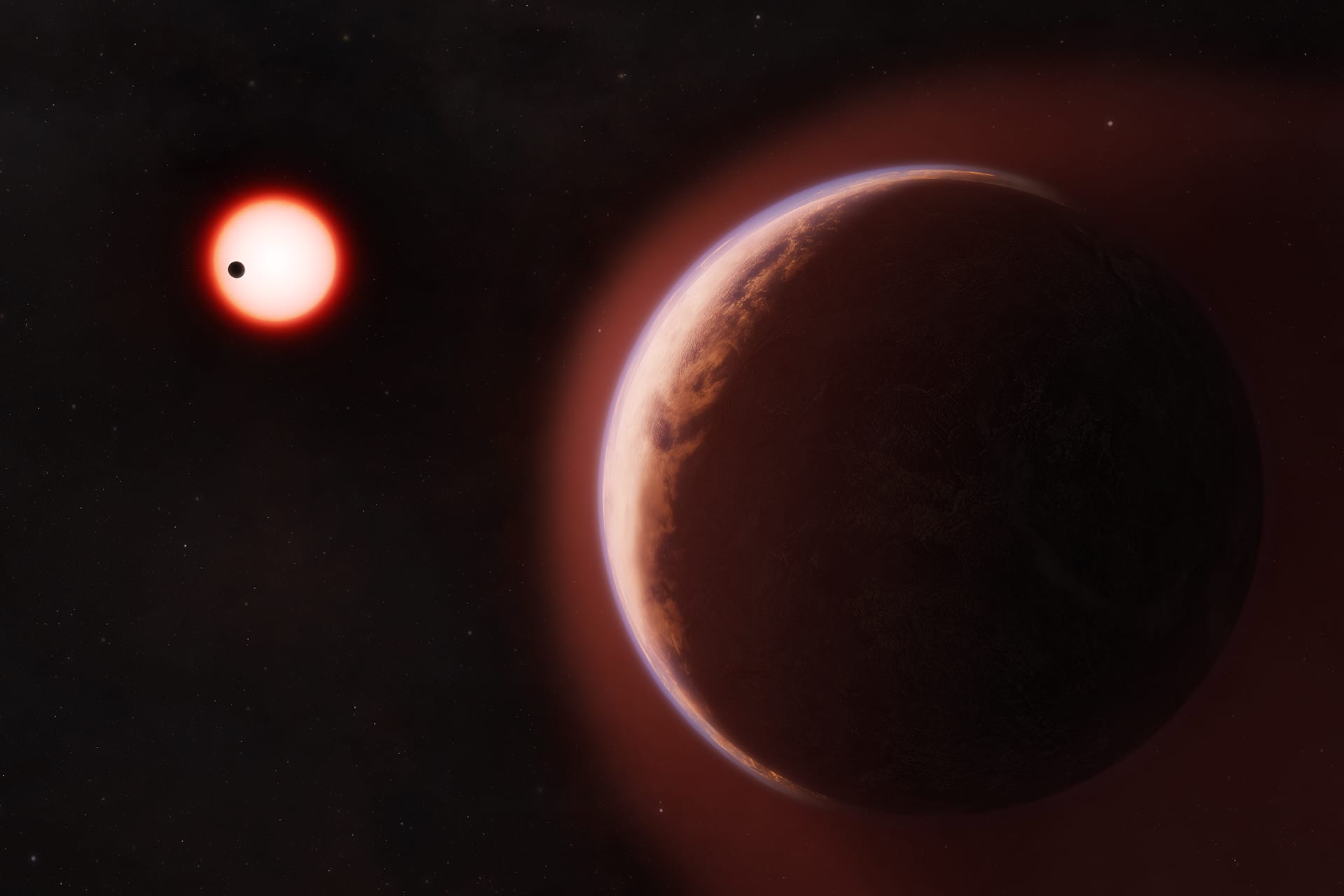
天文学者たちが、歴史上初めて恒星の「生命居住可能領域」にある岩石惑星の周囲に大気があることを検出しました。これは木曜日に『Science』誌で発表された研究によると、宇宙人の存在を探求する上で大きな飛躍を意味しています。
この惑星は LHS 1140-b と呼ばれ、地球のおよそ 5.6 倍の質量を持ち、太陽系から約 48 光年離れた小さな矮小恒星の周りを公転しています。銀河系内には多くの巨大ガス惑星や、居住可能領域外にある岩石惑星の大気は既に発見されていますが、LHS 1140-b の上空でヘリウムを検出した今回の発見は、居住可能領域にある岩石惑星が大気を保持できるという初の直接的な証拠となります。大気の有無は、生命を維持する可能性を評価する上で極めて重要な要素です。
シカゴ大学に所属し NASA ハッブルフェローであるコリン・チェルビム氏は 404 Media との電話インタビューでこう語っています。「岩石質の地球型惑星において大気そのものを検出することは、この分野にとって大きな課題でした。これほど多くの時間とエネルギーを費やして解明しようとしてきた問いの一つです。」
ハーバード大学で博士課程の学生だった際にこの研究を主導したチェルビム氏は、今回の発見について「これは、液体水の存在が可能性としてあり、生命を支えることができる居住可能領域にある岩石惑星の大気に関する、過去に例を見ない最初の主張です」と述べています。「まさにその点が他の発見と決定的に異なり、非常に興奮を覚える理由なのです」。
これまで科学者たちは、間接的な証拠に基づき、居住可能領域にある一部の岩石惑星が大気を持っている可能性があると推測してきました。例えば、昼と夜の温度が予想よりも穏やかであるという観測データは、大気の存在によるものか、あるいは惑星全体に及ぶ他の効果によるものかのどちらかで説明がつきます。しかし、これらの岩石惑星は恒星に比べて非常に小さいため、精密な観測を行うのが難しく、大気を直接検出するのは容易ではありません。
チェルビム氏はこの課題に対し、新しいアプローチで取り組みました。まず、大気中の軽い分子や原子が宇宙空間へ逃げ出し、重いものが取り残される「質量分画」というプロセスに焦点を当てた岩石惑星の理論モデルを開発しました。これらのシミュレーションは、地表に近い部分に厚い大気があり、上空ではヘリウムが宇宙空間へと逃げていくことができるような、新しいタイプの惑星が存在することを予測しています。
「水素は最も軽い元素であり、宇宙空間へ吹き飛ばされやすいものです」とチェルビム氏は説明します。「私のモデルでは、惑星がちょうど良い位置(スイートスポット)にある場合、十分な水素を失いながらも、少し重いヘリウムまで引きずり出さずに済む状態であれば、時間とともにヘリウム主体の大気が形成されると予測しています。」
「これは新たに予測された種類の惑星であり、非常にユニークな化学組成を持つはずです」と彼は付け加えました。
チェルビム氏は、この逃げるヘリウムが地球から観測可能になる可能性に気づき、LHS 1140 系が仮説を検証する絶好の候補であると判断しました。そこでチームは、2024 年から 2025 年にかけて、チリのマジェラン天文台にある赤外線エシェル分光器(WINERED)を用いて、同星系内の惑星 LHS 1140-b ともう一つの惑星 LHS 1140-c を観測しました。
2024 年の結果では LHS 1140-b でヘリウムの強い信号が検出されましたが、2025 年には検出されませんでした。これはヘリウムの放出量が時間とともに変動している可能性を示唆しています。チームは、この惑星が大気を数億年もの間保ってきたと予測しています。もう一つの惑星 LHS 1140-c は大気の兆候を見せませんでしたが、これもその軌道や特性から予想されていた結果です。
画期的なこの発見は、太陽のような大質量星よりもはるかに多い矮小星を含む岩石惑星の周囲に大気が存在し得ることを証明しました。チェルビム氏と彼の同僚たちは、LHS 1140-b の表面には生命に必要なもう一つの要素である大量の液体水が存在する可能性が高いと考えています。
「居住可能性について考えるとき、私たちは主に 3 つの高次な条件を念頭に置きます」とチェルビム氏は話します。「まず、惑星は岩石でできている必要があります。ガスに富んでいて表面が溶けているような状態や、木星のようにガスだけで構成された天体ではダメです。地球型の生命が存在するためには、表面に液体水を保てる適切な温度であること、そしてその水を閉じ込め、表面を放射線から守る大気を持っていることが不可欠なのです。」
「今回の発見により、LHS 1140-b がこの 3 つの条件すべてを満たしていることがわかりました。これは非常にワクワクすることです」と彼は付け加えます。「さらに、この系は地球に非常に近く、観測も容易であるという利点もあります。」
LHS 1140-b に実際に異星生命が存在するかどうかはまだ不明ですが、科学者たちはすでにハッブル宇宙望遠鏡やジェームズ・ウェッブ宇宙望遠鏡を用いて、その大気中に生命の痕跡(バイオシグネチャー)を探し始めています。現時点では明確な証拠は見つかっていませんが、今後の観測により、この惑星をより詳細に調査できる可能性があります。
「私は、ここがバイオシグネチャーを探すのに最適な場所だと考えています」とチェルビム氏は結論付けました。「どのような結果が出るのか、とても楽しみです。」
404 Media に購読登録して、今週の最も刺激的で驚くべき科学ニュースや研究を紹介するニュースレター「The Abstract」を受け取りましょう。
このたびの発見は、地球のような生命を宿す可能性が極めて高い惑星が見つかった画期的な成果です。
原文を表示
Subscribe to 404 Media to get The Abstract, our newsletter about the most exciting and mind-boggling science news and studies of the week.
imageAstronomers have detected an atmosphere around a rocky exoplanet in the habitable zone of its star for the first time in history, signalling a major breakthrough in the search for alien life, according to a study published on Thursday in Science.
The planet, known as LHS 1140-b, is about 5.6 times more massive than Earth and orbits a small dwarf star about 48 light years from our solar system. While scientists have discovered atmospheres around many giant gas planets in our galaxy—and even a few rocky exoplanets outside the habitable zone—the new detection of helium in the skies of LHS 1140-b marks the first direct evidence that a habitable-zone rocky world can host an atmosphere, which is a critical factor for assessing their potential to support life.
“For rockier Earth-like planets, it has been a huge challenge in the field to detect any atmospheres at all,” said Collin Cherubim, a NASA Hubble Fellow at the University of Chicago, in a call with 404 Media. “This has been a huge question in the field that so much time and energy has been devoted to answering.”
The new discovery “is really the first claim ever of any rocky exoplanet atmosphere in the habitable zone that could potentially have liquid water and really support life,” added Cherubim, who conducted the research while he was a PhD student at Harvard University. “That's what sets it apart and makes it really exciting.”
Scientists have previously inferred that some rocky exoplanets in the habitable zone might have atmospheres based on indirect evidence, such as measurements that show that their day and night temperatures are more moderate than expected, which could be explained either by an atmosphere, or other planet-wide effects. However, spotting an atmosphere around these rocky worlds is tricky because they tend to be so small compared to their stars, which is a challenge for precision observations.
Cherubim came at the problem with a new approach: He first developed theoretical models of rocky exoplanets that focused on mass fractionation, a process by which lighter molecules and atoms in the atmosphere escape into space, while heavier ones are left behind. These simulations predicted a new type of planet with thick skies closer to the surface, and a thinner upper atmosphere that allows helium to escape to space.
“Hydrogen is the lightest element and it's the easiest to blow off into space,” Cherubim explained. “My model was predicting that if your planet is in this sweet spot where you're blowing enough hydrogen away, but not too much that you're dragging helium, which is a bit heavier, along with it, then you can actually create a helium-dominated atmosphere over time.”
“This is a newly-predicted class of planets, which should have very unique chemistry,” he added.
Cherubim realized that this escaping helium might be detectable from Earth, and that the LHS 1140 system would be a prime candidate to test out the hypothesis. To that end, the team observed LHS 1140-b and another planet in the system, LHS 1140-c, over the course of 2024 and 2025 with the Warm Infrared Echelle (WINERED) Spectrograph on the Magellan Observatory in Chile.
The 2024 results revealed a strong signal of helium at LHS 1140-b, but no detection in 2025, which may mean that the helium escape varies over time. The team predicts that the planet has probably had its atmosphere for billions of years. The other planet, LHS 1140-c, did not show any signs of an atmosphere, which was also expected based on its orbit and characteristics.
The momentous discovery proves that atmospheres can exist around rocky worlds, including around dwarf stars, which are far more common than more massive stars like the Sun. Cherubim and his colleagues think it’s quite likely that LHS 1140-b has large amounts of liquid water on its surface, another key ingredient for life as we know it on Earth.
“When we think about habitability, we think about three high-level things,” Cherubim said. “We think the planet needs to be rocky for the most part. It can't be a gas-rich thing where the surface is molten, or like Jupiter where it's just all gas. It's got to be the right temperature to support surface liquid water, at least for Earth-like life, and it needs an atmosphere to hold that water in and to shield the surface from radiation.”
“With this discovery, we now know LHS 1140-b has all three of those things, which is really exciting,” he added. “And it just happens to be a very nearby system to Earth, so it's very accessible.”
Whether alien life exists on LHS 1140-b remains an open question, but scientists have already been looking for signs of life, known as biosignatures, in its skies using the Hubble Space Telescope and the James Webb Space Telescope. So far, the search hasn’t turned up any obvious signs of life, but future efforts may be able to peer at this world in more detail.
“I think this is the best place to be looking for biosignatures,” Cherubim concluded. “We're really excited to see what comes out of that.”
Subscribe to 404 Media to get The Abstract, our newsletter about the most exciting and mind-boggling science news and studies of the week.
関連記事
今日のまとめ
AI日報で今日の重要ニュースをまとめ読み