科学者、エイリアン探査対象を45の惑星に絞り込む
科学者が数千の惑星を調査し、生命存在の可能性が最も高い45の惑星を特定した。
Source Article
元記事を日本語で読む
本文に関係しない購読案内、埋め込み通知、サイト内プロモーションは除いています。
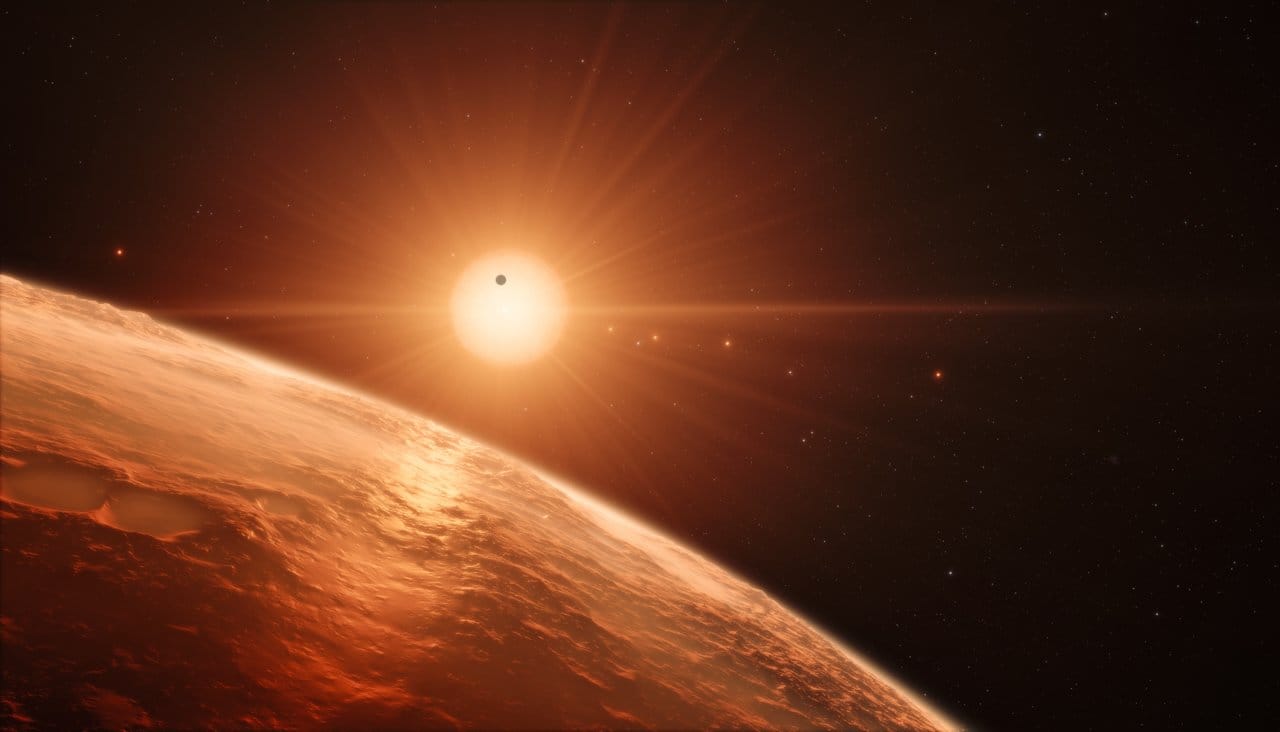 image「アブストラクト」へようこそ!今週は、奇妙な新世界を探査し、愛らしさの限界を超え、大食いをし、異星の光のショーを観察した研究をご紹介します。
まずは、科学者たちが数千もの惑星を精査し、生命が存在する可能性が最も高い場所を見極めました。続いて、白亜紀の愛らしい生物との出会い、ニシキヘビの血液の観察、そして太陽系最大の衛星への旅へとご案内します。
いつものように、私の他の作品については、著書『First Contact: The Story of Our Obsession with Aliens』をご覧になるか、個人ニュースレター『the BeX Files』をご購読ください。
可能性に満ちた世界のなかで
Bohl, Abigail et al. 「Probing the limits of habitability: a catalogue of rocky exoplanets in the habitable zone.」 Monthly Notices of the Royal Astronomical Society.
科学者たちは、他の恒星を周回する惑星である太陽系外惑星を6,000以上発見しています。しかし、これらの世界の大半は、生命にとって絶望的に過酷な環境です。居住可能性が高い最良の候補を絞り込むため、ある研究チームは太陽系外惑星のカタログを詳細に調査し、地球外生命の潜在的な居住地として最も有望な惑星を特定しました。
厳選されたリストには、地球の2倍以下の大きさで、恒星のハビタブルゾーン(液体の水が表面に存在できる領域)内を公転する岩石惑星45個が含まれています。特に興味深い対象は、約40光年離れた赤色矮星TRAPPIST-1を周回する4つの惑星、そして既知の太陽系外惑星の中で最も地球に近い、わずか4光年先のプロキシマ・ケンタウリbなどです。
「表面の居住可能性の限界を評価するには、ハビタブルゾーン内の岩石質太陽系外惑星を特徴づけることが極めて重要です」と、コーネル大学のアビゲイル・ボール率いる研究チームは述べています。「ハビタブルゾーンの境界付近にある既知の岩石惑星を観測することで、これらの限界を実証的に探ることが可能になりました。」
「このようにしてまとめられたハビタブルゾーン内の岩石惑星のリストは、観測者が宇宙および地上の望遠鏡を用いた探査戦略を策定・最適化し、これらの世界を探査する新たな観測手法や機器を設計することを可能にします。それにより、太陽系外惑星の表面居住可能性の限界という問題に取り組めるでしょう」と、チームは付け加えています。
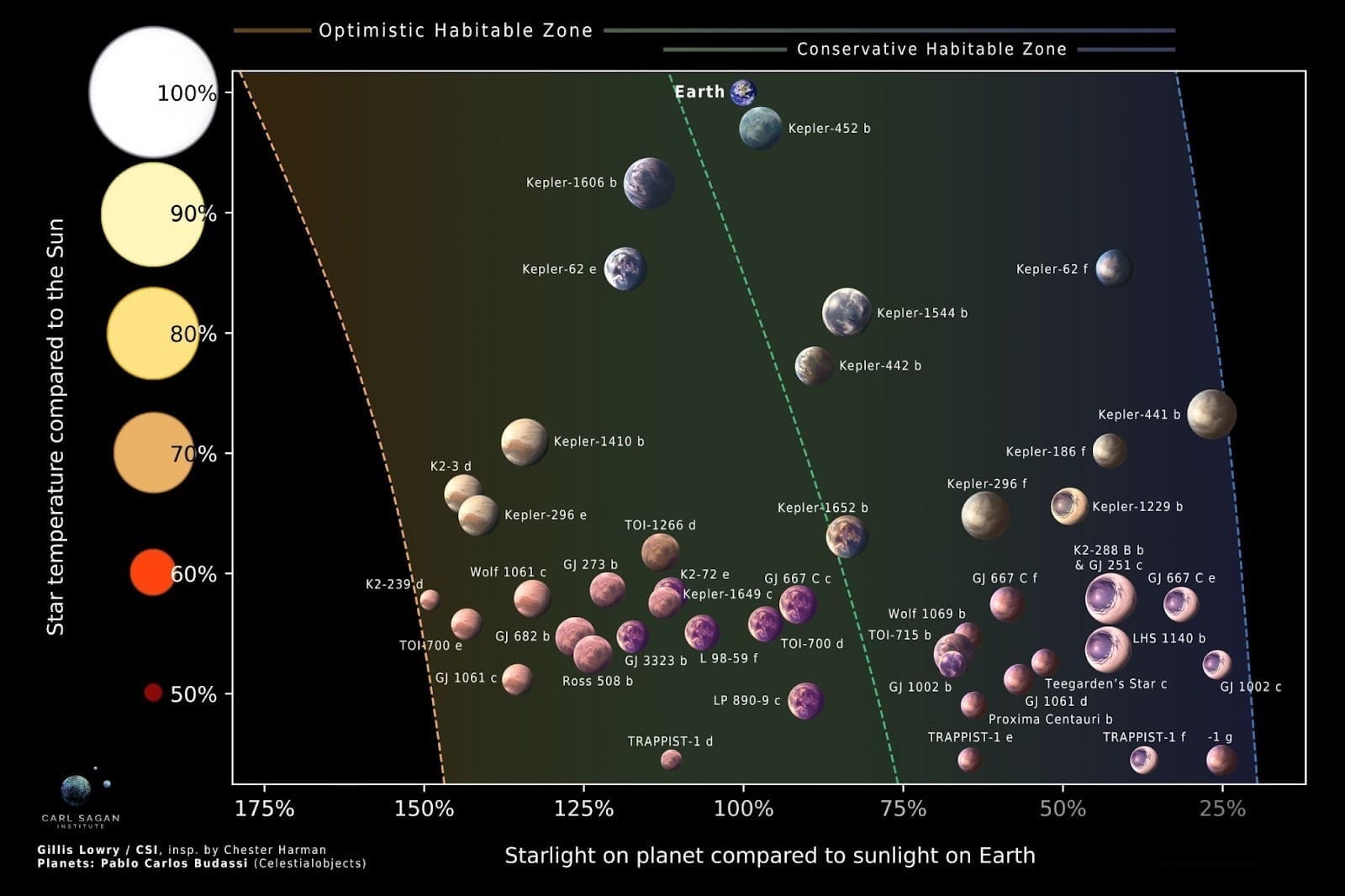 image恒星のタイプごとのハビタブルゾーン境界と岩石質太陽系外惑星を示す図。
過去の研究でも同様のリストは作成されてきましたが、今回の研究では観測データを更新し、さらに年齢、軌道特性、放射線被曝量、地球からの観測のしやすさといった主要な特性に基づいて惑星を分類しています。この方法により、研究者たちは、例えばより古い惑星の方が生命に優しい傾向があるかどうかなど、居住可能性に影響する個々の要因を検証する道筋をつけました。
また、ハビタブルゾーンの境界付近を公転する惑星と、その中心部を公転する惑星を比較することも有用かもしれません。結局のところ、私たちの太陽系では、金星と火星がハビタブルゾーンの内側と外側の境界付近に位置し、地球はちょうど「ゴルディロックスゾーン」の真ん中に居心地よく収まっています。
他の恒星系の惑星も、ゾーンの端に近づくにつれて居住可能性が同様に制限されるのかもしれませんし、あるいはそうではないかもしれません!調べてみなければわかりません。そして今、私たちはどこから探し始めればよいかを知っています。さあ、観測所へ!
その他のニュース…
1億歳の永遠の幼さ
Jung, Jongyun et al. 「A new dinosaur species from Korea and its implications for early-diverging neornithischian diversity.」 Fossil Record.
恐竜化石が極めて稀な韓国で、非常に愛らしい赤ちゃん恐竜が発見されたことを、大変嬉しくお知らせします。人気の韓国漫画キャラクター「ドゥーリ」にちなんで名付けられた、ドゥーリサウルスをご紹介しましょう。この幼体は約1億年前の中生代白亜紀に生息し、二足歩行の恐竜の一群であるテスケロサウルス科の新種に該当します。
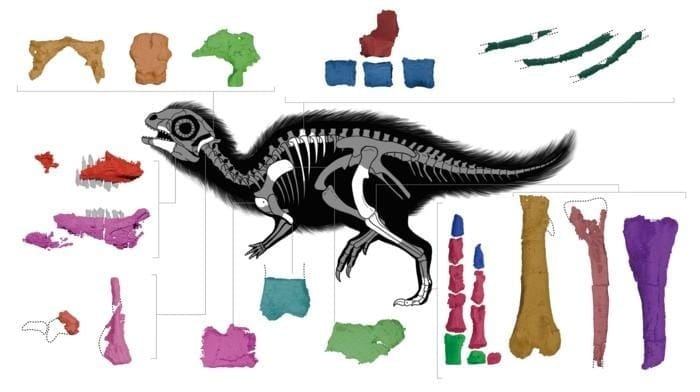 image幼体ドゥーリサウルス・フミニの骨格解剖図。発見された化石の骨が強調されている。画像: Janet Cañamar, Jung et al 2026より改変。
「ここでは、保存状態の良い小型の骨格を記載し、これを新属新種ドゥーリサウルス・フミニのホロタイプ(基準標本)と認める」と、テキサス大学オースティン校のジョンユン・ジュン率いる研究チームは述べています。これには「韓国産恐竜として初めての診断学的価値のある頭蓋資料」が含まれており、「これまで主に生痕化石や卵化石の記録によって知られてきた韓国の恐竜相の多様性について、新たな知見をもたらします。」
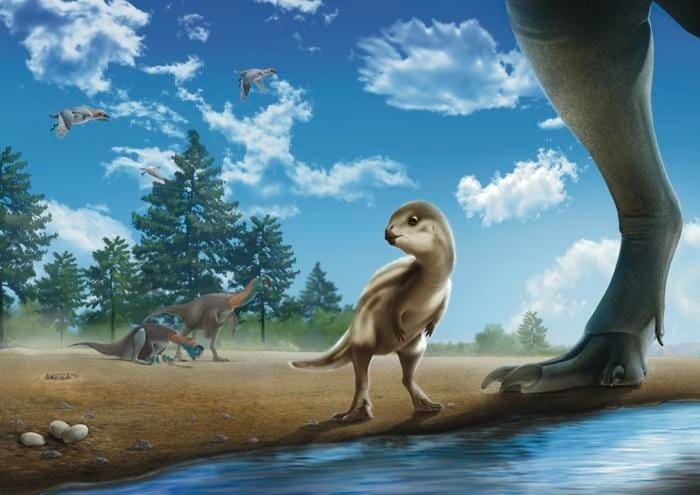 image幼体ドゥーリサウルス・フミニの想像図。画像: Jun Seong Yi
さらに嬉しいことに、この恐竜はふわふわした羽毛を持っていた可能性があります。『ジュラシック・パーク』の教訓から、公開展示のために恐竜を復活させたいテック億万長者は誰も信用すべきでないと学びましたが、ドゥーリサウルスだけは例外にしたいと思います。
大食いの秘密
Xiao, S., Wang, M., Martin, T.G. et al. 「Python metabolomics uncovers a conserved postprandial metabolite and gut–brain feeding pathway.」 Nature Metabolism.
食事の時間ともなれば、ニシキヘビは文字通り「丸飲み」にします。これらの巨大なヘビは一食で自分自身の体重に匹敵する獲物を飲み込み、次の食事まで1年以上も絶食することができます。新しい研究で、科学者たちはビルマニシキヘビの「食後」期の血液を分析することで、この極端な摂食行動の秘密に迫りました。
「ビルマニシキヘビは、エネルギー消費量の40倍以上の増加、持続的な組織タンパク質合成、ほとんどの臓器のサイズが50%以上肥大化するなど、驚くべき一連の食後反応を示します」と、スタンフォード大学のシュケ・シャオ、サウスフロリダ大学のメンジエ・ワン、コロラド大学ボルダー校のトーマス・G・マーティンが共同で率いる研究チームは述べています。
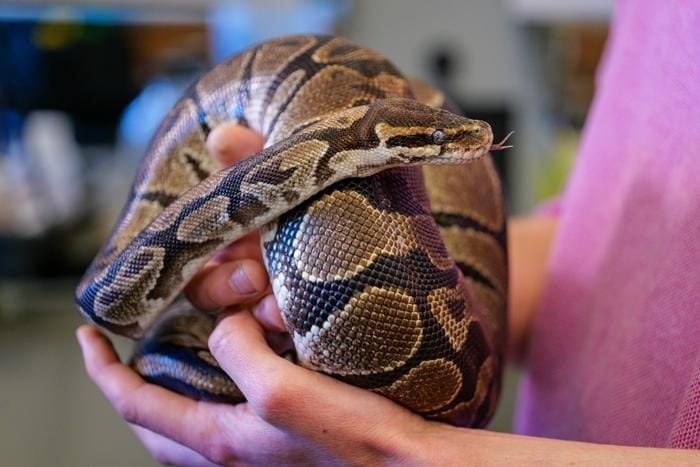 image研究著者の一人に抱えられたビルマニシキヘビ。画像: Patrick Campbell/CU Boulder
言い換えれば、ヘビは「広範な胃腸のリモデリング」を経験します。その様は、人類最高の競技フードイーターたちをも赤面させるほどです。ジョーイ・チェストナットがこの崇高な満腹感に匹敵しようとすれば、一度に2,000本以上のホットドッグを飲み込まねばならないでしょう(彼の世界記録はわずか83本です)。もしマスタードまみれのナプキンを使った計算にご興味があればですが。
ガニメデ、その輝きの秘密
Cao, Xin et al. 「Auroral Emissions on Ganymede: New Constraints on Their Electron Energy Dependence.」 Geophysical Research Letters.
すべての締めくくりは、地球外のオーロラで。今週は、太陽系最大の衛星であり、独自の磁場を持つ唯一の衛星である、木星の衛星ガニメデの輝く大気を見つめましょう。
科学者たちは、新たな大気測定と実験室データに基づく研究により、「ガニメデのオーロラはこれまで考えられていたよりも明るい」ことを発見しました。
「ガニメデの『ミニ磁気圏』は、木星の強力な磁気圏環境の中に埋め込まれています」と、ダブリン高等研究所のシン・カオ率いる研究チームは説明します。「この特異な構造により、磁化された惑星で観測されるものと形態的に類似したオーロラ現象が生じますが、それは異なる外部および内部条件によって駆動されているのです。」
この研究は、ガニメデと木星の間の複雑な磁気的相互作用を明らかにするもので、現在木星へ向かっている欧州宇宙機関の木星氷衛星探査機などの将来ミッションによって、さらに深く研究される予定です。到着は2031年を予定しています。この宇宙の輝きに関するニュースが、あなたの週末に少しの煌めきを添えますように。
お読みいただきありがとうございました!また来週。
原文を表示
imageWelcome back to the Abstract! Here are the studies this week that visited strange new worlds, broke the adorability scale, pigged out, and took in an alien light show.
First, scientists sift through thousands of planets to find the best possible sites for life. Then: meet a Cretaceous cutie, check out some python blood, and travel to the biggest moon in the solar system.
As always, for more of my work, check out my book First Contact: The Story of Our Obsession with Aliens or subscribe to my personal newsletter the BeX Files.
The best of all possible worlds
Bohl, Abigail et al. “Probing the limits of habitability: a catalogue of rocky exoplanets in the habitable zone.” Monthly Notices of the Royal Astronomical Society.
Scientists have discovered more than 6,000 exoplanets, which are planets that orbit other stars, but most of these worlds are hopelessly inhospitable to life. To hone in on the best candidates for habitability, a team combed through the catalogue of exoplanets to identify the best potential alien homes.
The short-list includes 45 rocky worlds that are no bigger than twice the size of Earth and orbit within the habitable zone (HZ) of their stars, which is the region where liquid water might exist on the surface. The most exciting destinations include four planets that orbit the red dwarf star TRAPPIST-1, about 40 light years away, or Proxima Centauri b, which is the closest known exoplanet, located just four light years from Earth.
“To assess the limits of surface habitability, it is critical to characterize rocky exoplanets in the HZ,” said researchers led by Abigail Bohl of Cornell University. “Observations of known rocky exoplanets on the edges of the HZ can now empirically explore these boundaries.”
“The resulting list of rocky exoplanet targets in the HZ will allow observers to shape and optimize search strategies with space- and ground-based telescopes… and design new observing strategies and instruments to explore these worlds, addressing the question of the limits of exoplanet surface habitability,” the team added.
imageA diagram depicting habitable zone boundaries across star type with rocky exoplanets.While previous studies have compiled similar lists, this work includes updated observations and also organizes the planets according to key properties such as age, orbital characteristics, radiation exposure, and ease of observation from Earth. In this way, the researchers pave the way toward testing individual factors that influence habitability, such as whether older planets seem to be more hospitable to life.
It could also be useful to compare planets that orbit at the edges of the habitable zone to planets right smack dab in the middle. After all, in our own solar system, Venus and Mars are at the inner and outer edges of the solar system, while Earth is vibing right in the Goldilocks zone.
It may be that planets in other star systems are similarly limited in their habitability as they approach the edge of the zone—or maybe not! We won’t know until we look. And now, we know where to start. To the observatory!
In other news…
Forever young at 100 million years old
Jung, Jongyun et al. “A new dinosaur species from Korea and its implications for early-diverging neornithischian diversity.” Fossil Record.
It is my great pleasure to inform you that an incredibly cute baby dinosaur has been discovered in South Korea, where dinosaur fossils are very rare. Meet Doolysaurus, named for the popular Korean cartoon character Dooly the Little Dinosaur. This little infant lived in the mid-Cretaceous period, about 100 million years ago, and represents a new species of thescelosaurid, a type of bipedal dinosaur.
imageThe skeletal anatomy of a juvenile Doolysaurus huhmini. The graphic highlights the fossil bones that were found with the dinosaur. Image: Janet Cañamar, adapted from Jung et al 2026.“Here, we describe a small, well-preserved skeleton…recognized as the holotype of a new genus and species, Doolysaurus huhmini” which includes “the first diagnostic cranial material of a dinosaur from Korea,” said researchers led by Jongyun Jung of the University of Texas at Austin. “It contributes novel insights into the diversity of the Korean dinosaur fauna, which has previously been known primarily from ichnofossil and egg fossil records.”
imageAn artist’s interpretation of a juvenile Doolysaurus huhmini. Image: Jun Seong YiTo top it off, this dinosaur might have sported a fuzzy coat. Jurassic Park has primed me not to trust any tech billionaire that wants to resurrect dinosaurs for public spectacle, but I’ll make an exception for Doolysaurus.
The right stuff for being stuffed
Xiao, S., Wang, M., Martin, T.G. et al. “Python metabolomics uncovers a conserved postprandial metabolite and gut–brain feeding pathway.” Nature Metabolism.
At dinnertime, pythons go whole hog—often literally. These huge snakes can devour their own body weight in a single meal, allowing them to fast for more than a year between feedings. In a new study, scientists probe these extreme eaters by analyzing the blood of Burmese pythons during their “postprandial” (after-gulp) phase.
“Burmese pythons display a remarkable array of postprandial responses, including more than 40-fold increase in energy expenditure, sustained tissue protein synthesis and more than 50 percent increase in the size of most organs,” said researchers co-led by Shuke Xiao of Stanford University, Mengjie Wang of the University of South Florida, and Thomas G. Martin of the University of Colorado, Boulder.
imageA Burmese python held by an author of the study. Image: Patrick Campbell/CU BoulderIn other words, the snakes “undergo extensive gastrointestinal remodelling” that truly put humanity’s best competitive eaters to shame. Joey Chestnut would have to simultaneously swallow over 2,000 hot dogs to even rival their sublime engorgement, just in case you are interested in some mustard-smeared napkin math (his world record is a measly 83).
Ganymede gets a glow-up
Cao, Xin et al. “Auroral Emissions on Ganymede: New Constraints on Their Electron Energy Dependence.” Geophysical Research Letters.
We’ll close, as all things should, with an extraterrestrial aurora. This week, let’s gaze into the glowing skies of Jupiter’s moon Ganymede, the largest moon in the solar system and the only one endowed with its very own magnetic field.
Now, scientists discovered that “Ganymede's auroras are brighter than previously thought,” according to a study based on new atmospheric measurements and laboratory data.
Ganymede “mini-magnetosphere [is] embedded within Jupiter's powerful magnetospheric environment,” said researchers led by Xin Cao of the Dublin Institute for Advanced Studies. “This unique configuration allows for auroral processes similar in morphology to those observed on magnetized planets, but driven by different external and internal conditions.”
The research illuminates the complex magnetic interactions between Ganymede and Jupiter, which will be studied more in depth by future missions, such as the European Jupiter Icy Moons Explorer (Juice) that is currently on its way to the gas giant, aiming for a 2031 arrival. I hope this news of cosmic radiance adds some sparkle to your weekend.
Thanks for reading! See you next week.
関連記事
今日のまとめ
AIデイリーブリーフで今日の重要ニュースをまとめ読み