150 年続いた進化論を覆す新たな化石発見
シカゴのフィールド博物館の研究チームが、3 億年前の初期四足歩行動物の化石を分析し、従来の説であった「変態過程」が存在しなかったことを証明した。
キーポイント
変説の否定と進化史の書き換え
3 億年前に陸上に進出した初期四足歩行動物(テトラポド)は、現代のカエルのように水棲幼生期を経て変態するプロセスを経なかったことが化石から判明した。
直接的な証拠の発見
シカゴのフィールド博物館の研究チームが、イリノイ州マゾンクリーク産の希少な幼生化石を調査し、外部エラや一時的な幼生段階を示す痕跡が見つからなかった。
進化仮説への挑戦
「陸上進出には魚のような幼生期が必要」という長年の定説に対し、直接的な証拠がないまま仮説が成り立っていたことが示され、新たな進化モデルが求められている。
変態の証拠なし
研究チームは水生から陸生への移行期にある動物化石を調査したが、カエルやイモリに見られるような外鰓や一時的な幼生段階の特徴は一切発見されなかった。
150 年の説の見直し
これらの生物が変態を行うという証拠が見つからなかったため、長年「両生類」として扱われてきたこの移行期の動物に関する従来の理解に疑問が生じている。
詳細な化石の発見
イリノイ州のマゾン・クリーク産の化石からは、孵化直後の幼体や卵黄を栄養源としていた個体など、極めて稀で詳細な初期発生の記録が得られた。
影響分析・編集コメントを表示
影響分析
この発見は古生物学および進化論の基礎的な理解を根底から変える可能性があり、脊椎動物の陸上進出メカニズムに関する教科書的な記述の修正が必要となる。しかし、AI やテクノロジー業界への直接的な応用や影響は現時点では皆無である。
編集コメント
このニュースは自然科学の知見を刷新する画期的な発見ですが、AI/テクノロジー業界の動向とは無関係であり、本フォーマットの主要な評価軸である技術関連性や実用性の観点からは低スコアとなりました。
404 Media に購読して、今週の最も刺激的で驚くべき科学ニュースと研究をまとめたニュースレター『The Abstract』を受け取りましょう。
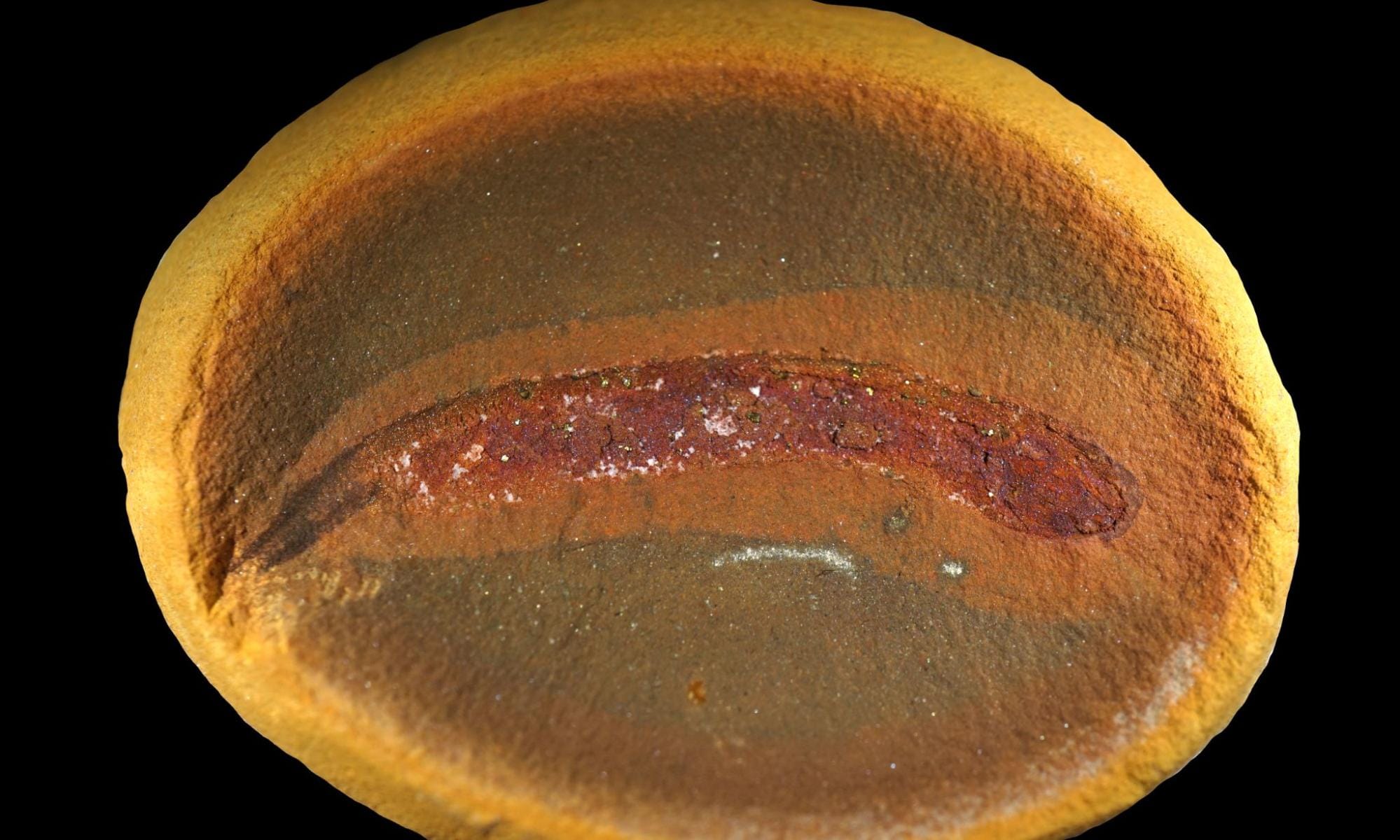
約 3 億年以上前に陸上を歩いた最初の動物に関する古代の化石が発見され、これらは現代のカエルやサンショウウオのような変態(metamorphosis)を経験しなかったことが明らかになりました。この発見は、木曜日に『Science Advances』誌に掲載された研究によると、陸生脊椎動物の進化史を書き換えるものです。
人間を含むすべての陸上生活を送る脊椎動物は、海から陸へと進出してきた四肢を持つ「四足類(tetrapods)」から派生したものであり、この進化プロセスには数千万年を要しました。もし昔の生物学の教科書を思い出すなら、おそらく以下のように教わったはずです:先駆的な四足類はカエルやサンショウウオに似た生活史で陸上への適応を果たし、オタマジャクシのような水生幼生期を経て、両生類の成体へと変態(metamorphosis)するというものです。
シカゴのフィールド博物館に所属する二人の科学者が、「鰭から四肢へ」という移行期間を跨ぐ極めて稀な孵化直後の化石を検討し、オタマジャクシに見られるような外部えらなどの変態(metamorphosis)の直接的証拠を探しました。驚くべきことに、研究者たちは初期の動物において一時的な幼生期を示す証拠を発見せず、これにより「変態(metamorphosis)の祖先起源に関する仮説」を否定したと、新しい研究は述べています。
「これらの四足動物には、陸上成体とは根本的かつ解剖学的に異なる鰓を持つ幼生期があったという感覚がまだ残っています」と、フィールド博物館の研究員でありリトアニアのヴィリニュス大学のポスドクターフェローでもあるジェイソン・パードは、404 Media との電話インタビューで語りました。彼は共同研究リーダーの一人です。「それが理にかなう理由はたくさんあります。なぜなら、生まれたばかりの子供がまだ魚のような姿をしている方が、水から陸への移行が容易だからです。そうすれば、陸上に上がるための移行期間を持つことになります。」
「問題は、その直接的な証拠をこれまで一度も得てこなかったことです」と彼は続けます。「常に『幼生期があり、それが成体へと移行するに違いない』という前提がありました。しかし、どちらの方向にも確かな情報はありませんでした。」
このギャップを埋めるため、パードとフィールド博物館の初期四足動物担当副学芸員であり、もう一人の研究共同リーダーであるアーヤン・マンは、原始的な四足動物の孵化直後の幼生期を捉えた化石を探し求め、公共の博物館アーカイブと私蔵コレクションの双方を精査しました。
これらの赤ちゃん動物は体が小さく、骨が発達途中だったため保存には理想的な条件が必要であり、そのためこのような標本は極めて稀です。しかし、パルドとマンは、約 3 億 1000 万年前、魚類から四肢への移行の最終段階にあたる時期の生命を驚くほど詳細に捉えた化石層であるイリノイ州北部のマゾン・クリーク化石床から採取された、特に興味深い化石の数点を特定することに成功しました。
これらの動物には、ワニのような捕食者であったエンボロメレス 2 種、蛇のようなアイストポド、そして数種のメガリチス科の魚類が含まれていました。一部の四足動物は死んだ時点で非常に若く、その化石には孵化直後の幼体が成熟して自ら餌を探すまで栄養源として利用していた卵黄が腹部に残されています。
この選定された標本群は、「これまでに得られたステムテトラポダ(初期四足類)の発生段階における系統発生的に最も包括的なサンプルであり、ステムテトラポダの孵化直後の形態と生活史を決定づける記録である」と、研究論文では述べています。
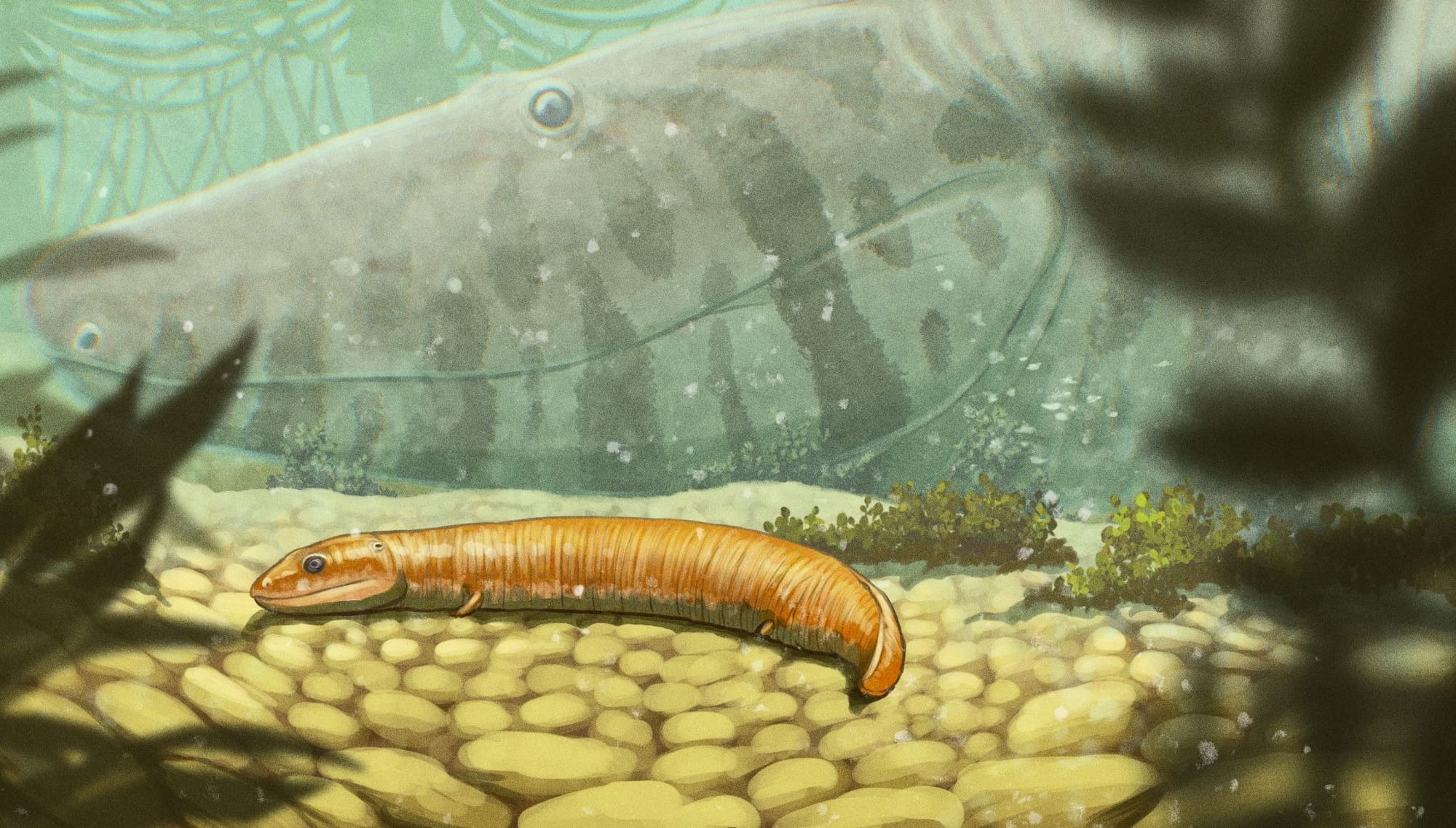 imageエンボロメラス(embolomere)の幼体が成体の隣にいる様子を描いたコンセプトアート。画像:ガブリエル・ウグエト「私たちは、これらの遺跡から取り出せる最も小さな動物、つまり非常に初期段階の赤ちゃんを研究しようとしてきました」とパルドは語った。「これは水から陸への最初の移行の後ですが、その移行全体にわたる動物たち、指や趾(し)が発達する前に分岐した動物たち、そして指や趾が発達した後に分岐した動物たちがいます。」
「これらの化石を調べ始めたとき、私たちは変態(metamorphosis)のような何かを見つけるだろうと予想していました」と彼は付け加えた。「しかし、最終的に見つかったのは、そのような証拠は全く存在しなかったという事実でした。」
例えば、外部鰓(がいぶえら)は、カエルやイモリで観察される変態の決定的な特徴です。これは孵化直後のオタマジャクシに現れ、徐々に体内に吸収されて肺へと変化します。しかし、パルドによると、孵化した幼体からはこれらの鰓の兆候も、一時的な幼生段階(larval phase)のチェックリストにある他のどの特徴も見られませんでした。
「私たちが通常、幼生の特徴として期待する構造が一つも存在しなかったことは非常に印象的でした」と彼は述べた。「最初は理解するのがかなり難しかったです。なぜなら、この時点では150年にわたる伝統により、これらの動物を両生類(amphibian)として扱ってきたからです。」
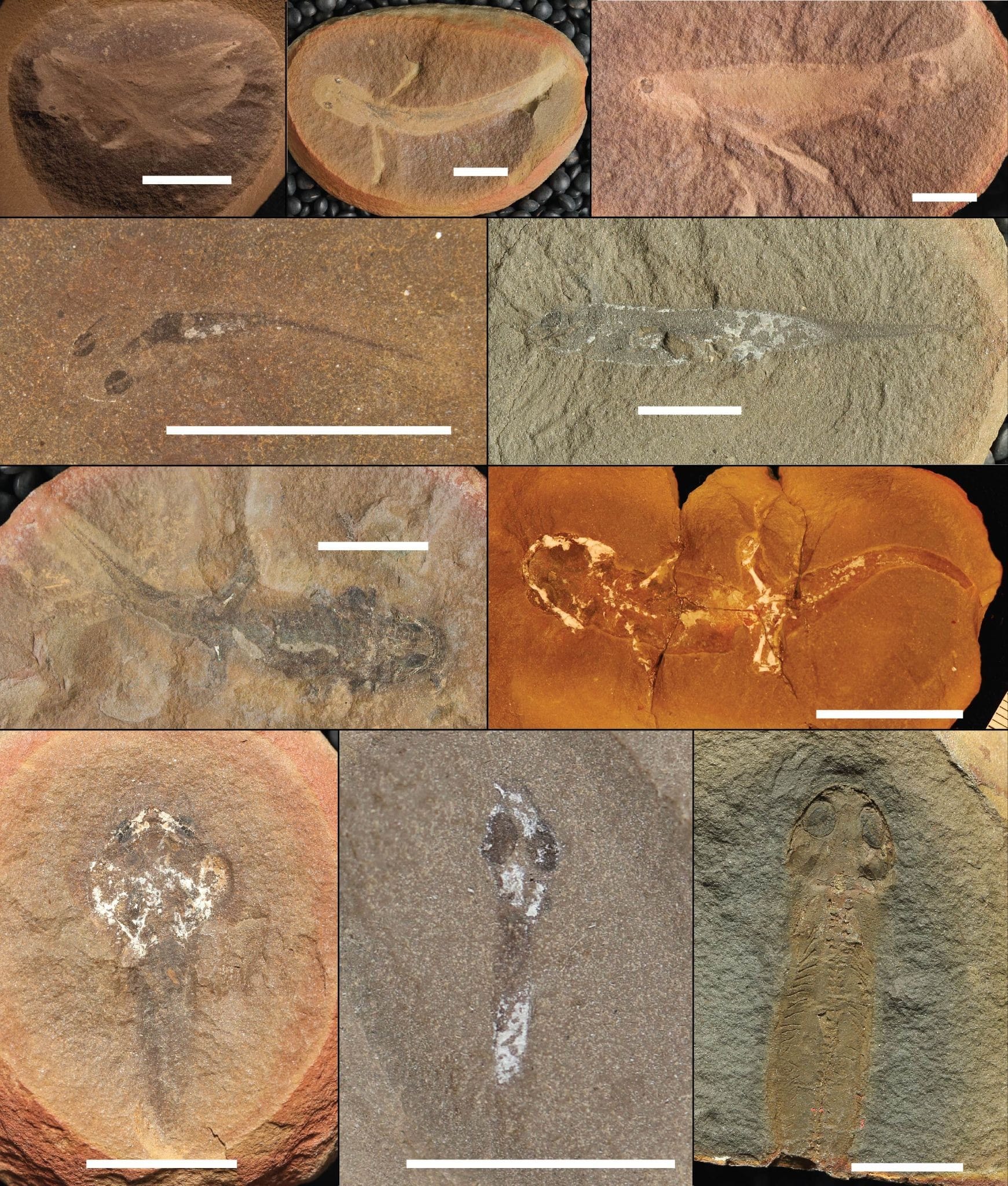 image チームが研究した初期の幼生化石の一部には、目や軟組織の詳細な保存状態が含まれています。スケールバーは10ミリメートルです。画像:Jason Pardo, Arjann Mann, Lauer Foundation。「私たちが最終的に発見したのは、水から陸への移行を遂げる動物たちにおいて、変態(metamorphosis)という主張を正当化することは実際にはできないということです」と彼は付け加えました。
この結果は、初期の四足類(tetrapod)が一生を通じてほぼ同じ基本的な解剖学的構造を持っていたことを示唆しています。この進化的戦略は、四足類が陸上生息地での生活にゆっくりと順応する過程で、陸への移行を以前に考えられていたよりもずっと長く遅らせた可能性があります。両生類様の変態(metamorphosis)は、おそらく四足類が陸上で足場を確立したかなり後になって出現し、最初から海から抜け出すための条件としてではなく、多様な新しい陸上環境への植民地化を最大化するためのものであったと考えられます。
従来の常識を覆すだけでなく、これらの化石は数億年前に新たな領域へと一歩を踏み出した古代の先駆者たちを垣間見せてくれます。彼らによって陸上への進出が徐々に進むにつれ、これらの四足動物はすべての脊椎動物の陸生動物の祖先となりました。精巧な保存状態にある化石の中には、時折、遥か昔からじっと見つめるように保存された眼球さえも含まれています。
「まるで昨日までそこにいたかのようです」とパルド氏は言います。「皮膚を見ることができます。時には動物の色模様が保存されていることもあります。目の水晶体も見えます。これらの動物の非常に複雑で親密な詳細が確認できます。これが生きた動物であったことが理解できるのです。そこにあるのです。」
404 Media に登録して、今週の最も刺激的で驚くべき科学ニュースと研究を紹介するニュースレター「The Abstract」を受け取りましょう。
原文を表示
Subscribe to 404 Media to get The Abstract, our newsletter about the most exciting and mind-boggling science news and studies of the week.
imageAncient fossils have revealed that the earliest animals to walk on land more than 300 million years ago did not experience a metamorphosis similar to modern amphibians, a discovery that rewrites the evolutionary history of terrestrial vertebrates, according to a study published on Thursday in Science Advances.
Humans and all other land-dwelling vertebrates descend from four-limbed “tetrapods” that left the seas to roam on land, an evolutionary process that took tens of millions of years. If you can recall your old biology textbook, this is probably what you were taught it looked like: the pioneering tetrapods adapted to land with a life cycle similar to frogs and toads, in which an aquatic larval phase, like a tadpole, is followed by metamorphosis into an amphibious adult form.
A pair of scientists at the Field Museum in Chicago looked at extremely rare fossils of hatchlings that span the “fin-to-limb” transition to identify direct evidence of this metamorphosis, such as the type of external gills seen on tadpoles. To their surprise, the researchers found no evidence of a transient larval phase in the early animals, thereby “falsifying hypotheses of an ancestral origin of metamorphosis,” according to the new study.
“There's still this sense that these [tetrapods] had this gilled larva that is fundamentally and anatomically different from the terrestrial adult,” said Jason Pardo, a research associate at the Field Museum and a postdoctoral fellow at Vilnius University in Lithuania who co-led the study, in a call with 404 Media. “There are a lot of reasons why that would make sense, because it's easier to make that transition from water to land if your baby, when it hatches out of the egg, is still fish-like, more or less. Then, you have this period of transition that allows it to get itself on land.”
“The problem is that we've never actually had direct evidence of that,” he continued. “The assumption has always been, ‘Of course we had a larval stage, and it would transition into an adult.’ But we didn't really have information that went one direction or the other.”
To fill this gap, Pardo and Arjan Mann, the Field Museum’s assistant curator of early tetrapods and the other co-lead of the study, scoured both public museum archives and private collections for fossils that captured the early hatchling phase of primordial tetrapods.
Such specimens are extremely rare because these baby animals were small and had developing bones that required ideal conditions for preservation. But Pardo and Mann were able to track down a handful of particularly intriguing fossils sourced from the Mazon Creek fossil beds in northern Illinois, which has preserved incredibly detailed snapshots of life as it existed about 310 million years ago, during the tail end of the fin-to-limb transition.
These animals included two embolomeres, which were crocodile-like predators, a snake-like aïstopod, and several megalichthyid fish. Some of the tetrapods were so young when they died that their fossils preserve abdominal yolk that the hatchlings were feeding off until they were mature enough to seek their own food.
This selection represents “the most phylogenetically extensive sample of stem tetrapod early developmental stages to date and a definitive documentation of stem tetrapod hatchling anatomy and life history,” according to the study.
imageConcept art of an embolomere hatchling next to an adult. Image: Gabriel Ugueto“We've been trying to look at the smallest animals that we can get out of these sites, where we can actually get very early stage babies,” Pardo said. “This is after the initial transition from water to land, but we have animals that span that transition. We have animals that branched off before [the development of] fingers and toes, and animals that branched off after fingers and toes.”
“When we started to look at these fossils, we were expecting that we were going to get something that looked kind of like a metamorphosis,” he added. “What we ended up finding is that there was no such evidence at all.”
External gills, for instance, are a telltale feature of the metamorphosis observed in frogs and toads. They appear on freshly hatched tadpoles and are slowly absorbed into the body to become lungs. But the hatchlings showed no signs of these gills, or anything else on the “checklist” of a transient larval phase, Pardo said.
“It was very striking that none of the structures that we would look at seemed like larval features that we would expect to see,” he said. “It was quite hard to make sense of at first because, at this point, there’s a 150-year tradition of treating these animals as amphibians.”
imageSome of the early hatchling fossils studied by the team, including detailed preservation of eyes and soft tissues. The scale bar is 10 millimeters. Image: Jason Pardo, Arjann Mann, Lauer Foundation.“What we ended up finding is that we can't actually justify any claim of metamorphosis in those animals that are transitioning across that water-to-land transition,” he added.
The results suggest that early tetrapods had the same basic anatomy, more or less, throughout their life cycle. This evolutionary strategy may have delayed the transition to land for much longer than previously assumed, as tetrapods slowly acclimated to life in a terrestrial habitat. Amphibian-style metamorphosis probably emerged well after tetrapods established their foothold on land, perhaps to maximize their colonization of diverse new land environments, rather than as a condition for getting out of the seas in the first place.
In addition to overturning conventional wisdom, the fossils offer a glimpse of the ancient trailblazers that took the first steps into a new realm hundreds of millions of years ago, paving the way for the rest of us. As a result of them gradually expanding onto land, these tetrapods became the progenitors of all vertebrate land animals. The exquisite fossils even include eerily preserved eyes in some cases, gazing out from a long-lost past.
“They look like they were around yesterday,” Pardo said. “You can see skin. Sometimes the animals have color patterns preserved. You can see the lenses in their eyes. You can see these really intricate and intimate details of these animals. You can understand this was a living animal. It's there.”
Subscribe to 404 Media to get The Abstract, our newsletter about the most exciting and mind-boggling science news and studies of the week.
関連記事
動物の性行為に関する最古の証拠が発見され、その内容は驚くべきもの
カナダ北西部の遺跡で発見された567年前の化石が、動物の性行為と移動の最古の証拠であることを示し、科学者らはこの発見により動物の性の起源を500万〜1000万年遡らせたと結論付けた。
科学者、奇妙な新生物に満ちた古代の巨大「ネクロポリス(墓地)」を発見
科学者が海中で発見した古代のクジラの墓場「ネクロポリス」には、多数の古代の死体が存在し、同時に多くの未知の新種が生息していることが判明しました。
科学者、ブラックホールは存在せずより奇妙な何かであると提案
科学者が地震波の観測結果に基づき、ブラックホールの実在を否定し、その正体はこれまで知られていない極めて奇妙な現象である可能性があると提案した。
今日のまとめ
AI日報で今日の重要ニュースをまとめ読み