動物の性行為に関する最古の証拠が発見され、その内容は驚くべきもの
カナダ北西部で発見された5億6700万年前の化石により、動物の性生殖と移動能力の起源が従来説より最大1000万年遡ることが判明した。
キーポイント
最古の証拠の発見
カナダ北西部で5億6700万年前(エディアカラ紀)の化石が発見され、動物の性生殖と移動能力の起源が従来より500万〜1000万年遡ることが示された。
北米での初確認
ロシアやオーストラリアで知られる「ホワイトシー群集」に属する化石(Aspidella, Dickinsonia, Funisiaなど)が、北米では初めて確認された。
生命の多様性と持続性
これらの生物は単なる一時的な存在ではなく、長い期間にわたって海洋環境で繁栄していたことが示唆され、カンブリア爆発前の生態系が再構築された。
北米初の白海化石群の発見
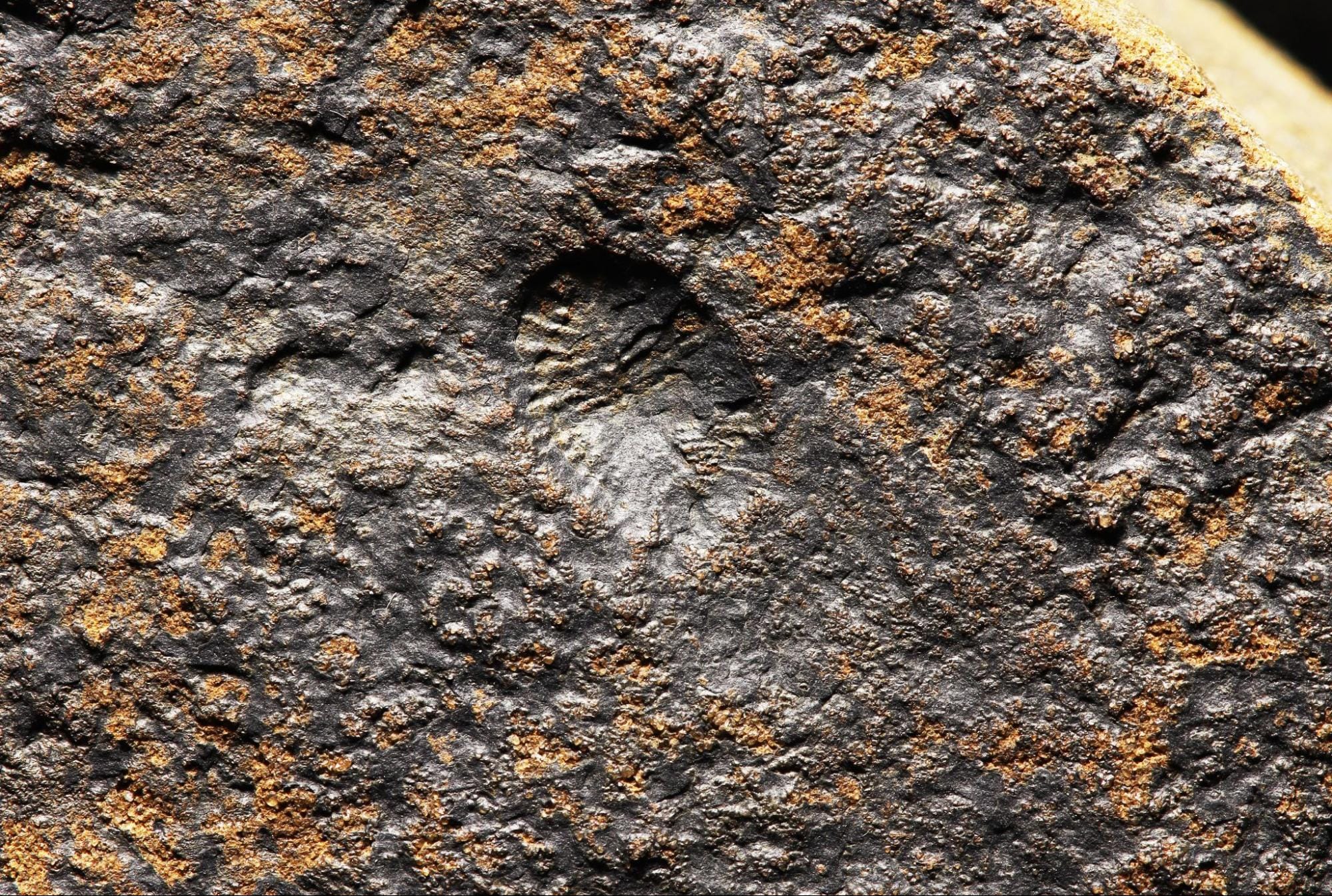
ダートマス大学の研究者らがカナダで初めて北米における白海(White Sea)化石を発見し、特に同地域では未確認だった生物「Dickinsonia」の遺骸を見つけた。
動物界最古の性行動と移動の証拠
発見されたワーム状の生物「Funisia」は化石記録における動物の性(群発産卵)の最古の例であり、DickinsoniaやKimberellaは動物による移動の最も古い証拠となる。
深海環境が初期生態系の安定地となった可能性
これらの繁栄した生態系が浅い沿岸域ではなく深海で発見されたことから、深海が初期の動物生命にとって安定した生息地を提供していたと考えられる。
生物の移動パターン
化石記録の後期では、生物がまず沿岸の浅い水域に現れ、その後深海へと進出する逆の軌跡をたどることが一般的である。
影響分析・編集コメントを表示
影響分析
この発見は古生物学および進化論において極めて重要な転換点であり、動物の多様化と複雑な行動(性生殖や移動)がカンブリア爆発よりも遥かに早く始まっていたことを裏付ける決定的な証拠となる。しかし、これはAIやテクノロジー業界に直接的な影響を与えるニュースではないため、技術的な応用可能性は限定的である。
編集コメント
AIやテック業界にとって直接的なインパクトはないが、生命の起源に関する科学的知見を深める重要なニュースです。
 image科学者たちは、カナダのノースウエスト準州にある遠隔地において、動物における性生殖と運動の最古の化石証拠を発見しました。これは水曜日に『Science Advances』誌に掲載された研究によると、エディアカラ紀に遡る約 5 億 6700 万年前のものです。研究者らによれば、この発見は動物の性の起源を 500 万〜1000 万年ほどさかのぼらせることになります。
新たに発掘された化石は、ロシア、アジア、オーストラリアの一部に保存されている「ホワイトシー群集」と呼ばれる化石層中に堆積したものであり、これまで北米では発見されたことがありませんでした。
この発見は、同心円状の模様を持つ飛行盤のような姿をしたアスピデラ(Aspidella)、底部から栄養を吸収する口のないパンケーキ型の生物ディッキンソニア(Dickinsonia)、動物における性生殖の最古の証拠となる管状のフニシア(Funisia)類の群れ、そして新種である可能性のある未同定の錨型生命体など、異世界のような種の姿を切り取ったものです。これらの動物は、海岸棚から遠く離れた約 600 フィートの深さの沖合水域で生活していました。
「オーストラリアの岩石やロシアの有名な岩層から主に知られているように、ディキニシアのような分類群は移動でき、フニジアのような分類群はおそらく有性生殖を行ったことがわかります」と、新しい研究を主導したアメリカ自然史博物館のキュレーター兼教授であるスコット・エヴァンス氏は、404 Mediaとの電話インタビューで語りました。
「この研究の素晴らしい点は、これまで知られていた最古の化石よりも少なくとも700万年以上古い岩石から、同じ化石が見つかったことです。彼らが単に一時的な期間に存在しただけではないと言えるのは興奮します。彼らは私たちの歴史において非常に長い期間にわたって存在していたのです」
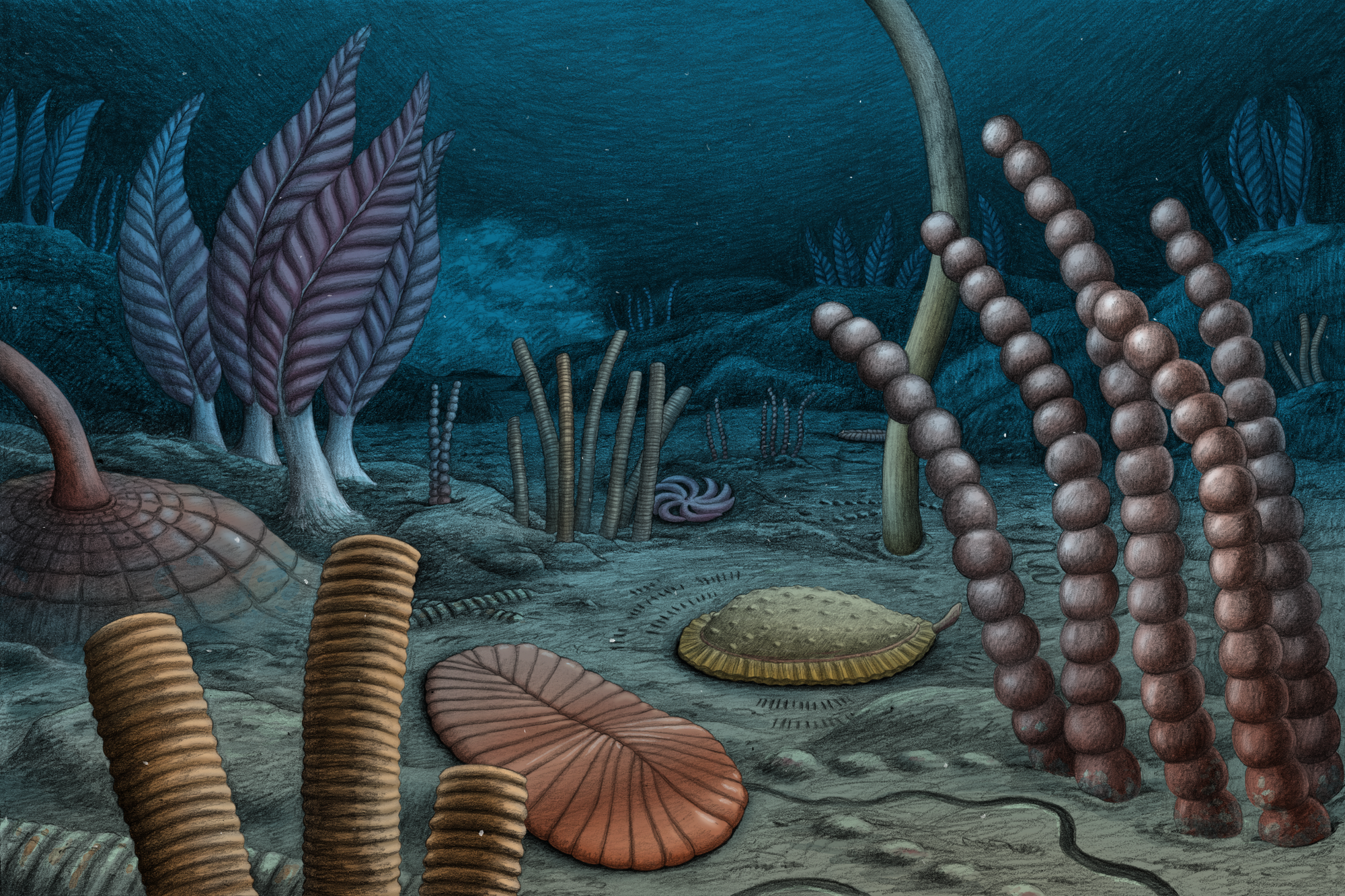 imageカナダ北西部準州のマッケンジー山脈、セクウィ川近くの下層ブルーフラワー層から復元されたエディアカラ紀の化石群集。画像:アレックス・ボアースマによるイラスト
エディアカラ紀(6億3500万年前から5億4100万年前)は、微小な生物からより大きな生命体への移行期を刻み、その直後に続くカンブリア爆発における動物の繁栄の舞台を設定しました。しかし、エディアカラ紀が地球上に真に複雑で視認可能な生命が現れた黎明期であったにもかかわらず、この時代の化石は希少です。その理由の一つとして、生物体が軟体であり、保存されやすい骨や殻を欠いていたことが挙げられます。
ただし、一部のエディアカラ生物群集は幸運にも世界中の堆積岩の中に石型として保存されており、この奇妙な失われた世界の一端を垣間見ることができます。何十年にわたり、古生物学者たちは北西準州のセッキ・ブルック地域にあるブルーフラワー層でこれらの古代生態系を探査してきました。
2024 年、エバンズとダートマス大学の共同著者であるジャスティン・ストラウスは、北米で初めて知られるホワイトシー化石を露出させた新たな発掘地を発見し、これらの初期生態系への新たな窓を開きました。エバンズにとって特に興奮したのは、彼が長年研究してきた生物であり、これまで北米では発見されたことがなかったディキンソニアの遺骸が見つかったことです。
「私たちはいつも冗談で、『ディキンソニアが見つかったらどうなるか』と話していました」とエバンズは当時の現地調査を振り返りながら語ります。「だから、1 日目にそれを見つけたのはほとんど喜劇的でしたが、それはジャスティンが岩石の性質を知っており、そこを探すのが正しいと判断していたからです。それが鍵なのです。」
有性生殖は約 20 億年前に単純な微生物において最初に進化しましたが、フニシア(Funisia)は化石記録から知られる最も古い動物の性の例です(もちろん、保存されていないより早期の性的先駆者もいたはずです)。これらのワーム状の動物はしばしば密集した群れとして発見され、彼らが水中に精子と卵子を放出する大量放卵イベントを通じて繁殖していたことを示唆しています。この戦略は現在でもサンゴや他の海洋生物によって用いられています。
チームによるディキソニアの発見は、もう一つの奇妙な底生生物であるキンベルラとともに、動物における運動の最古の化石証拠も提供しています。
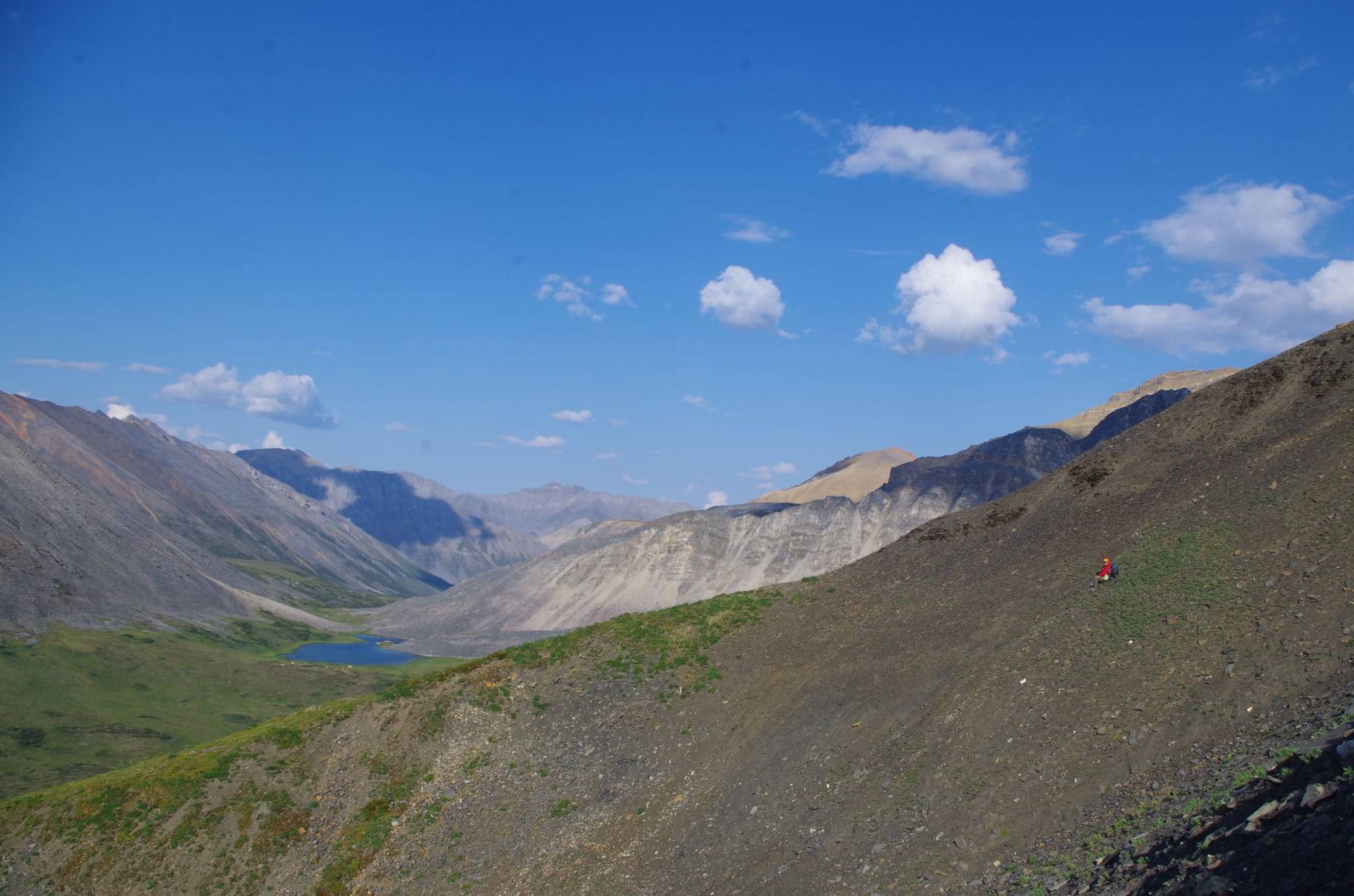 imageカナダ、ノースウエスト準州のマッケンジー山脈、セッキ川付近の化石発掘地。共著者のキム・ローと共に。画像:スコット・エヴァンス
最も印象的な発見の一つは、おそらく新種かつ新属に属する微小生物ですが、遺骸があまりにも不明瞭で明確な同定は困難です。これは「パルバンコリナ」と呼ばれる既知の生物に似ており、まるで生きた錨のような外観をしていますが、その系統を確定するにはさらに多くの標本が必要です。
「それが何であるかはわかりません」とエヴァンス氏は言います。「難しいのは、これらの化石が砂の下に埋もれて圧縮された軟体動物だからです。変形したり引き伸ばされたりする可能性があります。そのため、単一の標本が見つかった場合、目にする形状が典型的な保存状態なのか、あるいは特定の方向に引き伸ばされた奇妙な個体なのかが本当にわかりません。」
「これが新種であると思うのは非常に魅力的ですが、まだ命名するには準備ができていません」と彼は付け加えました。「だからこそ、私たちは再び戻り、これらの岩をより長く、より詳しく調べるのです。」
実際、研究チームは昨年この現場でわずか5日間しか活動していませんでしたので、まだ調査すべき範囲は広範に残されています。新たな化石標本の探索に加え、研究者たちはこの生物群集のより広い文脈を理解することを目指しています。
例えば、これらの繁栄する生態系が沖合の深層水域に出現したという事実は、浅い沿岸地域と比較して、初期の動物生命にとって安定した環境を提供していた可能性を示唆しています。
化石記録の後期では、まず岸辺近くの浅い水域で出現し、その後逆の軌跡をたどってより深い海洋へ進出する生物の方が一般的です。今後の野外調査は、この複雑な生命の初期の繁栄に関するさらなる洞察や、その後のすべての出来事の基礎となったプロセスについて明らかにする可能性があります。
「これは地球上でも数少ない場所の一つで、動物が初めて出現し多様化したとされる時期を覆う岩石が1キロメートル以上も堆積しています」とエヴァンスは結論付けました。「これらの現場に継続して訪れることで、その期間における変化のパターンについてさらに多くの情報を得られることを期待しています。
原文を表示
imageScientists have discovered the oldest fossilized evidence of sexual reproduction and locomotion in animals at a remote site in Canada’s Northwest Territories that dates back 567 million years to the Ediacaran period, according to a study published on Wednesday in Science Advances. According to researchers, the finding pushes the origins of animal sex back by 5-10 million years.
The newly unearthed fossils were deposited in a fossil layer known as the White Sea assemblage that is preserved in parts of Russia, Asia, and Australia, but has never been found in North America before.
The discovery offers a snapshot of otherworldly species such as Aspidella, an animal that looked like a flying saucer with concentric ring patterns; Dickinsonia, a mouthless pancake of a creature that absorbed food through its bottom surface, clusters of tubular Funisia animals that offer the oldest evidence of sexual reproduction in animals; and an unidentified anchor-shaped lifeform that may represent a new species. These animals lived in offshore waters at about 600 feet of depth, far from coastal shelves.
“We know, mostly from rocks in Australia, as well as some famous rock units in Russia, that taxa like Dickinsonia could move, and that taxa like Funisia probably reproduce sexually,” said Scott Evans, a curator and professor at the American Museum of Natural History who led the new research, in a call with 404 Media.
“The cool thing about this study is that we're finding those same fossils in rocks that are at least seven million years older than the oldest previously known,” he added. “It's exciting to be able to say that they weren't just around for a blip of time. They were around for a really long period of time in our history.”
imageReconstruction of Ediacaran fossil community from the lower Blueflower Formation near Sekwi Brook, Mackenzie Mountains, Northwest Territories, Canada. Image: Illustration by Alex BoersmaThe Ediacaran era, which elapsed between 635 to 541 million years ago, marked the transition from microscopic organisms to much larger lifeforms, setting the stage for the Cambrian “explosion” of animal life that directly followed it. But though the Ediacaran was the dawn of truly complex and visible life on Earth, fossils from this time are rare in part because organisms were soft-bodied, lacking bones or shells that are more conducive to preservation.
That said, some Ediacaran ecosystems have been fortuitously entombed in stone molds in assemblages around the world, offering a glimpse of this bizarre lost world. For decades, paleontologists have explored these ancient ecosystems at the Blueflower Formation in the Sekwi Brook area of the Northwest Territories.
In 2024, Evans and study co-author Justin Strauss of Dartmouth College discovered a new site that exposed the first known White Sea fossils in North America, opening a new window into these early ecosystems. For Evans, it was especially thrilling to find the remains of Dickinsonia, an organism he has spent years studying and had never been found in North America before.
“We'd always joke, ‘wouldn't it be crazy if we found Dickinsonia?’” Evans recalled, referring to his past fieldwork in the region. “So, on day one to find it out there was almost comical, but it's because Justin knows the rocks and knew they were right to look for them. That’s the key.”
Sexual reproduction initially evolved in simple microbes some two billion years ago, but Funisia is the oldest example of animal sex that is known from the fossil record (though there were no doubt earlier sexual pioneers that are not preserved). These worm-shaped animals are often found in dense clusters that imply they reproduced through mass spawning events in which they released sperm and egg into the water column, a strategy still used by corals and other marine animals today.
The team’s discovery of Dickinsonia, along with another strange bottom crawler called Kimberella, also offer the earliest fossil evidence of movement in animals.
imageFossil locality near Sekwi Brook, Mackenzie Mountains, Northwest Territories, Canada, with co-author Kim Lau. Image: Scott Evans One of the most evocative finds is a tiny organism that likely represents a new species and genus, though the remains are too indistinct to clearly identify it. It resembles a known organism called Parvancorina, which looks like an anchor came to life, but it will take more specimens to pin down its lineage.
“We don't know what it is,” Evans said. “It's hard because these fossils are soft-bodied things that were buried under sand and compressed. They can be distorted, stretched, and so when you find just one, it's really hard to know that the shape you're seeing is how it's typically preserved, or maybe this is just a weird specimen that got stretched in a certain way.”
“It is very tantalizing to think this is a new species, but we are not ready to name it yet,” he added. “But that's why we'll go back and spend a lot more time crawling over these rocks.”
Indeed, the team only spent five days at this site last year, so there is plenty of ground left to cover. In addition to looking for new specimens, the researchers hope to understand the broader context of this assemblage.
For example, the fact that these thriving ecosystems emerged in deep offshore waters suggests that these environments may have provided stability for nascent animal life, compared with shallow coastal regions.
Later in the fossil record, it is more common to find organisms that emerge first in shallow waters near the shoreline, and then follow the opposite trajectory by colonizing the deeper ocean. Future fieldwork could reveal more insights into this early flourishing of complex life, and how it laid the groundwork for everything that has happened since.
“This is one of the few places on Earth where we have over a kilometer of rocks that cover this period where we think animals first appear and diversify,” Evans concluded. “The hope is that by continuing to go back to these sites, we'll get a lot more information on patterns of change through that interval.”
関連記事
150 年続いた進化論を覆す新たな化石発見
404 Media は、3 億年以上前に陸上を歩いた初期動物が現代の両生類のような変態を経験しなかったとする新発見を発表し、これにより陸上脊椎動物の進化史が書き換えられたと伝えている。
科学者、奇妙な新生物に満ちた古代の巨大「ネクロポリス(墓地)」を発見
科学者が海中で発見した古代のクジラの墓場「ネクロポリス」には、多数の古代の死体が存在し、同時に多くの未知の新種が生息していることが判明しました。
科学者、ブラックホールは存在せずより奇妙な何かであると提案
科学者が地震波の観測結果に基づき、ブラックホールの実在を否定し、その正体はこれまで知られていない極めて奇妙な現象である可能性があると提案した。
今日のまとめ
AI日報で今日の重要ニュースをまとめ読み