KimiClaw は有用なツールか?
Moonshot AI は、OpenClaw のアーキテクチャを基盤としたクラウド管理型プラットフォーム「KimiClaw」を発表し、ローカル環境の構築負荷を取り除いて常時稼働するAIエージェントを一般ユーザーに提供しようとしている。
AI深層分析を開く2026年7月28日 00:13
AI深層分析
キーポイント
KimiClaw の基本コンセプト
Moonshot AI が開発したクラウドベースのプラットフォームであり、OpenClaw の機能をインフラ負荷なしで利用可能にするものである。
OpenClaw アーキテクチャの特徴
OpenClaw は単なる言語モデルではなく、OS と連携するオーケストレーションゲートウェイであり、ハートビート機能を通じて自律的にタスクを実行する。
ローカル実行の課題と解決策
従来のローカル型エージェントは技術的知識や専用ハードウェアを必要とするが、KimiClaw はこのセットアップオーバーヘッドを排除した。
機能制限に関する懸念
記事は、ローカル制御を削ぐことでフレームワークの力が低下する可能性や、プロフェッショナルにとっての実用性について疑問を呈している。
ハートビートによる自動実行
OpenClaw は設定された間隔で起動し、ローカルのチェックリストに基づいてバックグラウンドタスクを独立して評価・実行する。
重要な引用
The focus has moved to AI orchestration: giving these models the autonomy to execute complex workflows.
OpenClaw is not a language model. It's an orchestration gateway — a framework that connects your preferred LLM to an operating system.
KimiClaw, a managed, cloud-based platform developed by Moonshot AI designed to make the OpenClaw experience accessible without the infrastructure burden.
The text generated by the LLM acts as a system control signal rather than a conversational response.
編集コメントを表示
編集コメント
記事は、自律型エージェントの普及においてインフラ管理の簡素化が鍵となる点を指摘している。KimiClaw の実用性は、クラウド環境での制御権限と機能性能のバランス次第で決まるだろう。
 image**
イントロダクション
ここ1年ほどで、データサイエンスとAIをめぐる議論の焦点は劇的に変化しました。もはやブラウザのタブ内でプロンプトに応答するだけの受動的な存在として大規模言語モデル(LLM)を語るだけでは不十分です。今では「AIオーケストレーション」が注目されています。
これは、これらのモデルに自律性を与え、複雑なワークフローを実行させるアーキテクチャへの転換を意味します。
この流れの中心には、2025年末にリリースされたOpenClawがありました。通称「手付きのClaude」と呼ばれたこのオープンソースフレームワークは、ユーザーのハードウェア上で直接動作し、システムレベルのコマンドを実行することで、AIアシスタントの可能性を再定義しました。
しかし、自律型エージェントをローカル環境で動かすには、技術的な知識や専用ハードウェア、そして継続的な管理といった現実的な課題が伴います。
そこで登場したのが、Moonshot AIが開発したマネージド型のクラウドプラットフォーム「KimiClaw」です。インフラ構築の負担を取り除くことで、OpenClawの体験をより多くの人に提供することを目指しています。その結果、常時稼働するAIエージェントが一般ユーザーにも身近になるはずです。
しかし、ローカルでの制御権を手放すことが、このフレームワークの力を削ぐことにはならないのでしょうか?KimiClawは専門家にとって本当に有用なツールなのでしょうか、それとも開発者の間で愛される機能の一部を削ぎ落とした簡易版に過ぎないのでしょうか。
アーキテクチャ、機能、そしてトレードオフについて詳しく見ていきましょう。
OpenClaw アーキテクチャの理解
KimiClaw の評価を行うには、まずその基盤となるエンジンを知る必要があります。OpenClaw は言語モデルそのものではありません。これは、お好みの大規模言語モデル(LLM)とオペレーティングシステムを接続するオーケストレーション・ゲートウェイ、つまりフレームワークです。
従来の LLM との対話では、アーキテクチャは完全に受動的です。プロンプトを送信すると、モデルがテキストを生成し、そのやり取りはそこで終了します。OpenClaw は、以下の 4 つのコア機能によってこの仕組みを変革しています。
// ハートビートによる能動的な実行
OpenClaw は、設定可能な間隔(ハートビート)で動作する永続的なバックグラウンド・デーモンとして稼働します。通常は 30 分〜60 分ごとに起動し、そのたびにエージェントがローカルの HEARTBIT.md チェックリストを独自に読み込み、背景タスクの実行が必要かどうかを評価して実行します。
競合他社の Web サイトから情報を収集したり、Gmail の受信トレイ管理エージェント のようなシステムの運用を行ったり、データパイプラインを処理したりすることが可能です。ユーザーが睡眠中であってもタスクは進行し、完了時や人間の介入が必要な場合にのみ通知が届きます。
// システムレベルでの実行
このフレームワークはユーザーのマシン上に存在するため、実際のアクションを実行する権限を持っています。シェルコマンドの実行、Web ブラウザの操作、ファイルの読み書き、Docker のサンドボックス管理などが可能です。LLM が生成したテキストは、会話への応答ではなく、システムを制御するための信号として機能します。
// 永続的な Markdown メモリの維持
従来のウェブチャットは、タブを閉じると会話履歴がすべて消えてしまいます。一方、OpenClaw はローカルの設定ファイルを継続的に書き換えることで、長期にわたる状態管理を実現しています。コアとなる指示は「SOUL.md」ファイルに保存され、事実情報やユーザーの好意は「MEMORY.md」に記録されます。新しいメッセージを処理する前に Openclaw はこれらのファイルをコンテキストウィンドウに読み込み込むため、ワークフローやルールの一貫した記憶保持が可能になります。
// 至る所に存在するチャネル間のルーティング
OpenClaw は、あなたがすでに使用しているアプリからのメッセージをインターセプトします。チャネルアダプターを通じて WhatsApp、Telegram、Slack、Discord など多様なソースからの入力を正規化し、すべてを継続的なセッションへと統合します。
このアーキテクチャにより、AI は単なる「予言者」から、主体的に動くバックグラウンドワーカーへと進化します。
# ハードウェアのボトルネックと Mac Mini の活用
ローカルで動作する OpenClaw には、それなりのインフラ要件が伴います。2026 年初頭、このフレームワークの人気により Apple の M4 Mac mini が急騰し、パーソナル AI エージェントを実行するための事実上の標準機となりました。
このハードウェア依存が生じたのにはいくつか理由があります。OpenClaw は、ハートビートデーモンを維持し、24 時間 365 日 cron ジョブを実行するために常時稼働するマシンが必要です。Mac mini はアイドル時に最小限の電力しか消費しないため、実用的な選択肢となります。また、主要な作業用ラップトップで端末コマンドを実行できる自律型エージェントを動かすことは、セキュリティリスクをもたらします。具体的には、「AIjacking」のような新たな脅威への攻撃経路が増える恐れがあります。
専用のヘッドレスマシンを使用すれば、ユーザーは AI を個人データから隔離したサンドボックス環境内で安全に運用できます。さらに、エージェントをネイティブの Apple iMessage 経由でルーティングするには macOS が必須です。最後に、Apple Silicon の統一メモリアーキテクチャは、ローカルモデルを効率的に実行するのに適しています。
この構成は効果的ですが、専用ハードウェアの購入や Node.js 環境の管理、コマンドラインでの競合トラブルシューティングが必要となります。システム管理者になることなく自動化されたワークフローを望むプロフェッショナルにとって、これらの障壁は高すぎます。
# KimiClaw の登場:クラウドホスティングによるアプローチ
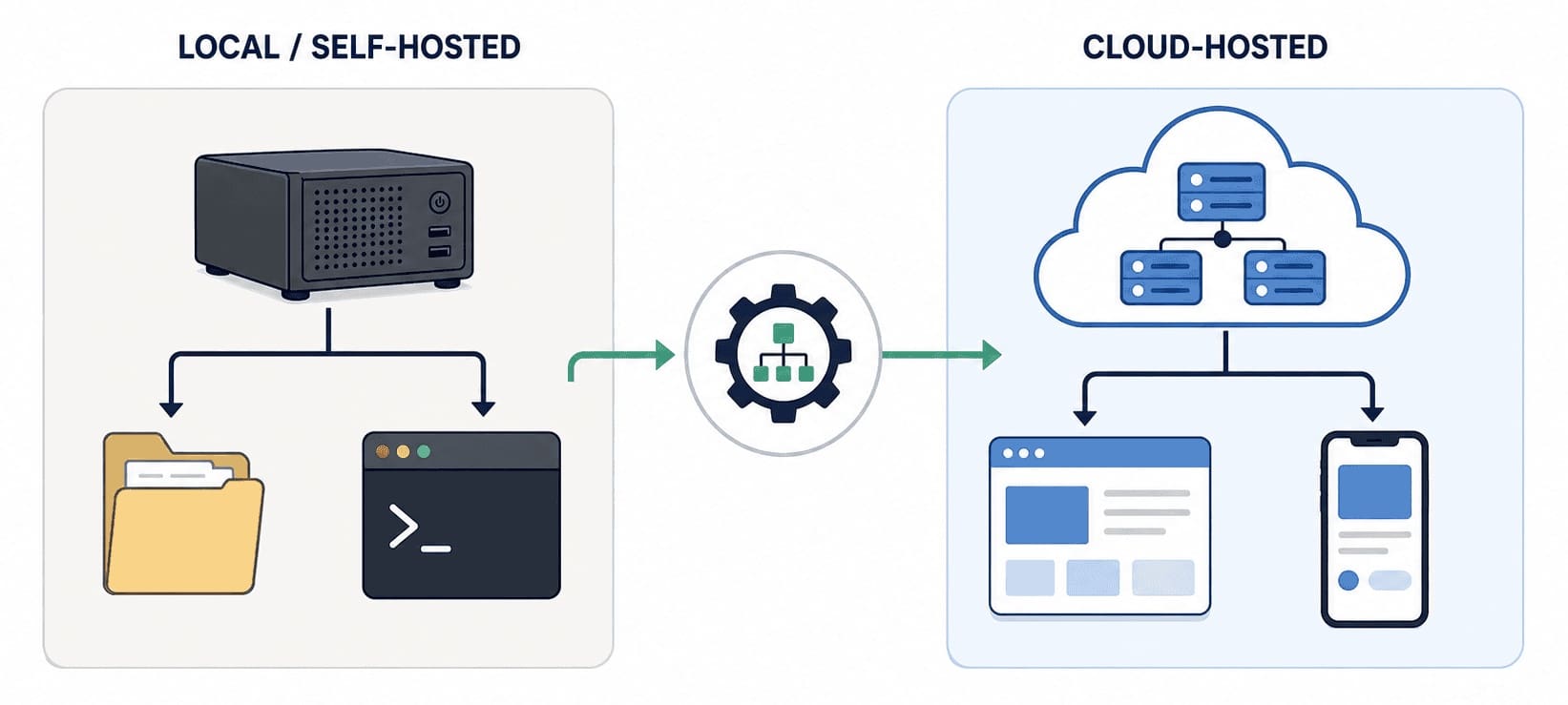
Moonshot AI がこの摩擦点を解消するために打ち出したのが、KimiClaw です。このプラットフォームを使えば、ローカルサーバーや複雑なデプロイメント、VPS が必要なく、ブラウザやモバイルデバイスから直接 OpenClaw スタイルのエージェントを実行できます。
OpenClaw のオーケストレーション層を管理型クラウドインフラへ移行し、プラットフォームはセルフホスト型の開発者ツールから SaaS(Software-as-a-Service)製品へと進化しました。これにより、データ専門家や自動化愛好家がどのような可能性を得られるのかを見ていきましょう。
// 技術的なセットアップ不要で、稼働率を確約
セルフホスト型の OpenClaw では、エージェントはマシンが電源オンかつ接続されている間だけしか動作しません。ハードウェアの故障やネットワーク切断、あるいはラップトップを閉じてしまうだけで、その活動は停止してしまいます。
しかし KimiClaw は Moonshot AI のサーバー上で稼働するため、エージェントは常時オンライン状態を維持できます。
この信頼性は、スケジュールされたバックグラウンドタスクにおいて特に重要です。毎朝 4 時に 5 つの業界サイトからデータ抽出スクリプトを実行するようエージェントに指示した場合でも、KimiClaw は物理サーバーの管理を必要とせず、その実行を確実に処理します。
// 統合されたスキルマーケットプレイス(ClawHub)を活用
ローカルの OpenClaw エージェントの機能を拡張したい場合——例えば、分析ダッシュボードの解析や Python コードの実行を覚えさせるなど——には、「スキル」を手動でインストールする必要があります。これらをローカル環境で管理すると、依存関係の競合やバージョンの不整合といった問題に直面することになります。
KimiClaw は、クラウドホスト型の「ClawHub」マーケットプレイスと連携します。ここには数千ものコミュニティが構築したスキルが揃っています。複雑なタスクを割り当てると、KimiClaw は背景で自動的に適切なスキルを選択・インストール・連鎖させます。これにより、エージェントはウェブスクレイピング、チャート生成、データ分析といった処理を自動パイプラインとしてつなぎ合わせることが可能になります。
// 内蔵の永続メモリとクラウドストレージの活用
複数のデバイス間でローカルに Markdown メモリファイルを管理していると、整理が難しくなることがあります。KimiClaw は 40GB のクラウドストレージを備えた統一されたワークスペースを提供します。エージェントが生成するすべてのファイル、PDF、ログ、データセット、レポートは、一つの集約ハブに保存されます。このプラットフォームは、OpenClaw で人気を博した永続的な長期メモリ機能をサポートしており、一度設定したルールやフォーマット設定、ワークフローはセッションを超えて確実に引き継がれます。
// モバイルと視覚的デバイス制御の機能強化
KimiClaw の特筆すべき機能の一つに、モバイル対応があります。Android アプリを通じて、Accessibility APIs を活用してデバイスの画面を視覚的に読み取ります。アプリ間の移動やタップ、スワイプ、インターフェースとの対話を人間のように自律的に行うことができます。これにより、エージェントはクロスアプリ操作が可能になり、連携していないモバイルアプリ間でのデータ参照や、スマートフォン上でのネイティブなワークフロー管理が実現します。これは、標準状態で提供されるローカルの OpenClaw にはない機能です。
# トレードオフの検討
KimiClaw は、多くのユーザーにとって実際に有用なツールです。
自律型エージェントとしての核となる価値を提供しながら、インフラ構築の複雑さを伴わないのが特徴です。ただし、すべてのユースケースで 1:1 の代替品になるわけではなく、そのトレードオフを率直に検討する価値があります。
// ローカルアクセス制限を受け入れる
KimiClaw は仮想ハードウェアとして機能し、即座にサンドボックス環境を提供します。ローカルのドライブ上で AI が破壊的なシェルコマンドを実行することを心配する必要はありません。しかし、この安全性には代償が伴います。クラウドサービスであるため、ユーザーが積極的にファイルをワークスペースにアップロードしない限り、KimiClaw はローカルのデスクトップアプリケーションを制御したり、個人端末に保存されたファイルを読み取ったりすることはできません。
// データプライバシーの考慮
ローカルモデルを実行するセルフホスト型の OpenClaw 設定であれば、データの 100% がハードウェア上に留まります。一方、KimiClaw を利用するには、エージェントのメモリ、システムプロンプト、生成されたデータが Moonshot AI のサーバーに存在することにユーザー自身が納得している必要があります。機密性や独自性の高いデータを扱う企業チームにとって、このクラウドへの依存は決定的な欠点となる可能性があります。
// プラットフォーム統合の違いへの対応
Mac mini 上で動作するローカルの OpenClaw は、Apple のネイティブエコシステムを介して直接ルーティングできますが、KimiClaw はモバイル上のエージェントと連携するために、Telegram などのサードパーティ製メッセージングプラットフォームに依存しています。Apple エコシステムに深く組み込まれているユーザーにとって、これは無視できないギャップです。
# 結論
OpenClaw は、AI に心臓のような機能とシステムレベルのアクセス権を与えることで、個人の生産性やデータ自動化のあり方をどう変えられるかを示しました。KimiClaw はその枠組みを引き継ぎつつ、誰でも利用できるようにしたツールです。
24 時間 365 日稼働する信頼性の高い自動化、ウェブスクレイピング機能、永続的なメモリ管理が必要で、かつ専用ハードウェアの管理やコマンドラインでのトラブルシューティングを避けたいプロフェッショナルにとっては、非常に頼もしい選択肢です。一方、データの完全な主権とローカルシステムへの絶対的な制御力を求めるエンジニアにとって、自己ホスト型の OpenClaw が依然として最良の選択肢であることに変わりはありません。しかし、すぐにでも自動化されたバックグラウンドワーカーを運用したい実践者にとっては、KimiClaw は余計な手間をかけずに確実に仕事をこなしてくれます。
Vinod Chugani は、新興 AI 技術と実務家のための応用をつなぐ役割を果たす AI・データサイエンスの教育者です。彼の専門分野は、エージェント型 AI、機械学習の実装、そして自動化ワークフローです。技術メンターや講師としての活動を通じて、Vinod はデータ関連のプロフェッショナルがスキルを磨き、キャリアの転換期を乗り越えるのを支えてきました。定量的金融分野で培った分析力を、実践的な指導スタイルに活かしています。彼のコンテンツは、プロフェッショナルがすぐにでも活用できる具体的な戦略やフレームワークに焦点を当てています。
原文を表示
**
# Introduction
The conversation in data science and AI has shifted dramatically over the past year. We're no longer talking exclusively about large language models (LLMs) acting as reactive systems that only respond when prompted in a browser tab. The focus has moved to AI orchestration: giving these models the autonomy to execute complex workflows.
At the center of this shift was the release of OpenClaw** in late 2025. Quickly dubbed "Claude with hands," this open-source framework redefined what an AI assistant could do by living directly on user hardware and executing system-level commands. But running an autonomous agent locally carries real friction. It requires technical know-how, dedicated hardware, and constant management.
Enter KimiClaw, a managed, cloud-based platform developed by Moonshot AI designed to make the OpenClaw experience accessible without the infrastructure burden. By removing that setup overhead, KimiClaw aims to bring always-on AI agents to everyday users. But does stripping away local control diminish the power of the framework? Is KimiClaw actually useful for professionals, or is it a stripped-down version of a developer favorite?
Let's break down the architecture, capabilities, and trade-offs.
# Understanding the OpenClaw Architecture
**
To evaluate KimiClaw, we first need to understand the engine it runs on. OpenClaw is not a language model. It's an orchestration gateway — a framework that connects your preferred LLM to an operating system.
When you interact with a traditional LLM, the architecture is entirely reactive. You send a prompt, the model generates text, and the interaction ends. OpenClaw changes this through four core mechanisms:
// Running Proactively via the Heartbeat
OpenClaw runs as a persistent background daemon on a configurable heartbeat, typically waking every 30 to 60 minutes. During each cycle, the agent independently reads a local HEARTBEAT.md checklist, evaluates whether background tasks need action, and executes them. It can scrape a competitor's website, manage something like a Gmail inbox routing system, or run a data pipeline while you sleep, notifying you only when a task is complete or needs human input.
// Executing at the System Level
Because the framework lives on your machine, it has permissions to execute real actions. It can run shell commands, drive a web browser, read and write files, and manage Docker sandboxes. The text generated by the LLM acts as a system control signal rather than a conversational response.
// Maintaining Persistent Markdown Memory
Traditional web chats wipe your context when you close the tab. OpenClaw manages long-term state by continuously rewriting its own local configuration files. Core instructions are saved in a SOUL.md file, while facts and user preferences are written to MEMORY.md. Before processing any new message, OpenClaw injects these files into the context window, ensuring consistent recall of your workflows and rules.
// Routing Across Omnipresent Channels
OpenClaw intercepts messages from apps you already use. Through channel adapters, it normalizes inputs from WhatsApp, Telegram, Slack, or Discord, routing everything into a continuous session.
This architecture shifts AI from being an oracle to a proactive background worker.
# The Hardware Bottleneck and the Mac Mini Run
The power of local OpenClaw comes with real infrastructure demands. In early 2026, the framework's popularity triggered a notable run on Apple's M4 Mac mini, which became the de facto standard for running personal AI agents.
This hardware dependency emerged for a few reasons. OpenClaw requires an always-on machine to maintain its heartbeat daemon and run 24/7 cron jobs. The Mac mini draws minimal power when idle, making it a practical choice. Running an autonomous agent capable of executing terminal commands on your primary work laptop also introduces security risks, including new vectors for threats like AIjacking. A dedicated headless machine lets users safely sandbox the AI away from personal data. macOS is also strictly required for routing the agent through native Apple iMessage. Finally, the unified memory architecture of Apple Silicon makes it well-suited to running local models efficiently.
While effective, this setup requires purchasing dedicated hardware, managing Node.js environments, and troubleshooting command-line conflicts. For professionals who want automated workflows without becoming system administrators, that barrier is too high.
# Introducing KimiClaw: The Cloud-Hosted Approach
This is the friction point Moonshot AI targeted with KimiClaw. The platform lets users run OpenClaw-style agents directly from a browser or mobile device, with no local servers, complex deployments, or VPS required.
It takes the orchestration layer of OpenClaw and moves it to managed cloud infrastructure, shifting the platform from a self-hosted developer tool to a software-as-a-service (SaaS) product. Here's what that makes possible for data professionals and automation enthusiasts.
// Eliminating Technical Setup with Guaranteed Uptime
With self-hosted OpenClaw, your agent only runs as long as your machine stays powered on and connected. Hardware failures, network drops, or simply closing your laptop kills the heartbeat. Because KimiClaw runs on Moonshot AI's servers, your agent stays online permanently.
This reliability matters most for scheduled background tasks. If you assign the agent to run a data extraction script across five industry sites every morning at 4:00 AM, KimiClaw handles that execution without requiring you to maintain a physical server.
// Leveraging the Integrated Skill Marketplace (ClawHub)
To expand a local OpenClaw agent's capabilities — such as teaching it to parse analytics dashboards or execute Python code — you have to manually install "Skills." Managing these locally means dealing with dependency conflicts and version mismatches.
KimiClaw integrates with the cloud-hosted ClawHub** marketplace, which has thousands of community-built skills. When you assign a complex task, KimiClaw can automatically select, install, and chain the right skills in the background. This lets the agent string together web scraping, chart generation, and data analysis into a fully automated pipeline.
// Using Built-In Persistent Memory and Cloud Storage
Managing persistent Markdown memory files locally can get disorganized across multiple devices. KimiClaw provides a unified workspace with 40 GB of cloud storage. All files, PDFs, logs, datasets, and reports your agent generates are saved in one centralized hub. The platform supports the persistent long-term memory that made OpenClaw popular, so the rules, formatting preferences, and workflows you establish carry reliably across sessions.
// Enabling Mobile and Visual Device Control
One of KimiClaw's more notable features is its mobile capability. Through its Android app, KimiClaw uses Accessibility APIs to visually read the device screen. It can autonomously navigate between apps, tap, swipe, and interact with interfaces as a human would. This allows the agent to perform cross-app operations, reference data across unlinked mobile applications, and manage workflows natively on your phone — something local OpenClaw doesn't offer out of the box.
# Weighing the Trade-Offs
**
KimiClaw is genuinely useful for most users. It delivers the core value of an autonomous agent without the infrastructure complexity. It's not a 1:1 replacement for every use case, though, and the trade-offs are worth examining honestly.
// Accepting Local Access Limitations
KimiClaw acts as virtual hardware, providing instant sandboxing. You don't have to worry about the AI executing a destructive shell command on your local drive. But that safety comes at a cost. Because it's a cloud service, KimiClaw can't control your local desktop applications or read files stored on your personal machine unless you actively upload them to its workspace.
// Considering Data Privacy
With a self-hosted OpenClaw setup running a local model, 100% of your data stays on your hardware. KimiClaw requires you to be comfortable with your agent's memory, system prompts, and generated data living on Moonshot AI's servers. For enterprise teams handling sensitive or proprietary data, that cloud dependency may be a dealbreaker.
// Navigating Platform Integration Differences
While local OpenClaw on a Mac mini can route directly through Apple's native ecosystem, KimiClaw relies on third-party messaging platforms like Telegram to interface with your agent on mobile. For users deep in the Apple ecosystem, this is a meaningful gap.
# The Verdict
OpenClaw proved that giving AI a heartbeat and system-level access can change how personal productivity and data automation work. KimiClaw takes that framework and makes it accessible.
It's a solid tool for professionals who need reliable, 24/7 automation, web scraping capabilities, and persistent memory, but who don't want to manage dedicated hardware or troubleshoot command-line interfaces. For engineers who need absolute data sovereignty and local system control, self-hosted OpenClaw is still the better option. But for practitioners looking to deploy an automated background worker immediately, KimiClaw gets the job done without the overhead.
Vinod Chugani** is an AI and data science educator who bridges the gap between emerging AI technologies and practical application for working professionals. His focus areas include agentic AI, machine learning applications, and automation workflows. Through his work as a technical mentor and instructor, Vinod has supported data professionals through skill development and career transitions. He brings analytical expertise from quantitative finance to his hands-on teaching approach. His content emphasizes actionable strategies and frameworks that professionals can apply immediately.
関連記事
今日のまとめ
AIデイリーブリーフで今日の重要ニュースをまとめ読み