野生生物保護警察がFlockカメラ数千台をICEのために検索
フロリダ州魚類野生生物保護委員会警察が、移民関税執行局のためにFlockのAI車両ナンバープレートスキャンカメラで数十件のナンバープレート検索を実施している。契約のないICEが地方機関を通じて技術にアクセスする実態が明らかになった。
Source Article
元記事を日本語で読む
本文に関係しない購読案内、埋め込み通知、サイト内プロモーションは除いています。
 imageフロリダ州魚類野生生物保護委員会(FWC)の警察が、入国管理税関捜査局(ICE)のためにFlockカメラで数十件のナンバープレート照会を行っていることが、検索の詳細を示す公開記録から明らかになった。
この実態は、Flockと契約を持たないICEが、地方・州警察を通じてFlockのAI駆動型ナンバープレートスキャンカメラへのアクセスを継続的に得ており、その方法がしばしば異例で予想外であり、一般市民がその活動を追跡したり説明責任を問うことが困難であることを浮き彫りにしている。今回のケースでは、ICEは名目上は自然保護、絶滅危惧種の保護、船舶・海事問題の調査に焦点を当てるべき法執行機関を通じてFlockデータへのアクセスを獲得した。404 Mediaは2025年5月に、ICEが地方警察を通じてFlockデータへの「裏口」アクセスを得ている実態を最初に報じた。
その報道は一連の改革と安全策につながり、Flockを使用する法執行機関が監視カメラデータを連邦機関に渡さないようにオプトアウトしやすくなるはずだった。Flockの「FlockはICEとデータを共有しますか?」というブログ記事は現在、明確に「いいえ。Flockは米国入国管理税関捜査局または国土安全保障省のその他の下部機関とは協力していません」と述べている。しかし実際には、公開記録によると、1月末(入手可能な最新データ)時点で、全国の数千の機関がフロリダ魚類野生生物保護委員会警察とカメラデータを共有しており、同委員会警察はその後定期的にICEのための照会を行っていた。
Flockカメラは、通過するすべての車両のナンバープレート、メーカー、色を継続的にスキャンする。法執行機関はその後、Flockシステムを検索して、車両が他にどこを移動したかを確認できる。重要なことに、Flockは全国照会ツールを維持しており、ある州の機関が別の州のカメラで生成されたデータを検索できる。たとえそれらのカメラが国の反対側にあってもだ。法執行機関は通常、令状なしにこれを行う。
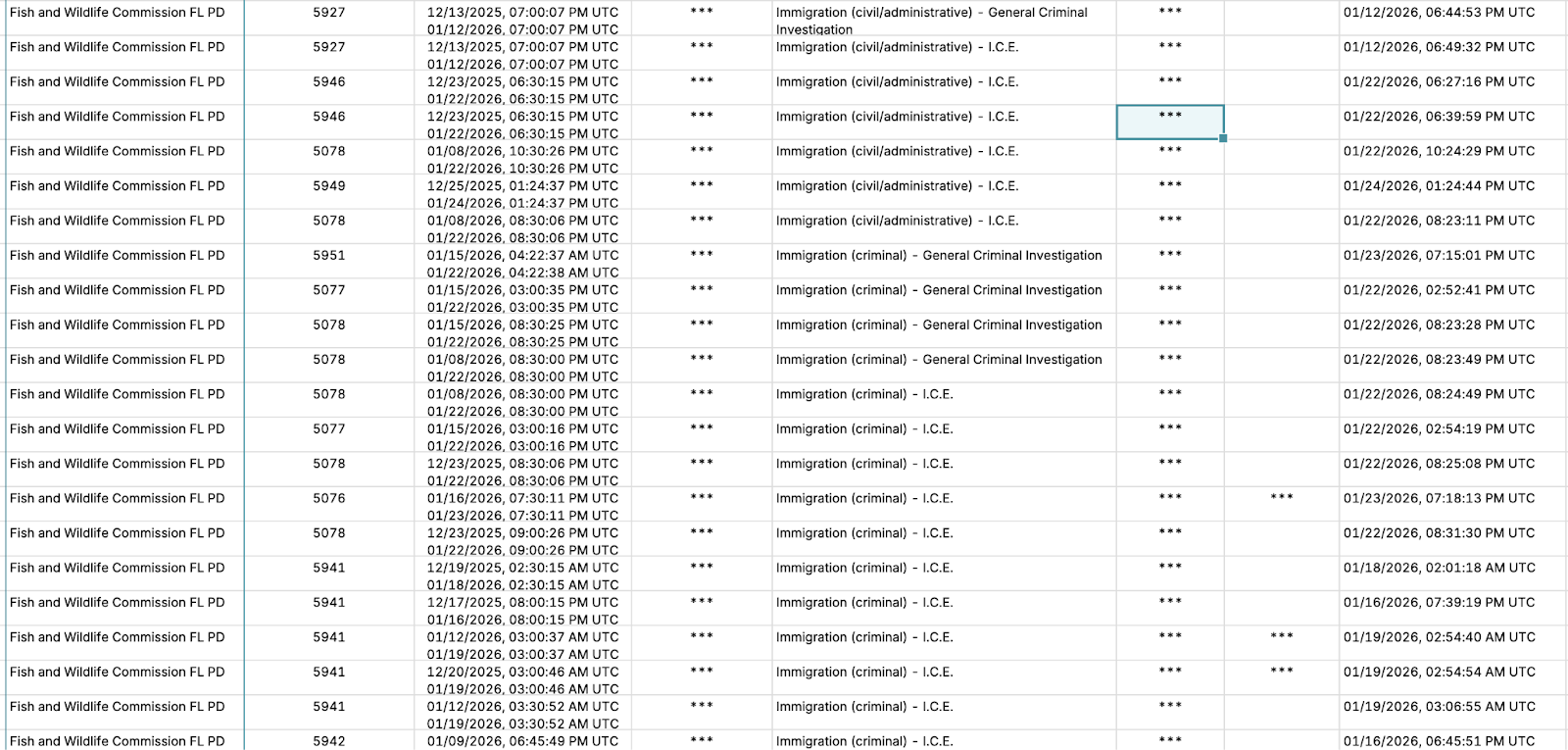
Flockと契約を持つインディアナ州の公立大学であるボール州立大学の1月のFlockネットワーク監査は、フロリダ魚類野生生物保護委員会警察が「移民」と記載された理由で38件の異なるFlock検索を行ったことを示している。
Flockネットワーク監査は、警察部門のFlockデータが別の機関によって照会されるたびに個別のエントリーを持つスプレッドシートである。各エントリーには、何件の異なるネットワークとカメラが検索されたか、検索時刻、および検索の「理由」に関する情報が含まれる。フロリダ魚類野生生物保護委員会によって実行された検索の理由は、「移民(民事/行政)- I.C.E.」から「移民(刑事)- 一般的犯罪捜査」、「移民(刑事)- I.C.E.」まで多岐にわたった。ネットワーク監査は、各ケースで5,000以上の異なるFlockネットワークが検索されたことを示しており、これは、Flockによって実施された新しい安全策にもかかわらず、1月時点で数千の町や都市が依然として最終的にICEと協力する機関とデータを共有していたことを示している。
 image「これは、大量監視を行うとき、データを本当に制御できないことを浮き彫りにしている」と、アメリカ自由人権協会(ACLU)の言論・プライバシー・テクノロジープロジェクトの上級アナリスト、ジェイ・スタンレーは404 Mediaに語った。「フロリダ魚類野生生物保護委員会がICEのために検索を行うことについて、多くの都市がFlockを導入すべきか話し合っていたときに議論していたとは思わない。これらの検索が本当にどの方向からでも来る可能性があることを示している。」
問題の記録は、自身のウェブサイトFOIABallで大学スポーツを取材するジャーナリスト、デビッド・コヴッチによってボール州立大学から取得された。コヴッチは文書を404 Mediaと共有した。文書は、フロリダ魚類野生生物保護委員会警察に加えて、テキサス州公安省、インディアナ州グラント郡保安官事務所、インディアナ州レイク郡警察、フロリダ州サラソータ郡警察、フロリダ州ブレバード郡保安官事務所、ネブラスカ州警察、テネシー州高速道路警察、フロリダ州フォートピアース警察署、ミシシッピ州公安省がすべて1月に移民関連のFlock検索を行ったことを示した。これは、これらの機関すべてが最終的に移民関連の目的でボール州立大学のキャンパス(および全国の他の数千)のFlockカメラを検索したことを意味する。
フロリダ魚類野生生物保護委員会の警察がICEのためにこれらの照会を行えるのは、8月にフロリダ州知事ロン・デサンティスが同州の警官約800名を287(g)プログラムに登録したためだ。これは国土安全保障省(DHS)のプログラムで、州および地方警察に特定の移民法執行権限を与える。デサンティスは事実上、多くの州警察をICEの延長に変えた:「フロリダは、不法移民対策において州の模範を示し、トランプ政権と協力して法の支配を回復している」と、デサンティスはこの動きを発表するプレスリリースで述べた。「州の捜査官と法執行官がICEによって訓練・承認されることを許可することで、フロリダは連邦パートナーを支援するために委任されたより多くの法執行要員を持つことになる。それは、不法外国人が排除されることで、国外退去がより効率的に行われ、我々のコミュニティがより安全になることを意味する。」
ACLUは2月に、287(g)プログラムの拡大がトランプ政権の国外退去部隊を大幅に増強した方法について報告書を発表した。「最近数ヶ月間、国の注目は当然ながらミネアポリスなどの場所でのICEと国境警備隊員による暴力と虐待に焦点を当ててきたが、フロリダと全国のコミュニティでは別の種類の恐怖を経験している:彼ら自身の法執行機関が、トランプ政権と緊密に協力して、露骨な人種的プロファイリング、嫌がらせ、さらには暴力の加害者となっている」と報告書は述べている。
報告書は特に、「フロリダは他のどの州よりも多くの州および地方法執行リソースを移民法執行に割り当てているようで、その結果、米国市民と非市民の両方に対する嫌がらせとプロファイリングの多数の事例、コミュニティにおける極度の恐怖の風潮、および重大な公民権侵害の報告が生じている」と指摘している。
ACLUのスタンレーは、287(g)の拡大により、コミュニティがFlockデータへの連邦アクセスについて行っている多くの議論が時代遅れに感じられるようになったと述べた。なぜなら、全国の地方警察が現在連邦当局に代わって仕事をしているという事実に対処できていない可能性があるからだ。「Flockが論争の的となっているコミュニティや他の場所での焦点の多くは、『連邦政府はこのデータにアクセスできるのか?』という質問に集中してきた」とスタンレーは言った。「これは、287(g)の急激な拡大により、多くの地方当局がICEと非常に緊密に協力しているため、それがほとんど無意味になったことを思い出させる。」
Flockはここ数ヶ月、ICEとの距離を置こうと試みてきた。その一環として「FlockはICEとデータを共有しますか?」というブログ記事や、その幹部による多数のメディア出演やLinkedIn投稿がある。Flockは繰り返し、顧客がデータを所有・管理しているという考えに依拠し、Flockがナンバープレートリーダーデータを移民や中絶法執行に使用することを禁止する、またはナンバープレートカメラデータの州外転送を完全に禁止するいくつかの州の法律に準拠するために多数の変更を加えたとしている。
「我々が貴組織に何度も共有してきたように、すべての顧客は自らのデータを所有し、それが地方の法律や法令に準拠する限り、その使用方法を選択する」と、Flockの広報担当者は404 Mediaに語った。「連邦移民当局との協力が法律違反となる都市や州では、製品自体の中でそれが起こらないようにブロックしている。協力が合法である州では、顧客とその地域の価値観が、法律をどのように執行するかを選択する方法を決定する。」
フロリダ魚類野生生物保護委員会は、複数のコメント要請に応じなかった。しかし、デサンティス知事事務所の広報担当者は404 Mediaに、魚類野生生物保護委員会がICEと引き続き協力していると述べた。「FWCがICEと協力することは、彼らがICEと287(g)協定を結んでいるため、異常なことではありません。フロリダ州のすべての法執行機関も同様です」と彼らは言った。
404 Media、他の記者、透明性擁護者たちは、主に公開記録請求を通じてネットワーク監査を取得することで、Flockカメラの使用について報告してきた。しかし、それらのネットワーク監査の有用性は急速に低下している。今年初めに我々が報じたように、Flockはネットワーク監査に変更を加え、個々のエントリーをより曖昧にし、当局は警察にFlockを使用する理由について「許容される限り曖昧に」するよう警告している。多くのFlock検索理由は単に「捜査」または他の包括的な用語を記載しており、システムが実際に何のために使用されたかを知ることは不可能だ。この変更により、どの機関がICEと協力しているか、そしてそれがどのくらいの頻度で起こっているかを追跡することが難しくなる可能性がある。
「Flockを使用している誰もが、コミュニティに何が起こっているかを悟らせないような一般的な記述を記載して済ませられることを知っていると思う」とスタンレーは言った。「この可視性の窓は閉じつつある。この非常に限定的で欠陥があり、操作可能な可視性の窓でさえも閉じつつある。」
原文を表示
imageFlorida’s Fish and Wildlife Conservation Commission (FWC) police are performing dozens of license plate lookups on Flock cameras for Immigrations and Customs Enforcement (ICE), according to public records that show details of the searches.
The practice highlights how ICE, which does not have a contract with Flock, continues to get access to Flock’s AI-powered license plate scanning cameras through local and state police, and often in ways that are unusual, unexpected, and difficult for the public to track or hold the agency accountable for. In this case, ICE has gained access to Flock data through a law enforcement agency that is nominally supposed to be focused on conservation, protecting endangered species, and investigating boating and maritime issues. 404 Media initially reported on how ICE was getting side-door access to Flock data via local police in May 2025.
That reporting led to a series of reforms and safeguards that are supposed to make it easier for law enforcement agencies that use Flock to opt out of having their surveillance camera data passed to federal agencies; a blog post by Flock called “Does Flock Share Data With ICE?” now states plainly “No. Flock does not work with U.S. Immigration and Customs Enforcement or any other sub-agency of the Department of Homeland Security.” But in practice, the public records show that as of the end of January (the most recent data available) thousands of agencies around the country were sharing their camera data with the Florida Fish and Wildlife Conservation Commission police, which was then regularly performing lookups for ICE.
Flock cameras continually scan the license plate, brand, and color of every vehicle that drives by. Law enforcement can then search the Flock system to see where else a vehicle has travelled. Crucially, Flock maintains a national lookup tool where agencies in one state can search data generated by cameras in another, even if those cameras are on the other side of the country. Law enforcement typically do this without a warrant.
A January Flock network audit for Ball State University, a public university in Indiana that has a contract with Flock, shows that the Florida Fish and Wildlife Conservation Commission police performed 38 different Flock searches for reasons that were listed as “immigration.”
Flock network audits are spreadsheets that have a separate entry for each time a police department’s Flock data is queried by another agency. Each entry contains information about how many different networks and cameras were searched, the time of the search, and the stated “reason” for the search. The searches performed by the Florida Fish and Wildlife Conservation Commission had reasons that ranged from “Immigration (civil/administrative) - I.C.E.” to “Immigration (criminal) - General Criminal Investigation” to “Immigration (criminal) - I.C.E.” The network audit indicated that more than 5,000 different Flock networks were searched in each case, indicating that, as of January, thousands of towns and cities were still sharing data with agencies that ultimately work with ICE despite new safeguards put in place by Flock.
image“This highlights when you do mass surveillance, you really can’t control the data,” Jay Stanley, a senior analyst with the American Civil Liberties Union’s (ACLU) Speech, Privacy, and Technology Project, told 404 Media. “I doubt there were many cities that were debating the Florida Fish and Wildlife Services doing searches for ICE when they were talking about whether they should get Flock. It shows these searches can come from really any direction.”
The records in question were obtained from Ball State University by the journalist David Covucci, who covers college sports for his website FOIABall. Covucci shared the documents with 404 Media. The documents showed that, beyond the Florida Fish and Wildlife Conservation Commission police, the Texas Department of Public Safety, Grant County Indiana Sheriff's Office, Lake County Indiana police, Sarasota County Florida police, Brevard County Florida Sheriff's Office, Nebraska State Patrol, Tennessee Highway Patrol, Fort Pierce Florida Police Department, and Mississippi Department of Public Safety had all done immigration-related Flock searches in January. This means that all of these agencies ultimately searched Flock cameras on Ball State’s campus (and thousands of others across the country) for immigration-related purposes.
Police with the Florida Fish and Wildlife Conservation Commission are able to do these lookups for ICE because in August, Florida Gov. Ron DeSantis enrolled nearly 800 of its officers in 287(g), a Department of Homeland Security (DHS) program that gives state and local police certain immigration enforcement powers. DeSantis has essentially turned many state police into an extension of ICE: “Florida is setting the example for states in combating illegal immigration and working with the Trump Administration to restore the rule of law,” DeSantis said in a press release announcing the move. “By allowing our state agents and law enforcement officers to be trained and approved by ICE, Florida will now have more enforcement personnel deputized to assist federal partners. That means deportations can be carried out more efficiently, making our communities safer as illegal aliens are removed.”
The ACLU published a report in February about how the expansion of the 287(g) program has vastly increased the Trump administration’s deportation force. “While in recent months the nation’s attention has rightly focused on the violence and abuse perpetrated by ICE and Border Patrol agents in places like Minneapolis, in Florida and around the country, communities are experiencing another kind of terror: Their own law enforcement agencies, working hand in glove with the Trump administration, are the perpetrators of blatant racial profiling, harassment, and even violence,” the report says.
The report specifically notes that “Florida appears to have devoted more state and local law enforcement resources to immigration enforcement than any other state, resulting in numerous cases of harassment and profiling of U.S. citizens and noncitizens alike, a climate of extreme fear in communities, and reports of serious civil rights violations.”
The ACLU’s Stanley said that the expansion of 287(g) has made a lot of the debates that communities are having about federal access to Flock data feel outdated, because they may fail to grapple with the fact that local police around the country are now doing work on behalf of federal authorities. “A lot of the focus in communities and elsewhere where Flock is controversial have focused on this question of ‘Will the feds be able to access this data?,’” Stanley said. “This is a reminder that the sharp expansion of 287(g) has made that almost moot because a lot of local authorities are working so closely with ICE.”
Flock has in recent months attempted to distance itself from ICE, in part with the “Does Flock Share Data With ICE?” blog post and with numerous media appearances and LinkedIn posts by its executives. Flock has repeatedly leaned on the idea that its customers own and control their data, and that Flock has made numerous changes to comply with several states’ laws that forbid the use of license plate reader data for immigration or abortion enforcement, or which ban the transfer of license plate camera data out of the state altogether.
“As we've shared with your organization many times, all our customers own their data and choose how to use it, provided it complies with local laws and statutes,” a spokesperson for Flock told 404 Media. “In cities and states where cooperating with federal immigration is against the law, we block that from happening within the product itself. In states where cooperation is legal, customers and their local values determine how they choose to enforce the law.”
The Florida Fish and Wildlife Conservation Commission did not respond to multiple requests for comment. A spokesperson for Gov. DeSantis’s office, however, told 404 Media that the Fish and Wildlife Conservation Commission continues to work with ICE. “Please note that it is NOT out of the ordinary for FWC to work alongside ICE as they have a 287 (g) agreement with them-as do all State of Florida law enforcement agencies,” they said.
404 Media, other reporters, and transparency advocates have been reporting on the use of Flock cameras primarily by obtaining network audits through public records requests. But the utility of those network audits is rapidly deteriorating; as we reported earlier this year, Flock has made changes to its network audits that makes each individual entry more vague, and authorities have warned police to be “as vague as permissible” about the reasons why they are using Flock. Many Flock search reasons simply say “investigation” or another blanket term, making it impossible to know why the system was really used. Because of this change, it may become harder to track which agencies are working with ICE, and how often it’s happening.
“I think everybody using Flock knows you can get away with putting something like a generic descriptor that won’t tip off communities to what’s going on,” Stanley said. “This window of visibility is closing, even this very limited flawed, manipulable window of visibility is closing.”
関連記事
今日のまとめ
AIデイリーブリーフで今日の重要ニュースをまとめ読み