Matt Pocock氏、計画の「霧」をナビゲートするWayfinderスキルを紹介
本文の状態
日本語全文を表示中
詳細モードで約9分の本文を読めます。
同じ出来事の情報源
この情報源を基点に整理
Latent Space
Matt Pocock は、プロジェクトの終状態が不明確な状況における計画段階の負担を軽減し、コンテキスト管理やセッション分割を自動化する「/wayfinder」というスキルを発表した。
AI深層分析を開く2026年8月21日 10:24
AI深層分析
キーポイント
/wayfinder スキルの目的と機能
このスキルはプロジェクトの終状態が明確でない場合でも、AI エージェントが計画段階で制約を感じずに作業を進められるよう支援するものであり、「戦争の霧」をナビゲートする役割を果たす。
開発者の計画プロセスにおける課題
Matt Pocock は、AFK エージェントのスケジュール管理において、トークン数やコンテキストウィンドウの深さといったセッション管理に多大な労力を費やす問題点を指摘し、これを解決する必要性を訴えた。
オーケストレーションレイヤーの実装
Pocock は計画段階での制約を取り除くため、複数のスレッドに分割してプロトタイピングや調査を行い、結果を統合するオーケストレーション層の導入を提案している。
文脈管理における情報の流れと用語の統一
エージェントが混乱しないよう、マップ(全体の決定事項)とチケット(具体的なタスク)を明確に区別し、各要素を指す用語を一貫させる必要がある。
Wayfinder の多様なチケットタイプ
グリリングセッションの他に、プロトタイプ作成や研究を行うための専用チケット、および人間が実行すべき広範なタスク用のチケットが存在する。
重要な引用
/wayfinder helps you navigate 'the fog of war,' where you have a project but 'you can't quite decide everything right at the start.'
I didn't want to feel constrained in the planning stage anymore.
I wanted an orchestrator layer that would basically say, okay, whatever you want to plan, I'm going to handle the planning sessions for you.
Whenever you're thinking about context management — because that's really what a skill is, you're managing the context of the agent you're working in — you need to think about the information flow.
編集コメントを表示
編集コメント
Matt Pocock の「AI Skills for Real Engineers」プロジェクトは GitHub で高い支持を集めており、その知見を反映した今回のスキル発表は実務的な価値が高い。開発者が直面するコンテキスト管理のボトルネックを解消する具体的な手法として注目される。
Source Article
元記事を日本語で読む
本文に関係しない購読案内、埋め込み通知、サイト内プロモーションは除いています。
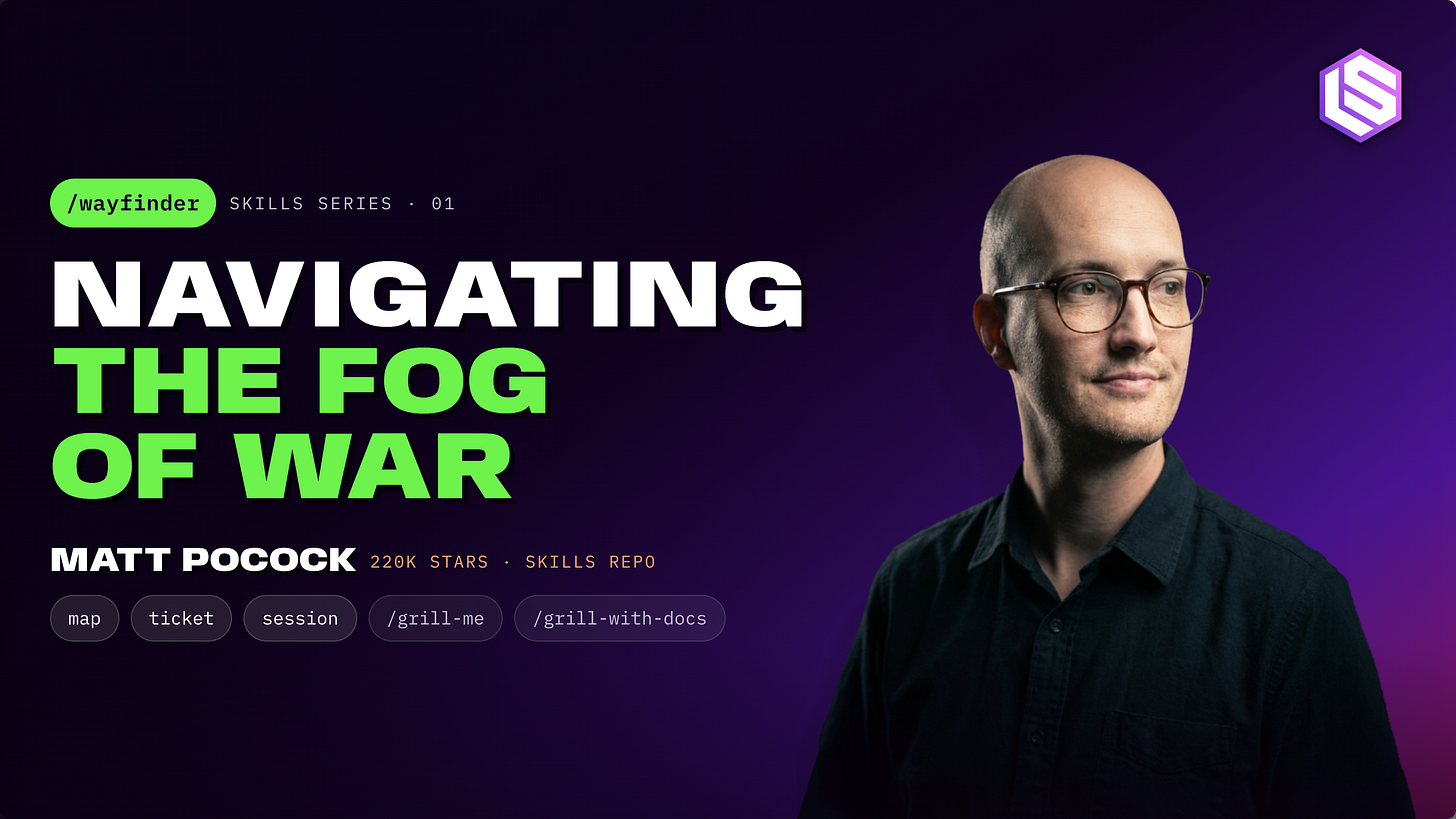
私たちは現在、プロジェクトで活用できる新しいスキルを定期的に提供することを目的とした「スキル」シリーズの制作を進めています。その第一弾として、GitHub で 22 万 2,000 スターを超える「AI Skills for Real Engineers」プロジェクトを手がけるマット・ポコック氏へのインタビューをお届けします。また、彼の YouTube チャンネルには 34 万 7,000 人の登録者がおり、そこでこれらのスキルについても解説しています。
ポコック氏は最近、新しいスキル「/wayfinder」を公開しました。このスキルの目的は、最終状態が完全に明確ではないプロジェクトにおいて、あなたとあなたのエージェントが道筋を見つけるのを支援することです。インタビューの中でポコック氏は、/wayfinder は「プロジェクトはあるものの、最初からすべてを決められない」という「戦争の霧(fog of war)」の中をナビゲートする手助けをすると述べています。
読みやすくするために、以下のインタビューは一部要約されています。ぜひ読んでマッティンの洞察を吸収し、実際に /wayfinder を試してみてください!
Latent Space: wayfinder の目的は何でしたか?
ポコック:私が気づいたのは、AFK エージェント(キーボードから離れている状態の自動化エージェント)との作業が非常に多くなっていたことです。エージェントがほぼ一晩中稼働できるように、大量の仕事をスケジュールする必要がありました。具体的には、まず多くの作業を計画し、その内容を仕様書として作成し、それをチケットに変換していました。私は「作業をエージェントがすぐに着手できる形にスケジュールする」というスキルをすでに高度に磨いていました。
しかし、計画段階は非常に負担になることがわかりました。なぜなら、セッション管理について常に意識し続けなければならなかったからです。「コンテキストウィンドウ内でどのくらいトークンを使っているか?」「この作業の深さはどこまで必要か?」といったことを絶えず考え続ける必要がありました。
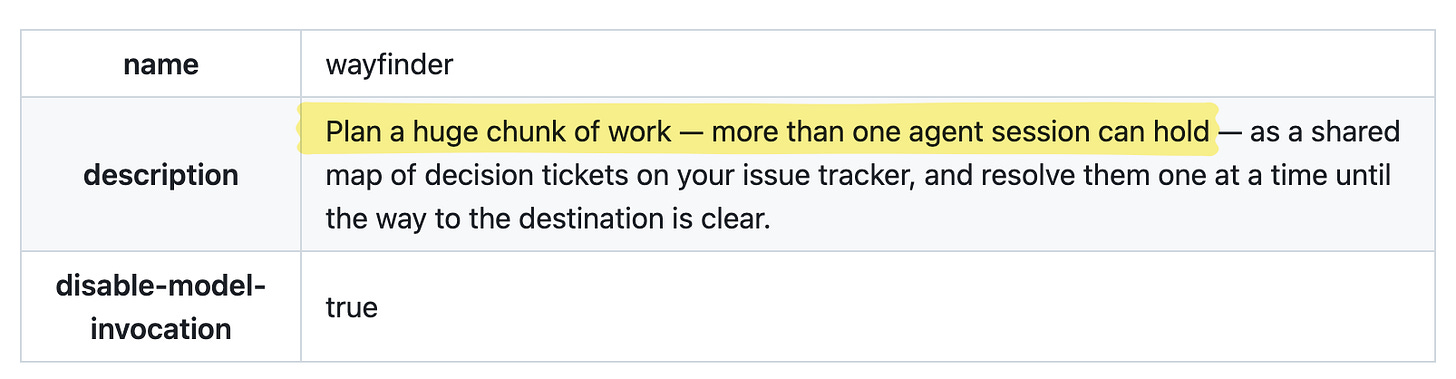
GitHub に記録されたマット・ポコックの「ウェイファインダー」スキル
私はもはや計画段階で制約されていると感じたくありませんでした。そこで必要だったのは、オーケストレーション層です。この層は「何を計画したいかに関わらず、計画セッション自体を私が担当します」と言ってくれるようなものです。具体的には、作業を複数のスレッドに分割し、プロトタイピングやリサーチを行い、それらをすべて統合して戻ってくるように設計しました。これにより、計画段階での制約を感じさせないようにします。
そうすれば、仕様書はさらに詳細なものにでき、AFK エージェントを放って、さらに多くの作業を行わせることができます。
Latent Space:このスキルを開発するまでの設計プロセスはどうでしたか?
ポコック:「ハンドオフの管理が不要になったらどうなるか」というアイデアの核がありました。また、それらすべての要素を一つの中央集権的なドキュメントにまとめたらどうなるか、という問いも持っていました。
スキルとは実質的にエージェントのコンテキストを管理することです。そのため、情報の流れについて考える必要があります。そこで私が考えたのは、「グリリング・セッション(議論の場)が他のグリリング・セッションを管理できるのではないか」ということです。それが実現するとどうなるでしょうか。
その第一歩は、管理される側のグリリング・セッションが何を必要とするかを確認することです。つまり、子孫となるタスクには何が必要なのでしょうか。おそらく、全体の流れに関する大まかな概要と、自分自身の具体的なタスクの理解が必要です。
つまり、ここでは2 つのドキュメントが存在します。1 つは「マップ」で、これはこれまでに決定されたすべての事項や他の要素を網羅したものです。もう 1 つは、実際のセッションに紐づく特定のチケットです。ここで注目すべき点は、これらの用語が非常に明確に定義されていることです。
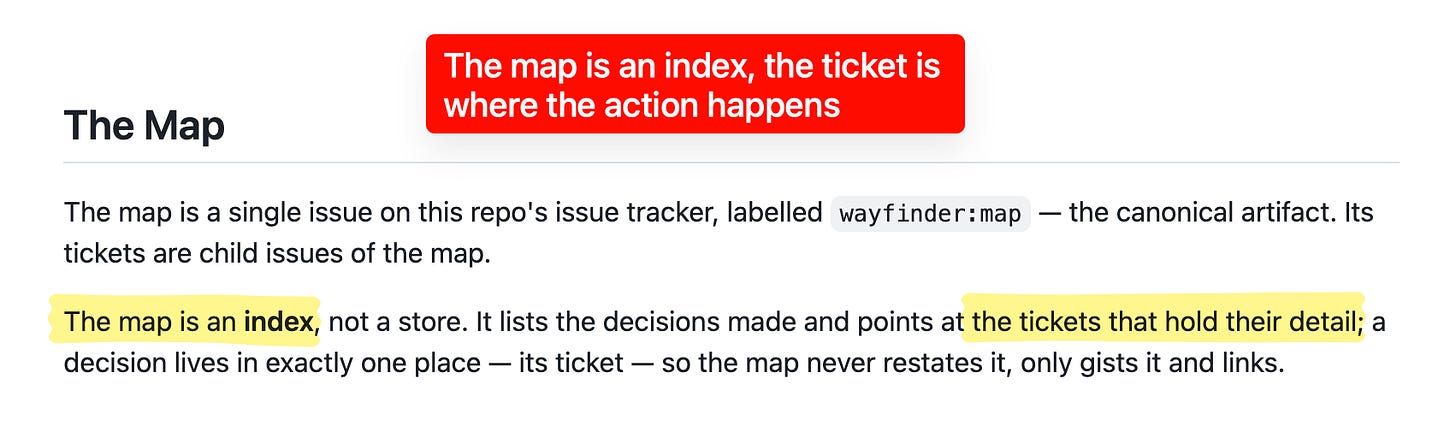
Wayfinder のドキュメントより
地図も、チケット(タスクの単位)も、セッションも用意できました。アイデアの核を固めたら、次はそれを言葉に落とし込む必要があります。なぜなら、言葉を明確に定義すればこそ、エージェントが各エンティティを正確に把握できるからです。
もしすべてのものを単に「チケット」と呼んだり、場所によって呼び方をバラバラにしたりすると、エージェントは混乱し、奇妙な挙動を示すことになります。一方、「先行する言葉(leading words)」と呼ばれる特定の用語を使って、エージェントが各部分の役割を正しく理解できるように導き、情報の流れを把握できれば、それがスキルとして確立されます。
潜在空間:Wayfinder はどのようなユースケースで役立つとお考えですか?
ポコック氏:実は、あらゆる用途で活用しています。コース計画にも使っていますね。Wayfinder には複数のチケットタイプが存在します。
例えば、「グリリングチケット」は単なるグリリングセッションを指し、「プロトタイプ作成チケット」はプロトタイプの作成用です。「研究チケット」は調査や研究の実行用、そして「タスクチケット」は非常に広範なカテゴリで、エージェントが実行できない人間が行うべき作業のすべてが含まれます。このように考えると、Wayfinder のアプローチをあらゆる場面に適用できることがわかります。
Wayfinder における重要な概念の一つに「戦争の霧(fog of war)」があります。これは、最初からすべてのことを完全に決定することはできないという考え方です。
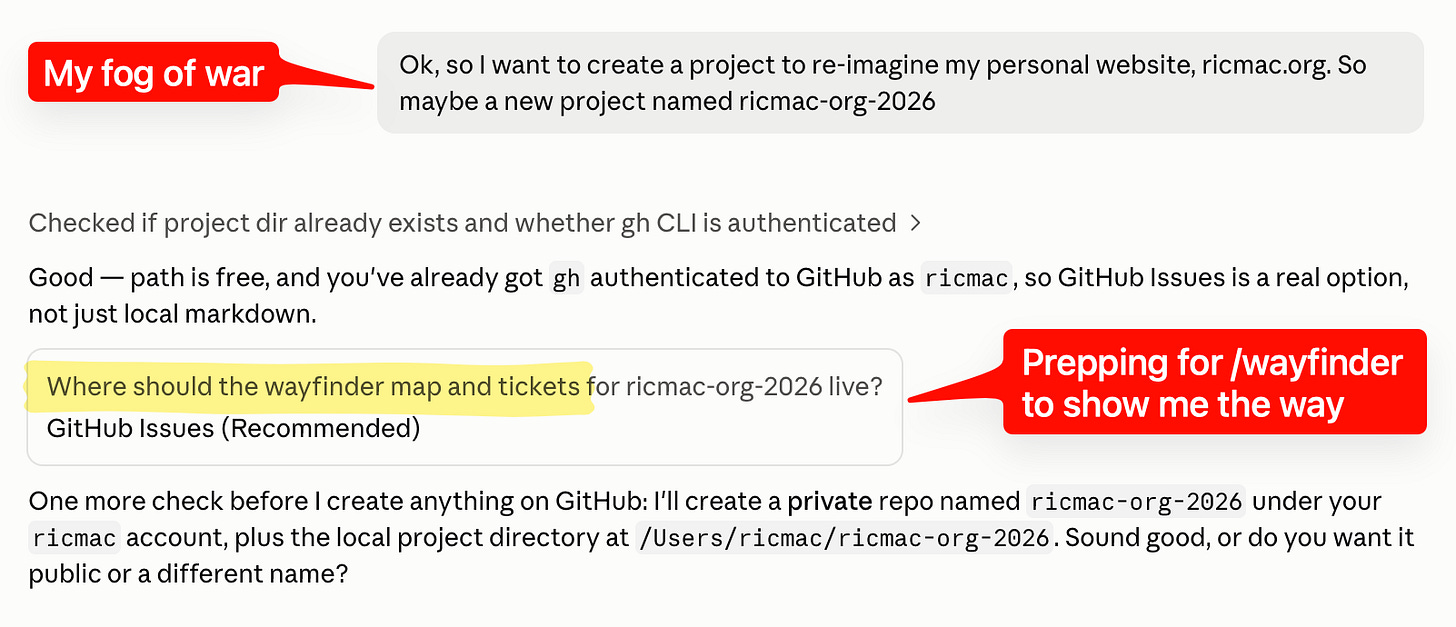
私は、/wayfinder を自分のウェブサイトの再構築プロジェクトで試してみることにしました。以下は、今回は Claude Code を使用した初期のプロジェクト設定です。
特定の判断を下すことで、その判断が道筋を示し、霧のかかった領域へとさらに踏み出すことになります。まるで『ウォークラフト III』のように、地図を探索するような感覚です。この「霧のかかった領域」という概念と「地図」という言葉を組み合わせたとき、両者が非常に相性が良く、エージェントに適切なアイデアをもたらすことに気づきました。以来、エンジニアリングだけでなく、非エンジニアリングのタスクやコース計画など、あらゆる場面で活用しています。
Latent Space: 「霧のかかった領域」という概念は、「自分が知らないことすら知らない」という状況を考えるのは奇妙ですが、LLM はそれを捉えるのに適しているかもしれません。
Pocock: 私がまだ取り組んでいる複雑な問題については、この概念が「知らないことがある」という考えを捉えていると感じます。しかし、エージェントが何か貢献し、まだよく理解できていない領域を照らし出す可能性もあるでしょう。
そして、/wayfinder はその上に追加されるレイヤーのようなものです。
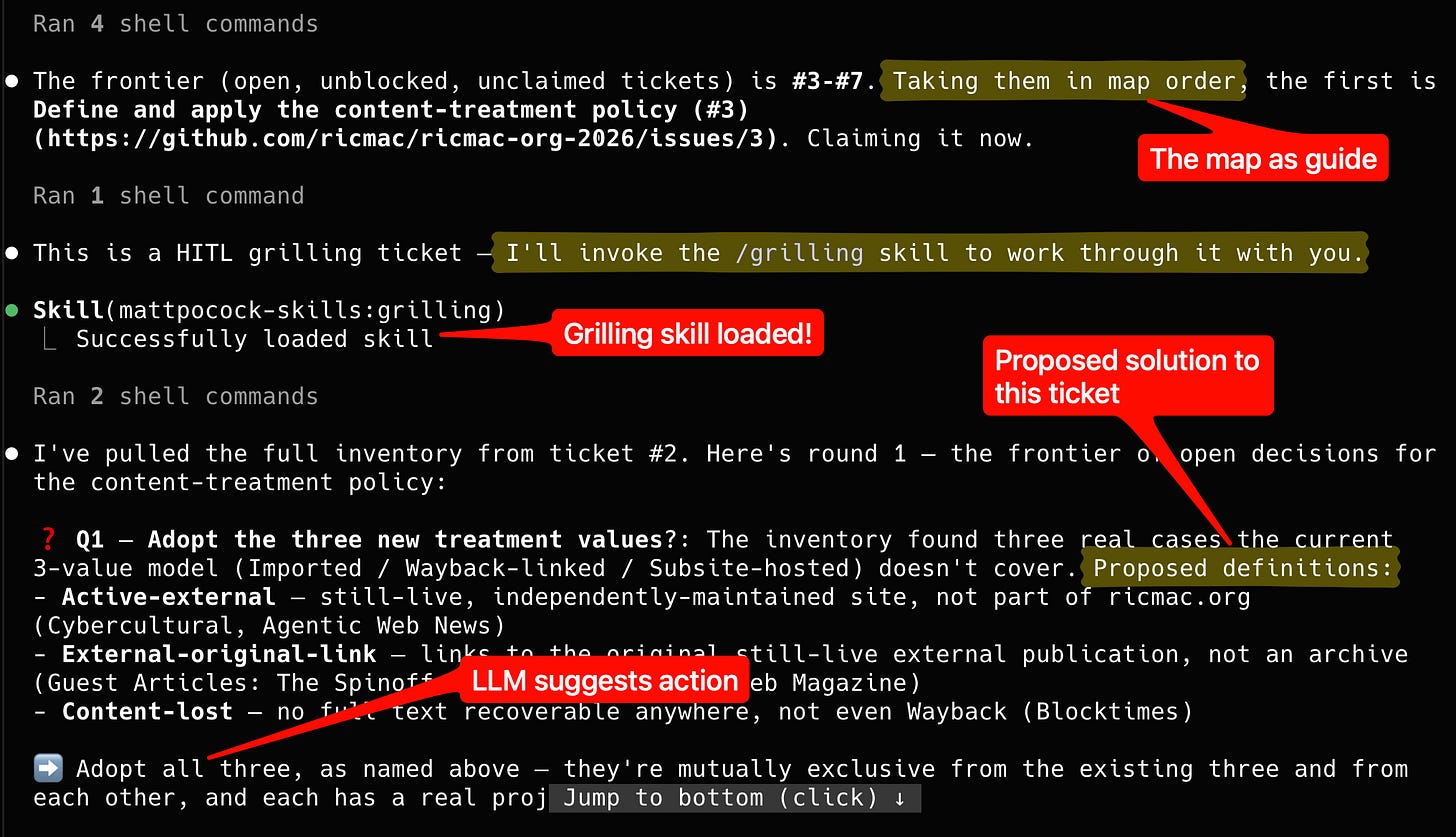
Web サイトの再構築プロジェクトを /wayfinder で進めています。整理すべきコンテンツは 20 年以上にわたる膨大な量です。
Latent Space: はい、確かにアーティファクトも多数ありますね。モデルにこれらの専門用語を教えるのにどれほどの時間を費やしているのですか?
Pocock: ここ数ヶ月、私は専門用語の選定に夢中でした。特定の概念に対して適切な言葉を見つけることに没頭しています。
実はまだ公開していませんが、「AI コーディング辞典」を作成しました。これは AI コーディング分野で使われるほぼすべての用語を網羅したものです。この美しいグラフを通じて、エージェント(agent)とは何か、ハーネス(harness)とは何か、モデル(model)とは何かといった概念を、具体的に探索し理解することができます。
私はこれまでの全コースをこの辞典に基づいて再構成し、基礎を固めました。さらに、すべてのスキルでも一貫した辞書を使用しています。これにより、すべてが同じ前提条件や共通のキーワードに基づいて動作するようになっています。
私とエージェントの間には、コミュニケーションの壁が存在することに気づきました。そこで私は、常に適切な言葉を見つけようと試みています。これが私がスキルを通じて取り組んでいることです。
そして驚くべきことに、エージェントは異なる表現による可能性を提示するのが非常に得意です。ドメインモデリングにおいてもその能力を発揮します。
潜在空間:「グリル・ミー」スキルの直接利用と「ウェイファインダー」の使い分けはいつか?
ポコック氏:「グリル・ミー」は、全体を1回のセッションで計画でき、実行前に合意形成が必要な場合に活用してください。小規模な機能実装など、先行する道筋が見えているケースにはほぼ該当します。この場合、エージェントがその方針に同意しているかを確認したいだけであれば、「グリル・ミー」で十分対応可能です。
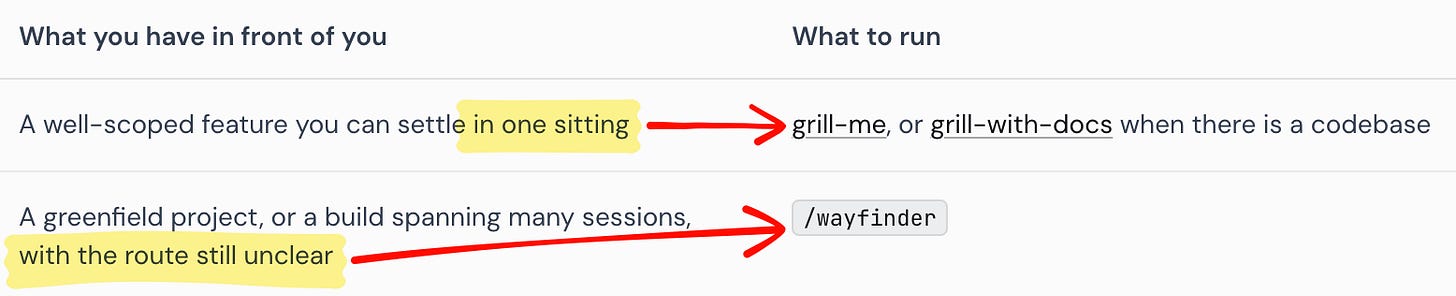
ウェイファインダー公式ドキュメントより引用
一方、先行する道筋が見えない場合や、戦場の霧(フォグ・オブ・ウォー)のような不確実性を感じ取る状況では「ウェイファインダー」を使用してください。このツールこそが、未知の領域を切り拓くための道しるべとなります。これが両者の基本的な使い分けです。
原文を表示
We’re currently developing a new series about skills, with the aim of giving you a regular supply of new skills to use in your projects. We’re kicking things off with an interview — and a super-useful skill — featuring Matt Pocock, whose “AI Skills for Real Engineers” project has over 220,000 stars on GitHub. He also talks about these skills to 347,000 subscribers on his YouTube channel.
Pocock recently released a new skill called /wayfinder. Its purpose is to help you and your agent figure out a project where the end state isn’t entirely clear. Or as Pocock put it in our interview, /wayfinder helps you navigate “the fog of war,” where you have a project but “you can’t quite decide everything right at the start.”
The following interview has been slightly condensed for readability, so you can read it, absorb Matt’s insights, and then test out /wayfinder for yourself!
Latent Space: What were the goals of wayfinder?
Pocock: What I noticed is I was doing a lot of work with AFK agents [Away From Keyboard] and trying to schedule in a ton of work so that my agents could run virtually overnight. I would just plan a bunch of stuff, and then I would create a spec and then turn that spec into tickets. And I had a really well-developed set of skills for how to turn work into scheduled stuff that agents could just crack on.
But [...] I was finding the planning stage really onerous, because I would have to be constantly thinking about my session management. Like, how many tokens am I into my context window? How deep am I going here?
Matt Pocock’s wayfinder skill, as documented in GitHub
I didn’t want to feel constrained in the planning stage anymore. I wanted an orchestrator layer that would basically say, okay, whatever you want to plan, I’m going to handle the planning sessions for you. I’m going to split this out into multiple different threads, do prototyping, do research and pull it all back together, so that you don’t feel constrained in the planning anymore.
And then your specs can be even more detailed, and you can just whack off an AFK agent to go and do tons more work.
Latent Space: What was the design process of coming up with this skill?
Pocock: I had this kernel of an idea of, what if I didn’t have to manage the handoffs? What would that look like? And then, what would it look like to have some kind of centralized document to have all of those pieces together?
Whenever you’re thinking about context management — because that’s really what a skill is, you’re managing the context of the agent you’re working in — you need to think about the information flow. So what I wanted to think about is, what if a grilling session could manage other grilling sessions? What would that look like?
Well, the first step to that is, what does the grilling session that’s being managed need? What does the child need in that situation? So the child probably needs to understand a vague overview of what else is happening, and they need their specific task.
So there, you’ve got two documents. You’ve got a map — which is all of the rest of the stuff, all the decisions that have already been made. And then you’ve got the specific ticket that goes into the actual session. And what you notice there is that those words are very precise.
From wayfinder documentation
You’ve got the map, and you’ve got the ticket, and you’ve got the session. And once you’ve got the kernel of an idea, you then need to come up with the words for that idea. Because once you’ve figured out the words, then those entities can be really clearly mapped out by the agent.
Because if you just call everything a ticket, or if you just refer to it in different ways in different places, then it’s going to be really confused and you’re going to get strange behavior. Whereas if you use these very specific, what I call leading words, to lead the agent to understand exactly what each part is, and you’ve understood what the information flow is, then you’ve got your skill.
Latent Space: What kind of use cases do you think wayfinder would be useful for?
Pocock: Well, I’ve been using it for all sorts of stuff. I’ve been using it to actually plan courses as well. In wayfinder, there are different types of tickets.
So you’ve got grilling tickets, which are just a grilling session. Then you’ve got prototype tickets for creating prototypes, research tickets for creating [and doing] research, and then task tickets — which are really broad…basically, just anything the human needs to do that the agent can’t do. And so once you think about that, you realize, OK, I can apply that to anything.
One really key idea in wayfinder is the ‘fog of war’. So this is the concept of, you can’t quite decide everything right at the start.
I decided to test /wayfinder on a project to rearchitect my personal website. Here’s the initial project set-up, in this case using Claude Code.
You can make certain decisions, and those certain decisions sort of lead you there and push further out into the fog of war — kind of like Warcraft III style, exploring the map. And once I had the idea of ‘fog of war’ and ‘map’, I realized those two terms actually work really nicely together, and it really leads the agent into the right idea. So I’ve been using it for engineering, for non-engineering stuff, for course planning, all sorts.
Latent Space: This concept of the fog of war — it’s weird to consider what you don’t know that you don’t know. Maybe LLMs are good at capturing that.
Pocock: I feel like with the grilling stuff that I’m still working on, that captures an idea that you don’t know stuff, but maybe the agent can contribute something and illuminate a part of the room that you don’t quite understand yet.
And wayfinder is just sort of an extra layer on top of that.
Working through my website rearchitecture project using /wayfinder. There’s 20+ years of content to re-organize!
Latent Space: Yeah, and there’s all these artifacts. How much time do you spend teaching the model all this terminology?
Pocock: For the last few months, I’ve been pretty obsessed with terminology — and finding the right terms for certain things. I’ve put together, I haven’t actually put it out yet, but it’s an AI coding dictionary — of basically all the terms in AI coding. It’s in this beautiful graph that you can explore and understand exactly what an agent is, exactly what a harness is, exactly what a model is, blah blah blah.
I’ve redone all my courses to use that dictionary and make it really solid. And then all of my skills use a consistent dictionary as well. So they’re all working off the [same] assumptions, the same leading words.
I realized that I needed a ubiquitous language between me and the agent. Between me and the agent, there is a communication barrier. And that’s what I’m trying to do with my skills all the time, is try to find the right words.
And agents are really good at showing you the opportunities for different wording — really good at domain modeling, actually.
Latent Space: When do we directly use the grill-me skill, versus wayfinder?
Pocock: Use ‘grill me’ in cases where you feel like you can plan the whole thing in a single session, and you need to align before you go. So most small features will fit into this. Most stuff where you can see the path ahead of you, but you just want to make sure the agent is on board, ‘grill me’ will work with that.
Via wayfinder documentation
For stuff where you don’t know the path ahead, for stuff where you can feel the fog of war in front of you, use wayfinder. You’re gonna find your way with wayfinder. So that’s how it works.
関連記事
今日のまとめ
AIデイリーブリーフで今日の重要ニュースをまとめ読み