宣言型とカスタムエージェント UI の融合:A2UI と MCP Apps を組み合わせる
本文の状態
日本語全文を表示中
詳細モードで約1分の本文を読めます。
同じ出来事の情報源
この情報源を基点に整理
Google Developers AI
Google Developers AI は、MCP アプリと Agent-to-User Interface(A2UI)を統合する 3 つのアーキテクチャパターンを発表した。これにより、開発者はネイティブな宣言型レンダリングとカスタム iframe のトレードオフを解消し、MCP サーバー上でネイティブ感覚の UI を提供できるようになる。
Source Article
元記事を日本語で読む
本文に関係しない購読案内、埋め込み通知、サイト内プロモーションは除いています。
この投稿では、高度にカスタマイズされた iframe 環境とネイティブかつ宣言的なレンダリングの間のトレードオフを解決するために、Model Context Protocol (MCP) アプリと Agent-to-User Interface (A2UI) を統合するための 3 つのアーキテクチャパターンを紹介します。これらのアプローチを組み合わせることで、開発者は MCP サーバー上で直接ネイティブな感覚を持つ UI を提供したり、宣言的なビュー内に複雑で状態を保持する iframe アプリを安全に埋め込んだり、レガシーシステムに生成型 UI コンポーネントを注入したりすることが可能になります。最終的に、これらのハイブリッドフレームワークは、エンジニアリングチームが特定のプロジェクトの制約に合わせて、安全でパフォーマンスが高く、ブランドの一貫性を保ったエージェント型ユーザーエクスペリエンスを提供することを可能にします。
原文を表示
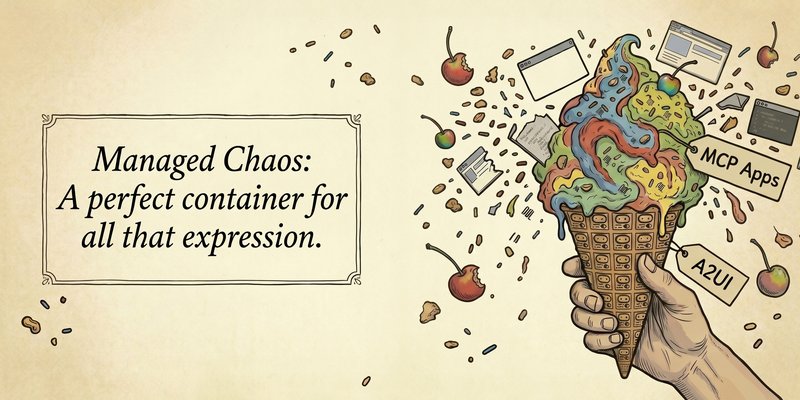
This post introduces three architectural patterns designed to integrate Model Context Protocol (MCP) Apps and Agent-to-User Interface (A2UI) to solve the tradeoff between highly custom iframe environments and native, declarative rendering. By combining these approaches, developers can serve native-feeling UIs directly over MCP servers, embed complex and stateful iframe apps securely inside declarative views, or inject generative UI components into legacy systems. Ultimately, these hybrid frameworks empower engineering teams to deliver secure, performant, and brand-consistent agentic user experiences tailored to their specific project constraints.
今日のまとめ
AIデイリーブリーフで今日の重要ニュースをまとめ読み