数学者らが AI に自らの地位が凌駕される可能性に直面
本文の状態
日本語全文を表示中
詳細モードで約20分の本文を読めます。
AI の急速な進展により、フィールズ賞受賞者を含む数学者らが専門分野における人間の優位性が近い将来失われる可能性を懸念し、その現実に向き合うよう求めている。
AI深層分析を開く2026年8月4日 23:36
AI深層分析
キーポイント
トップ数学者のキャリア転換と懸念表明
フィールズ賞受賞者のヤコブ・ツィマーマンが OpenAI の安全性チームへ転職し、数学の将来に対する悲観的な見解を公に表明した。
AI による未解決問題の自動解決事例
OpenAI や Anthropic の内部モデルが、長年人類の数学者を悩ませてきた未解決問題や反例の発見を自律的に行う事例が続出している。
数学界における AI 受容の多様性
国際数学者会議に参加した 20 名以上の数学者に取材したが、AI の進展に対する見解は懐疑的かつ楽観的など多岐にわたっている。
AI は数学の目的そのものを変えるわけではない
一部の数学者は、AI がすべての課題を解決しても数学が「完了」するとは考えない。彼らは数学には問題解決以外の多様な目標や価値があり、それらの動機自体は AI によって変化しないと主張している。
歴史的な自動化への対応と同様の未来
多くの専門家は、AI が計算などの技術的詳細を担い、人間が新たな理論や枠組みを生み出す役割へと移行すると予測する。これは過去にコンピュータが単純な計算を代行した際にも見られた、人間の研究対象の再定義というパターンと一致している。
重要な引用
I feel quite confident that very shortly AI will become robustly superhuman at what professional mathematicians currently do
I mostly want people to grapple with that reality
"I don't think it'll exist the way it exists right now."
"The AI will get stronger, but then we'll redefine what are technical details. I believe that the way we study math will change, but the joy we get from studying math will not change."
編集コメントを表示
編集コメント
AI の能力が数式処理や論理的推論の領域にまで到達し、人間の専門家の役割そのものを問い直す段階に来ている。この変化は単なるツールの進化ではなく、学問のあり方そのものに対する挑戦として捉える必要がある。
Source Article
元記事を日本語で読む
本文に関係しない購読案内、埋め込み通知、サイト内プロモーションは除いています。
これは当メディアの最初のスポンサー記事です。無料購読者の皆様には、本記事の後半でスポンサーである「80,000 Hours」の広告が表示されますが、有料購読者の方は引き続き広告なしでお読みいただけます。このような広告を通じて、私たちはすべての読者のために質の高い記事をより多く提供できるようになります。
今すぐ購読する
編集の独立性を守るため、当メディアの広告は以下の 5 つの原則に従っています。詳しくはここをクリックしてください。将来、記事のスポンサーをご希望の場合は、こちらから当メディアの読者層についてご確認ください。
— Timothy B. Lee
7 月 23 日、フィラデルフィアで開催された記者会見で、カナダ出身の数学者ヤコブ・ツィメルマンは、OpenAI の安全性チームに参加することを発表しました。このタイミングには驚きがありました。直前まで、彼は数学界で最も権威ある賞の一つであるフィールズ賞を受賞したばかりだったからです。
「今は注目を集めているので」と翌日、私は彼に聞きました。「できるだけ多くの人を AI 安全性の分野へ導きたいと考えています」
急速な AI の進展は、ツィメルマン氏を AI 安全性について不安にさせるだけでなく、数学という職業としての未来についても悲観的な見方を強めています。
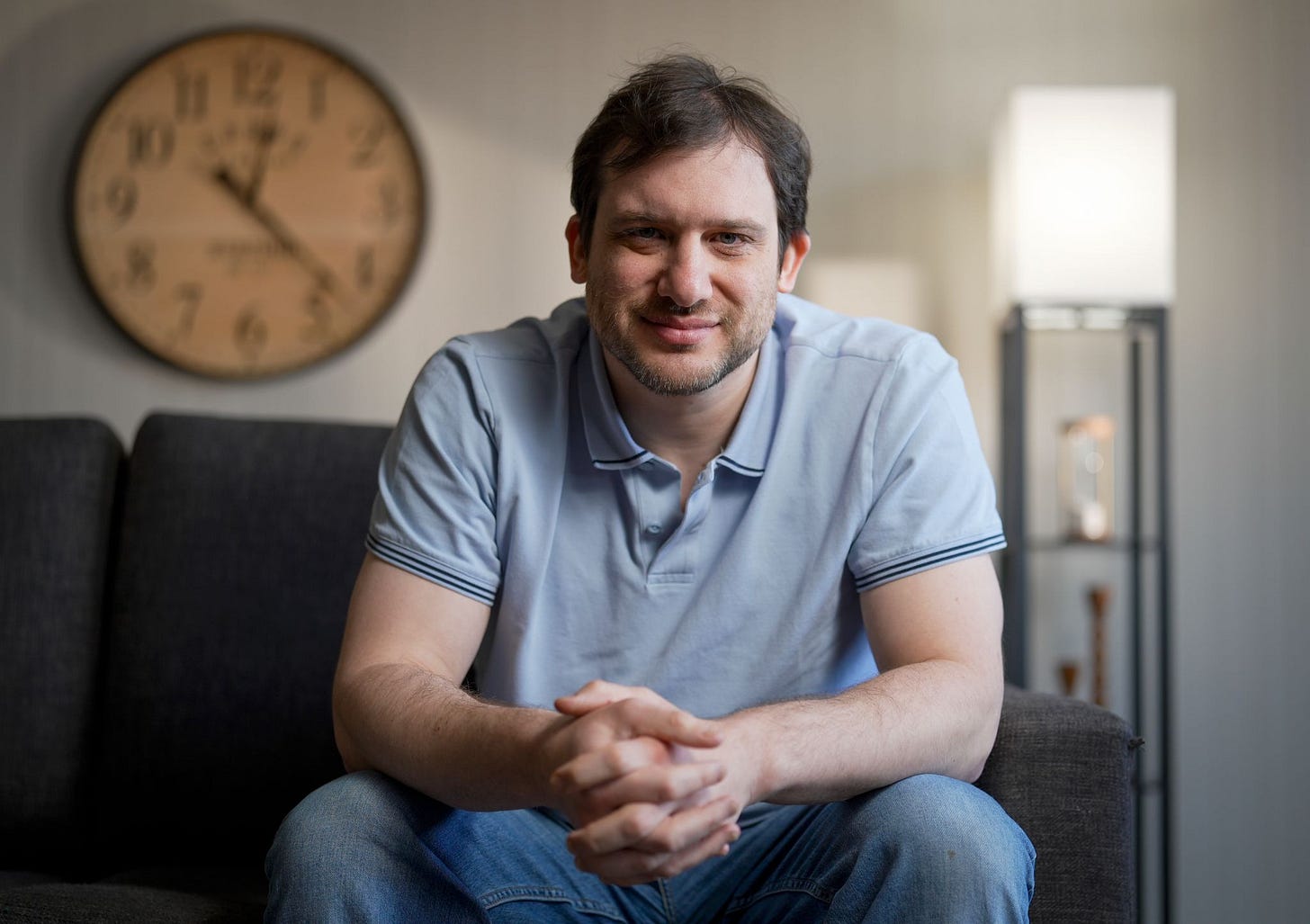
ヤコブ・ツィメルマン。(写真提供:サイモンズ財団。CC BY 4.0)
「まもなく、AI は現在のプロの数学者が行う業務において、確固たる超人的な能力を発揮するようになる」と彼は私に語った。「私は、人々がこの現実と向き合うことを強く望んでいるのだ。」
私は、数学分野における AI の急速な進歩に対する数学者たちの本音を聞き出すため、世界で最も権威ある数学会議である国際数学者会議(ICM)に参加するためにフィラデルフィアへと旅立った。
3 年前の主要な AI モデルは算術問題に苦戦していた。しかし昨年には、数学コンテストにおいて世界のトップ高校生とほぼ互角の実力を示すに至った。
現在では、AI システムが数十年にわたり人類の数学者を悩ませてきた未解決問題を自律的に解き明かしている。
5 月には、OpenAI の内部モデルがエルデシュの単位距離予想を反証した。この予想は、プリンストン大学の数学者ノガ・アロンによって「離散幾何学という数学の一分野において、おそらく最もよく知られた問題の一つ」と評されていた。
7 月には、Anthropic で働く数学者が Twitter に投稿し、「Claude Fable」が高次元におけるヤコビアン予想への反例を見つけたと報じた。
土曜日、OpenAI は、次期主要モデルファミリーである Astra の内部バージョンが「数学全体に広く関心を持つ十の主要な未解決問題を解決した」と発表した。
こうした進展により、AI システムによって数学はほぼ「解き明かされつつある」と主張する者も現れている。
数学者たちはこの状況に対して、どのように感じているのだろうか。私はフィラデルフィアで、ツィメルマンのような著名な教授から大学院生候補に至るまで、20 名以上の数学者に話を聞いた。
驚いたことに、多くの数学者は AI が自身の研究に与える影響について、少なくとも近い将来においては楽観的だった。相当数の人々が、AI システムが限定的ではあるものの自分の研究を助けてくれたと語り、AI は人間の才能を代替するのではなく、今後もそれを補完し続けるだろうと考えている様子だった。
また、いずれ AI がすべての数学的課題において人間を超えてしまう可能性を認める人々でさえ、「数学は解決される」という発想には強い拒絶反応を示した。彼らは主張する。数学には多様な目標と価値観があり、その一部に過ぎないのが未解決問題の解決だからだ。AI は人類が追求すべき価値観を変えることはできても、そもそも人間が数学に取り組む動機そのものを変えるわけではないのだ。
自動化に対する従来の反応
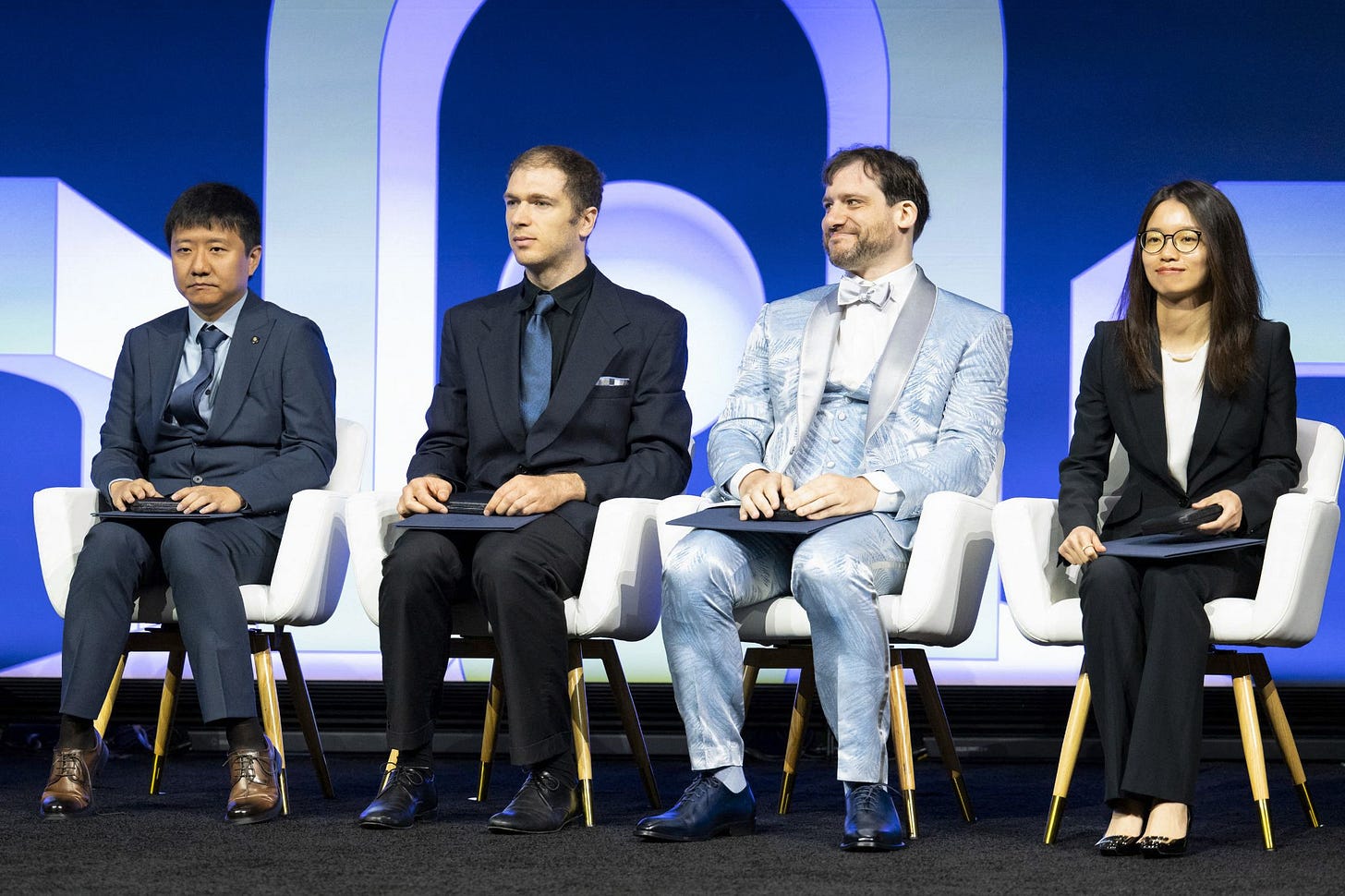
ユウ・デン、ジョン・パードン、ヤコブ・ツィメルマン、ホン・ワンの 4 人は、7 月 23 日にフィラデルフィアでフィールズ賞を受賞した直後、ステージ上で並んでいる。(写真:Erin Blewett/AFP via Getty Images)
7 月 23 日の記者会見には、国際数学者会議(ICM)でフィールズ賞や他の権威ある数学賞を受賞したばかりの数学者たちが登壇しました。高校生記者がパネルディスカッションに参加者たちに尋ねました。「AI システムが将来の数学における自分の居場所を狭めるかもしれないと不安に思っている学生たちに対して、何と言いますか?」
ツィメルマンは、若者たちが「世界がどうなるかわからないからこそ、学び続け自己研鑽を積んでほしい」と語りました。また、「AI は今後私たちの社会において大きな役割を果たすことになるので、それと向き合うべきだ」と学生たちに呼びかけました。
その一方で、彼は学生たちが AI が数学の職業に与える影響に関心を向けるべきだと考える点にも同意しました。「今の形のままでは存在しなくなると思います」とツィメルマンは述べています。
全員が同じ意見だったわけではありません。フィールズ賞を直前に受賞したシカゴ大学のユ・デン教授は、自分自身を「より楽観的な立場にいる」と表現しました。彼は「AI は数学者たちを置き換えるのではなく、支援するものになるだろう」と予測しています。
「将来予想されるのは、数学者たちが新しい理論やアイデア、新たな枠組みを生み出し、AI がその中の技術的な詳細部分を担うようになることです」とデンは語りました。「AI の能力は高まっていくでしょうが、私たちは『技術的な詳細』の定義を再設定することになるはずです。数学を学ぶ方法が変わることはあっても、数学を学ぶことから得られる喜びは変わらないと信じています。」
私は、ダン氏の見解に近い多くの数学者に話を聞きました。彼らは、歴史的に数学者たちが自動化とどう向き合ってきたかを、実質的に説明しているのです。
コンピュータが乗算や代数の操作といった特定の計算を容易にしたおかげで、人間はコンピュータでは解決できない新たな問題に取り組むことができるようになりました。
この考え方を、ジョーダン・エレンバーグ氏は 2014 年の著書『How Not to Be Wrong』の中で要約しています。彼は、機械が人間の知能を完全に凌駕して文明を終わらせるようなことがない限り、数学はきっと大丈夫だと述べています。
そもそも数学は、すでに数十年にわたってコンピュータの支援を受けてきました。かつては「研究」と見なされていた多くの計算も、今は 10 桁の数字を列挙する程度の作業と同じくらい創造性や称賛に値しないものと考えられています。ノートパソコンでできることなら、それはもう数学ではないのです。
しかし、それで数学者が職を失ったわけではありません。私たちは、拡大し続けるコンピュータの支配領域から、常にわずかに先を行くことに成功してきました。まるでアクションヒーローが火の玉を逃げるようにです。もし将来の機械知能が、私たちが現在「研究」として行っている仕事の多くを引き継ぐことになったとしても、それを「計算」へと再分類すればよいのです。
現在の AI は、2014 年のコンピュータよりもはるかに能力が高いものです。それでもなお、この考え方は、多くの数学者が自身の研究において現在の AI システムをどう捉えているかという実質的な姿勢と言えるでしょう。
私が最もよく耳にした利用ケースは、数学者が AI を活用して、自分には馴染みのない数学文献の分野から技法を学ぶというものです。
ブランダイス大学の大学院生、バシリー・ネクラソフ氏によると、以前は自分が知らない数学の分野のツールを使いたい場合、500ページにも及ぶ巨大な教科書をすべて読み通す必要がありました。しかし、その教科書が自分の特定の研究に適用できるかどうかは事前にわからないため、無駄になる可能性もありました。現在では AI が適切なリソースを即座に案内してくれるため、「自分がまさに学ぶ必要がある結果」に焦点を当てて読むことができ、より集中力とモチベーションが高まっていると感じています。
カーネギーメロン大学のジェレミー・アビガード教授は、多くの同僚がこのような形でシステムを利用していると話しました。数学的な結果を直接証明する AI システムに対しては脅威を感じる人もいますが、強力な検索エンジンとして機能する AI システムについては、「人々はそれほど脅威を感じない」と述べています。
一部の数学者からは、AI ツールを使って直接的に問題を解決したという声も聞かれました。ただし、それはより大きなプロジェクトの一部として行われたケースです。アロンソ・カスティージョ=ラミレス氏は、ChatGPT が自身の研究に関連する特殊な性質を持つセルオートマトンの例を構築できたことに驚きました。「通常のコンピュータプログラムでも見つけるのは非常に難しかったはずの例を、ChatGPT は提示してくれました」と彼は評価しました。ただし、ChatGPT によるこの例は、より広範な研究プロジェクトの一部に過ぎません。
ネクラソフ氏は、私が話を聞いた他の誰よりも積極的に AI を活用しています。文献検索や証明の穴埋め、論文のドラフトレビューなど多様な数学的タスクのために、月額200ドルを払って Codex を利用しています。しかし、彼にとって AI はあくまでツールとして機能しているに過ぎません。
「AI に証明を依頼しているときでも、ネクラソフは私にこう語りました。『まず頭の中に、このプロジェクトが何を目指し、何を扱い、どのような手法を用いるかというイメージを持っているものです』と。その後、AI に対して特定の論文を読み込み、一定のアプローチに従い、詳細を埋め合わせるよう指示します。
「最終的には自分のアイデアに取り組んでもらい、自分の考えをより速く処理する手助けをしてほしいのです。私のアイデアを置き換えてほしくはありません」
もちろん、楽観視していない人もいます。アビガドによると、キャリアの初期段階にある数学者たちは、まだ確立されていないため、分野の将来に対してより不安を抱きがちです。
AI システムが従来は大学院生に与えられて研究スキルを養うために解かれてきたような扱いやすい問題を解決できるようになれば、学生の教育はさらに難しくなる可能性があります。また、数学への資金提供のあり方にも影響が出るかもしれません。一般大衆が AI が人間の数学者を代替できると信じるようになれば、資金削減につながる恐れがあります。
マイケル・ハリスとロドリゴ・オチガメの二人は、この種の議論の例として、リソースを「レガシー」な研究機関から転換すべきだと主張するホワイトハウスの最近の報告書を私に紹介してくれました。その報告書では、数学における AI がケーススタディとして明確に言及されています。
全体として、数学分野における AI の進展がここで止まったとしても、その分野の根本的な構造は変わらないというのが私の見解です。人間の数学者たちは、AI が苦手とする「新しいアイデアを思いつくこと」のような作業に注力し、より日常的な業務については AI を活用して効率化を図るようになるでしょう。
しかし、数学における AI の進展がすぐに停滞する可能性は低いと考えられます。
複数の数学者から、「理論構築」、つまり新たな数学的定義や枠組みを考案することにおいて AI は苦手だろうという意見を聞きました。
この見解をツィーマーマン氏に伝えたところ、彼は懐疑的な態度を示しました。「AI が言語を話せるようになった当初も、『それでも数学はできない』と言われました。その後、『コンテストレベルの数学はできても、研究レベルの数学はできない』と言われるようになりました」とツィーマーマン氏は指摘します。「ゴールポストが予測可能な方向へと移動し続けているのです」。
Epoch AI の研究者で、AI の能力をベンチマークする仕事をしているグレッグ・バーンハム氏も同様の見解を示しました。「数学者たちが AI について語る際、彼らは往々にして『現在の能力に言及しながら、その能力がどこへ向かうのかの軌道を読み取ろうとしない』という、私たち多く人が非常に魅力的だと感じてしまう視点に陥るのです」とバーンハム氏は述べています。
AI システムが、根本的に新しいアイデアや理論を生み出すことのできない天井に到達する可能性もあれば、トレーニングの規模拡大に伴い、真に革新的な数学を扱えるようになるモデルが登場する可能性もある。バーナムの見解では、どちらのシナリオも現時点で得られている証拠と矛盾しない。
そのため、ツィメルマンのような数学者の中には、AI システムがすべての数学的タスクにおいて人間を超えていく可能性があると考える者もいる。AI は単に明確な問題の解決だけでなく、そもそも興味深い問いを立てる能力や、その解に至るために必要なアイデアを明確に説明する能力においても向上していくかもしれない。
価値観に関する問い
もしツィメルマンが正しく、数学に関連するすべての認知タスクにおいて AI がまもなく人間を超えるとすれば、それは人間の数学者を不要なものにしてしまうのだろうか?
先月の会議のハイライトの一つは、世界で最も有名な数学者の一人であるテレンス・タオによる、AI の進展に対して数学者がいかに応じるべきかという一般向け講演だった。タオは、数学者が研究を行う理由の一部を挙げた。
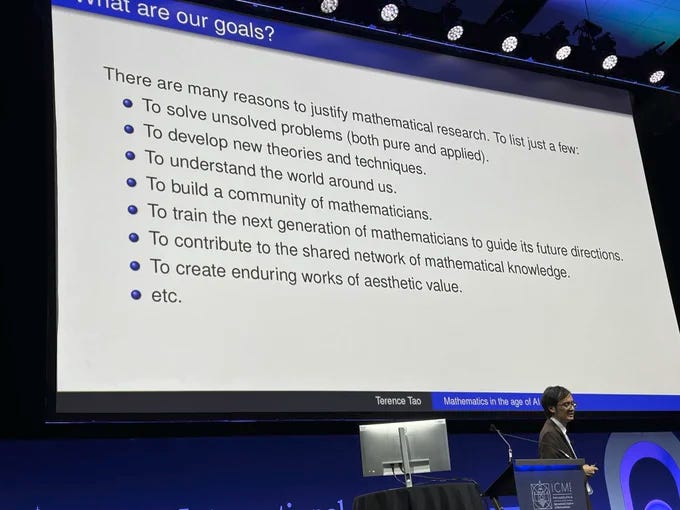
7 月 25 日、フィラデルフィアで行われた講演で、テレンス・タオは人々が数学的研究を行う理由の一部を挙げた。(写真:アレックス・コントロヴィッチ)
タオ氏は、これが唯一の理由ではないと指摘しました。「誰かが完全なリストをまとめたとは思いません」と彼は述べています。
長年、この状況は「まあ許容できる範囲」でした。数学者たちは一度に一つまたは二つの目標について議論することが多く、それらの目標はすべて互いに整合していました。難しい問題を解くことは、数学者が世界をより深く理解する手助けとなり、同じ問題に取り組む他の数学者たちとのコミュニティ形成にも寄与していたのです。
しかし、AI がこれらのサブゴール(特に未解決問題の解決)においてさらに能力を発揮するようになると、ある一つのサブゴールを追求することが「他の目標を犠牲にする」事態が生じかねません。
その後の講演でタオ氏は具体例を挙げました。
「私たちは、主要な結果が証明・検証されるものの、人間には理解や説明ができないというシナリオに、非常に近い段階に来ています」と彼は語りました。これは数学研究の問題解決という目標には近づきますが、分野に対する人間の理解にとってはマイナスとなるでしょう。
したがって、AI による混乱に対処するためには、数学者たちは数学が追うべき目標をより明確に定義する必要があるとタオ氏は主張します。
おそらく、定理証明や問題解決は、数学者にとって最も重要な目標ですらありません。有名な 1994 年の論文で、数学者のウィリアム・サーストンは、数学者が行っていることは「人々が数学を理解し、考えるための方法を見つけること」、特に社会の一員としてのコミュニティにおいてその役割を果たすことだと論じました。
サー・ウィリアム・サーストンが自身の経験から例を挙げています。キャリアの初期、彼は「葉状化」と呼ばれる数学の分野で次々と劇的な定理を証明し、大きな成果を上げました。しかし、定理の証明自体は得意だったものの、その背後にあるアイデアを他者に伝えることが苦手だったため、他の数学者たちはその分野から離れていきました。その結果、葉状化の研究を支えてきた社会的な構造が崩壊し、この分科領域は消滅してしまったのです。
サーストンはこう記しています。「人々が求めたのは答えだけだと私は考えていました。しかし、それは物語の一部に過ぎません。知識そのものよりも、人々は個人的な理解を求めているのです」
AI システムが同様に邪魔をする役割を果たすリスクも存在します。もし AI が重要な未解決問題を証明するようになった場合、特に人間の数学者には理解不能な方法で証明された場合、数学を深く考えるという動機が失われる恐れがあります。数学の最前線を果実ある形で探求する機会が減れば、若手数学者が取り組むべき課題も減ってしまいます。その結果、専門分野は次世代の育成に苦しみ、人類は既存の数学理論に対する理解を徐々に失っていくことになるでしょう。
数学者のティモシー・ガワーズは最近のブログ記事で、「数学文献が何らかの形で大幅に拡大される一方で、その一部を共有理解できる人間の専門家コミュニティが存在しない状況になりかねない」と警鐘を鳴らしています。現在の数学のほとんどが、今日ではほぼ忘れ去られた領域のように見えるかもしれません。それは数十年も前に書かれ、誰も読まなくなった論文の中に存在する分野と同じです。
しかし、AI が人間の数学的理解能力を増強する可能性もあります。
トロント大学のダニエル・リット教授は、「バベルの図書館における数学」というブログ記事で、より楽観的な展望を示しました。彼は「極端な」仮定例を提示しています。
すべての定理の証明と、質問を与えられた際に答えへと導き、その解説も行う優れたガイドが揃った図書館があったと想像してください。そのような図書館の中で数学者は何をするでしょうか?
このように問いかければ、答えは明白になります。彼らは驚くほど興奮し、すぐに作業を始めるでしょう。まず「リーマン予想はどう証明するのか?」「ホッジ予想は?」と質問し始めます。そして自分自身の執着するテーマ(私の場合はグロテンディーク=カッツ p-曲率予想)にも取り組み、答えを理解するまで働き続けるのです。その仕事は決して完了しません。まだ遠く及ばない段階です。
しかし、数学分野の再構築方法や、数学の本質的な価値を明確に定義する作業はまだ必要です。すべての問題を解決できる AI が登場しても、人間が数学を理解する機会を奪わないようにするためには、こうした取り組みが不可欠だからです。
AI の数学への影響に対する人間の応答を明文化しようとした試みの中で最も注目されているのが、「ライデン宣言」です。これは 2025 年 9 月の会議をきっかけに生まれました。序文の後に続く本文では、「共同で守るべき数学研究の特徴的な価値」がいくつか列挙されています。
宣言はその後、それぞれの価値に対する脅威を指摘し、個人や数学関連団体、政策決定者、そして AI 企業に向けた推奨事項を示しています。
しかし、ライデン宣言は、AI が社会に深く浸透した未来において数学がどうあるべきかという完全なビジョンというよりは、むしろ出発点と言えます。
やるべきことはまだ山積みです。ただし、数学者たちには分野の方向性を自ら形作る力も残されています。
「古いやり方で数学を行うことが生き残る可能性はないと思います」と数学者であり著者でもあるデヴィッド・ベッシー氏は語ります。「しかし、それにかわる何かが現れるでしょう」。それが具体的にどのような姿になるかは不明ですが、人々が数学に似た活動をし続ける根本的な理由があると考えています。
「私たちは依然として世界を理解したいと願い、数学そのものも理解したいと願っているのです。」
原文を表示
This is our first sponsored post! If you are a free subscriber, you’ll see an ad for our sponsor, 80,000 Hours, later in the article. If you a paid subscriber you will continue to enjoy an ad-free experience. Ads like this will allow us to produce more and better stories for all of our readers.
Subscribe now
To protect our editorial integrity, our advertisements follow five principles — click here to read them. If you’d like to sponsor one of our articles in the future, you can click here to learn about our audience.
— Timothy B. Lee
At a July 23 press conference in Philadelphia, the Canadian mathematician Jacob Tsimerman announced that he was joining the safety team at OpenAI. The timing was jarring: Tsimerman had just received a Fields Medal, perhaps math’s most prestigious prize.
“Because I have some publicity on me now,” he told me the next day, “I’m trying to direct people into AI safety as much as I can.”
Rapid AI progress hasn’t just made Tsimerman worried about AI safety; it’s also made him pessimistic about the future of mathematics as a profession.
Jacob Tsimerman. (Photo courtesy of the Simons Foundation. CC BY 4.0)
“I feel quite confident that very shortly AI will become robustly superhuman at what professional mathematicians currently do,” he told me. “I mostly want people to grapple with that reality.”
I had traveled to Philadelphia to attend the International Congress of Mathematicians (ICM), the world’s most prestigious math conference, because I wanted to find out how mathematicians felt about the rapid pace of AI progress in their field.
Three years ago, leading AI models struggled with arithmetic. Last year they reached near-parity with the world’s top high schoolers in math competitions.
Now AI systems are autonomously solving open problems that stumped human mathematicians for decades:
In May, an internal OpenAI model disproved the Erdős unit distance conjecture, which Princeton mathematician Noga Alon described as “arguably the best known problem” in the mathematical subfield of discrete geometry.
In July, a mathematician working at Anthropic tweeted that Claude Fable had found a counterexample to the Jacobian conjecture in higher dimensions.
On Saturday, OpenAI announced that an internal version of Astra, its next major model family, had “solved ten major open problems” — including several “of broad interest across mathematics as a whole.”
Developments like these have led some to claim that mathematics is close to being “solved” by AI systems.
How do mathematicians feel about this? I spoke with over 20 mathematicians in Philadelphia, ranging from prominent professors such as Tsimerman to incoming graduate students.
To my surprise, many were optimistic about the impact of AI on their own work, at least in the near future. A fair number said that AI systems had been helpful in their own research — albeit in limited ways — and seemed to expect that AI systems would continue to complement human talent rather than replace it.
And even those who thought AI systems might eventually get better than humans at all mathematical tasks bristled at the notion that math would then be “solved.” They argued that mathematics has a diverse array of goals and values, only some of which are about solving open problems. While AI can change which values humans should pursue, they argued, it does not change why humans might want to do math in the first place.
The traditional response to automation
Yu Deng, John Pardon, Jacob Tsimerman, and Hong Wang sit onstage after receiving their Fields Medals in Philadelphia on July 23. (Photo by Erin Blewett/AFP via Getty Images)
That July 23 press conference featured mathematicians who had just won a Fields Medal or another prestigious math award at the ICM. A high school reporter asked each panelist what they would tell students anxious that AI systems might narrow their future place in mathematics.
Tsimerman said he wanted young people to keep “learning and improving themselves because you don’t know how the world will turn out.” He encouraged students to “engage with AI because it’s going to be a big part of our world going forward.”
At the same time, he thought students were right to pay attention to how AI is disrupting the math profession. “I don’t think it’ll exist the way it exists right now,” he said.
Not everyone agreed. Yu Deng, a University of Chicago professor who also just won a Fields Medal, described himself as “on the more optimistic side.” He predicted that “AI is going to be helping mathematicians instead of replacing them.”
“What we may expect in the future is that mathematicians will come up with new theories, new ideas, new frameworks and the AI is going to do some of the technical details,” Deng said. “The AI will get stronger, but then we’ll redefine what are technical details. I believe that the way we study math will change, but the joy we get from studying math will not change.”
I spoke to many mathematicians whose views were close to Deng’s; he was effectively describing how mathematicians have historically dealt with automation. As computers have made certain types of calculations easy — like multiplication or algebraic manipulations — humans have been able to find new problems computers can’t solve.
The mathematician Jordan Ellenberg encapsulated this viewpoint in his 2014 book How Not to Be Wrong. He wrote that unless machines completely surpass humans’ mental powers and end civilization, math will probably be fine.
After all, math has already been computer aided for decades. Many calculations that once would have counted as “research” are now considered no more creative or praiseworthy than adding a series of ten-digit numbers; once your laptop can do it, it’s not mathematics anymore.
But this hasn’t put mathematicians out of work. We’ve managed to stay just ahead of the ever increasing sphere of computer dominance, like action heroes outracing a fireball. And if machine intelligences of the future can take over from us much of the work we know as research now? We’ll reclassify that research as “computation.”
Today’s AI is far more capable than computers in 2014. Still, this viewpoint seems to be functionally how a lot of mathematicians think about current AI systems in their own research.
The most common use case I heard about was mathematicians using AI to learn about techniques from unfamiliar areas of the mathematical literature.
The Brandeis grad student Vasiliy Neckrasov said that previously, if he wanted to use tools from an unfamiliar area of math, he’d have to read through “a giant textbook for 500 pages.” Going in, he wouldn’t know if the textbook applied to his specific research, so it might be a waste. Today, AI can quickly point him to the right resources — and he feels “more focused, more motivated” reading them “because I really needed to learn exactly these” results.
Jeremy Avigad, a professor at Carnegie Mellon, told me that a lot of colleagues use systems this way. He said that “people feel less threatened” by AI systems that serve as powerful search engines than AI systems directly proving mathematical results.
Some mathematicians told me they’d used AI tools to directly solve problems — but only as part of a larger project. Alonso Castillo-Ramirez said that ChatGPT had been able to construct an example of a cellular automaton that had special properties relevant to his research. He was impressed. “Otherwise, even with a computer program, it would have been very difficult to find” the example. But ChatGPT’s example was only one part of a larger research project.
Neckrasov uses AI more aggressively than anyone else I talked to. He pays $200 per month to use Codex for a variety of mathematical tasks like searching the literature, filling gaps in proofs, and reviewing drafts of his papers. But he still uses it as a tool.
“Even if I’m asking the AI to prove something,” Neckrasov told me, “I first have a picture in my head of what this project will be, what it is about, and what methods” to use. He then instructs the AI to read certain papers, follow a certain approach, and fill out the details.
“I want it just to work on my ideas at the end, and help me to process my own ideas faster, rather than replace my own ideas.”
Of course, not everyone is optimistic. Mathematicians earlier in their careers are generally more anxious about the future of the field because they are less established, Avigad said.
Educating students may grow more difficult as AI systems become capable of solving the kinds of tractable problems traditionally given to graduate students to help them develop research skills. And AI could have implications for how mathematics is funded. If the broader public believes that AI can replace human mathematicians, that might lead to funding cuts.
Two people — Michael Harris and Rodrigo Ochigame — pointed me toward a recent White House report that argued for redirecting resources away from “legacy” research institutions as an example of this type of rhetoric. The report explicitly mentioned AI in mathematics as a case study.
But overall, my sense is that if AI progress in mathematics stopped now, the fundamental structure of the field would stay the same. Human mathematicians would lean into the kinds of mathematical work that AI is not good at — like coming up with novel ideas — while using AI to accelerate the more routine parts of their jobs.
AI is (probably) going to keep getting better
However, it seems unlikely that AI progress in mathematics will stall soon.
Several mathematicians told me they thought that AI would not be good at “theory-building” — that is, coming up with novel mathematical definitions and frameworks.
When I raised this possibility to Tsimerman, he was skeptical.
“People said the same thing first about why even though it can speak, it will never do math. And then the same thing about, even though it can do contest math, it’ll never do research math.” The goalposts keep moving in a predictable direction, he said.
Greg Burnham, a researcher at Epoch AI who works on benchmarking AI capabilities, had a similar view. “Sometimes when I hear mathematicians talk about AI, they’ll fall into the same perspective that I think a lot of us find very tempting, which is to comment on current capabilities without trying to understand the trajectory of where capabilities might go,” he said.
AI systems could hit a ceiling where they can’t come up with fundamentally novel ideas or theories. But it’s also easy to imagine that as AI training continues to scale up, models will become capable of genuinely novel mathematics. In Burnham’s view, either scenario is consistent with the evidence we have so far.
So some mathematicians, such as Tsimerman, think it’s possible that AI systems become better than humans at all mathematical tasks. AI might get better not just at solving well-posed math problems, but also at asking interesting questions in the first place — and at clearly explaining the ideas necessary to reach those solutions.
The values question
Suppose Tsimerman is right and AI will soon become better than human beings at all cognitive tasks related to mathematics. Will that render human mathematicians obsolete?
One of the highlights of last month’s conference was a public lecture by Terence Tao — perhaps the most famous mathematician in the world — on how mathematicians should respond to AI progress. Tao listed some of the reasons why mathematicians do research:
During a July 25 lecture in Philadelphia, Terence Tao listed some of the reasons people perform mathematical research. (Photo by Alex Kontorovich.)
Tao noted that these weren’t the only reasons: “I don’t think that anyone has compiled a complete list.”
For a long time, this was “kind of fine,” he said. Mathematicians would mostly talk about one or two goals at a time, but all of the goals were “aligned.” Solving a difficult problem helped a mathematician understand the world better — and helped to build a community with other mathematicians working on the same problem.
But as AI gets better at some of these subgoals — notably at solving open problems — pursuing one subgoal can be “at the expense of others.”
Later in the talk, Tao gave an example.
“We are very, very close to a scenario in which a major result gets proved and verified and no human can understand and explain it,” he said. Even though this would bring mathematics closer to the goal of solving research problems, it would hurt human understanding of the subject.
So mathematicians need to articulate more clearly what goals mathematics should pursue, Tao argued, to deal with the disruption from AI.
Arguably, theorem proving and problem solving aren’t even the most important goals for mathematicians. In a famous 1994 essay, the mathematician William Thurston argued that what mathematicians are doing “is finding ways for people to understand and think about mathematics,” especially as members of a social community.
Thurston gave an example from his own life. Early in his career, he quickly proved a string of “dramatic theorems” in an area of mathematics called foliations. However, because he was so successful at proving the theorems — and significantly less successful at communicating the ideas behind his proofs — other mathematicians evacuated the field. The end result was that the social structure that had supported research into foliations collapsed and the subfield died.
“I had the conception that what people wanted was to know the answers,” Thurston wrote. “That’s only one part of the story. More than the knowledge, people want personal understanding.”
There’s a risk that AI systems could play a similar spoiler role. If they prove important open problems in mathematics — especially in ways that are impenetrable to human mathematicians — that could remove the motivation for people to think deeply about math. With fewer opportunities to fruitfully explore the frontiers of mathematics, there would be less for younger mathematicians to do. The profession would struggle to train the next generation, and humanity would gradually lose its understanding of existing mathematical theories.
As mathematician Timothy Gowers wrote in a recent blog post, “we might arrive at a situation where the mathematical literature has, in some form, been vastly expanded, but there is no corresponding community of human experts who have a shared understanding of parts of it. Almost all of mathematics would be like the areas that we have more or less forgotten about today, areas that exist in papers written many decades ago that nobody reads any more.”
But it may also be possible that AI augments humans’ ability to understand mathematics.
The University of Toronto professor Daniel Litt gave a more optimistic vision in his blog post Mathematics in the Library of Babel. He considered an “extreme” hypothetical example.
Suppose we had a library filled with proofs of every theorem [in mathematics], as well as excellent guides that could, given a question, take us to the answer and explain it. What would a mathematician do in such a library?
If you ask the question this way, the answer becomes clear: they would be unbelievably excited, and immediately get to work. They would immediately start asking questions: how does one prove the Riemann hypothesis? The Hodge conjecture? Their own pet obsession (in my case, the Grothendieck-Katz p-curvature conjecture)? Then they would work until they understood the answer. The job would not be done, not even close.
But there is still work to be done on how to restructure the field of mathematics — and clearly articulate mathematical values — so that an AI capable of solving all problems does not prevent humans from understanding mathematics as well.
The most prominent attempt to articulate a human response to AI’s impact on mathematics has been the Leiden Declaration, which arose from a September 2025 conference. After a preamble, the declaration lists several “characteristic values of mathematical research that we have a joint interest in preserving.”
The declaration then lists threats to each of these values, followed by recommendations to individuals, mathematical organizations, policymakers, and AI companies.
But the Leiden Declaration is more of a starting point than a complete vision for what the future of math would look like in a deeply different world.
There is work to be done. But mathematicians have some agency to shape the direction of the field.
“I don’t think there is a possibility of the old way of doing mathematics surviving,” mathematician and author David Bessis said. But “something will emerge” to take its place. He doesn’t know exactly what it will look like, but he thinks there are fundamental reasons that people will continue to do something that looks like math.
“We still want to understand the world and we still want to understand mathematics.”
同じ出来事を2媒体で確認
同じ出来事を扱う別媒体の記事です。見出しと公開時刻を比較できます。
今日のまとめ
AIデイリーブリーフで今日の重要ニュースをまとめ読み