Luma AIの新画像モデルUni-1、論理ベンチマークでNano Banana 2とGPT Image 1.5を上回る
本文の状態
日本語全文を表示中
詳細モードで約1分の本文を読めます。
同じ出来事の情報源
この情報源を基点に整理
The Decoder
Luma AIが、画像理解と生成を単一アーキテクチャで統合し、プロンプトを推論しながら生成するモデル「Uni-1」を発表した。同モデルは論理ベンチマークでOpenAIとGoogleのモデルを上回った。
Source Article
元記事を日本語で読む
本文に関係しない購読案内、埋め込み通知、サイト内プロモーションは除いています。
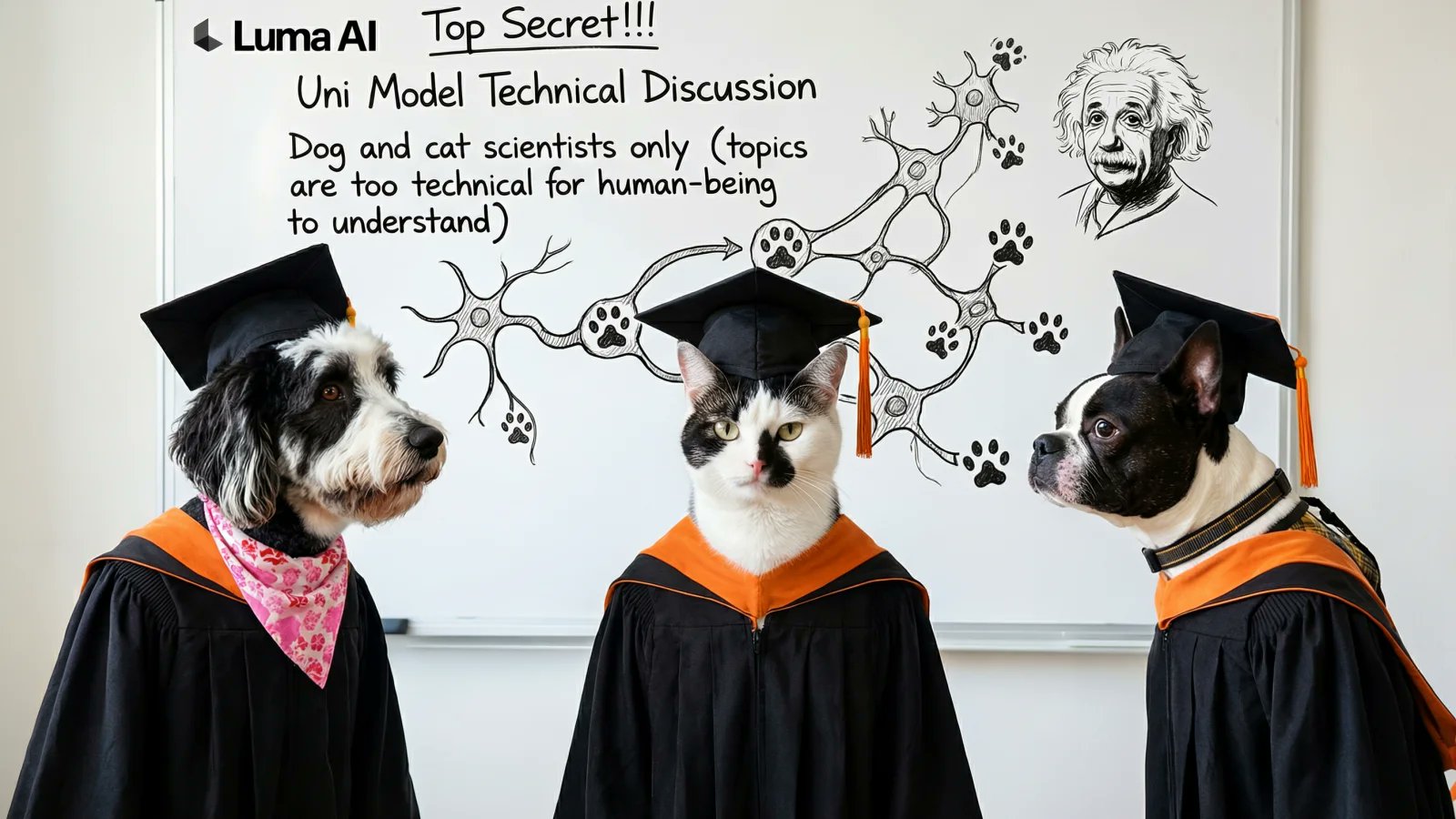
Luma AIは、画像理解と生成を単一のアーキテクチャに統合し、生成プロセスの中でプロンプトを推論するモデル「Uni-1」を発表。これによりOpenAIとGoogleへの対抗を鮮明にした。
この記事「Luma AIの新画像モデルUni-1、論理ベンチマークでNano Banana 2とGPT Image 1.5を上回る」は、The Decoderで最初に公開されました。
原文を表示
Skip to content
Read full article about: OpenAI's Codex now watches your screen to remember what you're working on
OpenAI rolled out Chronicle for its Codex app. The feature uses screen recordings to build memories Codex taps into as context for future tasks, so it knows what users are referring to, which tools they're using, and what projects they're working on without a fresh explanation each time.
Chronicle runs in the background, with AI agents turning recordings into summaries saved locally as Markdown files. The recordings are kept temporarily and, per OpenAI, deleted after six hours.
It's launching as an opt-in preview for ChatGPT Pro subscribers on macOS, but isn't available in the EU, UK, or Switzerland. Users enable it in Codex settings under "Personalization" by turning on "Memories" and then "Chronicle," and granting macOS screen recording and accessibility permissions.
OpenAI warns that Chronicle burns through rate limits quickly, raises the risk of prompt injection attacks—malicious instructions smuggled in through displayed websites—and stores memories unencrypted on the device.
Google builds elite team to close the coding gap with Anthropic
Google is doubling down on AI coding and betting on models that can eventually improve themselves. Sergey Brin is once again leading the charge to keep Google’s AI competitive.
Read full article about: Google plans nearly two million new AI chips as it turns to Marvell for custom designs
Google is in talks with chip designer Marvell Technology to develop two new specialized chips for its data centers, according to The Information, citing two sources. One of the chips is a memory processing unit designed to run alongside Google's in-house TPUs (Tensor Processing Units) and split AI tasks based on compute and memory demands. The other is a new TPU built specifically for inference - running finished AI models.
Google plans to produce nearly two million memory processing units, with the design expected to be finalized by next year. Marvell is a natural partner for Google: the company already designed the first inference chip for the startup Groq. Nvidia licensed Groq's LPU technology (Language Processing Unit) in December 2025 for $20 billion and used it to unveil the Groq 3 LPU and the Groq 3 LPX rack system at GTC 2026. Groq founder Jonathan Ross previously worked at Google and is one of the original TPU engineers.
The move is also about reducing Google's dependence on its current chip design partner Broadcom, which charges high per-unit fees for each TPU produced. Broadcom remains an important partner for now, though, having signed a new contract with Google through 2031 in early April.
Salesforce bets on "Agent Albert" to prove AI won't kill enterprise software
Wall Street worries AI could make traditional enterprise software obsolete. Salesforce CEO Marc Benioff is pushing back with a new AI product and a homegrown metric.
Read full article about: The NSA is using Anthropic's most powerful AI model Mythos
The NSA, the US intelligence agency responsible for electronic surveillance, is using Anthropic's most powerful AI model, "Mythos Preview." That's according to Axios, citing two sources. The Pentagon has classified Anthropic as a security risk and has been trying since February to block the company as a vendor. The NSA, notably, falls under the Pentagon's authority. In court filings, the Defense Department has even argued that Anthropic's tools pose a threat to national security.
Anthropic has restricted access to Mythos to around 40 organizations as part of "Project Glasswing," arguing that the model's offensive cyber capabilities are too dangerous for a broad release. That framing has drawn some skepticism, though.
Anthropic CEO Dario Amodei met with White House officials last week to discuss deploying Mythos across government agencies. The Pentagon demanded that Anthropic make Claude available for "all legal purposes." Anthropic refused, drawing the line at mass surveillance and autonomous weapons.
The UK's intelligence services also have access to the model through the country's AI Security Institute, according to Axios.
Read full article about: Anthropic's revenue surge reportedly fuels talk of trillion-dollar valuation
Anthropic has dramatically accelerated its revenue growth. According to The Information, the company's annualized revenue topped $30 billion "earlier this month," more than triple what it was at the end of last year. That could put Anthropic slightly ahead of OpenAI, though the numbers aren't directly comparable. The growth is being driven by Claude Code and Cowork, likely along with rising token sales from reasoning models.
Margins have also improved sharply. Gross margins swung from minus 94 percent in 2024 to plus 40 percent the following year, while annualized revenue jumped from under $1 billion to $9 billion. That kind of momentum let Anthropic set tough terms for its September 2025 funding round, with investors expected to commit checks in the hundreds of millions.
Two people familiar with the company say no new funding rounds are planned for now. If one does happen, it won't be before a board meeting in May at the earliest, The Information reports. CFO Krishna Rao and his team have reportedly already fielded offers valuing the company at $800 billion, and some investors think a trillion-dollar valuation is within reach.
Read full article about: German court rules AI comic adaptation of copyrighted photo doesn't violate the original
Turning someone else's photo into a comic with AI doesn't automatically violate copyright. That's the ruling from a German Higher Regional Court on April 2, 2026 (case no. I-20 W 2/26). An animal photographer who sells underwater dog shots sued a former business partner who had fed her photo of a diving dog into AI software and posted the comic-style result on its website.
The original photo (left) and the AI comic adaptation (right), which the court ruled is legal. | Decision of April 2, 2026 (case no. I-20 W 2/26)
The court denied the appeal, finding that the AI image doesn't copy the protectable elements of the original, such as framing, perspective, lighting, and sharpness. The motif and subject themselves aren't protected. The judges cited a recent European Court of Justice ruling that focuses on the recognizable adoption of specific creative elements rather than the overall impression.
The court also clarified that AI-generated works only qualify for copyright protection when a human makes recognizably creative decisions; picking an AI suggestion or typing generic prompts isn't enough. The decision aligns with earlier rulings from other German courts and echoes the position of the US Copyright Office.
News to Guide
ニュースの次に確認する
発表内容を、現在の料金や仕様と照らし合わせられる関連ガイドです。
今日のまとめ
AIデイリーブリーフで今日の重要ニュースをまとめ読み