Chai Discovery創業者がAI×製薬の転換点と2年での40億ドル評価を語る
本文の状態
日本語全文を表示中
詳細モードで約6分の本文を読めます。
同じ出来事の情報源
この情報源を基点に整理
Latent Space
Chai Discovery は JPM Pharma 会議で OpenAI の支援を受け、2 年目の若手企業でありながら AI ツール開発に成功し、医薬品設計の信頼性向上と新機能の実現を可能にした。
Continue in AI NEW LAB
このニュースを、実務の判断につなげる
AI NEW LABで、試したことや先に確認したい条件を共有できます。まずはログインなしで読めます。
AI NEW LABで論点を見るAI深層分析を開く2026年8月12日 06:33
AI深層分析
キーポイント
JPM Pharma での大型ツール契約の相次ぎ発表
1 月に開催された JPM Pharma 会議で、4 つの大手 AI×医薬品ツールの契約が発表され、Chai Discovery がその中心に位置した。
AI ツール開発から自社パイプライン構築への転換
従来の AI for Pharma 企業はツール販売の証明として自社で薬を開発する傾向があったが、Chai Discovery はツールの信頼性向上によりこのパラダイムシフトを促した。
設計品質の飛躍的向上による新機能の実現
モデル品質の向上は単なる効率化ではなく、実験室ベースでは不可能だった抗体設計や双特異性抗体の開発といった新しい機能を可能にした。
設計からエンジニアリングへの転換
初期段階で優れた分子を獲得できる技術は実験回数を減らし、反復時間を短縮することで科学をエンジニアリングへと変える。
構造モデルから結合モデルへ
構造予測から分子間の結合親和性を評価する結合モデルへの進化が設計可能性をUnlockし、製品性能の向上に寄与している。
重要な引用
The fact that the quality of the model has jumped means you’re enabling things you just plain couldn’t do.
It’s a step change. It’s not an efficiency argument at all, or not so much.
"This turns science into engineering: you can design your systems to reduce friction and hill climb towards one-shotting molecules all the way to the clinic."
"So rather than doing research in a vacuum, based on what would hypothetically be cool, we're able to do informed research based on what our partners have just been organically asking us for help with."
編集コメントを表示
編集コメント
Chai Discovery のような若手企業が、設立間もないにもかかわらず業界の中心に躍り出た事実は、AI ツールの成熟度が劇的に向上した証左である。編集者は、この変化が医薬品開発のパラダイムを根本から変える可能性を強く示唆していると評価する。
Source Article
元記事を日本語で読む
本文に関係しない購読案内、埋め込み通知、サイト内プロモーションは除いています。
今年 1 月、毎年サンフランシスコを席巻する大規模な JPM ファーマカンファレンスで、4 つの大手 AI×製薬ツール契約が発表されました。その中で OpenAI の支援を受ける Chai Discovery(現在時価総額 40 億ドル)は、設立からわずか 2 年という若さにもかかわらず、中心的存在として注目を集めました。
Science チームでは、共同創業者のマット・マクパートン氏とプロダクトリーダーのニール・パティル氏を迎えた初のポッドキャストをお届けします。Chai Discovery の全貌を詳しくお伝えします!
編集者注:当社のトップポッドの一つである Chai AI と混同しないでください。
製薬業界における大規模な AI ツール契約の台頭
製薬業界に詳しくない方のために補足すると、JPM は JP モルガンが主催する製薬業界向けの年次カンファレンスです。毎年 1 月にサンフランシスコを約 1 週間席巻し、数百ものサイドイベントが開催される大規模な行事です。
また、製薬業界におけるツール契約も近年大きなトレンドとなっています。AI を活用した製薬スタートアップは、多くの場合、自社で創薬パイプラインを構築する方向へ転換します。その背景には以下のような事情があります。製薬企業に自社のツールを採用してもらうためには、「ツールの有効性」を実証する必要があります。つまり、確かな標的(ターゲット)や、臨床検証データなどの裏付けが求められるのです。
もしそのような実績があれば、特定の標的に対して資金調達を行う(商業化までの道は長いものの既知のリスクがあるため)か、あるいはバイオバックス(製薬業界での通貨のようなもの)による支払いで売却する方が、自社ポートフォリオ全体にわたって効果が期待できるという約束だけで多数の企業に販売するよりも容易になります。
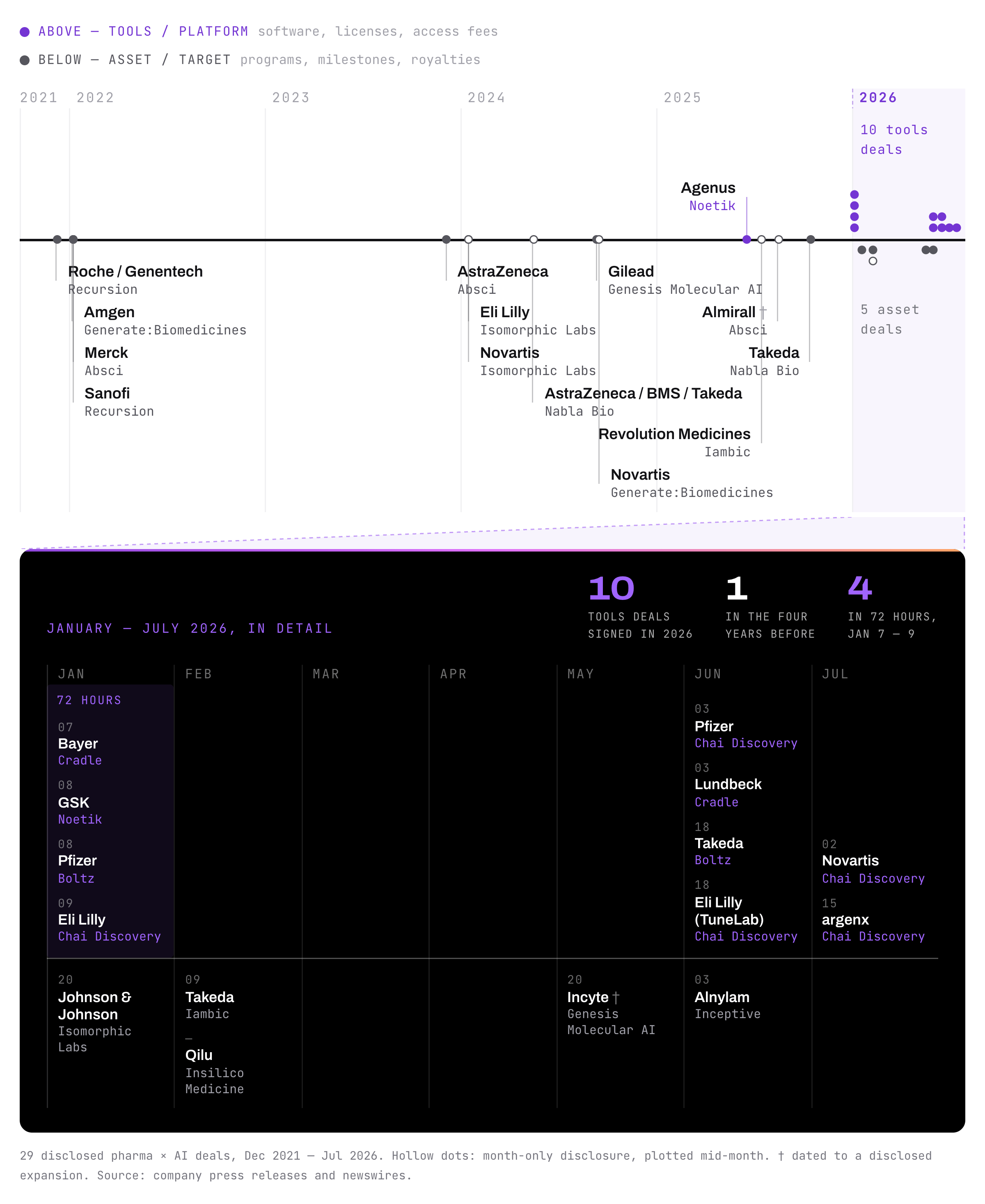
「自社開発か他社との提携か」という選択肢が、1 月まで唯一の正解でした。何が変化したのでしょうか?一言で言えば、ツールが信頼に値するレベルに達したからです。
この「信頼できるレベル」の実現により、創薬プロセスのスケーリングが可能になります。より多くの、質の高い候補物質を迅速に実験室や動物実験へと送り出し、毒性スクリーニングの強化や薬剤送達システムの改善などが実現します。その結果、臨床試験に進む候補が成功する確率が格段に高まります。
さらに、ツールは新たな可能性も開きます。従来のラボベースの探索手法では極めて困難、あるいは不可能だったメカニズムの実現です。特定の分子カスケードを正確にトリガーする抗体を設計するには、何年もの試行錯誤が必要でした。2 つの異なるタンパク質に結合するビスペシフィック抗体の設計も同様に難易度が高いものです。優れた設計ツールがあれば、こうした課題も解決可能です。
RJ: モデルの品質が飛躍的に向上したという事実は、それまで不可能だったことを可能にするという意味です。これは単なる効率化の話ではなく、段階的な改善を超えた「ステップチェンジ」なのです。
マット:はい、まさにその通りです。私たち自身にとっても興味深いことですが、この仮説を信じるようになるまでには時間がかかりました。Chai を設立する前から Josh と数ヶ月間話し合っていました。「マウスモデルで勝てるか」そして「マウスにはできないことができるか」、さらにその上にどれだけのレベルの相互作用を重ねていけるのか——そんな問いが続きました。
構造や結合領域で活動している企業は皆、それぞれの視点を持っていますが、優劣はあります。しかし Chai が目指すのは異なる突破口です。最初から良質な分子を生成できれば(つまり実験室での試行錯誤が少なくて済む)、イテレーションのスピードが格段に上がります。これにより科学がエンジニアリングへと転換します。摩擦を減らし、一度で臨床まで到達できる分子へと「ヒルクライム」するシステムを設計できるようになるのです。
これは本質的に新しい仮説ではありません。a16z は 2020 年に同様の見解を提示していました。変化しているのは、構造モデルが結合モデル(ある分子が別の分子とどれだけよく結合するか、すなわち「結合親和性」)へと進化し、設計の可能性が開かれた点です。この技術は着実に向上しています。Chai の観察によれば、エンジニアリング課題においては優れたプロダクトが勝者となり、良い技術は必要条件ではあっても十分条件ではありません。
Photoshop for molecules2
こうした認識のもと、Chai は製薬企業の知見から学ぶためのパートナーシップに積極的に投資しています。
多くのパートナーと密接に連携し、支援を行うことで得られる最大のメリットは、研究において何が本当に役立つかを深く理解できる点にあります。仮に「面白そうだから」という理由だけで真空状態の研究を進めるのではなく、パートナーが実際に必要としている課題に基づいた、根拠のある研究が可能になるのです。
— ニール・パティル(Chai プロダクトリード)
これは、チャットボットではなく CAD やグラフィックデザインツールに近い分子エディターなど、より優れたユーザー体験の実現を意味します。
このアプローチは実を結びました。6 月以来、Chai は Lilly、ノバルティス、argenx と新たに 3 つの大型契約を締結し、Eli Lily のプログラムも拡大しました。今回のエピソードには紹介すべき名場面が盛りだくさんで、短いブログ記事にまとめるのは不可能です。ぜひ直接お聞きください。
- なぜタンパク質トークンが他のどのトークンよりも下流での価値が高いのか
- モデルの進化に伴い、抽象度の高いレベルへと昇華していくプロセス
- 製薬企業、ベンチャーキャピタル、研究機関がいずれも「ポートフォリオ最適化」の一環に過ぎないという視点
- 技術の向上がポートフォリオ全体をどう変えるか
- シンプルさへの執拗な追求がいかにスケールへとつながるか
その他にも盛りだくさんの内容です!
1 "バイオバックス"とは、マイルストーン型のライセンス契約における取引価値のことです。 headline となる金額(例:「17 億ドルの契約」)は、ほぼすべてが目標達成に依存しています。通常、 upfront の割合は全体の 2〜5% に過ぎず、残りは薬が各段階をクリアした際にのみ支払われます。しかし、多くの薬はその壁を越えられません。
2 実は SolidWorks の方がより適切な比喩ですが、PhotoShop の方がブランド認知度が高いのであえてこちらを使いました ¯\_(ツ)_/¯
原文を表示
This January, four big AI × Pharma tools deals were announced at the huge JPM Pharma conference that takes over San Francisco every year. OpenAI-backed Chai Discovery (now worth $4B) was somehow at the heart despite being all of 2 years old.
The Science team is proud to bring you the first podcast with cofounder Matt McPartlon and product lead Neil Patil to tell the full story!
Editor’s note: not to be confused with Chai AI, which was another top pod of ours.
Pharma suddenly doing big AI tools deals
For the non-pharma people, JPM is JP Morgan’s annual conference for pharma deal-making that takes over San Francisco for a week in January with hundreds of side events, etc. It’s a big thing.
Tools deals for pharma are also a big (new) thing: companies that start as AI for Pharma usually end up building their own drug pipelines instead, and the reason is something like this: convincing pharma to use your tool requires proof that your tool works. Proof means good targets, maybe with good clinical validation. If you have that, then it’s easier to raise money (with a known, if long path to commercialization) or sell (e.g payment in biobucks1) for a specific target than it is to sell to lots of companies on a promise that it will work across their portfolios.
The “we’ll just partner / build our own drug” optionality proved to be the only good path up until January. What changed? In short, the tools got good enough for drug design teams to trust.
Good-enough-to-trust unlocks the ability to scale discovery: get more, better candidates into the lab and animal trials faster. More screening for toxicity, better delivery, etc. This means that what you push to the clinic is more likely to succeed.
Tools also unlock new capabilities: mechanisms that are very hard or impossible to develop using lab-based discovery. Designing an antibody that precisely triggers a very specific molecular cascade takes many years of trial and error. Designing bi-specific antibodies (that bind to two different proteins) is similarly difficult. Good design tools can unlock this.
RJ: The fact that the quality of the model has jumped means you’re enabling things you just plain couldn’t do. So it’s a step change. It’s not an efficiency argument at all, or not so much.
Matt: Yeah, exactly. It’s kind of interesting, even for us — it took me a while to believe in the thesis, actually. I talked to Josh for months before Chai started... It’s like, can I beat a mouse, and then can I do what mice can’t do? And then how many levels of interaction can you just keep building on top of that?
Everyone playing in the structural / binding space has an angle here, and some will be better than others, but Chai is pointing to a different unlock: getting good molecules right out of the gate (meaning they don’t then need as much lab work) means that the iteration time is faster. This turns science into engineering: you can design your systems to reduce friction and hill climb towards one-shotting molecules all the way to the clinic.
This, per-se, is not a new thesis: a16z articulated a version of this in 2020. What has changed is that structural models became binding models (how well doesn’t this molecule bind to this molecule, aka “binding affinity). Binding models unlock design, which has been steadily improving. Chai’s observation is that for engineering problems the best product tends to win, and good technology is a necessary but not sufficient condition.
Photoshop for molecules2
With that in mind Chai has invested heavily in partnerships that allow them to learn from their Pharma counterparts.
What is kind of cool about working so closely and supporting so many of these partners is we get to really learn about what is the stuff that would be helpful in research. So rather than doing research in a vacuum, based on what would hypothetically be cool, we're able to do informed research based on what our partners have just been organically asking us for help with.
— Neil Patil, (Chai product lead)
This means better UX, such as a molecule editor that is more like a CAD or graphics design program than a chatbot.
Their approach has paid off: since June, Chai has announced three more major deals: Lilly, Novartis, argenx, plus an expansion of their Eli Lily program. This episode is too full of quotable moments for a short blog, so tune in to learn about
Why protein tokens have the highest downstream value of any token
Climbing levels of abstraction as models improve
How Pharma, VC, and research are all just portfolio optimization
How better tech changes the whole portfolio
How relentless focus on simplicity leads to scale
Plus much more!
1"Biobucks" is deal-value for milestone-heavy licensing agreements — the headline number (e.g., "$1.7B deal") is almost entirely contingent on hitting targets. Typically only 2–5% of the total is upfront; the rest pays out only if the drug clears each gate, and most drugs don't.
2I actually think SolidWorks is a better analogy, but PhotoShop has better brand recognition ¯\_(ツ)_/¯
今日のまとめ
AIデイリーブリーフで今日の重要ニュースをまとめ読み