スタンフォード大、医療データ分析や実験設計を支援する AI ラボパートナー「Biomni」を開発
本文の状態
日本語全文を表示中
詳細モードで約7分の本文を読めます。
同じ出来事の情報源
この情報源を基点に整理
Stanford HAI News
スタンフォード大学の研究チームは、複数の学部門と企業との連携により、医療データ分析から実験設計までを自律的に実行する汎用 AI エージェント「Biomni」を開発し、オープンソースで公開した。
AI深層分析を開く2026年8月4日 18:38
AI深層分析
キーポイント
Biomni の開発主体と目的
スタンフォード大学の学者らが中心となり、生物医学研究の加速を目的として、人間科学者と協働する仮想 AI 生物学者「Biomni」を開発した。
技術的構成と機能
クラウドベースのプラットフォームであり、150 以上の専門バイオインフォマティクスツールや 59 のキュレートデータベースを統合し、大規模言語モデルによる推論で未知タスクも実行可能である。
コラボレーション体制
スタンフォード大学内の複数の学部に加え、Genentech や Arc Institute といった外部組織からの貢献を受け、学際的な知見を反映している。
科学者による監視と制御機能
科学者は計画を確認し、Biomni の活動各段階を監視して介入できるため、作業の履歴が失われる心配はない。
複雑なタスクでの高いパフォーマンス
開発中に遭遇していない8つの現実的なシナリオでも良好に機能し、ドメイン横断的な一般化能力を示した。
重要な引用
Biomni is a real partner in biomedical research
While human biologists are limited by specialized expertise, AI can integrate across disciplines and manage thousands of concurrent tasks.
"Biomni is a real partner in biomedical research," says Jure Leskovec, professor of computer science at Stanford and Biomni co-creator.
Scientists no longer have to worry about losing the history of their work in notebooks and Excel spreadsheets.
編集コメントを表示
編集コメント
この発表は、単なるツール提供を超え、AI が研究者の対等なパートナーとして機能する新たな研究パラダイムを示唆している。特に学術機関と製薬企業が連携して開発した点が注目され、今後の産業応用への道筋を明確に示すものである。
Source Article
元記事を日本語で読む
本文に関係しない購読案内、埋め込み通知、サイト内プロモーションは除いています。
Biomni は膨大な医療データを分析し、人間が見落としがちなパターンを特定し、実験計画の立案まで行うことで、研究者が病気の根治に向けた競争でより迅速に発見を行えるよう支援します。
生物学や医学を研究する多くの科学者にとって、画期的な成果は複雑な実験、膨大なデータセット、そして増え続ける専門的なソフトウェアツールに依存しています。この作業には往々にして進捗を妨げる反復的なタスクや分断された手順が伴います。
スタンフォード大学の研究者チームは、人間の科学者と並走する仮想の AI 生物学者を生み出すことで、生体医学分野での発見を加速させる道を見つけました。このプロジェクトの一部は Stanford HAI Hoffman-Yee Research Grant の助成金によって支援されており、チームは幅広い生体医学研究タスクを実行可能な汎用 AI エージェント「Biomni」を開発しました。
このオープンソースプロジェクトには、スタンフォード大学のコンピュータサイエンス学科、遺伝学部門、病理学部、医学部、小児科の専門知識が取り入れられており、さらに Genentech、Arc Institute、ワシントン大学、カリフォルニア大学サンフランシスコ校からの貢献も含まれています。
「現在、バイオメディカルデータは溢れていますが、それを分析できる人間の研究者が不足しています」と語るのは、スタンフォード大学の元博士課程生で、Biomni の共同開発者の一人である Kexin Huang 氏です。「専門知識に制約される人間生物学者とは異なり、AI は学問分野を横断して統合し、数千もの並行タスクを管理できます。」
科学者にとっての超能力
Biomni はクラウドベースのプラットフォームで、主に2つの要素から構成されています。1つは研究タスクに関連するすべての処理を行うバーチャルな作業環境、もう1つが追加学習なしで未知のタスクも実行できるエージェント型アーキテクチャです。このプラットフォームは、大規模言語モデルと150 以上の専門バイオインフォマティクスツールを組み合わせるとともに、タンパク質構造やゲノム変異、文献リポジトリなどを含む 59 の厳選データベース、さらに分子モデリングや単細胞解析などに用いる 100 以上のソフトウェアパッケージを統合しています。
Biomni と共同研究を行うには、科学者がエージェントのチャットウィンドウにクエリを入力します。例えば、ユーザーは「添付された Perturb-seq データを分析し、意味のある仮説を生成してください」といったオープンエンドな依頼から始めることができます。
エージェントはまず、タスク完了に必要な最も関連性の高いツールを検索します。次に、LLM による推論と生体医学分野への理解を活用して計画を立案します。科学者はこの計画を確認でき、データ分析や実験実行の各ステップで Biomni の活動を追跡できます。必要に応じていつでも介入し、進路修正を行うことも可能です。
「Biomni は生物医学研究における真のパートナーです」と語るのは、Stanford 大学のコンピュータサイエンス教授であり Biomni の共同開発者である Jure Leskovec です。「科学者がエージェントにタスクを与えると、エージェントは高度なモデルやツールを活用するための Python コードを記述します。その結果、作業は完全に文書化され監査可能なデジタル対話へと変わります。科学者はもはや、ノートや Excel スプレッドシートで作業の履歴が失われることを心配する必要はありません。」
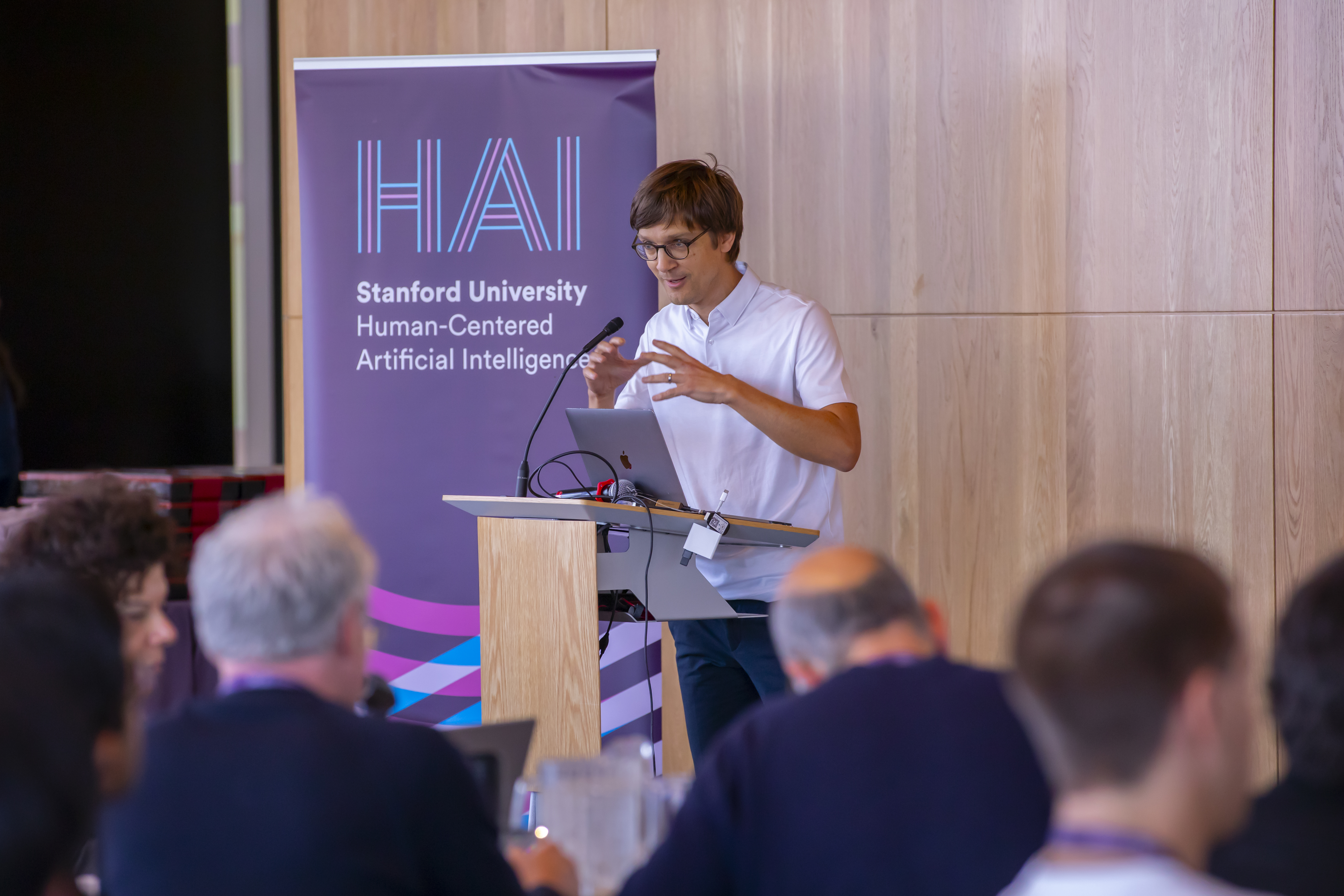
Jure Leskovec(Biomni 共同開発者、Stanford 大学コンピュータサイエンス教授)
複雑なタスクでも高いパフォーマンス
オープンソースのスタンフォード大学プロジェクトとして稼働してからの最初の9ヶ月間、Biomniは1万5000人以上の科学者から利用され、検証可能な仮説の策定や複雑なバイオインフォマティクス解析、厳密な実験プロトコルの設計など、10万件に及ぶ異なる科学的ワークフローの自動化を請け負いました。
初期テストでは、Biomniは生物医学知識および推論に関する既存のQ&Aベンチマークで卓越した成績を収めました。さらに開発段階で一度も遭遇したことのない8つの困難かつ現実的なシナリオでも高い性能を発揮し、タスク固有のトレーニングなしにドメインを超えて汎化できることを示しています。
Biomniの開発チームは、その可能性を示すいくつかの事例を紹介しています。最初のケースでは、研究者が30人の参加者が数ヶ月間にわたって継続血糖モニターを装着したデータを含む458件のExcelファイルの分析をBiomniに指示しました。そして「生物学的に意味のある熱生成パターンを発見できるでしょうか」というオープンエンドな質問を投げかけました。Biomniは自律的に10段階の分析計画を策定し実行。血糖値の上昇から食事イベントを推測し、食前・食後の体温データを抽出。個々のデータの詳細と集団レベルの傾向を明確にした構造化された読みやすいレポートとして結果を提示しました。
他の事例でも、Biomniはゲノム配列を含む膨大な生データセットを迅速に分析して新たな知見を生み出し、実験室研究者をサポートする実験プロトコルの設計を行いました。
「これらのユースケースすべてにおいて、Biomni は生々しい実世界のデータから検証可能な仮説へと至る道筋を加速し、代謝研究や精密医療など多様な分野での応用を支えてきました」と黄氏は語ります。
Biomni はデータベース照会、配列解析、分子クローニングなどの一部のタスクにおいて人間並みの性能を発揮していますが、研究者たちは、微妙な臨床判断や新規の実験的根拠、深い生物学的思考と統合を要する領域では依然として苦戦している点を指摘しています。また、すべての分野を網羅しているわけではありません。
それでもなお、Biomni は仮想 AI 生物学者が人間の研究者と共に働き、バイオメディカル研究の加速を実現する時代の幕開けを告げるものとなりました。2025 年 9 月、チームは Biomni をスタンフォード AI ラボから独立させ、商業世界へと送り出しました。シードラウンドでのベンチャーキャピタルからの資金調達も完了しています。現在、黄氏が立ち上げたスタートアップ「Phylo」の CEO を務め、レスコベック氏は科学共同創設者として引き続き関与しています。元の公開プラットフォームは新法人へ移行し、「Biomni Lab」として再出発しました。また、大学向けに「Academic Lab Program」も提供されています。コードベースは引き続き完全オープンソースで維持されます。
「Biomni によって、仮想 AI 生物学者が人間の科学者と並んで働き、その能力を補完することで、研究生産性や臨床洞察、医療の質を劇的に向上させる未来を構想しています」とレスコベック氏は語ります。「科学発見にとって、まさにエキサイティングな時代です。」
*続きを読む:*
オミクスデータ駆動型の生物学的発見における AI 科学者のベンチマーク
Biomni:汎用バイオメディカル AI エージェント
統合生物学環境:生物学者の新しい働き方
Leskovec は、工学部の初代アルフレッド・アンドレア・リン教授である。
原文を表示
Biomni can analyze mountains of medical data, spot patterns humans might miss, and even design experiments—helping researchers make discoveries faster in the race to cure disease.
For many scientists who study biology and medicine, breakthroughs depend on complex lab experiments, massive datasets, and a growing number of specialized software tools. This work often involves repetitive tasks and fragmented procedures that slow progress.
A team of Stanford scholars saw a way to accelerate biomedical discovery by creating a virtual AI biologist that operates alongside human scientists. Funded in part by a Stanford HAI Hoffman-Yee Research Grant, the team built Biomni, a general-purpose biomedical AI agent that can execute a wide range of biomedical research tasks.
The open-source project incorporates expertise from the Stanford departments of Computer Science, Genetics, Pathology, Medicine, and Pediatrics – as well as contributions from Genentech, Arc Institute, the University of Washington, and the University of California, San Francisco.
“Today, we have abundant biomedical data, but we don’t have enough human researchers to analyze it all,” says Kexin Huang, a former Stanford PhD candidate and one of the co-creators of Biomni. “While human biologists are limited by specialized expertise, AI can integrate across disciplines and manage thousands of concurrent tasks.”
A Superpower for Human Scientists
Biomni is a cloud-based platform that consists of two main components: a virtual work environment, where all actions related to a research task are handled, and an agentic architecture that enables the AI biologist to perform new tasks that it hasn’t encountered before without additional training. The platform combines large language models with more than 150 specialized bioinformatics tools; 59 curated databases containing protein structures, genomic variants, and literature repositories; and more than 100 software packages for molecular modeling, single-cell analysis, and the like.
To collaborate with Biomni, the scientist enters a query into the agent’s chat window. For example, the user might begin with an open-ended request, such as: “Analyze the attached Perturb-seq data and generate a meaningful hypothesis.” The agent begins by finding the most relevant tools needed to complete the task. Next, it applies LLM-based reasoning and its understanding of the biomedical field to formulate a plan. The scientist can review the plan and monitor Biomni’s activity each step of the way, as it analyzes data or runs an experiment, intervening at any time to course-correct.
“Biomni is a real partner in biomedical research,” says Jure Leskovec, professor of computer science at Stanford and Biomni co-creator. “You give the agent a task, and it writes Python code to use the advanced models and tools. From there, the assignment becomes a digital conversation that’s fully documented and auditable. Scientists no longer have to worry about losing the history of their work in notebooks and Excel spreadsheets.”
*
Jure Leskovec, Biomni co-creator and a Stanford professor of computer scientist.*
High Performance Across Complex Tasks
In Biomni’s first nine months as an open-source Stanford project, more than 15,000 scientists asked the AI research assistant to automate 100,000 different scientific workflows, such as formulating testable hypotheses, performing complex bioinformatics analyses, and designing rigorous experimental protocols.
In its initial testing, Biomni excelled on established Q&A benchmarks for biomedical knowledge and reasoning. It also performed well on eight challenging, realistic scenarios never encountered during development, indicating it can generalize across domains without task-specific training.
Biomni’s creators highlight several case studies to demonstrate its potential. In the first situation, a researcher instructed Biomni to analyze 458 Excel files containing data from 30 participants who wore continuous glucose monitors for several months. The researcher then posed an open-ended question: “Can we uncover biologically meaningful thermogenic patterns?” Biomni autonomously generated and executed a 10-step analysis plan. It inferred meal events from glucose spikes and extracted pre- and post-meal body temperature readings, presenting the results in a structured, readable report that detailed individual data and teased out population-level trends.
In other case studies, Biomni rapidly analyzed massive raw datasets containing genomic sequences to generate novel insights and designed laboratory protocols to assist wet-lab researchers.
“Across each of these use cases, Biomni accelerated the path from messy real-world data to testable hypotheses, and supported applications in domains as diverse as metabolic research and precision health,” Huang says.
Although Biomni approaches human-level performance in some tasks, such as database querying, sequence analysis, and molecular cloning, the scholars note it still struggles in areas that require nuanced clinical judgment, novel experimental reasons, or deep biological thinking and synthesis. It also doesn’t cover every field.
Even so, Biomni has set the stage for an era when virtual AI biologists will work alongside human researchers to accelerate biomedical discovery. In September 2025, the team spun Biomni out of the Stanford AI Lab and into the commercial world, with a seed round of venture funding. Huang now leads the startup, called Phylo, while Leskovec remains involved as scientific co-founder. The original public platform has migrated to the new entity as Biomni Lab, with an Academic Lab Program available to universities. The codebase remains fully open source.
“With Biomni, we envision a future where virtual AI biologists operate alongside and augment human scientists to dramatically enhance research productivity, clinical insight, and healthcare,” says Leskovec. “It’s an exciting time for scientific discovery.”
*Read more:*
- Benchmarking AI scientists for omics data–driven biological discovery
- Biomni: A General Purpose Biomedical AI Agent
- The Integrated Biology Environment: A New Way Biologists Work
*Leskovec is the inaugural Alfred and Rebecca Lin Professor in the School of Engineering.*
AI算出
主要ニュースainew評価高い
記事は医療データ分析と実験設計を支援する専用 AI ラボパートナー「Biomni」の開発を発表しており、AI が主題であるため ai_relevance は最高値。同クラスターに先行記事がない新規発表であり、具体的な機能や利用実績(1.5 万人以上)が記載されているため novelty は高い。製品名「Biomni」が明確なため search_opportunity も高く評価される。日本企業との直接的な関わりや国内特有の情報が少ないため japan_relevance は低め。
6つの評価軸を見る
- AI関連度
- 100
- 情報源の信頼性
- 100
- 新規性
- 75
- 調べる価値
- 75
- 重複の少なさ
- 100
- 日本での有用性
- 25
今日のまとめ
AIデイリーブリーフで今日の重要ニュースをまとめ読み