ARC プライズ 2026:ARC-AGI-3 マイルストーン賞第 1 号発表
本文の状態
日本語全文を表示中
詳細モードで約7分の本文を読めます。
同じ出来事の情報源
この情報源を基点に整理
ARC Prize
ARC プライズ主催の ARC-AGI-3 評価基準において、人工知能の汎用性向上を目指すマイルストーン賞の第 1 号受賞者が発表された。
AI深層分析を開く2026年8月1日 14:17
AI深層分析
キーポイント
ARC-AGI-3 ベンチマークの特性
これは記憶ではなく即時学習と効率的な探索を評価する、ゲームのようなインタラクティブ環境で構成された初のベンチマークである。
優勝作品「The Duck」の仕組み
Tufa Labs の「The Duck」は、ゲーム状態を Python 変数に変換し、REPL でコードを実行・実行結果を確認するループを通じて課題を解決する。
コンテキスト管理と哲学
同作品は古いメッセージを削除して無限にプレイ可能にする手法を採用し、手製のツールよりもマルチモーダル性と基盤モデルの向上が成果につながったと報告している。
Tufa Labs の独自アプローチ
この提出は唯一「エージェントがコードを記述する」手法を採用しており、他社とは異なる。手製のツールよりもモデルに任せて臨機応変に対応させた方が結果が良いことが示された。
Reki のビジョン言語モデル戦略
Reki はGemma-4-31B を用いた「ビジョンLLM-as-policy」エージェントであり、各ターンで画像を解析してJSONアクションを返す。環境変数による切り替え可能な機能や、無駄なクリックを防ぐヒューリスティックが特徴だ。
重要な引用
ARC-AGI-3 is our first Interactive Reasoning Benchmark.
Solving them is easy (and even fun) for humans, but remains hard for today's AI.
The Duck continuously pops the oldest messages ('infinite play via eviction'), keeping only the system prompt and recent history.
"counterintuitively, hand-crafted tools actually hurt the model; letting it improvise worked better."
編集コメントを表示
編集コメント
ARC-AGI-3 の結果は、AI が静的な知識だけでなく、動的な環境で適応する能力をいかに獲得するかという課題への重要な一歩を示している。特にコード実行を推論の手段として活用する手法は、実世界の問題解決に向けた新たな可能性を開くものである。
Source Article
元記事を日本語で読む
本文に関係しない購読案内、埋め込み通知、サイト内プロモーションは除いています。
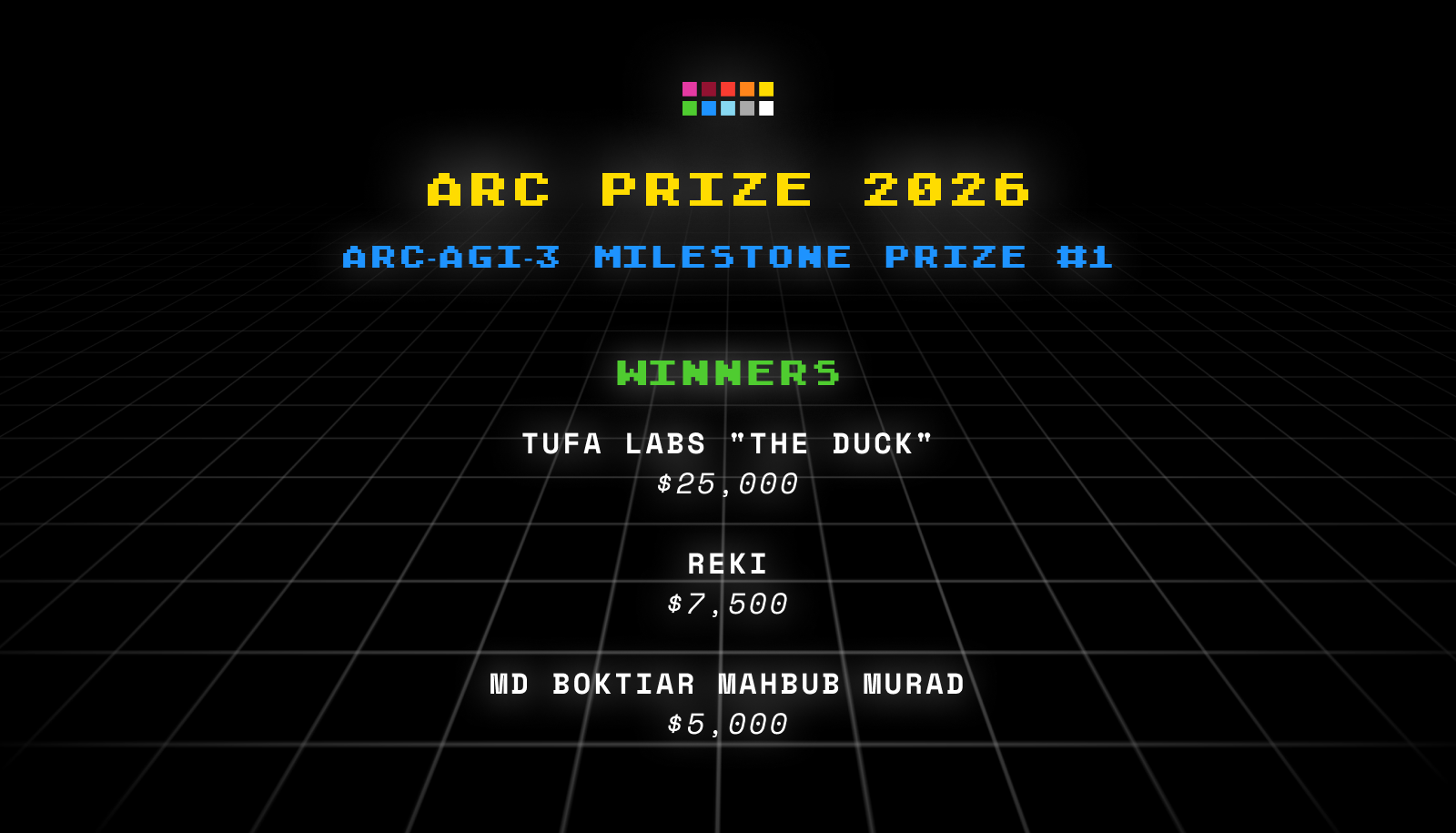 image ARC-AGI-3 マイルストーン 1 の上位 3 つの提出作品
ARC-AGI-3 は、私たちが初めて公開するインタラクティブ推論ベンチマークです。これはエージェントが知覚し、探索し、計画を立て、長い時間軸にわたって行動しなければならない、新しいビデオゲームのような環境のセットです。隠されたホールドアウトセットがあるため、これらのゲームを単に暗記することはできません。重要なのは、その場で学習することや効率的な探索、そして目標が明確でない場合に自分自身でゴールを設定する能力です。人間にとっては解決しやすく(むしろ楽しい)課題ですが、現在の AI にとってはまだ難しいものです。
2026 年の ARC Prize では新たに、ARC-AGI-3 の競争中盤における優れたオープンソースソリューションを表彰する 2 つのマイルストーン賞を導入しました。これは新しいアイデアに挑戦する人を鼓舞し、そのアイデアをさらに発展させるためのインセンティブとなることを目的としています。
私たちは、6 月 30 日までの期間で開催された最初の 37,500 ドルの ARC-AGI-3 マイルストーン賞 を授与できることを嬉しく思います。以下は、ARC-AGI-3 Kaggle コンペティション での上位 3 つの提出作品です。
1 位 - Tufa Labs、「The Duck」
ARC-AGI-3 をプレイするために、ライブ REPL(Duke Harness に似た環境)で Python コードを記述して実行する、小型のオープンソース LLM です。各ゲームはインタラクティブなコーディング問題として扱われます。
Notebook · 解説記事 · 動画 · Tufa Labs
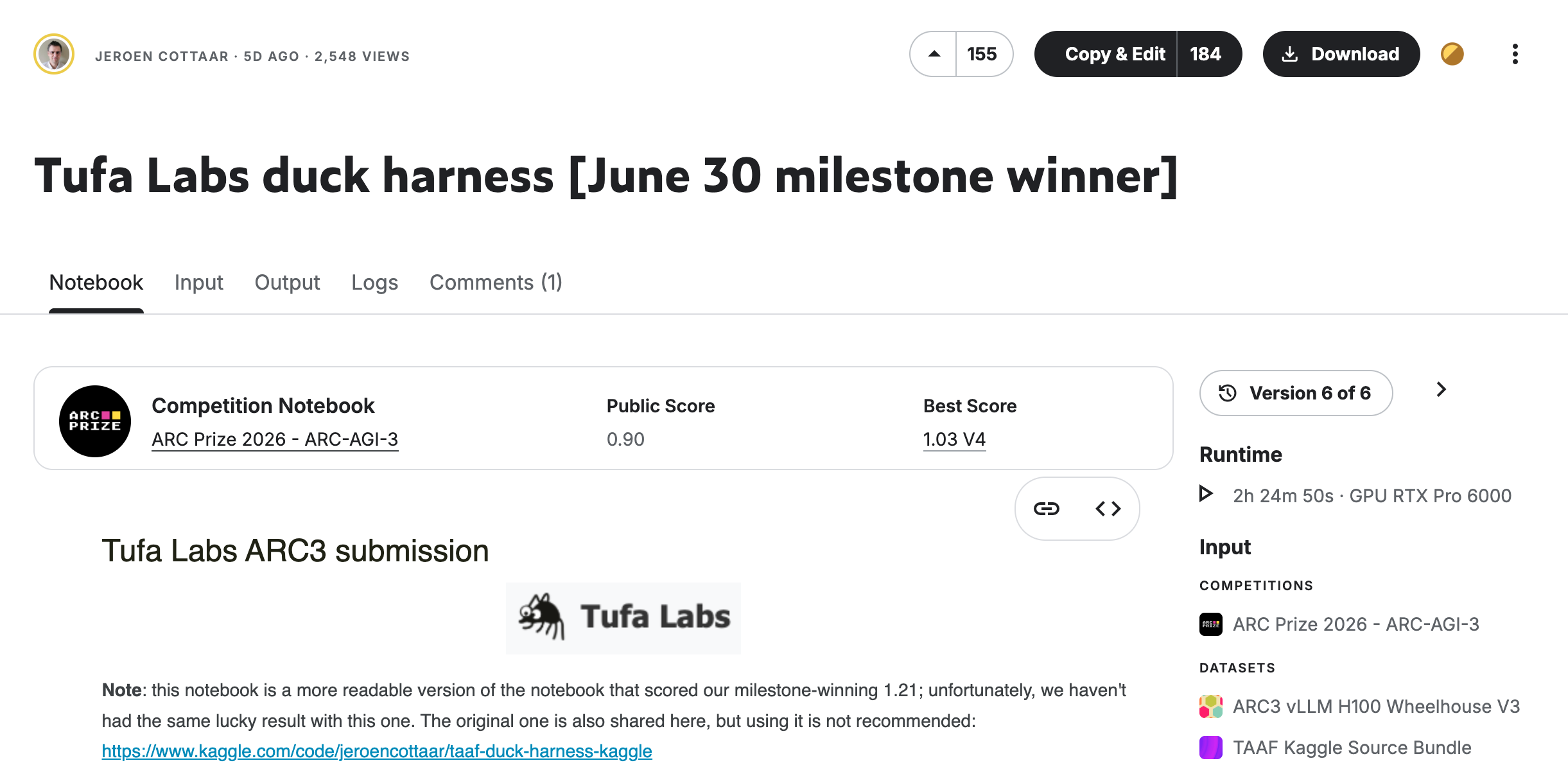
この提出作品は、ゲームの状態を Python の変数に変換し、REPL(対話型シェル)を通じて操作するアプローチを採用しています。具体的には、推論を行い、ヘルパー関数を呼び出し、コードを実行して行動を起こし、その結果を確認するという一連のプロセスを繰り返します。盤面認識にはレンダリングされた画像、生テキストのグリッドデータ、そして特定の領域にズームインするためのセグメンテーションツールを活用し、状況に応じて最適な表現方法を選択します。
コンテキストウィンドウ(記憶容量)を枯渇させることなく無限にゲームを進めるため、「Duck」は古いメッセージから順次削除する「eviction(追放)」メカニズムを採用しています。これにより、システムプロンプトと直近の履歴のみが保持されます。チームの哲学は、ハーンネス(基盤)を軽量かつ汎用的に保ち、モデル自体に主導権を持たせることにあります。彼らが得た成果は、手製のツールによるものではなく、マルチモーダル性の向上とより高性能なベースモデルのおかげであると報告しています。
この提出作品の詳細については、ぜひ Tufa の解説記事 を直接ご参照ください。
注目点:
- 今回受賞した作品の中で、唯一「エージェントがコードを記述する」アプローチを採用しています。他の 2 つの受賞作は単に「JSON のアクションを選択する」という手法でした。
「Stochastic Goose」の精神的後継作であり、同作は前期の ARC-AGI-3 エージェント予選コンペティションで優勝しました。
Qwen 3.6 27B FP8 をローカル環境で実行します。Tufa Labs は直感に反する結果として、手作業で作成したツールがモデルのパフォーマンスをむしろ低下させたと指摘しています。むしろ、モデル自身に即興させる方が優れた結果をもたらしました。
Machine Learning Street Talk で紹介されました。
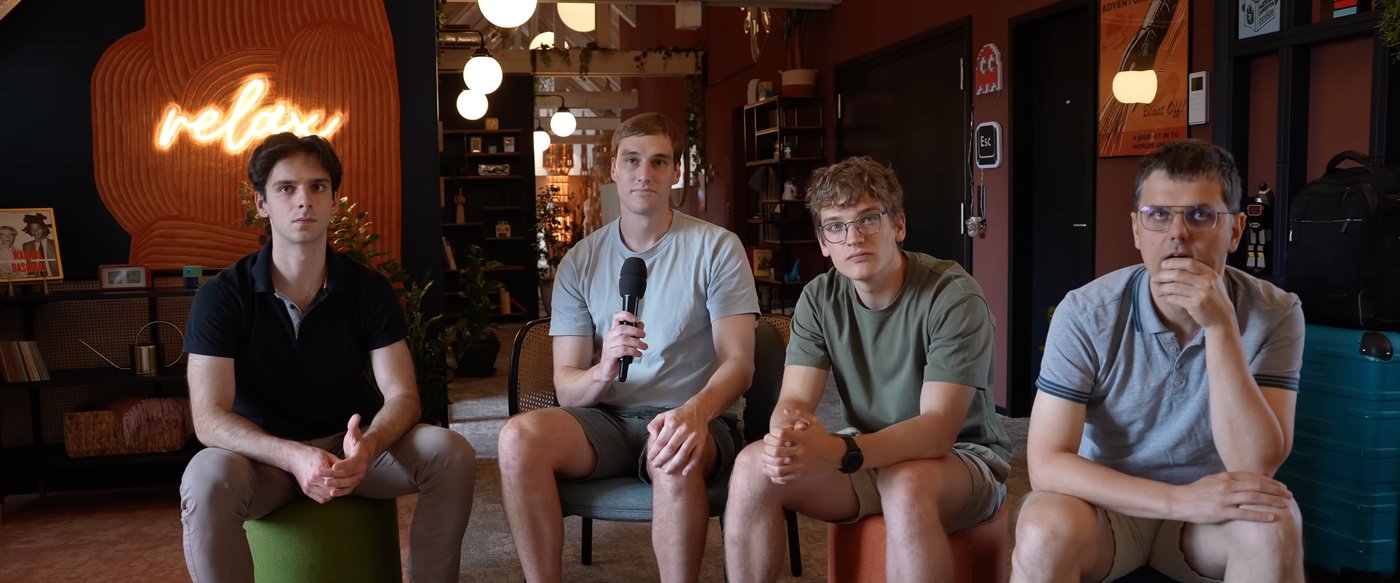 imageTufa Labs チームは Machine Learning Street Talk に出演しました。
2nd Place - Reki
ゲーム盤面の画像を解析し、1 ステップごとに JSON 形式のアクションを 1 つ返すビジョン言語モデルです。
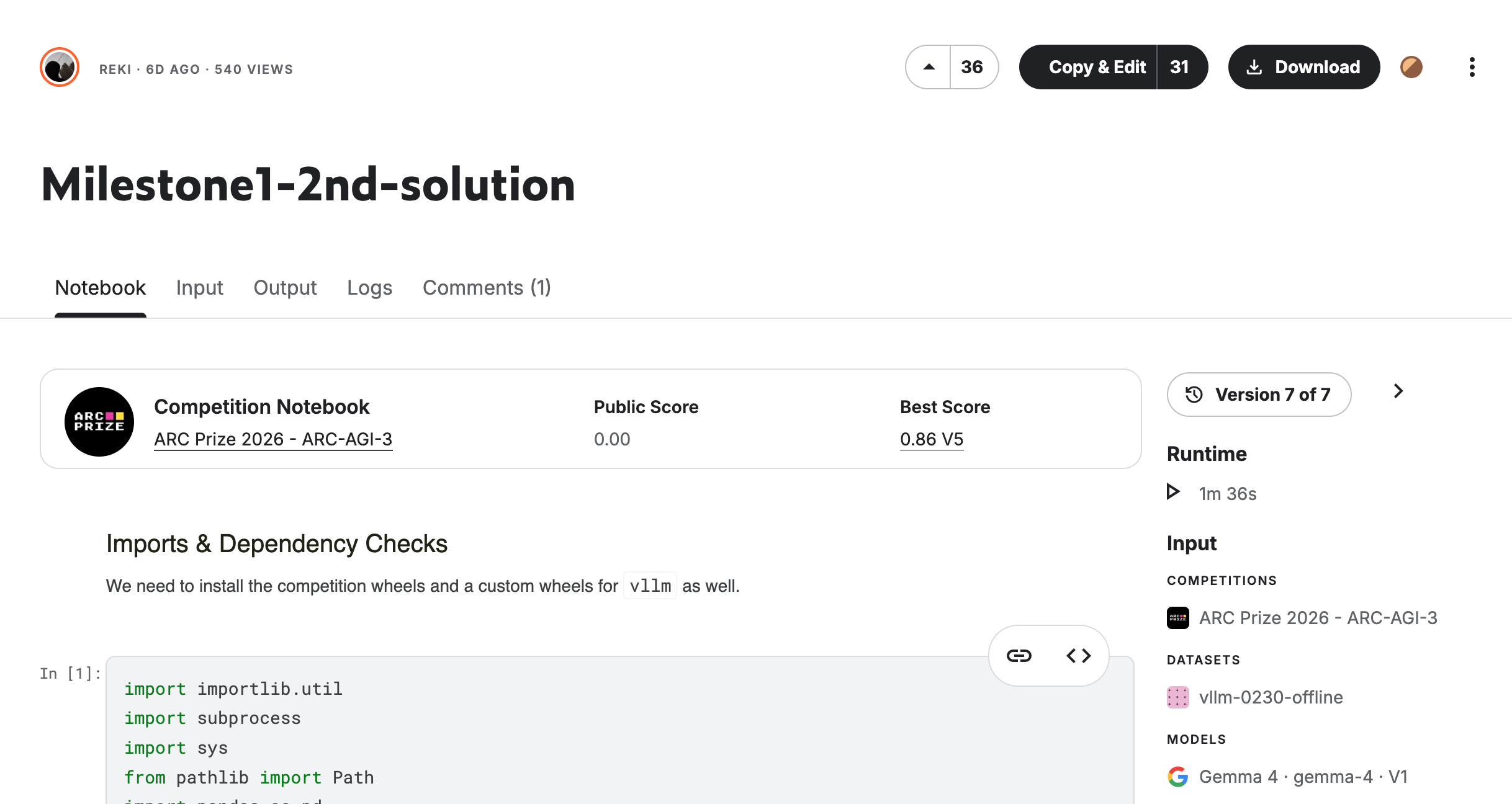
このシステムの核となるのは「ビジョン LLM-as-policy」エージェントです。各ターンで直近のフレームをラベル付き画像としてレンダリングし、Gemma-4-31B をローカル環境に読み込んで、変化点の説明、短い計画、そして次に行う 1〜4 のアクションを記述した JSON オブジェクトを生成させます。また、約 10 ステップごとに更新される継続的な反省メモリも保持しています。
さらに、NumPy を用いたクリックのヒューリスティック機構(GPU は不要)も実装されています。ハードコードされたルールにより、フォールバックや探索的なクリックでは、ランダムなピクセルではなく、小さく、希少な色を持つ、ボタン状の形状が優先されます。「Dead-signature」機能は、特定の種類のオブジェクトをクリックしても何の変化もない状態を検知し、そのレベルの残りで無駄なクリックを停止します。これらは環境変数で切り替え可能です。
何が興味深いのか:
公式の ARC プライズ GPT-OSS-120B テンプレートに基づいて構築されています。Reki チームはモデルを Gemma-4-31B に差し替えました。
アブレーション実験(要因ごとの効果検証)が容易にできるよう設計されており、環境変数で個々の機能やトリックのオンオフを切り替えることができます。これにより、各変更の影響を直接測定することが可能です。
JSON の自己修復機能、法的措置に関する制約、1〜4 段階のアクションプランキュー、そして反省(リフレクション)メモリーも実装されています。
3 位 - Md Boktiar Mahbub Murad 氏「forge」
2 位の Reki チームと同じく、「盤面を見て JSON アクションを返す」エージェントですが、設定可能なフレームワークとしてパッケージ化されています。
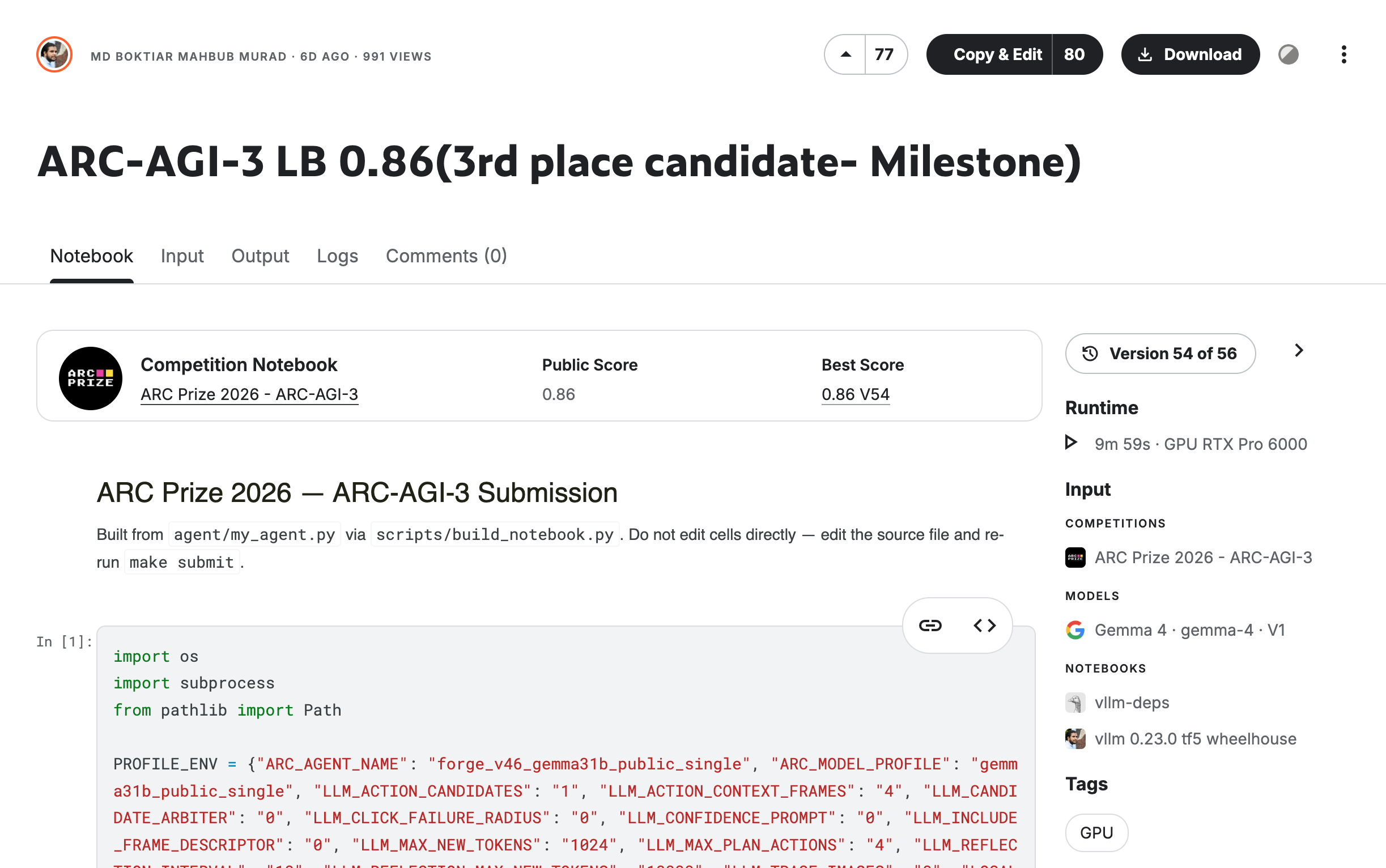
この提出作品は Reki のものと同様、フレームを画像としてレンダリングし、ローカルサーバーで提供される Gemma-4-31B に表示させ、反省メモリーを保持しながら、修復機能と法的措置ガード付きの構造化 JSON アクションを返します。
異なる点は、この作品がフローを制御するパラメータを持つプロファイル駆動型のフレームワーク(「forge」と呼ばれる)に包まれていることです。提出物には複数の候補アクションを生成するジェネレーターと、それらを評価して選択する仲裁者が含まれており、モデルが確信を持てない場合に安全で元に戻せる動きを強制するオプショナルな信頼度プロンプトも用意されています。
ただし、この Notebook で最高スコアを出した実行では、追加の機構はすべてオフにするプロファイルが使用されていました。
注目すべき点:
- 公式の ARC プライズ GPT-OSS-120B テンプレートに基づいています。
著者は、ローカルな公開ゲームの結果が信頼できるリーダーボードの代わりにはならないと指摘しました。
3 チーム全員にお祝いと、提出されたすべての参加者への感謝を申し上げます。
2 番目(そして最終)のマイルストーン賞は 9 月 30 日に終了します。今すぐ参加を開始できます。最も手っ取り早い方法は、以下の テンプレート のいずれかをコピーするか、上記の既存の提出物を自分のものにして改良し、どこまで突き進めるか試してみることです。
ARC-AGI-3 Kaggle コンペティション にアクセスして、参加を始めましょう。
原文を表示
ARC-AGI-3 is our first Interactive Reasoning Benchmark. It is a set of novel, video-game-like environments where agents must perceive, explore, plan, and act across long horizons. Due to a hidden hold-out set, these games can't be memorized. They reward on-the-fly learning, efficient exploration, and the ability to set your own goals when the objective isn't clear. Solving them is easy (and even fun) for humans, but remains hard for today's AI.
New to ARC Prize 2026, we've introduced two milestone prizes that reward the top mid-competition open-source solutions to ARC-AGI-3. They exist to inspire people to try new ideas and create incentives to push those ideas further.
We're excited to award our first $37.5K ARC-AGI-3 milestone prize, which ran through June 30th. Below are the top three submissions from our ARC-AGI-3 Kaggle competition.
1st Place - Tufa Labs, "The Duck"
A small open-source LLM that plays ARC-AGI-3 by writing and running Python in a live REPL (similar to the Duke Harness), treating each game like an interactive coding problem.
Notebook · Write-up · Video · Tufa Labs
This submission converts the game state into Python variables and interacts with it through a REPL. The process includes reasoning, calling helper functions, running code, taking an action, seeing the results, repeating. It perceives the board through a rendered image, the raw ASCII grid, and a segmentation tool for zooming into regions. It chooses whichever representation fits the moment.
To keep playing indefinitely without exhausting the context window, The Duck continuously pops the oldest messages ("infinite play via eviction"), keeping only the system prompt and recent history. The team's stated philosophy is to keep the harness lightweight and generic and let the model drive, and they report the gains came from multimodality and better base models, not hand-built tools.
For more on this submission, we encourage you to read the Tufa write-up directly.
What's interesting:
- This submission is the only one of the winners that has the "agent-writes-code" approach. The other two simply use "pick a JSON action."
- It is a spiritual successor to "Stochastic Goose," which won the earlier ARC-AGI-3 Agent Preview Competition.
- Runs Qwen 3.6 27B FP8 locally.
- Tufa Labs noted that, counterintuitively, hand-crafted tools actually hurt the model; letting it improvise worked better.
- Featured on Machine Learning Street Talk.
The Tufa Labs team on [Machine Learning Street Talk](https://arcprize.org/media/images/tufa-labs-mlst.jpg)
2nd Place - Reki
A vision-language model that looks at pictures of the game board and returns one JSON action per step.
At its core this is a "vision-LLM-as-policy" agent: each turn it renders the recent frames as labeled images, feeds them to Gemma-4-31B locally, and asks for a single JSON object describing what changed, a short plan, and the next 1-4 actions. It also keeps a running reflection memory (refreshed every ~10 steps).
Additionally, there is a numpy click heuristic mechanism (no GPU needed). Hardcoded rules make fallback and exploratory clicks prefer small, rare-colored, button-like shapes instead of random pixels. A "Dead-signature" notices when clicking a *type* of object never changes anything and stops wasting clicks on it for the rest of the level. Both are toggle-able via environment variables.
What's interesting:
- Built on the official ARC Prize GPT-OSS-120B template. Reki swapped the model to Gemma-4-31B.
- Designed for easy ablation: individual features or tricks can be toggled on or off using environment variables, allowing the team to directly measure the impact of each change.
- Includes JSON self-repair, legal-action constraints, a 1-4 action plan queue, reflection memory.
3rd Place - Md Boktiar Mahbub Murad, "forge"
The same "look at the board and return a JSON action" agent as Reki (2nd place), but packaged as a configurable framework.
This submission is similar to Reki's: render frames to images, show them to a locally-served Gemma-4-31B, keep a reflection memory, and return structured JSON actions with repair and legal-action guards.
The difference is that this one is wrapped in a profile-driven framework (called "forge") with parameters that control flow. The submission has a generator for multiple candidate actions and an arbiter to score and pick between them and an optional confidence prompt that forces safe/reversible moves when the model is unsure. However, the top-scoring run of thise notebook used a profile that *turns off* all of the extra machinery.
What's interesting:
- Built on the official ARC Prize GPT-OSS-120B template.
- Author mentioned that local public-game checks weren't a reliable leaderboard proxy.
Congratulations to all three teams, and thank you to everyone who submitted.
The second (and final) milestone prize will end September 30th. You can start competing right now. The fastest way in is to copy one of the templates or an existing submission above, make it your own, and see how far you can push it.
Head to the ARC-AGI-3 Kaggle competition to get started.
AI算出
主要ニュースainew評価標準
AI エージェントの推論能力評価という核心的な AI テーマであり、新規導入された賞制度と具体的な勝者(Tufa Labs の「The Duck」)とその技術的特徴(REPL を用いたコーディングアプローチなど)が明記されているため、高い新規性と関連性を持つ。
6つの評価軸を見る
- AI関連度
- 100
- 情報源の信頼性
- 25
- 新規性
- 75
- 調べる価値
- 75
- 重複の少なさ
- 100
- 日本での有用性
- 25
関連記事
今日のまとめ
AIデイリーブリーフで今日の重要ニュースをまとめ読み