AWS、ベンダーロックイン回避のエンタープライズ向けアジェンティック AI パターンを公開
本文の状態
日本語全文を表示中
詳細モードで約20分の本文を読めます。
同じ出来事の情報源
この情報源を基点に整理
AWS Machine Learning Blog
AWS は、マルチフレームワーク・マルチモデル環境でアジェンティック AI システムをスケーリングする際、ベンダーロックインを避けつつ柔軟性を維持するためのアーキテクチャパターンと原則を解説した。
AI深層分析を開く2026年8月21日 10:33
AI深層分析
キーポイント
マルチエブリシング環境の実態
大規模企業の AI システムは単一のドメインに閉じず、異なるフレームワーク、モデル、プロバイダーが混在する複雑な環境で運用されるのが実情である。
スケーリングにおける課題
組織がシステムを拡大する際、個々のエージェントの調整ではなく、多数のシステムを一貫して構築・カスタマイズ・デプロイするライフサイクル管理が重要となる。
Amazon SageMaker の役割
AWS は、一貫性を保ちつつ柔軟性を制約しない企業全体のモデルライフサイクル管理と推論において、SageMaker が基盤的な役割を果たすと位置づけている。
オプション性を管理可能な制約として捉える
標準化の強制は摩擦を生むため、アイデンティティやポリシーなどの制御平面を標準化し、アプリケーション層では柔軟性を許容するアプローチが有効である。
多様性システムにおける統合的課題
ガバナンスの困難さ、インターフェースの不整合による複雑化、セキュリティ境界の拡大など、個々の課題は相互に絡み合い時間とともに増幅する。
重要な引用
Scaling agentic AI across an enterprise requires architectural patterns that preserve flexibility while avoiding vendor lock-in.
The question is not how to orchestrate agents within one system, but how to operate many such systems across a 'multi-everything' environment.
Optionality is no longer about experimentation. It becomes a constraint that must be managed deliberately.
Managing them requires a system-level approach rather than isolated solutions.
編集コメントを表示
編集コメント
エンタープライズにおける AI の実装は、単なるモデルの導入から、複雑なシステム間の調整とスケーリングへとフェーズが移っている。本記事は、特定のベンダーに縛られずに柔軟性を保ちながら大規模化を図るための重要な設計思想を提示しており、現場のアーキテクトにとって有益な指針となる。
Source Article
元記事を日本語で読む
本文に関係しない購読案内、埋め込み通知、サイト内プロモーションは除いています。
エンタープライズ規模でアジェンティック AI を展開するには、柔軟性を保ちつつベンダーロックインを回避するアーキテクチャパターンが必要です。本稿は、大規模なマルチエージェントシステムに関するシリーズの第 2 弾です。ここでは、機械学習(ML)チームが、フレームワーク、モデル、プロバイダが混在する「マルチ・エブリシング」環境において、アジェンティック AI システムをどのように運用しているかを探ります。また、これらのシステムが協調してスケールするための原則についても解説します。
Amazon の大規模なマルチエージェントオーケストレーションパターンにおける高度なファインチューニング手法という前稿では、単一のユースケースやドメイン内でのマルチエージェントオーケストレーションの設計と最適化について取り上げました。そこでは、複数のエージェントが連携してワークフローを調整し、タスクを分解し、構造化された協働を通じて精度を高めることで複雑さに対処するシナリオに焦点を当てていました。
しかし実際には、エンタープライズの AI システムが単一のドメインに閉じこもることはめったにありません。
導入が進むにつれ、大企業における ML プラットフォームチームは新たな課題に直面します。重要なのは、1 つのシステム内でエージェントをどうオーケストレーションするかではなく、「マルチ・エブリシング」環境の中で多数のシステムをどう運用するかという点です。同じエンタープライズ内には複数のフレームワーク、モデル、プロバイダ、そしてチームが共存しており、それぞれが独自のペースで進化しています。
これらのシステムを大規模化する際、組織にとって重要になるのは、モデルの一貫した構築・カスタマイズ・デプロイ能力です。実際には、スケーリングされた環境におけるモデルライフサイクル管理と推論のための統一されたアプローチが必要です。この分野において、Amazon SageMaker は柔軟性を制限することなく、企業全体の整合性を支える基盤として重要な役割を果たしています。
本稿では、アジェンティック AI システムを拡張しつつ、柔軟性を維持しベンダーロックインを回避するために必要なアーキテクチャ原則とパターンについて探ります。
多様な環境の現実
エンタープライズ AI システムは、デフォルトとして異種混合な景観へと進化します。各チームは要件に応じて異なるフレームワークを採用します。構造化されたワークフローを重視するチームもあれば、協力的なエージェント間の相互作用に焦点を当てるチーム、あるいは決定論的でモデル駆動型のパイプラインを最適化するチームもあります。同時に、組織は独自に構築したエージェントと、SaaS(Software as a Service)機能や既存のエンタープライズシステムを組み合わせて利用しています。
モデル層にはもう一つの多様性の次元が加わります。ファウンデーションモデル(FM)は急速に進化を続けており、それぞれコスト、レイテンシ、能力において異なるトレードオフを提供します。その結果、多くの企業は単一のオプションに標準化するのではなく、複数のモデルプロバイダーにまたがる運用を行っています。
時を経て、これは定常状態へと収束します:複数のチームとユースケースにまたがり、マルチモデル・マルチフレームワーク・マルチプロバイダーのシステムが稼働する現実です。
この課題は、その結果を回避する方法ではなく、分断化をもたらすことなくその結果をどう管理するかにかかっています。
選択肢を管理すべき制約として捉える
パート1 では、特定のシステム内でのエージェントの動作最適化に焦点を当てました。しかし、企業レベルでは問題の性質が変わります。ここでいう「選択肢」はもはや実験のためのものではなく、意図的に管理すべき制約となります。
フレームワークやモデルレベルで標準化を強制しようとすると、かえって摩擦が生じます。チームが制約を回避して作業を進めたり、導入が遅れたり、承認されたアーキテクチャからシステムが逸脱したりするのです。同時に、アプリケーションを特定のモデルやプロバイダーに強く結びつけることは、環境の変化に応じて適応する能力を制限することになります。
より効果的なアプローチは、アプリケーション層の下で標準化を行うことです。アイデンティティ、ポリシー適用、観測性、ルーティングといった共通の制御プレーンに注力し、エージェントの構築や実行方法については柔軟性を保つことが重要です。
このアプローチは多様性そのものを排除するものではありません。むしろ、その影響を限定することで、システムがより広範なアーキテクチャを不安定化させることなく進化できるようにします。
システムの多様性が増すにつれ、予測可能な課題が次々と現れます。各フレームワークが独自の制御モデルを定義するため、ガバナンスを一貫して適用することが困難になります。エージェント、ツール、サービスが互換性の低いインターフェースを公開することで、統合の複雑さが増大します。動的な最適化がない場合、コストとパフォーマンスのトレードオフを管理するのが難しくなり、結果としてリソースの非効率的な利用を招くケースが多発します。
同時に、エージェントがツール、データ、他のエージェントと動的に相互作用するようになると、セキュリティ境界は拡大し、アクセスパターンは予測困難になります。永続的なメモリ機能は、データの保持、分離、一貫性に関する新たな複雑さを生み出します。さらに、エンタープライズユースケースでは、汎用的な設定だけでは達成できないドメイン固有の性能が求められます。
これらの課題は相互に関連しており、時間が経つほど複合化していきます。これらを管理するには、個別の解決策ではなく、システム全体を視野に入れたアプローチが必要です。
スケーリングにおける複雑性管理のための実践的な評価基準
以下の図は、成功する「マルチ・エブリシング」環境で繰り返し見られる中核的なアーキテクチャ原則を要約したものです。それは、制御プレーンと実行プレーンの分離、統一された観測可能性、集中型ガバナンス、動的ルーティング、設計段階からのレジリエンス、段階的なオーケストレーションの進化、そして組み込みの最適化です。
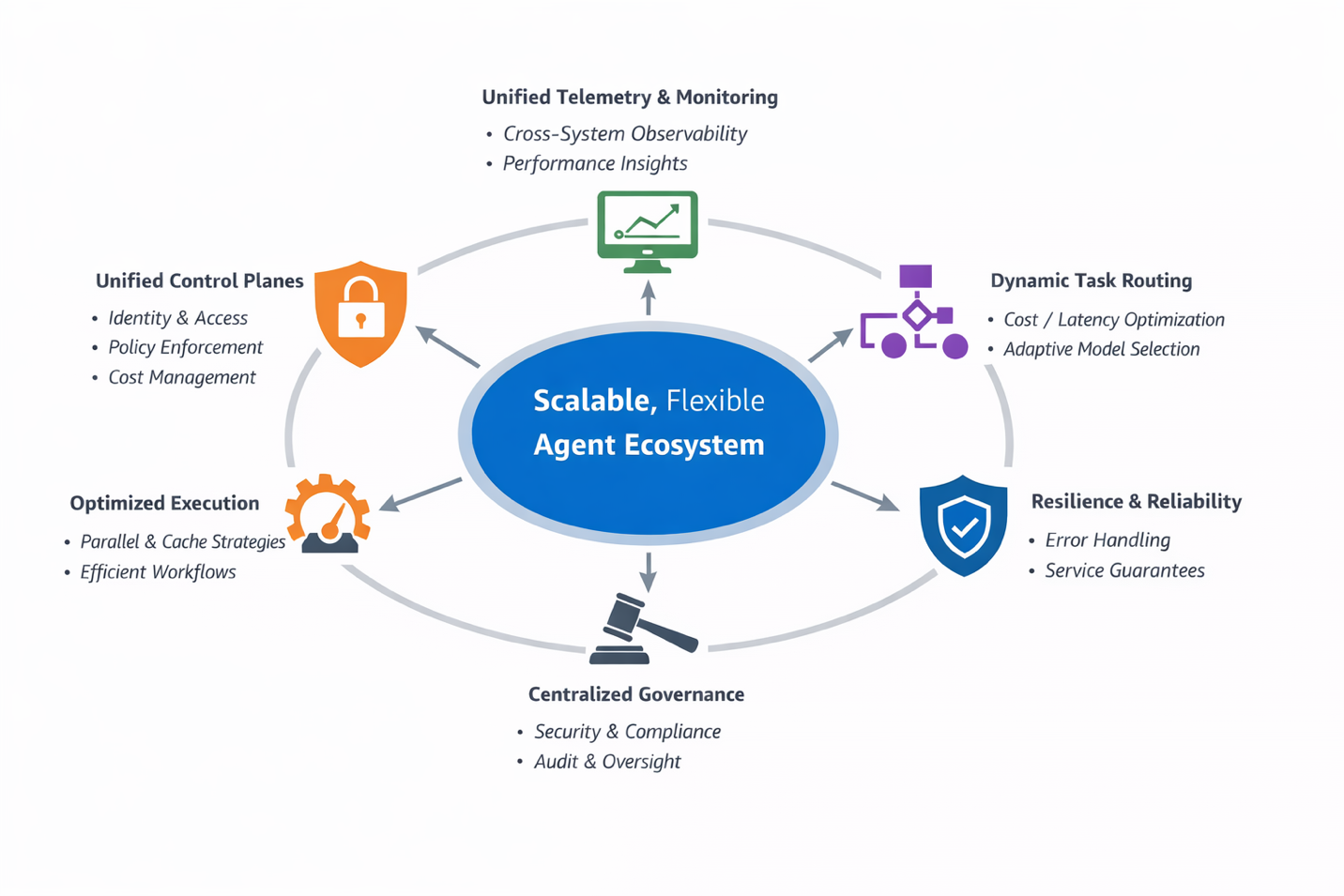
図 1:マルチ環境における複雑さを管理するためのコアなアーキテクチャ原則
マルチエージェント環境で成功を収める組織は、柔軟性と制御のバランスを取るための一連のアーキテクチャ原則に共通してたどり着きます。
その根幹となるのは、制御プレーンと実行プレーンの分離です。アイデンティティ管理、ポリシー適用、観測可能性(オバザビリティ)、コスト配分は企業全体での一貫性を確保するために中央集権化され、一方、エージェントの実行と開発はチームの自律性とスケーラビリティを支援するために分散されます。
これらのシステムを実効性のあるものとするためには、観測可能性が必須条件となります。統一されたテレメトリ層を確立することで、組織は異なるフレームワークや環境にわたるエージェントの挙動を可視化できます。この可視性は、パフォーマンスの監視、失敗の追跡、そして特定のフレームワーク依存ツールに頼らずシステムを継続的に改善する上で役立ちます。
ガバナンスは、個々のエージェント内部に埋め込むのではなく、プラットフォーム機能として実装された場合に最も効果を発揮します。中央集権的な適用により、フレームワークやモデル、実行環境が変化しても、一貫したセキュリティとコンプライアンスを維持することが可能になります。
ワークロードが多様化する中、ルーティングはシステムの中核機能へと進化しています。モデルやインフラを静的に割り当てるのではなく、コスト、レイテンシ、精度の要件に基づいてタスクとリソースを動的にマッチングさせることで、組織はリアルタイムでの適応と大規模運用における効率維持を実現します。
本番環境のシステム設計には、明確な保証が不可欠です。レイテンシ、可用性、分離性の要件を明確に定義するとともに、障害発生時の対処メカニズムも用意しておく必要があります。リトライ処理、サーキットブレーカー、フォールバックパスといった仕組みは、実世界での運用におけるレジリエンスを支える重要な要素となります。
多くの組織では、エージェント間の相互作用に対する可視性と制御を維持するため、まずは集中型のオーケストレーションモデルから始めます。しかしシステムが成長するにつれ、一貫性を保ちつつより高いスケーラビリティを提供する、分散型かつイベント駆動のアーキテクチャへと移行していくのが一般的です。
最後に、最適化はシステム構築の初期段階から組み込む必要があります。コストとパフォーマンスへの配慮は大規模運用の基本であり、動的なモデル選択やキャッシュ活用、効率的な実行パターンなどの手法が、長期的な効率維持に寄与します。
これらの原則を組み合わせることで、「マルチ・エブリシング」環境が抱える本質的な複雑さを管理するための実用的なフレームワークが得られます。
フレームワークに依存しないスケーリングを実現する AWS サービスの活用方法
前述のアーキテクチャ原則は、フレームワークやモデル、チームを超えて一貫して機能する能力を必要とします。AWS のサービスはこの基盤を提供し、組織が柔軟性を保ちながらフレームワークに依存しないプラットフォームを実装することを可能にします。
スケールが大きくなるにつれ、モデル層が複雑さの主要な要因の一つとなります。異なるユースケースでは、それぞれに適したモデルやカスタマイズ戦略、推論パターンが必要になります。
Amazon SageMaker は、この複雑さを大規模に管理するためのコアとなる実行・カスタマイズ層です。モデルの開発、ファインチューニング、デプロイメント、推論を統一的なレイヤーで扱い、組織全体でモデルの構築と運用方法を標準化できます。リアルタイム、非同期、バッチ推論への対応に加え、Inference Components やモデル監視などの機能も備えているため、チームはインフラをワークロード要件に合わせて最適化できます。これにより、組織全体で一貫した運用モデルが維持されます。
これに付随して、Amazon Bedrock は基盤モデルへのアクセスを容易にする管理されたインターフェースを提供し、インフラの管理なしで迅速な実験を可能にします。Amazon Bedrock はモデルへのアクセスと統合を加速しますが、カスタマイズや本番環境での推論には、Amazon SageMaker が提供する深い機能、制御力、スケーラビリティが必要です。両者を組み合わせることで、組織はモデルへのアクセスと実行を分離でき、柔軟でレジリエントなアーキテクチャを実現できます。
オーケストレーションと制御は、AWS Lambda、AWS Step Functions、Amazon API Gateway などのサービスを通じて実装されます。これらは動的なルーティングやワークフローの調整をサポートします。
AWS 上のエージェント・オーケストレーション に代表される新たな機能は、このレイヤーをさらに拡張します。これらはエージェント・オーケストレーション専用の抽象化を提供し、チームが複雑なマルチエージェント・ワークフローを一貫性を持って、かつ高い制御下で管理できるよう支援します。
アイデンティティとガバナンスは AWS Identity and Access Management (IAM) と AWS Organizations によって中央集権的に維持され、観測性は Amazon CloudWatch と AWS X-Ray を用いて標準化されます。
Amazon EventBridge、Amazon ElastiCache、Amazon CloudFront は、統合とパフォーマンス最適化をサポートします。
このアーキテクチャにおいて、Amazon SageMaker はモデル実行の運用基盤として機能し、一方 Amazon Bedrock は新興のファウンデーションモデルへのアクセスを加速します。両者を組み合わせることで、組織はイノベーションとコントロールのバランスを保つことが可能になります。
重要なポイント
Amazon SageMaker は、大規模なモデルのカスタマイズと推論のための運用基盤を提供し、Amazon Bedrock は管理されたファウンデーションモデルへの迅速なアクセスを支援します。これらにより、企業スケールでの柔軟でフレームワークに依存しないアーキテクチャが実現されます。
概要:アーキテクチャ原則と AWS サービスのマッピング
以下の表は、これらのアーキテクチャ原則が、フレームワークに依存しないスケーリングをサポートするネイティブな AWS サービスにどのようにマッピングされるかを要約しています。
| アーキテクチャ原則 | 対応機能 | AWS サービス |
|---|---|---|
| 集中型アイデンティティとガバナンス | フレームワークやチーム全体での一貫したポリシー適用 | IAM, AWS Organizations |
| 統一された観測性とテレメトリ | エージェントとワークフロー全体のエンドツーエンドの可視性 | Amazon CloudWatch, AWS X-Ray |
| モデル抽象化と選択肢の提供 | アプリケーションとモデルプロバイダーの分離 | Amazon Bedrock |
| 大規模なモデルのカスタマイズと推論 | ワークロード全体での標準化されたトレーニング、ファインチューニング、スケーラブルな推論 | Amazon SageMaker |
| 動的ルーティングとオーケストレーション | リアルタイム最適化 | AWS Lambda, AWS Step Functions, Amazon API Gateway, Amazon Bedrock AgentCore |
| イベント駆動型統合 | 非同期通信(結合を緩くした通信) | Amazon EventBridge |
| パフォーマンス最適化 | 効率的なスケーリング | Amazon ElastiCache, Amazon CloudFront |
多様なシステムにおけるエンタープライズのパターン
これらの原則を適用すると、組織は限られた数のアーキテクチャパターンに収束する傾向があります。これらは強制されるルールではなく、チームが業務負荷や運用上の制約に応じてエージェントシステムをどう構築するかを反映したものです。
重要なのは、これらのパターンが排他的ではないということです。多くの企業では、異なる事業部門やユースケースで複数のパターンを組み合わせて導入しています。課題は単一のパターンを選ぶことではなく、共有環境の中でそれらが共存できる仕組みを作ることです。
パターン 1:業務プロセス自動化のための内部エージェントプラットフォーム
よくあるのは、複数のチームが独立してエージェントの構築を始めた結果として生まれる「内部エージェントプラットフォーム」です。時間が経つと、インフラの重複、ガバナンスの不整合、組織全体での再利用性の低下といった問題が生じがちです。
こうした課題に対処するため、企業は中央集権型またはハイブリッド型のプラットフォームモデルを導入します。共有プラットフォーム層が、モデルへのアクセス、ガバナンス、観測性、コスト管理などの共通機能を提供する一方、各チームは自らのエージェントの構築・展開方法については自律性を維持できます。
このモデルでは、プラットフォームが制御プレーンとして機能し、エージェントがモデルにアクセスする方法やポリシーの適用、テレメトリの出力を標準化します。一方で、実行は分散されたままです。各事業部門は引き続き、アプリケーションロジック、データ連携、継続的インテグレーションおよび継続的デリバリー(CI/CD)パイプライン、そしてフレームワークの選択を自らの管理下に置きます。
この分離により、重複が削減され、イノベーションを制約することなく一貫性が保たれます。また、複数のユースケースで共通機能を再利用することも可能になります。
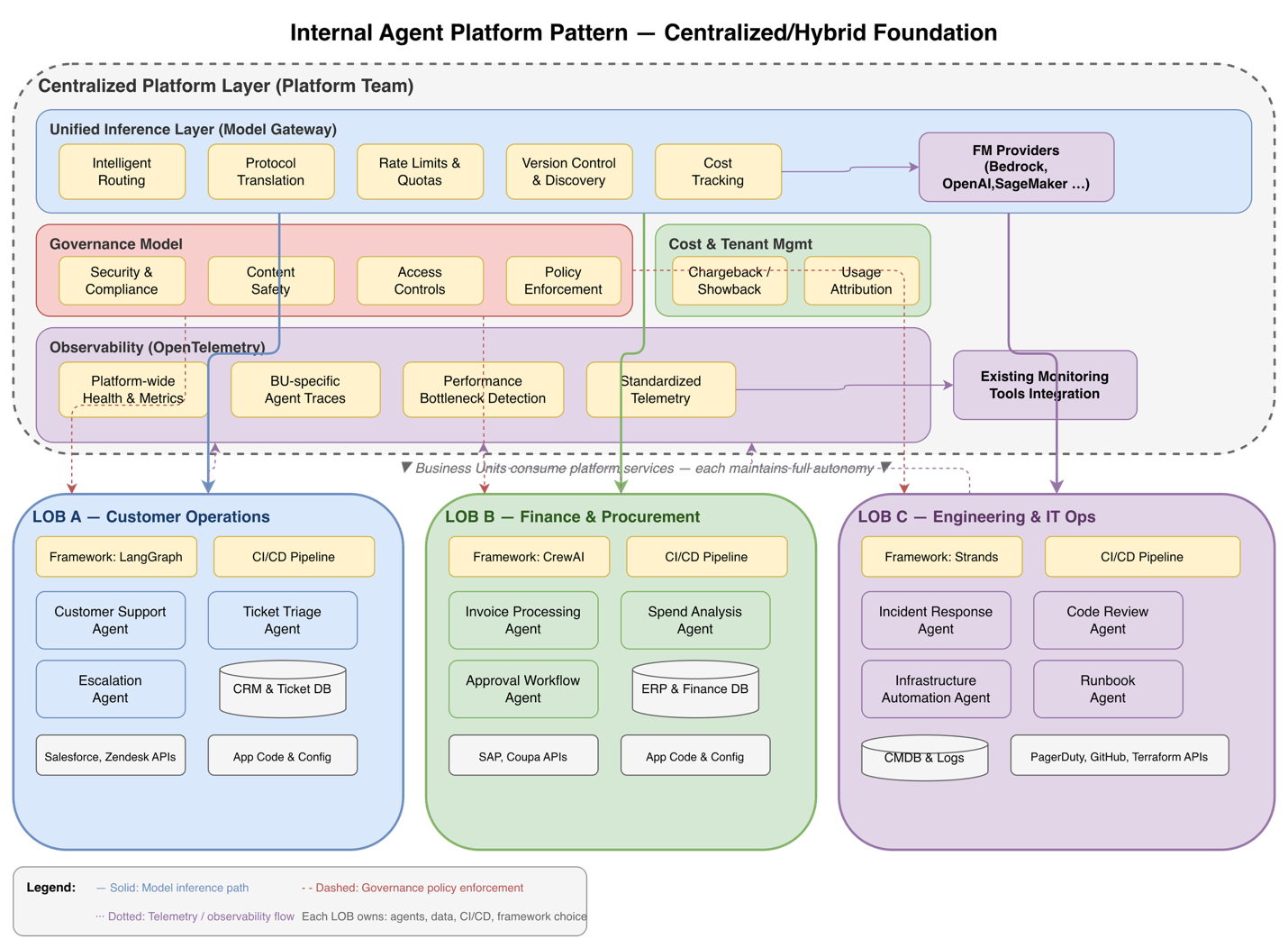
図 2:中央集権型の制御プレーンと事業部門間での分散型実行を持つ内部エージェントプラットフォーム
パターン 2:顧客向けエージェントプラットフォーム(ISV および SaaS)
エージェントが外部に公開される場合、アーキテクチャの優先事項はマルチテナント化、分離、および信頼性へとシフトします。
このパターンでは、システムが強力なテナント境界を強制するように設計されます。各リクエストにはシステム全体を通じてテナントコンテキストが含まれ、エージェントがそのテナントにスコープされたデータとツールのみアクセスできることが保証されます。アイデンティティおよびアクセス管理は中心的な課題となり、外部のアイデンティティプロバイダーとの統合が行われる一方で、プラットフォーム内での一貫した適用を維持します。
インフラストラクチャの判断も進化を遂げています。多くの組織が、標準的なワークロードには共有インフラを、規制要件やパフォーマンス要求が厳しい顧客向けには専用環境を組み合わせたハイブリッド・テナンシーモデルを採用しています。このアプローチは、コスト効率性と、分離性およびコンプライアンスへの対応という両方のニーズのバランスを取ります。
信頼性は、このパターンの決定的な特徴です。システムは、負荷が偏った状況下であっても、明示されたレイテンシ、可用性、スループットに対する期待を満たす必要があります。その結果、フェイルオーバー、レート制限、グレースフル・デグラデーションといったレジリエンス機構が、プラットフォームの中核機能として不可欠となります。
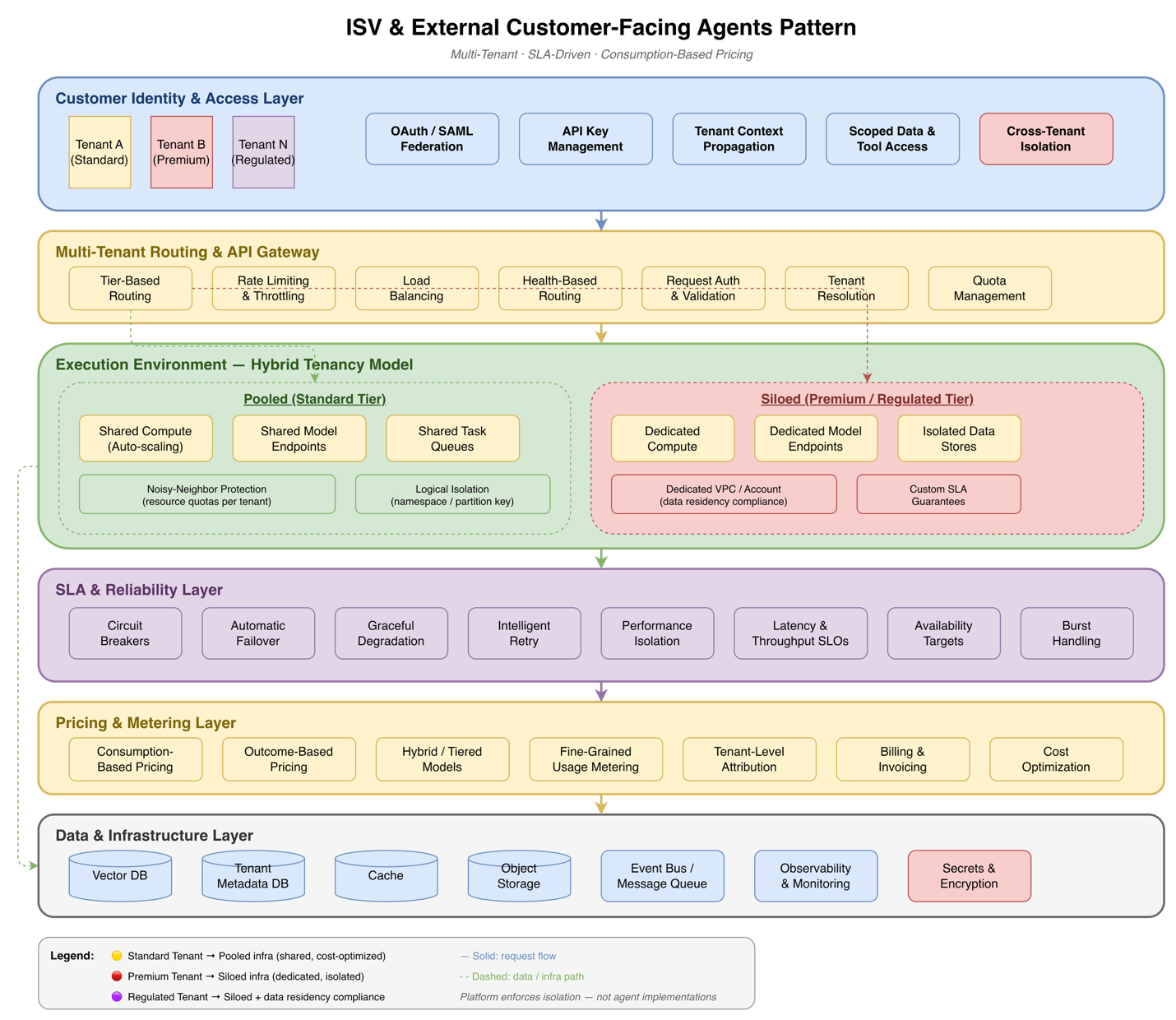
図 3: テナント認識型アイデンティティ、分離、共有インフラを備えたマルチテナント・エージェント・プラットフォーム
パターン 3:リアルタイムアプリケーションにおける推論レイテンシの最適化
リアルタイムシステムにおいては、レイテンシが主要なアーキテクチャ上の制約となります。会話型アシスタントや対話型ワークフローといったアプリケーションでは、応答を厳格な時間枠内で提供する必要があり、遅延は直接的にユーザー体験に影響を与えます。
こうした環境では、最適化はシステム設計の段階から組み込まれる必要があります。ルーティング判断は動的に行われ、各リクエストの複雑さ、レイテンシへの感度、コスト要件を評価した上で実行されます。これにより、最も適切なモデルとインフラ階層がリアルタイムで選択されます。
実行戦略も進化し、並列処理をサポートすることで独立した操作を同時に実行可能にし、全体の応答時間を短縮します。キャッシュは冗長な計算を削減し、レイテンシとコスト効率の両方を向上させる重要な役割を果たします。
このパターンはシステムレベルの最適化に重点を置いています。パフォーマンスは後付けではなく、主要な設計制約として扱われます。
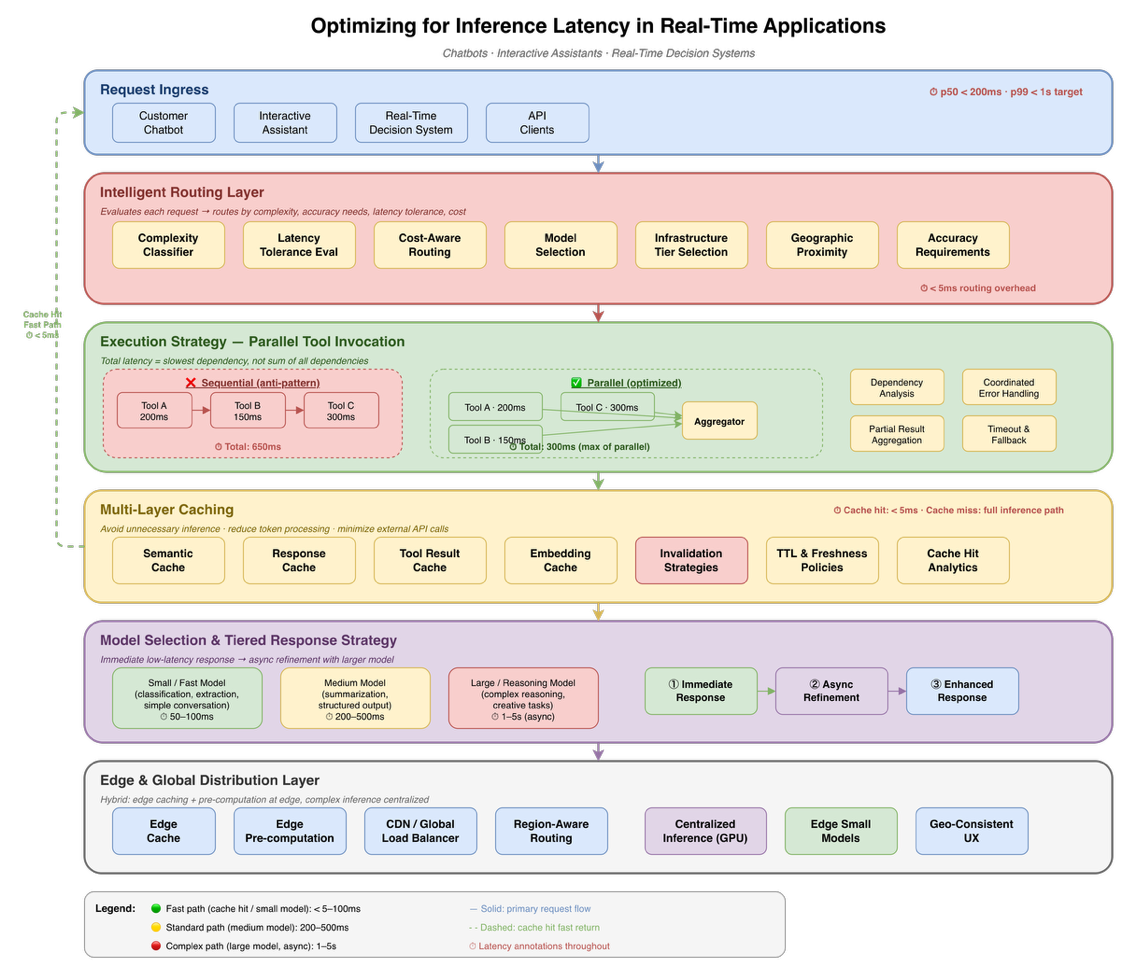
図 4: 動的ルーティング、並列実行、多層キャッシュを備えたレイテンシ最適化エージェントアーキテクチャ
統一プラットフォームによるパターンの統合
各パターンは特定の要件セットに対応しています。しかし、「マルチ〜」な環境では、これらが孤立して存在することは稀です。企業では内部自動化エージェント、顧客向けシステム、リアルタイムアプリケーションを同時に運用しているケースがほとんどです。また、これらのシステムは異なるチームによって、異なるフレームワークやモデルを用いて構築されることが一般的です。
共通の基盤がない場合、これらのパターンは
原文を表示
Scaling agentic AI across an enterprise requires architectural patterns that preserve flexibility while avoiding vendor lock-in. This post is Part 2 of our series on multi-agent systems at scale. In this post, we examine how machine learning (ML) teams operate agentic AI systems across a “multi-everything” environment of frameworks, models, and providers. We also cover the principles that let those systems scale together.
In Advanced fine-tuning techniques for multi-agent orchestration patterns from Amazon at scale, we explored how to design and optimize multi-agent orchestration within a single use case or domain. That post focused on scenarios where multiple agents are required to handle complexity by coordinating workflows, decomposing tasks, and improving accuracy through structured collaboration.
In practice, however, enterprise AI systems rarely remain confined to a single domain.
As adoption expands, ML platform teams in large enterprises encounter a different challenge. The question is not how to orchestrate agents within one system, but how to operate many such systems across a “multi-everything” environment. Multiple frameworks, models, providers, and teams coexist within the same enterprise, each evolving at its own pace.
As organizations scale these systems, the ability to consistently build, customize, and deploy models becomes critical. In practice, this requires a unified approach to model lifecycle management and inference at scale. This is an area where Amazon SageMaker plays a foundational role in supporting enterprise-wide consistency without constraining flexibility.
This post explores the architectural principles and patterns required to scale agentic AI systems while preserving flexibility and avoiding vendor lock-in.
The reality of multi-everything environments
Enterprise AI systems evolve into heterogeneous landscapes by default. Different teams adopt different frameworks based on their requirements. Some prioritize structured workflows, others focus on collaborative agent interactions, and still others optimize deterministic, model-driven pipelines. At the same time, organizations combine custom-built agents with software as a service (SaaS) capabilities and existing enterprise systems.
The model layer introduces another dimension of variability. Foundation models (FM) continue to evolve rapidly, each offering different tradeoffs in cost, latency, and capability. As a result, most enterprises operate across multiple model providers rather than standardizing on a single option.
Over time, this leads to a steady-state reality: multi-model, multi-framework, multi-provider systems operating across multiple teams and use cases.
The challenge is not how to avoid this outcome. It’s how to manage that outcome without introducing fragmentation.
Optionality as a constraint to manage
In Part 1, we focused on optimizing agent behavior within a specific system. At the enterprise level, the problem shifts. Optionality is no longer about experimentation. It becomes a constraint that must be managed deliberately.
Attempts to enforce standardization at the framework or model level often create friction. Teams work around constraints, adoption slows, or systems diverge outside of approved architectures. At the same time, tightly coupling applications to specific models or providers limits the ability to adapt as the landscape evolves.
A more effective approach is to standardize below the application layer, focusing on shared control planes such as identity, policy enforcement, observability, and routing, while allowing flexibility in how agents are built and executed.
This approach does not eliminate heterogeneity. It contains its impact, so systems can evolve without destabilizing the broader architecture.
The core challenges of multi-everything systems
As systems grow in diversity, a predictable set of challenges emerges. Governance becomes difficult to enforce consistently across frameworks that each define their own control models. Integration complexity increases as agents, tools, and services expose incompatible interfaces. Cost and performance tradeoffs become harder to manage without dynamic optimization, often leading to inefficient resource usage.
At the same time, security boundaries expand as agents interact dynamically with tools, data, and other agents, making access patterns less predictable. Persistent memory introduces additional complexity around data retention, isolation, and consistency. Finally, enterprise use cases demand domain-specific performance that cannot be achieved through generic configurations alone.
These challenges are interconnected and compound over time. Managing them requires a system-level approach rather than isolated solutions.
A practical rubric for managing complexity at scale
The following diagram summarizes the core architectural principles that recur across successful multi-everything environments: separation of control and execution planes, unified observability, centralized governance, dynamic routing, resilience by design, phased orchestration evolution, and built-in optimization.
**Figure 1: Core architectural principles for managing complexity in multi-everything environments
Organizations that operate successfully in multi-everything environments converge on a set of architectural principles that balance flexibility with control.
A foundational principle is the separation of control planes from execution planes. Identity, policy enforcement, observability, and cost attribution are centralized to facilitate consistency across the enterprise, while agent execution and development remain decentralized to support team autonomy and scalability.
Observability becomes a prerequisite for operating these systems effectively. By establishing a unified telemetry layer, organizations gain visibility into agent behavior across frameworks and environments. This visibility helps them monitor performance, trace failures, and continuously improve the system without relying on framework-specific tooling.
Governance is most effective when implemented as a platform capability rather than embedded within individual agents. Centralized enforcement supports consistent security and compliance, even as frameworks, models, and execution environments evolve.
As workloads diversify, routing becomes a core system function. Rather than statically assigning models or infrastructure, organizations dynamically match tasks to resources based on cost, latency, and accuracy requirements. This helps the system adapt in real time and maintain efficiency at scale.
Production systems must also be designed with explicit guarantees. Latency, availability, and isolation requirements should be clearly defined, along with mechanisms for handling failure. Retries, circuit breakers, and fallback paths facilitate resilience under real-world conditions.
Many organizations begin with centralized orchestration models to maintain visibility and control over agent interactions. As systems grow, they evolve toward more distributed and event-driven architectures, which provide greater scalability while preserving consistency.
Finally, optimization must be embedded into the system from the outset. Cost and performance considerations are fundamental to operating at scale, and techniques such as dynamic model selection, caching, and efficient execution patterns help facilitate long-term efficiency.
Together, these principles provide a practical framework for managing the inherent complexity of multi-everything environments.
How to use AWS services for framework-agnostic scale
The architectural principles outlined earlier require capabilities that operate consistently across frameworks, models, and teams. AWS services provide these building blocks that organizations can use to implement a framework-agnostic platform while preserving flexibility.
At scale, the model layer becomes one of the primary sources of complexity. Different use cases require different models, customization strategies, and inference patterns.
Amazon SageMaker serves as the core execution and customization layer for managing this complexity at scale. It provides a unified layer for model development, fine-tuning, deployment, and inference, allowing organizations to standardize how models are built and operated across the enterprise. By supporting real-time, asynchronous, and batch inference, along with capabilities such as Inference Components and model monitoring, Amazon SageMaker helps teams align infrastructure with workload requirements. This maintains a consistent operational model across the enterprise.
Complementing this, Amazon Bedrock provides a simplified, managed interface for accessing foundation models, supporting rapid experimentation without managing underlying infrastructure. While Amazon Bedrock accelerates model access and integration, Amazon SageMaker delivers the depth, control, and scalability required for customization and production-grade inference. Together, they allow organizations to separate model access from model execution, supporting flexible and resilient architectures.
Orchestration and control are implemented through services such as AWS Lambda, AWS Step Functions, and Amazon API Gateway, which support dynamic routing and workflow coordination.
Emerging capabilities such as Agent Orchestration on AWS further extend this layer. They provide purpose-built abstractions for agent orchestration that help teams manage complex multi-agent workflows with greater consistency and control.
Identity and governance remain centralized through AWS Identity and Access Management (IAM) and AWS Organizations, while observability is standardized using Amazon CloudWatch and AWS X-Ray.
Amazon EventBridge, Amazon ElastiCache, and Amazon CloudFront support integration and performance optimization.
In this architecture, Amazon SageMaker effectively becomes the operational backbone for model execution, while Amazon Bedrock accelerates access to emerging foundation model capabilities. Together, they help organizations balance innovation with control.
Key takeaway**
Amazon SageMaker provides the operational backbone for model customization and inference at scale, while Amazon Bedrock supports rapid access to managed foundation models. Together, they support flexible, framework-agnostic architectures at enterprise scale.
Summary: Mapping architectural principles to AWS services
The following table summarizes how these architectural principles map to native AWS services that support framework-agnostic scale.
| Architectural principle | What it supports | AWS services |
|---|---|---|
| Centralized identity and governance | Consistent policy enforcement across frameworks and teams | IAM, AWS Organizations |
| Unified observability and telemetry | End-to-end visibility across agents and workflows | Amazon CloudWatch, AWS X-Ray |
| Model abstraction and optionality | Decoupling applications from model providers | Amazon Bedrock |
| Model customization and inference at scale | Standardized training, fine-tuning, and scalable inference across workloads | Amazon SageMaker |
| Dynamic routing and orchestration | Real-time optimization | AWS Lambda, AWS Step Functions, Amazon API Gateway, Amazon Bedrock AgentCore |
| Event-driven integration | Decoupled communication | Amazon EventBridge |
| Performance optimization | Efficient scaling | Amazon ElastiCache, Amazon CloudFront |
Enterprise patterns for multi-everything systems
When these principles are applied, organizations tend to converge on a small number of architectural patterns. These patterns are not prescriptive. They reflect how teams structure agent systems based on workload requirements and operational constraints.
Importantly, these patterns are not mutually exclusive. Most enterprises implement a combination of them across different business units and use cases. The challenge isn’t selecting a single pattern but helping them coexist within a shared environment.
Pattern 1: Internal agent platform for business process automation
A common starting point is the internal agent platform, which emerges as multiple teams begin building agents independently. Over time, this can lead to duplicated infrastructure, inconsistent governance, and limited reuse across the organization.
To address this, organizations introduce a centralized or hybrid platform model. A shared platform layer provides common capabilities such as model access, governance, observability, and cost management, while individual teams retain autonomy over how they build and deploy their agents.
In this model, the platform acts as a control plane, standardizing how agents access models, enforce policies, and emit telemetry. At the same time, execution remains decentralized. Business units continue to own their application logic, data integrations, continuous integration and continuous delivery (CI/CD) pipelines, and framework choices.
This separation reduces duplication and enforces consistency without constraining innovation, while also supporting reuse of common capabilities across multiple use cases.
Figure 2: Internal agent platform with centralized control plane and decentralized execution across business units
Pattern 2: Customer-facing agent platforms (ISV and SaaS)
When agents are exposed externally, architectural priorities shift toward multi-tenancy, isolation, and reliability.
In this pattern, systems are designed to enforce strong tenant boundaries. Each request carries tenant context throughout the system, making sure that agents only access data and tools scoped to that tenant. Identity and access management become central concerns, often integrating with external identity providers while maintaining consistent enforcement within the platform.
Infrastructure decisions also evolve. Many organizations adopt hybrid tenancy models, combining shared infrastructure for standard workloads with dedicated environments for customers with stricter regulatory or performance requirements. This approach balances cost efficiency with the need for isolation and compliance.
Reliability is a defining characteristic of this pattern. Systems must meet explicit expectations for latency, availability, and throughput, even under uneven workloads. As a result, resilience mechanisms such as failover, rate limiting, and graceful degradation become core platform capabilities.
Figure 3: Multi-tenant agent platform with tenant-aware identity, isolation, and shared infrastructure
Pattern 3: Optimizing for inference latency in real-time applications
For real-time systems, latency becomes the dominant architectural constraint. Applications such as conversational assistants and interactive workflows require responses within tight time bounds, where delays directly impact user experience.
In these environments, optimization must be designed into the system. Routing decisions are dynamic, evaluating each request based on complexity, latency sensitivity, and cost considerations. This routing selects the most appropriate model and infrastructure tier in real time.
Execution strategies also evolve to support parallelism, allowing independent operations to run concurrently and reducing overall response time. Caching plays a critical role by reducing redundant computation and improving both latency and cost efficiency.
This pattern emphasizes system-level optimization, where performance is treated as a primary design constraint rather than an afterthought.
Figure 4: Latency-optimized agent architecture with dynamic routing, parallel execution, and multi-layer caching
Bridging patterns with a unified platform
Each of these patterns addresses a specific set of requirements. However, in a multi-everything environment, they rarely exist in isolation. Enterprises often run internal automation agents, customer-facing systems, and real-time applications simultaneously. These systems are frequently built by different teams using different frameworks and models.
Without a shared foundation, these patterns can
関連記事
今日のまとめ
AIデイリーブリーフで今日の重要ニュースをまとめ読み