Qwen-Image-3.0公開、リアル追求の第3世代画像生成モデル
本文の状態
日本語全文を表示中
詳細モードで約10分の本文を読めます。
同じ出来事の情報源
この情報源を基点に整理
Qwen Blog
アリババ傘下の通義千問チームは、画像生成モデル「Qwen-Image-3.0」を発表し、高精度なテキスト描画や複雑なレイアウト生成を可能にする実用性の高いツールへと進化させた。
AI深層分析を開く2026年8月4日 05:42
AI深層分析
キーポイント
リッチコンテンツの拡張
最大4,500トークンの入力に対応し、新聞やストーリーボードなど複雑なレイアウトを単一の生成処理で実現する能力を持つ。
本物らしさの追求
10pxの微小テキストも正確に描画し、毛穴や髪の毛などの微細なディテールまで再現することで「Real」を体現している。
深層知識と多言語対応
12か国語をネイティブにレンダリングし、Webページやゲーム画面など主要なインターフェースのシミュレーションが可能である。
高解像度テキストと微細描写の実現
Qwen-Image-3.0 は10pxの小さな文字を明瞭に読み取り可能にし、肌の質感や毛穴、髪の毛一本に至るまで写真のようなリアリティで描画する。
多層的なインターフェースの同時描画
単一の指示でVSCodeからチャット、SNS、ポスターに至る複数のレイヤーを「絵の中の絵」構造として、各層のスタイルと詳細を損なわずに表現する。
重要な引用
Qwen-Image-3.0 is not just pursuing “good-looking” — it is pursuing “useful”, making image generation a truly deployable productivity tool.
the entire image above was generated by Qwen-Image-3.0 in a single pass, rather than being stitched together from multiple images.
"Qwen-Image-3.0 raises the acceptable instruction length to 4.5k tokens, which means the model can understand and render extremely complex, information-dense visual layouts."
"Horizontal expansion tests 'how many parallel elements can be placed on a single canvas,' while depth tests the model's semantic deconstruction and logical nesting"
編集コメントを表示
編集コメント
画像生成モデルが「美しさ」から「実用性」へと焦点を移した点は、産業応用の観点で大きな転換点と言える。特に高精度なテキスト描画機能は、ドキュメント生成やUIプロトタイピングなどの現場での即戦力となる可能性が高い。
Source Article
元記事を日本語で読む
本文に関係しない購読案内、埋め込み通知、サイト内プロモーションは除いています。
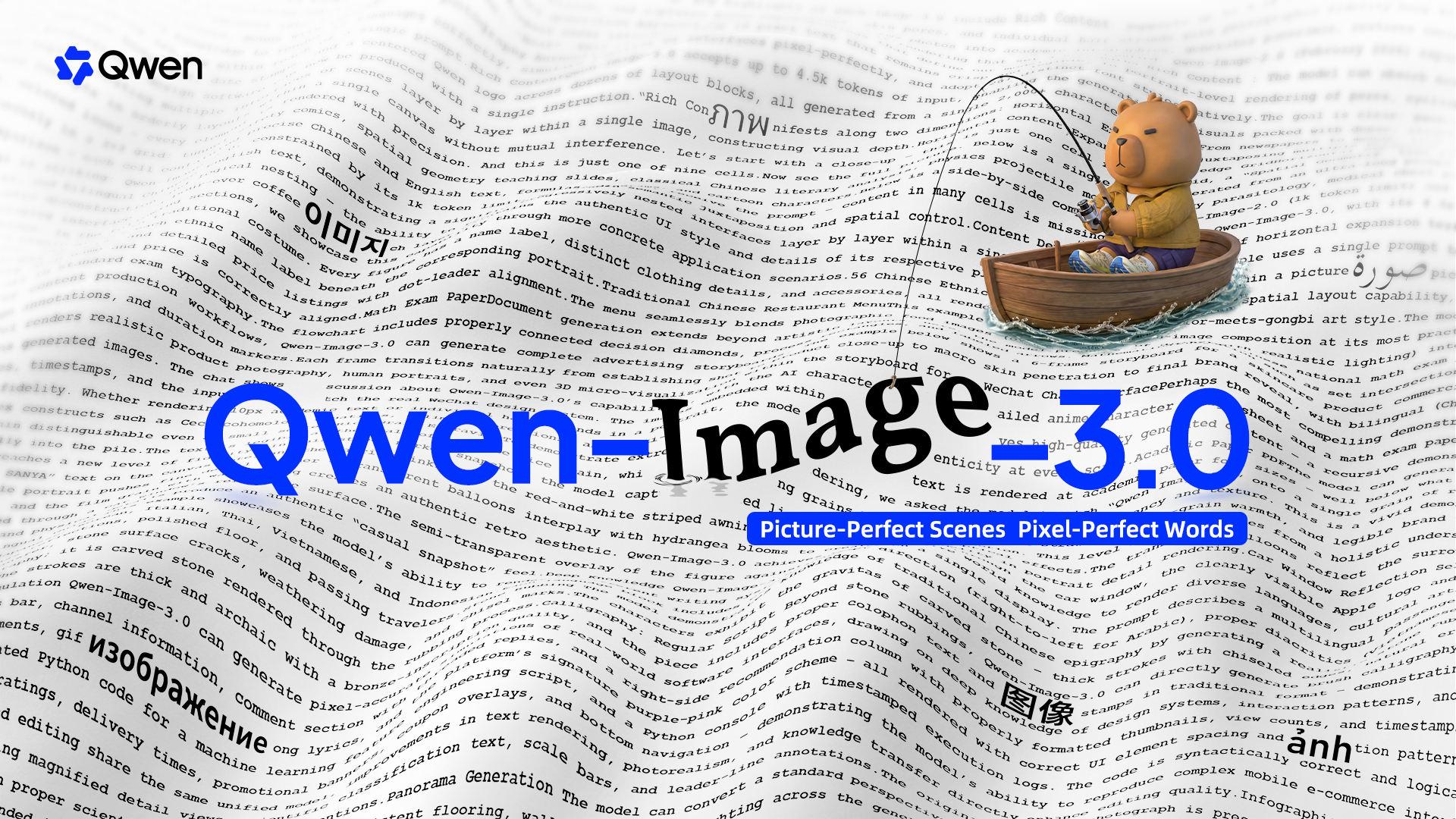
Qwen-Image シリーズの第 3 世代となる基盤画像生成モデル「Qwen-Image-3.0」をリリースします。Qwen-Image-1.0 のキーワードが「精度」であり、Qwen-Image-2.0 が「精度、多様性、完全性、美しさ、そして真実味」であったのに対し、Qwen-Image-3.0 の核心は単一の言葉に集約されます。それは「リアル(Real)」です。
この「リアル」は、以下の 3 つの次元で体現されています。
- 豊富なコンテンツ: 最大4.5k トークンの入力をサポートし、新聞、ストーリーボード、試験用紙といった複雑なレイアウトを難なく生成します。
- 本物のディテール: 10pxという極小の文字も正確に描画でき、毛穴や髪の毛一本に至るまで、微細レベルで生き生きとした描写を実現します。
- 深い知識: 12言語をネイティブに描画可能で、Web ページ、ゲーム、ライブ配信など主流のインターフェースをシミュレーションし、豊富な世界知識を活用します。
一言で言えば、Qwen-Image-3.0 は単に見た目が良いことだけを追求しているわけではありません。それは「実用性」を追求しており、画像生成ツールを真に現場で活用できる生産性の高い道具へと進化させました。
豊富なコンテンツ
まずは Qwen-Image-3.0 が生成した以下の画像をご覧ください。
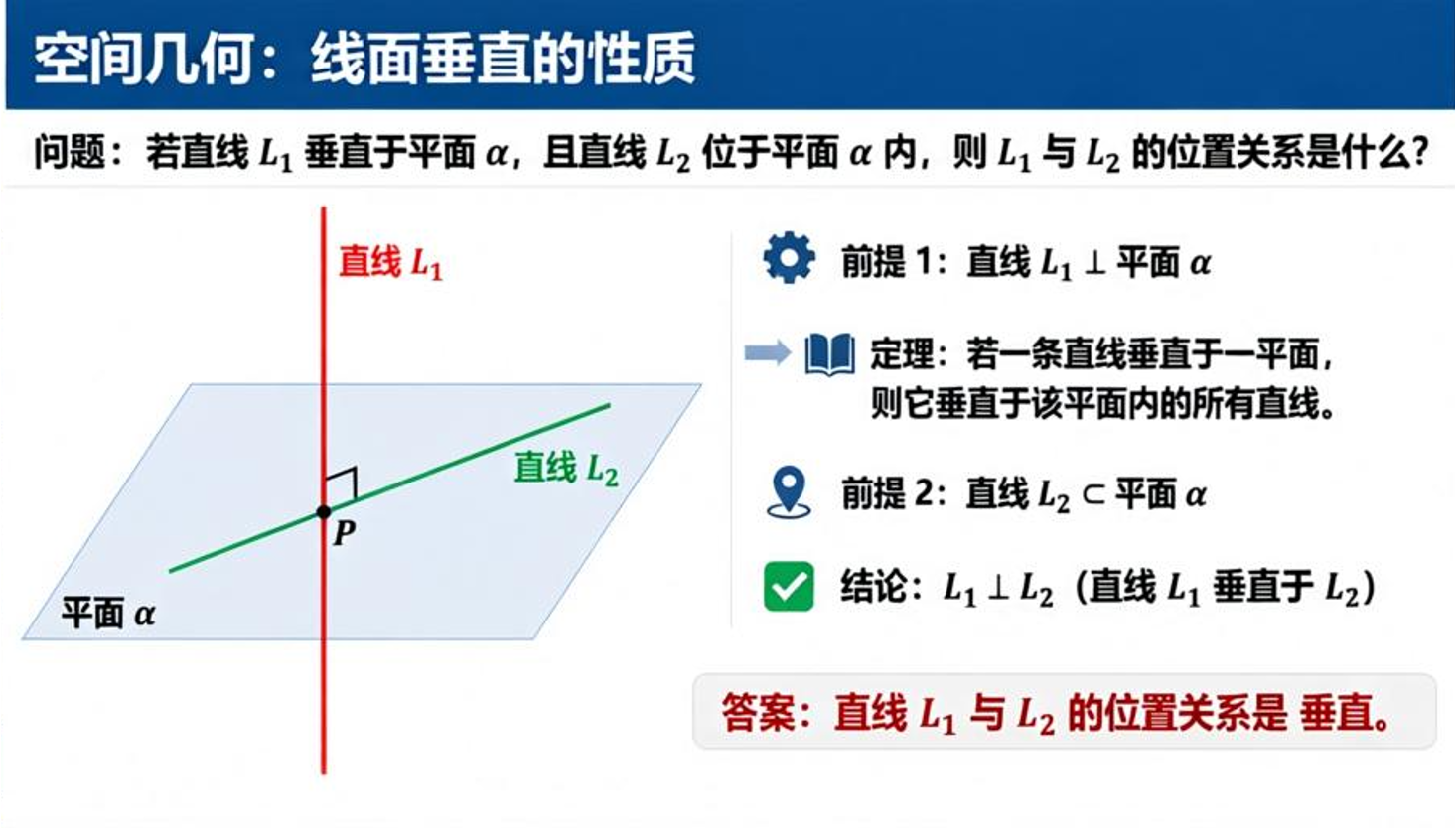
ご覧の通り、Qwen-Image-3.0 は数式スライドを正確に描画できます。空間的な関係性や数式記号、定理の説明といった豊富な視覚情報を適切に配置し、情報の密度も高い仕上がりです。
しかし、これが Qwen-Image-3.0 の真の強みではありません。実はこれはその能力の「1/9」に過ぎません。なぜなら、この画像は Qwen-Image-3.0 が生成した複雑な 3×3 グリッドの単一のセルにすぎないからです。元の画像を見てみましょう。
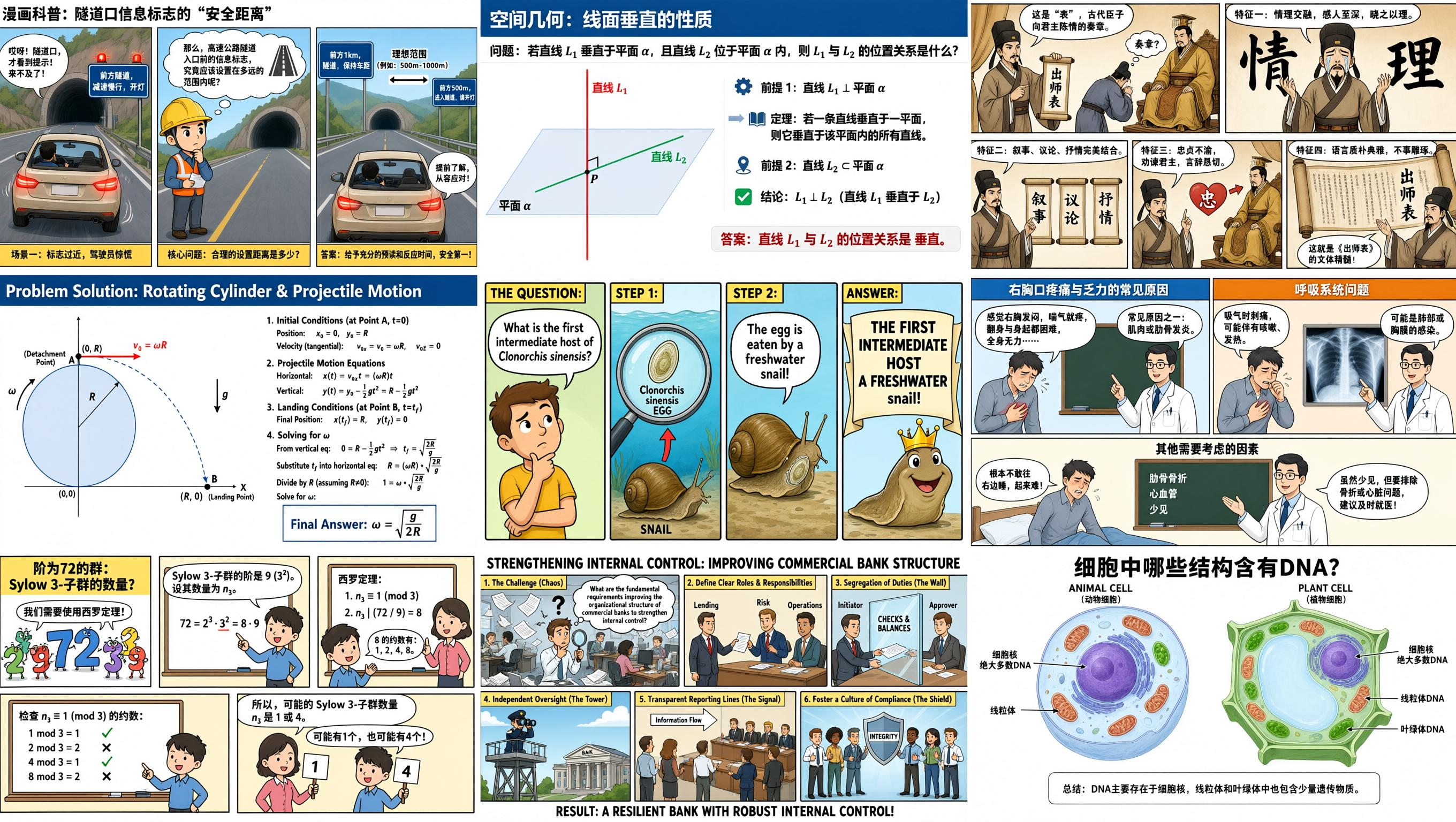
その通りです。上記の画像全体は、複数の画像を拼接したのではなく、Qwen-Image-3.0 が一度の処理で生成したものです。この画像が難しい理由は、各セルが複雑なインフォグラフィックである点にあります。この 3×3 グリッド全体を正確に記述するには、なんと 3,700 トークンが必要になります。
これら 3,700 トークンは、トンネル安全の漫画、空間幾何学の授業、「出師表」の文体分析、物理学的な放物運動、生物学の寄生虫解説、右胸疼痛の医療図解、群論におけるサイロウの定理、銀行内部統制管理のインフォグラフィック、そして細胞 DNA 構造の比較説明をすべて描き出すために使われます。各セルには正確な中国語と英語のテキスト、数式、チャート、キャラクターなど、多様な要素が含まれています。
それでも Qwen-Image-3.0 にとっては容易なことです。その理由は、Qwen-Image-3.0 が許容する指示の長さを 4,500 トークンに引き上げたためです。これにより、極めて複雑で情報密度の高いビジュアルレイアウトを理解し、描画することが可能になります。
これは前述した「リッチコンテンツ」の特徴の一つであり、コンテンツが水平方向へ拡張できることを意味します。この水平方向への拡張性は、モデルのセマンティック・ジャクストポジション(意味的な並置)とスプーシャルコントロール(空間制御)における強さを反映しています。つまり、単一の画像内で複数の概念を秩序立てて配置し、互いに干渉させることなく描画する能力です。
水平方向への拡張に加え、「リッチコンテンツ」のもう一つの重要な特徴が深さです。
水平方向の拡張は「1 つのキャンバス上にいくつの並列要素を配置できるか」を試すものですが、深さはモデルのセマンティック・デコンポジション(意味的分解)とロジカル・ネステイング(論理的な入れ子構造)を試すものです。単一の画像内で複数のインターフェースを層ごとに描画できるかどうかを検証します。
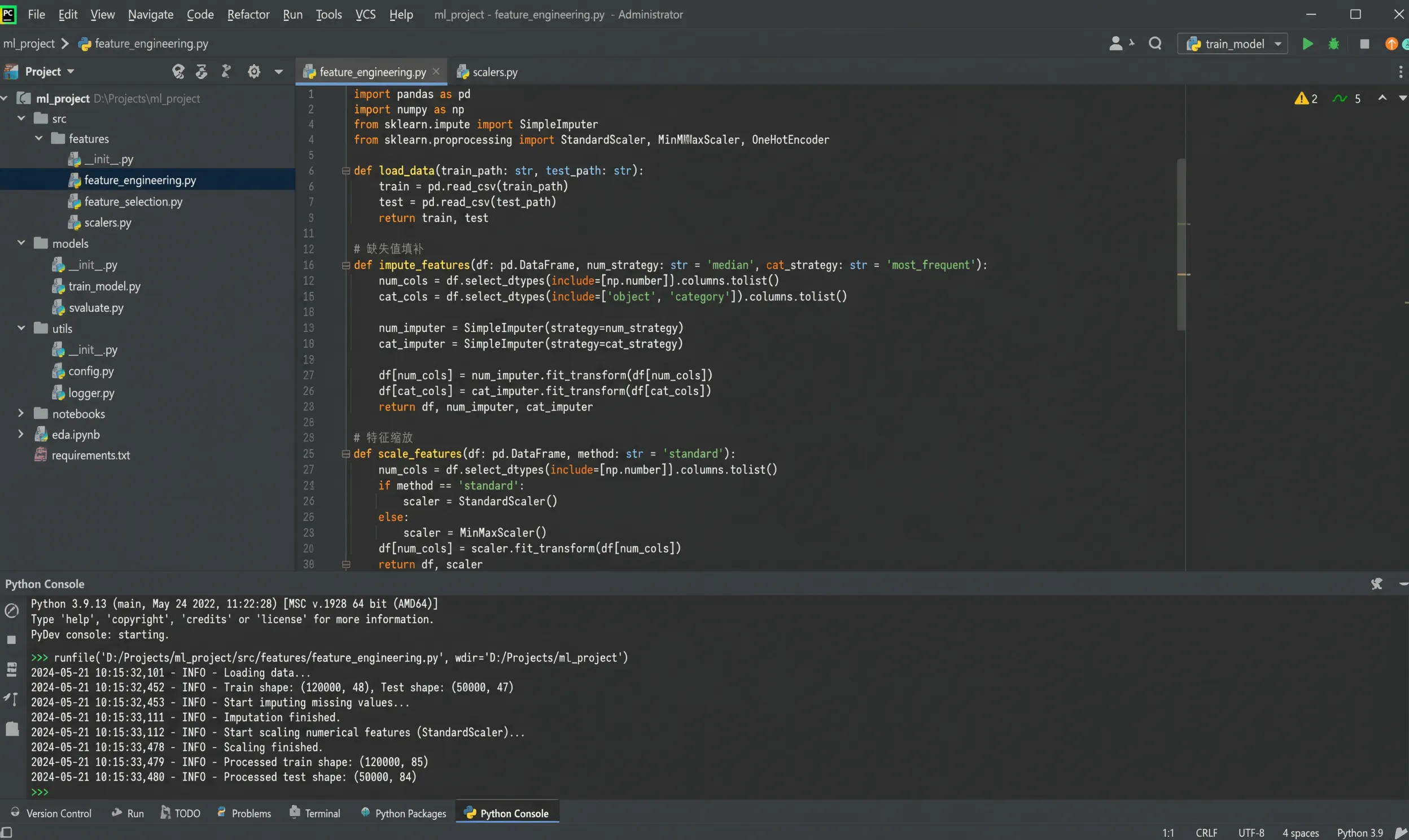
以下の例では、1 つの指示で外側から内側へと、VSCode のプログラミングインターフェース → Qwen Chat のチャットインターフェース → WeChat のメッセージ画面 → ドリップコーヒーのポスターを表示しています。各レイヤーはそれぞれの UI に固有のスタイルとディテールを忠実に保ち、「ピクチャー・イン・ピクチャー・イン・ピクチャー」という視覚的な奥行きを生み出します。
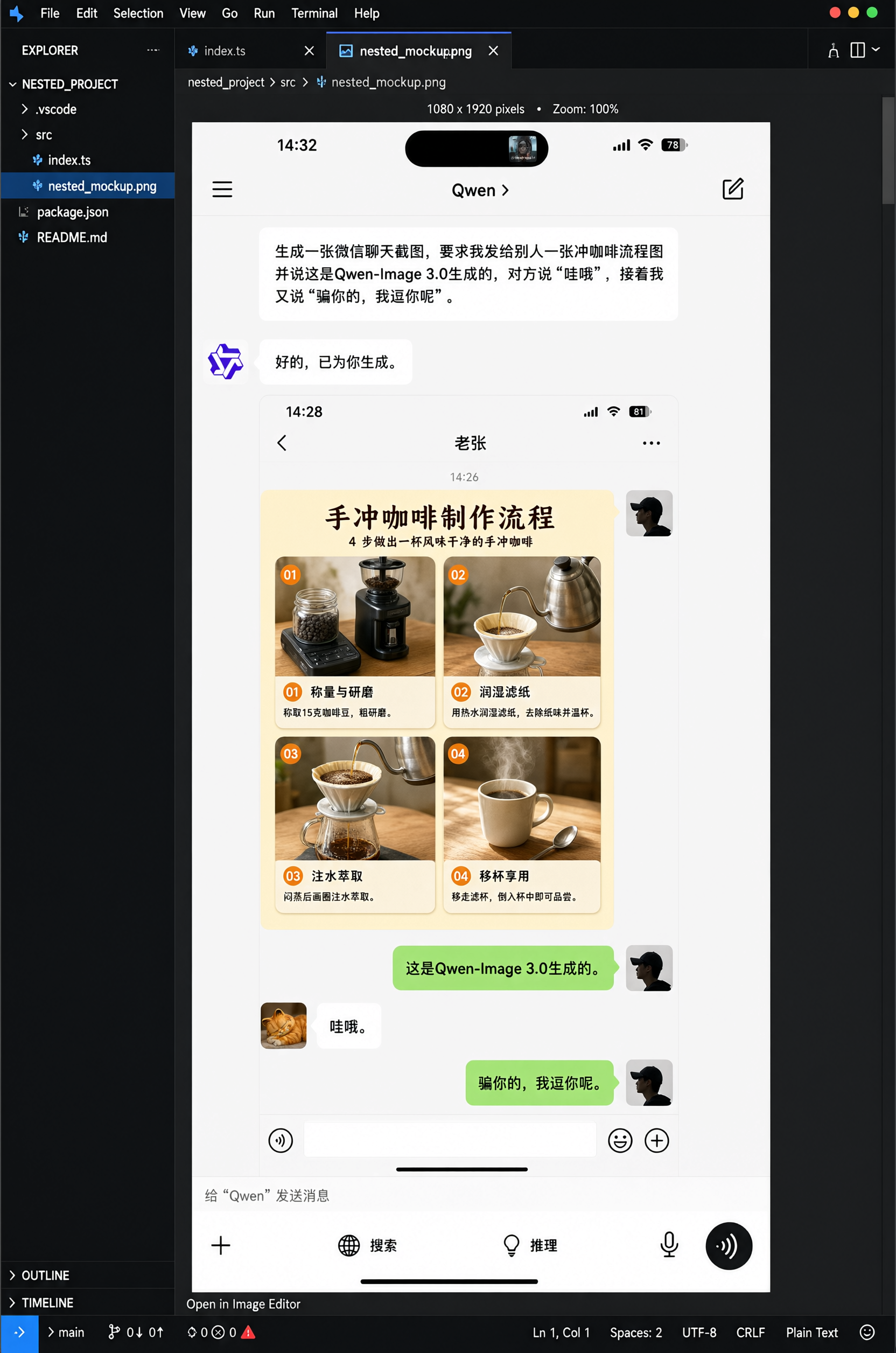
上記の 2 つの例は、「リッチコンテンツ」が水平方向と垂直方向の両方の次元において何を意味するかを説明しています。
忠実なディテール
「リッチコンテンツ」が「どれだけ描くか」という問いに答えるなら、「忠実なディテール」は「いかに細かく描くか」という問いに応えるものです。Qwen-Image-3.0 は、微細レベルの描写精度において新たな高みに到達しました。10px の小さな文字も明確に読み取れるようになり、毛穴や髪の毛一本一本まで精巧に表現され、肌の質感は写真のようなリアリティを備えています。
まずは、小さな文字の正確な描画能力から見ていきましょう。
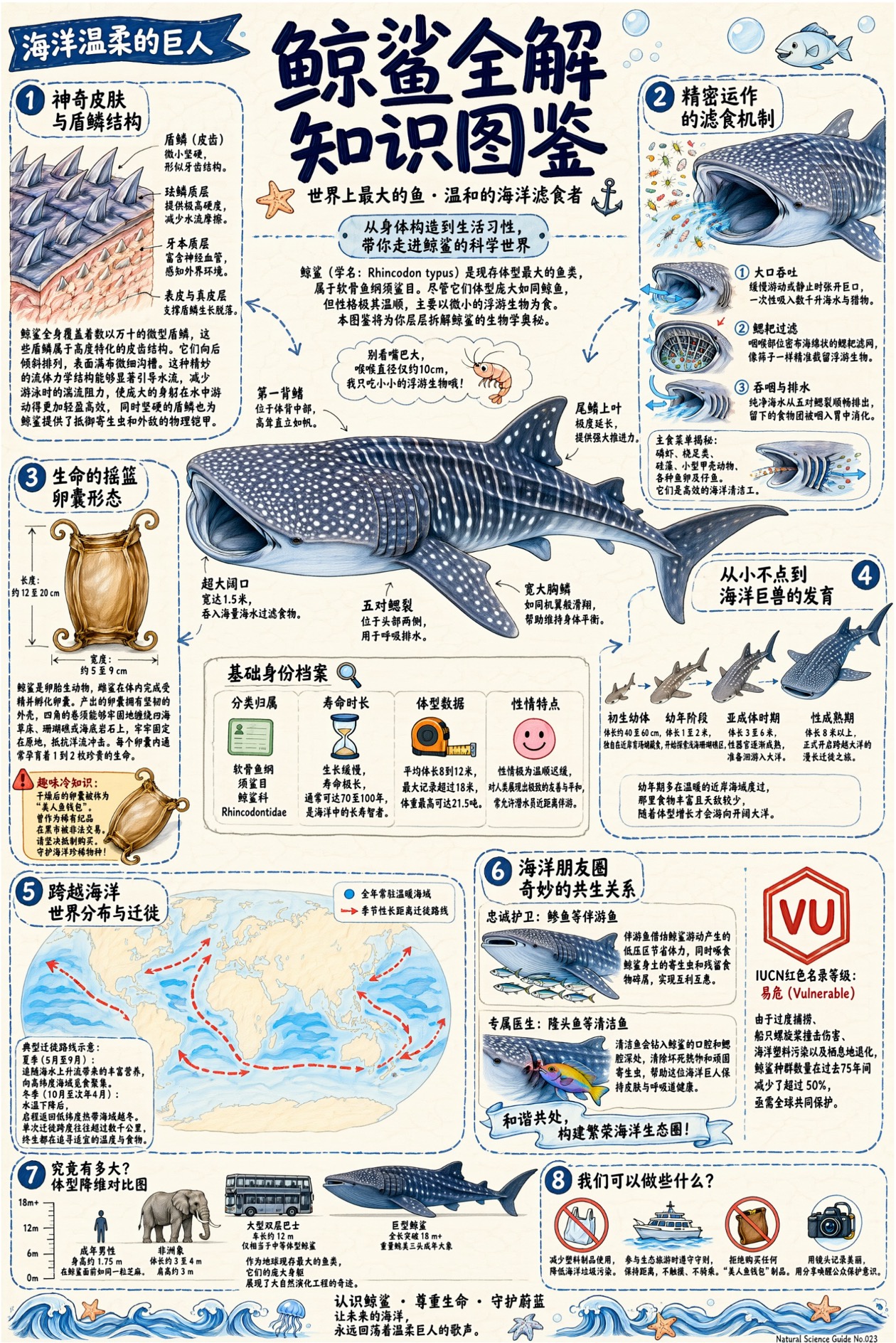
以下はサメザメに関する知識インフォグラフィックです。大量のテキストと図版が含まれていますが、Qwen-Image-3.0 はすべての領域を正確にレンダリングしています。
学術論文は、小さな文字の描画能力に対する究極のストレステストです。密度の高い LaTeX 数式、添字や上付き文字、ギリシャ文字、定理番号など、1 つの記号も誤ってはいけません。
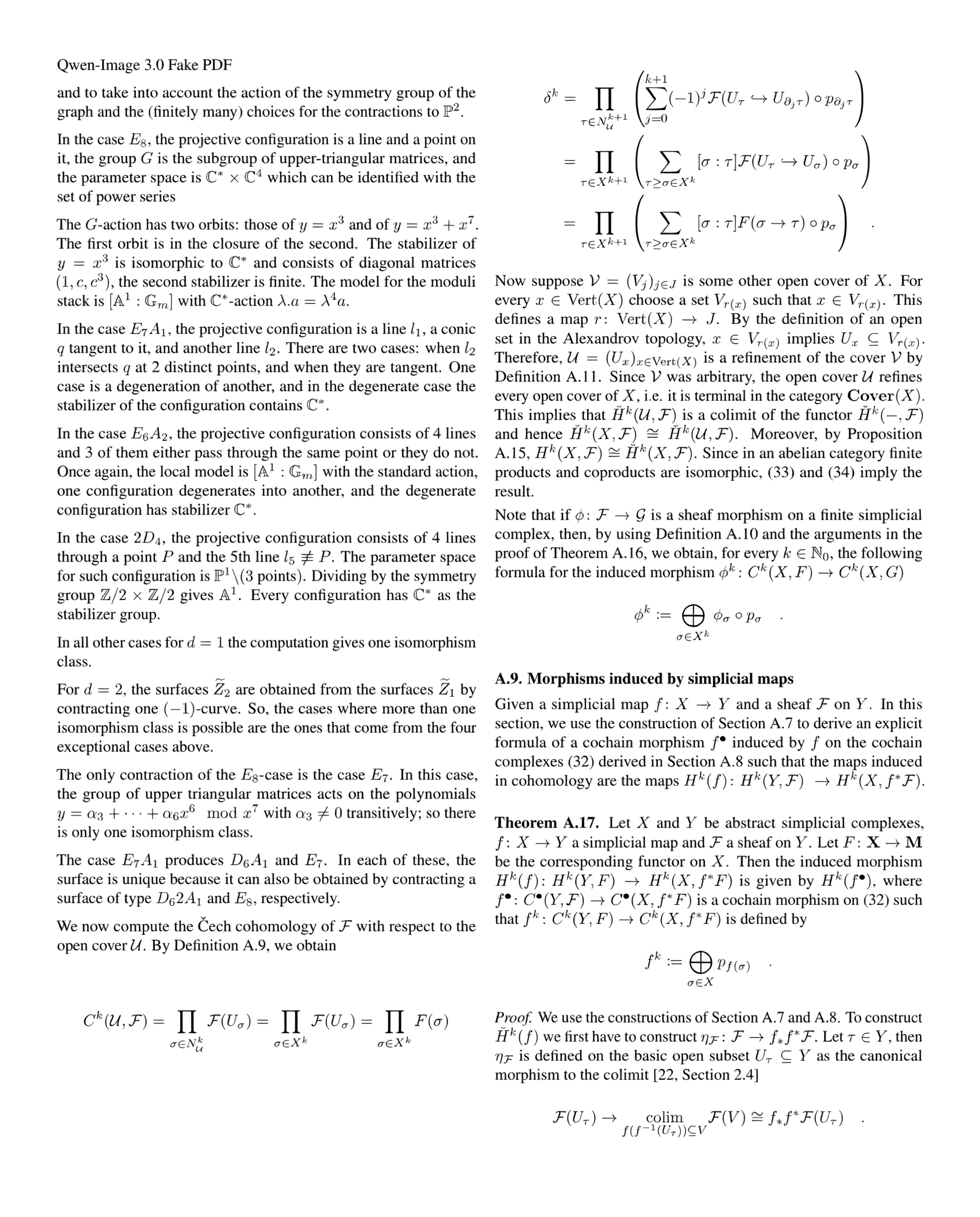
このモデルは、代数幾何学の分野における学術論文の 1 ページ全体をレンダリングします。複雑な数式の導出が複数行にわたって含まれていますが、上付き文字や添字、中括弧、分数バー、そして多行アライメントといった LaTeX の組版要素もすべて正確に表現されています。小さなフォントサイズであっても、優れた可読性を維持しています。
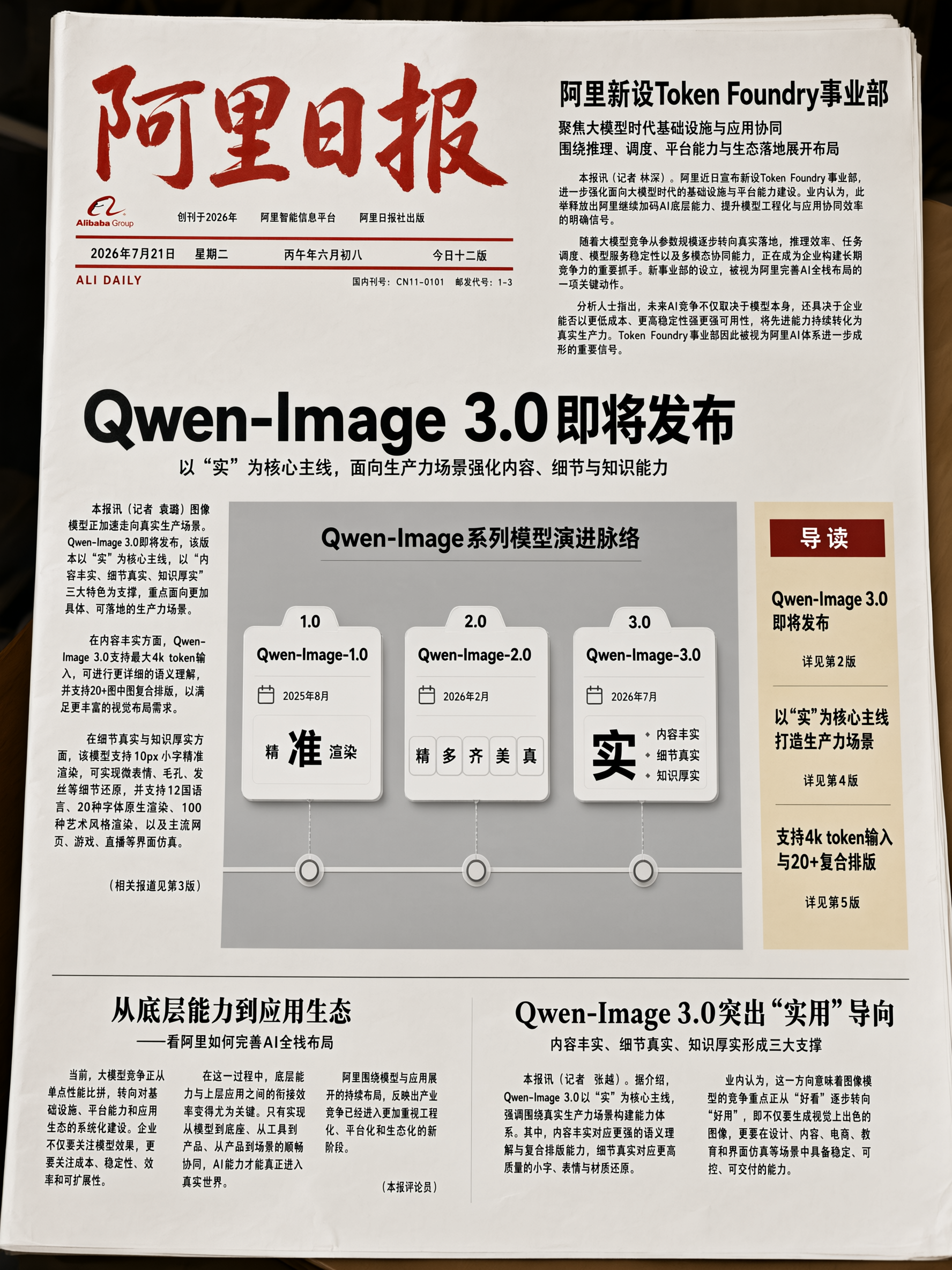
Qwen-Image-3.0 は、リアルな紙面にも細かな文字を生成できます。以下の例は同モデルが作成した新聞ですが、密度の高いテキストを正確に再現するだけでなく、新聞らしい質感も忠実に表現しています。
編集タスクにおいても、細かな文字の生成が可能です。例えば以下のケースでは、モデルがリアルなスタイルで注釈を付け加えています。
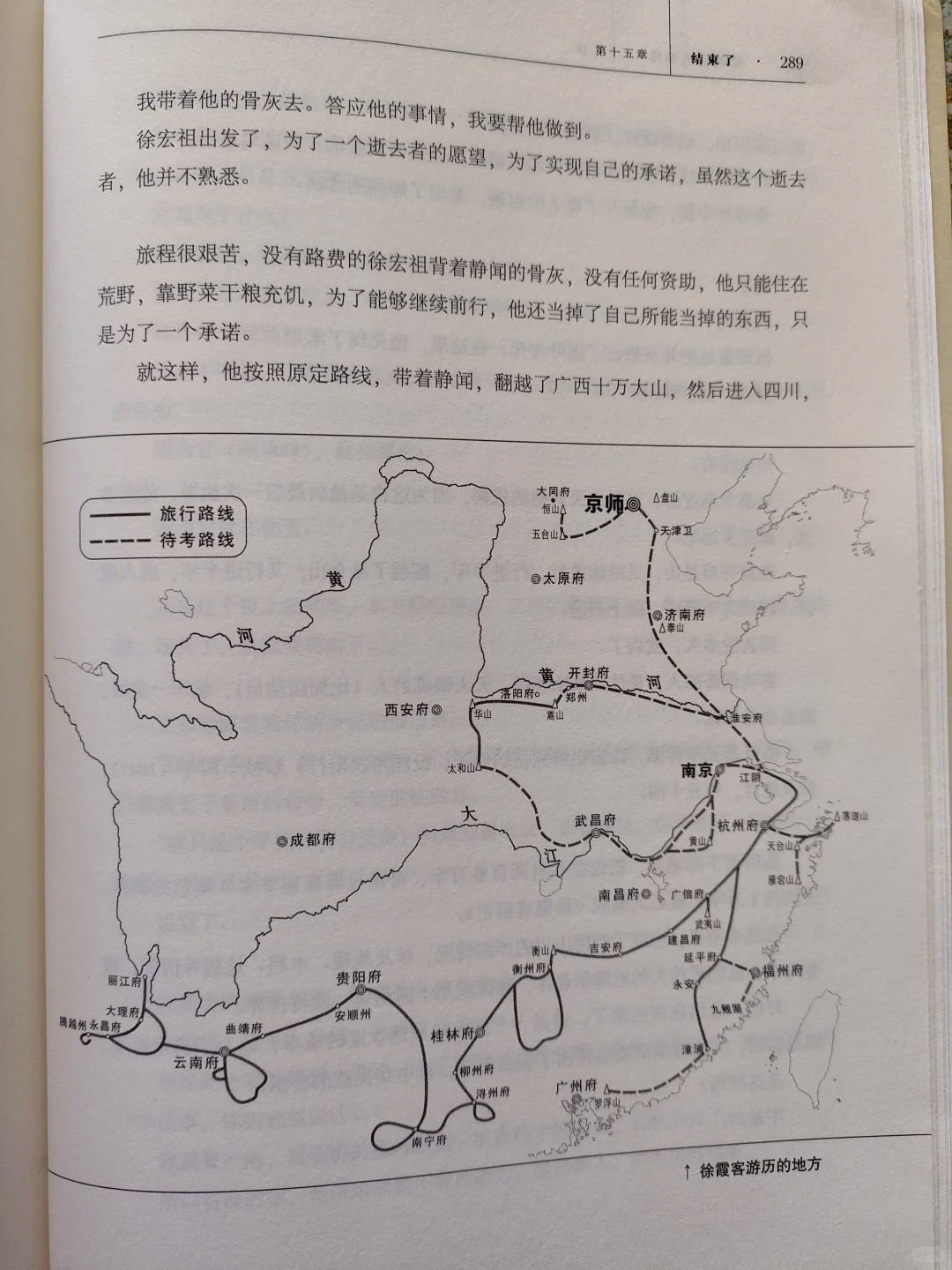
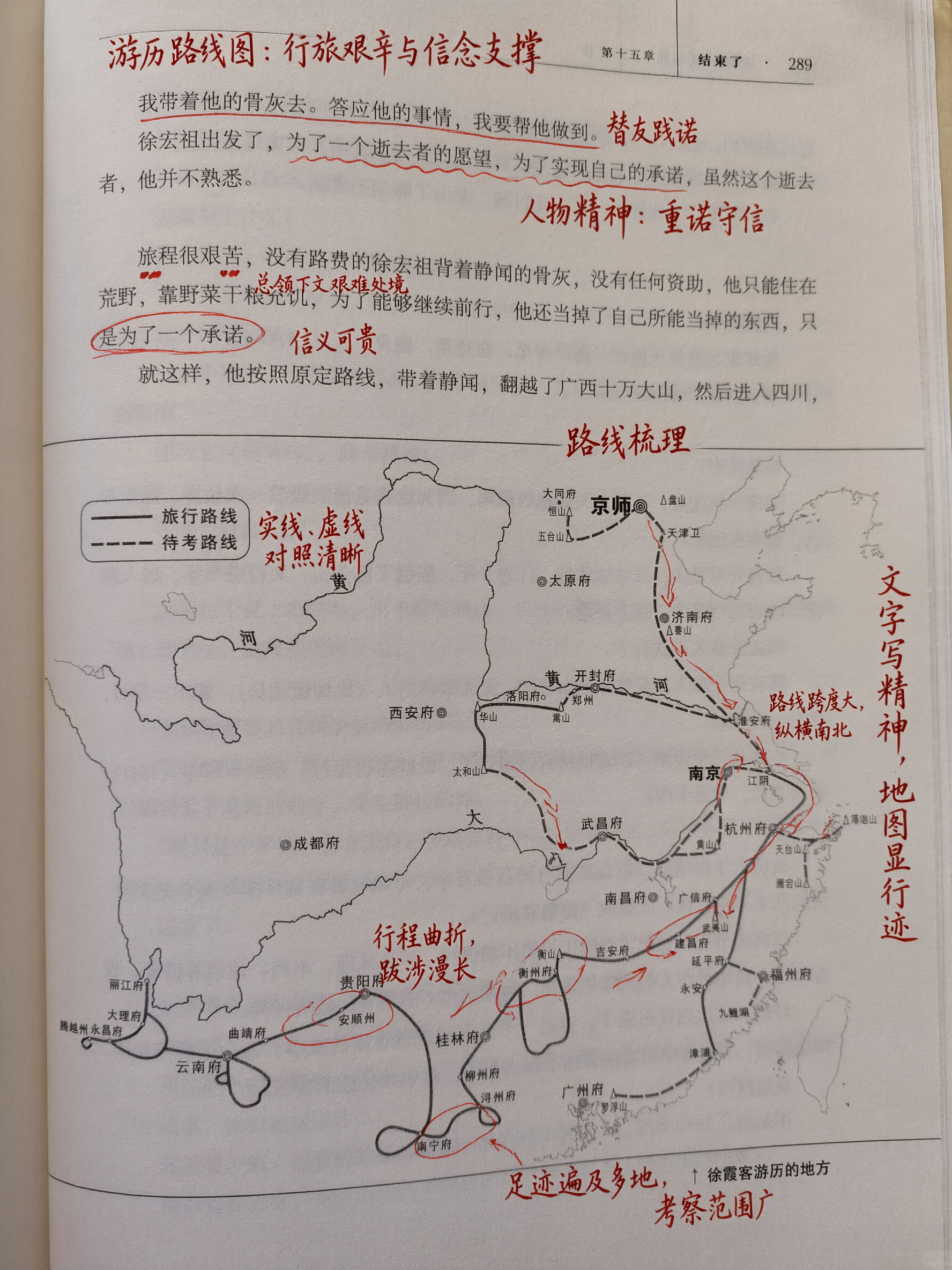
モデルは、本ページに赤い手書きの注釈を重ねて表示します。下線、波線、丸印、矢印、短いコメントなど、高校生の授業ノートのような自然で流れるような筆跡で描かれ、そのスタイルを完璧にシミュレートしています。
文字やレイアウトの精緻な再現に加え、「Authentic Details(本物のディテール)」は質感描写においても際立っています。以下に示す 2 つのポートレート写真では、モデルが極めて繊細な質感を捉えています。
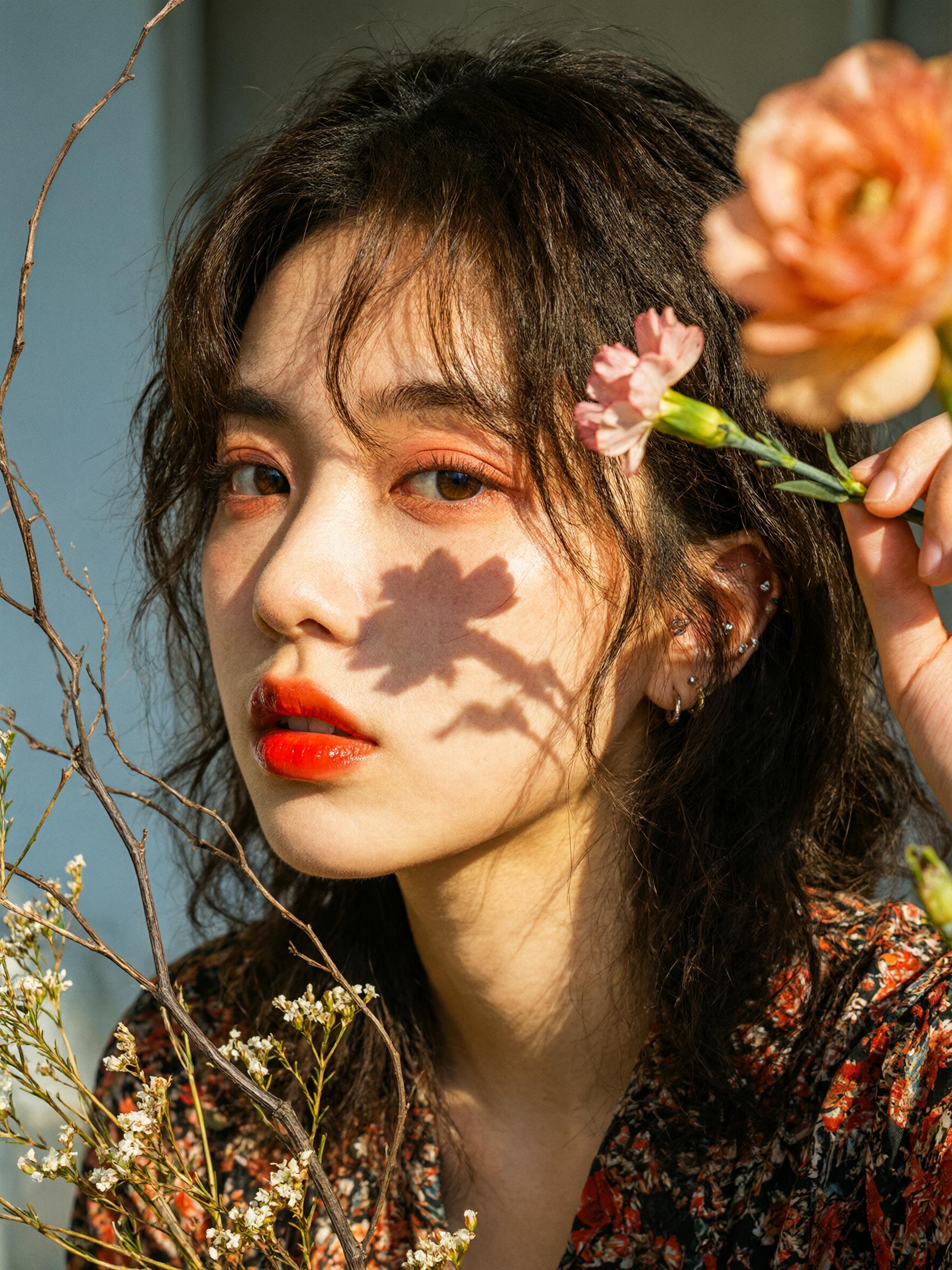
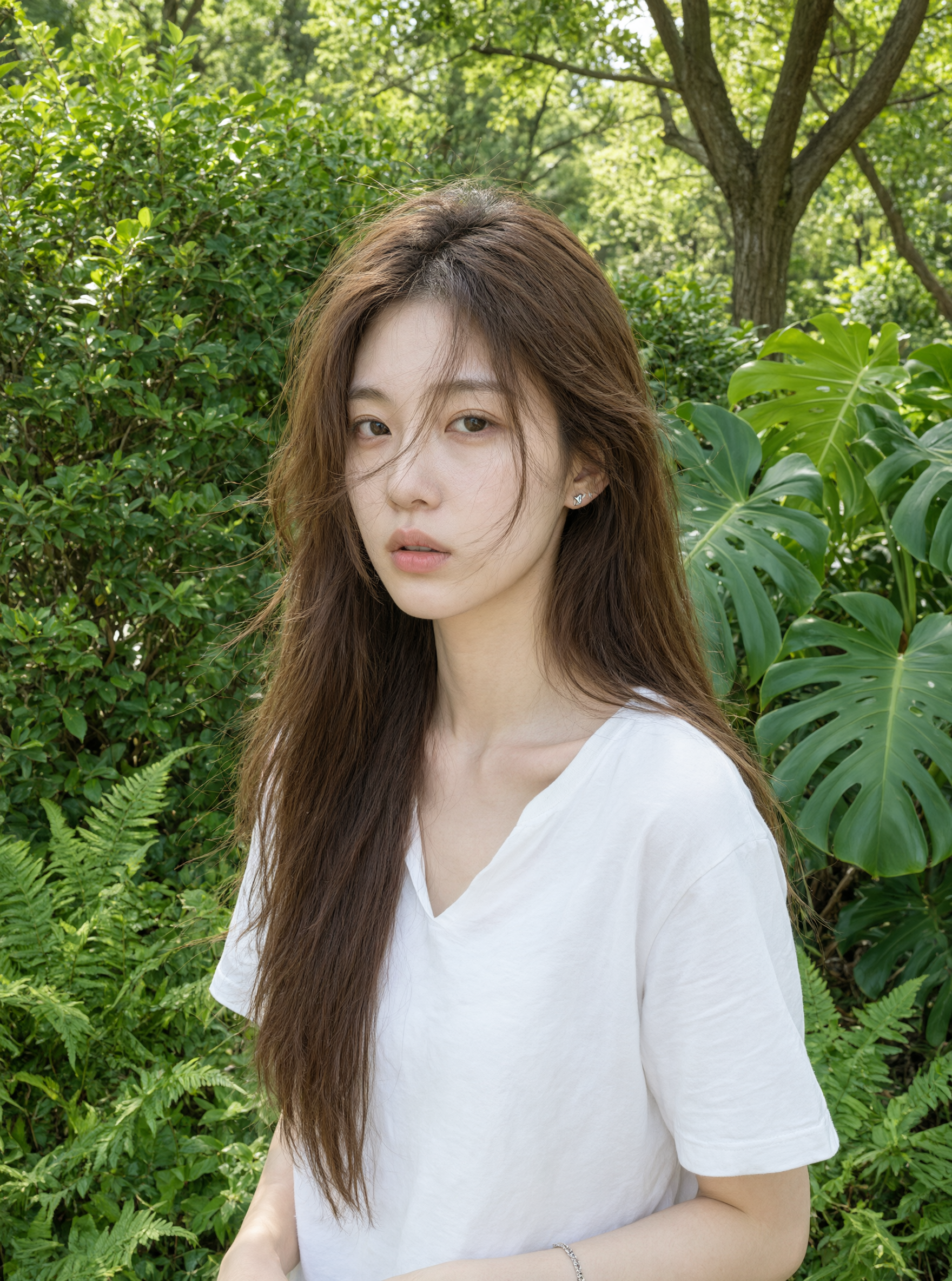
ポートレートに限らず、モデルは他の物体の繊細な質感も描写可能です。
.png)
.png)
.png)

編集タスクにおいても、詳細に富んだ画像を生成することが可能です。
損傷や欠落がある伝統的な絵画に対して、このモデルは元の芸術様式と筆致を忠実に維持しながら、欠けている部分を修復することができます。
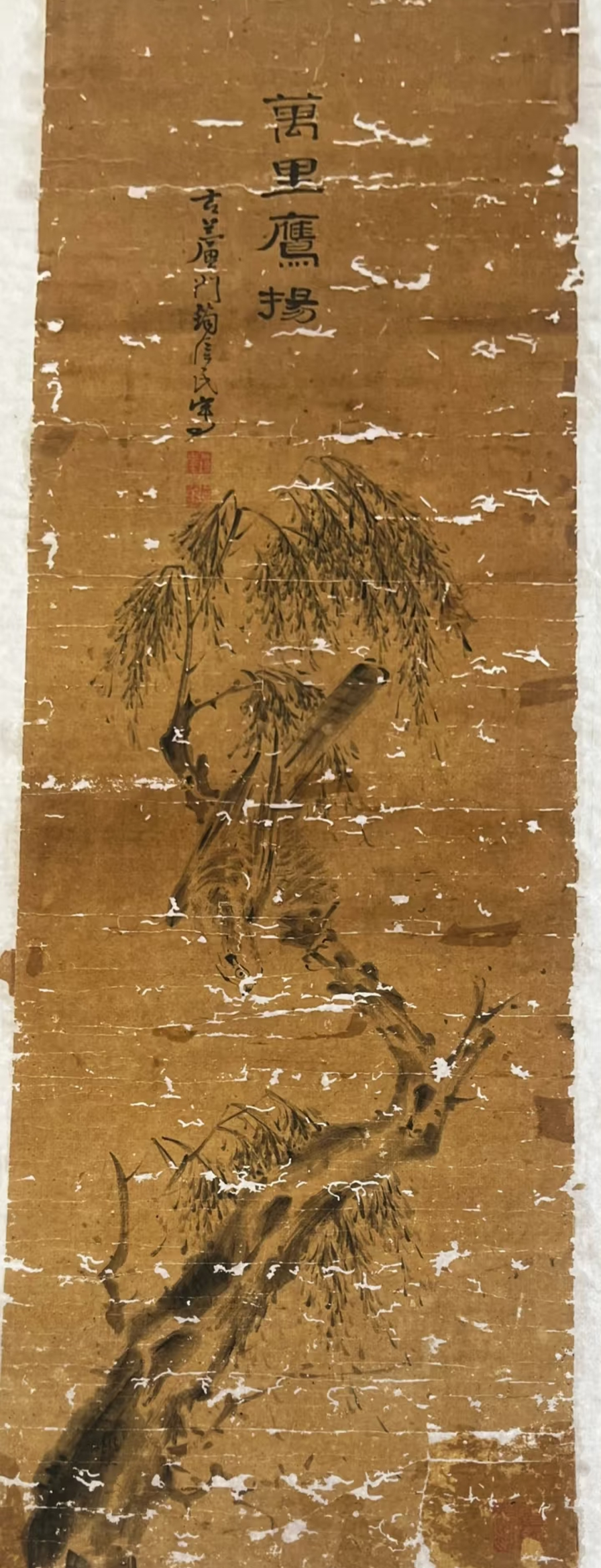
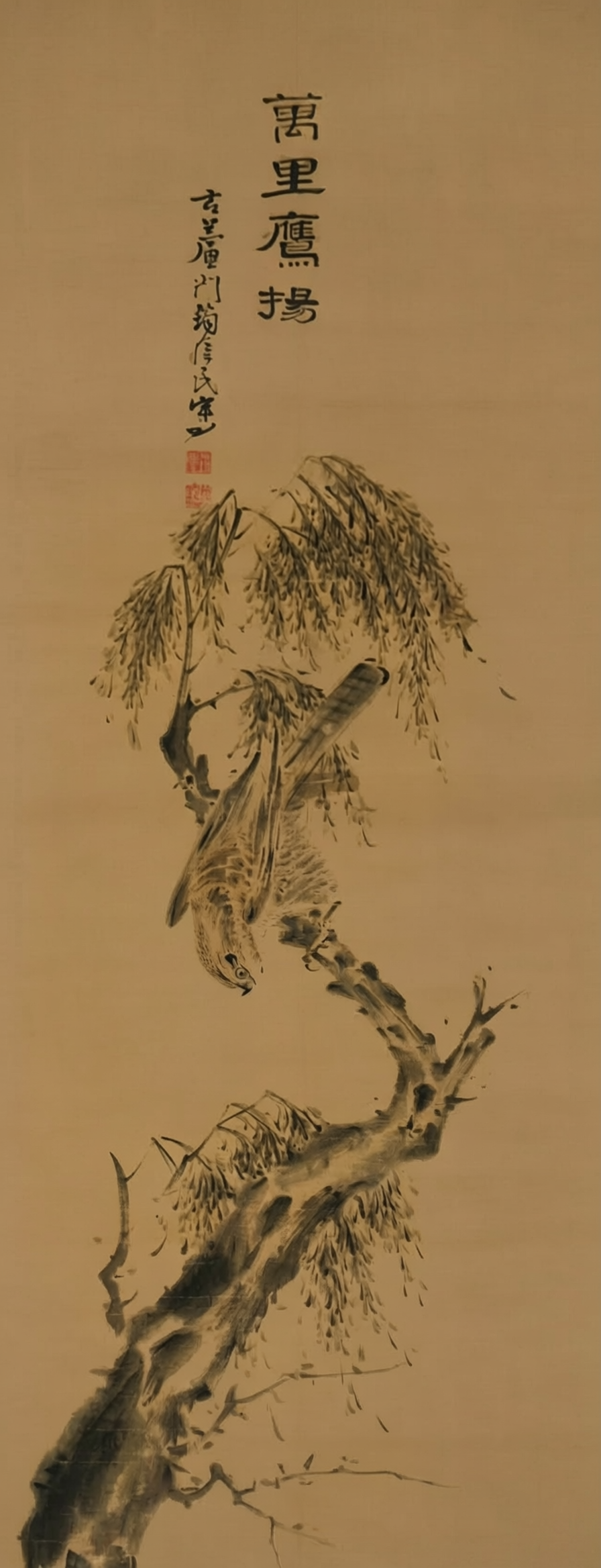
このモデルは、元の作品の筆致に合わせた修復を行い、墨の濃淡や羽根の質感、構図のバランスを保ちつつ、カビの斑点や損傷の跡を除去して鷹と戦う絵画の復元を完了します。
深い知識
「リッチコンテンツ」は「どの程度複雑に描画できるか」を、「オーセンティックなディテール」は「どれほどリアルに描画できるか」を、「ディープ・ナレッジ(深い知識)」は「どの程度の広範囲を描画できるか」を示します。Qwen-Image-3.0 は、12 言語、複数のフォント、100 以上の芸術的スタイル、そして多様な UI インターフェースの描画能力を備えており、これらはすべてモデルが持つ世界知識への深い理解によって支えられています。
以下の 3 つの例では、それぞれ日本語、韓国語、スペイン語が正確に描画されています。
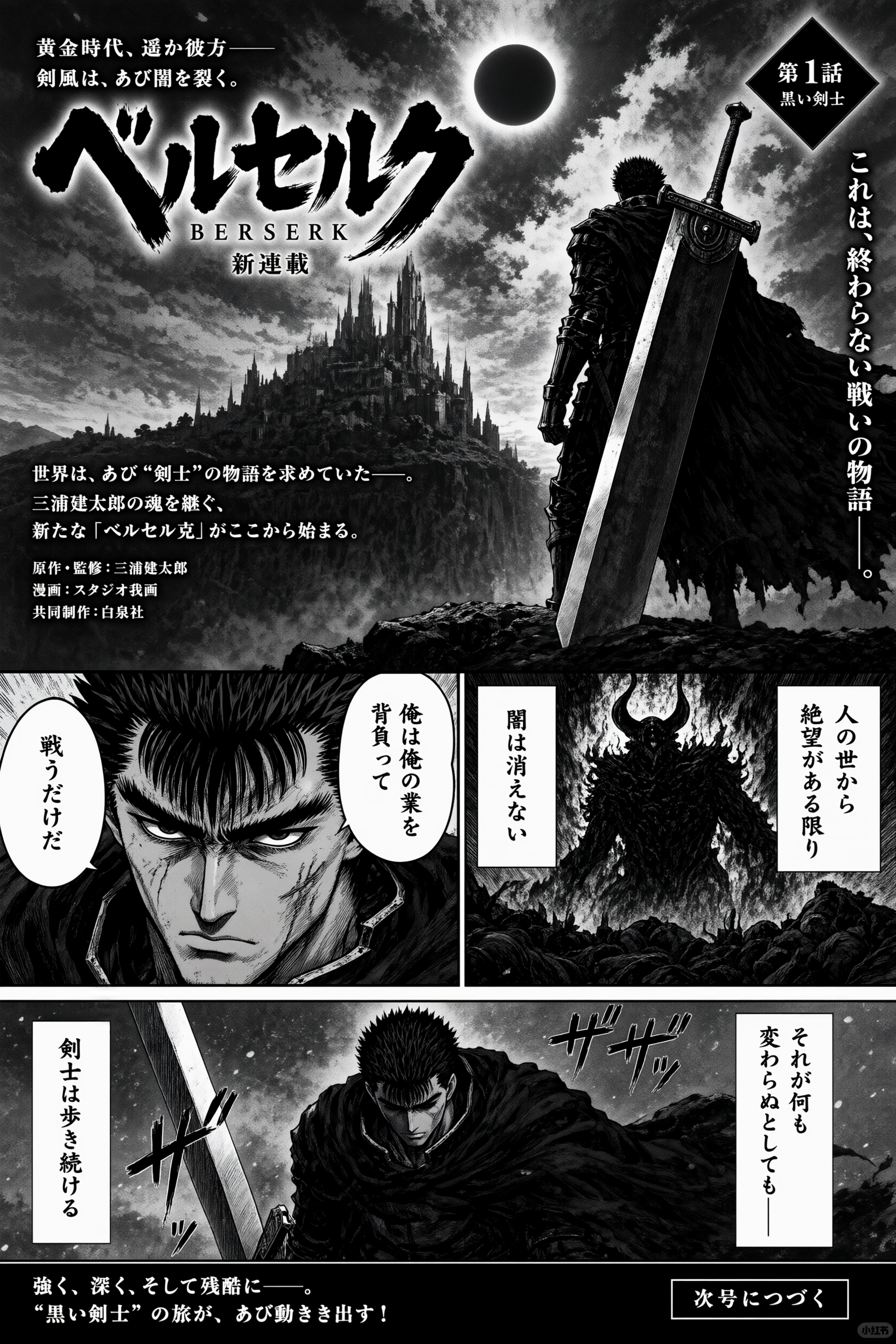

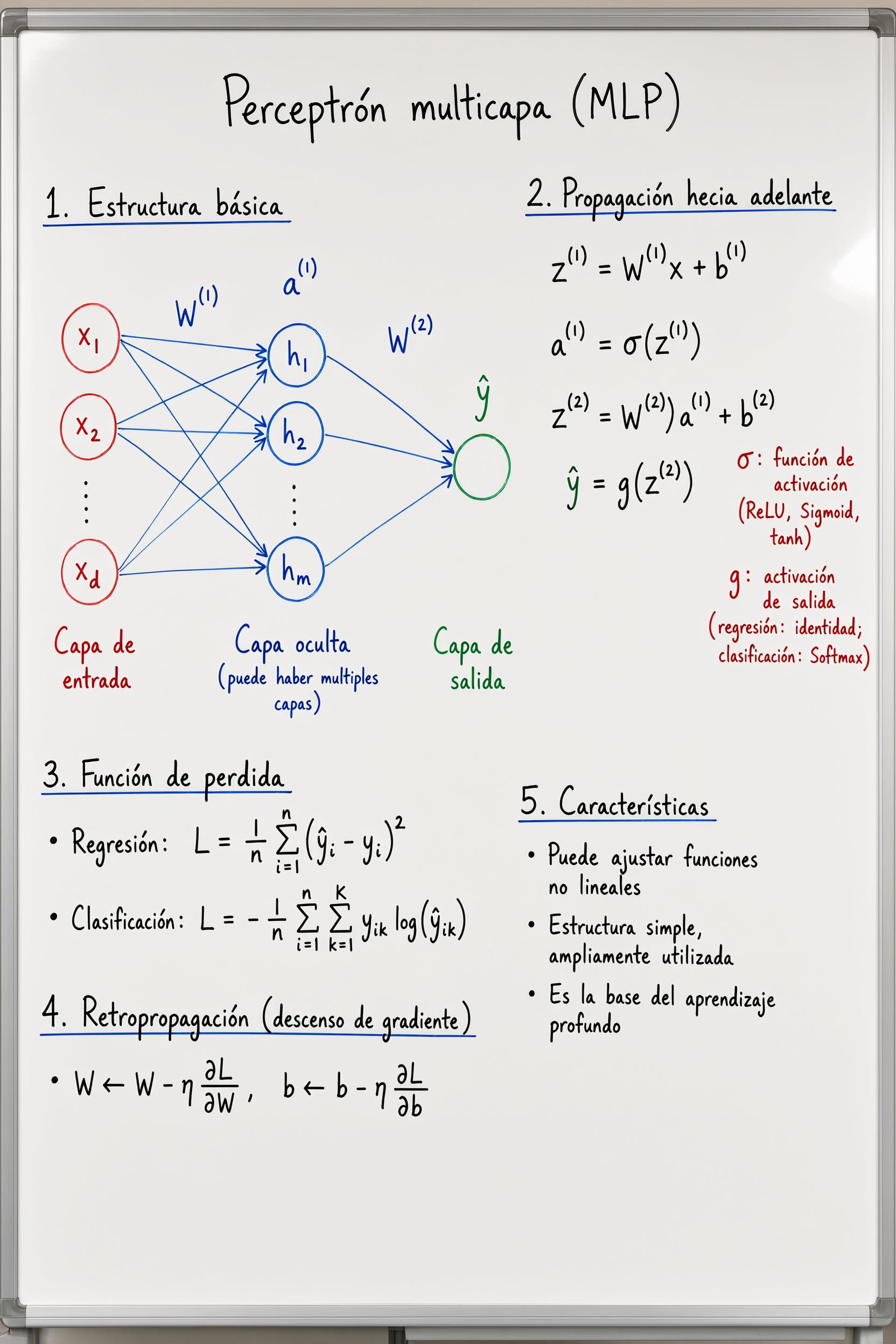
複数の言語の正確な描画に加え、モデルは豊富な世界知識も備えています。特に、多様なリアルな UI インターフェースを生成することが可能です。
また、モデルの強力な世界知識を活用してインフォグラフィックを作成することもできます。以下の例では、実際の画像に基づいて複雑なインフォグラフィックを生成しています。
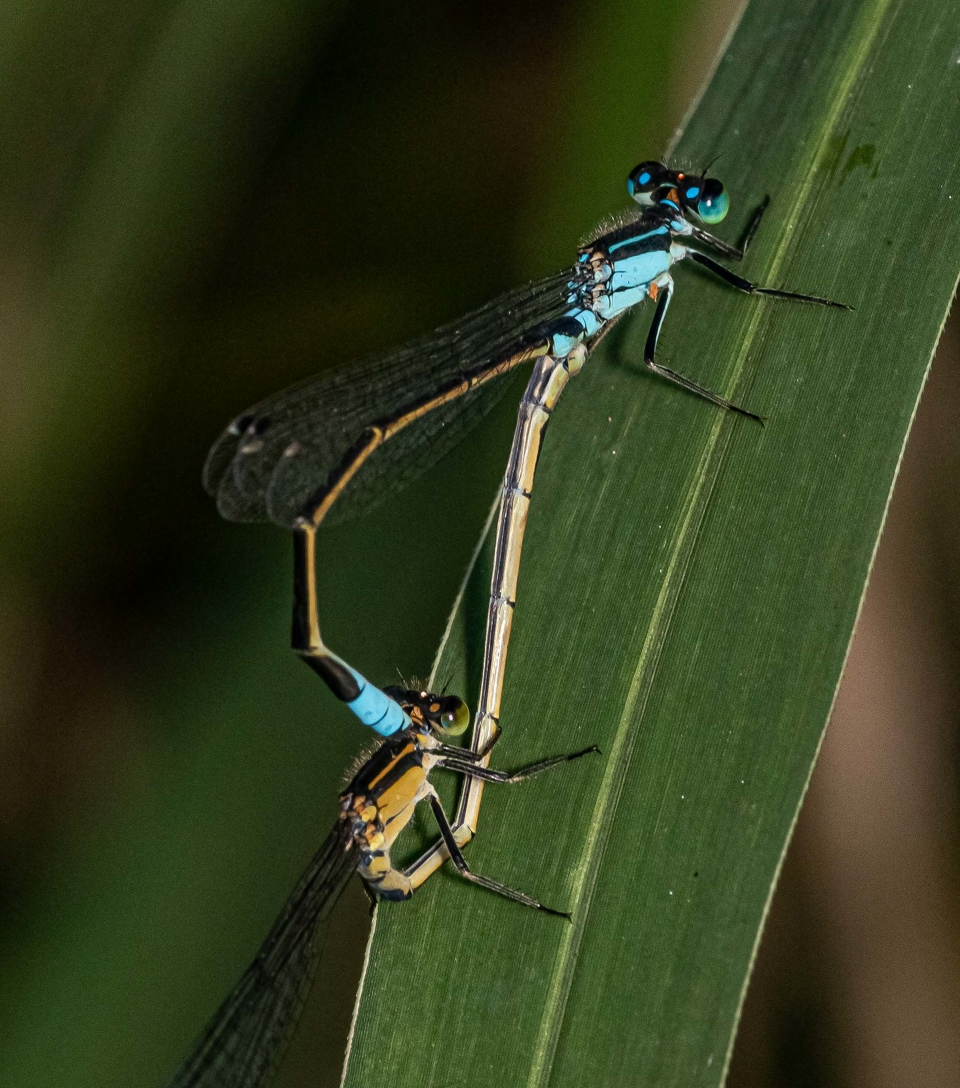
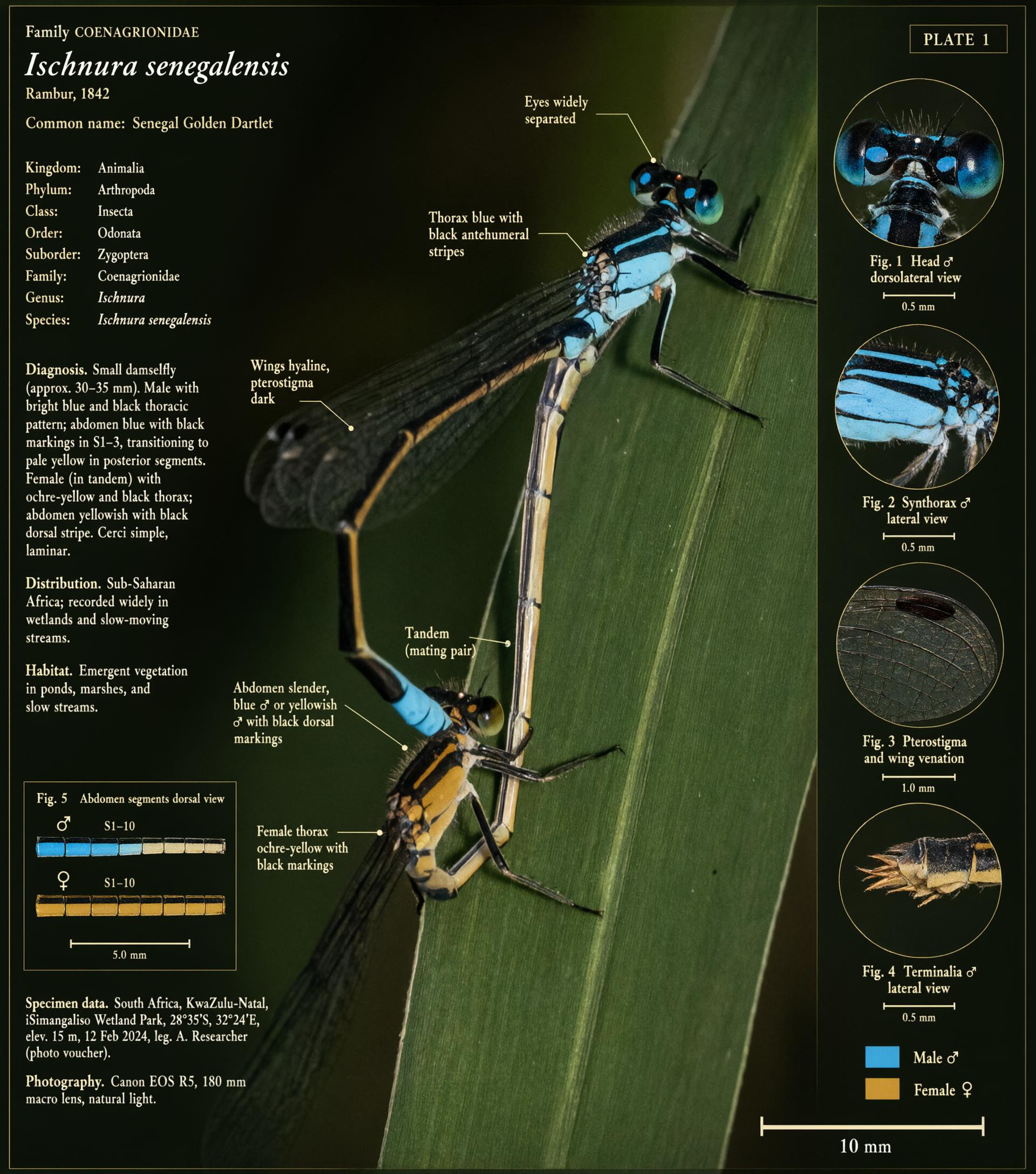
元の昆虫写真の主要な被写体を保ちつつ、分類情報や形態注釈、拡大した詳細ビュー、スケールバーといった専門的な要素を追加。これにより、学術誌への直接掲載が可能な研究用図版として完成します。
モデルはすでに保有する世界知識に加え、インターネットに接続して最新の情報を取得することも可能です。例えば、7 月 21 日の杭州の天気予報画像を生成させることもできます。
After editing.png)
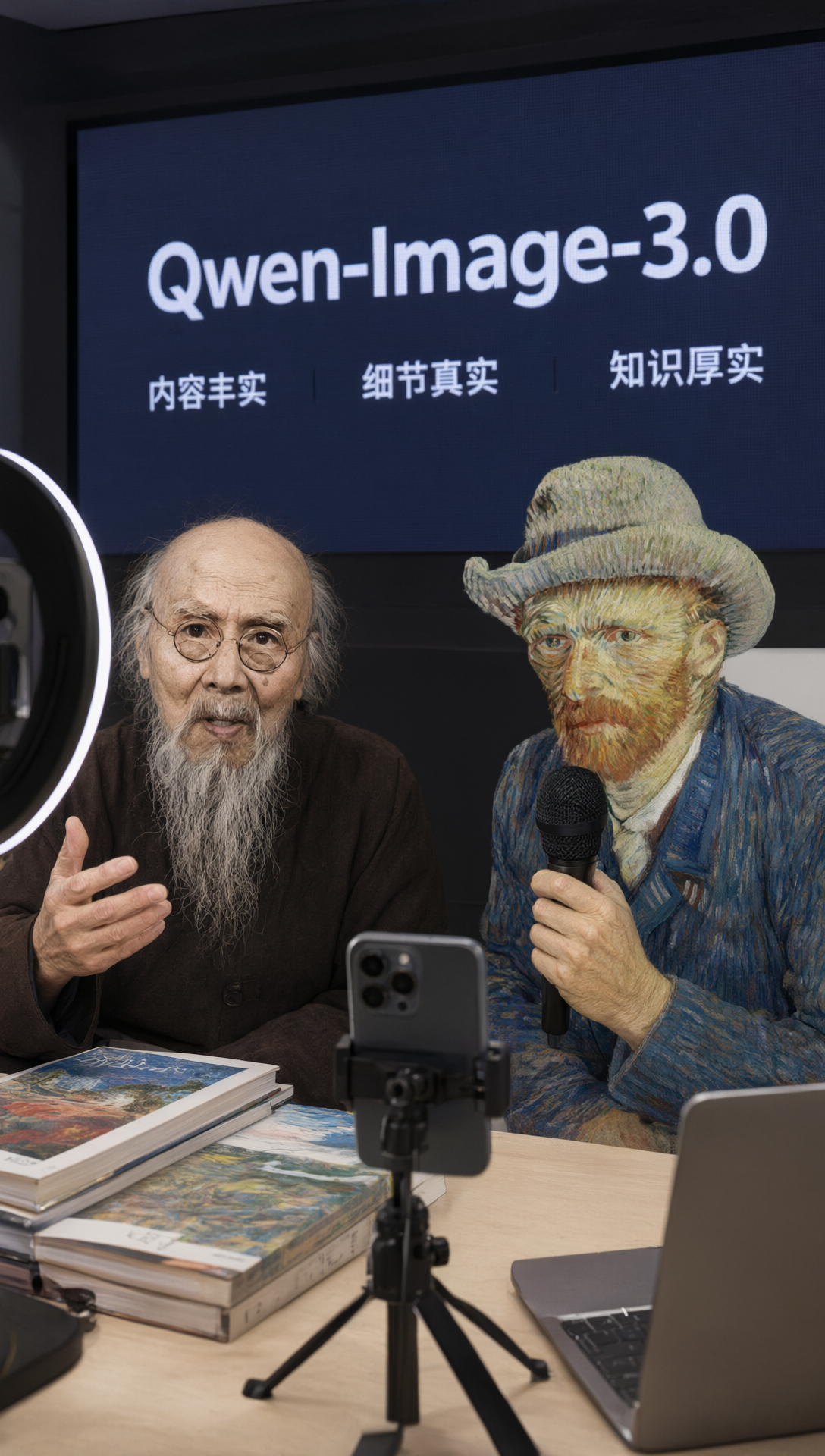
特定の IP フィギュアを検索し、それに基づいた創作も可能です。例えば、斉白石とヴァン・ゴッホが Qwen-Image-3.0 をライブ配信ルームで紹介する画像を生成することもできます。
結論
Qwen-Image-1.0 の「精度」から、Qwen-Image-2.0 の「精度・多様性・完全性・美しさ・真正性」、そして現在の Qwen-Image-3.0 の「リアルさ」へと進化しました。私たちが常に追求してきたのは、画像生成を「使えるもの」から「実用的なものへ」、「見栄えが良いもの」から「役立つものへ」と転換させることです。
「リッチなコンテンツ」「本物のディテール」「深い知識」という 3 つのコア機能を備えた Qwen-Image-3.0 は、新聞の PDF や短編ドラマのストーリーボード、複雑な UI インターフェースといった高付加価値な業務シーンで大きな飛躍を遂げました。画像生成モデルの能力がさらに向上するにつれ、デザイン、コンテンツ制作、教育、EC 分野など、より多くの領域で真の生産性価値を引き出すことになるでしょう。
今回のアップデートにおける主要なハイライトは以上です。Qwen-Image-3.0 の利用を楽しんでください!
原文を表示
We are launching Qwen-Image-3.0, the third-generation foundational image generation model in the Qwen-Image series. If the keyword for Qwen-Image-1.0 was “Precision”, and the keywords for Qwen-Image-2.0 were “Precision, Variety, Completeness, Beauty, and Authenticity”, then the core of Qwen-Image-3.0 comes down to a single word — “Real” (实).
This “Real” is embodied across three dimensions:
- Rich Content: Supports up to 4.5k token input, effortlessly generating complex layouts such as newspapers, storyboards, and exam papers.
- Authentic Details: Supports precise rendering of text as small as 10px, vividly reproducing details like pores and hair strands with lifelike, micro-level depiction.
- Deep Knowledge: Supports native rendering of 12 languages, simulates mainstream interfaces such as web pages, games, and livestreams, and draws on rich world knowledge.
In a word, Qwen-Image-3.0 is not just pursuing “good-looking” — it is pursuing “useful”, making image generation a truly deployable productivity tool.
Rich Content
Let’s start with the image below, generated by Qwen-Image-3.0:
As you can see, Qwen-Image-3.0 can accurately render a math slide, including spatial relationships, mathematical symbols, theorem descriptions, and other rich visual content. This content is laid out reasonably, with proper relative positioning, and looks rich in information.
However, this is not the true strength of Qwen-Image-3.0. In fact, this is only “1/9” of its real capability, because this image is actually just one cell of a complex 3×3 grid generated by Qwen-Image-3.0. Let’s look at the original image:
That’s right — the entire image above was generated by Qwen-Image-3.0 in a single pass, rather than being stitched together from multiple images. The difficulty of this image lies in the fact that each cell is a complex infographic; to precisely describe the full 3×3 grid takes a full 3.7k tokens.
These 3.7k tokens must fully depict a tunnel safety comic, a spatial geometry lesson, a stylistic analysis of “Chu Shi Biao” (Memorial on Dispatching the Troops), physics projectile motion, a biology parasitology explainer, a medical diagram of right-side chest pain, the Sylow theorems of group theory, a bank internal-control management infographic, and a cell DNA structure comparison — each cell containing precise Chinese and English text, formulas, charts, cartoon characters, and more.
And yet this remains effortless for Qwen-Image-3.0 — because Qwen-Image-3.0 raises the acceptable instruction length to 4.5k tokens, which means the model can understand and render extremely complex, information-dense visual layouts.
This is an important characteristic of the “Rich Content” we mentioned: content can expand horizontally. Horizontal expansion reflects the model’s strength in semantic juxtaposition and spatial control — the ability to lay out multiple concepts in an orderly fashion within a single image and render them without mutual interference.
Beyond horizontal expansion, depth is another important characteristic of Rich Content.
Horizontal expansion tests “how many parallel elements can be placed on a single canvas,” while depth tests the model’s semantic deconstruction and logical nesting — whether it can render multiple nested interfaces layer by layer within a single image. The following example uses a single instruction to display, from outer to inner: a VSCode programming interface → a Qwen Chat interface → a Wechat interface → a pour-over coffee poster. Each layer preserves the authentic style and details of its respective UI, forming a “picture-in-picture-in-picture” visual depth.
The two examples above illustrate the meaning of “Rich Content” along both the horizontal and vertical dimensions.
Authentic Details
If “Rich Content” addresses the question of “how much to draw,” then “Authentic Details” addresses the question of “how finely to draw.” Qwen-Image-3.0 reaches a new height in the rendering precision of micro-level details: 10px small text is clearly legible, pores and hair strands are rendered in fine detail, and skin texture approaches photographic realism. Let’s start with the precise rendering of small text.
Below is a knowledge infographic about whale sharks, containing a large amount of text and illustrations. Qwen-Image-3.0 is able to accurately render every region.
Academic papers are the ultimate stress test for small-text rendering — dense LaTeX formulas, subscripts and superscripts, Greek letters, and theorem numbering, where not a single symbol can go wrong.
The model renders a full page of an academic paper in the field of algebraic geometry, including multiple lines of complex formula derivations. LaTeX typesetting elements such as superscripts, subscripts, curly braces, fraction bars, and multi-line alignment are all accurately presented, maintaining excellent readability even at small font sizes.
Qwen-Image-3.0 can also generate fine text on realistic paper. The example below is a newspaper generated by Qwen-Image-3.0, in which the model not only accurately generates dense text but also simulates the authentic look of a newspaper.
In editing tasks, we can also generate fine text. For example, in the case below, the model produces annotations with a realistic style.
The model overlays realistic red handwritten annotations onto the book page — underlines, wavy lines, circles, arrows, and short comments — with natural, fluent handwriting that perfectly simulates the style of a high school student’s class notes.
Beyond the fine reproduction of text and layout, “Authentic Details” also stands out in texture depiction. Below are two portrait photography examples in which the model captures extremely delicate textures.
Beyond portraits, the model can also depict the delicate textures of other objects.
.png)
.png)
.png)
In editing tasks, we can also generate images with rich details.
Given a damaged or incomplete traditional painting, the model can restore the missing parts while faithfully maintaining the original artistic style and brushwork.
The model completes the restoration of the eagle-combat painting with brushwork consistent with the original, preserving the ink-wash gradients, feather texture, and compositional balance while removing mold spots and signs of damage.
Deep Knowledge
“Rich Content” answers “how complex can it draw,” “Authentic Details” answers “how lifelike can it draw,” and “Deep Knowledge” answers “how broadly can it draw.” Qwen-Image-3.0 possesses rendering capabilities covering 12 languages, multiple fonts, 100+ artistic styles, and a variety of UI interfaces — all backed by the model’s deep understanding of world knowledge.
In the three examples below, the model accurately renders Japanese, Korean, and Spanish respectively.
Beyond accurate rendering of multiple languages, the model also possesses rich world knowledge. In particular, the model can generate various realistic UI interfaces.
We can also leverage the model’s powerful world knowledge to create infographics. In the example below, we generate a complex infographic based on a real image.
While preserving the main subject of the original insect photograph, the model adds professional elements such as taxonomic information, morphological annotations, magnified detail views, and a scale bar, producing a research figure ready for direct use in academic publication.
In addition to the world knowledge the model already possesses, it can also connect to the internet to retrieve the latest world knowledge. For example, we can ask the model to generate a weather forecast image for Hangzhou on July 21.
After editing.png)
The model can also find specific IP figures and create based on them. For instance, we can generate an image of Qi Baishi and Van Gogh introducing Qwen-Image-3.0 in a livestream room.
まとめ
From the “Precision” of Qwen-Image-1.0, to the “Precision, Variety, Completeness, Beauty, and Authenticity” of Qwen-Image-2.0, and now to the “Real” of Qwen-Image-3.0 — the goal we have always pursued is to move image generation from “usable” to “practical,” and from “good-looking” to “useful.”
Supported by its three core features — “Rich Content, Authentic Details, and Deep Knowledge” — Qwen-Image-3.0 achieves significant breakthroughs in high-value productivity scenarios such as newspaper PDFs, short-drama storyboards, and complex UI interfaces. We believe that as the capabilities of image generation models continue to improve, they will unlock genuine productivity value in even more fields, including design, content creation, education, and e-commerce.
That concludes the main highlights of this update. We hope you enjoy using Qwen-Image-3.0!
AI算出
主要ニュースainew評価標準
AI モデルの核心となる新世代製品の発表記事であり、比較対象となる直前のニュースが存在しないため新規性が高い。ただし、日本企業や日本語圏特有の情報が含まれていないため、日本の関連性は低めに見積もる。
6つの評価軸を見る
- AI関連度
- 100
- 情報源の信頼性
- 25
- 新規性
- 75
- 調べる価値
- 100
- 重複の少なさ
- 100
- 日本での有用性
- 25
News to Guide
ニュースの次に確認する
発表内容を、現在の料金や仕様と照らし合わせられる関連ガイドです。
今日のまとめ
AIデイリーブリーフで今日の重要ニュースをまとめ読み