LLM ワークフローにおける推論遅延を削減する7 つのアプローチ
本文の状態
日本語全文を表示中
詳細モードで約12分の本文を読めます。
同じ出来事の情報源
この情報源を基点に整理
KDnuggets
生成AIの生産環境導入に伴う推論遅延問題に対し、モデルの読み込みと生成という二つのフェーズを分析し、量子化などの7つの実装アプローチを紹介する技術記事である。
AI深層分析を開く2026年8月4日 21:18
AI深層分析
キーポイント
推論遅延の構造分析
LLM の生成は計算集約型の「Prefill(読み込み)」フェーズとメモリ帯域集約型の「Decode(書き出し)」フェーズに分かれ、それぞれが TTFT と TPOT という異なる指標に影響を与える。
モデル量子化の導入
16 ビット浮動小数点数から 8 ビットや 4 ビットの整数へ変換する量子化により、VRAM 使用量を削減しメモリ帯域ボトルネックを解消することで生成速度を向上させる。
推論遅延の主要指標
ユーザー体験を決定づける指標として、最初の単語が表示されるまでの時間を測る「Time to First Token (TTFT)」と、その後のトークン生成速度を測る「Time Per Output Token (TPOT)」が定義されている。
実用化における課題
研究プロトタイプから本番環境へ移行する際、モデル構築だけでなくリアルタイムでの提供という異なる工学的課題に直面し、最適化を行わないとユーザー体験の低下や計算コストの高騰を招く。
モデル量子化の実装
重みを16ビットから8ビットや4ビットの整数に変換することでメモリフットプリントを大幅に削減し、デコード遅延を直接低減する。
重要な引用
"Serving that model to users in real time is a different engineering challenge entirely."
"Inference latency is the time delay during this process."
"Quantization compresses the model by converting weights from 16-bit to 8-bit (INT8) or 4-bit (INT4) integers"
A 4-bit quantized model moves through memory four times faster than an FP16 equivalent, producing a direct reduction in decode latency.
編集コメントを表示
編集コメント
本記事は、大規模言語モデルの運用におけるボトルネックを理論と実装の両面から解説しており、現場のエンジニアにとって即戦力となる知見を提供している。特に量子化のメリットとトレードオフについて言及されている点は、コスト削減と精度維持のバランスを考える上で重要な示唆を含んでいる。
Source Article
元記事を日本語で読む
本文に関係しない購読案内、埋め込み通知、サイト内プロモーションは除いています。
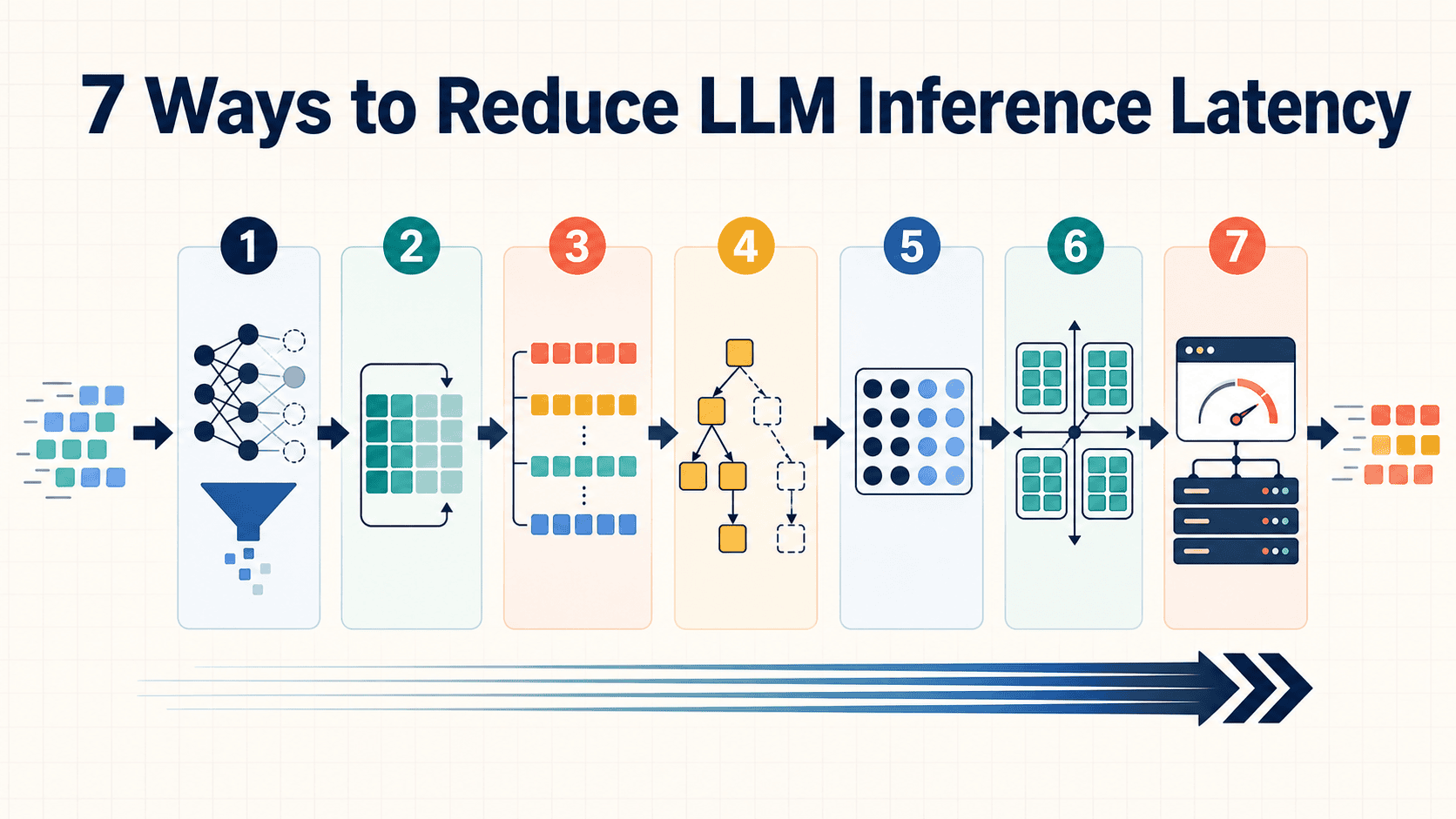
推論遅延への対応
大規模言語モデル(LLM)が研究段階のプロトタイプから本番環境へと移行するにつれ、エンジニアリングチームは厳しい現実に直面しています。知的なモデルを構築することだけが戦いの半分であり、それをユーザーにリアルタイムで提供することは全く異なるエンジニアリングの課題なのです。
生成 AI における「推論(inference)」とは、学習済みのモデルが入力(プロンプト)を処理して出力(レスポンス)を生成するフェーズのことです。この推論プロセスにおける時間遅延を「推論遅延」と呼びます。一般的な Web アプリケーションでは遅延がミリ秒単位で計測されるのに対し、最適化されていない LLM の遅延は数秒以上に及ぶこともあり、ユーザーエクスペリエンスの低下や計算コストの高騰につながります。
応答が遅くなる原因を理解することが第一歩です。LLM の生成プロセスは、明確に区別された 2 つのフェーズで構成されています。
- プリフィルフェーズ(読み込み): モデルが入力を一度にすべて取り込みます。このフェーズは計算処理がボトルネックとなります。プロンプトが長くなるほど、この処理には時間がかかります。
- デコードフェーズ(書き出し): モデルは回答を順次生成し、1 トークンずつ出力します。新しいトークンを生成するたびに過去のすべてのトークンの文脈が必要となるため、このフェーズは並列化できず、メモリの帯域幅がボトルネックとなります。
この 2 つの指標がユーザー体験を決定します。Time to First Token (TTFT) は最初の単語が表示されるまでの時間を測定し、Time Per Output Token (TPOT) は生成速度を測定するものです。
LLM ワークフローにおける推論遅延を削減するための、7 つの実証済みのアプローチをご紹介します。
1. モデル量子化の導入
LLM は本質的に膨大な数の数値的重み(weights)の集合体です。デフォルトではこれらは 16 ビット浮動小数点形式(FP16 または BF16)で保存されています。700 億パラメータを持つモデルを FP16 でロードするには、VRAM が約 140 GB も必要になり、生成されるトークンごとにこのデータを GPU 間で転送すると、深刻なメモリ帯域幅のボトルネックが発生します。これが TPOT の増加に直結しています。
量子化(Quantization)は、重みを 16 ビットから 8 ビット(INT8)または 4 ビット(INT4)の整数に変換することでモデルを圧縮し、メモリ使用量を大幅に削減します。4 ビットで量子化したモデルは、同等の FP16 モデルと比較してメモリ上での移動速度が 4 倍速くなり、デコード遅延を直接的に低減できます。その代償として、モデルの推論品質がわずかに低下する可能性があります。ただし、Activation-aware Weight Quantization (AWQ) や GPTQ といった最新の手法を用いれば、精度の低下は最小限に抑えることができます。
2. キーバリューキャッシュの活用
LLM の内部では、自己注意機構(self-attention)に依存するトランスフォーマーアーキテクチャが採用されています。モデルがトークン #100 を生成する際、そのトークンがトークン 1 から 99 とどう関連しているかを理解する必要があります。各ステップで過去のすべてのトークンの数学的関係(キーとバリュー)を再計算するのは計算コストが高く、まさにこれが KV キャッシングによって排除される冗長な作業です。
KV キャッシュは、処理済みのトークンのキー行列とバリュー行列を VRAM に保存します。次のトークンを生成する際、モデルはキャッシュから過去の文脈を取得し、最新のトークンに関する計算のみを行います。これにより計算時間が短縮され、トークンあたりの処理時間(TPOT)が低下します。その代償としてメモリコストがかかります。生成されるテキストが長くなるほど KV キャッシュも動的に成長し、より多くの VRAM を消費します。キャッシュサイズと生成速度のバランスは、実運用環境にある LLM システムにとって中核的なインフラ課題です。
# L3. 推測的デコーディングの活用
LLM 推論における最も頑固なボトルネックは、自己回帰的生成の逐次的性質にあります。トークン #4 を知らなければトークン #5 を生成できませんが、この強い依存関係により、単純な並列化は不可能です。推測的デコーディング(speculative decoding)はこの問題を回避し、2 つのモデルを連携させることで一度に複数の単語を書き出せるようにします。
- 巨大で遅い「ターゲット」モデル(例:Llama-3-70B)
- 小型で高速な「ドラフト」モデル(例:Llama-3-8B)
このプロセスは以下の通りです。
# PSEUDOCODE -- illustrative only, not a real framework API

draft_tokens = draft_model.generate(prompt, n=5)  # Near-instant
accepted = target_model.verify(draft_tokens)       # Single parallel pass

# If draft is accurate, all 5 tokens are accepted
output_tokens.extend(accepted)実際の実装では、Hugging Face はターゲットモデルの .generate() メソッドに assistant_model=draft_model を渡すことでこれを解決しています。検証ループは内部で処理されるため、ドラフトモデルが正確であれば、出力品質を一切損なうことなく、有利な条件下ではテキスト生成速度を 2 倍から 3 倍に加速できます。
# 4. コンティニュアスバッチングへの移行
従来の機械学習サーバーは、GPU の利用率を最大化するためにリクエストを静的なバッチで処理します。例えば、4 つのリクエストが同時に到着した場合、サーバーはそれらをグループ化して並列処理し、結果を返却します。しかし、LLM の出力長には大きなばらつきがあります。3 つのリクエストが 100 トークンで完了したとしても、もう 1 つのリクエストに 1,000 トークンが必要であれば、最初の 3 ユーザーは最長のリクエストが完了するまで待機することになります。
コンティニュアスバッチング(イテレーションレベルのスケジューリングとも呼ばれます)はこの課題を解決します。バッチ全体の完了を待つのではなく、推論エンジンはトークン単位で新しいリクエストを継続的に投入し、完了したものを即座に削除します。短いリクエストが完了した瞬間、サーバーは結果を直ちに返却し、空いた計算リソースに新たなユーザーを割り当てます。これにより、個々のレイテンシとサーバー全体の待ち時間が同時に削減されます。
# 5. モデルのプルーニングとディストillation
量子化が既存の重みのサイズを縮小するのに対し、モデルプルーニングは不要な重みそのものを削除します。ニューラルネットワークは本質的に過剰パラメータ化されており、すべてのニューロンがすべてのタスクに等しく貢献しているわけではありません。モデルのパフォーマンスへの寄与度が最も低い層やアテンションヘッドを特定して除去することで、アーキテクチャ自体を物理的に縮小できます。
一方、知識蒸留は異なるアプローチです。これは、より小さく高速な「生徒」モデルを訓練し、大きな「教師」モデルの振る舞いを再現させる手法です。基本的な感情分析や構造化データ抽出のようなタスクに 70B パラメータモデルを使用している場合、そのオーバーヘッドは不要です。その能力を目的別に設計された 8B パラメータモデルへと蒸留することで、必要な推論品質を維持したまま、推論レイテンシを劇的に短縮できます。現代の GPU では数十ミリ秒レベルまで削減も可能です。
# 6. 最適化された推論エンジンでのデプロイ
もし標準ライブラリのデフォルトの .generate() 関数を使って LLM を提供しているなら、レイテンシは必ず悪化します。標準ライブラリは研究のための柔軟性やデバッグのしやすさを目的として設計されており、高スループットかつ低レイテンシな本番環境での提供には向きません。速度に真剣に取り組むためには、専用の推論サービングフレームワークを使ってモデルをデプロイする必要があります。
vLLM、Hugging Face の Text Generation Inference (TGI)、そして NVIDIA の TensorRT-LLM はすべて、高性能なサービングのために特別に設計されたツールです。TGI は Rust と Python で書かれており、vLLM は Python に最適化された C++/CUDA カーネルを使用し、TensorRT-LLM は C++ と CUDA で実装されています。
これらのエンジンが自動的に実装している機能は以下の通りです。
- PagedAttention: KV キャッシュのためのスマートで非連続的なメモリ管理。
- Continuous batching: 前述の通り、サービング層に組み込まれています。
- Optimized CUDA kernels: Transformer 演算のためのハードウェアレベルでのアクセラレーション。
これらのフレームワークのいずれかを採用することで、モデルコードへの変更を最小限に抑えつつ、TTFT(Time To First Token)と TPOT(Time Per Output Token)の両方を大幅に短縮できます。
# 7. コンテキストとプロンプト管理の最適化
エンジニアリングチームは、トークン生成までの時間(TTFT)を短縮する最も手軽な手段を見落としがちです。それは「モデルに送るデータを減らす」ことです。
検索拡張生成(RAG: Retrieval-Augmented Generation)パイプラインでは、万が一のために取得した文脈を数千語もプロンプトに注入するのが一般的ですが、その大半は実際には無関係な情報です。プロンプト内のトークンが一つ増えるたびに、事前計算(prefill)にかかる処理時間が増加します。
これに対処する効果的な戦略が二つあります。
プロンプト圧縮: 軽量な自然言語処理(NLP)モデルを用いて、ベクトルデータベースから取得した情報のうち最も関連性の高い文だけを要約・抽出し、LLM に渡す方法です。これにより、回答の品質を損なうことなく、事前計算のオーバーヘッドを削減できます。
プロンプトキャッシュ: アプリケーションが巨大で静的なシステムプロンプト(例:2,000 語に及ぶ行動指針セット)に依存している場合、最新の API や推論エンジンではそのプロンプトの事前計算状態をキャッシュできます。新しいユーザーが接続した際、モデルはシステムプロンプトの再計算をスキップし、ユーザー固有のクエリのみを処理します。これにより、TTFT が直接的に短縮されます。
実践における最適化の積み上げ
推論レイテンシの削減は、単一の修正で達成されるものではありません。それは漸進的な改善を積み重ねるプロセスです。
INT8 量子化モデルを使用し、vLLM を介して連続バッチ処理を行い、予測デコーディング(speculative decoding)によって加速されたワークフローは、最適化されていないベースラインと比較すると、まるで全く異なるアプリケーションのように動作します。
速度向上には、インフラコスト、スループットの上限、エンジニアリングの複雑さといったトレードオフが常に伴います。これらのアプローチを実装する際は、投資対効果を評価するための構造化された方法が必要であり、速度の向上が裏でホスティング料金の増加を招いていないかを確認する必要があります。
これら7つのアプローチは、重みレベルからプロンプトエンジニアリングに至るまで、推論スタックの異なる層にそれぞれ対応しています。体系的にこれらに取り組むことが、高速かつコスト効率の高い生成AIアプリケーションをリリースするための最も確実な道です。
Vinod Chugani は、新興 AI 技術と実務家のための実践的な応用をつなぐ AI・データサイエンスの教育者です。彼の専門分野は、エージェント型 AI、機械学習アプリケーション、自動化ワークフローです。技術メンターおよびインストラクターとしての活動を通じて、Vinod はデータプロフェッショナルのスキル開発やキャリア転換を支援してきました。定量金融における分析 expertise を実践的な指導スタイルに活かしており、そのコンテンツは即座に適用可能な戦略とフレームワークに焦点を当てています。
原文を表示
**
# Dealing With Inference Latency
As large language models (LLMs) move from research prototypes into production, engineering teams run into a hard truth: building an intelligent model is only half the battle. Serving that model to users in real time is a different engineering challenge entirely.
In generative AI, inference is the phase where a trained model processes your input (the prompt) and generates an output (the response). Inference latency** is the time delay during this process. Unlike standard web applications where latency is usually measured in milliseconds, LLM latency can stretch into seconds or longer if left unoptimized, leading to poor user experiences and high compute costs.
Understanding the anatomy of a slow response is the first step. LLM generation happens in two distinct phases:
- The Prefill Phase (Reading): The model ingests the entire prompt at once. This phase is compute-bound. The longer your prompt, the longer this takes.
- The Decode Phase (Writing): The model generates the answer sequentially, one token at a time. Because each new token requires the context of all previous tokens, this phase can't be parallelized and is memory-bandwidth bound.
These two phases produce two metrics that dictate user experience: Time to First Token (TTFT), measuring how long before the first word appears, and Time Per Output Token (TPOT), measuring ongoing generation speed.
Here are seven proven approaches to reduce inference latency in your LLM workflows.
# 1. Implementing Model Quantization
**
An LLM is essentially a large collection of numeric weights. By default, these are stored in 16-bit floating-point format (FP16 or BF16). A 70-billion-parameter model in FP16 requires roughly 140 GB of VRAM just to load, and moving that data across the GPU for every generated token creates a severe memory bandwidth bottleneck that directly drives up TPOT.
Quantization compresses the model by converting weights from 16-bit to 8-bit (INT8) or 4-bit (INT4) integers, shrinking the model's memory footprint considerably. A 4-bit quantized model moves through memory four times faster than an FP16 equivalent, producing a direct reduction in decode latency. The trade-off is a potential slight degradation in model reasoning quality, though modern techniques like Activation-aware Weight Quantization (AWQ) and GPTQ** minimize that accuracy loss.
# 2. Utilizing Key-Value Caching
**
Under the hood, LLMs use the Transformer architecture, which relies on a self-attention mechanism. As the model generates token #100, it needs to understand how that token relates to tokens 1 through 99. Recalculating the mathematical relationships (the Keys and Values) for all previous tokens at every single step is computationally expensive, and that's exactly the redundant work key-value (KV) caching eliminates.
KV caching** stores the Key and Value matrices of previously processed tokens in VRAM. When generating the next token, the model retrieves historical context from the cache and only computes the math for the newest token. This reduces computation time and lowers TPOT. The trade-off is memory cost: as generated text grows longer, the KV cache grows dynamically, consuming more VRAM. Balancing cache size against generation speed is a core infrastructure concern for any production LLM system.
# L3. everaging Speculative Decoding
**
The most stubborn bottleneck in LLM inference is the sequential nature of auto-regressive generation. You can't generate token #5 without knowing token #4, and this hard dependency makes naive parallelization impossible. Speculative decoding** works around this by letting models write multiple words at once, using two models in tandem:
- A massive, slow "target" model (e.g. Llama-3-70B)
- A tiny, fast "draft" model (e.g. Llama-3-8B)
The process works as follows:
# PSEUDOCODE -- illustrative only, not a real framework API

draft_tokens = draft_model.generate(prompt, n=5)  # Near-instant
accepted = target_model.verify(draft_tokens)       # Single parallel pass

# If draft is accurate, all 5 tokens are accepted
output_tokens.extend(accepted)
In practice, Hugging Face implements this by passing assistant_model=draft_model to the target model's .generate() call. The verification loop is handled internally. When the draft model is accurate, you bypass the sequential memory bottleneck entirely, accelerating text generation by 2x to 3x without any loss in output quality in favorable conditions.
# 4. Transitioning to Continuous Batching
**
Traditional machine learning servers process requests in static batches to maximize GPU utilization. If four requests arrive together, the server groups them, processes them in parallel, and returns results. The problem: LLM outputs have highly variable lengths. If three requests finish in 100 tokens but one requires 1,000, the first three users wait idly for the longest request to complete.
Continuous batching** (also called iteration-level scheduling) fixes this. Instead of waiting for an entire batch to complete, the inference engine continuously injects new requests and evicts finished ones at the token level. The moment a short request completes, the server returns it immediately and slots a new user into that freed compute space, reducing both individual latency and overall server wait times.
# 5. Pruning and Distilling Your Models
**
If quantization shrinks the size of existing weights, model pruning** removes weights entirely. Neural networks are inherently over-parameterized, and not every neuron contributes equally to every task. By identifying and eliminating the layers or attention heads that contribute least to model performance, you physically reduce the architecture.
Knowledge distillation takes a different angle: training a smaller, faster "student" model to replicate the behavior of a larger "teacher" model. If you're using a 70B-parameter model for a task like basic sentiment analysis or structured data extraction, the overhead is unnecessary. Distilling that capability into a purpose-built 8B-parameter model can dramatically reduce inference latency — potentially to tens of milliseconds on a modern GPU — while retaining the specific reasoning quality you need.
# 6. Deploying with Optimized Inference Engines
**
If you're serving LLMs using a standard library's default .generate() function, your latency will suffer. Standard libraries are designed for research flexibility and ease of debugging, not for high-throughput, low-latency production serving. To get serious about speed, deploy your models using a dedicated inference serving framework. vLLM, Hugging Face's Text Generation Inference (TGI), and NVIDIA's TensorRT-LLM** are all purpose-built for high-performance serving: TGI is written in Rust and Python, vLLM uses Python with optimized C++/CUDA kernels, and TensorRT-LLM is implemented in C++ and CUDA.
These engines automatically implement:
- PagedAttention: Smart, non-contiguous memory management for the KV cache.
- Continuous batching: As described above, built into the serving layer.
- Optimized CUDA kernels: Hardware-level acceleration for Transformer operations.
Adopting one of these frameworks often reduces both TTFT and TPOT considerably with minimal changes to your model code.
# 7. Optimizing Context and Prompt Management
**
Engineering teams frequently overlook the most accessible way to reduce TTFT: send less data to the model. In retrieval-augmented generation (RAG) pipelines, it's common to inject thousands of words of retrieved context into a prompt as a precaution, even when most of it is irrelevant. Every additional token in the prompt increases prefill compute time. Two targeted strategies help here.
Prompt compression:** Use lighter natural language processing (NLP) models to summarize or extract only the most relevant sentences from your vector database before passing them to the LLM. This trims prefill overhead without sacrificing answer quality.
Prompt caching: If your application relies on a large, static system prompt (such as a 2,000-word behavioral instruction set), modern APIs and inference engines let you cache the prefill state of that prompt. When a new user connects, the model skips recomputing the system prompt and only processes the user's specific query, directly cutting TTFT.
# Stacking Optimizations in Practice
**
Reducing inference latency is rarely about a single fix. It's a process of stacking incremental improvements. A workflow using an INT8 quantized model, served via vLLM with continuous batching and accelerated by speculative decoding, will behave like a completely different application compared to an unoptimized baseline.
Speed always involves trade-offs around infrastructure cost, throughput ceilings, and engineering complexity. As you implement these approaches, you'll need a structured way to evaluate your return on investment and ensure that speed gains aren't quietly increasing hosting bills.
Each of these seven approaches addresses a different layer of the inference stack, from the weight level up to prompt engineering. Working through them systematically is the most reliable path to shipping fast, cost-efficient generative AI applications.
Vinod Chugani** is an AI and data science educator who bridges the gap between emerging AI technologies and practical application for working professionals. His focus areas include agentic AI, machine learning applications, and automation workflows. Through his work as a technical mentor and instructor, Vinod has supported data professionals through skill development and career transitions. He brings analytical expertise from quantitative finance to his hands-on teaching approach. His content emphasizes actionable strategies and frameworks that professionals can apply immediately.
今日のまとめ
AIデイリーブリーフで今日の重要ニュースをまとめ読み