Google、NotebookLM でノートブックコレクションのテストを開始
本文の状態
日本語全文を表示中
詳細モードで約3分の本文を読めます。
同じ出来事の情報源
この情報源を基点に整理
TLDR AI
Google が AI ノートブックツール「NotebookLM」において、複数のノートブックを整理・管理する機能である「コレクション」のテストを実施している。
Continue in AI NEW LAB
このニュースを、実務の判断につなげる
AI NEW LABで、試したことや先に確認したい条件を共有できます。まずはログインなしで読めます。
AI NEW LABで論点を見るSource Article
元記事を日本語で読む
本文に関係しない購読案内、埋め込み通知、サイト内プロモーションは除いています。
Google は、NotebookLM のために複数のノートブックを単一の見出しの下にグループ化し、メインナビゲーションの専用タブから表示できるようにするコレクションシステムの開発を進めているようです。この機能は公式には確認されておらず、開発初期段階にあるため具体的なスケジュールはまだ発表されていませんが、これは同ツールが長年抱えてきた課題への対応を示しています。
NotebookLM はすでに個々のノートブック内のソースを読み込み、クラスタリングする機能を備えており、これは 2026 年 5 月初旬に完全展開されたソースレベルの整理レイヤーです。しかし、ノートブック全体をグループ化するためのネイティブな手段は欠けていました。パワーユーザーたちはブラウザ拡張機能を利用してフォルダのような挙動を実現しようとしてきましたが、チーム側もノートブックレベルでのグループ化がまだ不足している主要な要素であると認めています。コレクションはこの役割を果たし、フラットでスクロールするリストではなく、トップレベルの構造を提供します。
最も恩恵を受けるのは、多くのノートブックを同時に扱っているヘビーユーザー、特に Gemini 内でプロジェクトワークスペースとしてノートブックを利用している人々です。両製品は現在同期しており、一方に追加されたソースは他方にも表示されます。今年初めに NotebookLM プロジェクトがすべての Gemini ウェブユーザーに無料開放されたため、大規模なライブラリを保有するユーザー層は急速に拡大しています。無料プランでは最大 100 のノートブックまで許可されているため、ナビゲーションの摩擦が生じることは当初から予想されていました。
ラップトップ& ノートブック
Google は当初、ノートブックの整理にラベルベースのアプローチを検討していた兆候があり、その後コレクション方式へと傾斜したようですが、その転換の背景にある理由は依然として不明です。
さらに詳しく知る
ビジネス・生産性ソフトウェア
C & C++
機械学習 (Machine Learning) & 人工知能 (Artificial Intelligence)
この動きは、ドキュメントに対する質問応答レイヤーから Gemini と統合された研究から出力までのハブへと NotebookLM を再構築する1年間の取り組みに合致しています。競合他社も同様の組織上の弱点を抱えています:ChatGPT Projects、Claude Projects、Perplexity Spaces はいずれも単一のコンテナを提供していますが、数十個のプロジェクトを柔軟にグループ化できる機能は備えていません。明確なトップレベル層が、カテゴリ全体で課題として認識され始めている問題に対する Google の早期回答となるでしょう。
原文を表示
Google appears to be developing a collections system for NotebookLM that would let people group several notebooks under a single heading, surfaced via a dedicated tab in the main navigation. The capability has not been officially confirmed and looks to be early in development, with no timeline attached, but it points to a gap the tool has carried for some time.
NotebookLM already reads and clusters the sources inside an individual notebook, a source-level organization layer that reached full rollout in early May 2026. What it has lacked is any native way to group whole notebooks. Power users have leaned on browser extensions to approximate folders, and the team itself has acknowledged notebook-level grouping as the main piece still missing. Collections would fill that role, providing a top-level structure rather than a flat, scrolling list.
EducationalResources
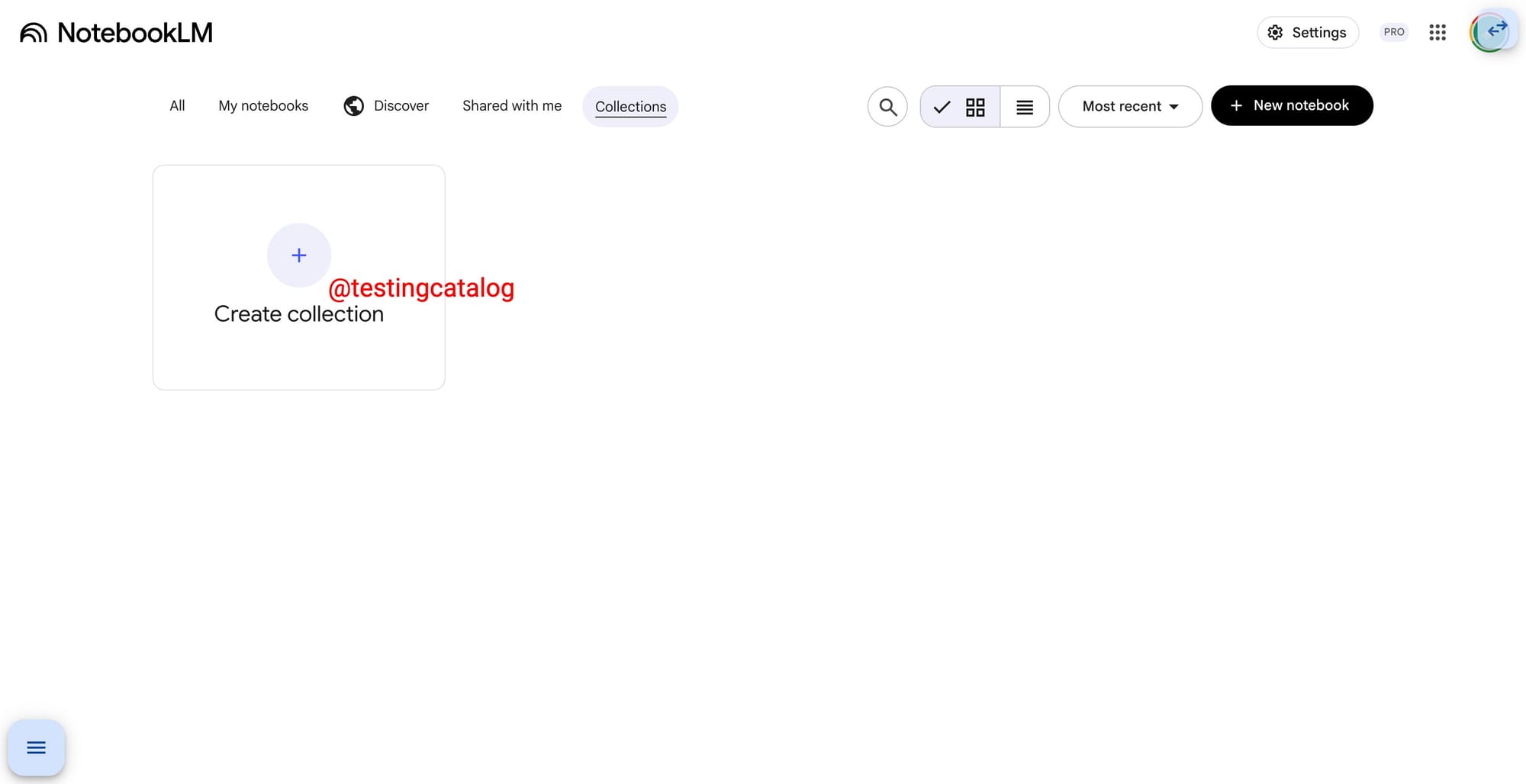
The people most likely to benefit are heavy users juggling many notebooks, particularly those who treat notebooks as project workspaces within Gemini. The two products now sync, so a source added in one place appears in the other. Notebook projects went free for all Gemini web users earlier this year, so the population sitting on large libraries has grown quickly. With the free tier allowing up to 100 notebooks, navigation friction was always going to surface.
Laptops& Notebooks
There are signs that Google first weighed a label-based approach to notebook organization before leaning toward collections, though the reasoning behind any shift remains unclear.
Discover more
Business & Productivity Software
C & C++
Machine Learning & Artificial Intelligence
The move fits a year spent reshaping NotebookLM from a question-and-answer layer over documents into a research-to-output hub welded to Gemini. Rivals face the same organizational weak spot: ChatGPT Projects, Claude Projects, and Perplexity Spaces all offer single containers, but none gracefully support grouping across dozens of them. A clean top-level layer would give Google an early answer to a problem the whole category is starting to feel.
関連記事
今日のまとめ
AIデイリーブリーフで今日の重要ニュースをまとめ読み