[AI ニュース] すべてのモデルラボが今やエージェントラボへと変貌している
OpenAI の IPO 直前を含む業界全体で、単なるモデル提供から「Agent(エージェント)」と「Harness」を統合した製品戦略へのシフトが加速しており、これが業界の競争優位性の定義を根本的に変えている。
キーポイント
モデルラボからエージェントラボへの変容
OpenAI を含む主要な AI ラボが、単なるモデル開発から、自律的なエージェント製品への転換を明確に示しており、これは過去の「モデル至上主義」からの大きな方針転換である。
競合他社の戦略的ピボット
AI21 がモデルチームを縮小してエージェントへ移行し、DeepSeek でさえ初めて「Harness team(統合基盤チーム)」を設立するなど、業界全体が同様の方向へ舵を切っている。
製品競争の多層化と閉鎖化リスク
成功する製品はモデル単体ではなく、「モデル+ハルネス+ワークフロー+UI+メモリ+経済性」の統合系となり、これにより他社への API 開放を制限し、自社エコシステムへユーザーを囲い込む戦略が可能になる。
コーディングエージェントの具体化
OpenAI が Codex の継続的なアップデート(Codex Thursday No.6)を通じて、コーディング支援におけるエージェント製品の差別化を具体的に進めている。
DeepSeek の価格破壊とコスト効率の劇的向上
DeepSeek が V4-Pro の価格を75%永久割引し、GPT-5.5 や Claude Opus 4.7 と比較して約12〜19倍のコスト削減を実現したため、市場のパレートフロンティアが再定義された。
コーディングエージェントの機能成熟と課題
OpenAI の Codex や Claude のアップデートによりリモート操作や自動モードが強化され IDE 使用頻度が低下する一方で、Codex の遠隔ワークフローの不具合など製品面の粗さが依然として指摘されている。
ベンチマーク向上と実用性の乖離
Gemini Flash が評価スコアで劇的に改善したものの、開発者からは「人間との協働より評価最大化に最適化された」という批判があり、定性的な判断を軽視する傾向への懸念が示されている。
重要な引用
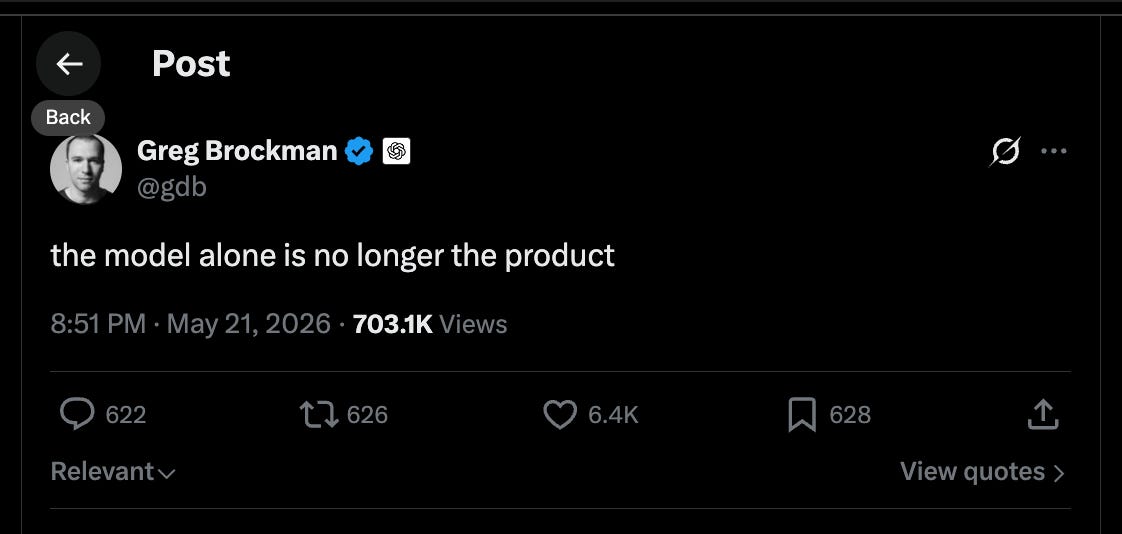
"the model alone is no longer the product"
"top-tier products need model <> harness <> product symbiosis"
"All Model Labs are now Agent Labs"
"intelligence too cheap to meter"
"the model feels optimized to max evals rather than cooperate with humans"
MCP's new release candidate is a substantive protocol simplification: the key change that the protocol is now stateless: no handshake, no session ID, and any request can hit any server instance.
影響分析・編集コメントを表示
影響分析
この記事は、AI 業界の競争構造が根本的に変化することを示唆しており、単にモデルを提供するだけでは生き残れない時代に入ったことを意味します。今後は、モデルの性能だけでなく、それをどう実社会のワークフローや UI に統合し、ユーザー体験を最適化するかが勝敗を分ける鍵となります。また、この傾向は「クローズドなエコシステム」への移行を加速させ、API 市場のあり方そのものにも大きな影響を与える可能性があります。
編集コメント
モデル開発からエージェント実装へのシフトは、単なるトレンドではなく業界の生存戦略として定着しつつあります。特に「ハルネス」という概念が重要視される背景には、API 依存からの脱却と独自エコシステムの構築という明確なビジネス意図が見え隠れします。
来週の OpenAI の IPO 申請に先駆け、Greg は、モデルラボが製品としてエージェントを構築するようになっているという一連の発言の中で最新のものを行いました。
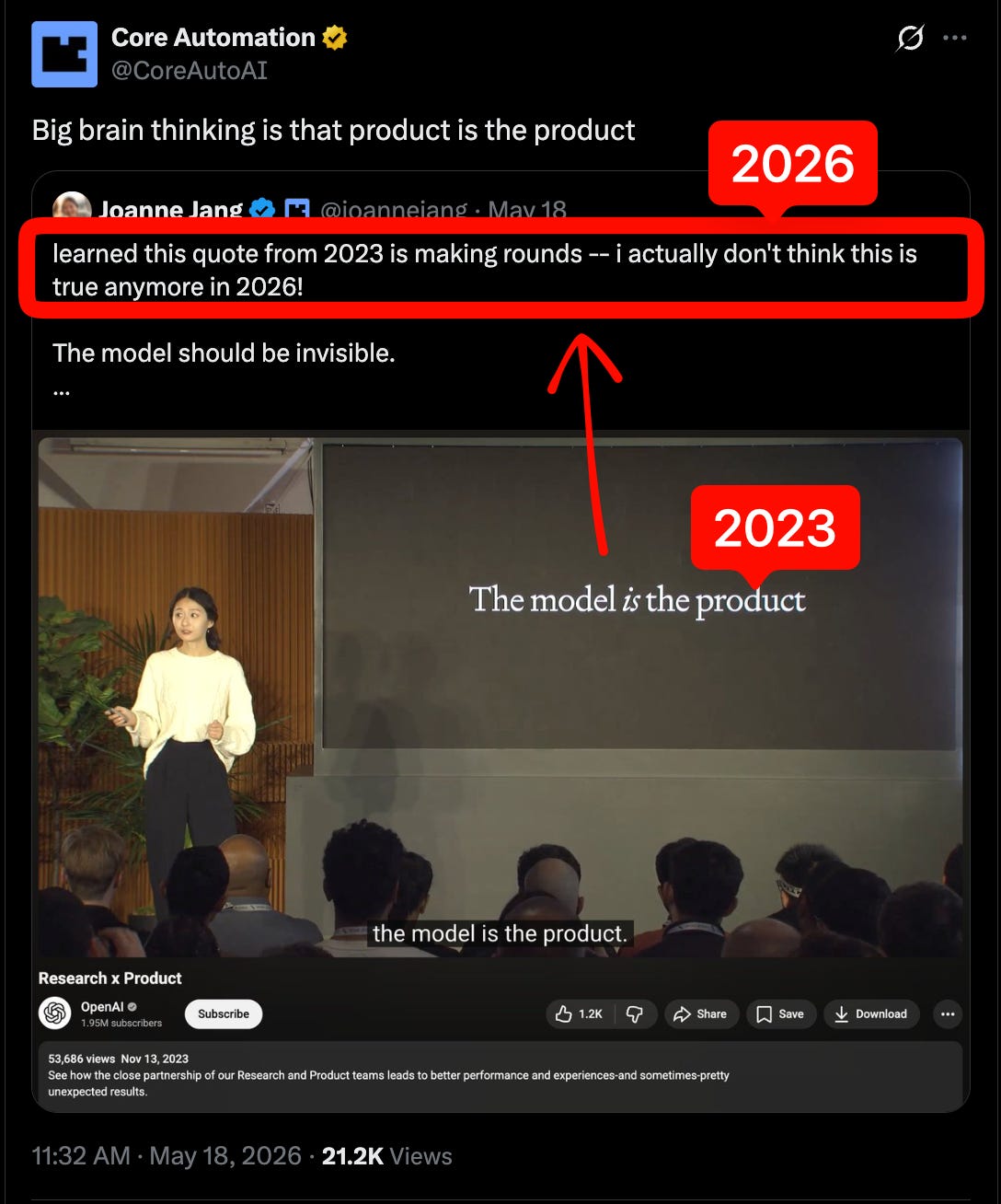
この発言は、OpenAI Labs の前ヘッドを含む「ビッグモデルチーム」で働いた人々がほぼ一様に持っていた立場からの大きな転換です。
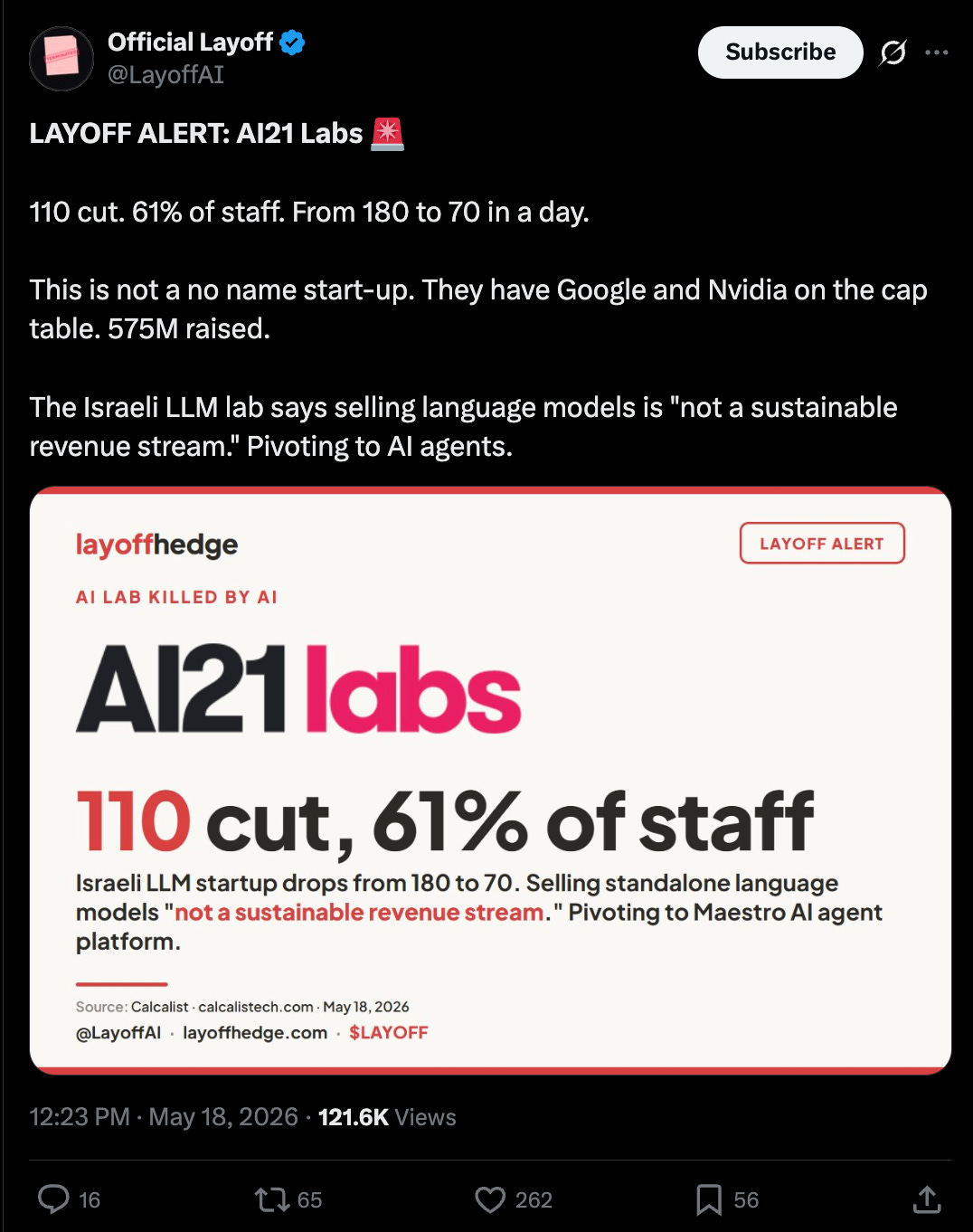
これは、AI21 のモデルチームが閉鎖され、今やエージェントへと転換していることと時を同じくしています。
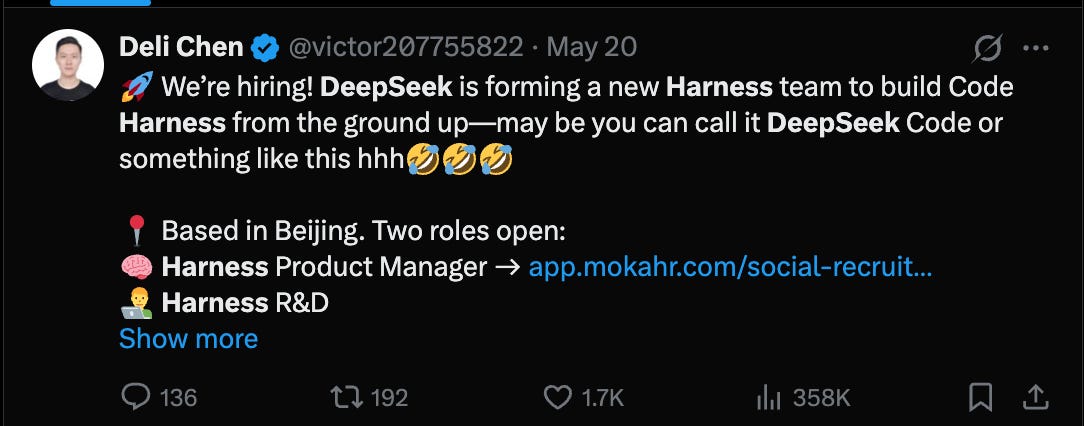
そして、古くからある DeepSeek でさえも、初めて「ハネステチーム」を構築しています。
「システム重視」派の人々は、これを彼らがこれまで主張してきたことの検証点として受け取るでしょう……ただし、ハルネスと共訓練されたモデルが、さらにモデルへのアクセスを制限する扉を開くというニュアンスは除きます。つまり、モデルを効果的にポストトレーニングして、クローズドソースのエージェントとのみ意味ある動作を行うようにできれば、モデルや API との競合・協調関係よりも、ユーザーの大半を自社のエージェントへと誘導することが可能になるのです。
しかし、それはより大きな議論の題材となる話題です……
2026 年 5 月 4 日〜5 月 5 日の AI ニュース。12 のサブレッドと 544 件の Twitter(X)投稿を確認しました。Discord は追加で確認していません。AINews のウェブサイトでは、過去のすべての号を検索できます。念のため、AINews は現在 Latent Space の一部となっています。メール配信頻度のオプトイン・オプトアウトが可能です!
AI Twitter レビュー
エージェント製品、ハルネス、そして「モデルのみ」を超えた転換
製品の表面は上層へ移行しています:繰り返し現れたテーマとして、モデルの品質単独ではもはや参入障壁(モート)ではないという点です。勝つ製品はますます、「モデル+ハルネス+ワークフロー+UI+メモリ+経済性」という組み合わせへと進化しています。@gdb は率直に「モデル単体ではもはや製品ではない」と述べ、@dzhng はトップクラスの製品にはモデルとハルネスと製品の共生関係が必要だと主張しました。この同じパターンは実践でも確認できます:@signulll は環境 AI とエージェント AI を計算機インターフェースの新たな接合部として位置づけ、@teortaxesTex はハルネス研究が依然として「Claude Code の複製」に収束するリスクがあり、より広範なインターフェースを探求していないと指摘しました。
コーディング・エージェント製品の差別化が具体化しつつあります:OpenAI は「codex thursday no. 6」を通じて、appshots(アプリショット)、/goal 機能の改善、ロック状態でのリモートコンピューター利用、注釈モード、プラグイン共有、分析機能などを含む大幅な Codex のアップデートをリリースしました。@gdb は個別に Appshots を強調しましたが、ユーザーからは意味のあるワークフローの変化が報告されています:@gdb は「Codex 以前はコーディングを思い出すのが難しかった」と述べ、@reach_vb は「1 ヶ月以上 IDE(統合開発環境)を開いていない」と発言しました。しかし製品の未熟な部分も残っています:@theo は T3 Code のリモート機能を他社製品より優れていると評価しましたが、その後の投稿で Codex のバグだらけのリモートワークフローと比較して批判的な見解を示しています。Claude 側では、@ClaudeDevs が自動モードを Pro プランに拡大し、Sonnet 4.6 のサポートを追加しました。また @_mohansolo はユーザーからの反発を受け、Antigravity 2.0 における IDE サポートの明確化とパッチ適用を余儀なくされました。
モデル性能、コスト曲線、および最前線の競争
DeepSeek の価格改定は最も大きな市場シグナルとなった:@deepseek_ai は DeepSeek-V4-Pro に対する 75% オフを恒久措置とし、コストと性能のフロンティアが実質的に変化したことで強い反響を呼んだ。@ArtificialAnlys はファーストパーティ価格を入力 100 万トークンあたり$0.435、出力 100 万トークンあたり$0.87、キャッシュされた入力 100 万トークンあたり$0.0036 と算出し、ブレンド価格は約$0.18/M と見積もっている。これにより V4 Pro は知能と実行コストの観点でパレートフロンティア(最適解の集合)に位置づけられる。彼らの試算では、V4 Pro でインテリジェンス・インデックスを実行するコストは Gemini 3.1 Pro Preview の約 3 分の 1、GPT-5.5 の約 12 分の 1、Claude Opus 4.7 の約 19 分の 1 に抑えられるという。コミュニティの反応は、@scaling01 が「メーターで測るほど安すぎる知能」と表現したように、DeepSeek のこの方向性を中心に展開された。@Yuchenj_UW と @kimmonismus は、この価格引き下げの規模の大きさをともに強調している。
Gemini Flash は改善されたものの、利用に関するフィードバックは賛否両論でした:@OfficialLoganK は Gemini 3.5 Flash が GDPval(GDP評価)において 3.1 Pro を大きく上回る進歩を遂げたと報告し、Flash が現在「最前線で競合している」と主張しました。また @Designarena では、Gemini 3 Flash Preview から 16 段階も順位を上げ、総合で 16 位にランクインしたとされました。しかし、ベンチマークでの向上に対する有用性を疑問視する開発者たちも複数現れました:@Alezander907 はコストが高くなる中でブラウザエージェントの改善はわずかだと指摘し、@giffmana はブランドが依然として「安価さ」を連想させるならこれは「Flash の進歩」と呼べないと論じました。さらに @jeremyphoward は、このモデルは人間との協働よりも評価値の最大化に最適化されているように感じると述べています。これには、現在のツールリングが定性的なヒューマン・イン・ザ・ループ(HITL)判断を過小評価しているという @HamelHusain の広範な評価への懐疑論とも一致しています。
Qwen と中国の最前線モデルは競争をさらに圧縮し続けています:公式の @Alibaba_Qwen からの予告と、@ZhihuFrontier による長編第三者レビューでは、Qwen3.7-Max が指示従順性、文脈の信頼性、安定性の面で有意義な一歩であると描かれていますが、依然として冗長性とトークン使用量の多さに悩まされています。一方、@scaling01 は最近の ALE-Bench(ALE ベンチマーク)の実行結果から、Kimi-K2.6、DeepSeek-V4、GLM-5.1 といった中国モデルが、その設定においていくつかの西洋製リリースを上回っていると主張しました。また @ArtificialAnlys は、Cursor Composer 2.5 がコーディングエージェントベンチマークにおいて Opus 4.7 よりも 3〜18 倍安価で、GPT-5.5 よりも 5〜32 倍安価であり、特にトークン使用量が大幅に低いと報告しています。
プロトコル、インフラストラクチャ、およびエージェントランタイムツールリング
MCP の新しいリリース候補は、実質的なプロトコルの簡素化です:@dsp_ が MCP 2026-07-28 リリース候補を発表し、主要な変更点はプロトコルがステートレス(状態を保持しない)になったことです。ハンドシェイクもセッション ID も不要で、あらゆるリクエストは任意のサーバーインスタンスに到達できます。RC ではまた、MCP アプリやタスクといったファーストクラスの拡張機能、認証の強化、より明確な非推奨ポリシーが導入されました。インフラチームにとって、ステートレス化は大きな運用上の転換点です:スケーリングが容易になり、負荷分散が単純化され、スティッキーセッションに関する懸念が減ります。
サンドボックスと管理された実行がファーストクラスのプリミティブ(基本要素)へと進化しています:@_philschmid は Gemini Managed Agents と Interactions API をデモし、エージェントにメモリとコード実行機能を備えた安全なホスト型 Linux サンドボックスを提供しました。@CoreWeave は RL(強化学習)、エージェントのツール使用、モデル評価のために CoreWeave Sandboxes のパブリックプレビューを開始し、@cnakazawa はトークンを公開せずにシェル、Codex、GitHub アクセスを備えたタスクごとの Cloudflare サンドボックスである Cloudsail をリリースしました。オーケストレーション層では、@skypilot_org は現代の RL が多様なハードウェアと回復要件を伴うマルチサービスシステムであるため、Slurm 上では RL が機能しないと主張しています。
オープンソースのハルネスやメモリ層が急増しています:@NVIDIAAI は、任意のハルネスに接続可能なポータブルな深層調査パイプライン用の AI-Q エージェントスキルをオープンソース化しました。@Teknium は、Hermes において Bitwarden のサポートを追加して鍵管理を実現し、その後 Hermes 内で Grok Build v0.1 のコンテキスト長を 256K に復元しました。@shannholmberg は、Hermes エージェントの下に共有メモリ「gBrain」層を記述し、専門家エージェント向けに型付きフォルダと読み取り優先アクセスを導入しました。@aakashadesara は CTOP を更新して Devin に対応させ、エージェントセッションのリスト表示、検索、終了を行う CLI を追加しました。
研究:強化学習(RL)、蒸留、アーキテクチャ、および評価
強化学習(RL)後のトレーニングと報酬設計は活発に見直されています:@RyanBoldi はベクトル方策最適化(Vector Policy Optimization: VPO)を紹介し、強化学習におけるスカラー報酬の崩壊がテスト時のスケーリングを損なう可能性があると主張しました。VPO は代わりにベクトル値報酬を最適化することで、元のスカラー目的関数においても検索性能を向上させます。@lateinteraction はこれを、LLM をより多様な環境や目標のために訓練する方法として位置づけ、@FeiziSoheil はこれを単一の報酬数値ではなく構造化フィードバックへの広範な動きへと関連付けました。一方、@jsuarez は極端なスパース性を伴う長年の強化学習問題に対する解決策を予告し、初期の探索では内部環境の一つで最良の結果(SOTA)を示しました。
エージェントのコンパイル/蒸留は、真剣な経済的アイデアとして浮上しています:@dair_ai は、マルチステップ呼び出し、ツール使用、スクラッチパッド、意思決定構造を含む完全なアジェンティックワークフローを重みに蒸留し、推論コストを約 100 分の 1 に抑えながら最前線に近い品質を維持できることを示す論文を紹介しました。これは、高価なランタイムエージェントループを安価なデプロイ可能なモデルにコンパイルするための最も明確な技術的議論の一つです。
バニラトランスフォーマーを超えたアーキテクチャ研究も活発です:@ChunyuanDeng は、スパースアテンションと線形アテンションを組み合わせてループを現実的なものにする LT2(Linear-Time Looped Transformer)と、蒸留された Ouro-hybrid-1.4B を紹介しました。@ZyphraAI は、エネルギーベースモデルを超えて生物学的に現実的なニューロンへと均衡伝播(Equilibrium Propagation)を拡張する研究を発表しました。MoE については、@Jianlin_S が損失ペナルティなしでシーケンスレベルの負荷分散を実現する Moving Quantile Balancing を提案しました。一方、@allen_ai は ArtifactLinker を立ち上げました。これはモデルが実行前にどのベンチマークで SOTA(State of the Art)を達成する可能性が高いかを予測するもので、ベンチマークの蔓延が進む中における有用なメタ評価ツールです。
数学および推論能力に関する議論は再び変化しました:@cozyblaze265065 は、gpt-5.5 を使用し、中程度の推論機能とツールの不使用で多桁乗算実験において 99.46% の精度を達成したと報告しました。また @teortaxesTex は、現代の LLM(大規模言語モデル)がツールなしで 100 桁の乗算が可能になったと指摘しました。これは推論の完全な理論ではありませんが、「自己回帰では算術処理ができない」という古い主張をさらに弱めるものです。
多モーダルシステム:動画、音声、ワールドモデル、イメージング
Google の I/O スタックは永続的なエージェントと世界シミュレータへと向けて推進されました。@Google は Gemini Spark を導入し、反復タスク、スキル、ワークフローのための 24/7 個人 AI エージェントとして機能します。また @GoogleDeepMind も Project Genie と Street View を発表し、ユーザーが実際の米国ロケーションをインタラクティブな世界に変換できる機能を追加しました。続報により、この機能は Google Labs を通じて Google AI Ultra のサブスクライバー向けに展開されることが確認されています。多モーダル側面については、@Google が会話型動画の作成・編集やカスタムアバターのための Gemini Omni を発表することで強化されました。一方 @emollick は、ネイティブで動画を編集できる完全な多モーダルシステムの重要性を強調しました。
Runway と画像/動画ツールは編集性をさらに高めています。@runwayml は Aleph 2.0 をリリースし、30 秒間のマルチショットシーケンス(1080p)をサポートするとともに、シーン内の他の部分を保持しつつ特定の箇所を対象とした編集を可能にしました。@CuriousRefuge は SeeDance 2 Stitcher を紹介し、Omni で生成された継続部分を用いて AI 生成の映画風クリップをシームレスに拡張する機能を強調しました。
音声および画像生成において顕著な進歩が見られました。@ArtificialAnlys は、Cartesia Sonic-3.5 を Speech Arena における新たな第1位 TTS モデルとしてランク付けし、Elo 評価が 1218 に達していること、42 か国語に対応していること、そして高い自然さと転写テキストへの追従性を挙げています。Cartesia は、本環境でのプロダクションにおけるエンドツーエンドの初回音声生成までの時間を 82 ミリ秒と主張しています。画像生成においては、@wildmindai が Tencent の Z-Image 6B を、VAE(Variational Autoencoder:変分オートエンコーダー)を備えないピクセル空間ジェネレーターとして、1K レゾリューションに対応し、Flux や SD モデルを変換するための転送フレームワークを持つものとして指摘しました。関連するエコシステム活動としては、@victormustar による Pixal3D デモや、@ostrisai の AI Toolkit における Z-Image L2P 1k のトレーニングサポートが含まれます。
セキュリティ、サイバーセキュリティ、および政策圧力
サイバーセキュリティは急速に高度なエージェントの試金石となりつつあります。@AnthropicAI は、Project Glasswing とパートナー企業により、わずか 1 か月で重要なソフトウェア内で 1 万件を超える高または重大度の脆弱性が発見されたと発表し、Claude Mythos Preview のようなモデルが検出する脆弱性の量に対応するために業界全体が適応を迫られることを明確に警告しました。セキュリティ製品の製品化も進行中です。@perplexity_ai は、macOS/Linux 向けにリスクのあるパッケージ、拡張機能、および AI ツール設定を検出するための読み取り専用スキャナ「Bumblebee」をオープンソース化しました。@AravSrinivas は、エンタープライズ展開にはエージェント型サンドボックスと継続的なセキュリティエンジニアリングが必要であると述べています。
米国移民政策の変更により AI リーダー層から激しい反発が生じている:いくつかの注目を集めた投稿では、グリーンカード申請者に米国国外からの申請を義務付ける proposed rule が、直接 AI 人材パイプラインに損害を与える可能性があると主張された。@Nick_Davidov, @AndrewYNg, @theo, @garrytan, @togelius の投稿が該当する。共通の論点:この規則は合法的な高度技能移民を罰し、スタートアップや研究を損ない、米国の AI における競争力を低下させる。
エンゲージメント上位のツイート
@deepseek_ai が V4-Pro の割引を恒久化について発言 — このバッチにおける LLM インファレンス経済学に関する最も明確な単一市場シグナルの一つ。
@gdb が「モデル自体がもはや製品ではない」と述べる — 現在のエージェント/ハーンチ製品テーゼの簡潔な表現。
@AnthropicAI が Glasswing で 10,000 件以上の重大な脆弱性を発見したと発表 — AI ドライブ型サイバー能力が生産環境へ移行する動きを裏付ける最も強力なデータポイントの一つ。
@dsp_ が MCP 2026-07-28 RC(Release Candidate)について言及 — 重要なプロトコル更新:ステートレス MCP とファーストクラス拡張機能の導入。
@GoogleDeepMind が Project Genie と Street View の連携を発表 — コンシューマー向けワールドモデルへの注目すべき一歩。
@cursor_ai が Cursor SDK をカスタムエージェント用に公開 — コーディングエージェント基盤の上に構築するチームにとって関連性の高い発表。
AI Reddit まとめ
/r/LocalLlama + /r/localLLM まとめ
続きを読む
原文を表示
Ahead of OpenAI’s likely IPO filing next week, Greg makes the latest in a series of comments where Model Labs are increasingly also building Agents as the product:
The quote is a big reversal of stance from a position ~uniformly held by anyone who worked at Team Big Model, including his previous head of OpenAI Labs:
This comes with the shuttering of AI21’s model team, which is now pivoting to agents:
and even the venerable DeepSeek is now building a “Harness team” for the first time:
The “Systems over Models” people will take this as a point of validation of what they have been saying all along… except for the nuance that models cotrained with harnesses does open the door for closing access to models even further — if you can effectively posttrain a model to only meaningfully perform with your closed source agent, then you get to funnel the majority of users to your agent at the expense of your model/API co-opetition.
But that’s a topic of a much larger discussion…
AI News for 5/4/2026-5/5/2026. We checked 12 subreddits, 544 Twitters and no further Discords. AINews’ website lets you search all past issues. As a reminder, AINews is now a section of Latent Space. You can opt in/out of email frequencies!
AI Twitter Recap
Agent Products, Harnesses, and the Shift Beyond “Just the Model”
The product surface is moving up-stack: A recurring theme was that model quality alone is no longer the moat; the winning product is increasingly model + harness + workflow + UI + memory + economics. @gdb put it bluntly: “the model alone is no longer the product,” while @dzhng argued top-tier products need model <> harness <> product symbiosis. The same pattern shows up in practice: @signulll framed ambient AI and agentic AI as the new seam of computing interfaces, and @teortaxesTex noted that harness research still risks converging on “replicate Claude Code” instead of exploring broader interfaces.
Coding-agent product differentiation is becoming concrete: OpenAI shipped another substantial Codex update via “codex thursday no. 6” with appshots, /goal improvements, remote computer use while locked, annotation mode, plugin sharing, and analytics. @gdb separately highlighted Appshots, while users reported meaningful workflow shifts: @gdb said it’s hard to remember coding before Codex, and @reach_vb said they haven’t opened an IDE in over a month. But product rough edges remain: @theo praised T3 Code’s remote feature as ahead of alternatives, then contrasted it with buggy remote workflows in Codex in a follow-up post. On the Claude side, @ClaudeDevs expanded auto mode to the Pro plan and added Sonnet 4.6 support; @_mohansolo also had to clarify and patch IDE support in Antigravity 2.0 after user backlash.
Model Performance, Cost Curves, and Frontier Competition
DeepSeek’s pricing move was the biggest market signal: @deepseek_ai made the 75% DeepSeek-V4-Pro discount permanent, triggering strong reactions because it materially changes the cost/performance frontier. @ArtificialAnlys quantified first-party pricing at $0.435/M input, $0.87/M output, $0.0036/M cached input, estimating a blended ~$0.18/M and placing V4 Pro on the Pareto frontier for intelligence vs run cost. They estimate running their Intelligence Index on V4 Pro costs ~3x less than Gemini 3.1 Pro Preview, ~12x less than GPT-5.5, and ~19x less than Claude Opus 4.7. Community reaction centered on DeepSeek’s push toward “intelligence too cheap to meter,” as @scaling01 put it. @Yuchenj_UW and @kimmonismus both emphasized the magnitude of the cut.
Gemini Flash improved, but usage feedback was mixed: @OfficialLoganK reported Gemini 3.5 Flash making major progress over 3.1 Pro on GDPval, claiming Flash is now “competing at the frontier,” and @Designarena placed it 16th overall on Design Arena, a 16-position jump from Gemini 3 Flash Preview. But several builders pushed back on usefulness vs benchmark gains: @Alezander907 saw only slight browser-agent improvement at higher cost, @giffmana argued this isn’t “Flash progress” if the brand still implies cheapness, and @jeremyphoward said the model feels optimized to max evals rather than cooperate with humans. That aligns with broader eval skepticism from @HamelHusain, who argued current tooling underweights qualitative, HITL judgment.
Qwen and Chinese frontier models keep compressing the race: The official @Alibaba_Qwen teasers and a long third-party review from @ZhihuFrontier portrayed Qwen3.7-Max as a meaningful step up, especially in instruction following, context reliability, and stability, while still suffering from verbosity and high token usage. Elsewhere, @scaling01 claimed recent ALE-Bench runs show Chinese models like Kimi-K2.6, DeepSeek-V4, GLM-5.1 outperforming several Western releases in that setting. @ArtificialAnlys also reported Cursor Composer 2.5 as 3–18x cheaper than Opus 4.7 and 5–32x cheaper than GPT-5.5 on Coding Agent benchmarks, with notably lower token use.
Protocols, Infra, and Agent Runtime Tooling
MCP’s new release candidate is a substantive protocol simplification: @dsp_ announced the MCP 2026-07-28 release candidate, with the key change that the protocol is now stateless: no handshake, no session ID, and any request can hit any server instance. The RC also introduces first-class extensions like MCP Apps and Tasks, plus auth hardening and a clearer deprecation policy. For infra teams, statelessness is a big operational shift: easier scaling, simpler load balancing, fewer sticky-session concerns.
Sandboxes and managed execution are becoming first-class primitives: @_philschmid demoed Gemini Managed Agents + Interactions API to give an agent a secure hosted Linux sandbox with memory and code execution. @CoreWeave launched CoreWeave Sandboxes in public preview for RL, agent tool use, and model eval, while @cnakazawa released Cloudsail for per-task Cloudflare sandboxes with shell, Codex, and GitHub access without exposing tokens. At the orchestration layer, @skypilot_org argued RL doesn’t work on Slurm because modern RL is a multi-service system with heterogeneous hardware and recovery needs.
Open-source harnesses and memory layers are proliferating: @NVIDIAAI open-sourced AI-Q agent skills for portable deep-research pipelines that can plug into arbitrary harnesses. @Teknium added Bitwarden support for key management in Hermes and later restored 256K context for Grok Build v0.1 in Hermes here. @shannholmberg described a shared-memory “gBrain” layer under Hermes agents, with typed folders and read-first access for specialist agents. @aakashadesara updated CTOP to support Devin and a CLI for listing, searching, and killing agent sessions.
Research: RL, Distillation, Architectures, and Evaluation
RL post-training and reward design are under active reconsideration: @RyanBoldi introduced Vector Policy Optimization (VPO), arguing scalar reward collapse during RL can sabotage test-time scaling. VPO instead optimizes vector-valued rewards, improving search performance even on the original scalar objective. @lateinteraction framed this as a way to train LLMs for more diverse environments and goals, while @FeiziSoheil connected it to broader moves toward structured feedback instead of a single reward number. Separately, @jsuarez teased a solution to a long-standing RL problem involving extreme sparsity, with initial sweeps showing SOTA on one internal environment.
Agent compilation/distillation is emerging as a serious economic idea: @dair_ai highlighted a paper showing a full agentic workflow—multi-step calls, tool use, scratchpads, decision structure—can be distilled into weights and run at ~100x lower inference cost while preserving near-frontier quality. This is one of the clearest technical arguments yet for compiling expensive runtime agent loops into cheaper deployable models.
Architecture work remains lively beyond vanilla transformers: @ChunyuanDeng introduced LT2, a linear-time looped transformer combining sparse and linear attention to make looping practical, along with a distilled Ouro-hybrid-1.4B. @ZyphraAI shared work extending Equilibrium Propagation beyond energy-based models toward biologically realistic neurons. On MoE, @Jianlin_S proposed Moving Quantile Balancing for sequence-level load balancing without a loss penalty. Meanwhile @allen_ai launched ArtifactLinker, which predicts which benchmarks a model is likely to set SOTA on before running them—a useful meta-eval tool amid growing benchmark sprawl.
Math and reasoning capability discourse shifted again: @cozyblaze265065 reported 99.46% on a multi-digit multiplication experiment using gpt-5.5 with medium reasoning and no tools, and @teortaxesTex noted modern LLMs can now do 100-digit multiplication without tools. That’s not a complete theory of reasoning, but it further weakens old “autoregression can’t do arithmetic” talking points.
Multimodal Systems: Video, Speech, World Models, and Imaging
Google’s I/O stack pushed toward persistent agents and world simulators: @Google introduced Gemini Spark, a 24/7 personal AI agent for recurring tasks, skills, and workflows. @GoogleDeepMind also launched Project Genie + Street View, letting users turn real U.S. locations into interactive worlds; follow-up posts confirm rollout to Google AI Ultra subscribers via Google Labs. The multimodal side was reinforced by @Google announcing Gemini Omni for conversational video creation/editing and custom avatars, while @emollick emphasized the significance of a fully multimodal system that can natively edit video.
Runway and image/video tooling keep raising editability: @runwayml released Aleph 2.0, supporting multishot sequences up to 30s at 1080p with targeted edits that preserve the rest of the scene. @CuriousRefuge highlighted SeeDance 2 Stitcher for seamlessly extending AI-generated cinematic clips using Omni-generated continuations.
Speech and image generation saw notable jumps: @ArtificialAnlys ranked Cartesia Sonic-3.5 as the new #1 TTS model on their Speech Arena, citing an Elo of 1218, support for 42 languages, and strong naturalness/transcript following. Cartesia claims 82ms end-to-end first audio in production here. In image generation, @wildmindai flagged Tencent’s Z-Image 6B as a pixel-space generator with no VAE, 1K resolution, and a transfer framework for converting Flux/SD models; related ecosystem work included Pixal3D demos from @victormustar and training support for Z-Image L2P 1k in AI Toolkit from @ostrisai.
Security, Cyber, and Policy Pressure
Cybersecurity is quickly becoming a proving ground for advanced agents: @AnthropicAI said Project Glasswing and partners found more than ten thousand high- or critical-severity vulnerabilities in essential software within a month, and explicitly warned the industry will need to adapt to the volume of vulnerabilities that models like Claude Mythos Preview can find. Security productization is following: @perplexity_ai open-sourced Bumblebee, a read-only scanner for macOS/Linux to detect risky packages, extensions, and AI tool configs; @AravSrinivas said enterprise deployment will require agentic sandboxes plus continuous security engineering.
US immigration policy changes triggered sharp backlash from AI leaders: Several high-engagement posts argued a proposed rule forcing green-card applicants to apply from outside the US would directly damage the AI talent pipeline. See @Nick_Davidov, @AndrewYNg, @theo, @garrytan, and @togelius. The common argument: the rule punishes legal high-skill immigrants, undermines startups and research, and harms US competitiveness in AI.
Top tweets (by engagement)
@deepseek_ai on making the V4-Pro discount permanent — the clearest single-market signal in this batch around LLM inference economics.
@gdb on “the model alone is no longer the product” — concise articulation of the current agent/harness product thesis.
@AnthropicAI on Glasswing finding 10,000+ critical vulnerabilities — one of the strongest data points for AI-driven cyber capability moving into production.
@dsp_ on MCP 2026-07-28 RC — important protocol update: stateless MCP plus first-class extensions.
@GoogleDeepMind on Project Genie + Street View — notable step toward consumer-facing world models.
@cursor_ai on opening the Cursor SDK for custom agents — relevant for teams building on top of coding-agent infrastructure.
AI Reddit Recap
/r/LocalLlama + /r/localLLM Recap
Read more
関連記事
今日のまとめ
AI日報で今日の重要ニュースをまとめ読み