2026 年向け最小限の AI エンジニアリング・ツールキットを KDnuggets が紹介
本文の状態
日本語全文を表示中
詳細モードで約14分の本文を読めます。
同じ出来事の情報源
この情報源を基点に整理
KDnuggets
2026 年の AI エンジニアリングにおいて、複雑な依存関係に悩まされるプロトタイプ時代から脱却し、基盤モデルの統合機能を活用した最小限かつ生産環境対応の標準スタックへ移行するべきである。
AI深層分析を開く2026年8月6日 23:57
AI深層分析
キーポイント
プロトタイプから本番環境へのパラダイムシフト
過去の AI アプリケーションは複雑な依存関係と高コストなモデルへの依存に悩まされたが、2026 年では非決定論的なエンジン周りに決定論的なシステムを構築する役割へと成熟している。
ツールリングの縮小と標準化
基盤モデルがネイティブ推論や状態管理機能を統合した結果、以前のような肥大化した「キッチンシンク」型アプローチは不要となり、簡素で標準的なプリミティブセットへと置き換わっている。
オーケストレーションの可視化と制御
本番環境のエージェントシステムでは、実行グラフや状態遷移、エラー処理への完全な可視性が不可欠であり、プロンプトを隠蔽するフレームワークは採用すべきではない。
コードファースト型グラフの採用
複雑で状態を持つアプリケーションでは、脆いループに依存せず、ノードとエッジを定義して状態を自動的に管理するコードファーストなグラフフレームワークが標準となっている。
コードファーストのグラフフレームワークの使用
複雑で状態保持が必要なアプリケーションでは、LangGraph や Burr のようなツールを用いてノードとエッジを定義し、状態管理や人間による介入を可能にする。これは推論ループのための脆弱な while ループに代わる標準的なアプローチである。
重要な引用
We're building deterministic systems around non-deterministic engines.
The bloated 'kitchen sink' approach has been replaced by a lean, standardized set of primitives.
For production agentic systems, you need visibility into the execution graph, state transitions, and error handling.
"The rule of thumb for 2026: If the task requires complex conversational memory and multi-turn planning, build a graph in code. If it's an asynchronous, event-triggered workflow, use a visual orchestrator."
編集コメントを表示
編集コメント
この記事は、2026 年という近未来の技術トレンドを予測し、現在の開発者が直面する複雑さからの脱却策を示唆している。基盤モデルの進化がツールチェーンそのものを簡素化するという視点は、今後のシステム設計において極めて重要な示唆を含んでいる。
Source Article
元記事を日本語で読む
本文に関係しない購読案内、埋め込み通知、サイト内プロモーションは除いています。
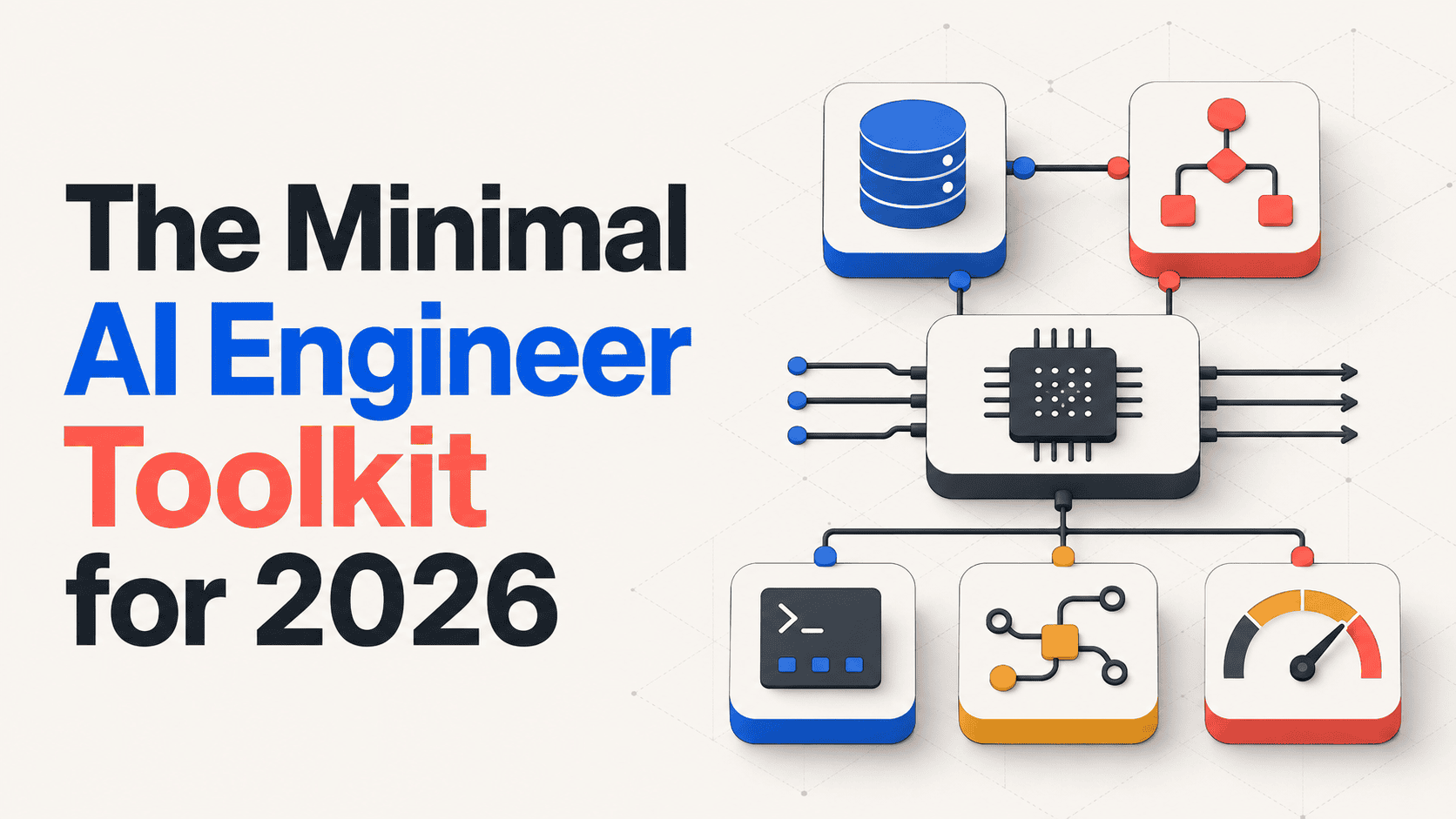
AI エンジニアリングのツールキット
2 年前に構築された生成 AI(GenAI)アプリケーションのアーキテクチャ図を見てみると、依存関係が複雑に絡み合った蜘蛛の巣のような状態だったことがわかります。当時の標準的なスタックには、巨大なベクトルデータベース、複雑なチャンキングアルゴリズム、過度に抽象化されたオーケストレーションフレームワーク、あらゆるツール用のカスタム API ラッパー、そして最も単純なタスクであっても高価な最先端モデルへの直接的な依存が必要でした。
これはプロトタイピング用であり、本番環境向けではありませんでした。
今日では、Python から AI エンジニアへ:独学ロードマップ で示されているように、AI エンジニアの役割は成熟しました。私たちはもはや、言語モデルが PDF を要約できるかどうかを試すために API を必死に接続しているわけではありません。非確率的なエンジンを中心に、決定論的なシステムを構築しています。
基盤モデルがネイティブの推論機能と状態管理機能を統合したため、その周囲を構築するために必要なツールはむしろ縮小しました。「何でも入った鍋」のような肥大化したアプローチは、軽量で標準化されたプリミティブのセットに置き換えられています。
以下は、2026 年半ばに AI エンジニアが自律システムを構築・評価・デプロイするために必要となる、最小限かつ本番環境対応のツールキットです。各レイヤーは固有の問題に対応しており、それらが一体となって一貫性のあるスタックを形成しています。
オーケストレーション:グラフとイベントループ
**
すべてはオーケストレーションから始まります。エージェントの推論やルーティングを確実に制御できない限り、スタック内の他の要素は何も意味を持ちません。
本番環境で動作するアジェンティックシステムには、実行グラフ、状態遷移、エラーハンドリングへの可視性が不可欠です。基盤となるプロンプトが隠蔽されていたり、ツールの呼び出しを容易にインターセプトできないフレームワークは、試作段階では使えても、本番環境で使うべきではありません。
The Complete AI Agent Decision Framework で詳述されている通り、業界は主に2つのパラダイムに収束しています。
// コードファーストのグラフフレームワークの利用
複雑で状態を保持するアプリケーションでは、サイクル付きグラフが標準となっています。エージェントの推論を管理するために脆い while ループを書くのではなく、ノード(エージェントまたはツール)とエッジ(条件付きルーティングロジック)を定義します。状態はグラフ全体で自動的に維持されるため、実行の一時停止やヒューマン・イン・ザ・ループによる承認要求が可能になり、コンテキストを失うことなく計算を再開できます。
「LangGraph」や「Burr」のようなツールがこのパラダイムを体現しています。ここで LangGraph を推奨することは、推論ループの抽象化に関する以前の指摘と矛盾するものではありません。LangGraph は低レベルでコードファーストなグラフフレームワークであり、状態と遷移に対する明示的な制御を提供します。過度に抽象化されたフレームワークへの懸念は、モデルが何をしているかを確認したり、介入したりすることを妨げるブラックボックス化したオーケストレーションにあります。
// ビジュアルイベント駆動型オーケストレーションの活用
ワークフロー自動化やデータパイプラインにおいては、数千行にも及ぶボイラープレートな Python コードよりも、ビジュアルオーケストレーションの方がはるかに保守性が高いことが実証されています。Automations with n8n: A Self-Study Roadmap で探求されているように、現代のビジュアルビルダーでは AI モデルがファーストクラス・シチズンとして扱われます。Webhook を分類エージェントに視覚的にマッピングし、その出力を Python 実行ノードへルーティングしてデータベースへ書き込むといった処理も、組み込みのリトライロジックと観測機能を用いてすべて実現可能です。
2026 年のルール: 複雑な会話メモリや多段階の計画が必要なタスクであれば、コードでグラフを構築してください。一方、非同期でイベント駆動型のワークフローであれば、ビジュアルオーケストレーターを使用するのが適切です。
オーケストレーション層が整ったところで、次はエージェントがいかにして外部世界と接続するかという問いが残ります。
# ユニバーサル・コネクター:Model Context Protocol
最近まで、AI エージェントに新しいツールへのアクセス権を与えるには、カスタム Python ラッパーの作成、JSON スキーマの定義、API 認証処理を行い、モデルが引数を正しく解析することを祈るしかなかった。各統合はそれぞれ小さなプロジェクトとして扱われていた。
Model Context Protocol(MCP)の採用により、このエンジニアリング上の負担は大幅に軽減された。
MCP は、AI モデルにとって USB-C がハードウェアに果たす役割と同じです。これはオープンな標準規格であり、一貫したインターフェースを通じてあらゆる AI エージェントがデータソースやツールに接続できるようにします。カスタムの統合コードを書く代わりに、データベースや Slack ワークスペース、GitHub リポジトリに対して MCP サーバーを立てるだけで済みます。エージェントは MCP クライアントに接続するだけで、利用可能なツールとコンテキストを即座に理解できるようになります。
これにより、エンジニアの工数は統合からガバナンスへとシフトします。適切に設定された MCP(Model Context Protocol)環境では、実行環境と推論エンジンを分離し、認証情報の管理をエージェントのシステムプロンプト内に埋め込むのではなくサーバー側で行うことができます。サーバー側のセキュリティ対策には注意が必要ですが、それでも統合の範囲は縮小されます。
# ローカル推論と小型言語モデル
**
ユニットテストを書いている最中にクラウドプロバイダにトークン料金を支払う必要はありません。現代の AI エンジニアリングワークフローは、すべてオフラインで始まります。
2026 年版「小型言語モデル入門:完全ガイド」で概説した通り、100 億パラメータ未満の小型言語モデル(SLM)はすでに一定の品質基準を達成しており、特定のタスクにおいては 2024 年の最先端モデルを凌駕する性能を発揮します。この変化により、ローカル環境での開発は単にコスト削減になるだけでなく、実際に生産性を高める手段となっています。
ローカルスタックの構成:
- 推論エンジン: Ollama や Apple Silicon 向けの MLX といったツールを使えば、単一のコマンドで量子化されたモデルをローカル環境で実行できます。
- ワークフロー: Qwen3、Gemma 3、Phi など、高速な最新世代のローカルモデルを用いてオーケストレーションロジックを構築します。ツールの呼び出しデバッグやシステムプロンプトの調整、エラーハンドリングのテストを、レイテンシもコストもゼロで行えます。
- 移行のポイント: ローカル推論エンジンがすでに OpenAI 互換の API エンドポイントを公開しているため、本番環境への展開にはベース URL と API キーの変更だけで済みます。コードの他の部分はそのまま流用可能です。
この最後の点は特に強調すべきです。ローカルとクラウド間の推論結果を互換性があることで、開発中は高速に動きながら、本番モデルへ移行する際にもオーケストレーションコードを変更する必要がありません。ただし、デプロイ準備が整った後は、測定なしでの反復作業は単なる推測に過ぎません。そこで次は評価の重要性について解説します。
# プロンプトのための CI/CD:評価エンジン
**
これはおそらく2026年のツールキットにおいて最も重要な追加要素ですが、チームが本番環境で問題が発生するまで見落としがちな部分でもあります。
本番環境へのエージェント型 AI の導入前に考慮すべき7つの重要事項 で警告されている通り、確率的な出力には統計的なテストが必要です。数回の手動クエリを実行して回答が正しそうに見えるかどうかを確認するだけでは、AI アプリケーションを検証することはできません。
現代の AI エンジニアリングでは、Promptfoo、LangSmith、または Braintrust といった評価フレームワークを CI/CD パイプラインに直接統合する必要があります。
システムプロンプトの変更や基盤モデルの更新があった場合、評価エンジンが数百ものエッジケースを含むテストスイートを自動的に実行します。エージェントの評価:エージェント型 AI のパフォーマンスをテスト・測定する方法 で詳述されている通り、このスイートは「LLM-as-a-Judge(LLM を審査員として活用する)」方式に依存しています。これは、能力のある別のモデルが厳格な評価基準に基づいてエージェントの出力を採点する仕組みです。例えば、「エージェントはトランザクション ID の誤生成(ハルシネーション)なしで refund_api ツールを正しく使用したか?」といった項目が該当します。
ビルドゲートとして 95% のパス率などの閾値を設定するのは、妥当な出発点です。ただし、最適な閾値はユースケースとリスク許容度によって異なります。プロンプトエンジニアリングはもはや芸術ではなく、測定可能でバージョン管理されたエンジニアリングの一分野となりました。
この分野は、エージェントが生成する出力にも及んでいます。下流のコードが期待する形状で確実に出力が届くという信頼性がなければ、評価パイプラインには検証対象となる確実なものが存在しません。
# 構造化出力の強制
**
かつて私たちはモデルに対して「有効な JSON のみを返してください。マークダウン形式は含めないでください。『以下が JSON です』といった文言も不要です」と指示するために多大な時間を費やしていました。しかし、その時代は終わりました。
これはすでに解決済みの問題です。2026 年のツールキットでは、2 つの補完的なアプローチが用いられます。どちらを選ぶかを決める前に、その違いを理解しておく価値があります。
// 制約付きデコーディングの利用
Outlines や vLLM Guided Decoding** などのライブラリは、トークンレベルでモデルの生成プロセスをインターセプトします。Pydantic モデルをスキーマとして提供することで、生成エンジンはモデルが指定した正確な構造に一致するトークンのみを出力するように制限します。整数フィールドを指定した場合、サンプリング段階でそれ以外の出力が行われないように防止されます。
// バリデーションとリトライの利用
Instructor は従来の仕組みとは異なり、モデルの関数呼び出しインターフェースをラップして生成後に Pydantic スキーマとの整合性を検証します。モデルの応答がバリデーションに失敗すると、エラー情報を付加した状態で自動的に再試行を行います。この方法はトークンレベルでの強制よりも柔軟ですが、専用の推論バックエンドを必要とせず、OpenAI 互換 API をそのまま利用できます。
どちらのアプローチも、従来のエージェントパイプラインで頻発していた後段の構文解析エラーを防ぎます。推論スタック全体を完全に制御できる場合は制約付きデコーディングを、ホスト型 API を対象に開発する場合は Instructor の採用がおすすめです。
# 高度な開発ワークフロー:Git Worktrees
**
コード管理の方法も AI 開発の現実に合わせて進化しています。実験は本質的に混沌としやすく、メインブランチでツール呼び出しの不具合を修正している最中に、別のモデルバージョンに対して新しいプロンプト手法を試す必要があるケースが頻繁に発生します。
【AI 開発における Git Worktrees の活用】
以前の記事「AI 開発のための Git Worktrees」でも触れた通り、ローカルモデルの実行や大規模なコンテキストファイルの管理において、標準的なブランチ切り替えに頼ると作業が非効率になりがちです。Git Worktrees を使えば、リポジトリの複数のブランチを別々のディレクトリに同時にチェックアウトできます。
例えば、1 つのターミナルで experimental-agent ブランチ上の評価スイートを実行しながら、別のターミナルで main ブランチのバグ修正を行っても、ローカルモデルの状態や環境変数が失われることはありません。
これは一見小さなワークフローの変更ですが、実験と安定化の間をスムーズに移動できるかどうかに大きな影響を与えます。
結論
これら 6 つのツールを並べてみると、明確なパターンが見えてきます。それぞれが、初期の GenAI 開発を困難にした特定の摩擦要因に対応し、独自で脆い解決策を、標準化されコンポーザブルなプリミティブに置き換えています。
シニア AI エンジニアの決定的な特徴は、最も多くのフレームワークを知っていることではありません。どの抽象化レイヤーを削ぎ落とすべきかを正確に見極める力です。
最小限のツールキットとは、グラフオーケストレーター、統合用の MCP(Model Context Protocol)、テスト用ローカル SLM(Small Language Model)、信頼性を高める構造化出力、CI/CD 向けの自動評価のことです。これらがあれば、堅牢な AI システムを構築するために必要なものはすべて揃います。
まずは、現在の最大のボトルネックとなっているレイヤーから始めるのがベストです。開発ループが遅いならローカル環境から始めましょう。デプロイが不安定なら、評価機能から着手してください。これらのツールは互いに連携して動作するため、一つの入り口を選んでそこから広げていくという戦略も十分に有効です。
それ以外の情報はすべてノイズに過ぎません。
Vinod Chugani は、AI とデータサイエンスの教育者であり、新興 AI 技術と実務家のための実践的な応用をつなぐ役割を果たしています。彼の専門分野は、エージェント型 AI、機械学習アプリケーション、自動化ワークフローです。技術メンターおよびインストラクターとして活動する中で、Vinod はデータ専門家のスキル向上やキャリア転換を支援してきました。定量的金融における分析 expertise を持ち込み、実践的な指導スタイルに活かしています。彼のコンテンツは、プロフェッショナルがすぐに活用できる戦略とフレームワークに焦点を当てています。
原文を表示
**
# The AI Engineering Toolkit
Look at the architecture diagrams for generative AI (GenAI) applications built just two years ago, and they resemble a tangled web of dependencies. The standard stack required a massive vector database, complex chunking algorithms, a heavily abstracted orchestration framework, custom API wrappers for every tool, and direct reliance on expensive frontier models for even the simplest tasks.
It was a stack built for prototyping, not production.
Today, as mapped out in From Python to AI Engineer: A Self-Study Roadmap**, the role of the AI Engineer has matured. We're no longer frantically wiring APIs together to see if a language model can summarize a PDF. We're building deterministic systems around non-deterministic engines.
Because foundation models have integrated native reasoning and state management, the tooling required to build around them has actually shrunk. The bloated "kitchen sink" approach has been replaced by a lean, standardized set of primitives.
Here's the minimal, production-grade toolkit an AI Engineer needs in mid-2026 to build, evaluate, and deploy autonomous systems. Each layer addresses a distinct problem, and together they form a coherent stack.
# Orchestration: Graphs and Event Loops
**
Everything begins with orchestration. Without reliable control over how your agent reasons and routes, nothing else in the stack matters.
For production agentic systems, you need visibility into the execution graph, state transitions, and error handling. Frameworks that obscure the underlying prompts or make it difficult to intercept a tool call belong in a prototype, not a deployed system.
As detailed in The Complete AI Agent Decision Framework**, the industry has converged on two primary paradigms.
// Using Code-First Graph Frameworks
For complex, stateful applications, cyclical graphs are the standard. Instead of writing brittle while loops to manage agent reasoning, you define nodes (agents or tools) and edges (conditional routing logic). State is maintained automatically across the graph, letting you pause execution, request human-in-the-loop approval, and resume computation without losing context.
Tools like LangGraph and Burr exemplify this paradigm. Recommending LangGraph here isn't a contradiction of the earlier point about reasoning-loop abstractions. LangGraph is a low-level, code-first graph framework that gives you explicit control over state and transitions. The concern with heavily abstracted frameworks is about opaque orchestration that prevents you from seeing or intercepting what the model is doing.
// Using Visual Event-Driven Orchestration
For workflow automation and data pipelining, visual orchestration has proven far more maintainable than thousands of lines of boilerplate Python. As explored in Automations with n8n: A Self-Study Roadmap, modern visual builders treat AI models as first-class citizens. You can visually map a webhook to a classifier agent, route the output to a Python execution node, and write to a database — all with built-in retry logic and observability.
The rule of thumb for 2026: If the task requires complex conversational memory and multi-turn planning, build a graph in code. If it's an asynchronous, event-triggered workflow, use a visual orchestrator.
Once your orchestration layer is in place, the next question is how your agents actually connect to the outside world.
# The Universal Connector: Model Context Protocol
**
Until recently, giving an AI agent access to a new tool meant writing a custom Python wrapper, defining a JSON schema, handling API authentication, and hoping the model parsed the arguments correctly. Each new integration was its own small project.
The adoption of the Model Context Protocol** (MCP) has reduced this engineering overhead considerably.
MCP is to AI models what USB-C is to hardware: an open standard that lets any AI agent connect to any data source or tool through a consistent interface. Instead of writing custom integrations, you stand up an MCP server for your database, your Slack workspace, or your GitHub repository. Your agent connects to the MCP client and immediately understands the tools and context available to it.
This shifts engineering effort away from integration and toward governance. A well-configured MCP setup separates the execution environment from the reasoning engine, moving credential management to the server side rather than embedding it in your agent's system prompt. The integration surface shrinks, even if the underlying security considerations require attention on the server side.
# Local Inference and Small Language Models
**
You shouldn't be paying a cloud provider for tokens while writing unit tests. The modern AI engineering workflow starts entirely offline.
As outlined in Introduction to Small Language Models: The Complete Guide for 2026**, small language models (SLMs) have reached a quality threshold where models under 10 billion parameters routinely outperform the frontier models of 2024 on targeted tasks. That shift makes local development not just cost-effective, but genuinely productive.
The local stack:
- Inference engine: Tools like Ollama or MLX (for Apple Silicon) let you run quantized models locally with a single command.
- The workflow: Build your orchestration logic using a fast, current-generation local model such as Qwen3, Gemma 3, or Phi. Debug your tool calls, refine your system prompts, and test your error handling with zero latency and zero cost.
- The pivot: Because local inference engines now expose OpenAI-compatible API endpoints, pushing to production requires changing only the base URL and API key. The rest of your code stays identical.
That last point is worth emphasizing. The portability between local and cloud inference means you can move fast during development and then graduate to a production model without touching your orchestration code. But once you're ready to deploy, iteration without measurement is just guessing — which is why evaluation comes next.
# The Evaluation Engine: CI/CD for Prompts
**
This is probably the most important addition to the 2026 toolkit, and it's also the one teams most commonly skip until something breaks in production.
As warned in 7 Important Considerations Before Deploying Agentic AI in Production**, probabilistic outputs require statistical testing. You can't verify an AI application by running a few manual queries and seeing if the response looks right.
Modern AI engineering requires an evaluation framework — like Promptfoo, LangSmith, or Braintrust — integrated directly into your CI/CD pipeline.
When you change a system prompt or update an underlying model, the evaluation engine automatically runs a test suite containing hundreds of edge cases. As detailed in Agent Evaluation: How to Test and Measure Agentic AI Performance, this suite relies on "LLM-as-a-Judge" grading: a secondary, capable model scores the agent's output against a strict rubric — for example, "Did the agent correctly use the refund_api tool without hallucinating a transaction ID?"
Setting a threshold like 95% pass rate as a build gate is a reasonable starting point, though the right threshold depends on your use case and risk tolerance. Prompt engineering is no longer an art; it's a measurable, version-controlled engineering discipline.
That discipline extends to the outputs your agent produces. If you can't trust that outputs arrive in the shape your downstream code expects, your evaluation pipeline has nothing reliable to test against.
# Structured Output Enforcement
**
We used to spend significant time instructing models: "Please return ONLY valid JSON. Do not include markdown formatting. Do not say 'Here is your JSON'." That era is over.
This is a solved problem. The 2026 toolkit relies on two complementary approaches, and it's worth understanding the difference before choosing one.
// Using Constrained Decoding
Libraries like Outlines and vLLM Guided Decoding** intercept the model's generation process at the token level. By providing a Pydantic model as a schema, the generation engine restricts the model to only outputting tokens that match your exact structure. If you specify an integer field, the model is prevented at the sampling stage from outputting anything else.
// Using Validation-and-Retry
Instructor works differently: it wraps the model's function-calling interface and validates the output against a Pydantic schema after generation. When the model's response fails validation, Instructor automatically retries with the error context appended. This approach is slightly less strict than token-level enforcement but works with any OpenAI-compatible API without requiring a specialized inference backend.
Both approaches eliminate the downstream parsing errors that used to crash agentic pipelines. Choose constrained decoding when you have full control over the inference stack; choose Instructor when you're building against hosted APIs.
# Advanced Development Workflows: Git Worktrees
**
The way we manage code has adapted to the reality of AI development. Experimentation is inherently messy: you frequently need to test a new prompt technique against a different model version while debugging a broken tool call in your main branch.
As covered in Git Worktrees for AI Development**, relying on standard branch switching creates friction when running local models or maintaining large context files. Git Worktrees let you check out multiple branches of your repository into separate directories simultaneously. You can run an evaluation suite on your experimental-agent branch in one terminal while fixing a bug in main in another, without losing your local model state or environment variables.
It's a small workflow change with a meaningful impact on how fluidly you can move between experimentation and stabilization.
# The Bottom Line
**
Look at these six tools together and a pattern emerges: each one addresses a specific source of friction that made early GenAI development painful, and each one replaces a bespoke, brittle solution with a standardized, composable primitive.
The defining characteristic of senior AI talent isn't knowing the most frameworks. It's knowing exactly which layers of abstraction to strip away.
The minimal toolkit — a graph orchestrator, MCP for integrations, local SLMs for testing, structured output for reliability, and automated evaluation for CI/CD — covers what you need to build solid AI systems. The best place to start is whichever layer reflects your current biggest bottleneck. If your development loop is slow, start local. If your deployments are unpredictable, start with evaluation. The tools fit together, so picking one entry point and building outward is a perfectly sound strategy.
Everything else is noise.
Vinod Chugani** is an AI and data science educator who bridges the gap between emerging AI technologies and practical application for working professionals. His focus areas include agentic AI, machine learning applications, and automation workflows. Through his work as a technical mentor and instructor, Vinod has supported data professionals through skill development and career transitions. He brings analytical expertise from quantitative finance to his hands-on teaching approach. His content emphasizes actionable strategies and frameworks that professionals can apply immediately.
関連記事
今日のまとめ
AIデイリーブリーフで今日の重要ニュースをまとめ読み