Google、本番環境での AI アプリ失敗原因と解決策を解説
本文の状態
日本語全文を表示中
詳細モードで約8分の本文を読めます。
同じ出来事の情報源
この情報源を基点に整理
Google Cloud AI
Google Cloud AI は、AI プロトタイプが本番環境で失敗する原因を分析し、YouTube の事例を通じて開発スピードとリスク管理の両立を目指す新しい SDLC デザインの重要性を指摘している。
AI深層分析を開く2026年8月4日 06:47
AI深層分析
キーポイント
プロトタイプの生産化の壁
週末の個人プロジェクトでは数時間で機能するアプリケーションが作れる一方で、企業環境ではインフラの硬直性や運用リスクにより、95% のプロトタイプが本番導入に至らない現状がある。
スピードとリスクのパラドックス
個人開発では失敗コストが低く即座に修正可能だが、企業規模で制約のないエージェントを並列実行すると、文脈の切り替えやコード変更の不整合により技術的負債が蓄積し、大規模な障害を引き起こすリスクがある。
YouTube における実証事例
記事執筆者は YouTube のエンジニアリング現場を調査し、数十億人のユーザーを支えるインフラにおいて、スピードとリスクのバランスをどう取るかという課題への具体的なアプローチを探っている。
大規模プラットフォームのリスク管理
YouTubeのような大規模インフラでは、実験的な技術的負債でシステムが過負荷になるリスクを避ける必要がある。
パブリックユースとしての厳格なガードレール
この規模のプラットフォームは公共インフラとみなされ、保護には広範かつ時間のかかるガードレールの整備が不可欠である。
重要な引用
only 5% of AI prototypes make it to production; the other 95% fall into the validation abyss.
unconstrained agentic orchestration inside an enterprise introduces an unpredictable blast radius.
The technical debt accumulated fast, breaking two apps catastrophically because the modifications weren't properly isolated.
It is essentially a public utility; you cannot risk overloading it with experimental technical debt.
編集コメントを表示
編集コメント
AI エージェント技術の普及により、個人開発と企業開発の間にある「スピード対リスク」のギャップが顕在化している。本記事は単なる課題提起にとどまらず、大規模プラットフォームである YouTube の実例を交えることで、具体的な解決策への示唆を与えている点に価値がある。
Source Article
元記事を日本語で読む
本文に関係しない購読案内、埋め込み通知、サイト内プロモーションは除いています。
週末に個人で取り組む AI プロジェクトの黄金時代が到来しています。エージェントエンジニアリングや大規模言語モデル(LLM)のおかげで、空の IDE から機能的なローカルアプリケーションを構築するまでの時間は、四半期単位から数時間へと劇的に短縮されました。コーヒーを片手に、最も大胆なアイデアも実現可能です。
しかし、堅牢なインフラと数百万人のユーザーを抱える企業エコシステムの中では、「バイブコーディング」は目に見えない壁にぶつかります。ローカルで動作していたプロトタイプが、企業のネットワークや連鎖するエラー、あるいは運用上の不安定さを恐れる経営陣によるブロックによって崩れ去ってしまうのです。
データ は冷徹な事実を物語っています。AI プロトタイプのうち、実際に本番環境へ移行できるのはわずか 5% に過ぎず、残りの 95% が検証の深淵に沈んでしまうのです。
開発者にとって、ソーシャルメディアで人々が lightning-fast(超高速)な AI デプロイを次々と実現している一方で、自分は永遠に続く検証ループに足止めされている姿を見るのは苛立たしいものです。この断絶をどう埋めるべきかを探るため、私は YouTube のエンジニアリング現場へと足を運びました。そこで彼らが、まさにこの「速度とリスクのジレンマ」をどのように管理しているのかを目撃したのです。その発見は、AI ソフトウェア開発ライフサイクル(SDLC)設計における既存のプレイブックを根本から書き換えるものでした。
リスク対スピードのパラドックス
個人で構築する際、失敗のコストは低く抑えられます。エージェントコードを書くことは、機敏な戦闘機の操縦に似ています。もし AI エージェントが暴走しても、プロンプトを書き直してサーバーを即座に再起動すれば済むのです。
しかし、AI エンジニアリングリーダーの Addy Osmani 氏が『Emergent』の初回で指摘しているように、企業内で制約のない自律型エージェントをオーケストレーションすると、予測不能な被害範囲が生じるリスクがあります。Addy は、個人的なプロジェクトで 10 のエージェントを並列実行した際、文脈を飛び越えながら素早いプレビューだけでコードを押し付け続けた結果、技術的負債が急速に蓄積し、2 つのアプリが壊滅的に破綻したと振り返っています。これは、変更が適切に分離されていなかったことが原因です。
このリスクをYouTubeのような大規模なスケールで考えると、そのインフラは 20 年以上も前の堅牢なコードベース上で数十億人のユーザーを支えています。それは本質的に公共インフラであり、実験的な技術的負債によって過負荷に陥れることは許されません。この規模のプラットフォームを保護するには、広範かつ慎重なガードレールが必要です。
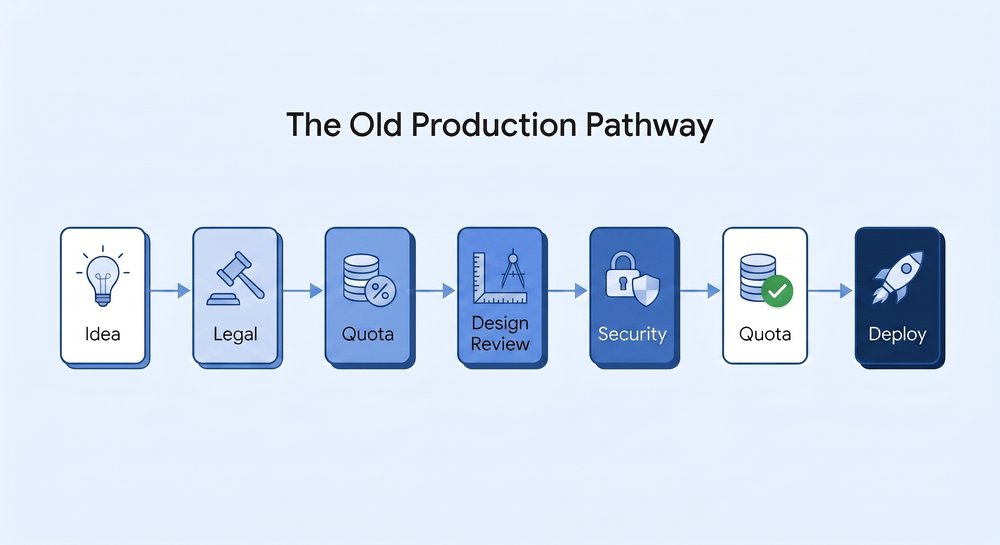
このパイプラインを通じてプリミティブなデモを構築する頃には、基盤となる AI モデルはすでに進化しており、アイデアが陳腐化してしまっています。システム全体のリスクを最小限に抑えながら、いかに光速で開発を進めるか?
YouTube の AI プロトタイピングスタック
DeepMind と元 YouTube ソフトウェアエンジニアの Benji Bear は、レビューを加速させることでこの課題を解決したのではなく、インフラストラクチャの哲学そのものを変革しました。彼と彼のチームはプロトタイピングスタックを構築しました。これは設計からコード生成までのライフサイクルを統合し、迅速な実験環境と本番サーバーを完全に分離するプラットフォームです。これにより、開発者の速度を阻害する2つの主要な摩擦要因が体系的に解決されました。
データ層の分離
スタンドアロンのアプリを孤立させるだけでは、「白紙の状態」の問題が生じ、現実的な条件でのプロトタイプ検証ができなくなります。これを解決するため、開発者は事前構築された Google AI Studio のテンプレートを用いてアイデアの骨組みを作成します。これらのテンプレートは、プロトタイプの承認済み読み取り専用データ用に Google Cloud 上に設定されたプロキシサーバーに接続されます。これにより、厳格なトークンを通じて、ライブメタデータバンドル(プレイリスト、動画、チャンネル)への事前認証済み・読み取り専用の API アクセスが即座に付与されます。
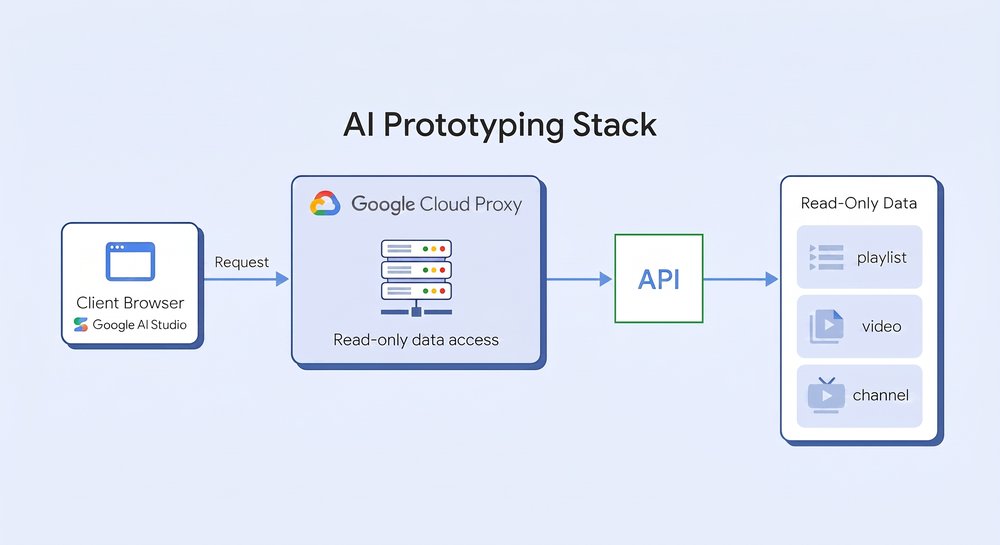
開発者は、本番環境のパラメータに基づく技術的な正確性を享受できますが、コアデータベースへの書き込みや汚染、あるいはシステムクラッシュを引き起こすことは一切できません。
ライブ UI 注入
概念に真の実世界での検証が必要な場合、スタックにはクライアントサイドの YouTube Extension wrappers が用意されています。このラッパーは接着剤のような役割を果たし、開発者が実験的な機能を YouTube の実際のライブプロダクションウェブ表面に直接注入できるようにします。コード分割チャンクの safeguards により、これがプロダクションバイナリから分離され、プロトタイプの更新を数分で安全なステージング環境へ展開することが可能になります。
その結果、YouTube はアイデアの審査に複数の四半期を要する状況から、数週間でユーザー調査研究(UXR)へと直接進めるようになりました。成功したプロトタイプには YouTube Recap や Ask YouTube などがあります。
使い捨てコードを受け入れる
このスタックを実装するには、根本的な心理的転換が必要です。エンジニアは通常、コードを永続的なインフラとして扱い、完璧になるまで磨き上げリファクタリングするよう訓練されています。しかし、ベンジーのここで示す企業 AI の哲学はシンプルです。使い捨てコードを受け入れることです。
Google AI Studio で作成されたプロトタイプは、技術的負債を含んだ多少の乱雑さを持つことを前提としています。その目的は、定量的データを用いて製品市場適合性を検証することにあります。混沌とした AI 生成アプリを企業向けコードベースにリファクタリングしようとすることは、摩擦を生むアーキテクチャ上の罠になりかねません。
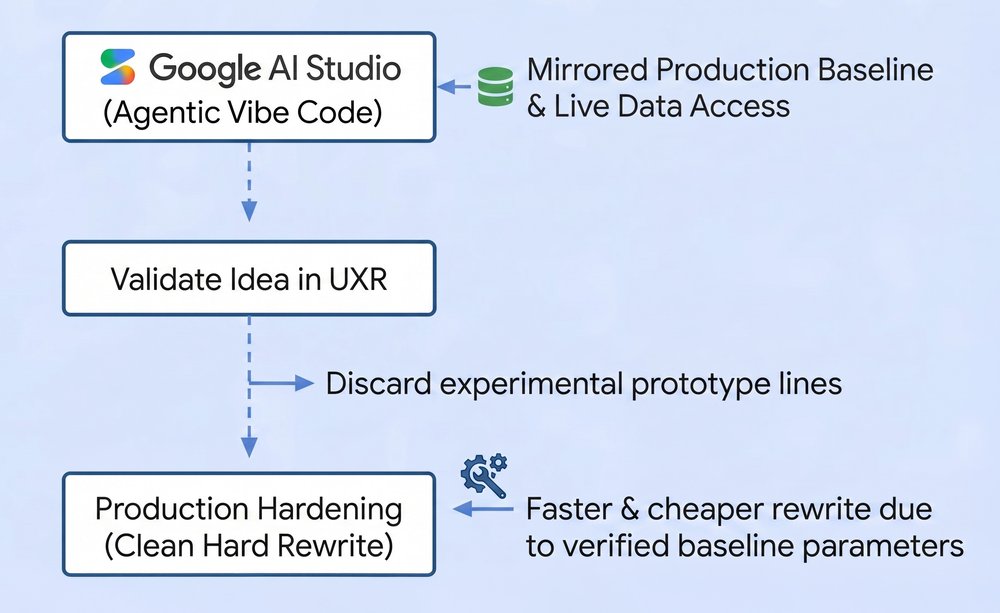
Google AI Studio は、プロダクション環境のミラーリングされたバージョン上に直接プロトタイプを構築するため、開発初日から極めて精度の高いベースラインを確立できます。依然として、AI によって生成されたごちゃごちゃしたスクリプトは破棄しますが、アイデアが成功することが確認できれば、本番環境向けへの書き換えは、開発ライフサイクルのより安全な後段で、はるかに迅速かつ低コストで行えます。これにより、白紙の状態から始めるのではなく、検証済みの設計図に基づいてコーディングを進めることが可能になります。
壊さずにスピードを出す
ここで最も重要な洞察は、95% の失敗率とはバグではなく、むしろ戦略そのものであるという点です。私たちはチームがより頻繁に、かつ安全に失敗できる環境を意図的に設計すべきなのです。
AI の登場によりコード生成のコストは劇的に低下しました。その結果、私たちの役割も「構文の番人」からシステムアーキテクトへとシフトしています。私たちが担うべき仕事は、チームが壊滅的な障害を引き起こすことなく大胆なアイデアを試せるよう、橋渡しとなる環境や読み取り専用のサンドボックス、分離されたパイプラインを設計することです。
最大のリスクは、AI による雑多なコードでサーバーを壊すことではありません。むしろ重要なのは、検証ループがあまりにも遅いために技術的な機会を見逃してしまうことです。失敗しても安全であるという構造的制約を整えることで、チームにはハイスピードでの実行という自由が生まれます。
詳細な技術解説や、YouTube の基盤インフラエンジニアへのインタビュー映像、そして Google AI Studio Proto-Stack の内部構造をご覧になりたい方は、YouTube で公開された **Emergent** の第 1 回エピソードをご覧ください。
原文を表示
We are living in the golden age of the weekend AI side project. Thanks to agentic engineering and LLMs, the time to go from a blank IDE to a functional local application has dropped from quarters to hours. You can build your wildest ideas over a cup of coffee.
But inside an enterprise ecosystem with rigid infrastructure and millions of users, vibe coding hits an invisible wall. Your local prototype falls apart against corporate networks, cascading errors, or getting blocked by leadership terrified of operational volatility.
The data is sobering: only 5% of AI prototypes make it to production; the other 95% fall into the validation abyss.
For developers, watching people on social media ship lightning-fast AI deployments while you’re stuck in endless validation loops is maddening. To figure out how to bridge this chasm, I went into the engineering trenches at YouTube to see how they manage this exact speed-versus-risk paradox. What I discovered completely rewrites the playbook on AI software development lifecycle (SDLC) design.
The risk-vs-speed paradox
When you are solo-building, failure is cheap. Writing agentic code is like piloting a nimble jet fighter—if an AI agent misbehaves, you rewrite the prompt and instantly restart the server.
But as AI engineering leader Addy Osmani points out in our premiere of Emergent, unconstrained agentic orchestration inside an enterprise introduces an unpredictable blast radius. Addy recalls running ten parallel agents on a personal project, context-hopping and pushing code based purely on quick previews. The technical debt accumulated fast, breaking two apps catastrophically because the modifications weren't properly isolated.
Amplify that risk to the scale of YouTube. Its infrastructure handles billions of users on a robust, 20-year-old codebase. It is essentially a public utility; you cannot risk overloading it with experimental technical debt. Protecting a platform of this scale requires extensive, slow guardrails:
By the time you build a primitive demo through this pipeline, the underlying AI models have evolved, leaving your idea out of date. How do you move at lightspeed while minimizing systemic risk?
YouTube’s AI prototyping stack
Deepmind and former YouTube software engineer, Benji Bear, solved this puzzle not by accelerating reviews, but by changing infrastructure philosophy. He and his team built a prototyping stack — a unified design-to-code lifecycle platform that completely decouples rapid experimentation from mainline production servers. It systematically solves the two primary friction points of developer velocity.
Decoupling the data layer
Isolating a standalone app completely causes a "blank canvas" problem where you can't test prototypes against realistic conditions. To solve this, developers bootstrap their ideas using pre-built Google AI Studio templates. These templates hook into a proxy server set up on Google Cloud for prototype-approved read-only data. This instantly grants the prototype pre-authenticated, read-only API access to live metadata bundles (playlists, videos, channels) via strict tokens.
Developers get the technical accuracy of live production parameters without any ability to write back to, pollute, or crash core databases.
Live UI injection
When a concept requires true real-world validation, the stack offers client-side YouTube Extension wrappers. This wrapper acts as glue code, allowing developers to inject their experimental features directly into the actual, live production web surface of YouTube. Code-split chunk safeguards isolate this from production binaries, allowing prototype updates to deploy to a safe staging environment in minutes.
The result? YouTube went from taking multiple quarters to vet an idea to launching several successful prototypes — including YouTube Recap and Ask YouTube — straight to user research studies (UXR) in weeks.
Embrace throw-away code
Implementing this stack requires a profound psychological shift. Engineers are trained to treat code as permanent infrastructure, polishing and refactoring it until it’s pristine. But Benji’s core enterprise AI philosophy here is simple: Embrace throw-away code.
Google AI Studio prototypes are meant to be messy with some technical debt; their objective is to validate product-market fit using quantitative data. Trying to refactor a chaotic, AI-generated app into an enterprise codebase is an architectural trap that can create friction.
But because Google AI Studio builds your prototype directly onto a mirrored version of production infrastructure, you establish a highly accurate baseline from day one. You still discard the messy, AI-generated script, but when an idea proves successful, rewriting it for production becomes significantly faster, cheaper, and safely positioned later in the development lifecycle—giving you a verified blueprint to code against rather than a blank canvas.
Move fast without breaking things
The core realization here is that a 95% failure rate isn’t a bug — it is the strategy. We should design environments that encourage our teams to fail more frequently and safely.
AI has plummeted the cost of code generation. Consequently, our roles are shifting from syntax gatekeepers to system architects. Our job is to design the bridges, read-only sandboxes, and isolated pipelines that empower teams to test wild ideas without triggering catastrophic meltdowns.
The biggest risk isn't breaking a server with messy AI code; it's missing the technological moment because validation loops are too slow. By building structural constraints that make failure safe, you give your team the freedom to run at hyper-speed.
To see the full technical breakdown, interview clips with YouTube's core infrastructure engineers, and a look inside the Google AI Studio Proto-Stack, watch our premiere episode of Emergent on YouTube.
AI算出
技術分析ainew評価標準
記事は AI エージェントや LLM の本番環境導入における「速度対リスク」のパラドックスを分析し、Google Cloud AI が独自に実施した YouTube での実証(エンジニアリングの現場調査)に基づいた解決策を提示している。これは単なる製品発表ではなく、再現可能な手法や設計思想の転換を示す技術分析であり、新規性としては既存の一般論に対する具体的な実装知見の追加として評価できるが、世界初の画期的発見ではないため中程度のスコアとなる。
6つの評価軸を見る
- AI関連度
- 75
- 情報源の信頼性
- 25
- 新規性
- 50
- 調べる価値
- 25
- 重複の少なさ
- 100
- 日本での有用性
- 25
今日のまとめ
AIデイリーブリーフで今日の重要ニュースをまとめ読み