AIエージェントの継続的学習
本文の状態
日本語全文を表示中
詳細モードで約6分の本文を読めます。
同じ出来事の情報源
6媒体で確認
LangChain Blog · The Decoder · Simon Willison Blog · TLDR AI · 404 Media · Ars Technica AI
各社の報じ方を比較 ↓LangChain社が、AIエージェントの継続的学習はモデル層だけでなく、ハーネス層とコンテキスト層の3層で行われると指摘し、時間とともに進化するシステム構築の考え方を変えると述べた。
Source Article
元記事を日本語で読む
本文に関係しない購読案内、埋め込み通知、サイト内プロモーションは除いています。
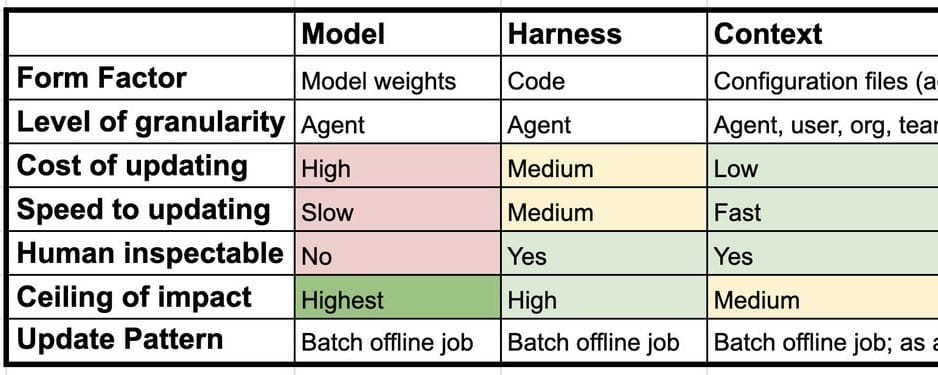 imageAIにおける継続的学習に関する議論の多くは、一つの点に集中しています。それはモデル重みの更新です。しかし、AIエージェントにとって学習は、三つの異なる層、すなわちモデル、ハーネス、コンテキストで発生し得ます。この違いを理解することは、時間とともに進化するシステムの構築についての考え方を変えるでしょう。
エージェントシステムの三つの主要な層は以下の通りです。
モデル: モデル重みそのもの。
ハーネス: エージェントの全てのインスタンスを動作させる、モデルを包むハーネス。これはエージェントを駆動するコード、および常にハーネスの一部である指示やツールを指します。
コンテキスト: ハーネスの外部に存在し、それを設定するために使用できる追加のコンテキスト(指示、スキル)。
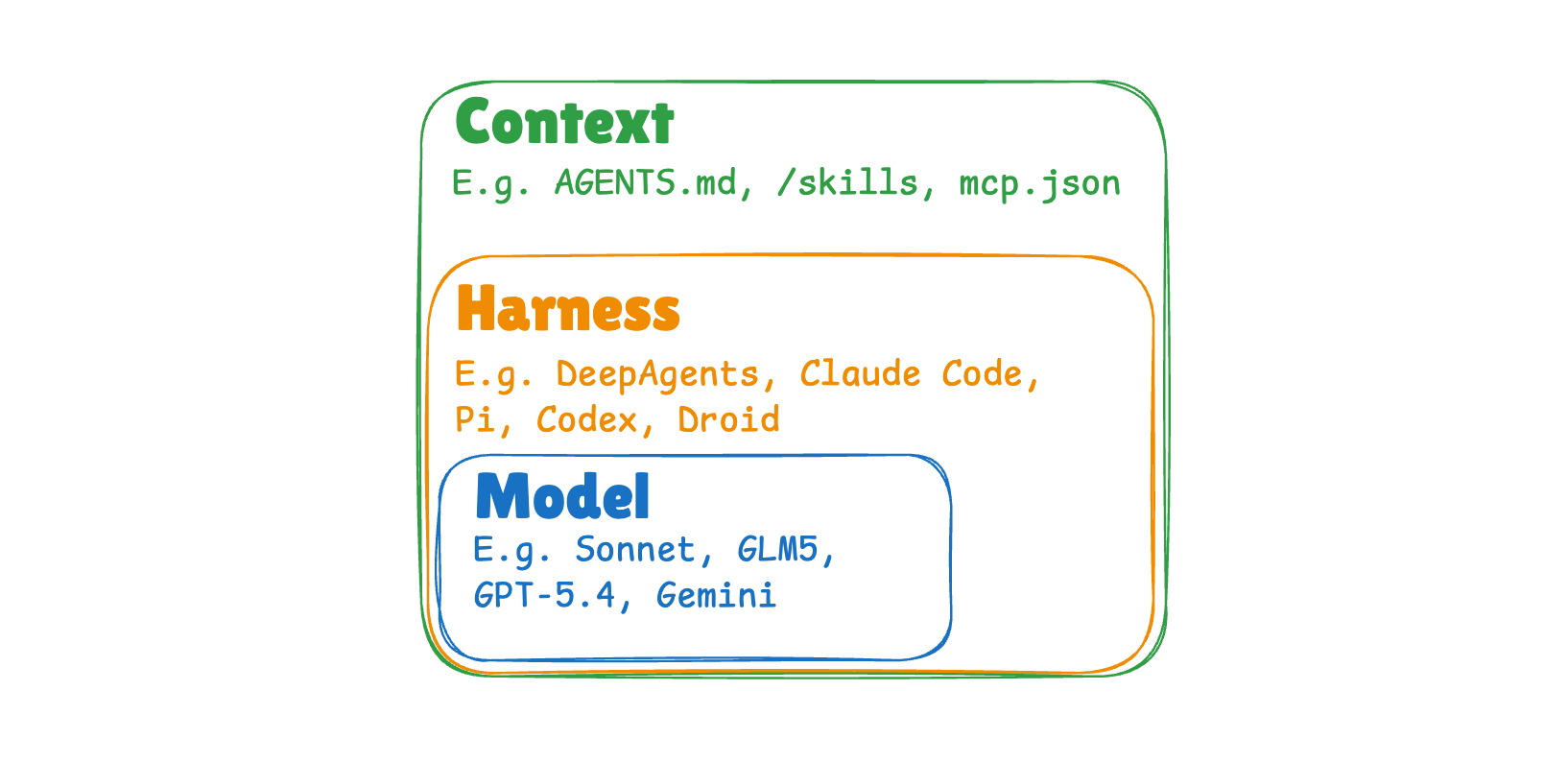 image例 #1: Claude Codeのようなコーディングエージェントへの当てはめ:
モデル: claude-sonnetなど
ハーネス: Claude Code
ユーザーコンテキスト: CLAUDE.md, /skills, mcp.json
例 #2: OpenClawへの当てはめ:
モデル: 多数
ハーネス: Pi + その他の足場
エージェントコンテキスト: SOUL.md, clawhubからのスキル
継続的学習について語るとき、多くの人はすぐにモデル層を思い浮かべます。しかし実際には、AIシステムはこれら三つの層すべてで学習することが可能です。
モデル層での継続的学習
多くの人が継続的学習について語るとき、最も一般的に言及されるのがこの層、すなわちモデル重みの更新です。
これを更新する技術には、SFT、RL(例:GRPO)などがあります。
ここでの中心的な課題は破滅的忘却です。モデルが新しいデータやタスクで更新されると、以前に獲得した知識の性能が低下する傾向があります。これは未解決の研究課題です。
特定のエージェントシステム向けにモデルを訓練する場合(例えば、OpenAIのCodexモデルはCodexエージェント向けに訓練されたと見なせます)、これは主にエージェントシステム全体に対して行われます。理論的には、より細かい粒度で行うことも可能ですが(例:ユーザーごとにLoRAを用意する)、実際にはほとんどがエージェントレベルで実施されています。
ハーネス層での継続的学習
先に定義したように、ハーネスとはエージェントを駆動するコード、および常にハーネスの一部である指示やツールを指します。
ハーネスが普及するにつれ、その最適化方法について論じた研究論文がいくつか発表されています。
最近の例が 「Meta-Harness: End-to-End Optimization of Model Harnesses」 です。
核心となる考え方は、エージェントがループ内で動作するというものです。まず、多くのタスクに対して実行し、評価します。次に、全てのログをファイルシステムに保存します。その後、コーディングエージェントを実行してこれらのトレースを分析させ、ハーネスコードへの変更を提案させます。
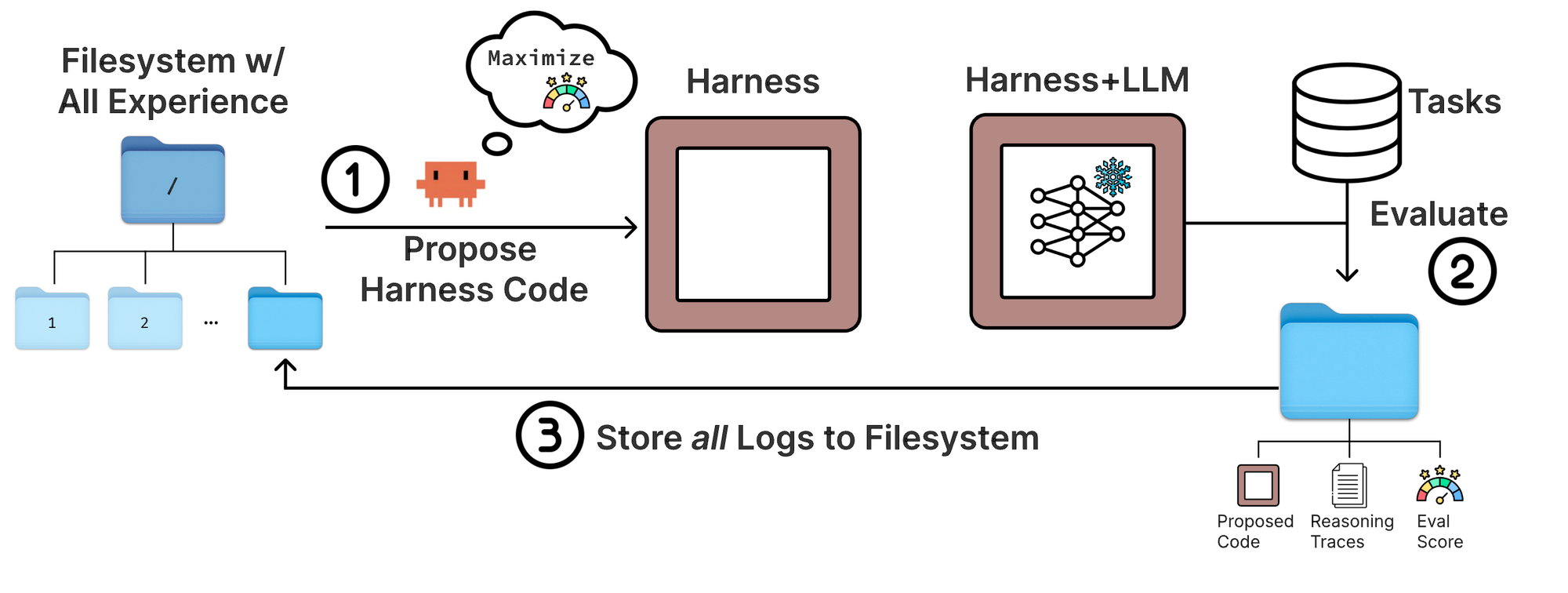 imageモデルの継続的学習と同様に、これは通常エージェントレベルで行われます。理論的には、より細かい粒度で行うことも可能です(例:ユーザーごとに異なるコードハーネスを学習する)。
コンテキスト層での継続的学習
「コンテキスト」はハーネスの外部に位置し、それを設定するために使用できます。コンテキストは、指示、スキル、さらにはツールなどの要素で構成されます。これは一般的にメモリとも呼ばれます。
同種のコンテキストはハーネス内部にも存在します(例:ハーネスが基本システムプロンプトやスキルを持つ場合)。その違いは、それがハーネスの一部なのか、設定の一部なのかという点です。
コンテキストの学習は、いくつかの異なるレベルで行うことができます。
コンテキストの学習はエージェントレベルで可能です。エージェントは永続的な「メモリ」を持ち、時間とともに自身の設定を更新します。良い例はOpenClawで、時間とともに更新される独自のSOUL.mdを持っています。
コンテキストの学習は、より一般的にはテナントレベル(ユーザー、組織、チームなど)で行われます。この場合、各テナントは時間とともに更新される独自のコンテキストを保持します。例としては、HexのContext Studio、DecagonのDuet、SierraのExplorerが挙げられます。
組み合わせることも可能です。つまり、エージェントレベルのコンテキスト更新、ユーザーレベルのコンテキスト更新、組織レベルのコンテキスト更新を全て備えたエージェントを構築できます。
これらの更新は、二つの方法で実施できます。
- 事後的、オフラインジョブとして行う。ハーネスの更新と同様に、最近の一連のトレースを分析して洞察を抽出し、コンテキストを更新します。これはOpenClawが「夢見る(dreaming)」と呼ぶものです。
- エージェントが動作している最中(ホットパス上)で行う。エージェントは、主要タスクに取り組みながら、自身のメモリを更新することを決定できます(またはユーザーが促すこともできます)。
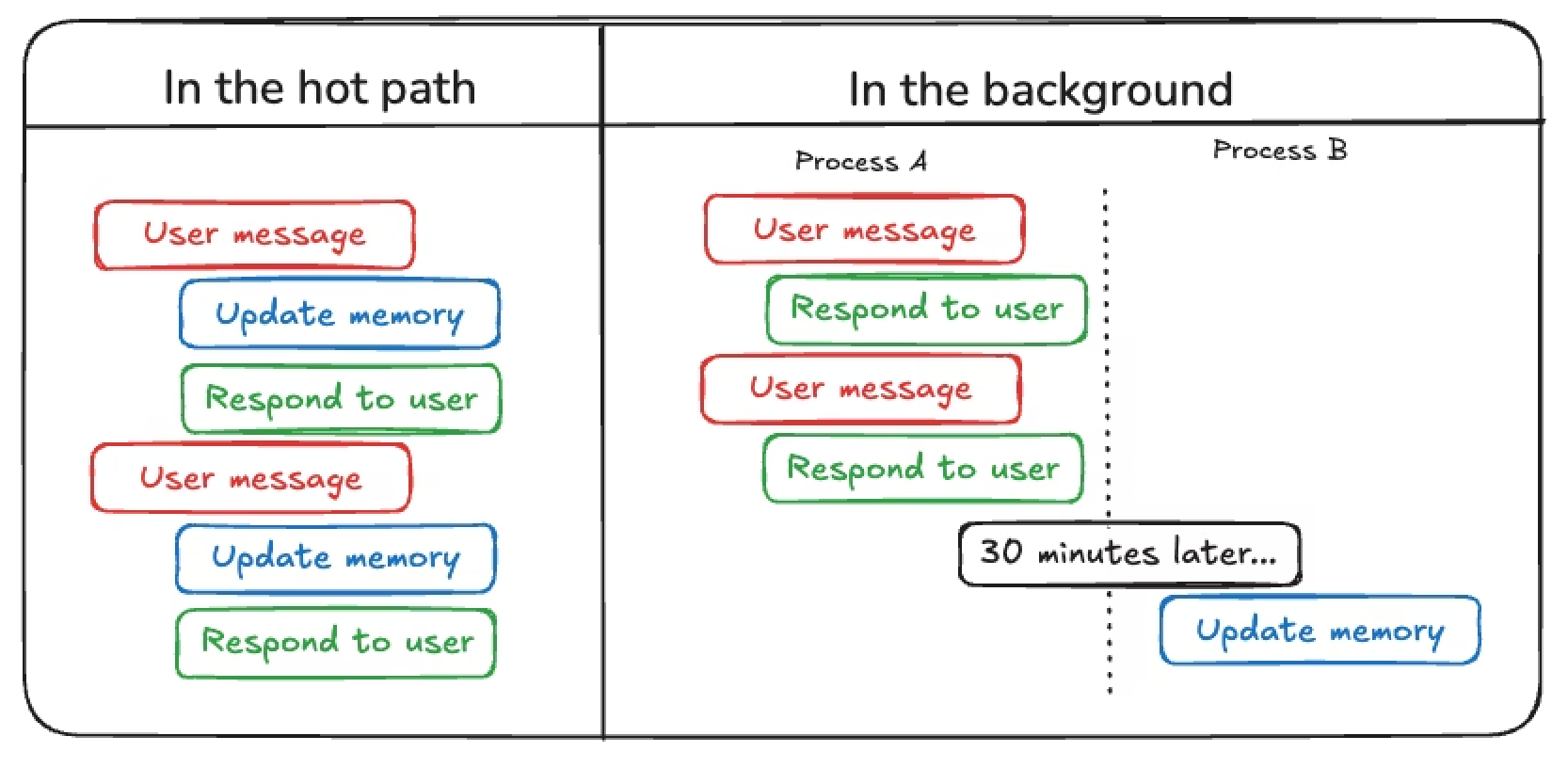 imageここで考慮すべきもう一つの次元は、メモリ更新の明示性の度合いです。ユーザーがエージェントに記憶するよう促しているのか、それともエージェントがハーネス自体の基本指示に基づいて自律的に記憶しているのか、という点です。
比較
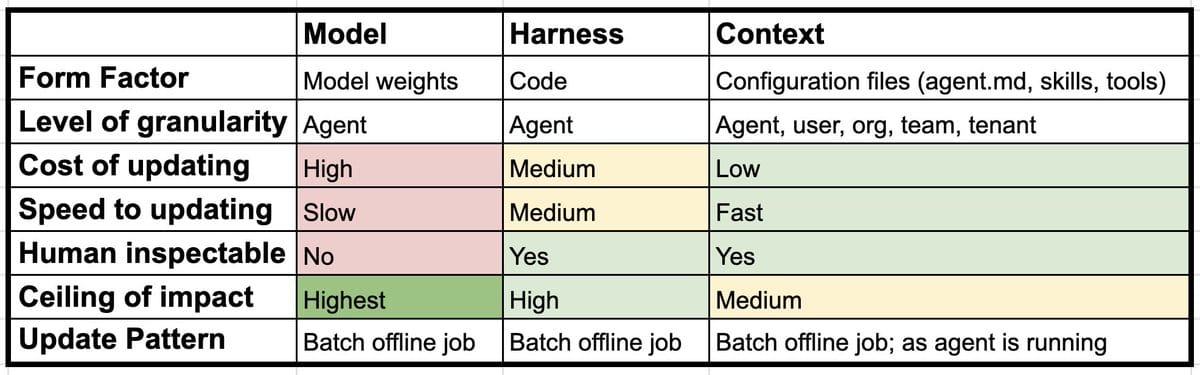
トレースが核心
これらのフローは全て、トレース、すなわちエージェントが行ったことの完全な実行パスによって駆動されています。LangSmithは、トレースの収集を支援する当社のプラットフォームです(他の機能も多数あります)。
これらのトレースは、様々な方法で活用できます。
- モデルを更新したい場合: トレースを収集し、Prime Intellectのようなパートナーと協力して独自モデルを訓練できます。
- ハーネスを改善したい場合: LangSmith CLIとLangSmith Skillsを使用して、コーディングエージェントにこれらのトレースへのアクセス権を与えることができます。このパターンを用いて、私たちはterminal benchにおいてDeep Agents(当社のオープンソース、モデル非依存、汎用ベースハーネス)を改善しました。
- 時間とともにコンテキストを学習したい場合(エージェント、ユーザー、組織レベル): エージェントハーネスがこの機能をサポートしている必要があります。私たちが選択するハーネスであるDeep Agentsは、プロダクション環境に対応した形でこの機能をサポートしています。ユーザーレベルメモリ、バックグラウンド学習などの実施例については、該当ドキュメントをご覧ください。
原文を表示
imageMost discussions of continual learning in AI focus on one thing: updating model weights. But for AI agents, learning can happen at three distinct layers: the model, the harness, and the context. Understanding the difference changes how you think about building systems that improve over time.
The three main layers of agentic systems are:
Model: the model weights themselves.
Harness: the harness around the model that powers all instances of the agent. This refers to the code that drives the agent, as well as any instructions or tools that are always part of the harness.
Context: additional context (instructions, skills) that lives outside the harness, and can be used to configure it.
imageExample #1: Mapping this a coding agent like Claude Code:
Model: claude-sonnet, etc
Harness: Claude Code
User context: CLAUDE.md, /skills, mcp.json
Example #2: Mapping this to OpenClaw:
Model: many
Harness: Pi + some other scaffolding
Agent context: SOUL.md, skills from clawhub
When we talk about continual learning, most people jump immediately to the model. But in reality - an AI system can learn at all three of these levels.
Continual learning at the model layer
When most people talk about continual learning, this is what they most commonly refer to: updating the model weights.
Techniques to update this include SFT, RL (e.g. GRPO), etc.
A central challenge here is catastrophic forgetting — when a model is updated on new data or tasks, it tends to degrade on things it previously knew. This is an open research problem.
When people do train models for a specific agentic system (e.g. you could view the OpenAI codex models as being trained for their Codex agent) they largely do this for the agentic system as a whole. In theory, you could do this at a more granular level (e.g. you could have a LORA per user) but in practice this is mostly done at the agent level.
Continual learning at the harness layer
As defined earlier, the harness refers to the code that drives the agent, as well as any instructions or tools that are always part of the harness.
As harnesses have become more popular, there have been several papers that talk about how to optimize harnesses.
A recent one is Meta-Harness: End-to-End Optimization of Model Harnesses.
The core idea is that the agent is running in a loop. You first run it over a bunch of tasks, and then evaluate them. You then store all these logs into a filesystem. You then run a coding agent to look at these traces, and suggest changes to the harness code.
imageSimilar to continual learning for models, this is usually done at the agent level. You could in theory do this at a more granular level (e.g. learn a different code harness per user).
Continual learning at the context layer
“Context” sits outside the harness and can be used to configure it. Context consists of things like instructions, skills, even tools. This is also commonly referred to as memory.
This same type of context exists inside the harness as well (e.g. the harness may have base system prompt, skills). The distinction is whether it is part of the harness or part of the configuration.
Learning context can be done at several different levels.
Learning context can be done at the agent level - the agent has a persistent “memory” and updates its own configuration over time. A great example is OpenClaw which has its own SOUL.md that gets updated over time.
Learning context is more commonly done at the tenant level (user, org, team, etc). In this case each tenant gets their own context that is updated over time. Examples include Hex’s Context Studio, Decagon’s Duet, Sierra’s Explorer.
You can also mix and match! So you could have an agent with agent level context updates, user level context updates, AND org level context updates.These updates can be done in two ways:
After the fact in an offline job. Similar to harness updates - run over a bunch of recent traces to extract insights and update context. This is what OpenClaw calls “dreaming”.
In the hot path as the agent is running. The agent can decided to (or the user can prompt it to) update its memory as it is working on the core task.
imageAnother dimension to consider here is how explicit the memory update is. Is the user prompting the agent to remember, or is the agent remembering based on core instructions in the harness itself?
Comparison
Traces are the core
All of these flows are powered by traces - the full execution path of what an agent did. LangSmith is our platform that (among other things) helps collect traces.
You can then use these traces in a variety of different ways.
If you want to update the model, you can collect traces and then work with someone like Prime Intellect to train your own model.
If you want to improve the harness, you can use LangSmith CLI and LangSmith Skills to give a coding agent access to these traces. This pattern is how we improved Deep Agents (our open source, model agnostic, general purpose base harness) on terminal bench.
If you want to learn context over time (either at the agent, user, or org level) - then your agent harness needs to support this. Deep Agents - our harness of choice - supports this in a production ready way. See the documentation there for examples of how to do user-level memory, background learning, and more.
同じ出来事を6媒体で確認
同じ出来事を扱う別媒体の記事です。見出しと公開時刻を比較できます。
関連記事
今日のまとめ
AIデイリーブリーフで今日の重要ニュースをまとめ読み