プルリクエスト制限がノイズを削減する方法について
本文の状態
日本語全文を表示中
詳細モードで約6分の本文を読めます。
同じ出来事の情報源
この情報源を基点に整理
GitHub Blog
GitHub は、オープンソースへの貢献者増加に伴う大量の低品質なプルリクエストによる混乱を防ぐため、新規に「プルリクエスト制限」機能を導入した。これにより、重要な貢献が埋もれるのを防ぎ、レビュー効率を向上させる。
Source Article
元記事を日本語で読む
本文に関係しない購読案内、埋め込み通知、サイト内プロモーションは除いています。
オープンソースへの貢献者は過去に例を見ないほど多く、そのほとんどが支援を試みています。課題は、その量の追跡にあります。プルリクエストの作成はかつてないほど容易になりましたが、レビューには依然として人間が従来どおりの時間を要します。優れた貢献と低品質なノイズが同じキューに流れ込むと、注目を deserving するものが発見しにくくなります。
そのため、私たちはプルリクエスト制限を導入しました。これは私たちが最も頻繁に耳にする課題に対処するものです:流入するプルリクエストが多すぎる、低品質なノイズが多すぎる、そしてフローを管理する方法が少なすぎることです。
仕組みについて
プルリクエスト制限は、書き込み権限を持たないユーザーが、リポジトリ内で同時に開けることができるプルリクエストの最大数を設定します。制限に達すると、別のプルリクエストを開く前に、1 つを閉じるかマージする必要があります。Copilot や他の AI エージェントによって開かれたプルリクエストも、この制限に含まれます。信頼できる貢献者はバイパスリストに登録され、制限から免除されますが、完全な貢献者アクセス権が付与されるわけではありません。ドラフト状態のプルリクエストは、制限にはカウントされません。
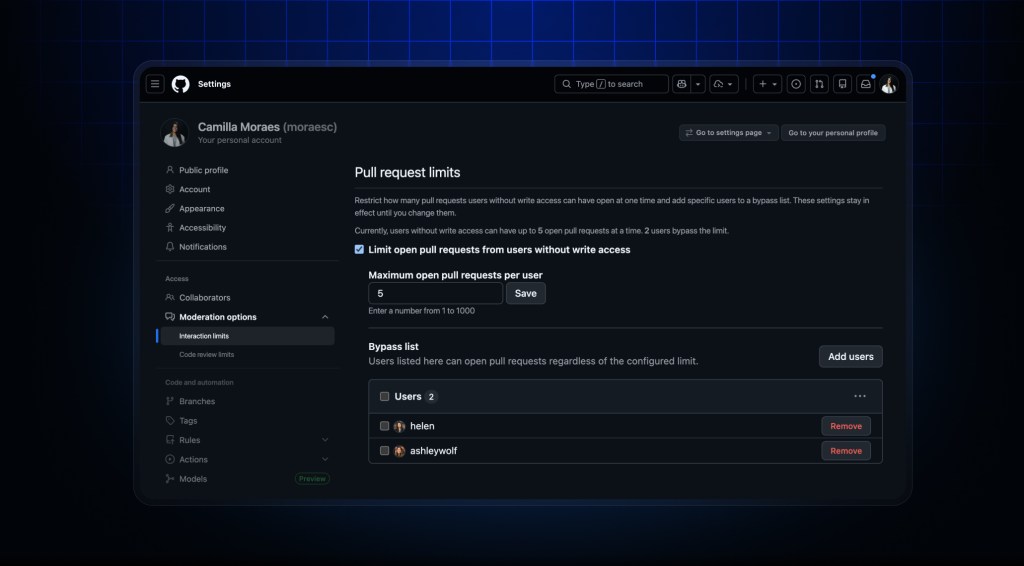
GitHub にはすでにインタラクション制限(一時的なクールダウン期間)が存在しますが、今回の新しいプルリクエスト制限は永続的かつ設定可能であり、メンテナーが求めていた制御権を提供します。
制限を設けることは、コントリビューターの行動様式も変化させます。誰でも数秒でプルリクエストを開ける場合、完成された変更と未熟な草案がキューの中で同じように見えてしまいます。しかし、同時に開けることができるプルリクエストの数が限られる場合、コントリビューターは選択的になり、どの貢献をレビューしてほしいかを優先順位付けする必要があります。その最初の判断は、プルリクエストがあなたに届く前に行われ、対象となるプールが小さくなることで優れた作業を見極めやすくなります。
これは、私たちが再びプルリクエストのレビューをしたくなるようにも役立ちました。誰かが単に 5〜10 の「雑多な」プルリクエストを開いただけではないと知っておくと、それらを見る意欲が湧きやすくなります。今後、この機能はバックログの管理を助け、人々が取り組んでいるものが私たちが本当に必要としているものであることを保証するものになると期待しています。
Nicholas Tindle, AutoGPT
この機能は素晴らしいです。Homebrew では長年、熱心なユーザーがほぼ同じレビューが必要な多くのプルリクエストを投稿するという問題がありました。AI がさらにこれを加速させてしまいました。これにより、外部からの貢献を維持しつつ、メンテナーがより多く貢献できるようになりつつ、ユーザーを私たちが処理できるレベルのプルリクエストに制限(ゲート)することが可能になります。
Mike McQuaid, Homebrew
OpenClaw ではコミュニティから膨大な量のプルリクエストを受け取り、スパム対策のために独自のボットを構築する必要がありました。GitHub が現在、メンテナー向けにすぐに使えるソリューションを開発できたことを非常に嬉しく思います。
Vincent Koc, OpenClaw
作成にかかるコストがレビューにかかるコストを上回った
これらの制限は、エコシステムの変化により特に今、極めて重要です。2023 年 1 月には、開発者たちは GitHub 上で月に約 2500 万件のプルリクエストをマージしていました。現在ではその数は 9000 万件を超え、およそ 3.6 倍の増加となっています。オープンソースで構築する人々は、GitHub の歴史においてこれまで以上に増えています。
ほとんどの貢献は善意に基づいて行われますが、善意に基づく作業でも、ボランティアが対応できる速度よりも速く積み上がってしまうことがあります。2 月に私たちは、オープンソースが独自の「永遠の 9 月」に直面していると記しました。プルリクエスト制限は、次の貢献者を拒絶することなく、メンテナーにその注意の一部を取り戻させるものです。
今後の展開:貢献管理のためのより多くのコントロール機能
プルリクエスト制限は第一歩に過ぎません。同じフィードバックは、その後の取り組みに向けられています。つまり、貢献が流入する方法に対する、より柔軟でより細粒度のコントロールです。
プルリクエストのアーカイブ化(近日公開): リポジトリ管理者は、プルリクエストをアーカイブできるようになります。これにより、低品質またはスパム性の高いプルリクエストをメインのプルリクエストビューから非表示にできます。アーカイブされたプルリクエストは管理者にはアクセス可能ですが、デフォルトリストからはフィルタリングされます。削除ではなくアーカイブを選んだのは意図的なことです。一部の組織では、法的またはコンプライアンス上の理由でプルリクエストを恒久的に削除できない場合があり、多くのメンテナーは文脈のためにそれらを保持したいと考えています。
Issue limits (in development): The controls you now have on pull requests will be applied to issues: per-repository caps on how many open issues a user without write access can have at once, with a bypass list, plus an option to restrict issue creation to collaborators.
Smarter bypass signals (up next): The goal is less manual trust management. Instead of curating a bypass list by hand, you could let contributors clear a limit automatically based on real signals: a previously merged pull request in the repo, account age, or organization membership. That frees maintainers from curating lists by hand and gives them more time to focus on the work itself.
Cross-repository controls (exploring): A per-repository cap helps with repeated activity in one project, but it does nothing when someone opens pull requests across hundreds of repositories at once. We're exploring ways to catch contributors who spray pull requests across multiple repositories, whether through trust signals, rate limiting, or other cross-repository controls.
Thank you
Open source runs on the people who show up every day. To everyone who reviews pull requests late at night, mentors a first-time contributor, triages a backlog, files issues, or tells us where our tools fall short: thank you. You shaped this feature, and your input is critical in helping us decide what comes next. We'll keep building with you.
リポジトリ設定でプルリクエスト制限を試していただき、どこで役立ち、どこで役立たないかをお知らせください。
プルリクエストキューでお会いしましょう。李
原文を表示
More people are contributing to open source than ever, most of them trying to help. The challenge is keeping up with the volume. Creating a pull request has never been easier. Reviewing one still takes a human about as long as it ever did. When great contributions and low-quality noise land in the same queue, the ones that deserve attention are harder to find.
That’s why we’ve introduced pull request limits. It takes on the problem we hear most: too many incoming pull requests, too much low-quality noise, and too few ways to manage the flow.
How it works
A pull request limit sets the maximum number of pull requests a user without write access can have open at once in your repository. Hit the limit, and you must close or merge one before opening another. Pull requests opened by Copilot or another AI agent will counts toward your limit. Trusted contributors can be placed on a bypass list, where they are exempted from limits, but don’t gain full contributor access. Draft pull requests will not count towards your limit.
GitHub already has interaction limits, but those are temporary cooldowns. These new pull request limits are persistent and configurable—giving maintainers the control they told us they were missing.
A cap also changes how contributors behave. When anyone can open a pull request in seconds, a polished change and a rough draft look the same in the queue. But when only a few pull requests can be open at once, a contributor must be selective and prioritize which contributions they want to be reviewed. That first judgment call happens before the pull request reaches you, and a smaller pool makes good work easier to spot.
It’s helped us want to review pull requests again. Knowing that someone hasn’t just opened 5–10 pull requests that are slop makes it much easier to want to look. Going forward we expect it to help us manage our backlog and ensure the things people are working on are the things we need.
Nicholas Tindle, AutoGPT
This feature is great. We’ve had problems on Homebrew for a while with enthusiastic users submitting many pull requests that need near identical review. AI further accelerated it. This allows us to still have outside contribution and maintainers contribute more while gating users to a level of pull requests we can cope with.
Mike McQuaid, Homebrew
At OpenClaw we get a huge volume of pull requests from the community and had to build our own bots for fighting spam. We are super glad GitHub has been able to develop out-of-the-box solutions for maintainers now to manage this volume.
Vincent Koc, OpenClaw
The cost to create outran the cost to review
These limits are especially crucial right now because of a change in the ecosystem. In January 2023, developers merged about 25 million pull requests a month across GitHub. Today that number tops 90 million—a roughly 3.6x increase. More people are building in the open than at any point in GitHub’s history.
Most contributions come in good faith, and even good-faith work can pile up faster than one volunteer can answer. In February, we wrote that open source was hitting its own Eternal September. A pull request limit gives maintainers some of that attention back, without closing the door on the next contributor.
What’s coming next: More controls for managing contributions
Pull request limits are just the first step. The same feedback is pointed straight at what comes after: more flexible, more granular control over how contributions flow in.
Archiving pull requests (shipping soon): Repository admins will be able to archive pull requests, hiding low-quality or spammy pull requests out of the main pull request view. Archived pull requests stay accessible to admins, but can be filtered out of the default list. We chose archive over delete on purpose: some organizations can’t permanently delete pull requests for legal or compliance reasons, and many maintainers want to keep them for context.
Issue limits (in development): The controls you now have on pull requests will be applied to issues: per-repository caps on how many open issues a user without write access can have at once, with a bypass list, plus an option to restrict issue creation to collaborators.
Smarter bypass signals (up next): The goal is less manual trust management. Instead of curating a bypass list by hand, you could let contributors clear a limit automatically based on real signals: a previously merged pull request in the repo, account age, or organization membership. That frees maintainers from curating lists by hand and gives them more time to focus on the work itself.
Cross-repository controls (exploring): A per-repository cap helps with repeated activity in one project, but it does nothing when someone opens pull requests across hundreds of repositories at once. We’re exploring ways to catch contributors who spray pull requests across multiple repositories, whether through trust signals, rate limiting, or other cross-repository controls.
Thank you
Open source runs on the people who show up every day. To everyone who reviews pull requests late at night, mentors a first-time contributor, triages a backlog, files issues, or tells us where our tools fall short: thank you. You shaped this feature, and your input is critical in helping us decide what comes next. We’ll keep building with you.
Try the pull request limit in your repository settings, and tell us where it helps and where it doesn’t.
See you in the pull request queue. 李
The post How pull request limits are cutting down the noise appeared first on The GitHub Blog.
関連記事
News to Guide
ニュースの次に確認する
発表内容を、現在の料金や仕様と照らし合わせられる関連ガイドです。
今日のまとめ
AIデイリーブリーフで今日の重要ニュースをまとめ読み