Google Cloud、全データエコシステムに会話型分析機能を展開
本文の状態
日本語全文を表示中
詳細モードで約9分の本文を読めます。
同じ出来事の情報源
この情報源を基点に整理
Google Cloud AI
Google Cloud は、生成 AI の企業導入拡大に向け、BigQuery や API を通じた会話型分析(CA)を孤立した実験から大規模な企業向け展開へ移行し、信頼性とガバナンスを強化したと報告した。
AI深層分析を開く2026年8月4日 06:44
AI深層分析
キーポイント
コンバーサショナルアナリティクスの展開拡大
BigQuery と Looker で一般提供が完了し、AlloyDB、Cloud SQL、Spanner でのプレビューが開始されたことで、利用可能なデータソースとインターフェースが大幅に増加した。
マルチクラウドおよび多様なデータベースへの対応
Google Cloud 内のデータだけでなく、AWS S3 Unity Catalog や Apache Iceberg REST catalog などの外部ストレージもネイティブにクエリ可能となり、マルチクラウド環境での分析が実現した。
エンタープライズ向け信頼性とガバナンスの強化
ビジネス上重要なデータベースへの対話には絶対的な信頼と厳格なガバナンスが必要であるとし、コンバーサショナルアナリティクスはこれらを満たすための基盤として位置づけられている。
データエコシステム全体への統合
データプラクティショナー向けにはBigQuery StudioやData Agent Kitに、ビジネスチーム向けにはLookerやGemini Enterpriseに会話型分析機能が直接統合される。これにより、複雑なデータを安全に照会できる中央集権的なインターフェースが提供される。
APIとMCPツールによる柔軟な埋め込み
APIおよびMCPツールを活用することで、カスタムアプリケーションやマルチエージェントシステム、Slackチャットボットなど、ビジネスユーザーの作業環境 whereverに機能を埋め込むことが可能になる。
重要な引用
Interacting with business-critical databases demands absolute trust, strict governance, and deep grounding in enterprise semantics.
Conversational Analytics is now generally available for BigQuery and Looker, and in preview for AlloyDB, Cloud SQL, and Spanner.
Data teams can publish Conversational Analytics agents created in BigQuery, Looker, AlloyDB, Spanner, and Cloud SQL directly into Gemini Enterprise, giving business leaders a centralized interface to query complex data safely.
Our APIs and MCP tools let you embed Conversational Analytics wherever your business users work
編集コメントを表示
編集コメント
企業における AI 導入の最大の障壁である「信頼性」への対応を、製品機能として明確に打ち出している点が特徴的だ。単なるチャットボットの追加ではなく、ガバナンスと統合を前提とした分析基盤としての再定義が進んでいると言える。
Source Article
元記事を日本語で読む
本文に関係しない購読案内、埋め込み通知、サイト内プロモーションは除いています。
エンタープライズ全体で生成 AI の導入を拡大するには、カスタムラッパーを付けた汎用的なチャットボートをデプロイするだけでは不十分です。ビジネスに不可欠なデータベースとの対話には、絶対的な信頼性、厳格なガバナンス、そしてエンタープライズ固有のセマンティクスへの深い理解が求められます。
過去 1 年間、Google Cloud の Conversational Analytics(CA)は孤立した実験から、企業全体でスケーリングされた本番環境へと進化しました。BigQuery Conversational Analytics と Conversational Analytics API が一般提供され、昨年に一般提供された Looker での Conversational Analytics に加わりました。この勢いを踏まえ、データベースにおける Conversational Analytics もプレビュー版として利用可能です。これ以外にも多くの進展があり、Google Cloud の Conversational Analytics は、これまで以上に多様なデータソースや画面に対応し、より強力なエンタープライズ制御と機能を提供するようになりました。
ここでは、Google Data Cloud における Conversational Analytics の現状を詳しく解説します。何ができるのか、もたらされるメリット、そして今日からどのように活用を開始できるかをご紹介します。
マルチクラウドおよびデータベースワークロードを横断するクエリ
コンバーサショナル・アナリティクスは、BigQuery と Looker で一般提供が開始され、AlloyDB、Cloud SQL、Spanner ではプレビュー版として利用可能です。また、Lakehouse Managed Service テーブルに保存されたデータや Apache Iceberg REST カタログ、連合 AWS S3 Unity Catalog 内のデータも分析できます。
データが Google Cloud のみで完結している場合でも、複数のクラウドプロバイダに分散している場合でも、エージェントはネイティブ環境でデータをクエリすることができます。
データエンジニアにとっては、コンバーサショナル・アナリティクスは BigQuery Studio、BigQuery Data Canvas、Database Studio、そして Data Agent Kit に直接統合されています。一方、ビジネスチームにとっては、これらの対話型機能が Looker、Data Studio、Gemini Enterprise へと直接拡張されます。データチームは、BigQuery、Looker、AlloyDB、Spanner、Cloud SQL で作成したコンバーサショナル・アナリティクス用エージェントを Gemini Enterprise に直接公開できるため、経営層は複雑なデータを安全にクエリするための一元化されたインターフェースを利用できるようになります。
当社の API や MCP ツールを使えば、カスタムアプリケーションやマルチエージェントシステム、あるいは Google Cloud Next で紹介したようなデータソース全体で質問に答える Slack チャットボットなど、ビジネスユーザーが働くあらゆる場所に会話型分析機能を埋め込むことができます。
エンタープライズ向けのセキュリティとガバナンス制御
生成 AI を数万規模のユーザーへ拡張するには、厳格なガバナンス体制と透明性の高いコスト管理が必要です。会話型分析では、顧客管理暗号化鍵(CMEK)、プライベート IP、および仮想プライベートクラウド(VPC)に対応した制御機能を提供しています。
データ保存時および機械学習処理については、欧州連合(EU)と米国内のマルチリージョンエンドポイント内で完結させることを保証し、Data Residency (DRZ) を満たします。また、HIPAA 準拠にも対応しています。
データアクセスにおいては、AlloyDB for PostgreSQL に搭載された パラメータ化されたセキュアビュー を含むロールベースの制御機能により、エージェントとチャットするユーザーがアクセスできるデータを厳密に管理します。行レベルおよび列レベルの権限まで細かく設定することで、許可されたデータのみが表示されるよう強制されます。
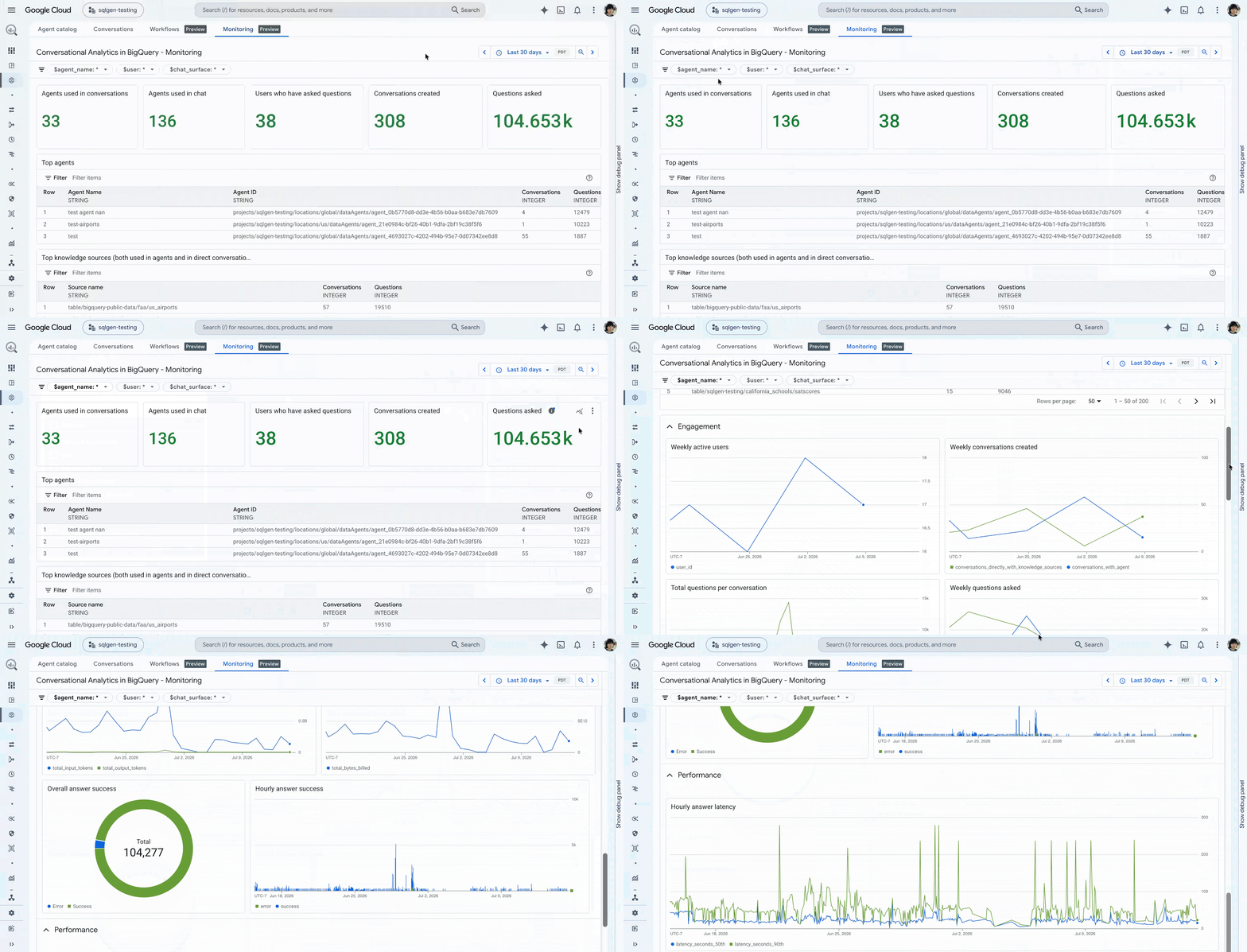
利用規模が拡大するにつれ、管理者はコスト管理やシステム状態の把握、精度向上のためのツールを必要とします。ネイティブのコスト制御機能を設定すれば、バイト単位での最大クエリサイズに制限を設けたり、BigQuery のクエリラベルや Looker のシステムアクティビティログを通じて利用状況を追跡したりすることが可能です。
ファーム全体の可視性を維持するため、エージェントは OpenTelemetry (OTEL) 標準に従って、健全性、ツール使用状況、レイテンシ、トークン消費量などのメトリクスをエクスポートできます。統合されたフィードバックループにより、管理者はエージェントのトレースやユーザーからのフィードバックを確認でき、時間経過とともに継続的な評価と精度向上のための基盤を構築できます。
エージェントとデータの共同設計による文脈の確立
汎用的な大規模言語モデル(LLM)をエンタープライズデータベースに巻き付けるだけでは、論理の誤生成(ハルシネーション)を引き起こす可能性があります。これを最小限に抑えるため、私たちはデータプラットフォームを照会するコンバーサショナル・アナリティクスエージェントと、それらを同時に設計しました。
具体的には、エージェントは知識カタログを活用してデータ発見を行い、用語集やテーブル結合・説明といった自動的な文脈の強化を行います。また、BigQuery Graph や Spanner Graph を利用することで、エージェントは多段階の関係性を超えて構造化・非構造化データの両方を照会できるようになります。さらに、Looker のセマンティックレイヤー(LookML)が、中央集権的に管理された指標定義に基づいてエージェントの回答を裏付けることで、推測による SQL 結合に頼らず、確定的な回答を提供するよう支えています。
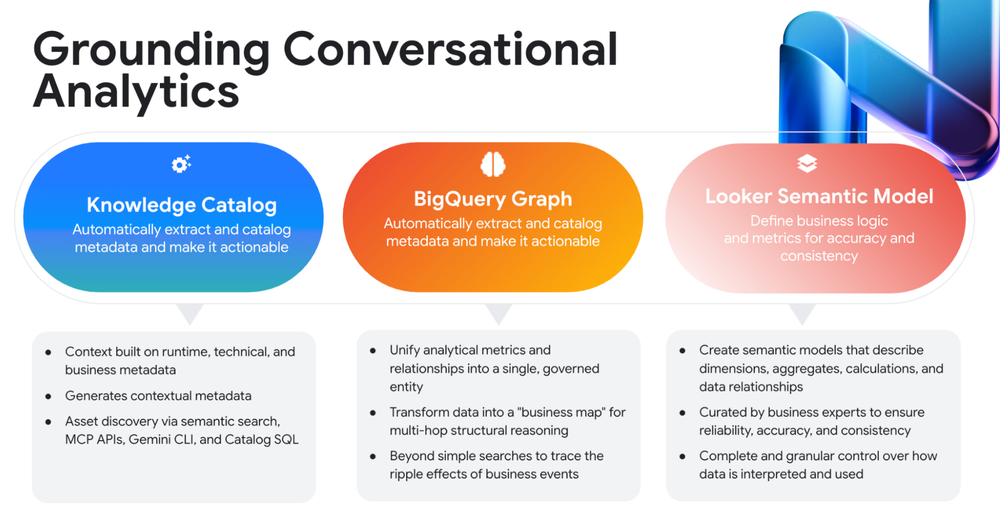
会話型分析エージェントは、自身が照会するデータと共設計されています。つまり、これらのツールは文脈を認識しており、メタデータを最も深く理解できるようになっています。
また、BigQuery のオブジェクトテーブルを活用したマルチモーダルデータクエリや、ai.search を用いたマルチモーダルデータの処理など、組み込み機能からも恩恵を受けることができます。
ai.generate_embedding、ai.classify、ai.score の利用方法
ai.forecast と ai.detect_anomalies を使用して、TimesFM の基盤モデルを活用し、時系列予測と異常検出を行います。さらに ai.key_drivers は自動寄与分析を実行し、何が要因となっているかを特定します。
データに予期せぬ変化が生じた際、Looker と統合されたエージェントはセマンティックレイヤーを活用し、中央管理され決定論的な指標に基づいて回答を生成します。AI の誤答(ハルシネーション)を防ぐため、この API フォーカス型のアプローチ(「ゴールデンクエリ」を使用)により、エージェントは SQL ジョインの推測ではなく、検証済みのビジネスロジックから情報を取得します。また Looker は、エージェントに高カルディナリティなデータセットを動的フィルタリングでシームレスに探索させる機能や、チャット体験中に行レベルセキュリティを自動的に適用する機能、文脈に応じた推奨質問を表示する機能を備えています。
Proactive insights with Agentic Workflows
分析の潮流は、受動的な質問応答から能動的なインテリジェンスへと移行しています。つまり、ユーザーが適切なタイミングで正しい質問をする必要はなく、会話型分析エージェントは、メトリクスの変化背後にある 10〜20 の要因を多角的に深掘りして分析できます。
現在プレビュー版として提供されている「アジェンシーワークフロー」を使えば、チャットワークフロー内に直接届く自動レポートのスケジュール設定が可能になります。エージェントは主要なメトリクスに対して常時異常検知を実行し、毎日または毎週のサマリーをチームに直接送信します。ストリーミング異常検知では、主要なメトリクスがベースライン閾値から外れた瞬間に自動的にエージェントを起動することも可能です。
API、SDK、MCP との柔軟な連携
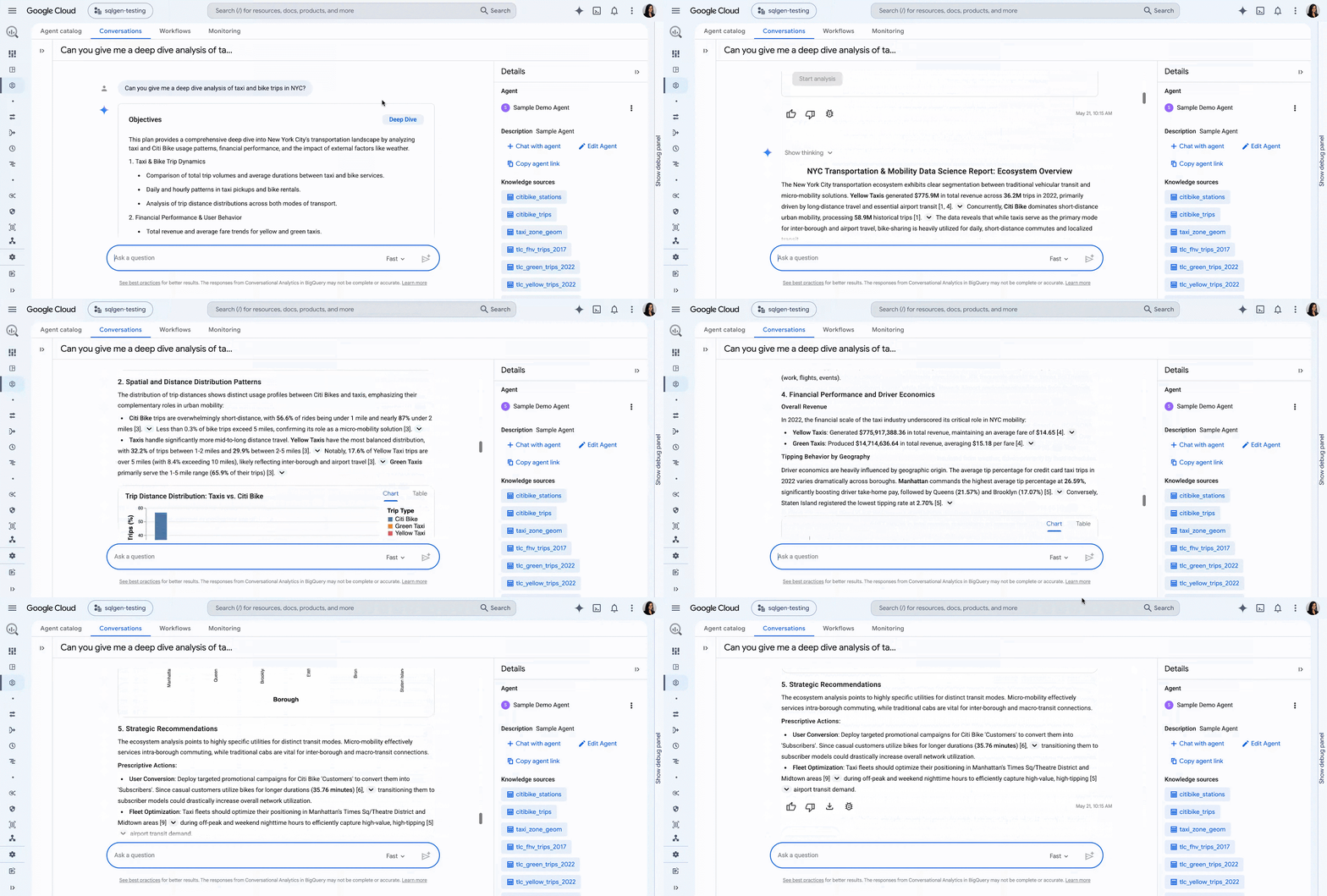
Conversational Analytics は、開発者やビジネスユーザーが既存の環境で利用可能です。Conversational Analytics API には Node.js、Java、Go、Python、PHP、Ruby、.NET 向けのネイティブ SDK が用意されており、分析結果は作業が行われる場所のまま保持されます。また、Looker Dashboards や Data Studio の利用拡大から始め、Gemini Enterprise へのパブリッシングエージェントのサポート も行っています。
Conversational Analytics を他のマルチエージェントシステムにも追加できます。Agent Development Kit (ADK) と Model Context Protocol (MCP) を使用すれば、Conversational Analytics をカスタムアプリケーションや Slack ボット、マルチエージェントオーケストレーターに統合することが可能です。例えば、サプライチェーンを管理するエージェントが、財務データのエージェントに対してクエリを送り、配送遅延による利益への影響をリアルタイムで計算させるようなユースケースも実現できます。
Conversational Analytics の始め方
Google Cloud Conversational Analytics は、データ基盤、セキュリティ管理プレーン、開発者向け API を統合し、チームがどこで作業していても先行的なデータインサイトを届けるサービスです。Conversational Analytics のドキュメント で詳細を確認したり、クイックスタートのリポジトリを参照したり、今すぐ新しいプレビュー版の体験登録 を行ったりできます。
原文を表示
Increasing the adoption of generative AI across the enterprise requires you to do more than deploy a generic chatbot with a custom wrapper. Interacting with business-critical databases demands absolute trust, strict governance, and deep grounding in enterprise semantics.
Over the last year, Conversational Analytics (CA) in Google Cloud has moved from isolated experiments to scaled, enterprise-wide deployments. BigQuery Conversational Analytics and the Conversational Analytics API are now generally available, adding to the general availability of Conversational Analytics in Looker last year. Building on this momentum, Conversational Analytics in Databases are also available in Preview. And so much more has happened — Google Cloud Conversational Analytics is available for more data, across more surfaces, with more enterprise controls, and greater capability than ever before.
Let’s take a deeper look at the state of Conversational Analytics in the Google Data Cloud — what you can do with it, the benefits that it brings, and how to get started with it today.
Query across multi-cloud and database workloads
Conversational Analytics is now generally available for BigQuery and Looker, and in preview for AlloyDB, Cloud SQL, and Spanner. You can also analyze data stored in Lakehouse Managed Service tables, Apache Iceberg REST catalogs, and federated AWS S3 Unity Catalogs. Whether your data resides exclusively in Google Cloud or across multiple cloud providers, your agents can query it natively.
For data practitioners, Conversational Analytics is integrated directly into BigQuery Studio, BigQuery Data Canvas, Database Studio and Data Agent Kit. For business teams, these conversational capabilities extend directly into Looker, Data Studio, and Gemini Enterprise. Data teams can publish Conversational Analytics agents created in BigQuery, Looker, AlloyDB, Spanner, and Cloud SQL directly into Gemini Enterprise, giving business leaders a centralized interface to query complex data safely.
Our APIs and MCP tools let you embed Conversational Analytics wherever your business users work, like custom applications and multi-agent systems, or as slack chatbot that can answer questions across data sources, as we showed at Google Cloud Next.
Enterprise security and governance controlsScaling generative AI to tens of thousands of users requires ironclad governance and transparent cost controls. Conversational Analytics includes Customer Managed Encryption Keys (CMEK), Private IP, and Virtual Private Cloud (VPC) controls.
We guarantee Data Residency (DRZ) at rest and machine learning processing inside multi-region endpoints within the European Union and the United States, along with HIPAA compliance. For data access, role-based controls, including parameterized secure views in AlloyDB for PostgreSQL, help ensure users chatting with an agent only see data they are authorized to view, enforced down to row- and column-level permissions.
As usage grows, administrators need tools to manage costs, observe system health, and improve accuracy. You can configure native cost controls to define limits on maximum query sizes in bytes, and track usage through BigQuery query labels and Looker system activity logs.
To maintain fleet visibility, agents can also export health, tool usage, latency, and token consumption metrics via OpenTelemetry (OTEL) standards. Integrated feedback loops allow administrators to review agent traces and user feedback, establishing a foundation for continuous evaluation and accuracy improvements over time.
Grounded context through agent and data co-designWrapping a generic LLM around an enterprise database can sometimes lead to hallucinated logic. To minimize this, we co-designed Conversational Analytics agents alongside the data platforms they query.
For instance, agents leverage Knowledge Catalog for data discovery, glossaries, and automated context enrichment like table joins and descriptions. BigQuery Graphs and Spanner Graphs allow agents to query structured and unstructured data across multi-hop relationships. Additionally, Looker’s semantic layer (LookML) grounds agent responses in centrally governed metric definitions, helping ensure answers remain deterministic rather than relying on guessed SQL joins.
Conversational Analytics agents are also co-designed with the data they query. This means their tools are context-aware, to have the best understanding of the metadata. They also benefit from built-in capabilities like multimodal data querying using BigQuery object tables, operating over multimodal data with ai.search, ai.generate_embedding, ai.classify, ai.score and using ai.forecast and ai.detect_anomalies to use the TimesFM foundation for forecasting and anomaly detection.Additionally, ai.key_drivers performs automated contribution analysis to pinpoint exactly what is driving unexpected changes in your data. When integrated with Looker, these agents leverage the semantic layer to ground their responses in centrally governed, deterministic metrics. To avoid AI hallucinations, this API-first approach (using 'Golden Queries') ensures agents retrieve verified business logic rather than guessing at SQL joins. Looker additionally equips the agents to seamlessly navigate high-cardinality datasets with dynamic filtering, automatically enforce row-level security during the chat experience, and surface context-aware suggested questions.
Proactive insights with Agentic Workflows
Analytics is moving beyond reactive question-answering toward proactive intelligence. That is, instead of requiring users to ask the right question at the right time, Conversational Analytics agents can run multidimensional deep dives to analyze 10 to 20 contributing factors behind a change in a metric.
With Agentic Workflows, now in preview, you can schedule automated reporting routines delivered directly into your chat workflow. Agents continuously run anomaly detection across key metrics, sending daily or weekly summaries straight to your team. Streaming anomaly detection can also launch an agent automatically the moment a key metric deviates from baseline thresholds.
Flexible integration with APIs, SDKs, and MCP
Conversational Analytics is available to developers and business users in their existing environments. The Conversational Analytics API includes native SDKs for Node.js, Java, Go, Python, PHP, Ruby, and .NET and keeps insights where the work happens. We are expanding how and where people use Conversational Analytics, starting with Looker Dashboards and Data Studio, as well as supporting publishing agents to Gemini Enterprise.
You can also add Conversational Analytics to other multi-agent systems. Using the Agent Development Kit (ADK) and Model Context Protocol (MCP), you can integrate Conversational Analytics into custom applications, Slack bots, or multi-agent orchestrators. For example, a supply chain orchestrator agent can query a financial data agent to calculate the margin impact of a shipping delay in real time.
Get started with Conversational Analytics
Google Cloud Conversational Analytics unifies your data estate, security control plane, and developer APIs to deliver proactive data insights wherever your team works. Explore our Conversational Analytics documentation, review our quickstart repositories, and sign up to try our new previews today.
AI算出
主要ニュースainew評価標準
生成 AI の企業導入における信頼性とガバナンスを強化した新機能の一般提供(GA)およびデータベースでのプレビュー開始という明確な技術的・事業的ニュースであり、新規性が高い。ただし、日本固有の価格や規制情報がないため、日本関連性は低めとなる。
6つの評価軸を見る
- AI関連度
- 75
- 情報源の信頼性
- 25
- 新規性
- 75
- 調べる価値
- 75
- 重複の少なさ
- 100
- 日本での有用性
- 25
今日のまとめ
AIデイリーブリーフで今日の重要ニュースをまとめ読み