AI エンジニアが認識するエージェントの進化と能力向上
本文の状態
日本語全文を表示中
詳細モードで約15分の本文を読めます。
同じ出来事の情報源
この情報源を基点に整理
Latent Space
AI エンジニアは 2025 年クリスマスの時期にエージェントの能力が飛躍したと認識し、これはモデル性能とそれを支えるハネス(環境・ツール・ガードレール)の両者が同時に成熟し、その改善曲線が交差した結果であると分析する。
AI深層分析を開く2026年8月22日 17:11
AI深層分析
キーポイント
エージェント能力向上の要因
2025 年クリスマスの時期にエージェントが実用的な作業を開始したのは、モデル自体の能力向上と、それを支えるハネス(ツールや環境)の成熟という二つの要素が同時に進展した結果である。
AI ハネスの定義
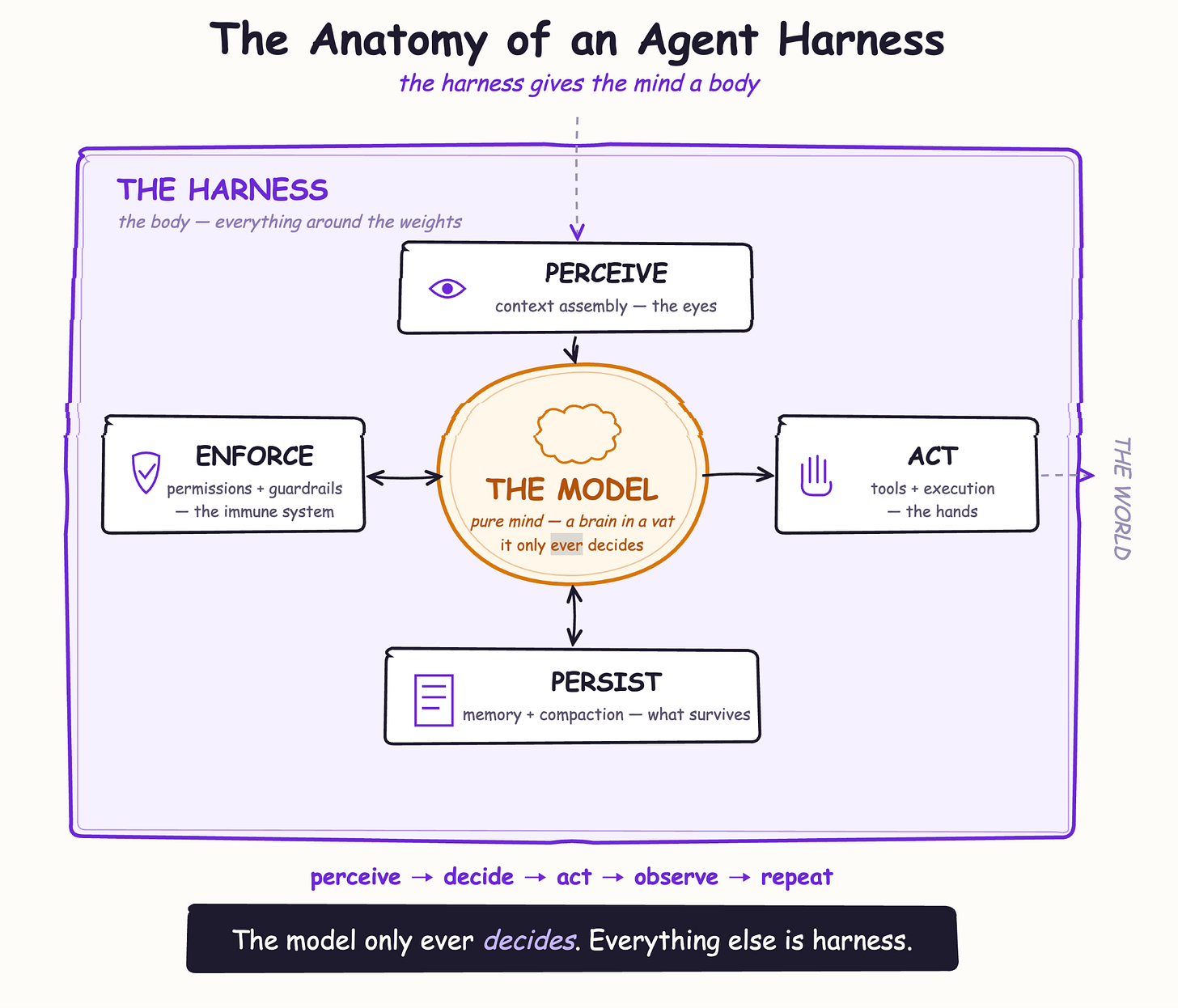
AI ハネスとはモデル重み以外のすべてを指し、エージェントに知覚(コンテキスト)、行動(ツール)、情報保持(メモリ)、境界制御(ガードレール)といった機能を与える「体の役割」を果たす。
未来の進化方向
今後はモデルがハネスの一部を内部重みに吸収し、エンジニアは不要になった部分を削除するプロセスが続くため、残されるハネスはモデル向けのものから人間の注意を管理するためのものへと変化する。
ChatGPT の歴史的比較
2022 年当時の ChatGPT は訓練データとプロンプトに閉じ込められた「バットの中の脳」だったが、ハネスの導入によりリアルなデジタル空間で相互作用できるようになった。
エージェントの有効性はモデルとハッチのギャップで決まる
エージェントの有効性は、ハッチがモデルに求めるものとモデルが実際に提供できる能力との間のギャップによって定義される。このギャップを埋めることが、実用的な改善をもたらす要因となる。
重要な引用
The answer is in the agent harness.
Without the harness the model is a brain in a vat. It can take an epistemic action, but needs the harness to actuate that decision in real digital space.
With the harness, the model can perceive (context), act (tools), persist information (memory and compaction), and enforce its boundaries (permissions and guardrails).
The gap between these two curves is equal to the effectiveness of an agent, and the closing of that gap is what I'll argue led to the tangible improvement in agents.
編集コメントを表示
編集コメント
この記事は、AI エージェントが単なるチャットボットから自律的な作業システムへと進化するための鍵が「ハネス」にあるという重要な視点を提供している。技術者にとっては、モデルの性能向上だけでなく、それを支える周辺環境の設計思想を見直す契機となるだろう。
Source Article
元記事を日本語で読む
本文に関係しない購読案内、埋め込み通知、サイト内プロモーションは除いています。
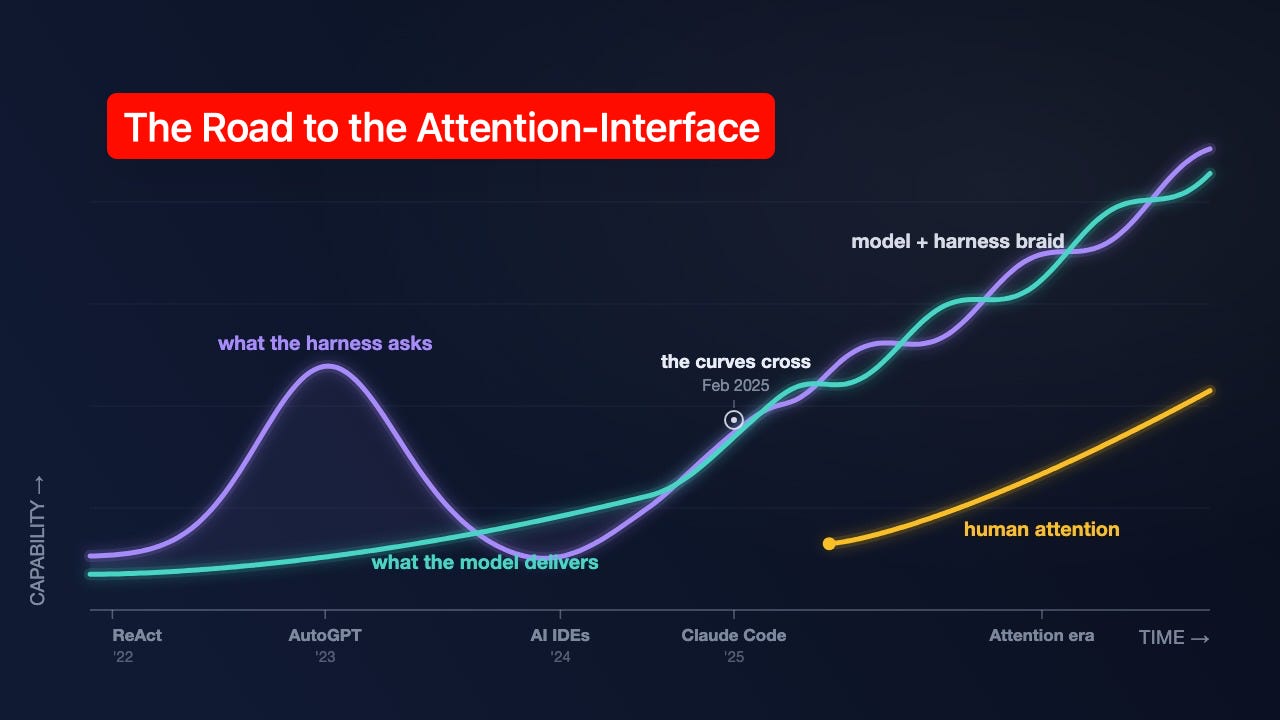
2025 年のクリスマス頃、AI エンジニアたちはエージェントの動きに大きな変化を感じ取っていました。ついに、彼らが本格的に機能し始めたのです。なぜそうなったのかを特定するのは容易ではありません。おそらく、年末年始という休暇を利用して、最新のモデルを搭載した最新のエージェントを試す機会が得られたからかもしれません。あるいは、モデル自体がある能力の閾値を超えたのかもしれません。さらに、モデルを取り巻く「ハッチ(harness)」と呼ばれる仕組みが成熟した可能性もあります。
本稿で私が主張するのは、この変化は後者の二つの要因が重なった結果だということです。モデルとハッチが同時に進化し、その改善曲線が適切なタイミングで交差したことが決定的でした。このダイナミクスこそが、今後の展開を説明する鍵となります。今後、モデルはハッチの機能を内部の重み(weights)として吸収していきます。エンジニアたちは、すでにモデルに組み込まれた部分を削除・簡素化し続けます。その結果、残されるのはモデルのためのハッチではなく、人間の注意を誘導するためのハッチへと進化していくのです。
トランスフォーマー(Transformer)の発明者の一人であるルカシュ・カイザー氏は、6 月に開催された「Unsupervised Learning」カンファレンスでこう述べています。
「昨冬のクリスマス頃のあの急激な変化は、少し特定しにくいものです。ハッチが変わり、ポストトレーニング(post-training)の手法が少し改良され、新しい事前学習済みモデルが登場しました……しかし、これは大きな飛躍であり、何が原因だったのかを特定するのは容易ではありません」
「何が起こったのか?」という問いに対する答えは、単にモデルの重みの中にあるわけではありません。その重みを囲んで成長したシステム全体の中にあります。
その正体こそが、エージェントハッチなのです。
2022 年 11 月、ChatGPT が最も先進的な AI ツールだった頃を思い出してください。その当時は、次単語予測と、役立つアシスタントとして振る舞うための人間フィードバックからの強化学習(RLHF)という機能しか備えていませんでした。ツールも検索機能も推論能力もありませんでした。
初期の ChatGPT は、学習データとユーザーが入力したプロンプトの中に閉じ込められていました。それ以上でもそれ以下でもない、いわば瓶の中の脳のような存在でした。
エージェント・ハーネス(Agent Harness)とは、LLM がその閉鎖状態から抜け出し、実際のデジタル情報空間と対話するための手段です。
ハーネスの正体
エージェント・ハーネスとは、モデルの重み以外のすべてを指します。モデルを取り巻く環境、ツール、文脈、そしてガードレール(安全装置)のことです。ハーネスがなければ、モデルは瓶の中の脳のままです。認識的な行動を起こすことはできても、その判断を実際のデジタル空間で実行に移すにはハーネスが必要です。
ハーネスとは、モデルの「心」に「体」を与えるようなものです。これにより、モデルは文脈(コンテキスト)を通じて知覚し、ツールを使って行動し、情報を記憶・圧縮して保持し、権限やガードレールによって境界を維持できるようになります。
ハーネス 1.0:過去、「ボルトオン時代」
モデルとハッチの進化の道筋には、二つの曲線が走っています。一つはハッチがモデルに求めること、もう一つはモデルが実際に実現できることです。
この二つの曲線の差こそがエージェントの有効性を表し、その差を埋めることが、ルカシュ・カイザー氏が言及したような、実体あるエージェントの向上につながったと私は主張します。
この差がどのように段階的に縮まるのかを見てみましょう。
ReAct、「紙の上のハッチ」(2022 年 10 月):ReAct は、モデルにプロンプトを通じて推論を行わせるための手法です。これはモデルの重みとは別に存在する、エージェントループの概念を記述したものです。ここで定義される「エージェントループ」とは、モデルが推論し、行動し、観察し、それを繰り返すというサイクルのことです。ただし、ReAct ループはあくまでプロンプト手法としてのみ存在します。当時、推論手段として確立されていたのはプロンプトだけであり、誰もこれを「ハッチ」と呼ぶことはありませんでした。
同じく 2023 年の冬に登場した Toolformer(Meta)は、ツール使用をプロンプトではなく学習によって獲得できる可能性を示唆しました。これは、物理的な基盤に実装される前のコンピュータに関するアラン・チューリングの考え方に似ています。強力なアイデアですが、その実現には時間がかかりました。
(ReAct は ChatGPT よりも一ヶ月早く、2022 年 10 月です。ChatGPT は 2022 年 11 月)。
この時点では両方の曲線はほぼゼロに近く、差も小さかったのは、まだ始まったばかりだからです。
AutoGPT や BabyAGI(2023 年春の「未熟な自律性」):この時期、ハイスコアの曲線はモデル能力の曲線を大きく上回って走りました。両者はモデルに完全な自律性を付与し、「自律的な従業員」として行動させるよう求めましたが、当時のモデルはまだ脆い次単語予測器に過ぎませんでした。ループを設けるだけではモデルに新たな能力は生まれません。ループは既存の能力を増幅するものであり、ある閾値を下回る場合、信頼性ではなくエラーを増幅させてしまいます。
負の複利効果を考えればわかります。1 つのステップで 95% の信頼性を保てたとしても、20 ステップからなるタスクでは平均成功率は約 36% に低下します。ハイスコアはモデルに現実的に完了できない課題を突きつけたのです。これが最も大きな格差が生じていた点であり、今後 18 ヶ月はまさにこの格差を埋めようとする反応と試行の期間となります。
Cursor や Copilot が 2023〜2024 年に掲げた「人間をループに組み込む(Retreat to Human in the Loop)」という方針は、AI を搭載した IDE の初期段階において、モデルに過度な自律性を委ねることの失敗パターンを認識した結果です。彼らは、ハネス曲線をモデル曲線よりも下方へ引き下げることでそのギャップを埋めました。つまり、ループを直接モデルに与えるのではなく、人間がループを担い、モデルは人間の速度を上げる役割を果たすという仕組みです。
Devin の最初のバージョンでは、自律性を再びモデル側に委ねようとしていましたが、Answer.AI チームによるテスト結果はそれがまだ早すぎたことを示しています。成功率は約 15% に留まりました。これは、IDE が完全な自律性から撤退した動きが臆病さではなく、正解だったという証拠です。
しかしながら、主流の戦術としてハネスをモデルより下方に引き下げる一方で、モデル自体は着実に進化し続けています。2024 年末、推論能力を持つ最初のモデルである o1 が登場したことで、ついにこの関係性が逆転しました。これにより、初めてモデルの能力がシステム全体を上回る「オーバーハング」の兆候が見られるようになったのです。
Claude Code、"曲線の交差点"(2025年2月):2024年末の逆転は、誰かが掴むべき機会を生み出しました。もしモデルがハッチ(制御枠)を凌駕しているなら、意図的にブレーキをかけるハッチは能力を十分に引き出せていないことになります。Claude Code はその機会を捉えるために設計された最初のコーディングエージェントです。IDE からターミナルへ移行し、モデルに Bash やファイルの読み書き権限を与え、すべての変更に対する人間の承認を不要にする代わりに、許可ルールを導入しました。ループは再びモデルに委ねられ、今回はモデルが課題を理解しています。Boris Cherny 氏とそのチームは、現在のモデルではなく次世代モデルの能力を見据えて Claude Code を構築しました。Claude Code がこれほどヒットした理由は、単にモデルに自律性を与えた最初の製品だからではありません。重要なのは、適切なタイミングでその自律性を実現した点にあります。そのタイミングとは、モデルが自律的に成功できるほど信頼性が向上した交差点です。Claude Code はわずか 6 ヶ月で年間約 10 億ドルの売上(ARR)を達成しました。これは Anthropic が曲線が出会う瞬間に利用可能な機会を捉えた結果です。
次に起こるのは、曲線が単に出会うだけでなく、互いに編み込まれていくことです。
Harness 2.0:現在、「共学習時代」
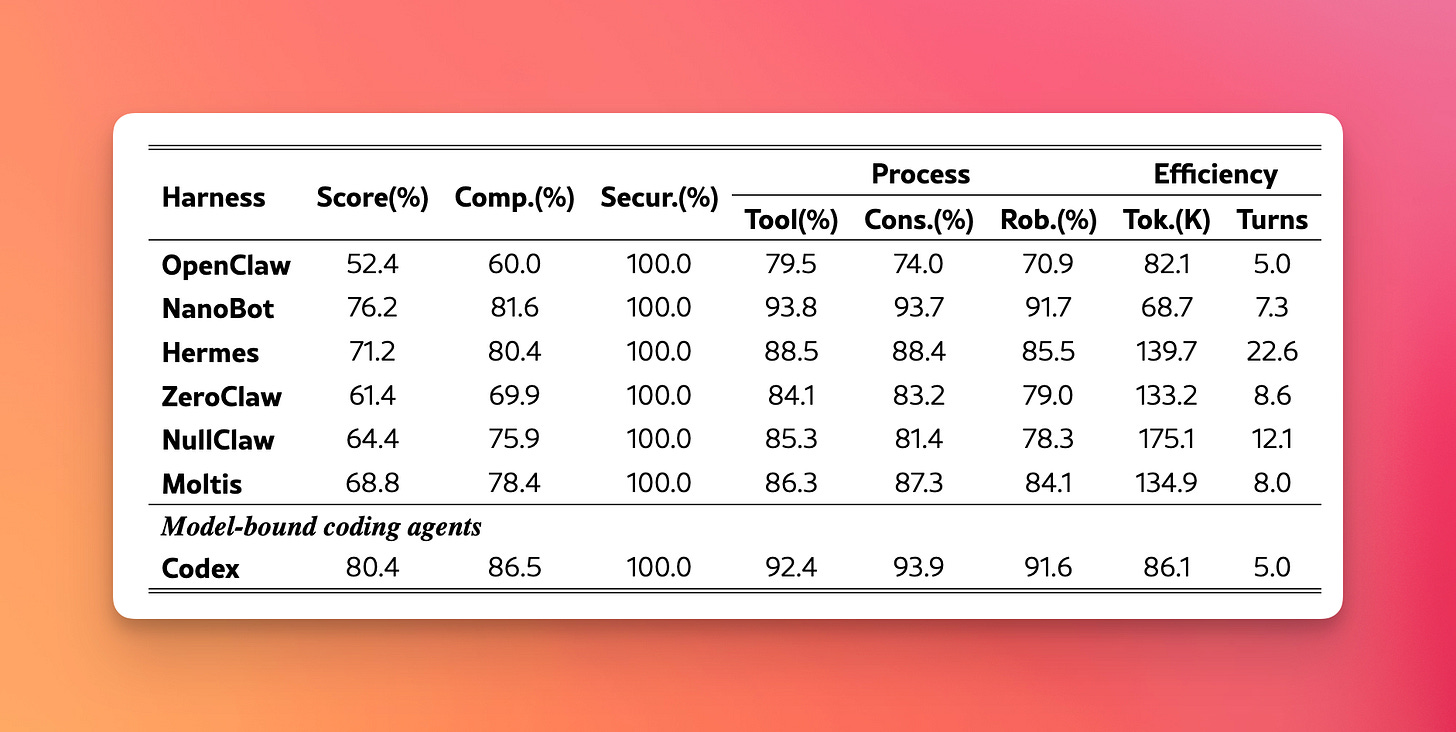
現在のハッチは重要であり、その重要性は測定可能です。Harness-Bench では、同じモデルを異なるハッチで同一の 106 タスクに実行させました。結果は 52.4 から 76.2 の範囲に及び、モデル自体には一切変更を加えていないにもかかわらず、23.8 ポイントもの差が生じました。エージェントの能力のうち半分は、ハッチによって決まるのです。
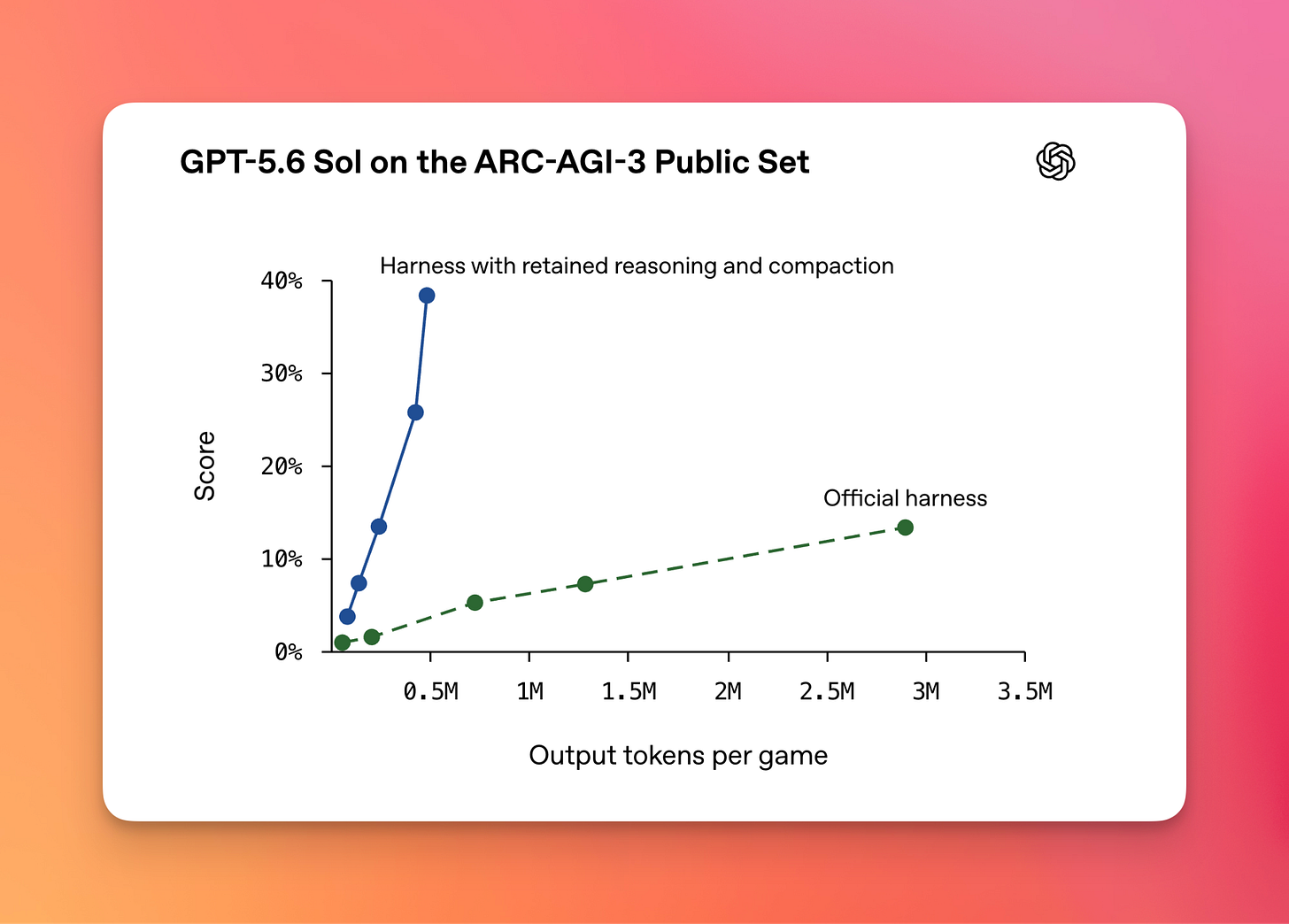
OpenAI も同様に、ARC-AGI-3 においてハッチングの変更により類似の成果を達成しました。推論の保持と圧縮機能を追加しただけで、GPT-5.6 Sol の ARC-AGI-3 スコアは 13.3% から 38.3% と 3 倍に跳ね上がっています。
その背後で起きているのは、強化学習(Reinforcement Learning: RL)がハッチング内部へと組み込まれたことです。OpenAI が 2025 年 5 月に発表した codex-1 のリリースアナウンスメントには、「codex-1 は、さまざまな環境における実世界のコーディングタスクに対して強化学習を用いて訓練された」と記されています。
これにより、二つの曲線は融合し、一つの統合システムとして編み込まれ始めます。
これは、ツールファウンダー(Toolformer)の夢が現実のものとなった瞬間です。外部からプロンプトで呼び出されるツールではなく、モデル自身の環境内部からトレーニングされたツール呼び出しが可能になりました。
そして、モデルがハッチングという環境の中で訓練されるにつれ、その能力をモデルの重みへと吸収し始めます。例えば、コンテキストウィンドウに関する知識を活用して、自動的に情報を圧縮する方法を学習するようになります。
GPT-5.1-Codex-Max の発表:
「圧縮機能を通じて複数のコンテキストウィンドウでネイティブに動作するように訓練された、初のモデル。」
モデルがハarnessの機能を吸収し終えれば、ハarnessは足場としての役割を終えることができます。これは「削減による生産」です。Anthropic の Thariq Shihipar 氏は、最近 Claude Code のシステムプロンプトの 80% を削除したと明かしています。
エージェントハarness の進化のペースを測る指標は、同じ能力レベルを維持しながら、どれだけハarness を削除できるかにあります。これが AI エンジニアとして目指すべき未来です。
つまり、モデルとハarness の進化には「学習→吸収→削減→繰り返し」というループがあります。モデルは次に挑戦すべき課題へと登り続けるのです。
Kaiser 氏が指摘した飛躍を特定するのは困難です。なぜならそれは離散的なイベントではないからです。事前学習による飛躍は、モデルカードに記述できるため認識しやすいですが、モデルとハarness の共進化による飛躍はそうではありません。進化のプロセス自体が文書化されていないからです。昨冬の飛躍の答えは、モデルとハarness が連携する隙間の中で起こったのです。
ここで問わねばなりません。すべてのハarness 機能が最終的にモデルに吸収されるなら、私たちが残るのは何でしょうか?
Harness 3.0:未来、「アテンション時代」
モデルが吸収できるものはすべて削除し続けることです。そのプロセスの終焉において、あなたのエージェントはどのような姿になっているか想像してみてください。すべてを削除した時、手に残るものは何ですか?
モデルの重みが次に吸収するのは何でしょうか?マルチエージェントのオーケストレーション、ツールの選択、メモリ……その例は数多くあります。研究者たちは、モデルと同様にトレーニング可能な自己改善型のハネスを構築しています。
この削除と吸収のプロセスの最後に残るのは、人間中心のエージェント機能です。権限、アイデンティティ、信頼性、そして可視性がそれにあたります。権限を自身に吸収したモデルは、権限そのものを溶解させてしまいます。しかし、吸収によってハネスが終了するわけではありません。むしろ、吸収はハネスの役割を逆転させるのです。
ハネスは、それを操作する人間に対してエージェントが接するインターフェースへと変貌します。
当初、ハネスはモデルに対する人間のインターフェースとして誕生しました。チャットボックスから IDE(統合開発環境)、そしてターミナルへと進化してきました。もしモデルがコンピューター側の機能を吸収してしまうなら、次の進化の段階は抽象化のレイヤーを一つ上へ移すことになります。つまり、ハネスは人間からの注意を引きつけるためのモデル側のインターフェースとなるのです。
それは「アテンション・インターフェース」になります。
Ryan Lopopolo は Latent Space のエピソード「Extreme Harness Engineering for Token Billionaires」の中でこう述べています。
「本質的に希少なのは、チームの同期された人間の注意だけだ。」
トークンはもはや豊富で信頼性のあるものになりましたが、私たちは依然として希少な人間の注意にボトルネックされています。
すでにその兆候は見て取れます。Anthropic の長期間にわたるエージェント進捗ファイルや、アジェンシー承認キューなどがその例です。
モデルとハーネスの曲線の差は、モデルがハーネスを吸収しても消えることはありません。それは人間の境界を超えて移動し、新たな曲線対と新たな差を生み出します。その新しい差とは、エージェントが人間に求めるものと、人間が実際に答えられるものの間の空間です。
注意インターフェース
私は予測します。1 年以内に、アジェンティック AI を構築するすべての企業が、かつて AGENTS.md を提供したように、「人間の注意に関するポリシー」を表面化させるようになるでしょう。
AGENTS.md は、エージェントがどのようにコードベースと連携すべきかを伝えます。一方、この「注意インターフェース」は、エージェントがあなた自身とどう向き合うべきかを示すものです。それは、いつあなたが中断されてもよいのか、いつ作業を継続すべきか、どの決定を単独で行えるのか、そしてどの決定にあなたの承認が必要なのかを規定します。アジェンティックシステム内の他の要素と同様に、これもシステムの学習可能なコンポーネントへと進化し、より多くのデータを通じて学習していきます。修正されるたびに、それが有用なデータとして蓄積されていくのです。
モデルは当初、瓶の中の脳のような存在でした。ハーネスがその脳に身体を与え、やがてその身体は脳へと溶け込んでいきました。私たちがこれから構築すべきものは、将来のどのモデルも吸収することのない唯一のもの、つまり「人間の注意」という真に希少な資源へのインターフェースです。
原文を表示
Sometime around Christmas 2025, AI engineers noticed a change in agents. They started to work! It’s hard to pin down exactly why. Maybe we finally had holiday downtime to try the newest agents with the newest models. Maybe the models had crossed some capability threshold. Maybe the wrappers around the models had matured.
What I’ll argue in this post is that it was the confluence of the last two. The model and the harness improving together and then their curves of improvement crossing at the right moment. And that dynamic helps to explain what comes next: models keep absorbing the harness into their weights, engineers keep deleting what got absorbed, and what remains is a harness for human attention rather than for the model.
Lukasz Kaiser, one of the people who invented the Transformer, said on “Unsupervised Learning” in June:
“The change last winter, last Christmas — it’s a little hard to pin down. I mean, the harness changed and a little post-training changed and then new pre-trained models came… but it felt like a big jump which is not that easy to pin down what did it.”
The answer to “What happened?” isn’t solely in the model weights. It’s in the system that grew up around the weights.
The answer is in the agent harness.
Think back to November 2022, when ChatGPT was the most advanced AI tool. The only capability at its disposal was next-token prediction and some Reinforcement Learning from Human Feedback (RLHF) that allowed it to act like a helpful assistant. No tools, no search, and no reasoning.
The original ChatGPT was confined to its training data and the prompt you sent it. No more, no less. It was a brain in a vat.
The agent harness is a way for the LLM to break free from that confinement and interact with real digital information space.
What a Harness Actually Is
An agent harness is everything besides the model weights that makes the agent work. The environment, tools, context and guardrails that surround the model. Without the harness the model is a brain in a vat. It can take an epistemic action, but needs the harness to actuate that decision in real digital space.
The harness is like giving the mind of the model a body. With the harness, the model can perceive (context), act (tools), persist information (memory and compaction), and enforce its boundaries (permissions and guardrails).
Harness 1.0: The Past, “The Bolt-On Era”
Two curves run through the path of model / harness evolution. What the harness asks of the model, and what the model can deliver in practice.
The gap between these two curves is equal to the effectiveness of an agent, and the closing of that gap is what I’ll argue led to the tangible improvement in agents that Lukasz Kaiser referenced.
Here’s how the gap closes, in stages:
ReAct, “The Harness on Paper” (October 2022): ReAct is a prompting technique to get models to reason through prompting. It’s the agentic loop on paper, external to the model weights. It defines the idea of an “agent loop” where a model reasons -> acts -> observes -> repeats. Again, the ReAct loop exists only as a prompting method. Prompting is the only reasoning method that exists at this time and no one calls it a “harness.” Toolformer (Meta, Feb. 2023), that same winter, hints that tool use could be trained in rather than prompted. It’s a bit like Alan Turing’s idea of the computer before it was instantiated in a physical substrate. A powerful idea that is only later made manifest. (ReAct predates ChatGPT by a month — October 2022 vs. November 2022). Both the curves are near zero at this point. The gap is small because we are just getting started.
AutoGPT/BabyAGI, “Premature Autonomy” (Spring 2023): With AutoGPT/BabyAGI, the harness curve sprints ahead of the model capability curve. Both hand the model full autonomy, asking the model to act as an “autonomous employee,” but the models at this point are still little more than brittle next-token predictors. A loop doesn’t add capability to a model. A loop amplifies the capability a model has, and below some threshold the loop amplifies errors rather than reliability. Consider the power of compounding in the negative: 95% reliability per-step over a 20-step task results in a ~36% average success rate. The harness hands the model an assignment it has no realistic chance of completing. This is where the gap is at its widest and the next 18 months are a reaction and attempt to close that gap.
Cursor/Copilot, “Retreat to Human in the Loop” (2023 - 2024): The first AI-powered IDEs recognize the failure-mode of giving the model too much autonomy. They close the gap by pulling the harness curve down below the model curve. Don’t give the model the loop directly; give the human the loop and empower the human to orchestrate the loop while the model speeds the human up. The first version of Devin tries to hand the autonomy back to the model. A test from the team at Answer.AI shows that is still premature, with a ~15% success rate. It’s evidence that the move from the IDEs to retreat from full autonomy is not cowardly, but the correct move. However, while the prevailing tactic is to pull the harness down below the model, models continue to improve. Near the end of 2024, with the introduction of o1 — the first reasoning model — for the first time the gap inverts and we begin to see the first signs of a model capability overhang.
Claude Code, “The Curves Cross” (February 2025): The inversion at the end of 2024 sets up an opportunity that someone has to seize: if the model is now ahead of the harness, then a harness intentionally riding the brakes of the model is leaving capability on the table. Claude Code is the first coding agent built to seize that opportunity. It abandons the IDE for the terminal, gives the model bash and file read/write access, and replaces the need for human approval on every change with permission rules. The model is handed the loop again, and this time it understands the assignment. Boris Cherny and team build Claude Code with the next model’s capabilities in mind, not the current one. It is such a hit not because it’s the first product to give the model autonomy, but because it’s the first product to do so at the right time. That time is the crossover point where the model has gotten reliable enough to succeed with autonomy. Claude Code grows to roughly $1B ARR within six months, all because Anthropic seized the opportunity available when the curves begin to meet.
What happens next is that the curves don’t just meet, they begin to braid together.
Harness 2.0: The Present, “The Co-Training Era”
Today the harness matters, and in a way we can measure. Harness-Bench ran the same model over the same 106 tasks in different harnesses, and scores ranged from 52.4 to 76.2: a 23.8-point spread with zero change to the model. Half the agent is the harness.
OpenAI achieved a similar result on ARC-AGI-3 with harness changes. Adding only retained reasoning and compaction, GPT-5.6 Sol’s ARC-AGI-3 score tripled from 13.3% to 38.3%.
What’s happening under the hood is that Reinforcement Learning (RL) has moved inside the harness. From OpenAI’s codex-1 release announcement in May 2025: “codex-1 was trained using reinforcement learning on real-world coding tasks in a variety of environments.”
The two curves join and start to braid as one unified system.
This is the dream of Toolformer manifesting in reality. Rather than a tool prompted from the outside, now tool calling is trained from within the environment of the model.
Then, as the models are trained in the environment of the harness, they start to absorb the harness capabilities into the model weights, learning how to auto-compact with knowledge of their own context window, for example.
GPT-5.1-Codex-Max launch:
“The first model natively trained to operate across multiple context windows through compaction.”
Once the models absorb the harness capabilities, the harness can shed the scaffold. It’s production by reduction. Thariq Shihipar from Anthropic said that the team recently deleted 80% of Claude Code’s system prompt.
The measure of the pace of agent harness evolution is how much of the harness you get to delete, while retaining the same capability level. This is the future we need to build towards as AI engineers.
This, then, is the loop of model / harness evolution: train -> absorb -> shed -> repeat. The model climbs to the next thing it can’t do yet.
The jump that Kaiser pointed out is hard to pin down because it’s not a discrete event. A pre-training leap is noticeable because you can articulate it in a model card. A model / harness co-evolution jump is less so, because there’s no documentation of the evolution process. That’s the answer to the jump last Winter: it happened in the space between the model and harness working together.
We need to ask: if every harness capability will eventually get absorbed into the model, what does that leave us with?
Harness 3.0: The Future, “The Attention Era”
Keep deleting everything that the model can absorb. Imagine what your agent looks like at the conclusion of that process. What are you left with in your hand when you’ve deleted everything?
What do the model weights absorb next? Multi-agent orchestration, tool selection, memory...to name a few possibilities. Researchers are building self-improving harnesses that can themselves be trained in a similar way to models.
What’s left at the end of this deletion and absorption process are the human-centric agent capabilities. Things like permissions, identity, trust and legibility. A model that absorbs permissions into itself has dissolved permissions. Absorption doesn’t end the harness. Absorption inverts the harness.
The harness becomes the agent’s interface to the human that operates it.
The harness was born as the human interface to the model. We grew from chatbox to IDE to the terminal. If the model absorbs the computer-facing capabilities, the next stage of evolution becomes one layer of abstraction up. The harness becomes the model’s interface to our human attention.
It becomes the attention-interface.
Ryan Lopopolo said on the “Extreme Harness Engineering for Token Billionaires” episode of Latent Space:
“The only fundamentally scarce thing is the synchronous human attention of my team.”
Tokens became abundant and reliable, yet we remain bottlenecked on scarce human attention.
We see sparks of this already, with Anthropic’s long-running agent progress files and agentic approval queues.
The gap between the model and harness curve doesn’t disappear when the model absorbs the harness. It migrates across the human boundary and creates a new pair of curves with a new gap. The new gap is the space between what the agent asks of the human, and what the human is able to answer.
The Attention-Interface
I predict that within a year, every company building agentic AI will ship a human attention policy surface in the way that every agentic AI company shipped AGENTS.md.
AGENTS.md tells the agent how to work with your codebase. The attention-interface will tell the agent how to work with you. It will govern when it’s allowed to interrupt you, when it should keep working, which decisions it can make alone and which decisions need your approval. And like everything else in the agentic system, it will become a learnable component of the system that can learn with more data. Every correction becomes useful data.
The model began as a brain in a vat. The harness gave the brain a body, then the body started to dissolve into the brain. What’s left for us to build is the thing no future model will ever absorb. The interface to the one true scarce resource: human attention.
関連記事
今日のまとめ
AIデイリーブリーフで今日の重要ニュースをまとめ読み