Qwen、コーディングと協働で新基準「Qwen3.8-Max」を公開へ
本文の状態
日本語全文を表示中
詳細モードで約47分の本文を読めます。
Qwen は Qwen 3.8-Max をリリースし、2.4兆パラメータのモデルとしてコーディングや複雑なタスク処理能力を大幅に向上させ、来週には重みもオープンソース化すると発表した。
AI深層分析を開く2026年8月4日 05:43
AI深層分析
キーポイント
Qwen 3.8-Max の発表と仕様
Qwen は Qwen ファミリで最も高性能なモデル「Qwen 3.8-Max」を公式にリリースし、2.4兆パラメータ(アクティブ950億)を備えていることを明らかにした。
オープンソース化の予定
同社は Qwen-Max クラスモデルの重みを初めて公開する方針を示し、来週にオープンソース版のリリースを予定している。
自律的なコーディング能力
Qwen 3.8-Max は人間の手助けなしで10日以上継続してプロジェクトを構築・改善する自律的なコーディング実験に成功し、フィードバックループを通じた自己進化を実現した。
エンドツーエンドのタスク処理
複雑なタスクを信頼性の高い成果物として完遂できる能力が強化され、コーディング、業務、研究、長期計画タスク全般で包括的な改善が見られる。
自律型コーディングハネスの実装構造
Qwen3.8-Max は状態機械、ディスパッチャー、モニター、ウォッチドッグを統合した実行ループにより、要件の受け取りから実装、テスト、マージまでを自動で処理する。
重要な引用
Today, we are officially releasing Qwen 3.8-Max, the most capable model in the Qwen family to date.
This also marks the first time we will open-source the weights of a Qwen-Max-class model — the open weights will be released next week.
Qwen3.8-Max doesn't just follow a fixed plan — it self-evolves through feedback loops.
Qwen3.8-Max combines an issue state machine, dispatcher, monitor, and watchdog into one execution loop
編集コメントを表示
編集コメント
Qwen が Max クラスの重みをオープンソース化するという発表は、高性能モデルの民主化に向けた重要な一歩である。特に自律的なコーディング能力の実証は、開発ワークフローの変革を促す可能性を秘めている。
Source Article
元記事を日本語で読む
本文に関係しない購読案内、埋め込み通知、サイト内プロモーションは除いています。
QWEN STUDIO | DISCORD
本日、Qwenファミリーの中で最も能力が高いQwen 3.8-Maxを正式にリリースいたします。また、Maxクラスモデルの重みオープンソース化も初めて実現し、公開は来週に行われます。
Qwen 3.5のアーキテクチャ基盤の上に構築されたQwen 3.8-Maxは、パラメータ数を2.4兆にスケールさせ、コーディング、業務、研究、長期タスクなど幅広い領域で包括的な改善を実現しました。単に難しい質問に答えるだけでなく、複雑なタスクをより高い信頼性でエンドツーエンドで完遂し、確実な成果物を生み出すことができます。
- Qwen3.8-Max — QwenCloud で利用可能:2.4Tパラメータ(アクティブ95B)、公開重みは来週リリース
- コーディング、業務、研究、長期タスクにおける包括的な改善
- 複雑なタスクのエンドツーエンドかつ信頼性の高い実行
- QwenCloud を通じてAPIで呼び出し可能。
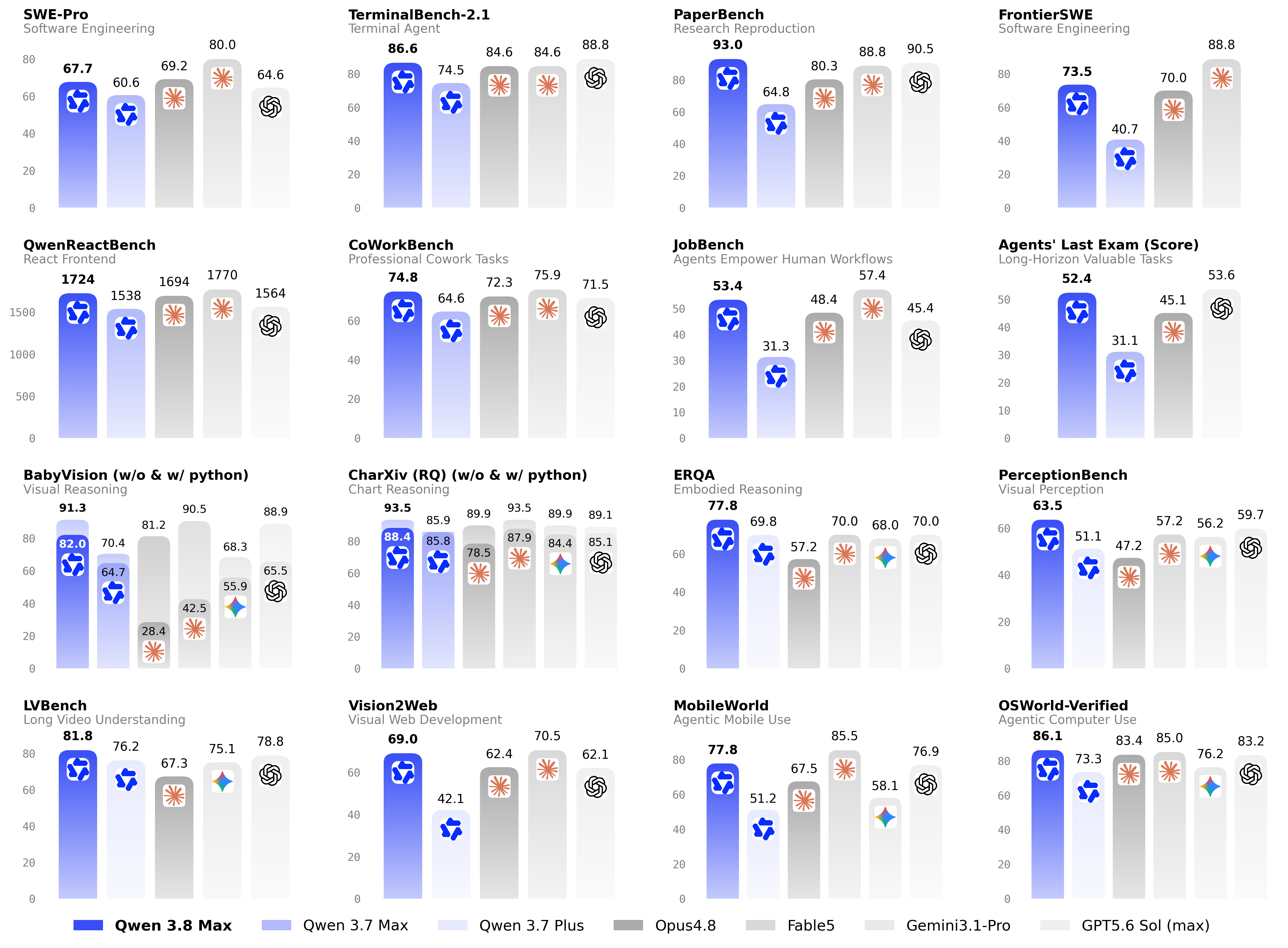
コーディング
トップクラスのモデルにとって、現在のコーディングとは単にリクエストされた関数を書くことではありません。空のフォルダから始まり、実際にコードを書き実行して結果を導き出すまで、数日かかる本格的なプロジェクトを、人間の手を借りずに完遂できるかどうかが問われます。
Qwen3.8-Max を対象とした 3 つの課題でテストを行いました。いずれも、人間の助けは一切なく、実際にコードを実行して結果を得ることで評価されました。これら 3 つの課題に共通する点は、Qwen3.8-Max が単に固定された計画に従うだけでなく、フィードバックループを通じて自己進化していることです。それは、自身をアップグレードするハネス(枠組み)を構築したり、実験ごとに研究手法を洗練させたり、競争のリーダーボードで提出を積み重ねて順位を上げたりすることを含みます。
10 日以上続く自律的なコーディング:自己進化型ハネスの構築
このケースでは、Qwen3.8-Max に oh-my-cli プロジェクトをゼロから作成するよう指示しました。そして、10 日以上におよぶ長期の自律的なコーディング実行を通じて、自己進化型のハネスを構築させました。これにより、ユーザーからのフィードバック、高度なコミュニティの実践、そしてモデル自身の自己テスト結果が一つのエンジニアリングループに統合されます。要件は課題として正規化され、エージェントによって自動的に引き受けられ実行されます。その後、コード、テスト、プレビュー、ログを通じて継続的に反復改善が行われます。
完全なプロジェクトの履歴は、GitHub リポジトリ qwen-code-dev-bot/oh-my-cli で公開されています。
自律的なコーディングハネスにおける主な実装の詳細:
ループエンジニアリングの仕組みは、タスクの状態管理、ディスパッチ、回復を統合しています。Qwen3.8-Max は、課題状態機械、ディスパッチャー、モニター、ウォッチドッグを一つの実行ループに組み込んでいます。新しい要件が GitHub Issues に登録されると、エージェントが状態機械を通じてそれを引き受け、ready → leased → active の段階を経て進みます。実装が完了すると E2E テストと CI チェックが起動し、合格後に PR がマージされます。
自己テスト機能では、製品自体の検証と保守を担います。各アップデート後、モデルはビルド、ユニットテスト、E2E、デスクトップライフサイクルの検証を自動で実行します。異常が発生した場合は、関連する課題や PR に戻され、修正と再検証が行われます。
多様なソースからの進化により、製品は複数の要求信号からアップグレードされます。コミュニティの経験やユーザー・開発者のフィードバックを実行可能な作業に変換することで、/goal や /resume、ダイナミックワークフロー、セッションリプレイ、デスクトップ機能など、さまざまな能力が継続的に進化します。
2026 年 7 月 30 日現在、完全自律的な AI 運用から約 16 日が経過し、リポジトリには 265 のコミット、127 の PR、151 の課題が蓄積されました。これは、継続的に進化する自律コーディング能力の証です。
動画 1: 10 日以上続く長期の自律コーディング実行において、Qwen3.8-Max は自己進化型のハッチを構築し、コミュニティ要件の収集、課題のディスパッチ、コード生成、検証、自己修復を継続的に完了します。
論文を再現し、さらに改善する
Qwen3.8-Max に最新の研究論文「Unified Data Selection for LLM Reasoning」を渡し、「コードで実験を再現した上で、より良い方法を探してほしい」と依頼しました。この論文は AI の学習において非常に実用的な問いに取り組んでいます。「学習に使えるデータが限られている場合、どのサンプルを優先して残すべきか?」という問題です。
論文の答えは、「難しい判断ポイント」が含まれるサンプルこそ価値があるというものです。これは、モデルが次にどう進むべきか本当に迷った瞬間を指します。
ただし、Qwen3.8-Max は論文と GPU のセットのみからスタートしました。初期コードも既成のパイプラインもありません。データ処理スクリプト、学習コード、評価環境——すべてをゼロから設計し、実装しなければなりませんでした。熟練したエンジニアが数日かけて行うような作業です。
Qwen3.8-Max は約 5 日間(連続して約 125 時間)完全に自律的に作業しました。その結果、約 7,600 行のコードを記述し、1,100 回以上のアクションを実行し、33 回の GPU 学習を行いました。まず約 37 時間をかけて論文の全パイプラインをゼロから再構築し、6 つの主要な発見を再現しました。Qwen3-8B モデルを選抜されたデータで繰り返し微調整し、難しい数学ベンチマークでの性能向上を確認したのです(例えば、論文の方法はランダム選択に比べて AIME24 で +7.7% の改善を示しています)。
さらに一歩踏み出し、単なる模倣から「自己進化」へと至りました。その後の約88時間にわたり、モデルは自身を改善する研究ループを実行しました。
仮説の立案 → コードの実装 → GPU での実行 → 分析 → 再挑戦
このサイクルを4ラウンドにわたって繰り返し、自ら18もの改善案を発案・検証しました。各ラウンドの結果が次のラウンドにおける仮説形成にフィードバックされ、試行錯誤の過程で何が失敗したかを診断することで、最終的に論文内の既存手法を上回る新たな方法を導き出しました。その結果、競技レベルの数値推論ベンチマーク「AIME24」において、+2.7ポイントという大幅な向上を達成しています。
この改善探索プロセスは以下の通り展開されました(全4ラウンド、18のアイデア)
| ラウンド | そのラウンドでの最良のアイデア | スコア (AIME24) | ベースラインとの差 |
|---|---|---|---|
| — | 論文の手法(再現版、ベースライン) | 49.58% | — |
| 1 | 選択前に難易度でデータを分割 | 50.42% | +0.84 |
| 2 | エントロピー・スコア差に基づいて例に重みを付与 | 51.67% | +2.09 |
| 3 | 選択幅を調整 | 51.25% | +1.67 |
| 4 | 困難な意思決定点("nhighgate")を数える ★ | 52.29% | +2.71 |
24時間で数百の人間チームを凌駕
次に、Qwen3.8-Max を実戦のオンラインコンテストに投入しました。それが「WWW2025 Multimodal Dialogue Intent Recognition Challenge」です。この大会はアリババクラウドの天池プラットフォームで主催され、526 の人間チームが参加しました。課題は、カスタマーサービスのチャット記録(テキストとスクリーンショットの両方)を読み込み、顧客の意図を正確に把握することでした。
Qwen3.8-Max は、厳格な24時間という制限の中で、一切の人間の介入なしで自律的に活動しました。大会ルールを読み解き、コードによる完全なソリューションを構築したのです。テキスト処理には、中国語モデルであるBERT、MacBERT、RoBERTaを微調整してアンサンブル化し、製品画像のスクリーンショット解析には、視覚言語モデルQwen2.5-VL-7Bを微調整しました。さらに、メインモデルが確信を持てない画像については、Chinese-CLIPモデルをバックアップとして活用しています。
これらすべてのモデルを統合し、単一の重み付き投票システムへと結合しました。各モデルの票の重みを決定するためクロスバリデーションで調整し、同点の場合に備えて追加の画像判定役も投入したのです。45 回の提出を通じて、各ラウンドでのフィードバックが次の微調整と再重み付けを導き、精度は着実に向上。最終的に0.60から0.853まで到達し、参加した526 の人間チームのうち 458 チーム(全体の 87%)を破るという結果となりました。
これら 3 つの事例から、Qwen3.8-Max が際立っている理由が見えてきます。人間が介在することなく、困難で開かれた目標に対して数日間にわたり集中し続け、独自のアイデアを考案して実行可能な成果へと変えることができるのです。
Work
コーディングと並んで、実務こそが、あらゆる職業の日常を埋め尽くす複雑で多段階かつツール依存度の高いタスクであり、最先端モデルが莫大な経済的価値を生み出すもう一つの主要な領域です。Qwen3.8-Max がこれらのワークフローにおいて広く通用する能力を持ち、確実に堅牢であることは、私たちのミッションの中核を成しています。
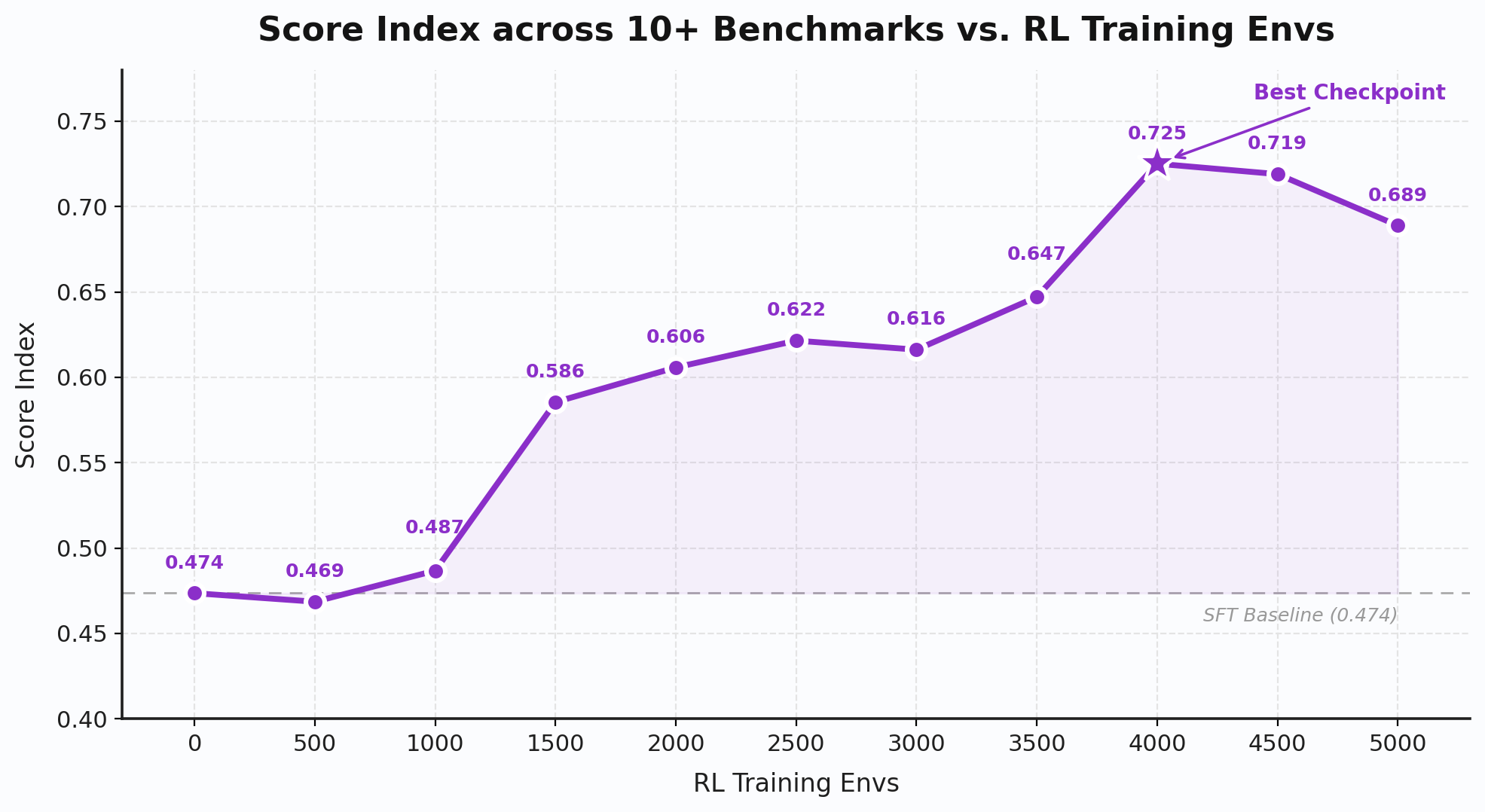
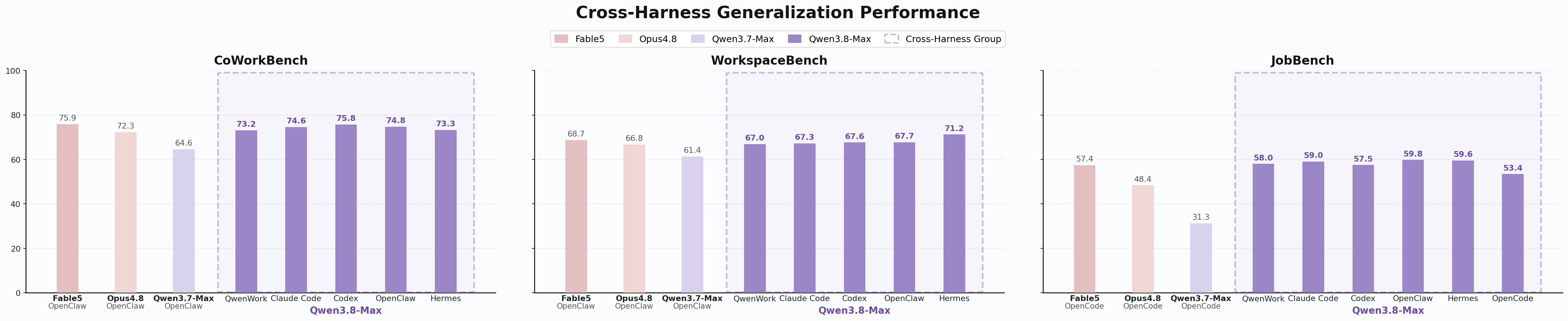
実世界向け RL システムの拡張。 強化学習(RL)環境と計算リソースを同時にスケールさせることで、QwenWork / Claude Code / Codex / OpenClaw / Hermes など複数の主要なフレームワーク全体で、汎用的な実務能力を一様に引き上げました。これを実現するには、3 つの相互に関連する課題への対応が不可欠でした。
独立した軸に沿って、継続的にスケーリング可能な分離型実環境を構築します。具体的には、タスク(単一タスク→マルチタスク→多日間の作業)、ワークスペース(複数ファイル→階層化フォルダ→複雑な異種フォルダ)、そしてハネス(カテゴリ、バージョン、スキル)の各軸で成長させます。これにより、環境の拡大は個別の統合を必要とせず、組み合わせ的に複利効果を生み出します。
また、実行ベースの検証、テキストやレンダリングされた視覚出力に対するルールに基づく裁定、エージェントによる検査など、多様な検証手法を内包する「ユニバーサル・リワードシステム」を採用しています。これらは自動的にスケーラブルなルールの下で統合され、1 つのリワードシステムとして機能します。その結果、すべての環境で一貫性があり信頼性の高い報酬源を提供し、タスク固有の検証子を維持することに伴う不整合を解消します。
さらに、オンラインデータバランス調整器が各バッチを形成し、タスク、難易度、ワークスペース、ハネスにおける分布を常に高度に均衡させます。これによりバッチ間の勾配分散を抑制し、強化学習計算資源の安定した継続的なスケーリングを実現します。
これらの要素が「広がり」「信頼性の高い報酬」「安定性」を提供することで、環境と計算リソースの規模拡大を、実世界での作業能力における測定可能な横断的な向上へと転換します。
数百の専門職にわたる「実用能力」の広さを検証する
最先端モデルが経済価値の高い業務で担う役割はますます広がっています。そこで私たちは、Qwen3.8-Max が実際のワークフローにおいて本番品質の結果をいかに提供できるか、その「幅(breadth)」を徹底的にテストしました。対象は数百の高度な経済価値を持つ専門職にまたがる高頻度のタスクです。以下にいくつかの代表的な事例を紹介します。
企業法務顧問 — Qwen3.8-Max は、数百件の文書から 1,284 の関連条項を単一の処理で抽出し、完全なレビューを 1 時間未満で完了させました。通常、この種のレビューには、チームで協力して作業する準法律専門家が約 1 週間を要します。
UI/UX デザイナー — Qwen3.8-Max は、デジタルバンキングアプリ「NOVA」のために高忠実度のインタラクティブなプロトタイプを作成しました。一貫したデザインシステムを持つ 8 つの画面を、人間による修正をゼロ回で一度に提供しています。従来のワークフローでは通常、3〜5 回の修正ラウンドが必要でした。
レストランブランド創業者 — Qwen3.8-Max は、100 件を超える食材供給に関するブリーフを読み込み、26 品目の完全なメニューを単一の処理で生成しました。各料理には平均カロリー値と原材料の原産地が注釈として付与され、食品原価率は 33.8% に抑えられています。通常、このようなメニュー開発には、シェフ長と運営チームが数週間をかけてレシピの反復テスト、コスト計算、改良を行う必要があります。
構造エンジニア — Qwen3.8-Max は、単一の図面セットからブラウザ上で 30 階建てオフィスビルの耐震構造モデルを再構築しました。固有周期、基底せん断力、層間変形係数などのデータは、マウスオーバーでリアルタイムに確認可能です。従来のワークフローでは、エンジニアは専用モデリングソフトウェアで手動でモデルを構築する必要があり、通常 1 週間以上を要します。
リハビリテーション療法士向けに、Qwen3.8-Max は 2D の紙製評価フォームを、自由に回転可能な視点と段階的な解剖学的オーバーレイを備えた 3D インタラクティブデモに変換しました。これにより患者は怪我の場所や回復の進捗を視覚的に確認できます。従来のこの作業は医療アニメーション制作会社に外注する必要があり、納期に 2~4 週間、費用には数千ドルがかかっていました。
スポーツデータ分析担当者は、Qwen3.8-Max を活用することで、選手ごとの約 8,400 の攻撃・守備ポゼッションデータを解析し、即戦力となる「選手の戦術プロファイル」とコーチングレポートを数十分で完成させました。従来のアナリティクスチームが手作業で戦術セグメンテーション、因果関係の特定、レポート作成を行うには通常数営業日を要します。
Video 1. 数百もの高付加価値職種において、Qwen3.8-Max は実際の業務フローで人間の生産性を劇的に向上させ、その汎用的な作業能力の広範さを示しています。
単一セッションで収益性の高いエンドツーエンド型クオンツ戦略を構築する
「Dynamic Workflows(動的ワークフロー)」という構築機能を駆使した Qwen3.8-Max は、タスク計画をプログラム的に実行し、大規模なサブエージェントシステムを精密に統括します。これにより、単なる会話のやり取りが、自動化されたクオンツ研究ループへと変貌するのです。
深層学習による ETF 回転戦略の R&D:エンドツーエンドの実現
Qwen3.8-Max は、単なる一行のタスク説明から自律的に複雑な動的ワークフローを計画し、数時間にわたって実行を継続しました。その過程でデータシステムの構築や基本ファクターの作成、そして多段階の貪欲法による反復処理を遂行。さらにバックテスト結果を動的に分析しながら軌道修正も行うなど、固定されたスクリプトに従うのではなく、証拠に基づいて行動しました。
- 設計期間の指標と検証期間の指標に乖離が生じるという、典型的な過学習の兆候を検知すると、自動的に剪定プロセスを起動し、冗長なファクターを段階的に削除しました。
- 複数の経路が同じコアシグナルに収束するケースを発見した際は、パス依存性を排除するためにマルチシード連合検証を追加しました。
- 小規模なクロスセクションにおいて 3 モデルのアンサンブルよりも固定方向合成の方が頑健であると判断した場合、自律的により適切な戦略フレームワークへ切り替えました。
幅広さ——大規模並列ファクター採掘。 ファクター研究には膨大な探索空間が伴い、従来のワークフローは逐次処理に依存していました。Qwen3.8-Max はこのプロセスを並列化しました。モメンタム、バリュー、クオリティ、投資、低リスク、センチメントという 6 つの古典的なファクターファミリーを要約した短い記述のみから始め、それぞれを 50 の研究方向 に分解し、約 330 個のサブエージェント を配置。さらに 約 6,000 回のバックテスト を実行し、実行中もワークフローを継続的に適応させました。その結果、選ばれたファクターは エクセス・シャープレシオが 0.64~1.48 に達し、IC(相関係数)も一様に正しく、0.010 から 0.014 の範囲となりました。
単一の軌道に沿った R&D から、広大な仮説空間への並列探索へ。Qwen3.8-Max は Dynamic Workflows を活用して、オーケストレーションのロジックを再現可能なプログラムとして固定します。これにより、研究者が逐次作業で数週間から数ヶ月を要していたクオンツ研究を、単一の会話内で完結するスケーラブルな自動化ループ に圧縮しました。これは、モデルが 長期にわたる自律的な作業 において持つ広範な可能性を示すものです。
Video 2. Qwen3.8-Max は、クオンツ研究者の専門知識を誰もが利用可能にする約束を果たします——その作業能力における「深さ」を実証するのです。
Long-Horizon Task
Qwen3.8-Max は、複雑で長期にわたる制約の多いタスクにおいて、卓越したシステムレベルの自律的計画と、エンドツーエンドのクローズドループ適応学習を実現します。デジタルチップ設計における厳格な物理制約や、競争が激しい戦略的なビジネスシミュレーションといった課題においても、行動フィードバック反復ループを通じて数千回ものインタラクションを繰り返すことで、アルゴリズムと戦略の深い再構築を成し遂げます。
Autonomous Chip Design and Closed-Loop Feedback-Driven Optimization
Qwen3.8-Max は、ロジックの再構成、多制約最適化、物理レイアウト生成を含むシリコン設計フロー全体を自律的に実行する能力を獲得しました。対象となる設計は、モジュラー指数計算とモジュラー乗算を組み合わせた GCD / RSA 暗号化ハードウェアアクセラレータ です。このブロックは GCD データパスと制御パスを基盤としており、コンパクトでありながら論理密度の高い典型的なデジタル回路を表しています。
ランダム化された cocotb ベースの検証フレームワーク下で、モデルは 4 ビット、6 ビット、8 ビット、16 ビットの各構成において ビット単位の機能的完全性 を維持しつつ、合成ゲート数(Yosys セル数)を最小化する必要があります。これは、フロントエンドハードウェア設計における「面積と正しさ」の古典的なトレードオフに直接取り組むものです。面積性能は 16 ビット(WIDTH = 16)構成に基づいて評価されます。
Qwen3.8-Max は、Iverilog(シミュレーション)、Yosys(論理合成)、OpenROAD(物理設計)のツールチェーンを統合したサンドボックス環境内でこの設計を最適化しました。基本となるタスク説明、空のモジュールテンプレートを含むスタブ RTL ワークスペース、検証および合成用の評価スクリプトという最小限の入力からスタートし、Qwen3.8-Max は完全に自律的に動作しました。
ゴールデンリファレンス設計や人間の介入なしに、このモデルは高レベルなアルゴリズムアーキテクチャの設計から RTL コード生成、そして多段階の反復改良に至るまで、一連のプロセスを独自で実行しました。
単一の連続した自律的な実行において、Qwen3.8-Max は約 500 ターンと 13 の主要マイルストーンにわたる 71 回の評価を完了し、設計の全体構造を再構築しました。モデルは RTL 編集、シミュレーションデバッグ、合成分析、冗長性の特定、反復的なデータパスの再アーキテクチャリングを自律的に管理し、単なるバグ修正からアルゴリズムレベルの深い書き換えへと進化させました。
最初の機能的に動作可能な設計が 8,298 ゲートであったのに対し、Qwen3.8-Max はこれを 678 ゲートまで削減し、評価されたすべてのモデルの中で最高記録を達成しました。この推移は、Qwen3.8-Max が初期の簡単な改善で頭打ちになるのではなく、実行が数百ターンに及んでも大規模な構造的突破が可能であることを示しています。
軌跡に沿った主要な設計マイルストーン: *(各段階における完全な回路トポロジーと対応するコード差分の詳細を記録した進化履歴)*
アルゴリズムの書き換え:剰余除算器を反復シフト・減算方式へ(8,298 → 2,010 ゲート、Turn 22)
これは単一の最適化ステップの中で最も大きな成果をもたらしました。Qwen3.8-Max は modular_multiplier 内で高コストな 16 ビットハードウェアの剰余除算器を置き換え、反復シフト・減算アーキテクチャを採用しました。これにより一挙に 6,288 ゲートを削減し、全体の面積削減量の 80% 以上を占めるに至りました。
冗長性の排除とビット幅の最適化(2,010 → 1,304 ゲート、Turn 35–48)
呼び出し元の事前条件を認識したモデルは、安全に REDUCE ステージ全体をスキップしました。さらに、独立していた 2 つの削減モジュールを 1 つの共有ブロックへ統合し、出力経路を組み合わせ論理へ最適化。内部レジスタ k_ff のビット幅も絞り込みました。
- レジスタと制御 FSM のプルーニング(ゲート数 1,304 → 907、サイクル数 60–113) 冗長な
baseレジスタとmodレジスタ、およびk_nzフリップフロップを削除し、偶数の場合の早期終了機構を導入。減算器の最上位ビット(MSB)を比較器として活用することで、「比較後減算」という GCD モジュール内の別々のロジックを、再利用可能な単一の減算器に統合しました。 - モジュール融合とロジック共有(ゲート数 907 → 765、サイクル数 170–252) モジュール間の境界を溶解させ、乗算器を直接 finite state machine (FSM) にインライン化。3 つのサブモジュールを統合し、単一の減算器をグローバルに共有することで、モジュール間での冗長なインターフェースと重複するロジックを排除しました。
ゲートレベルの微調整(765→678 ゲート、ターン 443–500)では、共有 NOR ゲートツリーや絶対値差分減算分割(abs-sub splitting)、バイトからビットへの選択ロジックといった局所的な最適化手法を活用し、最終的なゲートレベルの冗長性を排除しました。
フロントエンドでの最適化が物理実装にどう反映されるか検証するため、Qwen3.8-Max は OpenROAD(Nangate45 PDK)を用いた標準的な配置配線(PR)フローを RTL デザインに適用し、物理シリコンレイアウトを生成しました。この物理レイアウトでは、各チップが実際の配線結果を示しています。ダイの物理面上には標準セルが配置され、その上には金属配線層が積み重ねられています。各層は色分けされており、垂直ビアによって接続されています。初期設計は 106×106 µm² のダイ面積を占有し、総配線長は 33,369 µm で、深刻なタイミング違反(負のスラック -4.46 ns)が発生していました。一方、最終レイアウトは 46×46 µm² に縮小され、配線長も 4,187 µm に減少。500 MHz でタイミングクロージャを達成し(スラック +0.66 ns)、実用化可能な状態となりました。これは物理ダイ面積が 81% 削減されたことを意味し、高レベルのフロントエンドにおけるアーキテクチャ最適化が、高密度で配線可能かつ高性能なシリコン実装に直接寄与することを証明するものです。
この事例は、自律的で長期計画を必要とするハードウェアエージェントのための基盤モデルとしての Qwen3.8-Max が持つ、2 つの決定的な能力を浮き彫りにしています。
長期にわたる持続的最適化:本モデルは、数百回に及ぶ複雑な対話ターンを通じて一貫性が高く体系的な戦略を維持し、表面的な構文調整で止まることなく、アルゴリズムレベルのデータパス書き換えへと深く進めます。
フィードバック駆動型クローズドループ改善:事前の参照設計が存在しない場合、モデルは「編集・シミュレーション・合成・レイアウト」というフィードバックループに完全に依存して最適化を推進します。各設計イテレーションは、自動化された cocotb 機能テストによって厳格に検証され、OpenROAD バックエンドによる検証により物理的な実現性が完全に保証されます。
長期的な運用における継続的学習
E-Commerce Bench は、大規模言語モデルの持続的な業務シナリオにおける意思決定能力を評価するために設計された、365 日間の長期サイクル型 e コマース運営シミュレーションベンチマークです。淘宝(タオバオ)と天猫(ティーマル)の実在する非識別化取引データに基づいて構築されており、12 の店舗タイプ、60 の商品カテゴリ、約 600 のサプライヤー、7,000 点の商品から成る複雑な生態系を深く再現しています。
モデルには初期資金として 10 万円が与えられ、複数のオンラインストアを同時に運営します。通年を通じて、季節による需要の変動や突発的な環境イベント、そして極めて現実的な e コマース決済システムに起因するキャッシュフローの圧力に対処しなければなりません。モデルは、商品選定、サプライチェーン交渉、在庫管理、動的価格設定、返品処理など、フルチェーンにわたる意思決定を自律的に行う必要があります。最終目標は、年末までに総残高を最大化することです。
これはまた、通年を通じた資金配分戦略のテストでもあります。成長のために積極的に投資すべきタイミングを知る必要がある一方で、同様に重要なのは、サイクル終了前に在庫や営業利益を現金化することです。もし期末に換金されない資産が帳簿上に残ったままになれば、最終結果に悪影響を及ぼすことになります。
価格交渉において、このベンチマークはゲーム理論の原則に基づいた「サプライヤー行列」を導入しています。各サプライヤーには固有の性格特性と譲歩戦略が設定されており、モデルはこれらとの間で多輪にわたる自然言語による対話を通じて交渉を進める必要があります。
Qwen3.8-Max は交渉における継続的な学習能力を実証しました。同じサプライヤーからの同一製品に対して深い調査を行い、調達価格を段階的に引き下げながら、ラウンドごとに着実に利益を増やしていくことに成功しています。その結果、レーダーチャートで示される「交渉効率」が時間とともに持続的に拡大しました。
さらに、このモデルは得た交渉経験を類似する製品へ効果的に一般化できました。一方、他のモデルの多くは中盤以降で交渉効率が頭打ちになる傾向が見られました。
さらに、モデルは表面の奥に潜む隠れたリスクや複雑な市場のリズムにも対応する必要がありました。約600社からなるサプライヤーのネットワークの中で、ベンチマークは「会費トラップ」「安価な餌」「商品と説明違い」などといった典型的な詐欺パターンを含む152社の偽装業者を隠密裡に埋め込み、モデルのリスク管理能力を包括的にテストしました。同時に、年間の大型セール期間における注文急増の圧力と、台風や資材不足といったランダムなサプライチェーン危機が重なり合い、モデルの在庫調整リズムや危機管理能力は限界まで試されました。
こうした背景の中で、Qwen3.8-Max は卓越した先見性のある計画能力を発揮しました。事業初期段階に最も多くの資本を投入して地位を確立し、その後の資産成長曲線を加速させたのです。また、年末の大型セール期間中に10 万円を超える純利益を達成し、これは2位につけた GLM 5.2 の約2.4倍に相当します。
Qwen3.8-Max は最終的に 416,252 円の最高総利益(4.16 倍リターン)を達成し、2 位の GLM 5.2 を 38% 引き離しました。これは前世代のフラッグシップモデルである Qwen3.7-Max と比較して 152% の向上です。これらの結果は、Qwen3.8-Max が長期的な一貫性のある意思決定において優位性を有していることを示しています。さらに、このモデルは取引フィードバックから適応的に学習し、初期に学習した戦略に固執するのではなく、2,000 回を超えるインタラクションを通じて継続的に反復・進化させる能力を備えています。
マルチモーダルエージェント
Qwen3.8-Max は画像、ドキュメント、動画の理解にとどまらず、タスクライフサイクル全体にわたる視覚的知能を発揮します。
200 ページを超える金融報告書や複雑な PDF を扱う際、Qwen3.8-Max はページをまたぐテキスト、チャート、ドキュメントレイアウトを理解し、大量の情報から重要な洞察を抽出して、構造化されたレポートやそのまま運用可能な Web 体験へと変換します。100 時間を超える動画の処理においても、単に特定の瞬間を検索したり詳細な質問に答えたりするだけでなく、人物、イベント、タイムスタンプ、シーンをビデオメモリグラフとして整理し、長時間にわたるつながりを構築することで、出来事の進行や登場人物の関係性、重要な瞬間を再構成します。
入力データが数百ページの文書、通しで視聴できるテレビシリーズ、あるいは100時間に及ぶライブストリームであっても、本来なら処理しにくい情報を検索可能で追跡可能、かつ双方向性のある知識構造へと変換できます。
理解を超えて、Qwen3.8-Maxは実際の視覚制作タスクも実行可能です。個人の映像を編集してブログ動画に仕上げるのはもちろん、質問を没入型の教育アニメーションに変えたり、インターフェースのスクリーンショット一枚から完全なフロントエンドプロジェクトを再構築したり、間取り図からBlenderを用いた3Dインテリアビジュアライゼーションを作成したり、自然言語でのリクエストからインタラクティブなゲームやアプリケーションを開発したりすることもできます。
さらに重要なのは、視覚処理が入力段階だけで終わらないことです。実行中もQwen3.8-Maxは自身の中間結果を継続的に監視・評価します。ページレイアウト、オブジェクトの向き、空間的な関係性、アニメーションの質、インタラクションの結果などを確認できます。テレビが逆方向を向いている、インターフェースの配置がズレている、意図したデザインと視覚結果が一致していないといった問題を検知した場合、その乖離を特定し、計画を見直して出力を自律的に修正することができます。
つまり、視覚は単なる入力理解のための別の手段ではなくなります。代わりに、計画・実行・検証・改善のすべての段階を貫くネイティブなフィードバックループへと進化します。モデルは観察しながら生成し、レビューしながら行動し、結果を繰り返し精査して問題を特定し、作業を改善していきます。この視覚によるフィードバックループにより、エージェントは単にタスクを完了するだけでなく、高品質で完遂させる段階へと踏み出します。
Qwen3.8-Max は、マルチモーダルなエージェントが「世界を理解する」段階から、視覚を通じて継続的に行動し創造する段階へと進化することを支えています。
デジタル空間において、複雑なタスクを自律的に完了させるには、通常、2 つの要素が同時に必要となります。すなわち、背後にあるロジックを実装するためのコード記述と、タスクを推進し結果を観察するために手動でインターフェースを操作することです。この「ハイブリッドエージェント」機能——コーディングと GUI 操作の組み合わせ——により、2 つのチャネルは補完関係にあります。コーディングは効率的かつ大規模に重労働を担い、一方GUI 操作は人間が見たり触れたりできるあらゆる対象にアクセスし、何よりも重要なのは、実際のシステムで何が起きているかをフィードバックすることです。これにより、前述の視覚フィードバックループが「自身の出力を検証する」段階から、実際に稼働中のアプリケーションに対して検証を行う段階へと拡張されます。
これを測定するために、私たちはRecreationBenchを導入しました。これはデスクトップ(Ubuntu、macOS、Windows)、モバイル(Android)、ウェブの 5 つのプラットフォームにまたがる長期ホライズンなアプリケーション再現ベンチマークです。モデルは実行中の実際のアプリケーションをブラックボックスとしてのみ観察します。ソースコードもインターネットアクセスも利用できず、相互作用とフィードバックを通じてのみ理解し、ゼロからアプリケーション全体を再構築します。ここで Qwen3.8-Max は、反復的なコーディングと対話的フィードバックのサイクルを繰り返しながら元の状態に徐々に収束する最先端レベルのハイブリッドエージェント能力を実証しています。
これらの機能を既存のエージェントシステムにより容易に統合できるようにするため、私たちはQwen-MM-Pluginsも導入しました。これはマルチモーダルエージェント向けのハーン拡張ライブラリであり、画像・動画処理、マルチモーダルメモリ、可変解像度サポート、ビジュアルツール利用機能を提供します。また、ビデオ編集、Blender、CAD といったタスクに特化した機能も備えています。Qwen-MM-Plugins を用いれば、既存のどのエージェントハーンでも、より自然なマルチモーダルネイティブシステムへと拡張可能です。
ユーザーフィードバック
Qwen3.8-Max に対する最も率直な評価は、実際に現場で活用している人々から寄せられています。トップティアのエージェントプラットフォーム、主要なオープンソースアルゴリズムチーム、法律・金融・製造業の専門企業、意欲的なスタートアップ、個人開発者、そして学術研究者——彼ら全員が、最も複雑でミッションクリティカルかつ長期にわたるタスクを Qwen3.8-Max に任せています。
企業は、大規模なエージェントシステムを構築するためにこれを利用します。知識労働者は画像や原稿、動画を投入し、すべてを処理した結果を受け取ります。開発者は最も重いエンジニアリングタスクを丸ごと任せます。研究チームは文献からデータ、シミュレーションまでを一貫して実行します。あまりにも多様な業務で頻繁に利用される一つのモデルが、不可欠な存在となっています。
その評価は一つです。Qwen3.8-Max は、長期かつ自律的なタスクリストを駆使し、単一のパラメータ設定で出荷可能な成果物を生み出します。
Full Benchmark Table
| Opus4.8 | Fable5 | GPT5.6 Sol (max) | Qwen3.7-Max | Qwen3.8-Max | |
|---|---|---|---|---|---|
| コーディングエージェント | |||||
| Terminal Bench 2.1 | 84.6 | 84.6 | 88.8 | 74.5 | 86.6 |
| SWE-bench Pro | 69.2 | 80.0 | 64.6 | 60.6 | 67.7 |
| DeepSWE 1.1 | 59.0 | 70.0 | 73.0 | 21.6 | 56.6 |
| NL2Repo-Bench | 69.4 | -- | -- | 47.2 | 55.9 |
| FrontierSWE | 70.0 | 88.8 | -- | 40.7 | 73.5 |
| MLS-Bench-Lite | 42.8 | 49.9 | 46.2 | 31.7 | 41.0 |
| PaperBench | 80.3 | 88.8 | 90.5 | 64.8 | 93.0 |
| AndroidBench | 69.8 | 84.5 | 74.0 | 56.5 | 75.1 |
| QwenSWEBench | 84.0 | 86.3 | 73.5 | 63.4 | 80.7 |
| QwenQoderBench | 62.7 | 63.1 | 53.8 | 36.8 | 58.4 |
| QwenReactBench | 1694 | 1770 | 1564 | 1538 | 1724 |
| QwenSVGBench | 1648 | 1690 | 1758 | 1499 | 1713 |
| 汎用エージェント | |||||
| CoWorkBench | 72.3 | 75.9 | 71.5 | 64.6 | 74.8 |
| WorkSpaceBench | 66.8 | 68.7 | 65.6 | 61.4 | 67.7 |
| JobBench | 48.4 | 57.4 | 45.4 | 31.3 | 53.4 |
| SkillsBench | 65.1 | 70.9 | 73.5 | 61.2 | 70.2 |
| エージェント最終試験 (合格 / スコア) | 27.0 / 45.1 | -- / -- | 30.6 / 53.6 | 11.8 / 31.1 | 27.0 / 52.4 |
| Automation-Bench (Pass@1) | 27.2 | 29.1 | 29.7 | 14.2 | 27.3 |
| Toolathlon Verified (Pass@1) | 76.2 | 77.9 | 74.9 | 49.7 | 72.5 |
| WideSearch | 72.9 | 81.2 | -- | 75.2 | 81.9 |
| HLE w/ tools | 57.9 | 64.5 | 58.0 | 53.5 | 56.2 |
| 汎用能力 | |||||
| GPQA Diamond | 92.0 | 92.6 | 94.1 | 92.4 | 92.6 |
| HLE | 45.7 | 53.3 | 47.2 | 41.4 | 43.6 |
| IFBench | 62.2 | 63.5 | 72.7 | 79.1 | 82.8 |
| $OneMillion-Bench (エキスパートスコア) | 41.8 | 55.9 | 53.8 | 44.4 | 52.5 |
| HealthBench | 52.4 | -- | 55.3 | 54.5 | 60.2 |
| PLawBench | 69.6 | 70.2 | 72.3 | 58.9 | 73.2 |
| PRBench-Legal | 52.7 | 57.6 | 57.6 | 48.5 | 57.6 |
| PRBench-Finance | 51.9 | 55.8 | 55.5 | 46.8 | 58.3 |
| MRCR v2 256K (8-needle) | 83.2 | -- | 93.8 | 86.7 | 92.9 |
| LongBench v2 | 69.1 | -- | 67.1 | 65.3 | 66.3 |
- Fable5 の結果には、フォールバックが含まれる場合があります。
- Terminal Bench 2.1: Claude Code(平均試行数@10)を用いて評価しました。タイムアウトは 5 時間、最大トークン数は 131,072 です。それ以外のモデルについては、各ハーンスで発表された最高スコアを報告します。具体的には、Artificial Analysis のデータより Claude Opus 4.8 と Terminus 2 を使用した Claude Fable 5(https://artificialanalysis.ai/evaluations/terminalbench-v2-1)、および OpenAI の資料より Codex を使用した GPT-5.6 Sol(https://openai.com/index/previewing-gpt-5-6-sol/)です。
- SWE-bench Pro: Claude Code ハーンスを用いて評価しました。パラメータは温度 1.0、top_p=0.95、コンテキストウィンドウは 256K です。問題のあるタスクを修正し、すべてのベースラインを改良されたベンチマーク上で再評価しています。
- DeepSWE 1.1: Claude Code ハーンスと mini-SWE-agent ハーンスの両方を用いて評価しました。パラメータは温度 1.0、top_p=0.95、コンテキストウィンドウは 256K です。両ハーンスで得られた最高スコアを報告します。特筆すべきは、Qwen3.8-Max が Claude Code で最も高い性能を発揮した点です。
- NL2Repo-Bench: Claude Code ハーンスを用いて評価しました。報酬のハッキングを防ぐため、pip download、pip install、git clone といった特定のリポジトリへのアクセスを試みる Bash コマンドを無効化しています。
- FrontierSWE: Claude Code ハーンスを用いて評価しました。それ以外の MEAN@5 の結果はすべて、2026 年 8 月 3 日時点の公式 FrontierSWE リーダーボード(https://www.frontierswe.com)から引用しています。ドミナンススコアは、公式の評価スクリプトを用いて生データから再計算した値です。「--」は、その時点で公式の MEAN@5 結果が存在しなかったことを示します。
- MLS-Bench-Lite:Claude Code を用いて評価。タイムアウトは 5 時間、最大トークン数は 131,072 です。その他のモデルのスコアは公式リーダーボードから引用しています。
- PaperBench:Code-Dev モードの BasicAgent 設定で評価し、Claude Opus 4.6 が判定を行いました。3 回の実行結果を平均化(各実行の最大時間は 12 時間)しています。
- AndroidBench:公開されている 95 タスクのサブセット上で評価し、avg@3 スコアを報告しています。
- QwenSWEBench:モデルのソフトウェアエンジニアリング能力を評価するための社内ベンチマークです。Claude Code ハーネスを用いて評価。タイムアウトは 8 時間、最大トークン数は 32,768、温度パラメータは 1.0、コンテキストウィンドウは 256K トークンで avg@3 スコアを報告しています。
- QwenQoderBench:Qoder 上のユーザー体験を評価するための社内ベンチマークです。Claude Code ハーネスを用いて評価。タイムアウトは 6 時間、最大トークン数は 32,768、温度パラメータは 1.0、コンテキストウィンドウは 256K トークンで avg@5 スコアを報告しています。
- QwenReactBench:Claude Code をハーネスとして使用した React プロジェクト構築の社内ベンチマークです。英語と中国語の二言語対応で 7 つのカテゴリに分類。自動レンダリングと多モーダル判定を行い、BT/Elo レーティングを算出しています。
- QwenSVGBench:SVG コード生成の社内ベンチマークです。英語と中国語の二言語対応で、自動レンダリングと多モーダル判定を行い、BT/Elo レーティングを算出しています。
- CoWorkBench:コンピュータサイエンス、金融、法律、医療、その他の生産性分野にわたる長期タスクの評価を行うための社内コワークベンチです。
- SkillsBench: 87 のタスクにわたる公開ベンチマーク「SkillsBench v1.1」で評価し、各タスクごとに 3 回の実行結果の平均スコアを報告しました。Opus 4.8 と Fable 5 は Claude Code で、GPT-5.6 Sol は Codex で、Qwen シリーズは OpenCode でそれぞれ評価しています。すべての数値は当社の独自テストによるものです。
- Automation-Bench: 公開されている 600 タスクのサブセットで評価を行いました。
- WideSearch: 外部モデルには Claude Code ハーネスを、自社製品には Qwen-Agent ハーネスを使用し、4 回の実行における平均 item-F1 を報告しています。
- $OneMillion-Bench: gemini-3.1-pro-preview を用いて評価を行いました。
- PLawBench: gemini-3.1-pro-preview を用いて評価を行いました。
- 空欄(--): スコアが未発表、または適用対象外の場合です。
| Opus4.8 | Fable5 | Gemini3.1-Pro | GPT5.6-Sol | Qwen3.7-Plus | Qwen3.8-Max | |
|---|---|---|---|---|---|---|
| マルチモーダル推論 | ||||||
| MMMU-Pro | 75.6 | 81.2 | 80.5 | 83.0 | 79.0 | 82.3 |
| MathVision | 87.1 / 97.1 | 92.7 / 98.6 | 87.4 / 95.7 | 90.8 / 97.8 | 90.3 / -- | 95.2 / 97.7 |
| BabyVision | 28.4 / 81.2 | 42.5 / 90.5 | 55.9 / 68.3 | 65.5 / 88.9 | 64.7 / 70.4 | 82.0 / 91.3 |
| HLE-VL (w/ Tools) | -- | -- | 43.9 | 51.2 | 25.6 | 52.2 |
| ZeroBench (Pass@5) | 17.0 / 34.0 | 20.0 / 46.0 | 17.0 / 23.0 | 22.0 / 35.0 | 19.0 / 19.0 | 24.0 / 49.0 |
| ZeroBench-Sub | 31.1 | 37.1 | 36.5 | 46.7 | 41.0 | 48.5 |
| LogicVista | 76.7 | 85.7 | 82.6 | 89.7 | 84.3 | 91.9 |
| HiPhO | 69.3 | 78.6 | 85.4 | 86.8 | 84.1 | 90.0 |
| PhyX | 54.2 | 71.7 | 79.4 | 79.1 | 80.0 | 83.5 |
| SLAKE | 75.9 | 86.6 | 82.9 | 85.1 | 83.2 | 90.8 |
| MedXpertQA-MM | 71.7 | 80.0 | 80.7 | 81.5 | 71.0 | 80.4 |
| PMC-VQA | 59.2 | 63.2 | 62.5 | 62.3 | 63.4 | 66.2 |
| ビジュアルエージェント & コーディング | ||||||
| OSWorld-Verified | 83.4 | 85.0 | 76.2 | 83.2 | 73.3 | 86.1 |
| OSWorld 2.0 | 20.6 / 54.8 | -- / 66.1 | 7.8 / 30.6 | -- / 62.6 | 2.8 / 21.5 | 19.4 / 46.7 |
| ScreenSpot Pro | 82.3 | 87.3 | 68.1 | 81.3 | 79.0 | 84.5 |
| WebArena-Verified | 67.9 | 71.3 | 64.3 | 69.7 | 55.3 | 66.8 |
| AndroidWorld | 75.0 | 88.8 | 70.7 | 77.6 | 81.0 | 85.3 |
| MobileWorld | 67.5 | 85.5 | 58.1 | 76.9 | 51.2 | 77.8 |
| ClawEval-MM | 73.3 / 73.8 | 81.2 / 77.5 | 50.5 / 55.2 | 81.2 / 78.9 | 57.4 / 60.1 | 77.2 / 74.8 |
| Vision2Web | 62.4 | 70.5 | -- | 62.1 | 42.1 | 69.0 |
| QwenBlenderBench | 62.4 | 69.5 | 23.0 | 68.6 | 41.5 | 69.9 |
| Parametric CAD Bench | 85.1 | 87.5 | 73.5 | 86.2 | 73.8 | 91.5 |
| RecreationBench | 48.0 | 56.1 | 16.2 | 47.6 | 30.2 | 51.7 |
| PresentBench | 80.9 | 79.8 | 55.4 | 82.9 | 65.7 | 79.6 |
| 文書 & オフィスインテリジェンス | ||||||
| CharXiv (RQ) | 78.5 / 89.9 | 87.9 / 93.5 | 84.4 / 89.9 | 85.1 / 89.1 | 85.8 / 85.9 | 88.4 / 93.5 |
| OmniDocBench 1.5 | 86.5 | 89.5 | 90.0 | 86.7 | 91.4 | 92.1 |
| OCR-Bench-V2 (EN/ZH) | 53.9 / 55.3 | 65.3 / 58.1 | 64.6 / 58.2 | 69.0 / 57.3 | 70.7 / 67.1 | 74.2 / 68.3 |
| CC-OCR-Bench-V2 | 60.3 | 72.4 | 68.9 | 68.0 | 72.7 | 79.6 |
| MTVQA-Test | 48.1 | 41.6 | 54.3 | 52.7 | 51.2 | 56.6 |
| MADQA | 86.8 | 86.0 | 81.1 | 87.8 | 87.1 | 91.8 |
| QwenVisualOffice | 34.5 | 32.4 | 39.6 | 29.5 | 32.4 | 44.6 |
| 実世界 & 空間理解 | ||||||
| RealWorldQA | 76.6 | 85.9 | 83.5 | 83.7 | 86.9 | 88.0 |
| ERQA | 57.2 | 70.0 | 68.0 | 70.0 | 69.8 | 77.8 |
| LingoQA | 73.8 | 77.4 | 66.8 | 72.6 | 83.4 | 84.8 |
| SURDS | 62.2 | 79.4 | 64.0 | 63.0 | 77.2 | 77.8 |
| 視覚知覚 & グラウンディング | ||||||
| SimpleVQA | 67.3 | 73.4 | 73.1 | 66.6 | 70.3 | 75.0 |
| WorldVQA | 33.9 | 53.5 | 54.0 | 45.1 | 43.9 | 53.2 |
| MMStar | 76.7 | 80.5 | 84.0 | 82.5 | 83.2 | 85.9 |
| PerceptionBench | 47.2 | 57.2 | 56.2 | 59.7 | 51.1 | 63.5 |
| CountQA | 41.3 | 63.1 | 72.8 | 68.6 | 77.0 | 82.4 |
| RefAdv-S | 61.7 | 68.6 | 71.9 | 69.2 | 73.0 | 80.2 |
| Dense200 | 20.8 | 31.1 | 69.7 | 55.3 | 60.7 | 87.0 |
| COCO | 50.7 | 56.4 | 72.4 | 61.2 | 74.2 | 78.7 |
| VisFactor | 30.1 | 54.5 | 39.8 | 62.8 | 42.8 | 60.8 |
| VLMsAreBiased | 43.8 | 61.2 | 74.1 | 59.8 | 36.6 | 88.3 |
| ビデオインテリジェンス & エージェント | ||||||
| VideoMME (w/ Sub.) | 85.4 | -- | 86.7 | 89.5 | 88.0 | 90.4 |
| VideoMME v2 (w/ Sub.) | 49.0 | 52.2 | 66.9 | 71.1 | 59.7 | 68.3 |
| VideoMMMU | 75.3 | 81.2 | 85.3 | 85.0 | 85.4 | 88.7 |
| MMVU | 67.4 | 72.0 | 77.9 | 81.2 | 76.6 | 82.4 |
| MLVU (M-Avg) | 53.4 | -- | 84.7 | 87.6 | 87.4 | 90.8 |
| TVBench | 61.5 | -- | 73.0 | 83.2 | 78.2 | 81.9 |
| LVBench | 67.3 | -- | 75.1 | 78.8 | 76.2 | 81.8 |
| LVBench (w/ Mem.) | 84.3 | 90.1 | -- | 84.2 | 74.5 | 85.6 |
| EgoLife (w/ Mem.) | 78.3 | 82.3 | -- | 70.8 | 68.8 | 80.3 |
| VideoDR (w/ Search) | 65.6 | 77.1 | -- | 71.3 | 41.0 | 73.2 |
- MathVision、BabyVision、CharXiv (RQ)、ZeroBench のスコアは「CI なし / CI あり」の形式で報告されています。MathVision と CharXiv (RQ) では、手動検証後に少数の誤った正解注釈が修正されました。
- MathVision: 本モデルの評価には固定プロンプトを使用します(例:"Please reason step by step, and put your final answer within \
\boxed{}\. ")。他のモデルについては、\\boxed{}\ フォーマット要件あり・なしの両方の実行結果から高いスコアを報告しています。
- MMMU-Pro: Gemini3.1-Pro と GPT5.6-Sol の結果は、公式モデルレポートまたはシステムカードからの引用です。それ以外のモデルはすべて社内評価で算出されています。
- ClawEval-MM: スコアは「Pass@3 / 平均スコア」の形式で報告されます。Pass@3 は 3 回の試行のうち少なくとも 1 回に合格した割合を、平均スコアは 3 回試行全体の平均点を表します。
- Vision2Web: スコアはフロントエンド、ウェブページ、ウェブサイトのカテゴリ全体で平均化されており、評価には Claude Code ハーネスと gpt-5.4-2026-03-05 を判事として使用しています。
- HLE-VL (ツール使用時): ツール利用を含む評価(Code Interpreter と検索の両方)によりスコアを算出します。ツール機能付きバージョンのスコアは
原文を表示
Today, we are officially releasing Qwen 3.8-Max, the most capable model in the Qwen family to date. This also marks the first time we will open-source the weights of a Qwen-Max-class model — the open weights will be released next week. Built upon the architectural foundation of Qwen 3.5, Qwen 3.8-Max scales to 2.4 trillion parameters, delivering comprehensive improvements across coding, work, research, and long-horizon tasks. It can not only answer more challenging questions, but also complete complex tasks end-to-end with greater reliability, producing dependable deliverables.
- Qwen3.8-Max — now available via
QwenCloud:2.4T parameters (95B active), with open weights releasing next week
- comprehensive improvements across coding, work, research, and long-horizon tasks
- end-to-end and dependable delivery of complex tasks
- Call via API on QwenCloud.
Coding
For a top model, coding today means far more than writing a function on request — it means taking a real, multi-day project from an empty folder all the way to a finished result, on its own. We tested Qwen3.8-Max on three such challenges, where every result had to be earned by actually writing and running code, with no human help at all. One thread runs through all three: Qwen3.8-Max doesn’t just follow a fixed plan — it self-evolves through feedback loops, whether that means building a harness that upgrades itself, refining a research method experiment after experiment, or climbing a competition leaderboard submission after submission.
10+ Days of Autonomous Coding: Building a Self-Evolving Harness
In this case, Qwen3.8-Max was asked to create the oh-my-cli project from scratch and, over a 10+ day long-horizon autonomous coding run, build a self-evolving harness. It brings user feedback, advanced community practices, and the model’s own self-test results into one engineering loop: requirements are normalized into issues, automatically claimed and executed by agents, and continuously iterated through code, tests, previews, and logs. The complete project trace is publicly available in the GitHub repository qwen-code-dev-bot/oh-my-cli.
Key implementation details in the autonomous coding harness:
- Loop Engineering Setup: task state, dispatch, and recovery. Qwen3.8-Max combines an issue state machine, dispatcher, monitor, and watchdog into one execution loop: after a new requirement enters GitHub Issues, an agent claims it through the state machine and moves through ready → leased → active; once implementation is complete, E2E tests and CI checks are triggered, and the PR is merged after passing.
- Self-testing: product self-testing and maintenance. After each update, the model triggers Build, Unit Test, E2E, and Desktop Lifecycle validation; abnormal states are routed back to the relevant issue / PR for fixes and re-verification.
- Multi-source Evolution: product upgrades from multiple demand signals. By converting community experience and user / developer feedback into executable work, the harness continuously evolves /goal, /resume, Dynamic Workflow, Session Replay, Desktop, and other capabilities.
As of July 30, 2026, after approximately 16 days of fully autonomous AI operation, the repository had accumulated 265 commits, 127 PRs, and 151 issues, demonstrating a continuously evolving autonomous coding capability.
Video 1. In a 10+ day long-horizon autonomous coding run, Qwen3.8-Max autonomously builds a self-evolving harness, continuously completing community requirement collection, issue dispatch, code generation, verification, and self-repair.
Reproduce a research paper — then improve it
We handed Qwen3.8-Max a recent research paper — “Unified Data Selection for LLM Reasoning” — and asked it to: reproduce the paper’s experiment in code, then try to do better. The paper tackles a very practical question in AI training: when you have far more data than you can afford to train on, *which examples are actually worth keeping?* The paper’s answer is to prize the examples full of “hard decision points” — the moments in a worked solution where the model was genuinely unsure which way to go next.
The catch: Qwen3.8-Max started from nothing but the paper and a set of GPUs — no starter code, no ready-made pipeline. The data-processing scripts, the training code, the evaluation setup — it had to design and write all of it from scratch, exactly the kind of work that takes skilled engineers days.
Working completely on its own for about five days (~125 hours of continuous effort), Qwen3.8-Max wrote roughly 7,600 lines of code, took over 1,100 actions, and ran 33 rounds of GPU training. It first spent ~37 hours rebuilding the paper’s full pipeline from zero and reproduced its six main findings — repeatedly fine-tuning a Qwen3-8B model on the data it selected and confirming the gains on hard math benchmarks (for instance, the paper’s selection method beats picking data at random by +7.7% on AIME24).
Then it went further, turning reproduction into self-evolution. Over the next ~88 hours it ran a self-improving research loop — *form a hypothesis → write the code → run it on GPUs → analyze → try again* — inventing and testing 18 improvement ideas of its own across four rounds. Each round’s results fed the next round’s hypotheses, and by diagnosing what went wrong with each attempt it finally evolved a new method that beats the paper’s own approach, a +2.7-point gain on the competition-level math benchmark AIME24.
How the improvement search unfolded — 4 rounds, 18 ideas
| Round | Best idea that round | Score (AIME24) | Gain vs. baseline |
|---|---|---|---|
| — | Paper’s method, reproduced (baseline) | 49.58% | — |
| 1 | Split the data by difficulty before selecting | 50.42% | +0.84 |
| 2 | Weight examples by an entropy–score gap | 51.67% | +2.09 |
| 3 | Tune the selection width | 51.25% | +1.67 |
| 4 | Count the hard decision points (“nhighgate”) ★ | 52.29% | +2.71 |
Beat hundreds of human teams in 24 hours
Next we entered Qwen3.8-Max into a real online contest — the WWW2025 Multimodal Dialogue Intent Recognition Challenge, hosted on Alibaba Cloud’s Tianchi platform, where 526 human teams were competing. The task: read customer-service chats — both the text *and* the screenshots — and correctly work out what the customer wants.
Working entirely on its own and under a strict 24-hour time limit, Qwen3.8-Max read the competition rules and built a full solution in code. For the text side, it fine-tuned and ensembled several Chinese language models — BERT, MacBERT, and RoBERTa; for the product screenshots, it fine-tuned a vision-language model, Qwen2.5-VL-7B, backed by a Chinese-CLIP model for images its main model was unsure about. It then fused all of them into a single weighted-voting system, calibrating how much each model’s vote should count through cross-validation and adding extra image voters to break ties. Across 45 submissions — each round’s feedback steering the next round of fine-tuning and re-weighting — its accuracy climbed steadily from 0.60 to a final 0.853, beating 458 of the 526 human teams (87% of the field).
Together, these three cases show what makes Qwen3.8-Max stand out: it can stay focused on a hard, open-ended goal for days, come up with its own ideas, and turn them into working results — all without a human in the loop.
Work
Alongside coding, real work - the messy, multi-step, tool-heavy tasks that fill the working day in nearly every profession - is the other main track where frontier models create enormous economic value. Making Qwen3.8-Max broadly competent and reliably robust across these workflows is therefore central to our mission.
Scaling Real-World RL Systems. By jointly scaling RL environments and compute, we lift general working competence uniformly across several popular harnesses (QwenWork / Claude Code / Codex / OpenClaw / Hermes). Achieving this required addressing three coupled challenges:
- Continuously scaling decoupled real environments along independent axes — Task (single-task → multi-task → multi-day), Workspace (multi-file → hierarchical folders → complex heterogeneous folders), and Harness (category, version, skills) — so environment growth compounds combinatorially rather than requiring bespoke integration.
- A Universal Reward System that internalizes heterogeneous verification — spanning execution-based checking, rubric-conditioned adjudication over text and rendered visual output, and agentic inspection — under automatically scalable rubrics. By unifying these modalities within one reward system, it provides a coherent and reliable source of reward across all environments, eliminating the inconsistency inherent in maintaining task-specific verifiers.
- An online data balancer that shapes every batch to keep its distribution over tasks, difficulty, workspaces, and harnesses highly balanced, suppressing inter-batch gradient variance and thereby sustaining stable, continued scaling of RL compute.
Together these supply breadth, reliable reward, and stability — turning joint environment-and-compute scale into a measurable, horizontal lift in real-world working ability.
Testing the Breadth of Working Ability Across Hundreds of High-Value Professions
As frontier models take on an ever-widening role in economically valuable work, we stress-tested the breadth of Qwen3.8-Max’s ability to deliver production-quality results in real workflows — spanning high-frequency tasks across several hundred high-economic-value professions. A few representative showcases:
- Corporate compliance counsel — Qwen3.8-Max surfaced 1,284 relevant clauses across a corpus of hundreds of documents in a single pass, completing the full review in under an hour. Such a review typically takes a paralegal team working collaboratively for around a week.
- UI/UX designer — Qwen3.8-Max produced a high-fidelity, interactive prototype for the digital-banking app NOVA — 8 screens with a consistent design system, delivered in one shot with zero rounds of human revision, versus 3–5 rounds of revision in a conventional workflow.
- Restaurant brand founder — Qwen3.8-Max read through over a hundred ingredient-supply briefs and produced a complete 26-dish menu in one pass. Each dish is annotated with its average caloric value and ingredient provenance, with the food-cost ratio held at 33.8%. Such menu development would normally require a head chef and operations team weeks of iterative recipe testing, costing, and refinement.
- Structural engineer — From a single set of drawings, Qwen3.8-Max reconstructed the seismic structural model of a 30-story office tower in the browser, with natural period, base shear, and inter-story drift ratio all available for real-time inspection on hover. In a traditional workflow, an engineer would need to build the model manually in specialized modeling software, typically taking over a week.
- Rehabilitation therapist — Qwen3.8-Max turned a 2D paper assessment form into a 3D interactive demo with freely rotatable viewing angles and layer-by-layer anatomical overlays, letting patients see exactly where the injury sits and how recovery progresses — work previously outsourced to a medical-animation studio at 2–4 weeks’ lead time and thousands of dollars in cost.
- Sports data analyst — Qwen3.8-Max parsed ~8,400 offensive/defensive possessions per player into a ready-to-use player tactical profile and coaching report in tens of minutes. A traditional analytics team would need to manually complete tactical segmentation, causal attribution, and report writing — a process typically spanning several working days.
Video 1. Across hundreds of high-value professions, Qwen3.8-Max measurably boosts human productivity in real workflows — showcasing the *breadth* of its working ability.
Building a Profitable End-to-End Quant Strategy in a Single Session
Powered by its Dynamic Workflows construction capability, Qwen3.8-Max drives task planning programmatically and orchestrates large-scale sub-agent systems with precision — turning a single conversation into an end-to-end, automated quant-research loop.
Depth — end-to-end ETF-rotation strategy R&D. From a one-line task description, Qwen3.8-Max autonomously planned a complex dynamic workflow and worked for hours to deliver a complete ETF-rotation strategy — building the data system, constructing base factors, and orchestrating multi-round greedy iteration, all while dynamically analyzing backtests and correcting course. Throughout, it acted on evidence instead of a fixed script:
- When it observed misalignment between design-period metrics and validation-period metrics — a classic overfitting signal — it automatically triggered pruning, removing redundant factors round by round.
- When it found multiple paths converging on the same set of core signals, it added multi-seed union validation to eliminate path dependence.
- When it judged that three-model ensembling was less robust than fixed-direction synthesis on small cross-sections, it autonomously switched to a more suitable strategy framework.
Breadth — massively parallel factor mining. Factor research entails a vast search space, and traditional workflows remain serial. Qwen3.8-Max parallelized the process: from just six short descriptions spanning the classic factor families of momentum, value, quality, investment, low-risk, and sentiment, it decomposed each into 50 research directions, dispatched ~330 sub-agents, completed ~6,000 backtests, and continuously adapted the workflow mid-run. The selected factors achieved excess Sharpe ratios of 0.64–1.48, with IC uniformly positive, ranging from 0.010 to 0.014.
From coherent single-track R&D to parallel exploration of a huge hypothesis space, Qwen3.8-Max leverages Dynamic Workflows to freeze orchestration logic into reproducible programs — compressing quant research that once took researchers weeks to months of serial work into a scalable, automated loop delivered within a single conversation, demonstrating the model’s broad potential for long-horizon autonomous work.
Video 2. Qwen3.8-Max promises to put a quant researcher's expertise within everyone's reach — showcasing the *depth* of its working ability.
Long-Horizon Task
When tackling highly complex, long-horizon, and multi-constraint tasks, Qwen3.8-Max demonstrates exceptional system-level autonomous planning and end-to-end closed-loop adaptive learning. Whether navigating stringent physical constraints in digital chip design or highly competitive, strategic business simulations, the model achieves deep algorithmic and strategic refactoring across thousands of rounds of interaction via an action-feedback-iteration loop.
Autonomous Chip Design and Closed-Loop Feedback-Driven Optimization
Qwen3.8-Max has independently achieved the autonomous execution of the entire silicon design flow, spanning logic restructuring, multi-constraint optimization, and physical layout generation. The target design is a GCD / RSA cryptographic hardware accelerator that integrates modular exponentiation and modular multiplication. Built on a GCD datapath and control path, this block represents a typically compact yet logic-dense digital circuit. Under a randomized cocotb verification framework, the model must maintain bit-exact functional correctness across 4-, 6-, 8-, and 16-bit configurations while minimizing the synthesized gate count (Yosys cell count)—a direct addressing of the classic trade-off between area and correctness in front-end hardware design. Area performance is evaluated based on the 16-bit (WIDTH = 16) configuration.
Qwen3.8-Max optimized this design within a sandboxed environment integrated with simulation (Iverilog), synthesis (Yosys), and physical design (OpenROAD) toolchains. Starting with minimal inputs—a basic task description, a stub RTL workspace with empty module templates, and an evaluation script for verification and synthesis—Qwen3.8-Max operated completely autonomously. Without any golden reference designs or human intervention, the model independently executed the entire process from high-level algorithmic architecture design to RTL code generation and multi-round iterative refinement.
Over a single continuous autonomous run, Qwen3.8-Max completed approximately 500 turns and 71 evaluations across 13 key milestones, executing an end-to-end restructure of the design. The model autonomously managed RTL editing, simulation debugging, synthesis analysis, redundancy localization, and iterative datapath re-architecting—advancing from initial bug-fixing to deep, algorithm-level rewrites. While its first functionally viable design measured 8,298 gates, Qwen3.8-Max drove this down to 678 gates, leading all evaluated models. This trajectory demonstrates that Qwen3.8-Max is capable of major structural breakthroughs even hundreds of turns into a run, rather than plateauing after early, low-hanging gains.
Key Design Milestones Along the Trajectory:*(The evolution records preserve the complete circuit topology and the corresponding code diff details at each stage)*
- Algorithmic Rewrite: Modulo divider to iterative shift-subtract (8,298 → 2,010 gates, Turn 22)
The single largest optimization step. Qwen3.8-Max replaced the expensive 16-bit hardware modulo divider in modular_multiplier with an iterative shift-subtract architecture, slashing 6,288 gates in one move—accounting for over 80% of the total area reduction.
- Redundancy Elimination & Bitwidth Trimming (2,010 → 1,304 gates, Turns 35–48)
Recognizing the caller’s pre-conditions, the model safely bypassed the entire REDUCE stage, merged two independent reduction modules into a single shared block, optimized the output path to combinational logic, and narrowed the bitwidth of the internal register k_ff.
- Register & Control FSM Pruning (1,304 → 907 gates, Turns 60–113)
The model removed redundant base and mod registers as well as the k_nz flip-flop, introduced an early-exit mechanism for even numbers, utilized the subtractor’s most significant bit (MSB) as the comparator, and merged the separate “compare-then-subtract” logic in the GCD module into a single, reusable subtractor.
- Module Fusion & Logic Sharing (907 → 765 gates, Turns 170–252)
Dissolving module boundaries, the model inlined the multiplier directly into the modular exponentiation finite state machine (FSM), merged three sub-modules, and shared a single subtractor globally, thereby eliminating cross-module redundant interfaces and duplicated logic.
- Gate-Level Refinement (765 → 678 gates, Turns 443–500)
Utilizing local optimizations such as a shared NOR-gate tree, absolute-difference subtraction splitting (abs-sub splitting), and byte-to-bit selection logic, the model squeezed out the final gate-level redundancies.
To verify whether front-end optimizations translate to physical implementation, Qwen3.8-Max ran the RTL design through a standard place-and-route (PR) flow using OpenROAD (Nangate45 PDK) to generate a physical silicon layout. In the physical layout representation, each chip demonstrates the actual routing results: standard cells are laid out on the physical plane of the die, with metal routing layers stacked above (each layer color-coded and connected by vertical vias). The starting design occupied a 106×106 µm² die with a total wirelength of 33,369 µm and severe timing violations (a negative slack of -4.46 ns). The final layout shrank to a 46×46 µm² die, with wirelength dropping to 4,187 µm, and successfully achieved timing closure at 500 MHz (+0.66 ns Slack). This represents an 81% reduction in physical die area, proving that high-level front-end architectural optimizations translate directly into highly compact, routable, and performant silicon implementation.
This case highlights two pivotal capabilities of Qwen3.8-Max as a foundational model for autonomous, long-horizon hardware agents:
- Long-horizon Sustained Optimization: The model maintains a highly coherent, systematic strategy over hundreds of complex interaction turns, driving deep into algorithmic-level datapath rewrites rather than stalling at superficial syntax adjustments.
- Feedback-driven Closed-loop Improvement: In the absence of prior reference designs, the model relies entirely on an “edit-simulate-synthesize-layout” feedback loop to drive optimization. Each design iteration is strictly validated through automated cocotb functional tests, with physical feasibility fully guaranteed by OpenROAD backend validation.
Continuous Learning in Long-term Operations
E-Commerce Bench is a 365-day long-cycle e-commerce operation simulation benchmark, designed to evaluate large language models’ business decision-making capabilities in sustained operational scenarios. Built on real, desensitized transaction data from Taobao and Tmall, this benchmark deeply replicates a complex ecosystem comprising 12 store types, 60 product categories, nearly 600 suppliers, and 7,000 products. The model is given ¥100,000 in starting capital to simultaneously operate multiple online stores. Throughout the year, it must contend with seasonal demand swings, sudden environmental events, and cash flow pressures from a highly realistic e-commerce settlement system. The model must autonomously make full-chain decisions, including product selection, supply chain negotiation, inventory management, dynamic pricing, and returns handling, with the ultimate goal of maximizing total balance by year-end. This also tests the model’s capital allocation strategy throughout the year. It must know when to invest proactively for growth. Just as importantly, it must convert inventory and operating gains into cash before the cycle ends. Otherwise, unconverted assets left on the books can hurt the final results.
In price negotiations, the benchmark introduces a supplier matrix, driven by game theory principles, where each supplier possesses distinct personality traits and concession strategies. This requires the model to negotiate through multi-round natural language interactions. Qwen3.8-Max demonstrated continuous learning capability in negotiations. It conducted deep probing on the same products from the same suppliers, achieving progressive reductions in procurement prices and steady increases in profit round by round. This caused the negotiation efficiency (represented by the area in the radar chart) to continuously expand over time. Moreover, it effectively generalized this negotiation experience to similar products, while other models’ negotiation efficiency generally hit a plateau in the mid-term.
Additionally, the model had to navigate hidden risks beneath the surface and complex market rhythms. Within the matrix of nearly 600 suppliers, the benchmark covertly embedded 152 fraudulent merchants, encompassing classic scam patterns such as “membership fee traps,” “low-price bait,” and “goods not as described.” This comprehensively tested the model’s risk control capabilities. At the same time, the pressure of surging orders during annual major promotions intertwined with random supply chain crises, like typhoons and material shortages, pushing the model’s stocking rhythm and crisis management abilities to the limit. Against this backdrop, Qwen3.8-Max exhibited exceptional forward-looking planning capability. It invested the most capital in the earliest stage of operations to establish its position, which accelerated its subsequent asset growth curve. It also achieved a net profit exceeding ¥100,000 during the year-end major promotion period—nearly 2.4 times that of the second-place GLM 5.2.
Qwen3.8-Max ultimately achieved the highest total balance of ¥416,252 (a 4.16x return), surpassing the second-place GLM 5.2 by 38%. This also represents a 152% improvement over its previous flagship generation, Qwen3.7-Max. These results demonstrate that Qwen3.8-Max possesses advantages in long-horizon coherent decision-making. Furthermore, it has the ability to adaptively learn from transactional feedback, continuously iterating and evolving across more than 2,000 rounds of interaction, rather than rigidly adhering to strategies learned early on.
Multimodal Agents
From everything it sees to everything it does, Qwen3.8-Max is not merely capable of understanding images, documents, and videos. It delivers visual intelligence that runs through the entire task lifecycle.
When working with financial reports and complex PDFs spanning more than 200 pages, Qwen3.8-Max can understand text, charts, and document layouts across pages, extract key insights from large volumes of information, and turn them into structured reports or production-ready web experiences. When processing videos longer than 100 hours, it can do more than locate specific moments and answer detailed questions. It can organize people, events, timestamps, and scenes into a video memory graph, continuously building connections across long time spans to reconstruct event progressions, character relationships, and critical moments.
Whether the input is a hundreds-page document, a complete TV series, or a 100-hour livestream, information that would otherwise be difficult to consume can be transformed into a searchable, traceable, and interactive knowledge structure.
Beyond understanding, Qwen3.8-Max can carry out real visual production tasks. It can edit personal footage into a vlog, turn a question into an immersive educational animation, reconstruct a complete frontend project from a single interface screenshot, transform a floor plan into a Blender-based 3D interior visualization, and develop interactive games and applications from a natural-language request.
More importantly, vision is not limited to the input stage. During execution, Qwen3.8-Max continuously observes and evaluates its own intermediate results. It can inspect page layouts, object orientations, spatial relationships, animation quality, and interaction outcomes. When it detects issues—such as a television facing the wrong direction, a misaligned interface, or a visual result that does not match the intended design—it can identify the deviation, revise its plan, and correct the output autonomously.
This means vision is no longer simply another modality that an agent uses to understand input. It becomes a native feedback loop across planning, execution, verification, and iteration. The model generates while observing, acts while reviewing, and repeatedly examines the result, identifies problems, and improves its work. This visual feedback loop moves an agent beyond merely completing a task toward completing it well.
Qwen3.8-Max is helping multimodal agents evolve from understanding the world to continuously acting and creating within it through vision.
In the digital world, finishing a complex task on its own often takes two things at once: writing code to implement the underlying logic, and operating the interface by hand to drive the task and observe the result. This Hybrid Agent capability — the pairing of *coding* and *GUI operation* — makes the two channels complementary: coding does the heavy lifting efficiently and at scale, while GUI operation reaches whatever a human can see and touch and, just as importantly, feeds back what actually happens in a live system — extending the visual feedback loop above from inspecting its own output to verifying against a real, running application.
To measure this, we introduce RecreationBench, a long-horizon application-recreation benchmark spanning five platforms — desktop (Ubuntu, macOS, Windows), mobile (Android), and web. The model may observe a real, running application only as a black box — no source code, no internet access — making sense of it purely through interaction and feedback, then rebuilding the whole application from scratch. Here Qwen3.8-Max already demonstrates frontier-level Hybrid Agent capability, converging on the original step by step through repeated cycles of iterative coding and interactive feedback.
To make these capabilities easier to integrate into existing agent systems, we are also introducing Qwen-MM-Plugins. It is a harness extension library designed for multimodal agents, providing agent frameworks with image and video processing, multimodal memory, dynamic-resolution support, visual tool use, and specialized capabilities for tasks such as video editing, Blender, and CAD. With Qwen-MM-Plugins, any existing agent harness can be extended into a more naturally multimodal-native system.
User Feedback
The most honest take on Qwen3.8-Max comes from people who actually put it to work. Top-tier agent platforms, leading open-source algorithm teams, professional firms in law, finance, and manufacturing, scrappy startups, solo developers, and academic researchers — all of them keep handing it their most complex, mission-critical, and long-horizon tasks.
Enterprises use it to stand up large-scale agent systems. Knowledge workers dump their images, manuscripts, and video on it, and get everything processed. Developers hand it their heaviest engineering tasks outright. Research teams run the loop of literature, data, and simulation end to end. One model, reached for so often across such different work that it becomes indispensable. The verdict is the same: Qwen3.8-Max drives long, autonomous task chains and turns out ship-ready results in a single pass.
Full Benchmark Table
| Opus4.8 | Fable5 | GPT5.6 Sol (max) | Qwen3.7-Max | Qwen3.8-Max | |
|---|---|---|---|---|---|
| Coding Agent | |||||
| Terminal Bench 2.1 | 84.6 | 84.6 | 88.8 | 74.5 | 86.6 |
| SWE-bench Pro | 69.2 | 80.0 | 64.6 | 60.6 | 67.7 |
| DeepSWE 1.1 | 59.0 | 70.0 | 73.0 | 21.6 | 56.6 |
| NL2Repo-Bench | 69.4 | -- | -- | 47.2 | 55.9 |
| FrontierSWE | 70.0 | 88.8 | -- | 40.7 | 73.5 |
| MLS-Bench-Lite | 42.8 | 49.9 | 46.2 | 31.7 | 41.0 |
| PaperBench | 80.3 | 88.8 | 90.5 | 64.8 | 93.0 |
| AndroidBench | 69.8 | 84.5 | 74.0 | 56.5 | 75.1 |
| QwenSWEBench | 84.0 | 86.3 | 73.5 | 63.4 | 80.7 |
| QwenQoderBench | 62.7 | 63.1 | 53.8 | 36.8 | 58.4 |
| QwenReactBench | 1694 | 1770 | 1564 | 1538 | 1724 |
| QwenSVGBench | 1648 | 1690 | 1758 | 1499 | 1713 |
| General Agent | |||||
| CoWorkBench | 72.3 | 75.9 | 71.5 | 64.6 | 74.8 |
| WorkSpaceBench | 66.8 | 68.7 | 65.6 | 61.4 | 67.7 |
| JobBench | 48.4 | 57.4 | 45.4 | 31.3 | 53.4 |
| SkillsBench | 65.1 | 70.9 | 73.5 | 61.2 | 70.2 |
| Agents' Last Exam (Pass / Score) | 27.0 / 45.1 | -- / -- | 30.6 / 53.6 | 11.8 / 31.1 | 27.0 / 52.4 |
| Automation-Bench (Pass@1) | 27.2 | 29.1 | 29.7 | 14.2 | 27.3 |
| Toolathlon Verified (Pass@1) | 76.2 | 77.9 | 74.9 | 49.7 | 72.5 |
| WideSearch | 72.9 | 81.2 | -- | 75.2 | 81.9 |
| HLE w/ tools | 57.9 | 64.5 | 58.0 | 53.5 | 56.2 |
| General Capabilities | |||||
| GPQA Diamond | 92.0 | 92.6 | 94.1 | 92.4 | 92.6 |
| HLE | 45.7 | 53.3 | 47.2 | 41.4 | 43.6 |
| IFBench | 62.2 | 63.5 | 72.7 | 79.1 | 82.8 |
| $OneMillion-Bench (expert score) | 41.8 | 55.9 | 53.8 | 44.4 | 52.5 |
| HealthBench | 52.4 | -- | 55.3 | 54.5 | 60.2 |
| PLawBench | 69.6 | 70.2 | 72.3 | 58.9 | 73.2 |
| PRBench-Legal | 52.7 | 57.6 | 57.6 | 48.5 | 57.6 |
| PRBench-Finance | 51.9 | 55.8 | 55.5 | 46.8 | 58.3 |
| MRCR v2 256K (8-needle) | 83.2 | -- | 93.8 | 86.7 | 92.9 |
| LongBench v2 | 69.1 | -- | 67.1 | 65.3 | 66.3 |
- Fable5 results may involve fallbacks.
- Terminal Bench 2.1: Evaluated with Claude Code (avg@10), using a 5-hour timeout and max_tokens=131,072. For all other models, we report the best published score across harnesses: Claude Opus 4.8 and Claude Fable 5 with Terminus 2 from Artificial Analysis (https://artificialanalysis.ai/evaluations/terminalbench-v2-1); GPT-5.6 Sol with Codex (https://openai.com/index/previewing-gpt-5-6-sol/).
- SWE-bench Pro: Evaluated with the Claude Code harness, temp=1.0, top_p=0.95, and a 256K context window. Problematic tasks corrected and all baselines evaluated on the refined benchmark.
- DeepSWE 1.1: Evaluated with the Claude Code and mini-SWE-agent harnesses, temp=1.0, top_p=0.95, and a 256K context window. We report the highest score among both harnesses; notably, Qwen3.8-Max performs best on Claude Code.
- NL2Repo-Bench: Evaluated with the Claude Code harness. To prevent reward hacking, we disable Bash commands that attempt to access the specific repository, such as pip download, pip install, and git clone.
- FrontierSWE: Evaluated with the Claude Code harness. All other available MEAN@5 results are taken from the official FrontierSWE leaderboard (https://www.frontierswe.com) as of August 3, 2026. Dominance scores are recomputed from the raw scores using the official evaluation script. "--" indicates that no official MEAN@5 result was available as of that date.
- MLS-Bench-Lite: Evaluated with Claude Code using a 5-hour timeout and max_tokens=131,072. All other model scores are taken from the official leaderboard.
- PaperBench: Evaluated in the BasicAgent setting under Code-Dev mode, judged by Claude Opus 4.6, and averaged over 3 runs (max 12 hours per run).
- AndroidBench: Evaluated on the 95-task public subset, reporting avg@3 scores.
- QwenSWEBench: Inhouse coding benchmark to evaluate models' software engineering capabilities. Evaluated with the Claude Code harness. Reporting avg@3 with an 8-hour timeout, max_tokens=32,768, temperature=1.0, and a 256K-token context window.
- QwenQoderBench: Inhouse coding benchmark to evaluate user experience on Qoder. Evaluated with the Claude Code harness. Reporting avg@5 with a 6-hour timeout, max_tokens=32,768, temperature=1.0, and a 256K-token context window.
- QwenReactBench: Inhouse React project building benchmark using Claude Code as the harness, bilingual (EN/CN), 7 categories; auto-render + multimodal judge; BT/Elo rating.
- QwenSVGBench: Inhouse SVG code generation benchmark; bilingual (EN/CN), auto-render + multimodal judge; BT/Elo rating.
- CoWorkBench: Inhouse cowork benchmark for evaluating long-horizon tasks across computer science, finance, law, medical, and other productivity domains.
- SkillsBench: Evaluated on the public SkillsBench v1.1 benchmark across 87 tasks, reporting the average score over three runs per task. Opus 4.8 and Fable 5 are evaluated on Claude Code; GPT-5.6 Sol is evaluated on Codex; the Qwen-series are evaluated on OpenCode. All results are from our own testing.
- Automation-Bench: Evaluated on the 600-task public subset.
- WideSearch: Evaluated with the Claude Code harness for external models and the Qwen-Agent harness for ours, reporting the average item-F1 over four runs.
- $OneMillion-Bench: Evaluated using gemini-3.1-pro-preview.
- PLawBench: Evaluated using gemini-3.1-pro-preview.
- Empty cells (--): Scores are not yet available or are not applicable.
| Opus4.8 | Fable5 | Gemini3.1-Pro | GPT5.6-Sol | Qwen3.7-Plus | Qwen3.8-Max | |
|---|---|---|---|---|---|---|
| Multimodal Reasoning | ||||||
| MMMU-Pro | 75.6 | 81.2 | 80.5 | 83.0 | 79.0 | 82.3 |
| MathVision | 87.1 / 97.1 | 92.7 / 98.6 | 87.4 / 95.7 | 90.8 / 97.8 | 90.3 / -- | 95.2 / 97.7 |
| BabyVision | 28.4 / 81.2 | 42.5 / 90.5 | 55.9 / 68.3 | 65.5 / 88.9 | 64.7 / 70.4 | 82.0 / 91.3 |
| HLE-VL (w/ Tools) | -- | -- | 43.9 | 51.2 | 25.6 | 52.2 |
| ZeroBench (Pass@5) | 17.0 / 34.0 | 20.0 / 46.0 | 17.0 / 23.0 | 22.0 / 35.0 | 19.0 / 19.0 | 24.0 / 49.0 |
| ZeroBench-Sub | 31.1 | 37.1 | 36.5 | 46.7 | 41.0 | 48.5 |
| LogicVista | 76.7 | 85.7 | 82.6 | 89.7 | 84.3 | 91.9 |
| HiPhO | 69.3 | 78.6 | 85.4 | 86.8 | 84.1 | 90.0 |
| PhyX | 54.2 | 71.7 | 79.4 | 79.1 | 80.0 | 83.5 |
| SLAKE | 75.9 | 86.6 | 82.9 | 85.1 | 83.2 | 90.8 |
| MedXpertQA-MM | 71.7 | 80.0 | 80.7 | 81.5 | 71.0 | 80.4 |
| PMC-VQA | 59.2 | 63.2 | 62.5 | 62.3 | 63.4 | 66.2 |
| Visual Agent & Coding | ||||||
| OSWorld-Verified | 83.4 | 85.0 | 76.2 | 83.2 | 73.3 | 86.1 |
| OSWorld 2.0 | 20.6 / 54.8 | -- / 66.1 | 7.8 / 30.6 | -- / 62.6 | 2.8 / 21.5 | 19.4 / 46.7 |
| ScreenSpot Pro | 82.3 | 87.3 | 68.1 | 81.3 | 79.0 | 84.5 |
| WebArena-Verified | 67.9 | 71.3 | 64.3 | 69.7 | 55.3 | 66.8 |
| AndroidWorld | 75.0 | 88.8 | 70.7 | 77.6 | 81.0 | 85.3 |
| MobileWorld | 67.5 | 85.5 | 58.1 | 76.9 | 51.2 | 77.8 |
| ClawEval-MM | 73.3 / 73.8 | 81.2 / 77.5 | 50.5 / 55.2 | 81.2 / 78.9 | 57.4 / 60.1 | 77.2 / 74.8 |
| Vision2Web | 62.4 | 70.5 | -- | 62.1 | 42.1 | 69.0 |
| QwenBlenderBench | 62.4 | 69.5 | 23.0 | 68.6 | 41.5 | 69.9 |
| Parametric CAD Bench | 85.1 | 87.5 | 73.5 | 86.2 | 73.8 | 91.5 |
| RecreationBench | 48.0 | 56.1 | 16.2 | 47.6 | 30.2 | 51.7 |
| PresentBench | 80.9 | 79.8 | 55.4 | 82.9 | 65.7 | 79.6 |
| Document & Office Intelligence | ||||||
| CharXiv (RQ) | 78.5 / 89.9 | 87.9 / 93.5 | 84.4 / 89.9 | 85.1 / 89.1 | 85.8 / 85.9 | 88.4 / 93.5 |
| OmniDocBench 1.5 | 86.5 | 89.5 | 90.0 | 86.7 | 91.4 | 92.1 |
| OCR-Bench-V2 (EN/ZH) | 53.9 / 55.3 | 65.3 / 58.1 | 64.6 / 58.2 | 69.0 / 57.3 | 70.7 / 67.1 | 74.2 / 68.3 |
| CC-OCR-Bench-V2 | 60.3 | 72.4 | 68.9 | 68.0 | 72.7 | 79.6 |
| MTVQA-Test | 48.1 | 41.6 | 54.3 | 52.7 | 51.2 | 56.6 |
| MADQA | 86.8 | 86.0 | 81.1 | 87.8 | 87.1 | 91.8 |
| QwenVisualOffice | 34.5 | 32.4 | 39.6 | 29.5 | 32.4 | 44.6 |
| Real-World & Spatial Understanding | ||||||
| RealWorldQA | 76.6 | 85.9 | 83.5 | 83.7 | 86.9 | 88.0 |
| ERQA | 57.2 | 70.0 | 68.0 | 70.0 | 69.8 | 77.8 |
| LingoQA | 73.8 | 77.4 | 66.8 | 72.6 | 83.4 | 84.8 |
| SURDS | 62.2 | 79.4 | 64.0 | 63.0 | 77.2 | 77.8 |
| Visual Perception & Grounding | ||||||
| SimpleVQA | 67.3 | 73.4 | 73.1 | 66.6 | 70.3 | 75.0 |
| WorldVQA | 33.9 | 53.5 | 54.0 | 45.1 | 43.9 | 53.2 |
| MMStar | 76.7 | 80.5 | 84.0 | 82.5 | 83.2 | 85.9 |
| PerceptionBench | 47.2 | 57.2 | 56.2 | 59.7 | 51.1 | 63.5 |
| CountQA | 41.3 | 63.1 | 72.8 | 68.6 | 77.0 | 82.4 |
| RefAdv-S | 61.7 | 68.6 | 71.9 | 69.2 | 73.0 | 80.2 |
| Dense200 | 20.8 | 31.1 | 69.7 | 55.3 | 60.7 | 87.0 |
| COCO | 50.7 | 56.4 | 72.4 | 61.2 | 74.2 | 78.7 |
| VisFactor | 30.1 | 54.5 | 39.8 | 62.8 | 42.8 | 60.8 |
| VLMsAreBiased | 43.8 | 61.2 | 74.1 | 59.8 | 36.6 | 88.3 |
| Video Intelligence & Agents | ||||||
| VideoMME (w/ Sub.) | 85.4 | -- | 86.7 | 89.5 | 88.0 | 90.4 |
| VideoMME v2 (w/ Sub.) | 49.0 | 52.2 | 66.9 | 71.1 | 59.7 | 68.3 |
| VideoMMMU | 75.3 | 81.2 | 85.3 | 85.0 | 85.4 | 88.7 |
| MMVU | 67.4 | 72.0 | 77.9 | 81.2 | 76.6 | 82.4 |
| MLVU (M-Avg) | 53.4 | -- | 84.7 | 87.6 | 87.4 | 90.8 |
| TVBench | 61.5 | -- | 73.0 | 83.2 | 78.2 | 81.9 |
| LVBench | 67.3 | -- | 75.1 | 78.8 | 76.2 | 81.8 |
| LVBench (w/ Mem.) | 84.3 | 90.1 | -- | 84.2 | 74.5 | 85.6 |
| EgoLife (w/ Mem.) | 78.3 | 82.3 | -- | 70.8 | 68.8 | 80.3 |
| VideoDR (w/ Search) | 65.6 | 77.1 | -- | 71.3 | 41.0 | 73.2 |
- MathVision, BabyVision, CharXiv (RQ), and ZeroBench: Scores are reported as “without CI / with CI.” A small number of incorrect ground-truth annotations in MathVision and CharXiv (RQ) were corrected following manual verification.
- MathVision: Our model is evaluated using a fixed prompt, e.g., “Please reason step by step, and put your final answer within
\boxed{}.” For other models, we report the higher score obtained from runs with and without the\boxed{}formatting requirement. - MMMU-Pro: Results for Gemini3.1-Pro and GPT5.6-Sol are taken from official model reports or system cards. All other models are evaluated in-house.
- ClawEval-MM: Scores are reported as “Pass@3 / average score.” Pass@3 measures the percentage passed in at least one of the three trials, and average score is the mean score across the three trials.
- Vision2Web: Scores are averaged across the frontend, webpage, and website categories, using the Claude Code harness and gpt-5.4-2026-03-05 as the judge.
- HLE-VL (w/ Tools): Scores are evaluated with tool use, including both Code Interpreter (CI) and Search. Scores for the tool-enabled versi
AI算出
主要ニュースainew評価標準
記事は Qwen ファミリーで最も能力が高い新モデル「Qwen3.8-Max」の公式発表であり、2.4兆パラメータ規模やコーディング・協働機能の向上といった具体的な技術的詳細を含んでいる。同クラスター内の既存記事と比較しても、オープンウェイト公開の時期など独自の情報増分があるため新規性は高いが、日本固有の導入情報や価格情報は含まれていない。
6つの評価軸を見る
- AI関連度
- 100
- 情報源の信頼性
- 25
- 新規性
- 75
- 調べる価値
- 100
- 重複の少なさ
- 80
- 日本での有用性
- 25
同じ出来事を5媒体で確認
同じ出来事を扱う別媒体の記事です。見出しと公開時刻を比較できます。
News to Guide
ニュースの次に確認する
発表内容を、現在の料金や仕様と照らし合わせられる関連ガイドです。
今日のまとめ
AIデイリーブリーフで今日の重要ニュースをまとめ読み