LangGraphにおける長期記憶サポートの公開
LangChain は LangGraph にクロススレッド永続メモリ機能を追加し、AI エージェントが会話間で情報を保持・学習してユーザーの嗜好に適応する能力を強化した。
キーポイント
クロススレッドメモリの実装
Python と JavaScript の両方で利用可能になった新機能により、エージェントは単一の会話スレッドを超えて情報を記憶・検索できるようになる。
フィードバック学習と適応性の向上
この機能により AI エージェントは過去の対話からフィードバックを学び、ユーザーの好みに動的に適応することが可能となる。
柔軟なアーキテクチャ設計
LangChain は「万能型」の高レベル抽象化ではなく、シンプルで信頼性の高いドキュメントストア層を提供し、その上にアプリケーション固有のロジックを構築できる方針を示した。
OSS とクラウドサービスの統合
この機能はオープンソースライブラリとして提供されつつ、LangGraph Cloud および Studio のユーザーにはデフォルトで有効化されている。
影響分析・編集コメントを表示
影響分析
この発表は、AI エージェントが単発のタスク実行から、継続的な学習と適応を伴う真の意味での「自律的パートナー」へと進化するための基盤技術を提供します。特に、開発者がアプリケーション固有のロジックを柔軟に実装できる「シンプルで信頼性の高い層」をベースとしたアプローチは、生産環境におけるメモリ管理の標準となる可能性があります。
編集コメント
「万能型」のメモリ解決策への批判から、開発者が自社のユースケースに合わせて柔軟に設計できる基盤を提供する方向性は、実務家にとって非常に歓迎すべき姿勢です。
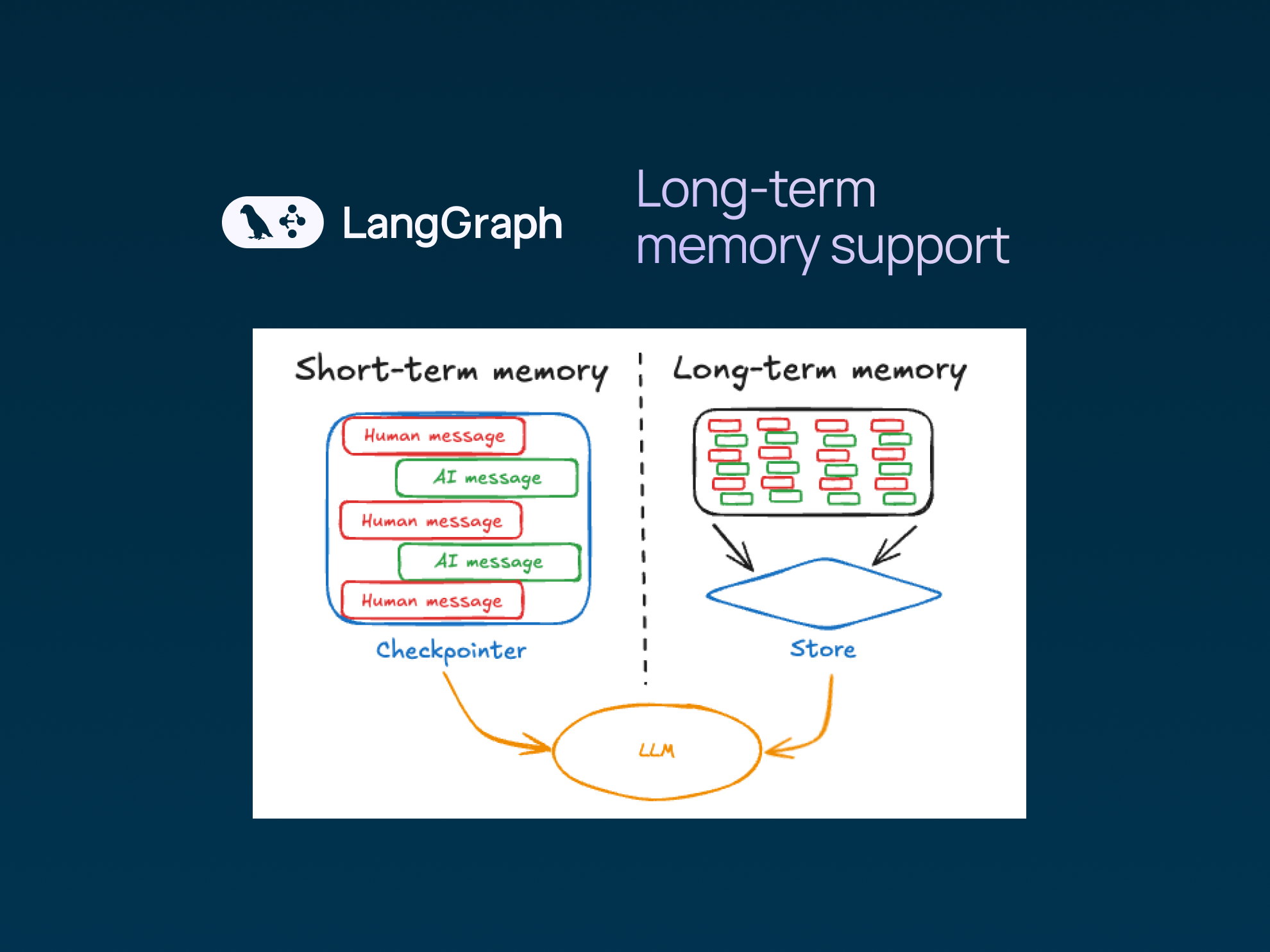
本日、LangGraphにおける長期記憶(Long-Term Memory)サポートへの第一歩となる機能を発表いたします。この機能は、PythonおよびJavaScriptの両方で利用可能です。長期記憶により、会話間で情報を保存および呼び出すことができるようになり、エージェントがフィードバックから学習し、ユーザーの好みに適応することが可能になります。この機能はオープンソースライブラリの一部であり、LangGraph CloudおよびStudioの全ユーザーに対してデフォルトで有効化されています。
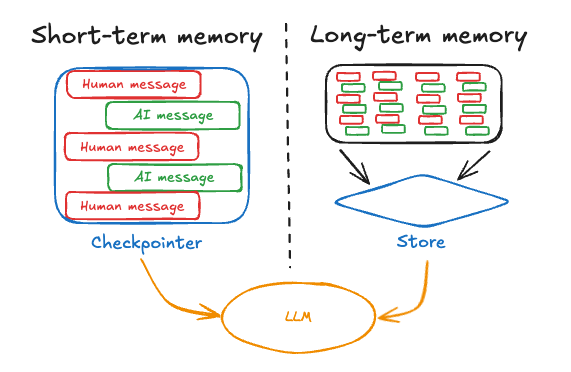
メモリ:短期(スレッドスコープ)から長期(クロススレッド)へ
メモリについて
現在、ほとんどのAIアプリケーションは金魚のようなもので、会話の間にすべての情報を忘れてしまいます。これは非効率であるだけでなく、AIが実行できることを根本的に制限するものです。
過去1年間、LangChainでは顧客と協力してエージェントにメモリ機能を実装してきました。この経験を通じて、私たちは重要な洞察を得ました。AIのメモリには普遍的に完璧なソリューションは存在しないということです。各アプリケーションにとって最適なメモリは、依然として非常にアプリケーション固有のロジックを含んでいます。その延長線上で、現在の「エージェントメモリ」製品の多くは高レベルすぎます。これらは万能型の製品を作ろうとしますが、多くのプロダクションユーザーのニーズを満たすことができていません。
この洞察に基づき、私たちは初期のメモリサポートをLangGraphにシンプルなドキュメントストアとして構築しました。高レベルな抽象化は容易にその上に構築できます(以下で示す通り)、その基盤にはすべてのLangGraphアプリケーションに組み込まれた、シンプルで信頼性の高い永続的なメモリ層が存在します。
スレッド間メモリ
LangGraphは、チェックポインターを使用して、単一の会話スレッド内のステータスを管理することに常に優れていました。この「短期メモリ」により、単一の会話内でコンテキストを維持できます。
本日、私たちはこの機能を複数のスレッドにまたがって拡張し、エージェントがLangGraphフレームワーク内で統合された状態で、複数の会話にわたる情報を簡単に記憶できるようにしました。
スレッド間メモリの核心は、保存したメモリをput(格納)し、get(取得)し、search(検索)できる永続的なドキュメントストアであるという点です。これらの基本的なプリミティブにより、以下のことが可能になります:
- スレッド間永続化:異なる会話セッション間で情報を保存および呼び出す機能。
- 柔軟なネームスペース管理:カスタムネームスペースを使用してメモリを整理し、異なるユーザー、組織、またはコンテキストのデータ管理を容易にします。
- JSON ドキュメントストレージ:メモリを JSON 形式で保存し、操作と取得を容易にします。
- コンテンツベースフィルタリング:ネームスペースを超えてコンテンツに基づいてメモリを検索します。
これらの概念をより深く理解するために、開始方法に関する枠組みとガイダンスを提供する一連のドキュメントを準備しました:
- メモリの概念を解説するコンセプトビデオ
- LangGraph Python 版および JS 版におけるメモリに関するコンセプトガイド
- Python 版および JS 版でスレッド間でメモリを共有する方法に関するハウツーガイド
実践的な実装
アプリケーションで長期記憶を実装し始めるお手伝いとして、新しい LangGraph テンプレート を準備しました:
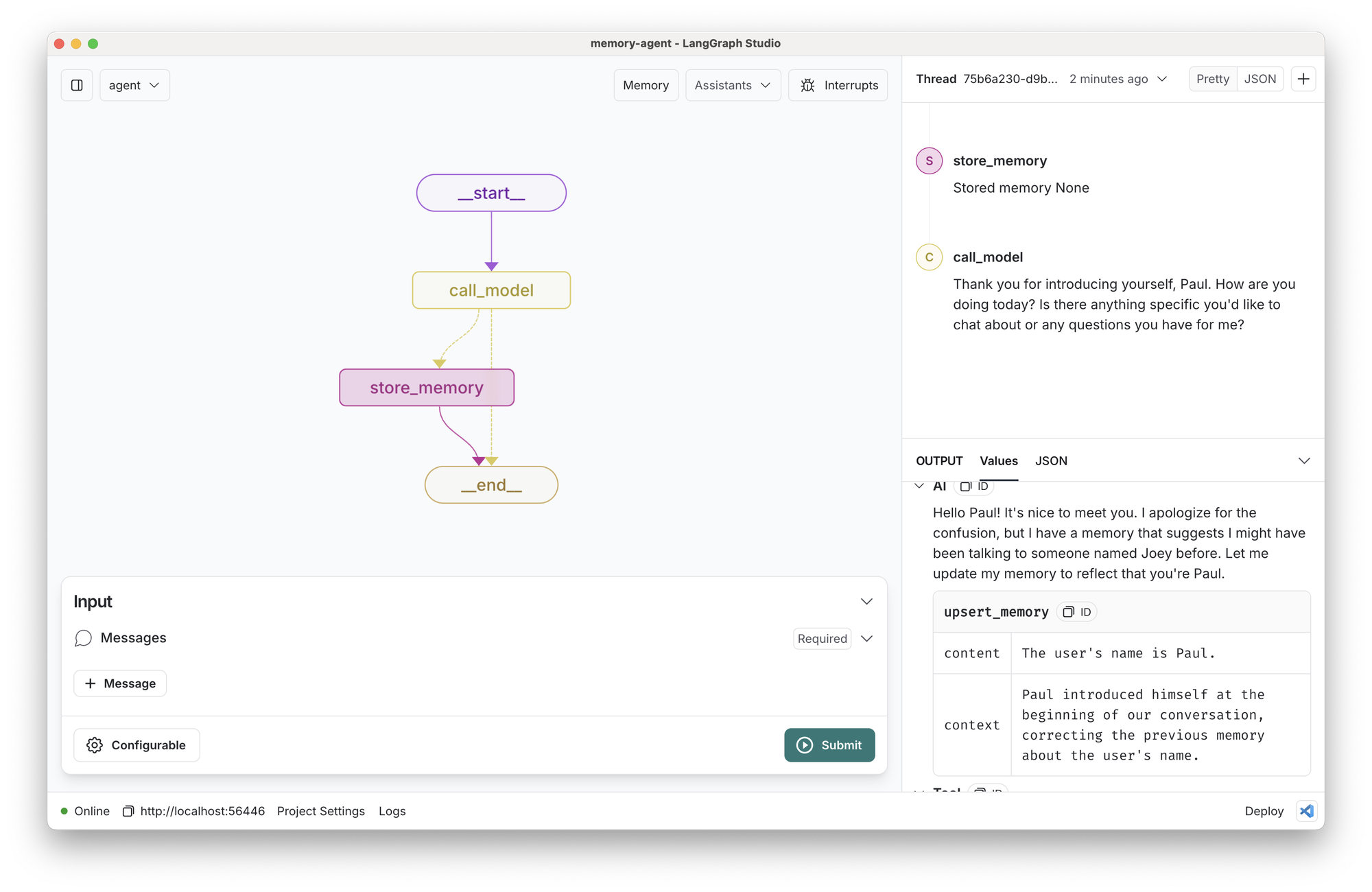
この LangGraph テンプレートは、独自のメモリを管理するチャットボットエージェントを示しています。これに必要な主要なリソースは以下の通りです。
- 実装手順を解説するエンドツーエンドのチュートリアルビデオ
- Python 版の LangGraph Memory Agent
- JavaScript 版の LangGraph.js Memory Agent
これらのリソースは、LangGraph で長期記憶を活用する一つの方法を示しており、概念と実装のギャップを埋めるものです。
これらの資料をご覧いただき、LangGraph プロジェクトに長期記憶(Long-Term Memory)を組み込む実験を行っていただくことをお勧めします。これまでと同様、皆様からのフィードバックを歓迎し、これらの新しい機能があなたのアプリケーションでどのように活用されるかを楽しみにお待ちしております。
関連コンテンツ

企業アナウンス
2026年4月:LangChain ニュースレター

LangChain チーム
2026年4月27日

4
分
企業アナウンス
2026 Interrupt のプレビュー:エンタープライズ規模のエージェント

Becca Weng
2026年4月9日
3
分

企業アナウンス
2026年3月:LangChain ニュースレター
LangChain チーム
2026年4月1日
4分

エージェントの真の動作を確認する
LangSmithは、当社のエージェントエンジニアリングプラットフォームであり、開発者がすべてのエージェントの決定をデバッグし、変更を評価し、ワンクリックでデプロイすることを支援します。
原文を表示
Today, we are excited to announce the first steps towards long-term memory support in LangGraph, available both in Python and JavaScript. Long-term memory lets you store and recall information between conversations so your agent can learn from feedback and adapt to user preferences. This feature is part of the OSS library, and it is enabled by default for all LangGraph Cloud & Studio users.
On Memory
Most AI applications today are goldfish; they forget everything between conversations. This isn't just inefficient— it fundamentally limits what AI can do.
Over the past year at LangChain, we've been working with customers to build memory into their agents. Through this experience, we've realized something important: there's no universally perfect solution for AI memory. The best memory for each application still contains very application specific logic. By extension, most "agent memory" products today are too high-level. They try to create a one-size-fits-all product that doesn't satisfy many production users' needs.
This insight is why we have built our initial memory support into LangGraph as a simple document store. High level abstractions can be easily built on top (as we will show below), but beneath it all is a simple, reliable, persistent memory layer that comes built in to all LangGraph applications.
Cross-Thread Memory
LangGraph has always excelled at managing state within a single conversation thread using checkpointers. This "short-term memory" lets you maintain context within a single conversation.
Today, we're extending that capability across multiple threads, enabling your agents to easily remember information across multiple conversations, all integrated in the LangGraph framework.
At its core, cross-thread memory is "just" a persistent document store that lets you put, get, and search for memories you've saved. These basic primitives enable:
- Cross-Thread Persistence: Store and recall information across different conversation sessions.
- Flexible Namespacing: Organize memories using custom namespaces, making it easy to manage data for different users, organizations, or contexts.
- JSON Document Storage: Save memories as JSON documents for easy manipulation and retrieval.
- Content-Based Filtering: Search for memories across namespaces based on content.
For a deeper understanding of these concepts, we've prepared a set of documents to provide framing and guidance on how to get started:
- A conceptual video walking through memory concepts
- Conceptual guides on memory in LangGraph Python & JS
- How-to guide for sharing memories across threads in Python & JS
Practical Implementation
To help you get started with implementing long-term memory in your applications, we've prepared a new LangGraph template:
This LangGraph Template shows a chatbot agent that manages its own memory. Key resources for this are
- An end-to-end tutorial video walking through the implementation
- A LangGraph Memory Agent in Python
- A LangGraph.js Memory Agent in JavaScript
These resources demonstrate one way to leverage long-term memory in LangGraph, bridging the gap between concept and implementation.
We encourage you to explore these materials and experiment with incorporating long-term memory into your LangGraph projects. As always, we welcome your feedback and look forward to seeing how you apply these new capabilities in your applications.
Related content
Company Announcements
April 2026: LangChain Newsletter
The LangChain Team
April 27, 2026
4
min
Company Announcements
Previewing Interrupt 2026: Agents at Enterprise Scale
Becca Weng
April 9, 2026
3
min
Company Announcements
March 2026: LangChain Newsletter
The LangChain Team
April 1, 2026
4
min
See what your agent is really doing
LangSmith, our agent engineering platform, helps developers debug every agent decision, eval changes, and deploy in one click.
関連記事
今日のまとめ
AI日報で今日の重要ニュースをまとめ読み