「エントリーレベル」の門番:Textstat を用いた求人票の監査
本文の状態
日本語全文を表示中
詳細モードで約6分の本文を読めます。
同じ出来事の情報源
この情報源を基点に整理
KDnuggets
KDnuggets は、テキスト統計ライブラリ Textstat を活用し、求人票が実際のエントリーレベルに合致しているかを客観的に監査する手法を提案しています。
Source Article
元記事を日本語で読む
本文に関係しない購読案内、埋め込み通知、サイト内プロモーションは除いています。
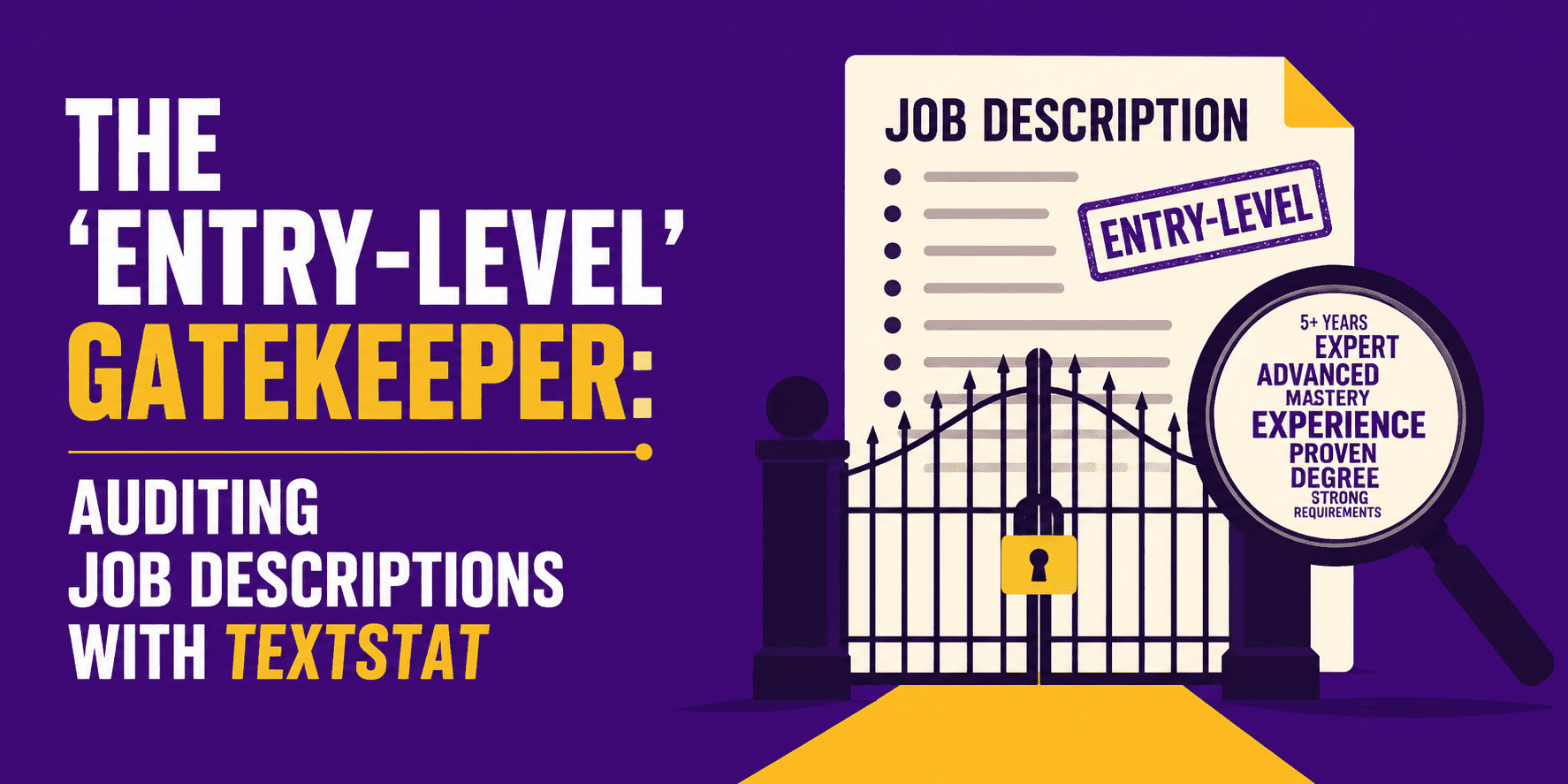 image**
# イントロダクション
「エントリーレベル」の求人票で、候補者の要件に「相乗効果を最適化するためにクロスファンクショナルなパラダイムを活用する」といった解読不能な要素が含まれているもの、あるいはそれ以上にひどいものに出会ったことはありませんか?人事文書が密度の高い専門用語やビジネス用語で埋め尽くされていると、それは単に読者を混乱させるだけでなく、有能な求職者さえも遠ざけてしまいます。包括性への第一歩はアクセシビリティである以上、監査プロセスを通じて求人票のトーンをアクセシブルなものに保つことをなぜ検討しないのでしょうか?
この記事では、Python やその自然言語処理(NLP)ライブラリである Textstat などの無料かつオープンソースのツールを使用して、公開前に求人票から「門番となる言葉」を捉えるプロセスを自動化するスクリプトを構築する方法を示します。
# 重要な要素:ガンニング・フォグ指数
ガンニング・フォグ指数(Gunning Fog Index) — Textstat では textstat.gunning_fog を使用して利用可能 — は、特にエントリーレベルの求人票を対象にテキストを監査するための優れたアプローチです。本質的に、この指数は、ある人がテキストを初めて読む際に理解するために必要な正式な教育の年数を推定するために利用できます。
その計算は、主に2つの要因の観察に基づいています:平均文の長さと複雑な用語の割合です。ここでいう複雑な用語とは、通常3音節以上の単語を指します。なお、ビジネス用語では「運用化(operationalization)」や「方法論(methodologies)」といった多音節の流行語が濫用されることがよくあります。したがって、ガンニング・フォグ指数は、募集対象となる候補者にとって過度に複雑にならないよう求人記述を監査するという私たちの意図した目標に非常に近づくものです。言い換えれば、これは言語が明確でアクセスしやすいことを保証するのに役立ちます。この指数の値が低いほど、明確性とアクセシビリティが高まります。
Textstat を用いた例の監査
**
最初の重要なステップは、まだ行っていない場合は Python 用の Textstat ライブラリをインストールすることです:
pip install textstat
スクリプトの中核ロジックは、入力テキスト(例えばエントリーレベルの求人記述)を監査することを目的とした再利用可能な関数に置かれます:
import textstat
def audit_job_description(job_text):
# ガンニング・フォグ指数の計算
fog_score = textstat.gunning_fog(job_text)
# スコアに基づいた包括性の判定
if fog_score < 10:
verdict = "アクセス可能で包括的。エントリーレベルに最適。"
elif 10 <= fog_score <= 14:
verdict = "注意:ゲートキーパー領域に近づいています。一部の用語を簡素化してください。"
else:
verdict = "ゲートキーパー警報:専門用語の密度が高いです。明確さのために書き直してください。"
整形されたレポートの返却
return {
"Gunning-Fog Score": fog_score,
"Verdict": verdict
}
前回の関数で行った手順は非常に単純です。まず、入力として渡されたテキスト(おそらく職務記述書)に対して、すぐに Gunning Fog スコア [Gunning-Fog Score] を計算します。このスコアは fog_score 変数に格納され、テキストの複雑度に基づいて三つの異なる判断を下すための単純な条件チェックを経ます。これは三色信号機システムのように機能します。
一般的に、Gunning Fog スコアが 10 未満のテキストはアクセスしやすく、エントリーレベルの職務記述書として理想的とみなされます。スコアが 10 から 14 の間は中程度の複雑さを持ち、14 を超える場合は非常に複雑であると判断され、大幅な修正が必要となります。
次に、この監査役をテストするために、二つの異なる例の職務記述書を渡してみましょう:
例 1: "ゲートキーパー" 職務記述書
complex_jd = """
The successful candidate will leverage cross-functional paradigms to optimize synergistic deliverables.
You will be expected to operationalize key performance indicators and facilitate continuous improvement methodologies
to maximize our return on investment and institutionalize core competencies across the organizational ecosystem.
"""
EXAMPLE 2: An "Inclusive" Job Description
inclusive_jd = """
We are looking for a team player to help us grow our marketing channels.
You will work closely with different teams to launch campaigns, track how well they do, and find new ways to improve.
Your goal is to help us reach more customers and share our brand story.
"""
print("--- Gatekeeper Job Description ---")
print(audit_job_description(complex_jd))
print("\n--- Inclusive Job Description ---")
print(audit_job_description(inclusive_jd))
Output:
--- Gatekeeper Job Description ---
{'Gunning-Fog Score': 30.364102564102566, 'Verdict': 'Gatekeeper Alert: High jargon density. Rewrite for clarity.'}
--- Inclusive Job Description ---
{'Gunning-Fog Score': 8.165986394557823, 'Verdict': 'Accessible & Inclusive. Great for entry-level.'}
Our auditor did a great job of spotting the first description as a clear "gatekeeper" — a barrier to entry — and recommending that it be rewritten for clarity and inclusivity. The second description scored a much lower 8.16 (compared to 30.36 for the first, which is comparable to postgraduate research papers in terms of language complexity), confirming it is well-suited for attracting entry-level candidates.
# Wrapping Up
求人情報は多くの場合、企業の入り口であり、特にオープンさが最も重要となる状況では、過度なビジネス用語が門番のように機能してしまいます。これはとくにエントリーレベルの職種において顕著です。この記事では、Textstat のガンニング・フォグ指数を活用し、複雑すぎる求人情報を特定するシンプルで自動化されたテキスト監査ツールを構築する方法を紹介しました。これにより、明確で直接的かつアクセスしやすい言語を保証し、すべてのエントリーレベルの候補者が応募できる状態を維持することができます。
Iván Palomares Carrascosa は、AI、機械学習、ディープラーニング、LLM におけるリーダー、作家、スピーカー、そしてアドバイザーです。彼は、現実世界で AI を活用する方法を他者に指導・支援しています。
原文を表示
**
# Introduction
Have you ever come across an "entry-level" job description in which candidates' requirements include impenetrable aspects like "leveraging cross-functional paradigms for optimizing synergistic outcomes", or even worse? When HR documents are full of dense jargon or business terms, they not only confuse readers but also scare talented, capable job seekers away. Since the first step towards inclusivity is accessibility, why not ensure your job descriptions keep an accessible tone through auditing processes?
This article shows how to use free, open-source tools like Python and its Textstat** natural language processing (NLP) library to build a script that automates the process of capturing "gatekeeping language" in job descriptions before publishing them.
# The Key Ingredient: Gunning Fog Index
**
The Gunning Fog Index** — available in Textstat by using textstat.gunning_fog — is an excellent approach to audit text, particularly entry-level job listings. In essence, this index can be utilized to estimate the number of years of formal education a person may need to comprehend a text on a first read.
Its calculation is based on observing two main factors: average sentence length and percentage of complex terms — typically words having three syllables or more. Note that business jargon commonly abuses multi-syllable buzzwords like "operationalization", "methodologies", and so on. Therefore, the Gunning Fog Index closely approaches our intended goal of auditing job descriptions to ensure they are not overly complex for the intended profile they are meant to attract. In other words, it helps ensure the language is clear and accessible. A lower value for this index means greater clarity and accessibility.
# Auditing an Example with Textstat
**
The first crucial step is to install the Textstat library for Python if you haven't done so yet:
pip install textstatThe core logic of our script will reside in a reusable function whose purpose is to audit an input text — e.g. an entry-level job description:
import textstat

def audit_job_description(job_text):
    # Calculating the Gunning Fog Index
    fog_score = textstat.gunning_fog(job_text)

    # Determining the inclusivity verdict based on the score
    if fog_score < 10:
        verdict = "Accessible & Inclusive. Ideal for entry-level."
    elif 10 <= fog_score <= 14:
        verdict = "Caution: Approaching gatekeeper territory. Simplify some terms."
    else:
        verdict = "Gatekeeper Alert: High jargon density. Rewrite for clarity."

    # Returning a formatted report
    return {
        "Gunning-Fog Score": fog_score,
        "Verdict": verdict
    }
The steps taken in the previous function are quite simple. First, we go straight to the point and calculate the Gunning Fog score for the text (presumably a job description) passed as input. This score, stored in fog_score, goes through a simple condition-based check to generate three different verdicts based on text complexity — much like a three-color traffic light system.
Generally speaking, a text with a Gunning Fog score below 10 is considered accessible and ideal for an entry-level job description. A score between 10 and 14 is moderately complex, and a score above 14 is deemed highly complex and in need of substantial revision.
Next, it's time to test our auditor by passing it two different example job descriptions:
# EXAMPLE 1: A "Gatekeeper" Job Description
complex_jd = """
The successful candidate will leverage cross-functional paradigms to optimize synergistic deliverables.
You will be expected to operationalize key performance indicators and facilitate continuous improvement methodologies
to maximize our return on investment and institutionalize core competencies across the organizational ecosystem.
"""

# EXAMPLE 2: An "Inclusive" Job Description
inclusive_jd = """
We are looking for a team player to help us grow our marketing channels.
You will work closely with different teams to launch campaigns, track how well they do, and find new ways to improve.
Your goal is to help us reach more customers and share our brand story.
"""

print("--- Gatekeeper Job Description ---")
print(audit_job_description(complex_jd))

print("\n--- Inclusive Job Description ---")
print(audit_job_description(inclusive_jd))
Output:
--- Gatekeeper Job Description ---
{'Gunning-Fog Score': 30.364102564102566, 'Verdict': 'Gatekeeper Alert: High jargon density. Rewrite for clarity.'}

--- Inclusive Job Description ---
{'Gunning-Fog Score': 8.165986394557823, 'Verdict': 'Accessible & Inclusive. Great for entry-level.'}
Our auditor did a great job of spotting the first description as a clear "gatekeeper" — a barrier to entry — and recommending that it be rewritten for clarity and inclusivity. The second description scored a much lower 8.16 (compared to 30.36 for the first, which is comparable to postgraduate research papers in terms of language complexity), confirming it is well-suited for attracting entry-level candidates.
# Wrapping Up
Job descriptions are often a company's front door, and excessive business jargon can act as a bouncer in situations where openness matters most — particularly for entry-level roles. This article showed how to use Textstat's Gunning Fog Index to build a simple, automated text auditor that identifies overly complex job descriptions, helping ensure clear, direct, and accessible language that keeps your job listings open to every entry-level talent.
Iván Palomares Carrascosa** is a leader, writer, speaker, and adviser in AI, machine learning, deep learning & LLMs. He trains and guides others in harnessing AI in the real world.
今日のまとめ
AIデイリーブリーフで今日の重要ニュースをまとめ読み