AI便分析アプリがユーザーの便画像データベースを販売しようとした件
本文の状態
日本語全文を表示中
詳細モードで約13分の本文を読めます。
同じ出来事の情報源
この情報源を基点に整理
404 Media
Reddit の投稿で、あるユーザーが AI による便分析アプリから収集した約 15 万枚の便画像を含むデータベースを販売する旨を発表し、プライバシー侵害の懸念が浮上しました。
Source Article
元記事を日本語で読む
本文に関係しない購読案内、埋め込み通知、サイト内プロモーションは除いています。
数週間前、大規模データセットの取引を目的とした Reddit の r/DHExchange サブレッドで、奇妙な投稿を見かけました。「私は何か貴重なものの巨大データベースを蓄積しているが、あなたが予想するものではない…15 万枚の便画像だ」という内容でした。
Ill_Car_7351 というユーザーが投稿したこの内容は、まさにその通りです。彼が数年前に立ち上げた AI による便分析アプリから収集された便のデータベースを販売しようとしています。要するに、約 2 万 5000 人の人々が自分の便の画像を撮影し、彼のアプリにアップロードしていました。彼はこれらの画像を収集・分析・注釈付けしており、現在はアクセス権の販売を検討しています。「15 万以上のラベル付きおよび分類された便(💩)画像を約 2 万 5000 人から入手しました。冗談抜きで、これには大きな価値があることは承知しています(入手が困難であり、機械学習 [machine learning] のトレーニングやがん研究などに有用ですが)、どうやって販売すべきか確信が持てません。まるで輝くコインの山に座っているようなものですが、誰が欲しいのか見つけられません」と投稿者は付け加え、「画像は極めて稀である」とし、どれほどの金額で売却できるかを模索しているとも述べています。
コメント欄には、主に恐怖や嫌悪感を示す人々の反応が見られました。「5 歳の時に先生から読み方を教わったが、その出来事を今では後悔している」という投稿もあれば、「何てことだ」というもの、さらに「他人の投稿を削除する方法は?」という投稿もありました。
投稿者にメッセージを送り、データベースの入手に興味があることを伝えた。これが「糞のインターネット(Internet of Shit)」への旅、ひいては AI 学習のために収集された極めて機微なユーザーデータを地下で販売する不快な世界への入り口となった。
この糞データベースは、Soft All Things という会社が開発した PoopCheck というアプリから提供されている。同社は、AI を用いて便の画像を分析し、「毎日の腸内健康スコア」を提供することを謳っている。「当社の AI は、ブリストル便スケールと高度なパターン認識技術を用いてあなたの糞を分析します。一貫性、色、形状に関する洞察とその消化器系への意味を得ることができます」と、アプリは宣伝している。ブリストル便スケール(Bristol Stool Scale)は、便を「小石のような別々の硬い塊」から「固体の断片のない水様便」まで、7 つの種類に分類するものである。
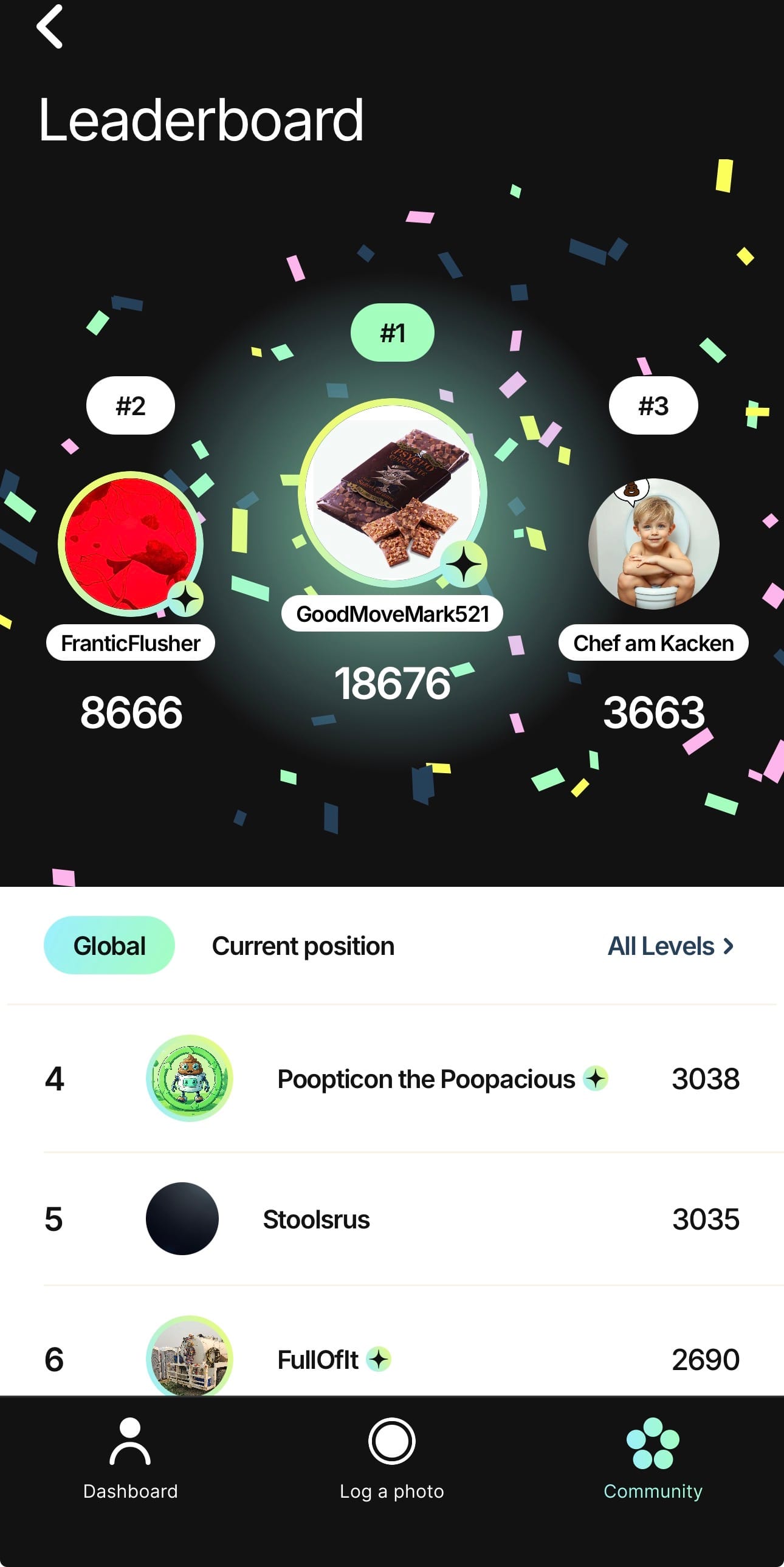
このアプリには、執筆時点では151,317件の「共有された便」からなるコミュニティ機能と、「リーダーボード」機能が備わっており、ユーザーは自身の便の画像を投稿して他のユーザーからのコメントを得たり、参加することでポイントを獲得したりできます。私が感じたところ、コミュニティ内の投稿は少し胃が痛みそうなものでした。「粘土のような感じ」「心配している」「過去3週間、断続的にこの問題に直面中」といったタイトルです。写真は自動的にコミュニティへ共有されるわけではなく、写真を撮影する際に「共有しますか?」と確認されます。
アプリ上の「人気」投稿には、他のコミュニティメンバーが寄生虫や大腸がんを患っているのではないかという推測が含まれるものがあり、いくつかの投稿のコメント欄では、元の投稿者に対してイベルメクチン(ivermectin)の使用を推奨する書き込みも見受けられました。
ユーザーは自身の便を他のユーザーと共有するオプションを持っていますが、アプリからは矛盾したメッセージが発せられています。つまり、アップロードされたデータが分析・注釈付けされ、他の便とともにパッケージ化されてAI企業へ販売される商業データベースの一部となるという事実についてです。
PoopCheck の App Store ページには「開発者はこのアプリからデータを収集していません」と記載されています。App Store ダウンロードページ内のプライバシーポリシーへのリンクでは、データの売却や共有について一切言及されておらず、「健康データは転送中および保存時に暗号化されます。写真は安全に処理されます。業界標準のセキュリティ対策を実装し、お客様のデータを保護します」と述べています。
PoopCheck ウェブサイトの「About」ページには「プライバシーファースト」と記載されています。「健康データは機微な情報です。そのため、プライバシーは単なる機能ではなく、当社の基盤です。写真は暗号化されており、いつでもすべてのデータを削除できます。私たちは、自分たちの健康アプリをどのように構築したいかを基準に PoopCheck を作りました」。FAQ でも「お客様のプライバシーが最優先事項です」と明記されています。
これは、実際にアプリを開いてアカウントを作成する際にユーザーが同意する「サービス契約」や「利用規約」とは全く異なるものです。サービス契約には、「便画像または健康関連データをアプリにアップロードすることにより、Soft All Things LLC に対し、研究、商業的活用、製品開発、第三者へのライセンス供与など、合法的な目的(これらに限られない)のために、当該コンテンツを使用、複製、改変、適応、配布、販売、ライセンス付与し、派生作品を作成するための、世界的かつ不可撤廃的な永続的無条件のロイヤリティフリーで完全支払い済みかつ譲渡可能かつ再ライセンス可能なライセンスを付与する」と明記されています。また、「画像およびデータは、AI 技術や機械学習モデルの作成、訓練、改善、商業化に使用される可能性があること、そしてそのようなモデルやデータから派生した出力が医療機関、研究機関、商業パートナーを含む第三者へライセンス供与または売却される可能性があることをユーザーは認識する」とあります。
さらに、「データは不可逆的に AI モデルおよび集約データセットに取り込まれる可能性がある。アカウントを削除しても、個人のプロファイルデータのみが削除され、すでに処理済みまたは AI モデルに取り込まれた匿名化されたデータ、集約データ、派生データの削除までは要求されない」とされています。「情報の共有」に関するセクションでは、会社は「AI およびデータライセンスを含むあらゆる事業目的のためにデータを共有または売却する権利を留保する」と追加で記載しています。
Reddit で Ill_Car_7351 にメッセージを送り、「こんにちは。あなたが投稿したデータベースに興味があります。探していることや、データが収集されたアプリの詳細について、もう少し教えていただけますか?また、データのサンプルなどがある可能性はありますか?」と尋ねました。するとすぐに返信があり、「こんにちは!このデータベースは実際のユーザーによって収集されました。アプリを立ち上げてから過去数年間で 25,000 人のユーザーが利用しました。ちなみにアプリ名は PoopCheck です。もし興味があれば見てみてください。メールで話しましょうか?データサンプルをお渡しできるかもしれません」とのことでした。
私は Soft All Things という会社の「Marco」という人物にメールを送りました。彼は PoopCheck の創設者の一人であると名乗っていました。Reddit で連絡を取り、データのサンプルに興味があると伝えたところ、実名のメールアドレスと本名を使用しました。
Marco はこう返信しました。「もちろんデータセットのサンプルをお送りできますが、画像フォルダと JSON データを含む Google Drive のリンクでよろしいでしょうか?ご希望であれば他の方法も検討できます。さて、実際に必要なデータセットのサイズはどのくらいですか?また、どのような用途でお使いになるのでしょうか?ご要望に合致しているか確認するためです」。
私は Marco に、10,000 件のデータを希望し、AI のトレーニングに使用すると伝えました。価格と、含まれるデータのタイプについて質問しました。
Marco は以下のように返信しました:
(※原文の続きは提供されていませんが、上記の文脈に基づき翻訳を完了します)
「各エントリごとに取得した主要項目を網羅する画像と JSON メタデータを含むフォルダが見つかるはずです。ご不明な点がございましたら、お気軽にお知らせください。
データセットの内容と価格オプションについてより具体的にイメージしていただくために:現在、AI によって検証済みの画像が 150,000 枚以上あります。そのうち約 5,000 枚は当社のチームメンバーによる手動レビューも受けており、AI の出力とラベル付けが確認されているため、この部分はより価値が高く、それに相応しい価格設定となっています。また、ブリストル便性状分類(Bristol Stool Scale)のタイプの中には他のタイプに比べて稀な種類もあるため、具体的なニーズによって利用可能なデータの種類は異なる可能性があります。
その点を踏まえた上で、価格オプションのおおよその見積もりを以下に示します:
• 10,000 枚の未レビュー画像(AI 検証済み)— $3,000
• 5,000 枚の完全な人間によるレビューおよび注釈付き(AI 検証の上追加)— $4,000
• 5,000 枚のレビュー済み + 5,000 枚の未レビュー — $5,000
データセットの構造やカバレッジに関するいくつかの点は、対面で説明する方がわかりやすいため、この件をさらに進めるために簡単な通話を行えれば幸いです。
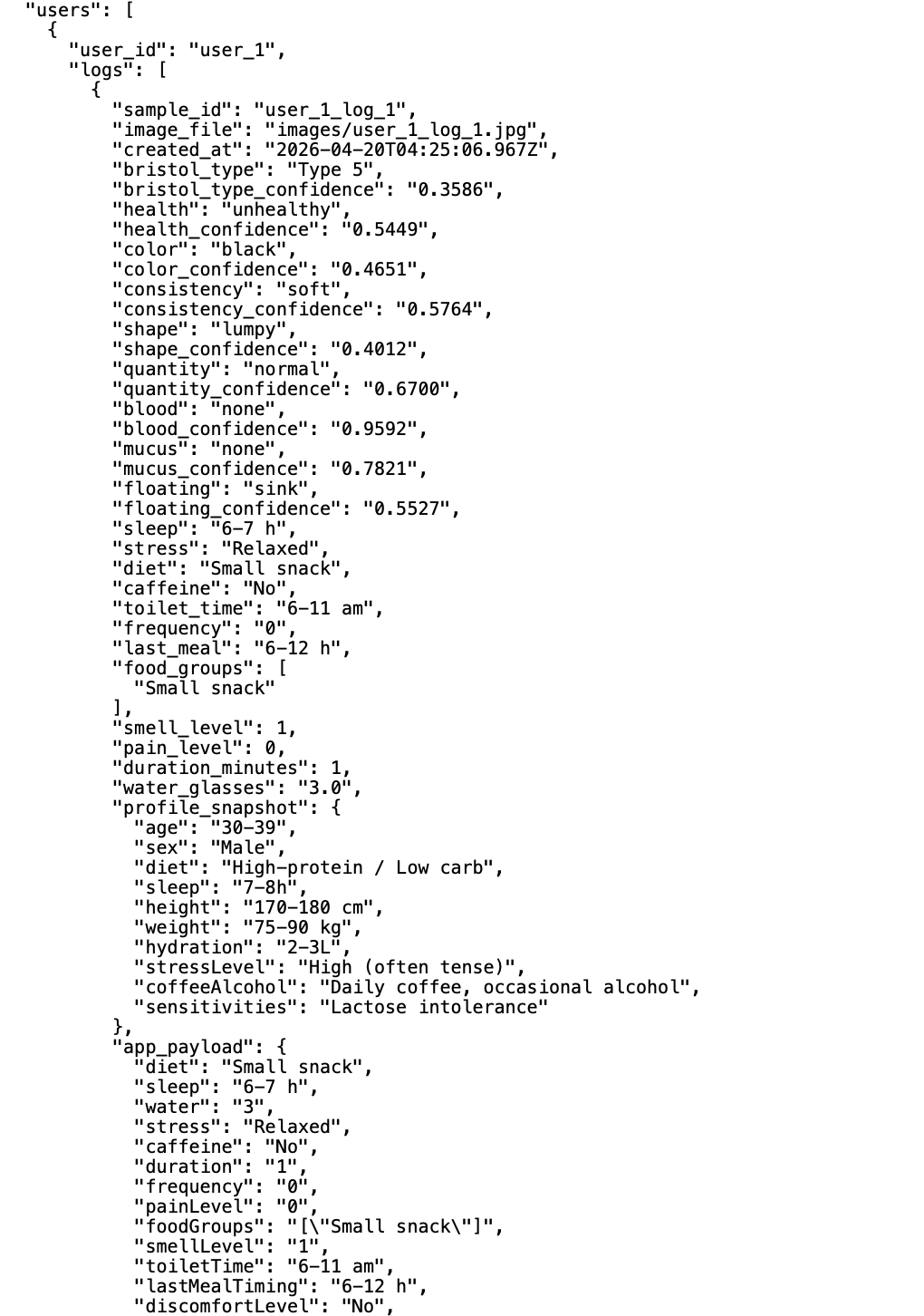
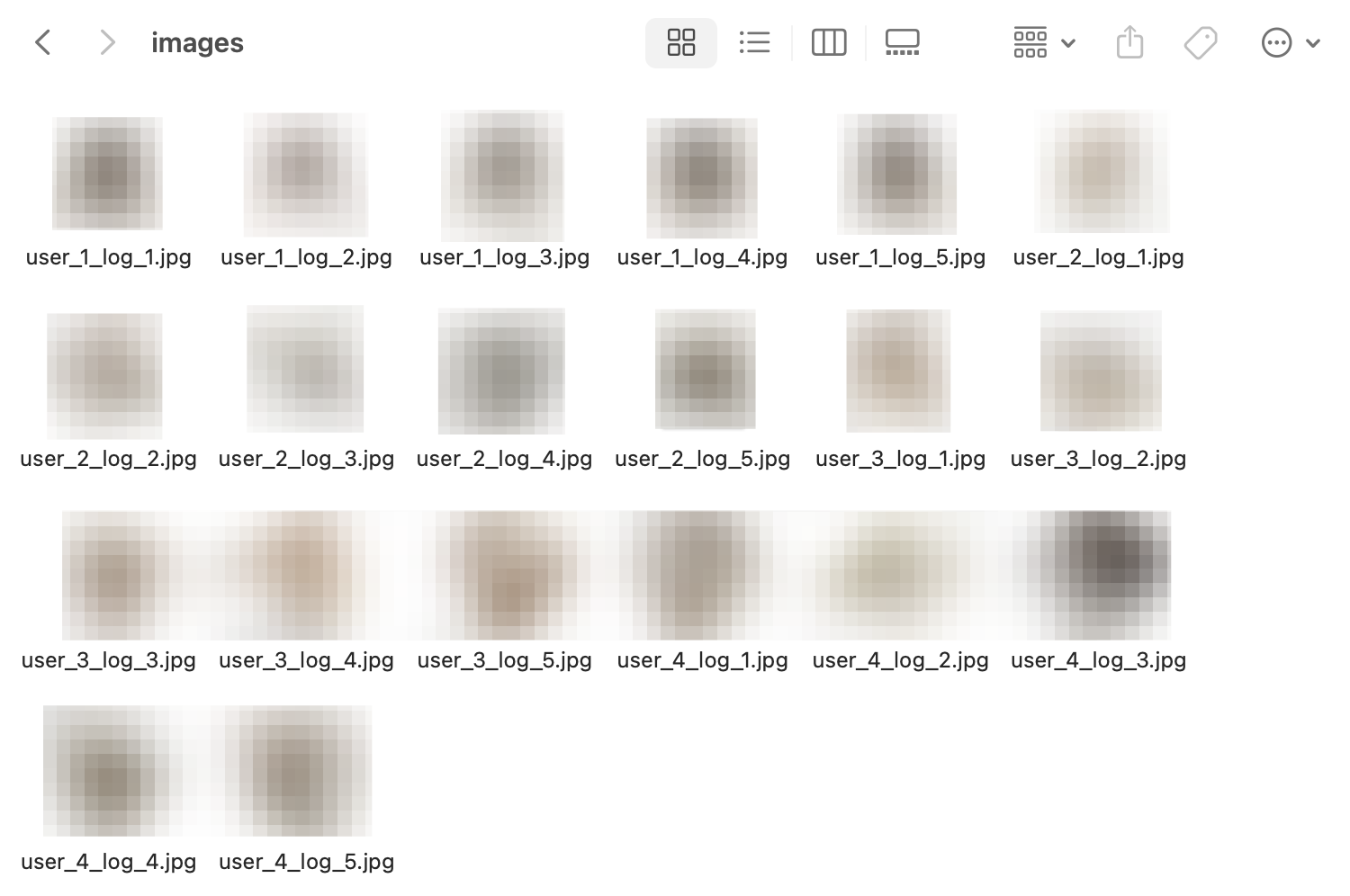 imageMarco 氏が私に送ったサンプルデータセットには、特定の 4 ユーザー(各ユーザーあたり便画像 5 枚)の便に関する画像 20 枚が含まれていました。各画像は、ユーザーが報告した一連のデータポイントと、各画像に対する AI 分析結果と紐付けられていました。AI が分析したデータポイントには、便を撮影した時刻、各便のブリストルタイプ(Bristol Type)、それが「健康的」か「不健康」か、「形状」と「性状」、便に血液や粘液が含まれているかどうか、量(「大」「正常」「小」)、そして「浮いている」かどうかなどが含まれます。これらの各データポイントには、AI の分析に対する自信度を示す「信頼度スコア」も付与されていました。
各画像にはまた、ユーザーが報告した情報も含まれており、これには「直近の食事は何時でしたか」「排便時に不快感はありましたか(「出しにくい」「灼熱感」「鋭い痛み」など)」「所要時間はどのくらいでしたか?」「普段より臭いが強かったですか?」「過去 12 時間以内にコーヒーやアルコールを摂取しましたか?」といった一連の質問への回答が含まれます。データにはさらに、年齢層、性別、身長、体重、「乳糖不耐症」や「過敏性腸症候群(IBS)」などの感受性といった人口統計情報も含まれていました。各画像は、「externalIndividualID」と呼ばれるフィールドを通じて特定のユーザーに紐付けられています。
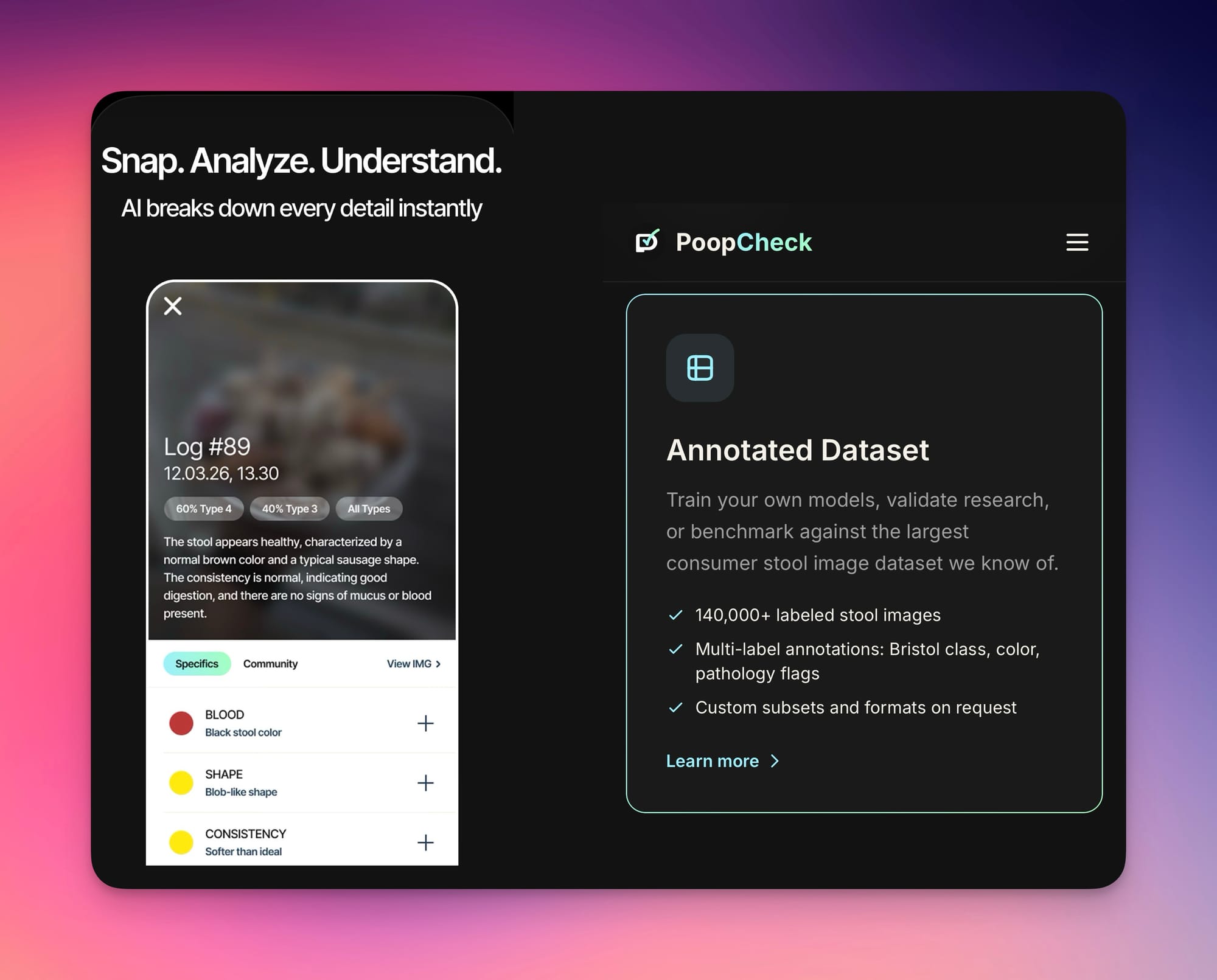
 imageSoft All Things は、自社が構築したデータベースについて静かにしているわけではありません。Poop Check のウェブサイトには「For Business」というページがあり、そこで同社のデータベースを宣伝しています。そこでは、「便の写真を構造化された健康レポートに変換する」"Stool Analysis API"(便分析 API)へのアクセスと、14 万枚以上の画像からなる "Annotated Dataset"(注釈付きデータセット)を提供し、「独自のモデルを訓練するためのもの」として販売しています。これは「私たちが知る限り最大の消費者用便画像データセットである」と宣伝されています。
便の写真をランダムな企業にアップロードする無料アプリが、そのデータをパッケージ化して販売することに焦点を当てたビジネスモデルを持つことは、それほど驚くべきことではないかもしれません。しかし、この種のデータ収集—まさに私たちの排泄物に関するもの—は、私たちがスマートフォンで行うほぼすべての行為が最終的には商品として売られる可能性があることを浮き彫りにしています。そもそもこれを販売のために宣伝している事実に基づけば、あらゆる種類のデータ、つまり私たちの実際の廃棄物さえもが AI による金鉱探査の対象となっていることがわかります。
研究は繰り返し示しているように、他のデータセットと組み合わせると、匿名化された「匿名」データが必ずしも匿名のままではないということです。昨年末頃、家電大手のコーラー社は、その便分析機能付きスマートトイレのカメラが、コーラー社に送信する画像を適切に暗号化していないことを研究者が示したことで、セキュリティ上の大混乱に見舞われました。ここで懸念されていたのは、あなたの排泄データが悪意のある第三者によって何らかの方法でアクセスされる可能性です。一方、PoopCheck の場合は、誰でも簡単にアクセス権を購入できます。
私が Marco 氏に PoopCheck とそのデータベースについて記事を書いていると伝えたところ、彼は私の連絡を断ち、質問にも一切答えませんでした。
原文を表示
 imageA few weeks ago, I came across a wild post on Reddit’s r/DHExchange, a subreddit for trading large datasets: “I hoarded a large database of something valuable, just not what’s [sic] you expect…150k stools images.”
The post, made by a user called Ill_Car_7351, was advertising exactly what it sounds like: A database of poop images, collected from an AI poop analyzing app that he had launched several years ago. Basically, 25,000 people had been taking images of their poop and uploading them to his app. He’d been collecting, analyzing, and annotating these images and now wanted to sell access to them: “I’ve got 150k+ labeled and classified images of from roughly 25K different people. Jokes aside, I know there’s a lot of value in it (hard to obtain, useful for ML [machine learning] training, cancer studies etc) but not sure on how to move about it. Feels like I’m sitting on a pile of shi..ny coins but can’t find who wants them.” The poster added that “the images are extremely rare,” and that he was trying to figure out how much money he could sell them for.
The comments were from people who were mostly horrified: “When I was 5 the teacher taught me how to read. I now regret that happened,” one read. “What in the fuck,” another read. “How to delete someone else’s post,” a third said.
I messaged the poster and told him I was interested in obtaining the database. Thus began my journey into the Internet of Shit and, by extension, the unpleasant world of the underground sale of highly sensitive, app-collected user data for AI training.
The poop database comes from an app called PoopCheck, an app made by a company called Soft All Things that purports to use AI to analyze images of one’s stool in order to give you a “daily gut health score.”
“Our AI analyzes your poop using the Bristol Stool Scale and advanced pattern recognition. Get insights on consistency, color, shape, and what they mean for your digestive health,” the app advertises. The Bristol Stool Scale classifies stools into one of seven types ranging from “separate hard lumps, like little pebbles” to “watery with no solid pieces.”
 image
image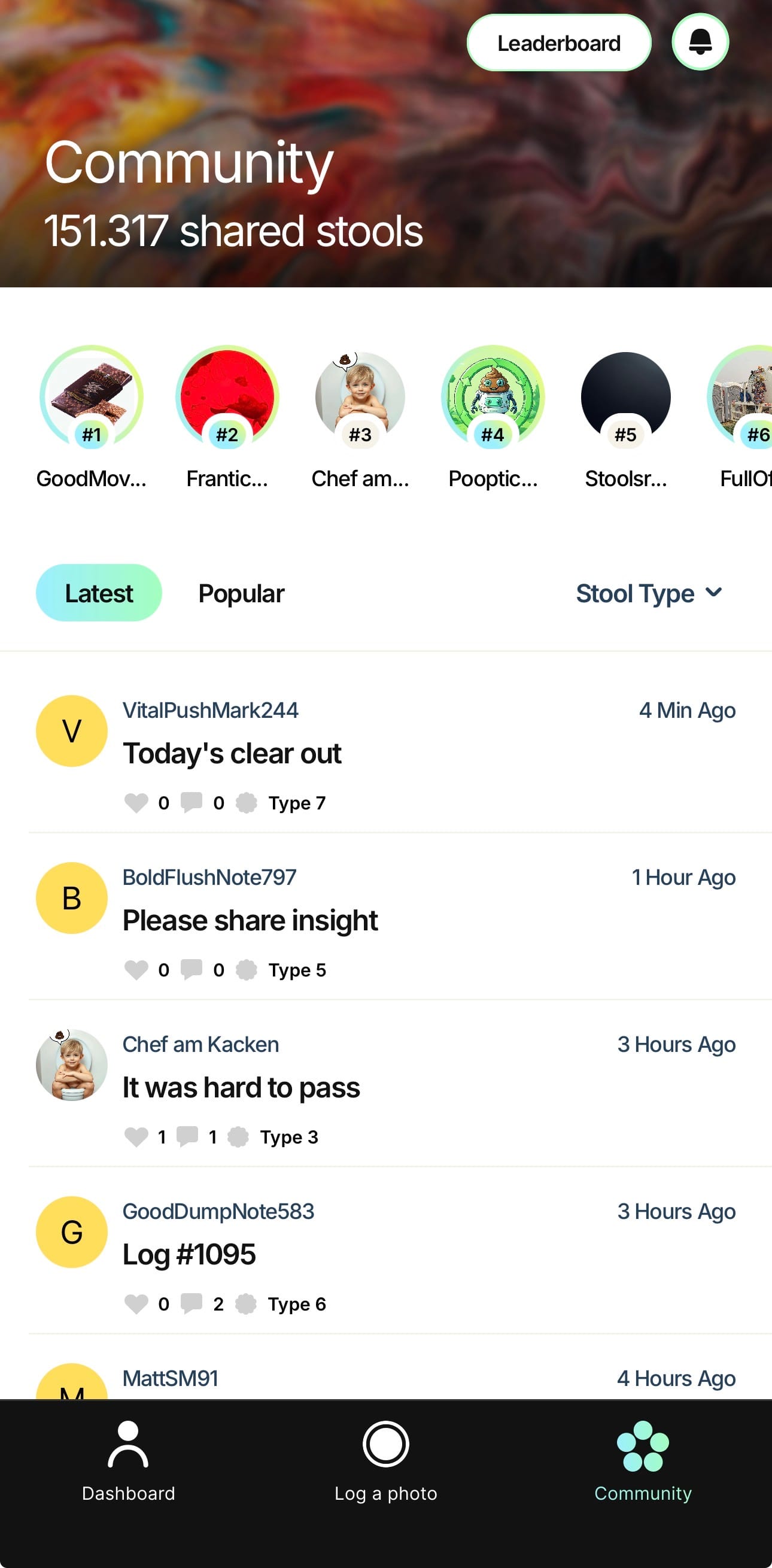 imageThe app also features a “community,” of 151,317 “shared stools” at the time of this writing and a “leaderboard,” where people can share images of their poop for commentary from other users and earn points for participating. I found the posts in the community a bit hard to stomach, with titles “like play dough,” “Concerned,” and “Dealing with this on and off for the past 3 weeks.” Pictures are not automatically shared to the community; when you take a photo it asks if you want to share it.
“Popular” posts on the app include people speculating as to whether their fellow community members have parasites or colon cancer; in the comments section of a few posts I saw people recommending ivermectin to the original poster.
Though users have the option to share their poops with other users, the app provides mixed messages about the fact that the data uploaded to the app will be analyzed, annotated, and packaged with other poops into a commercial database to be sold to AI companies.
On the App Store page for PoopCheck, it says “The developer does not collect any data from this app.” The link to the privacy policy from within the App Store download page does not mention anything about selling or sharing the data and says “your health data is encrypted in transit and at rest. Photos are processed securely. We implement industry-standard security measures to protect your data.”
The PoopCheck website’s About page states “Privacy First.” And “Health data is sensitive. That’s why privacy isn’t a feature, it’s our foundation. Your photos are encrypted. You can delete everything at any time. We built PoopCheck the way we’d want our own health apps built.” The FAQ also notes “your privacy is our priority.”
This is completely different from the “Service Agreement” and “Terms and Conditions” people agree to when they actually open the app and make an account. The Service Agreement states that “by uploading stool images or any health-related data to the App, you grant Soft All Things LLC a worldwide, irrevocable, perpetual, unconditional, royalty-free, fully-paid, transferable, sub licensable license to use, reproduce, modify, adapt, distribute, sell, license, and create derivative works from such content for any lawful purpose, including but not limited to research, commercial exploitation, product development, and third party licensing. You acknowledge that your images and data may be used to create, train, improve, and commercialize AI technologies and machine learning models, and that such models and any outputs derived from your data may be licensed or sold to third parties, including medical organizations, research institutions, and commercial partners.”
It adds that “your data may be irreversibly incorporated into AI models and aggregated datasets. Deletion of your account will remove your personal profile data but does not require the removal of anonymized, aggregated, or derivative data already processed or incorporated into AI models.” Under a section called “Sharing of Information,” it adds that the company reserves the right to share or sell the data “for any business purpose,” including “AI and Data Licensing.”
On Reddit, I messaged Ill_Car_7351 and said “Hi - am interested in this database you posted about. Can you share any more info about what you're looking for / details about the app where it was collected? also any chance there's like, a sample of what the data looks like etc?” They responded quickly and said “Hey! The db was gathered by real users, we had 25k users over the last couple years, since we launched the app. It’s called PoopCheck btw if you wanna see it. Let’s maybe talk via email? I’ll be happy to share a sample of the data if that interests you.”
I sent an email to someone named “Marco” at Soft All Things, who identified himself as one of the founders of PoopCheck. I said I had reached out on Reddit and was interested in a sample of the data. I used my real email address and real name.
“We can surely send you a sampling of the dataset, would a Google Drive link containing an image folder and JSON data work? We can also figure out other ways if you prefer,” Marco said. “In terms of the actual dataset you need, what would be the size of it for your needs? And what would you be using it for? Just so we can make sure it’s actually a good fit for your use case.”
I told Marco that I wanted 10,000 pieces of data and said I would use it for AI training. I asked him for pricing and what type of data was included.
Marco responded:
“You'll find a folder with images and JSON metadata covering the key fields we capture per entry. Let us know if you have any questions about it.
To give you a better idea of the dataset and pricing options: we currently have over 150,000 images validated by AI. Around 5,000 of these have also been manually reviewed by a member of our team, who verified the AI output and labeling, making this portion more valuable and priced accordingly. It's also worth noting that certain types on the Bristol Stool Scale are rarer than others, so availability may vary depending on your specific needs.
With that in mind, here there is an estimation of pricing options:
• 10,000 unreviewed images (AI-validated) — $3,000
• 5,000 fully human-reviewed & annotated (on top of AI validation) — $4,000
• 5,000 reviewed + 5,000 unreviewed — $5,000
It would be great to have a quick call to take this further as there are a few things about the dataset's structure and coverage that are easier to walk through live.”
imageThe sample dataset Marco sent me included 20 images of poop from four specific users (five poops each). Each image was tied to a series of user-reported data points as well as AI analyses of each image. AI-analyzed datapoints included the time the poop was taken, the Bristol Type of each poop, whether it was “healthy” or “unhealthy,” the “shape” and “consistency,” whether there was blood or mucus in the poop, and the quantity (“large,” “normal,” or “small”), and whether it was “floating” or not. Each of these data points also had a “confidence” score for how confident the AI was in its analysis. Each image also had user-reported information, which included the answers to a series of questions including “when did you have your last meal,” “any discomfort while pooping? (“Hard to pass;” “burning”; “sharp pain” etc); “How long did it take?” “Did it smell stronger than usual?” “Coffee or alcohol in the last 12 hours?” The data also included demographic information, which includes age ranges, sex, height, weight, and sensitivities such as “lactose intolerance” or “irritable bowel syndrome.” Each image is tied to a specific user through a field called “externalIndividualID.”
imageSoft All Things is not exactly quiet about the database that it has created. On the Poop Check website, it has a page called “For Business,” which advertises its database. It sells access to both the “Stool Analysis API,” which “turns a stool photo into a structured health report,” as well as the “Annotated Dataset,” of 140,000+ images to “train your own models.” It advertises this as the “largest consumer stool image dataset we know of.”
It maybe should not be terribly surprising that a free app in which you upload images of your poop to a random company would have a business model focused on packaging and selling that data. But this type of data collection—of our literal poop—highlights how almost anything we do on our phones can ultimately end up for sale. The fact that it is advertising this for sale at all indicates that there is an AI goldrush for any and all types of data, even our literal waste.
Research has shown, over and over again, that de-identified “anonymous” data doesn’t necessarily remain anonymous when combined with other datasets. Toward the end of last year, the appliance giant Kohler endured a security shitshow when a researcher showed that its stool-analyzing smart toilet camera was not actually properly encrypting the images that it sent to Kohler. The concern there was that your poop data would be somehow accessed by bad actors. In the case of PoopCheck, anyone can simply buy access.
After I told Marco I was writing an article about PoopCheck and its database, he stopped responding to me and did not answer any of my questions.
関連記事
今日のまとめ
AIデイリーブリーフで今日の重要ニュースをまとめ読み