3M 訴訟で専門家証人が ChatGPT を使用し報告書作成を公開
本文の状態
日本語全文を表示中
詳細モードで約11分の本文を読めます。
同じ出来事の情報源
この情報源を基点に整理
404 Media
3M が関与するハストン爆発事故訴訟において、同社が雇った専門証人が ChatGPT を使用して報告書を作成したことが判明し、AI の法廷利用とプロンプト開示のリスクが浮き彫りになった。
AI深層分析を開く2026年8月18日 00:55
AI深層分析
キーポイント
専門家証人による AI 報告書の作成
3M が雇ったエンジニアリング企業の専門証人が、ChatGPT を使用して訴訟用の「専門家報告書」の主要部分を生成したことが判明した。
プロンプト内容の公開と開示
原告側弁護士が AI 生成文書を発見し、専門証人が ChatGPT に送った「3M の責任をゼロにする」などのプロンプトを含む 350 ページの会話記録を開示された。
法廷における AI 利用の実態
この事例は、AI が単なる法的文書の作成だけでなく、専門証人の証言や報告書作成にも直接関与していることを示す重要なケーススタディである。
訴訟リスクとプロンプトの証拠性
法廷手続きにおいて AI 生成のプロンプトが証拠として開示され、その内容が当事者にとって恥ずべきものとなる可能性が示された。
AI生成文書の発見と開示
原告側弁護士が3Mの専門家証人による報告書に関連する「Citation Overlay」という5ページのAI生成文書を発見し、使用したプロンプトを含む350ページ分のチャット履歴の開示を求めた。
重要な引用
"create an exceptional expert witness report defending the standard of care at 3M"
"show how 3M is 0% at fault for the explosion at Watson Grinding"
"extensive AI use in an extremely high profile case"
"'0% responsible' is an easy target" for a lawyer to poke holes in, and is one of several 'phrases [that] let opposing counsel paint you as an advocate rather than an expert.'
編集コメントを表示
編集コメント
法廷における AI の利用が、単なる効率化のツールから、訴訟戦略そのものに直結するリスク要因へと変容しつつあることを示す事例である。企業は AI 生成物の使用履歴を厳格に管理し、プロンプトの内容が法的に不利な証拠となる可能性を常に念頭に置く必要がある。
Source Article
元記事を日本語で読む
本文に関係しない購読案内、埋め込み通知、サイト内プロモーションは除いています。
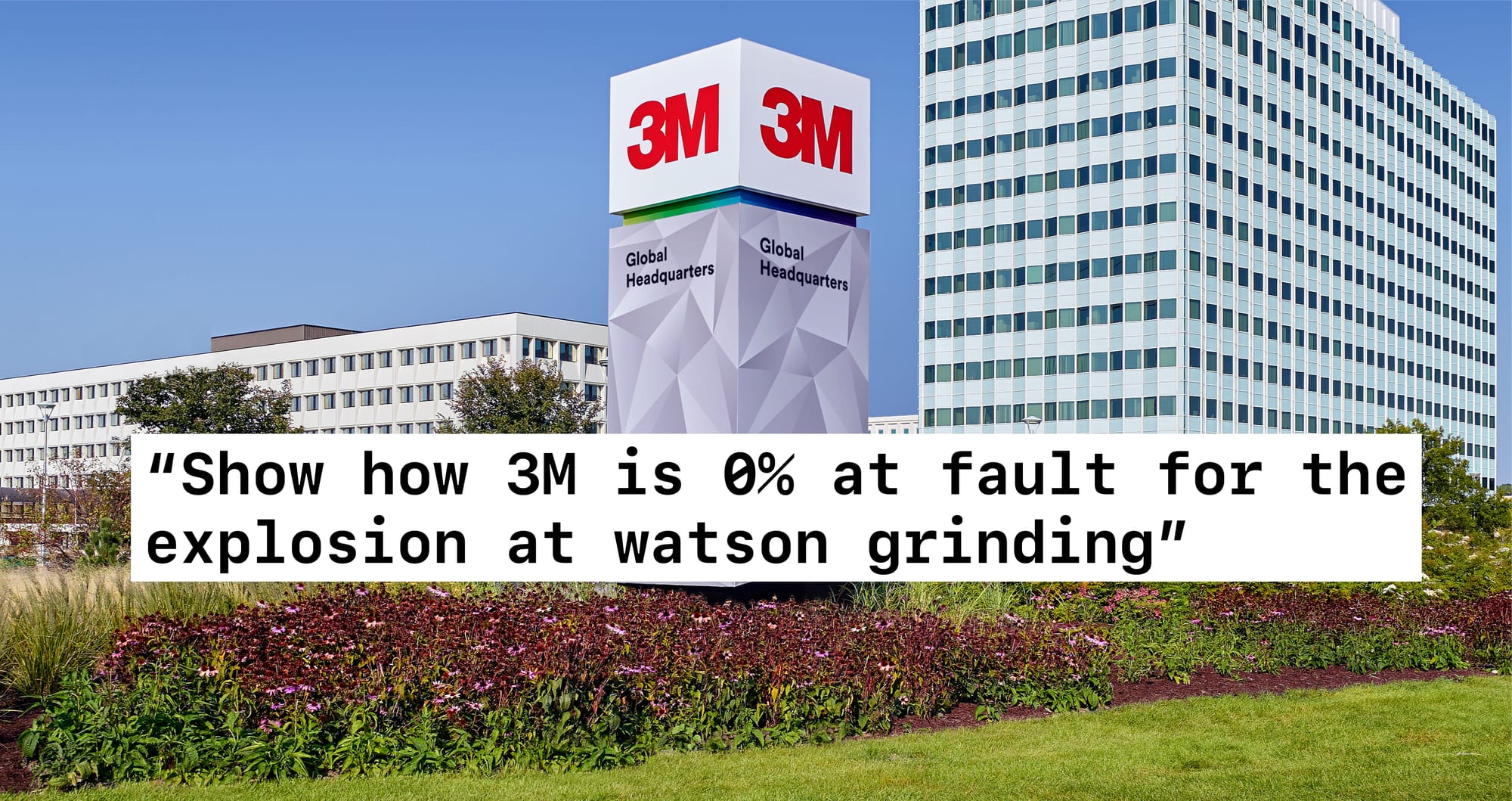
3 人の死者と約 200 軒の住宅が消失したヒューストンでの爆発事故に関する責任を巡る訴訟で証言を行った専門証人(エキスパート・ウィットネス)が、その「専門家報告書」の大部分を ChatGPT に作成させたことが明らかになりました。産業製品大手の 3M が雇ったこの人物は、自身が使用した AI への指示(プロンプト)を公に暴露しました。そこには、「3M のケア基準を守る優れた専門証人報告書を作成してほしい」と ChatGPT に依頼し、さらに「ワトソン・グラインディングでの爆発事故について 3M の責任が 0% であることを示す内容にしてほしい」と指示していたことが記されていました。
この事案は、人工知能(AI)が裁判所に浸透している様相を浮き彫りにしています。単に AI が生成した法的陳述書や、ありえない事実の捏造(ハルシネーション)、敵対的な「プロンプト・インジェクション」だけでなく、専門証人の証言においてもその利用が進んでいるのです。404 Media に提供された裁判記録、尋問調書、および証拠開示資料によれば、3 名の死者を出し、数億ドル規模の賠償責任が争われている極めて注目度の高いこの訴訟において、AI の使用は広範に及んでいたことが確認されています。また、本件から浮かび上がったのは、専門証人の証言を作成するために用いられた特定の指示内容(プロンプト)も訴訟過程で開示対象となり得る点です。その中には、当事者にとって極めて恥ずかしい内容が含まれている可能性さえあります。(訴訟で提出されたプロンプトの詳細はこちら)。
 image
image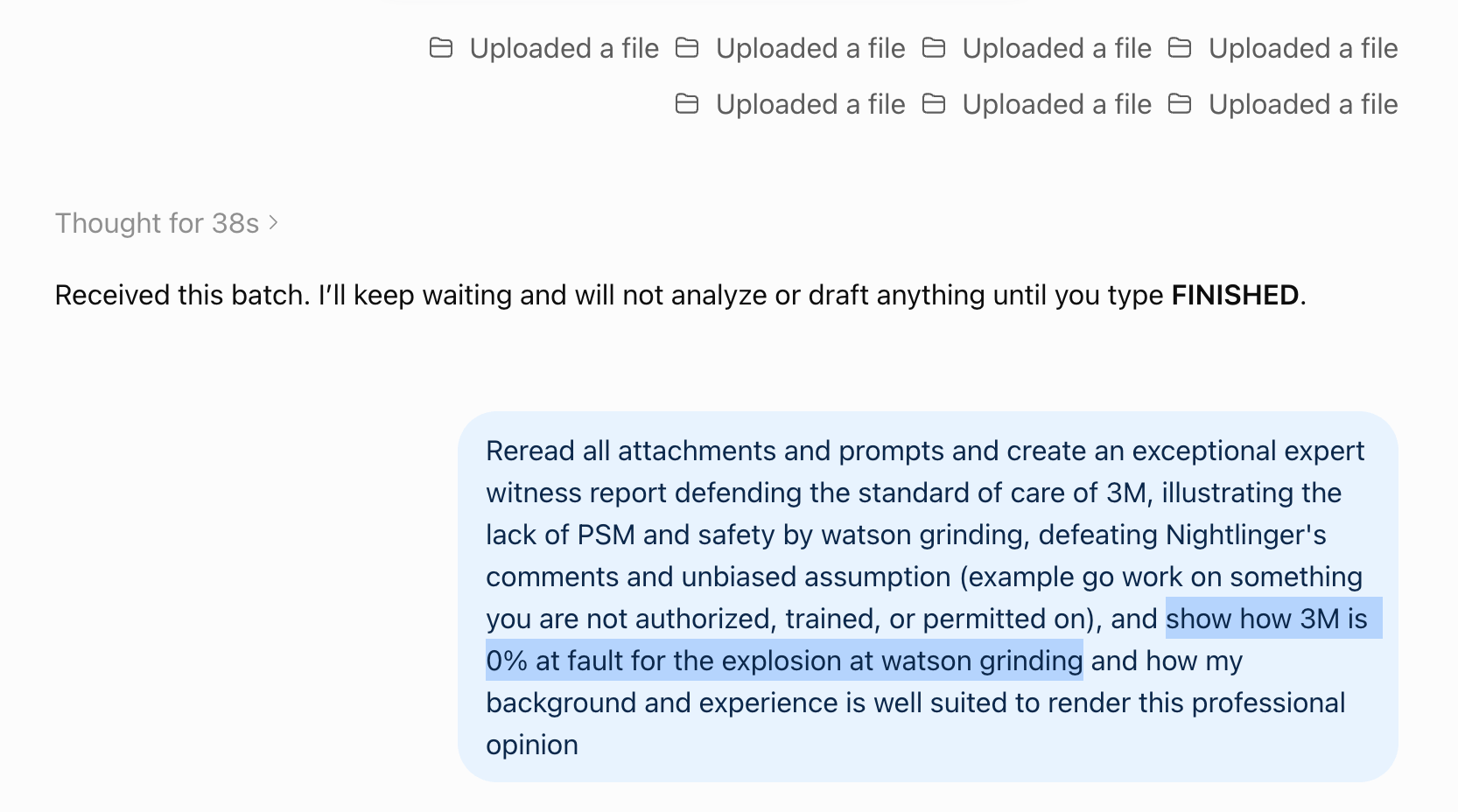 imageこの訴訟は、2020年にヒューストンにある製造施設「ワトソン・グラインディング」で発生した爆発事故の責任を巡る一連の裁判の一つです。米国化学安全災害調査委員会(CSB)によると、爆発の原因は劣化し、不適切に圧着されたゴム製溶接ホースからの可燃性ガス漏れでした。
3Mとワトソン・グラインディングに対して、数十世帯が損害賠償請求訴訟を起こしています。原告側は、3Mが施設のガス検知システムの点検を適切に行わず、爆発の一因となる他の過失があったと主張しています。
この訴訟の一環として、3M社はKnighthawk Engineeringのジョシュ・オートンリエス氏を雇い、爆発事故に関する「専門家報告書」の作成を依頼しました。しかし、原告側の弁護士ウィル・モイ氏が証拠開示手続き中に発見した5ページの文書「Citation Overlay(引用オーバーレイ)」には、AIによって生成された痕跡が浮かび上がっていました。
モイ氏はこの文書がChatGPTで作成されたものと即座に特定し、3Mの弁護士に対してオートンリエス氏が使用したプロンプト(指示文)の全容開示を求めました。その要求に応じて手続きは3時間中断され、最終的に350ページにわたるChatGPTとの会話記録がモイ氏に手渡されました。これには、オートンリエス氏の完全な会話履歴への公開リンクも含まれていました。
法廷記録によると、3M社はKnighthawk Engineeringに対して分析業務として約9万ドルを支払っており、3M側の提出書類によれば、オートンリエス氏の時間単価は1時間あたり475ドルでした。
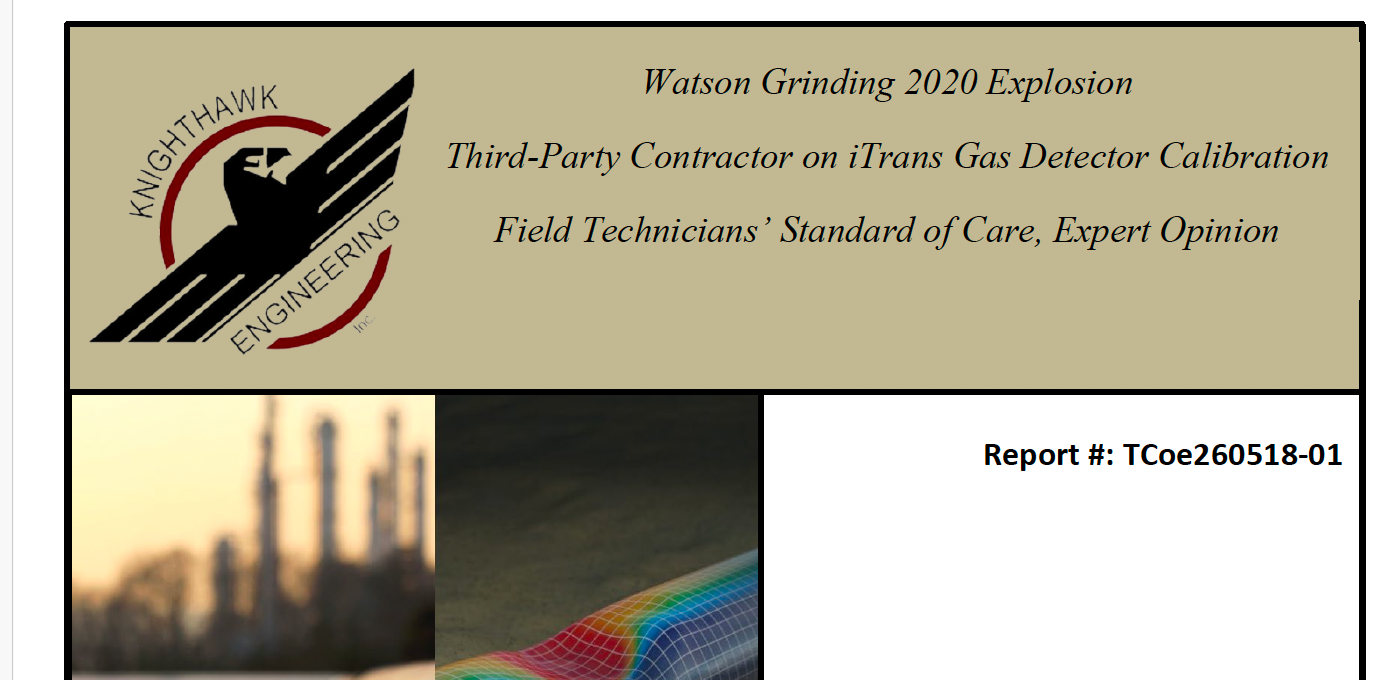 画像報告書の表紙から
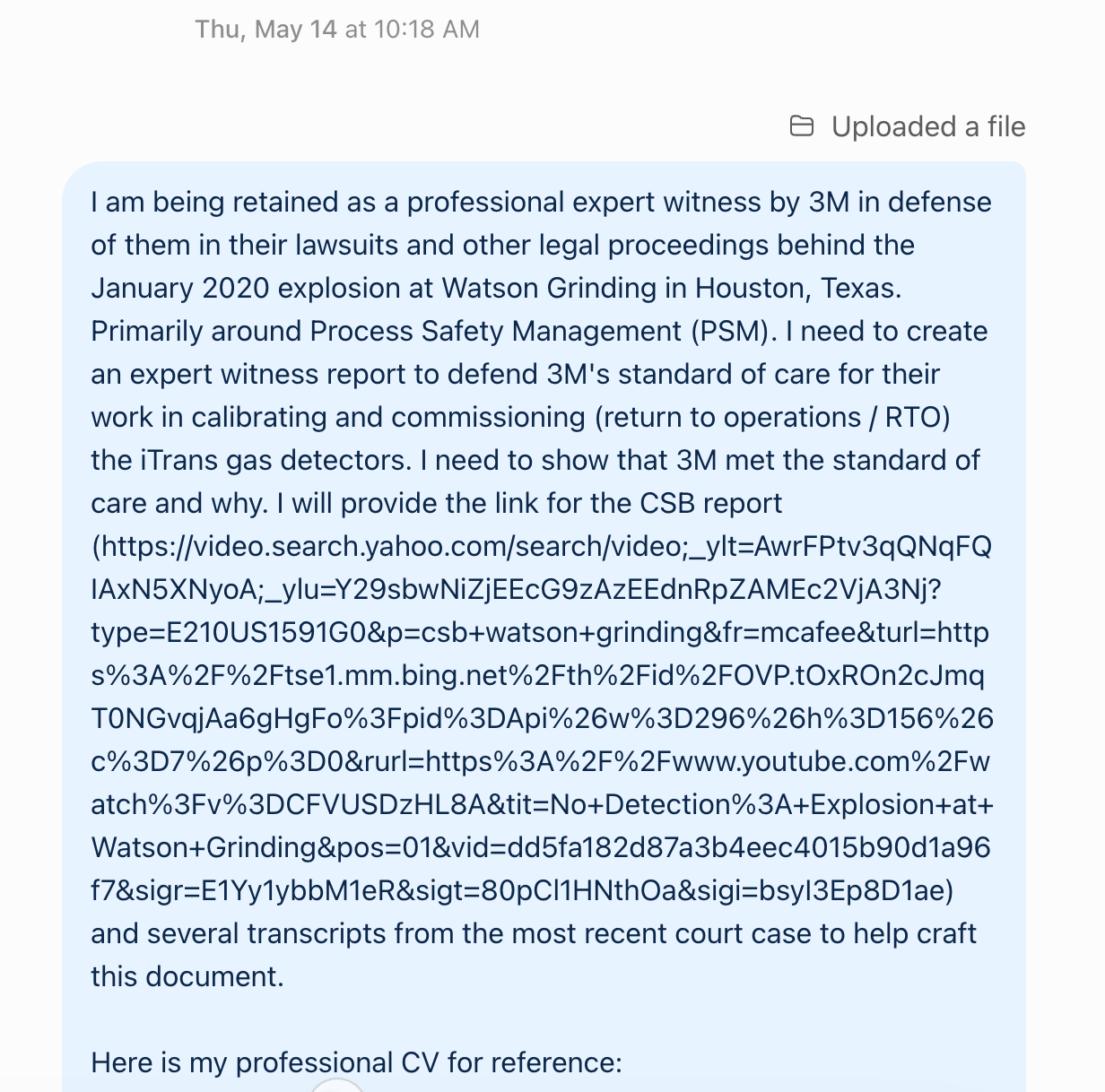
これらの会話記録は、オステンリエス氏の作業プロセスを最初から最後まで詳細に示しています。彼は ChatGPT に対して、「私は 3M 社から依頼され、2020 年 1 月にワトソン・グラインディングで発生した爆発事故に関する訴訟やその他の法的手続きにおいて、同社の弁護側として専門的証人(エキスパートウィットネス)を務めている」と伝えました。さらに、「3M 社の業務における標準的な注意義務を擁護する専門家報告書を作成する必要がある」と語り、具体的には「訓練を受けていない設備での作業や、適切な許可なく作業を行ったことなどについて、相手方の証人が主張しているあり得ない誤った主張を反駁する内容にするよう」指示しました。彼は ChatGPT にさまざまな労働基準違反の事例を探すよう求め、数百件の裁判記録を添付しました。
その後、オステンリエス氏は ChatGPT に対して、添付されたすべての記録を読み込み、3M を擁護するよう依頼しました。「ワトソン・グラインディングにおけるプロセスおよび安全管理(Process and Safety Management)と安全対策の欠如を示し、相手方の証人の主張を論破するとともに、3M がこの爆発事故について 0% の過失であること、そして私の背景と経験がこの専門的見解を提供するのにふさわしいことを示してほしい」という内容です。
ChatGPT は、2020 年 1 月 24 日の爆発事故について「技術的および標準的な注意義務の観点から、3M の責任は 0% です」という一文を含む約 30 ページの報告書を作成しました。しかし、この文言は最終的に裁判所に提出された報告書からは削除されました。その理由は、弁護士である Autenrieth が後日 ChatGPT に「反対側の弁護士としてこれをレビューしてほしい」と指示した際、ChatGPT が「『責任 0%』という表現は、弁護士が攻撃しやすく、批判の的になりやすい」と判断したからです。また、この表現は「あなたが専門家ではなく、当事者の擁護者であるかのように見せる」ために反対側の弁護士に利用される可能性がある数あるフレーズのひとつであると指摘されました。
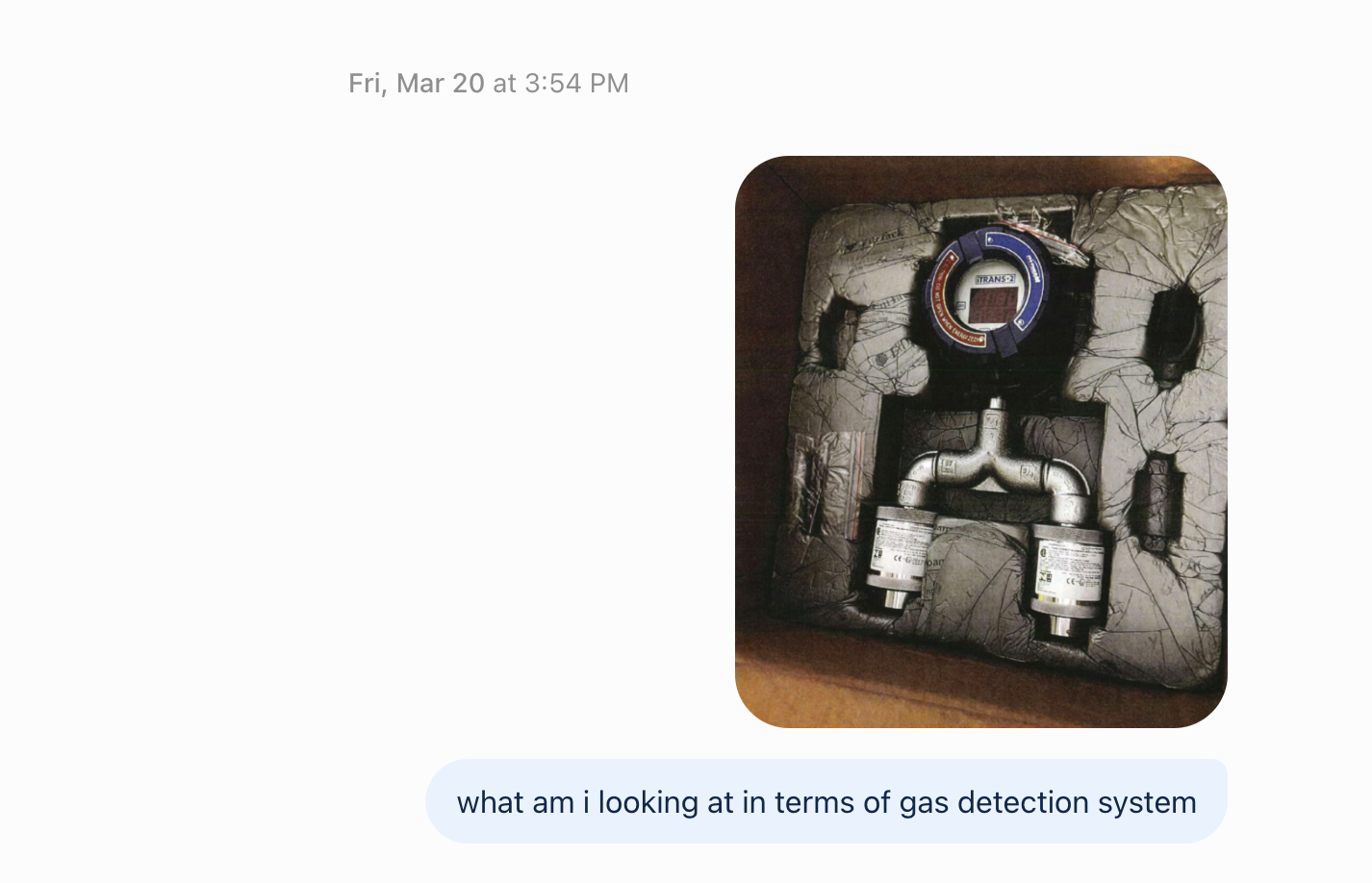 image別のチャットでは、Autenrieth がガス検知器の画像をアップロードし、「これは何ですか?」と質問しました。さらに「産業用ガス検知器のモデル名は何ですか?」とも尋ねています。Moye 氏は、このガス検知器が「本件の争点そのもの」であると述べています。
オーテンリエスは、ChatGPT を活用して生成された報告書に対してさまざまな編集を行い、異なるバージョンを繰り返しアップロードしてツールの修正を受け取りました。その際、一部のチャットでは専門証人としての証言という主題から、T シャツの画像生成へと話題を変えています。
また、オーテンリエスは ChatGPT に「自分の報告書を採点してほしい」と依頼し(結果は 97/100)、さらに「検察側が攻撃してくる可能性のある報告書の主要な 5 つのポイントと、それらに対する反論の仕方は何か?」とも尋ねました。その後、「私の経歴書は専門証人として十分か?」「これまで専門家としての証人経験がないことを理由に、検察側が言葉遣いなどを根拠にして私を攻撃してくる可能性はあるか?また、それをどう防げばよいか?」と ChatGPT に質問しています。
オーテンリエスが裁判所に提出した報告書は、ChatGPT が最初に出力した内容と同じ構成になっており、その大部分は、ChatGPT の初期出力や、オーテンリエスの後のチャットで AI がお勧めした修正案と完全に一致しています。
「この証人は、AI を補助ツールとして利用したのではなく、ChatGPT にのみ依存して意見形成と報告書作成を行いました」と、Moye 氏は 404 Media の電話インタビューで語りました。「彼は裁判で、3M が勝訴するためにバイアスのかかったプロンプトを入力していたことを認めています。これはあまりにも悪質です」。Moye 氏はさらに、多くのプロンプトが証人尋問の夜に行われたと付け加えました。「彼らはこの人物を、事件の結果を変化させるためだけに雇いました。ChatGPT を使って報告書を書かせたのです。つまり、この裁判における真の専門家とは ChatGPT だったのです。疑いの余地はありません」。
 imageMoye 氏は 404 Media に、3M が最終的に Autenrieth 氏の証人資格を無効化しようとしたが、彼が報告書生成に AI を過度に使用していたことを知った後、非常に珍しい手段に出たことを明かしました。それは、相手側の専門家証人を自らの証人として呼び出すというものです。「私は裁判であなたを呼ぶと言いました。なぜなら、陪審員にあなたの話を聞かせなければならないからです。これはひどい話なのですから」と Moye 氏は振り返ります。
「まさにその通りに行いました」
裁判記録において、オーテンリート氏は ChatGPT を使用したことを認めた上で、「私はガス検出の専門家であり、業界で 20 年以上の実績と経験がある」と繰り返し主張しました。なぜ ChatGPT を使ったのかについては説明していませんが、「私の意見を入力し、AI が骨子となる草案を作成するのを手伝ってくれた。生成される前に情報や意見を事前に投入しており、出力が私の意見や合意した内容に合わない場合は修正した」と述べています。
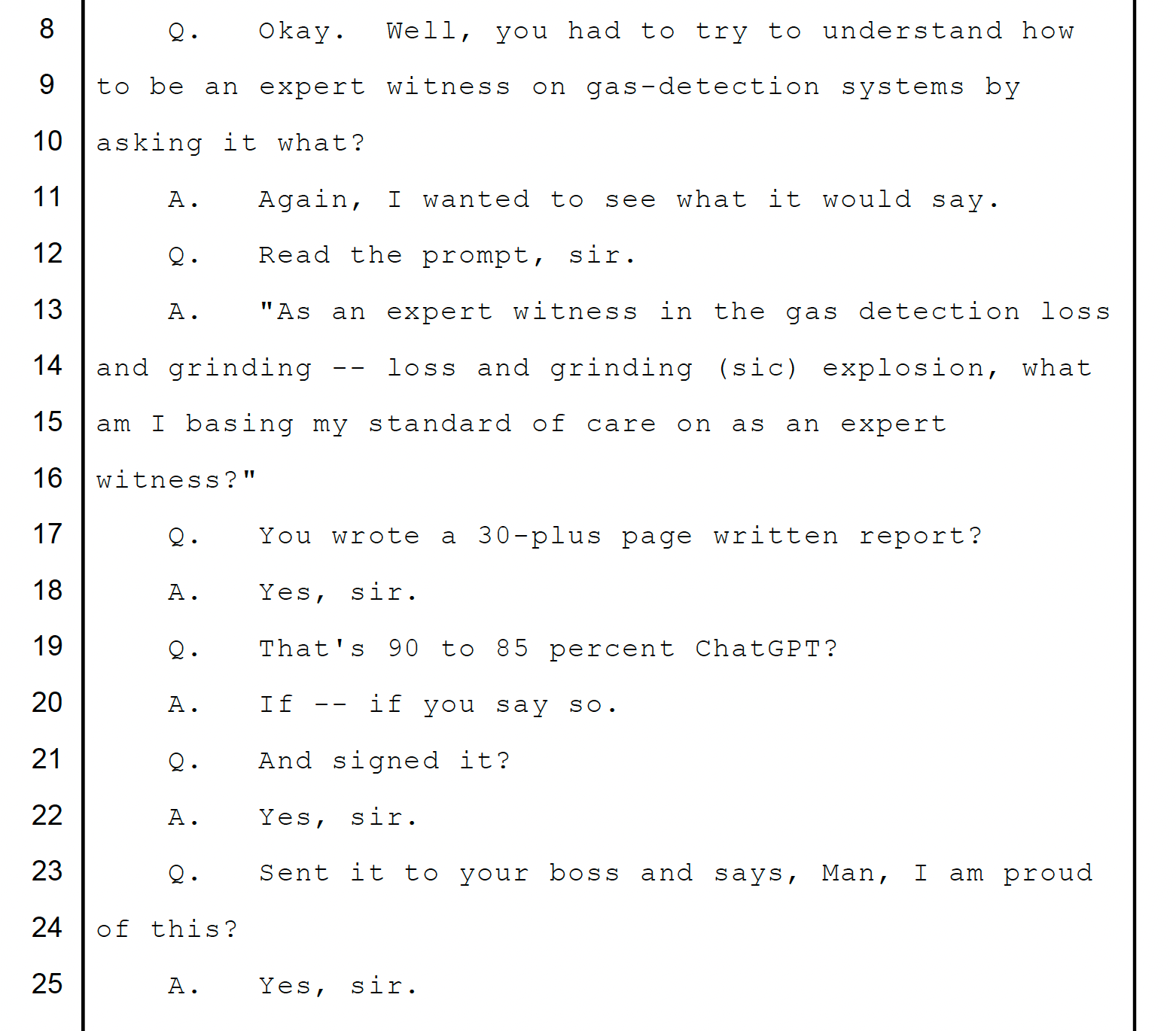
裁判での尋問では、モイ氏とオーテンリート氏は提出された報告書について「90〜85% が ChatGPT によるもの」と一致して認めています。また、オーテンリート氏は「ガス検出器の複数のメーカーに関する記憶を呼び起こすため」に、渋滞の中で ChatGPT にケース関連のプロンプトを入力したことも明かしました。
この事件自体が非常に興味深い事例であるだけでなく、対立する弁護士側が証拠開示手続きや証人尋問において ChatGPT のプロンプト記録を取得できる可能性を示しています。モイ氏は「すべての弁護士は、自らの専門家が不誠実な方法で作業成果物を生成していないか確認し、さらにプロンプトを召喚状で請求できることを知っておく必要がある」と指摘しました。そして、「世界中の弁護士から『どうやってプロンプトを取得したんだ?』『この問題が自分たちにも起きているケースはどれくらいあるんだ?』という声が聞こえている」と語っています。
AI を証拠作成に利用した専門家証人として裁かれるケースは、オートニエス氏だけが初めてではありません。ただし、AI が証拠作成に用いられた裁判事例をデータベース化した調査によると、これまで知られている事例の多くは海外での出来事です。
フランスのある訴訟では、弁護士が洪水紛争における雨水のパターンについて AI を活用して主張を展開しましたが、その証拠は却下されました。カナダの別の事件では、AI が特定の植物種がアパート街で害虫被害を引き起こしたかどうかについての見解を生成するために使用されました。この裁判を担当した判事は、「私は [AI による証拠] に何らの重みも置かない」と記しました。「専門家証言は、問題に関する具体的な知識を持つ、資格と経歴が明確な個人から提供されなければならない」からです。
3M 事件の陪審団は原告側に 6,100 万ドル以上の賠償金を命じ、責任の配分を 3M が 30%、ワトソン・グラインディング社が 70% としました。これまでに下された判決では、爆発事故の被害者に対してそれぞれ 1 億 1800 万ドルと 3800 万ドルの賠償金が認められており、今後さらに多くの訴訟が控えています。
ナイトホーク・エンジニアリング社、オートニエス氏、そして 3M はコメント依頼に対し回答しませんでした。
原文を表示
imageAn expert witness testifying in a lawsuit about liability for a Houston explosion that killed three people and destroyed roughly 200 homes used ChatGPT to write significant portions of his “expert report.” The man, who was hired by the industrial product conglomerate 3M, exposed his AI prompts publicly. They showed that he asked ChatGPT to help him “create an exceptional expert witness report defending the standard of care at 3M,” and that the report should “show how 3M is 0% at fault for the explosion at Watson Grinding.”
The incident shows that artificial intelligence has made its way into courtrooms not just in AI-generated legal briefings, hallucinated cases, and adversarial “prompt injections,” but in expert witness testimonies. Court transcripts, deposition documents, and discovery records shared with 404 Media show extensive AI use in an extremely high profile case, where multiple people died and hundreds of millions of dollars in total liability are at stake in ongoing litigation about the explosion. The case also shows that the specific prompts used to create this type of expert testimony can be discoverable during a case, and that those prompts can be quite embarrassing. (Prompts provided in the case are here).
imageimageThe case is one of several about liability for a 2020 explosion at Watson Grinding, a manufacturing facility in Houston that was caused by a “degraded and poorly crimped rubber welding hose,” which leaked a flammable gas that eventually exploded in the facility, according to the U.S. Chemical Safety and Hazard Investigation Board. Dozens of homeowners have sued by 3M and Watson Grinding; the plaintiffs alleged that 3M didn’t properly service the facility’s gas detection system and made other errors that contributed to the explosion.
As part of the case, 3M hired a man named Josh Autenrieth of Knighthawk Engineering to prepare an “expert report” about the explosion. During discovery in the case, Will Moye, one of the plaintiffs’ attorneys, found a five-page document called “Citation Overlay,” which appeared to have been generated by AI. Moye recognized the Citation Overlay document as being from ChatGPT, and demanded all of the prompts Autenrieth used from 3M’s lawyers. The deposition was paused for three hours while they were gathered, and Moye was given 350 pages of ChatGPT conversations that Autenrieth had when creating the report. Those documents included ChatGPT’s public links to Autenrieth’s full conversations. Court transcripts suggest that 3M paid Knighthawk Engineering roughly $90,000 for its analysis, and a filing by 3M shows that Autenrieth’s rate was $475 per hour.
imageFrom the cover page of the reportThe conversations show much of Autenrieth’s process from start to finish, which included telling ChatGPT that he was “being retained as a professional expert witness by 3M in defense of them in their lawsuits and other legal proceedings behind the January 2020 explosion at Watson Grinding.” He told ChatGPT that he needed “to create an expert witness report to defend 3M’s standard of care for their work,” and that, specifically, it needed “to counter the defense witness [sic] outlandish and false claims particularly about working on equipment you are not trained to and without the right permitting.” He asked ChatGPT to help him find violations of various working standards, then attached hundreds of court records.
Autenrieth then asked ChatGPT to read all of the attached records and to defend 3M, “illustrating the lack of [Process and Safety Management] and safety by Watson Grinding, defeating [the defense witness’] comments […] and show how 3M is 0% at fault for the explosion at Watson Grinding and how my background and experience is well suited to render this professional opinion.”
ChatGPT created a roughly 30-page report that included the line “From a technical and standard-of-care standpoint, 3M is 0% responsible for the January 24, 2020 explosion.” This line did not make it into the final report filed with the court, because when Autenrieth later asked ChatGPT to “review this as the opposing council,” ChatGPT determined that writing “‘0% responsible’ is an easy target” for a lawyer to poke holes in, and is one of several "phrases [that] let opposing counsel paint you as an advocate rather than an expert."
imageIn another chat, Autenrieth uploaded an image of a gas detector and asked ChatGPT “what am I looking at?,” and asked “what are model names of industrial gas detectors.” Moye said that the gas detector in question is “the subject of the whole case.”
Autenrieth used ChatGPT to help him make various edits to the report it had generated, and repeatedly uploaded different versions of the report, getting revisions from the tool, then uploading new versions of the report (in some of the chats he changed the subject from his expert witness testimony to having ChatGPT generate t-shirt images). He also asked ChatGPT to “grade” his report (it got a 97/100), and “what are the 5 main things in my report the prosecution could attack and how do I defend them?” He then asked ChatGPT if his resume was sufficient to be an expert witness; “will prosecution go after me for never having been [an expert witness] before based on wording and how do I defend that?”
The report that Autenrieth submitted to the court is structured the same as the initial output given by ChatGPT and large swaths of it are identical to what ChatGPT first outputted and the revisions that it recommended in Autenrieth’s subsequent chats.
“This expert relied on AI not as an assistive device, but exclusively relied on ChatGPT to form his opinions and write his report,” Moye told 404 Media in a phone interview. “He acknowledged [at trial] the prompts he put in were biased toward 3M to help 3M win the case […] it’s really egregious.” Moye added that many of the prompts took place the night before Autenrieth was deposed as an expert witness. “They hired him for the sole purpose of changing the outcome of the case. They hired him and he used ChatGPT to write these reports, so really, ChatGPT was the expert in the case. There’s just no question about that.”
imageMoye told 404 Media that 3M eventually tried to get Autenrieth disqualified from the trial, but that after he learned Autenrieth extensively used AI to generate his report, he took the somewhat unusual step of calling the other side’s expert witness as his own witness. “I said, I’m calling you to trial because I need a jury to hear from you because this is bad, bad stuff. And that’s exactly what I did,” Moye said.
In trial transcripts, Autenrieth admits to using ChatGPT, but said repeatedly that he is an expert in gas detection: “I've got a body of work and 20-plus years of experience in the industry.” He did not explain why he used ChatGPT, but said “my opinions were put in there, and AI helped me to draft a straw man to build off of,” and added “I put information and opinions in up front before it ever generated […] if the output wasn't of my opinion or what I agreed to, I did alter it.” In the examination at trial, Moye and Autenrieth agree that the submitted report is “90 to 85 percent ChatGPT.” Autenrieth also said that he prompted ChatGPT about the case several times while “sitting in traffic” to “jog my memory” about several different manufacturers of gas detectors.
Beyond this being a highly interesting case on its own merits, it shows that ChatGPT transcripts can be obtained by opposing lawyers in discovery or during depositions. Moye said “every lawyer needs to make sure their own experts aren’t generating work product in a way that’s insincere, and then knowing you can subpoena the prompts [...] I’ve got lawyers all over the place saying, 1) ‘Holy shit, man. How did you get the prompts?,’ and 2) ‘How many cases do I have where this is happening to us?’”
Autenrieth is not the first expert caught using AI during a trial, though most known cases have been international, according to a database of cases in which AI was used to create evidence. In a case in France, a lawyer used AI to make an argument about rainwater patterns in a flooding dispute; that evidence was thrown out. In Canada, AI was used to generate opinions about whether specific types of plants caused a bug infestation at an apartment complex. The judge in that case wrote “I place no weight on the [AI evidence]. Expert evidence must come from a known individual with known qualifications who has specific knowledge about the issue at hand.”
The jury in the 3M case awarded more than $61 million to the plaintiffs, apportioning 30 percent of the responsibility to 3M and 70 percent to Watson Grinding. Previous decisions awarded $118 million and 38 million to victims of the blast, and there are several more upcoming cases.
Knighthawk Engineering, Autenrieth, and 3M did not respond to a request for comment
関連記事
News to Guide
ニュースの次に確認する
発表内容を、現在の料金や仕様と照らし合わせられる関連ガイドです。
今日のまとめ
AIデイリーブリーフで今日の重要ニュースをまとめ読み