スポーツの動画レビュー論争が示す AI と人間の意思決定
本文の状態
日本語全文を表示中
詳細モードで約8分の本文を読めます。
同じ出来事の情報源
この情報源を基点に整理
The Conversation AI
スポーツにおけるビデオアシスタントレフェリー(VAR)の導入がもたらした信頼と公平性の葛藤は、組織におけるAI意思決定システムの普及における課題を浮き彫りにする重要な事例である。
AI深層分析を開く2026年8月4日 16:50
AI深層分析
キーポイント
技術と人間の認識のギャップ
VAR はエラー削減や客観性向上という期待に応えられず、かえってファンや選手との間に新たな対立を生み出した。
意思決定プロセスへの疑問
介入の基準が常に一貫していたかどうかや、プロセス自体が公平に感じられるかという点が議論の対象となっている。
AI導入における教訓
スポーツの事例は、組織においてAIを意思決定に組み込む際の課題を理解するための有用なレンズとして機能する。
測定問題と判断問題の区別
オフサイドやボールがラインを越えたかどうかといった測定問題は技術によって正確に解決できる。しかし、ペナルティに値する接触か、タックルが危険だったかなどは解釈や文脈を要する判断問題であり、カメラだけでは決定できない。
精度向上と審判の質の非連動
ビデオリプレイは公式により正確な情報を提供するが、それが自動的に審判の判断力向上や論争の減少につながるわけではない。
重要な引用
VAR produced a set of mismatches between what the technology promised and how people experienced it.
It left fans disappointed and created new disputes about judgment, process and trust.
Video replays give officials more accurate information, but that doesn't automatically lead to better judgment – or less controversy.
A camera can show that contact occurred. It cannot decide how that contact should be judged.
編集コメントを表示
編集コメント
本記事は、技術的な性能指標だけでなく、人間がシステムをどう受け止めるかが導入の成否を分けるという視点を提示している。AI導入においては、アルゴリズムの精度向上と同様に、プロセスの透明性と公平性の確保が不可欠である。
Source Article
元記事を日本語で読む
本文に関係しない購読案内、埋め込み通知、サイト内プロモーションは除いています。
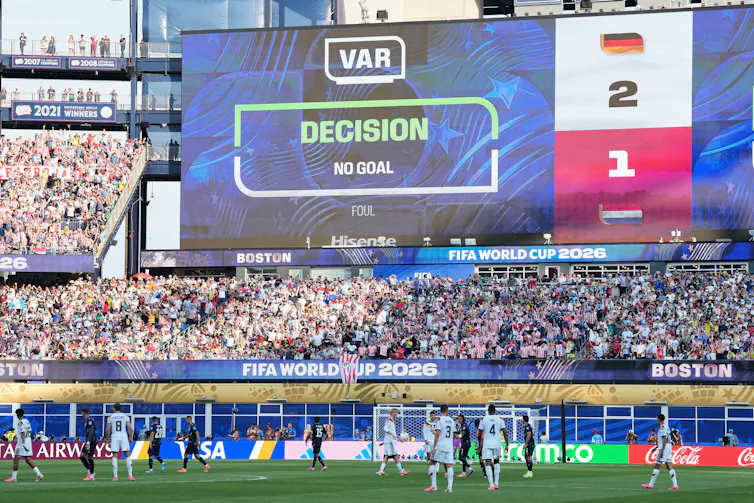
もしあなたが 2026 年 FIFA ワールドカップを視聴したなら、おそらくあの慣れ親しんだ儀式を目にしたことでしょう。ゴールが決まり、選手たちが喜びに沸く中、審判がイヤホンに触れてビデオアシスタントレフェリー(VAR)からの判定を待つ間、ファンや選手たちは一瞬の沈黙の中で待機します。
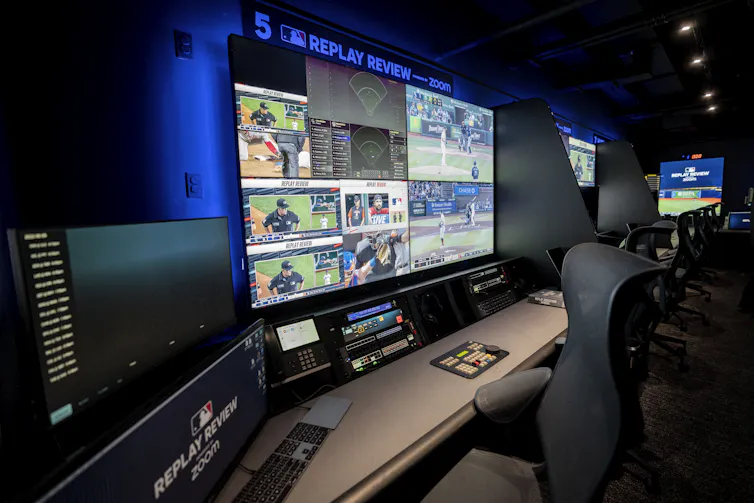
この儀式はサッカーだけのものではありません。野球にはニューヨークにリプレイセンターが存在し、他のスポーツでも人間の判断だった判定が次々とレビューシステムへと移行しています。
その期待はシンプルです。より優れた技術を用いて、より正確な判定を下すこと。
サッカーの統括団体は、審判のミスを減らし、主観的な要素を排除し、公平性への信頼を高めるために、カメラ数を増やし、再生アングルやトラッキングデータを導入することを期待していました。しかし VAR は、選手、コーチ、ファン、解説者の間で新たな議論を生み出しました。「VAR は介入すべきだったのか」「介入の基準が一貫して適用されたか」「そのプロセス自体が公平に感じられたか」。
意思決定を研究する研究者としてワールドカップを観戦した私は、VAR を単なる審判の道具と見なすことはできませんでした。それはテクノロジー支援型意思決定のケーススタディのように見え、組織における AI の利用が拡大する現状と通じる部分があるように思えました。
VAR は、技術が約束したものと人々が実際に体験したものとの間に、一連の不一致を生み出しました。ファンを失望させ、判断やプロセス、信頼性に関する新たな論争を引き起こしたのです。これらの緊張関係は、より広範な文脈における AI の導入を理解するための有用なレンズを提供します。
より優れた測定が、必ずしもより優れた判断を生むわけではない
ある種の決定は「測定の課題」です。例えば、「選手はオフサイドだったか」「ボールはラインを越えたか」「接触があったか」といった問いです。カメラやセンサー、データを活用することで、人の視覚の限界に起因するミスを減らすことができるため、技術はこれらの質問に対して非常に優れています。
しかし、多くの判断は「主観的な問題」です。接触が反則となるのに十分な強さだったか?タックルは無謀だったか?審判の最初の判定が明らかに誤りだったか?こうした問いには、解釈や文脈、そして基準が絡んできます。カメラは接触があった事実を示すことはできても、その接触をどう評価すべきかを決定することはできません。
この問題は、組織が意思決定を支援するために AI を導入する際にも同じように現れます。AI はデータを処理し、パターンを予測し、ケースを分類することができます。しかし、出力結果の意味をどう解釈するか、どの程度の重みを与えるか、そしてどのような価値が脅かされているかを最終的に決めるのは、医師、管理者、裁判官、あるいは教師といった人間です。人間の AI 協働に関する研究 も同様の指摘をしています:AI は、それを完全な代替品として扱うのではなく、人間の判断と組み合わせて用いる場合に最も力を発揮するのです。
主観性が消えるわけではない——ただ場所が変わるだけ
VAR(ビデオアシスタントレフェリー)導入前は、議論の焦点は審判が何を見たかにありました。しかし VAR 導入後は、議論の中心は「プロセスそのものがどう機能しているか」に移っています。いつ VAR が介入すべきなのか?審判はどの程度の範囲でプレイを再検証できるのか?また、「明確かつ明白な(clear and obvious)」とされる映像証拠とは何を指すのでしょうか。
主観性は依然として存在します。それは審判の目から、レビューシステムのルール、閾値、ガバナンスへと移っただけです。野球でも同様の傾向が見られます。リプレイ導入によってゲームからの判断が完全に消えたわけではありません。どのプレーをリプレイで検証できるか、チャレンジの仕組みはどうなるか、そしてどこで審判の裁量が介入するかという点が変えられただけです。
AI システムも同様の転換をもたらします。組織は往々にして、AI を人間の裁量を排除する手段だと考えています。しかし実際には、裁量は新たな場所へと現れます。「どのモデルを使うか」「何を学習データとするか」「許容できるエラー率はいくらか」「システムが失敗した際に誰が責任を負うか」といった判断です。
精度が高まると信頼は低下する
人々は往々にして、精度が高まれば信頼も高まると考えがちです。確かにそうなる場合もありますが、誤解を減らす速度よりも期待値の方が先に上がってしまうこともあります。テクノロジーがオフサイドの判定をセンチ単位で測れるようになった今、ファンはすべての判定が同じように確実であるべきだと感じるようになります。しかし、ペナルティやレッドカードの判定がいまだに議論の余地がある場合、人々はイライラするようになるのです。
アルゴリズムの使用を避ける理由に関する研究では、同様の現象が見られます。全体としてのパフォーマンスは良好であっても、一度でもミスをした瞬間に人々がアルゴリズムへの信頼を失ってしまうのです。正確さだけでは正当性は保証されません。
この知見は AI による意思決定システムにとって極めて重要です。企業は採用や業績評価において AI を活用し、より客観的な判断を目指そうとするかもしれません。しかし、応募者や従業員がそのシステムを一貫性がない、偏っている、あるいは不公平だと感じれば、信頼は高まるどころか低下してしまいます。組織が AI を「万能薬」のように位置づけることは、技術が常に満たせるわけではない期待を高めることになりかねません。その結果、人々の不満は深まり、信頼の喪失も加速してしまうのです。
技術の終焉と、判断の始まり
経営学の研究では、AI の導入は人間か機械かの二者択一ではないことが示されています。重要なのは、「どの決定を自動化すべきか」「どこまで AI を活用し、どこで人間の判断に委ねるべきか」という問いです。
測定が課題となるケースこそ、自動化の最有力候補です。AI は文書のスキャンやパターンの検出、事案の分類、異常のフラグ付けなどを、人間よりもはるかに速く、かつ一貫して行えます。一方、解釈が求められる問題では、人間と AI の協働が必要です。AI が情報や選択肢、推奨事項を提供することはできますが、決定の文脈、不確実性の度合い、そしてその決定がもたらす結果について考えるのは依然として人間の役割です。
さらに、公平性、説明責任、価値観、あるいは意味といった問いを含む決定は、技術に委ねることで決定の本質が変わってしまいます。それは「人間の判断」から「アルゴリズムによる評価」へと変容してしまうのです。
スポーツにおける VAR(ビデオアシスタントレフリー)の議論は、この境界を可視化しています。AI は現在、組織に対して高リスクな決定において同じ境界に直面するよう迫っています。AI 導入における鍵となる問いは、「AI がその決定を下せるか」ではありません。「決定のどの部分を AI に任せ、どの部分を人間の判断に残すべきか」という問いこそが本質です。
原文を表示
If you watched the 2026 FIFA World Cup, you probably saw the now-familiar ritual: a goal, a celebration, then a referee touching an earpiece while fans and players wait for the verdict from the video assistant referee, or VAR.
That ritual is not unique to soccer. Baseball has a replay center in New York, and other sports have also moved once-human calls into review systems.
The hope is simple: Use better technology to yield better calls.
Soccer authorities expected more cameras, replay angles and tracking data to mitigate referee error, limit subjectivity and strengthen perceptions of fairness. But VAR has created new arguments among players, coaches, fans and commentators: Should VAR have intervened? Was the same standard for when to intervene applied consistently? Did the process itself feel fair?
Watching the World Cup as a decision-making researcher, I could not help but see VAR as more than a refereeing tool. It looked like a case study in technology-assisted decision-making, with parallels to the growing use of AI in organizational decision-making.
VAR produced a set of mismatches between what the technology promised and how people experienced it. It left fans disappointed and created new disputes about judgment, process and trust. These tensions offer a useful lens for understanding AI adoption more broadly.
Better measurement is not better judgment
Some decisions are measurement problems: Was the player offside? Did the ball cross the line? Did contact occur? Technology is excellent at these questions because cameras, sensors and data reduce mistakes that come from people not seeing clearly.
But many decisions are judgment problems: Was the contact enough for a penalty? Was the tackle reckless? Was the referee’s original call clearly wrong? Those questions involve interpretation, context and standards. A camera can show that contact occurred. It cannot decide how that contact should be judged.
The same issue appears when organizations use AI to support decisions. AI can process data, predict patterns and classify cases. But a doctor, manager, judge or teacher still needs to decide what the output means, how much weight to give it and what values are at stake. Research on human-AI collaboration makes a similar point: AI is often strongest when paired with human judgment rather than treated as a full replacement for it.
Subjectivity does not disappear – it moves
Before VAR, arguments focused on what the referee saw. After VAR, arguments often focus on how the process works. When does VAR intervene? How far back can officials review the play? What counts as “clear and obvious” video evidence?
Subjectivity is still there. It has moved from the referee’s eyes to the rules, thresholds and governance of the review system. Baseball shows a similar pattern: Replay did not remove judgment from the game. It changed which plays could be reviewed, how challenges worked and where judgment entered the process.
AI systems create the same shift. Organizations often imagine AI as a way to remove human discretion. In practice, discretion reappears in new places: deciding which model to use, what data to train on, what error rate is acceptable and who is accountable when the system fails.
More precision can reduce trust
People often assume that greater precision creates greater trust. Sometimes it does. But it can raise expectations faster than it reduces ambiguity. If technology can measure an offside decision by centimeters, fans may expect every decision to feel equally certain. When penalty calls or red cards remain debatable, people can become frustrated.
Research on why people avoid using algorithms finds something similar: People can lose confidence in algorithms after seeing them make mistakes, even when they perform well overall. Accuracy alone does not guarantee legitimacy.
That finding matters for AI decision systems. A company may use AI to make hiring or performance evaluation more objective. But if applicants or employees see the system as inconsistent, biased or unfair, trust can fall instead of rise. When organizations frame AI as a silver bullet, they raise expectations the technology cannot always meet. The result can be deeper frustration and faster loss of trust.
Where technology ends and judgment begins
Management research suggests that AI adoption today is not a simple choice between humans and machines. The better question is whether a decision should be automated, augmented or left to human judgment.
Measurement problems are the strongest candidates for automation: AI can scan documents, detect patterns, classify cases or flag anomalies faster and more consistently than people can. Interpretation problems call for human-AI collaboration: AI can provide information, options or recommendations, but people still need to think about the context of the decision, how much uncertainty is involved and the consequences the decision may have. And some decisions remain deeply human. Questions involving fairness, accountability, values or meaning cannot be handed over to technology without changing the nature of the decision itself – from one of human judgment to algorithmic assessment.
VAR makes this boundary visible in sport. AI is now forcing organizations to confront the same boundary across high-stakes decisions. The key question in AI adoption is not simply, “Can AI make this decision?” It is, “Which parts of the decision should AI make, and which parts should remain a matter of human judgment?”
今日のまとめ
AIデイリーブリーフで今日の重要ニュースをまとめ読み