ペンタゴンとOpenAIの画期的な契約、その解説
本文の状態
日本語全文を表示中
詳細モードで約19分の本文を読めます。
同じ出来事の情報源
この情報源を基点に整理
Understanding AI
国防長官ヘグセットはAnthropicに対し、Claudeの市民監視や自律型兵器使用を禁止する条項の削除を要求した。これに対しAnthropicは拒否し、両者の対立がAI業界の注目を集めている。
Continue in AI NEW LAB
このニュースを、実務の判断につなげる
AI NEW LABで、試したことや先に確認したい条件を共有できます。まずはログインなしで読めます。
AI NEW LABで論点を見るSource Article
元記事を日本語で読む
本文に関係しない購読案内、埋め込み通知、サイト内プロモーションは除いています。
どんな日でも、先週金曜日に OpenAI が発表した記録的な 1,100 億ドルの資金調達ラウンドは、AI 界の注目を集めるはずでした。しかし代わりに、私たちはすべて Anthropic とペンタゴンの対決に引き込まれました。
火曜日、国防長官ピート・ヘグセットは、Anthropic の CEO ダリオ・アモデイをペンタゴンに呼び出しました。彼は、Claude を米国人の大量監視や完全自律型兵器の運用に使用することを禁止する契約条項の撤廃を Anthropic に要求しました。Anthropic がこれに従わない場合、ヘグセットは Anthropic をサプライチェーンリスクとして宣言すると脅し、この指定により他の政府請負業者が Anthropic の製品を使用できなくなる可能性があると示唆しました。
ヘグセットはアモデイに、金曜日の午後 5時1分を期限としました。しかしドナルド・トランプが先手を打ちました。午後 3時47分、彼は Truth Social で「Anthropic は『急進的な左翼の目覚めた企業』である」と宣言し、「アメリカ政府内のすべての連邦機関に対し、直ちに Anthropic の技術の使用をすべて停止する」よう指示しました。ヘグセットは彼の脅しを実行に移し、Anthropic をサプライチェーンリスクとして宣言しました。
ヘグセットによると、これは「即時効力をもって、米国軍と取引を行う請負業者、供給業者、またはパートナーが Anthropic といかなる商業活動も行ってはならない」ことを意味しますが、法律がヘグセットにそのような広範な権限を与えるものかどうかは明確ではありません。
数時間後、サム・アルトマンは OpenAI がペンタゴンと独自の合意に達したことを発表し、AI 界を驚かせました。アルトマンは、ペンタゴンが OpenAI のモデルを完全自律型兵器や米国人の大量監視に使用しないことに同意したと主張しました。これは数日前に Anthropic が同様の制限を求めた際にペンタゴンが拒否していた条件と同じものです。
この発表当初、私を含む多くの観察者を混乱させました。アルトマンは本当にヘグセットを、彼が直前にアモデイに対して拒絶した条件を受け入れさせることに成功したのでしょうか?それとも、OpenAI の従業員であるレオ・ガオが OpenAI の契約におけるガードレールについて「実質的には機能しておらず、単なる飾りに過ぎない」と述べたことが正しかったのでしょうか。
先週の交渉の概要は週末にかけて徐々に明らかになりました。アルトマンや他の OpenAI 従業員は Twitter で自身の見解を共有し、土曜日の夜に行われた質問に答えるセッション(AMA)も含まれていました。トランプ政権の高官たちも意見を述べています。ニューヨーク・タイムズやアトランティックなどの報道機関が、裏側で交わされた詳細な情報を公開しています。
私はこれらの情報をすべて注意深く読みましたが、私には OpenAI がペンタゴンの要求に応じ、その過程で Anthropic を下回ったように見えます。OpenAI が共有した契約条項は、政府が米国人をスパイしたり完全自律型兵器を構築したりする能力を実質的に制限しているようには見えません。
しかし究極的には、いかなる契約も政府による AI の濫用を防止するものではないと思います。それには議会による監視、そして最終的には立法が必要です。どのモデルが使用されるかに関わらず、政府のすべての AI 利用に適用される基本的なルールが必要なのです。
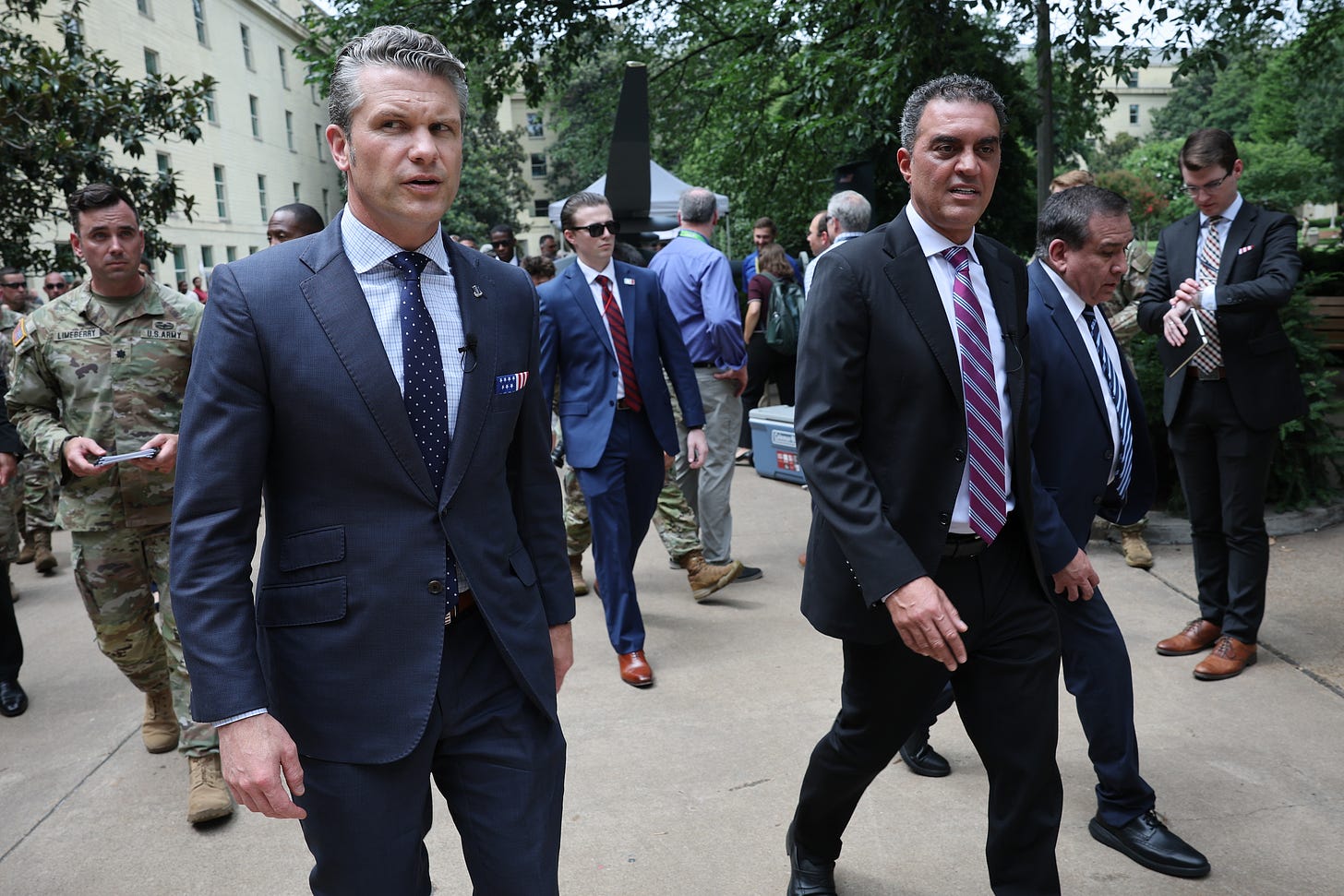
国防長官ピーター・ヘグセスと、研究工学担当国防次官エミル・マイケル。(写真:Win McNamee/Getty Images)
大規模監視をめぐる争い
先週の争いの背景には、政府の約束をそのまま信じるのが妥当かどうかという問題がありました。なぜ多くの人々がそれに対して懐疑的なのかを理解するには、2013 年の出来事まで遡る必要があります。
2013 年 3 月の上院公聴会において、ロ恩・ワイデン上院議員(民主党・オレゴン州)は、バラク・オバマ大統領の国家情報長官ジェームズ・クラッパーに対し、「NSA は数百万人あるいは数億人の米国人に対して、いかなる種類のデータも収集しているのか?」と問いました。
クラッパーは「いいえ、意図的にではありません」と答えました。
それから 3 ヶ月後、NSA の契約業者であるエドワード・スノーデンが文書を漏らし、政府が実際には米国の数百万人の電話通話記録をベライゾンや他の通信会社から収集するための裁判所の命令を取得していたことが明らかになりました。
6 月の議会聴聞会において、オバマ政権の高官がこのプログラムの政府による法的根拠を擁護しました。法律の下では、政府は継続中のテロ捜査に関連する業務記録を取得することが可能です。政府は外国情報監視法(FISA)裁判所に対し、全米国民の電話記録がすべて該当すると説明していました。これに激怒したジェームズ・センセンブレナー下院議員(共和党・ウィスコンシン州選出)は、政府の法律解釈が「法的基準を嘲笑するもの」と憤慨しました。
この歴史的背景を踏まえれば、OpenAI と政府との契約が軍事的権限に実質的な制限を加えるとは考えにくいと人々が懸念するのも理解できます。同契約では、「個人情報の取扱いについては、修正第 4 条、1947 年国家安全保障法、1978 年外国情報監視法、大統領令 12333 号、および定義された外国情報目的を要する国防総省(DoD)指令に準拠する」と明記されています。さらに、「これらの権限の一貫性に基づき、AI システムは米国人の個人情報に対する無制限な監視には使用されない」と付加されています。
購読はこちら
特筆すべきは、これらすべての法律や規制がスノーデン氏の告発以前から存在していたにもかかわらず、政府が数百万人の米国民の電話記録を収集することを阻止しなかったという点です。
土曜日の質疑応答セッションにおいて、アルトマン氏は質問に答えるためにカトリーナ・マリンガンというスタッフを指名しました。マリンガン氏は 2024 年初めに OpenAI の「初の国家安全保障担当の採用者」となる前に、10 年間にわたり国家安全保障の世界で活動していました。彼女は OpenAI とペンタゴン間の交渉において中心的な役割を果たした人物です。
ある参加者が、ペンタゴンが OpenAI のモデルを用いて「大規模に利用可能な商用データを分析する」可能性についてマリンガン氏に尋ねました。これに対しマリンガン氏は、「これは懸念する必要がない」と答え、「ペンタゴンにはそれを法的権限を持って行う権限がないからである」と述べました。
しかし、これは真実ではないようです。ジョー・バイデン氏が 2021 年に就任した直後、『ザ・ヒル』紙は「国防情報局(DIA)の分析官らは、令状なしに近年、米国のスマートフォン位置データのデータベースを購入してきた」と報じていました。
2018 年の Carpenter v. United States 事件において、最高裁判所は、政府が携帯電話事業者から個人の位置データを入手するには第四修正憲法により令状が必要であると判断しました。しかし、DIA の内部メモには、「同局は Carpenter 判決を、諜報目的のために商用データの購入または利用を承認する司法令状の必要性と解釈していない」と記されていました。
OpenAI の批判者たちは、OpenAI との契約書にある曖昧な表現が政府に大量監視を行うための多くの抜け道を提供していることを懸念しています。例えば、民間企業から大量の位置データを購入することは「制約のない監視」に該当するのでしょうか?大半の市民自由団体はイエスと答えるでしょうが、政府はノーと言うかもしれません。
中核となる問い:あなたは政府を信頼しますか?
Snowden の暴露以降、オバマ政権の多くの国家安全保障関係者は、自分たちが何か悪いことをしたとは思っていませんでした。
明確な不正行為の事例はいくつかありました。例えば、NSA(アメリカ国家保安局)の従業員の中には、監視権限を恋愛対象のスパイ活動に利用していた者も捕まりましたが、NSA はこれらの事件は「非常に稀」であり、加害者は解雇されたと述べています。
主要な Snowden の暴露はそれとは異なり、オバマ政権がテロリストをより効果的に監視するために法的限界を試みていることを示しました。政治的優位性の獲得や個人的な富の追求のためではありませんでした。
そして、理論上では透明性が素晴らしいように聞こえるかもしれませんが、情報機関側は、新たな監視プログラムに対して議会に明示的な承認を求めることは非現実的だと考えていました。彼らは、新しい監視プログラムについての公開議論がテロリストにプログラムの存在を知らせ、その有効性を損なう恐れがあると信じていたのです。そのため多くの関係者は、合理的な妥協点を見出したと考えていました:一部のプログラムは一般から秘密にしつつ、FISA 裁判所の承認を得て、議会の指導者には随時更新を行うというものです。
反論としては、一度大規模監視インフラが構築されてしまうと、より道徳的でない将来の指導者たちにも利用可能になってしまうという点があります。したがって、現在の政府関係者を完全に信頼している場合であっても、大規模監視を許可することは悪い考えかもしれません。また、監視プログラムが秘密裏に行われている場合、一般市民はその侵入性が強すぎると判断する機会を得られません。
これらの広範な議論に対するある人の見解は、必然的に先週の AI 企業と連邦政府との交渉に関する思考に影響を与えることになります。
OpenAI の国家安全保障パートナーシップ責任者であるマッリガン氏は、防衛業界との強い結びつきを持っています。彼女の LinkedIn ページによると、2013 年にはオバマ政権で働いており、「スノーデンの暴露に対するメディアおよび公共政策への対応」を主導したとされています。2024 年、彼女はジョー・バイデン政権下で陸軍長官を務めていたクリスティーン・ワームースと共にテイラー・スウィフトのコンサートでセルフィーを撮影しました。そのため、既存の法律が AI の濫用を防ぐのに十分だと主張するペンタゴンの高官たちを信じるマッリガン氏の考えは驚くべきことではありません。
アルトマン氏もまた、ペンタゴン高官たちの誠意に感銘を受けた様子です。「この点において国防総省(DoD)との一致の度合いについて、私は過大評価することはできません」と、アルトマン氏は大規模監視に関する質問への回答で記述しました。
公平を期すために、OpenAI はペンタゴンの高官たちの善意にのみ依存しているわけではありません。LinkedIn の投稿において、マッリガンは、OpenAI が「慎重な安全スタックの導入、展開アーキテクチャにおける制限、そして重要な AI 利用事例における AI 専門家の直接関与を含む多層的なセーフガード」を実装していると記述しました。OpenAI は、問題のある要求に対して拒否するようにモデルを訓練すると述べています。また、セキュリティクリアランスを持つエンジニアが軍と直接連携し、その活動が合法であることを確保する体制も整えます。
この戦略が OpenAI のモデルの誤用を防ぐ上でどれほど効果的であるかは、実際にはわかりません。もし政府が大規模監視プログラムを設立した場合、作業を多数のモデルインスタンスに分割するのは自然な流れです。もしそれが行われた場合、単一のインスタンスが、自分が大規模監視プログラムの一部に参加していることに気づくのに十分な文脈を持っているとは必ずしも明らかではありません。
また、OpenAI の前方展開されたエンジニアたちが政府が行っていることを理解する可能性は否定できませんが、機密プログラムに対して内部告発を行うよう求めるのは、彼らのキャリアを損なう恐れがあり、さらには法的責任に問われる可能性さえあるため、非常に過酷な要求です。
企業が防衛機関を基本的に信頼できると判断し、正当に選出された大統領とその上院確認を受けた部下の政策決定を再検討することは適切ではないと考えることは、決して狂気ではありません。しかし私の見解では、OpenAI が Anthropic とは異なる立場をとっているという事実について、より率直であるべきだったでしょう。
キラーロボットについてはどうでしょうか?
これまでに私は主に大規模監視に焦点を当ててきましたが、Anthropic と OpenAI はどちらも、自社のモデルが完全自律型兵器で使用されることに反対していることを一貫して表明しています。これは将来非常に重要な課題になると予想されますが、短期的にはその重要性はそれほど高くないと考えます。自律型兵器用の AI モデルは、高速で小型であり、空間推論に優れている必要があります。
そのような AI モデルを構築することは確かに可能です — 例えば Waymo は自律性向けに最適化されたモデルの開発に取り組んでいます — しかし、現在の最先端モデルは、このタスクには適していません。ドローンやその他のモバイルデバイス内に収めるには計算資源が多すぎます。また、正確なリアルタイム標的指定のために最適化されてもいません。
将来的には、数千機あるいは数百万機のドローンを有する群れが登場するかもしれません。しかし、米国はまだそのような群れを持っていないだけでなく、最先端モデルは、そのような大規模な艦隊を効率的に管理するにはまだ十分ではないようです。
したがって、企業の自律兵器に関する言説の実践的・短期的な重要性は限定的に見える。とはいえ、OpenAI の自律ロボットに関する言説は、大量監視に関する同社の言説と同様に無力である。
契約書には「法律、規制、または国防総省の方針が人間の制御を要求するあらゆる場合において、AI システムは自律兵器を独立して指揮するために使用されない」と記されている。また、「自律型および半自律型システムにおける AI のいかなる使用も、展開前に現実的な環境で意図通りに機能することを確保するため、厳格な検証、妥当性確認、およびテストを経なければならない」と付け加えている。
これは完全自律型兵器の禁止には程遠いものである。米国法が現在、完全自律型ドローンを禁止していると広く誤解されているが、昨年の記事でマイケル・ホロウィッツはこれが事実ではないと説明している。
購読する
Anthropic とペンタゴンの対決
今週末、Anthropic とペンタゴンとの交渉に関する新たな詳細も明らかになった。例えば、日曜日の報道で、The Atlantic のロス・アンダーソンは、ペンタゴンが「Anthropic の AI を国内での大量監視や完全自律型殺戮兵器に使用しないことを約束するが、その約束には『適切と判断される場合』といった抜け道となる表現を付加し、条件が変更される可能性があることを示唆している」と記した。
ついにペンタゴンはこれらの条件付き条項の撤廃に合意したが、「ペンタゴンは依然として、同社の AI を用いて米国人から収集された大量データを分析したいと考えていた」——GPS 座標、クレジットカード取引、Google の検索結果などがその対象である。最終的に、両者は金曜日に設けられたペンタゴン側の期限までに合意に至らなかった。
ニューヨーク・タイムズ紙の日曜日の報道によると、金曜日の午後時点で、当事者間の争点は「合法的な監視に関する問題について数語」のみであったという。しかし、交渉を主導するペンタゴンの担当官であるエミル・マイケル氏がアモデイ氏に連絡し、最適な文言を協議しようとしたところ、「アモデイ氏は会議中で、すぐに電話に出られない」と告げられた。
日曜日の夜、マイケル氏から投稿されたツイートは、政府による監視が「適切な場合」という表現とともに、交渉の主要な難点であったことを裏付けるものとなったように見えた。
しかし、彼は議論をやや異なる形で描き、「アンソロピック側は、[国防総省] の全従業員が LinkedIn 検索を行えないような文言を求めていた」と主張した。さらに、「彼らは、例えば軍人の募集や新規雇用の採用を可能にするような*公的*データベースを国防総省(DoW)が使用することを阻止したいと考えていた」と付け加えた。
ペンタゴンは、同時に OpenAI と新たな契約を策定中だったという点で交渉の優位性を持っていました。このプロセスは、マイケルが先週水曜日にアルトマンに電話した際に始まりました。「1 日以内に、彼らは粗筋となる枠組みを起草しました」とタイムズ紙は報じています。OpenAI の融通の利く姿勢は、おそらくマイケルが Anthropic との交渉において強硬な立場をとることを容易にしたのでしょう。
土曜日、私はミネソタ大学の法学教授であるアラン・ロゼンシュタインに、ペンタゴンが Anthropic をサプライチェーン上のリスクとして指定する計画について話を聞きました。彼は、トランプ政権がこの措置を裁判所に認めてもらうためには困難な戦いを強いられるだろうと語りました。
ロゼンシュタイン氏は、ペンタゴンはおそらく 2011 年に制定された「セクション 3252」と呼ばれる法律を援引する可能性が高いと述べました。この法律は外国企業を対象に使用されることを意図したものであり、Anthropic のように米国に拠点を置く企業にも適用されるのかどうかは明確ではありません。
「私は探し回り、研究助手にも探させたが、この法令に関する anything は見つからなかった」と彼は私に語りました。「実際に使われている事例も見つかりません。」
彼は、このような仕組みを米国の企業に対して用いるのは前例がないと指摘しました。さらに、交渉過程で指定を脅しとして使用するという決定は、政府の根拠が形式的なものであることを裁判所に示唆する可能性があると述べました。
Rozenshtein 氏もまた、Hegseth 氏が掲げるルール — すなわち「どの政府契約業者も Anthropic と『いかなる商業活動』を行ってはならない」という規定 — があまりにも広範すぎると考えています。もしこの法律が適用されるなら、おそらく軍事契約に関する企業の業務にのみ限定されて適用されるでしょう。これは、連邦政府との取引を多数行っている一方で Anthropic にも数十億ドル規模の投資を行っている Amazon にとっては救いとなるはずです。Hegseth 氏の法律解釈が正しければ、Amazon は多くの懸念を抱えることになります。しかし同社の株価は先週ほぼ横ばいで推移しており、これは投資家たちがこの問題を深刻な脅威とは考えていないことを示唆しています。
私は Anthropic の原則に基づく姿勢を称賛しますが、最終的には強力な契約上の制限があったとしても、それほど大きな違いを生むことはなかったのではないかと確信が持てません。すでにペンタゴンは xAI との間に、AI の軍事利用に対する制限をほとんど設けていない契約を結んでいます。さらに、オープンウェイトモデルはすでに多くの監視活動に十分実用可能であり、今後数ヶ月から数年のうちに、より多くの用途にも適するようになるでしょう。
実際、Dario Amodei 氏自身も、AI モデルの濫用を防ぐための契約上の合意はあくまで暫定的な解決策に過ぎないと信じています。
「長期的には、実際にはそれが議会の役割だと私は信じています」とアモデイ氏は土曜日のCBSでのインタビューで述べました。彼は議会に対し、「国内の大量監視を制限する法律を整備して追いついてほしい」と呼びかけました。そして、これがアンソロピック社と国防総省との戦いの究極的に最も重要な成果となる可能性があります:AI の危険な応用について、一般市民、ひいては彼らを通じて選ばれた代表者たちが焦点を当てるようにすることです。
1DoW は「Department of War(戦争省)」の略で、ドナルド・トランプが国防総省に好んで使用する名称です。
原文を表示
On any other day, the record-breaking $110 billion fundraising round OpenAI announced last Friday would have captured the attention of the AI world. Instead, we were all captivated by the showdown between Anthropic and the Pentagon.
On Tuesday, Defense Secretary Pete Hegseth summoned Anthropic CEO Dario Amodei to the Pentagon. He demanded that Anthropic drop contractual terms prohibiting the use of Claude for mass surveillance of Americans and the operation of fully autonomous weapons. If Anthropic didn’t comply, Hegseth threatened to declare Anthropic a supply-chain risk — a designation that could prevent other government contractors from using Anthropic’s products.
Hegseth gave Amodei a deadline of 5:01 PM on Friday. But Donald Trump jumped the gun. At 3:47 PM, he declared on Truth Social that Anthropic was “A RADICAL LEFT, WOKE COMPANY” and directed “EVERY Federal Agency in the United States Government to IMMEDIATELY CEASE all use of Anthropic’s technology.” Hegseth followed through on his threat and declared Anthropic to be a supply-chain risk.
According to Hegseth, this meant that “effective immediately, no contractor, supplier, or partner that does business with the United States military may conduct any commercial activity with Anthropic” — though it’s not clear that the law gives Hegseth such broad powers.
A few hours later, Sam Altman stunned the AI world by announcing that OpenAI had reached its own deal with the Pentagon. Altman claimed that the Pentagon had agreed not to use OpenAI models for fully autonomous weapons or mass surveillance of Americans — the same restrictions the Pentagon had rejected when Anthropic asked for them days earlier.
The announcement initially left many observers — including me — confused. Did Altman really convince Hegseth to accept terms he’d just denied to Amodei? Or was OpenAI employee Leo Gao right when he described the guardrails in OpenAI’s contract as “not really operative except as window dressing?”
The contours of last week’s negotiations gradually became clear over the weekend. Altman and other OpenAI employees shared their perspectives on Twitter, including in a Saturday night ask-me-anything session. Senior officials from the Trump Administration also weighed in. News organizations such as the New York Times and the Atlantic have published behind-the-scenes details.
I’ve read all of this information carefully, and it sure looks to me like OpenAI gave the Pentagon what it wanted and undercut Anthropic in the process. The contractual language shared by OpenAI does not appear to meaningfully restrict the government’s ability to spy on Americans or build fully autonomous weapons.
But ultimately, I don’t think any contract was going to prevent the government from misusing AI. That’s going to take oversight — and eventually legislation — from Congress. We need ground rules that apply to all government use of AI, regardless of whose models are used.
Defense Secretary Pete Hegseth and Emil Michael, Under Secretary of Defense for Research and Engineering. (Photo by Win McNamee/Getty Images)
A fight over mass surveillance
An underlying issue in last week’s fight was whether it was reasonable to take government promises at face value. To understand why many people are skeptical about that, you have to go back to the events of 2013.
At a March 2013 Senate hearing, Sen. Ron Wyden (D-OR) asked James Clapper, Barack Obama’s Director of National Intelligence, “Does the NSA collect any type of data at all on millions or hundreds of millions of Americans?”
Clapper answered “No sir, not wittingly.”
Three months later, an NSA contractor named Edward Snowden leaked documents showing that the government actually had obtained a court order to collect telephone calling records about millions of Americans from Verizon and other phone companies.
In a June congressional hearing, an Obama administration official defended the government’s legal rationale for this program. Under the law, the government could obtain business records if they were relevant to an ongoing terrorism investigation. The government had told the Foreign Intelligence Surveillance Act (FISA) court that every American’s phone records qualified. This outraged Rep. James Sensenbrenner (R-WI), who fumed that the government’s interpretation of the law makes “a mockery of the legal standard.”
Given this history, you can understand why people might worry that OpenAI’s deal with the government will not meaningfully constrain the military. The agreement states that “handling of private information will comply with the Fourth Amendment, the National Security Act of 1947 and the Foreign Intelligence and Surveillance Act of 1978, Executive Order 12333, and applicable DoD directives requiring a defined foreign intelligence purpose.” It adds that “the AI System shall not be used for unconstrained monitoring of U.S. persons’ private information as consistent with these authorities.”
Subscribe now
Notably, all of these laws and regulations were on the books prior to the Snowden revelations — and they didn’t prevent the government from collecting the phone records of millions of Americans.
During Saturday’s ask-me-anything session, Altman tapped a staffer named Katrina Mulligan to help him answer questions. Mulligan had spent a decade in the national security world before becoming OpenAI’s “first national security hire” in early 2024. She had been a key figure in OpenAI’s talks with the Pentagon.
Someone asked Mulligan whether the Pentagon might use OpenAI models to analyze “commercially available data at scale.” Mulligan replied that this wasn’t a concern because “the Pentagon has no legal authority to do this.”
But this doesn’t appear to be true. Just after Joe Biden took office in 2021, The Hill reported that “analysts at the Defense Intelligence Agency (DIA) have purchased databases of U.S. smartphone location data in recent years without a warrant.”
In the 2018 case Carpenter v. United States, the Supreme Court held that the Fourth Amendment required a warrant for the government to obtain someone’s location data from a cellular provider. But an internal DIA memo stated that the agency “does not construe the Carpenter decision to require a judicial warrant endorsing purchase or use of commercially-available data for intelligence purposes.”
OpenAI’s critics worry that vague language in the OpenAI contract provides the government with plenty of loopholes to engage in mass surveillance. For example, does buying bulk location data from a private company count as “unconstrained monitoring?” Most civil liberties groups would say yes, but the government might say no.
A core question: Do you trust the government?
In the wake of the Snowden revelations, many of Obama’s national security officials didn’t think they’d done anything wrong.
There were a handful of cases of clear-cut misconduct. For example, some NSA employees were caught using surveillance powers to spy on romantic interests. But the NSA said those incidents were “very rare” and that the perpetrators had been fired.
The major Snowden revelations weren’t like that. They showed the Obama Administration pushing the legal envelope to more effectively spy on terrorists, not to seek political advantage or personal enrichment.
And while transparency might sound nice in theory, the intelligence community believed it would have been impractical to ask Congress to explicitly authorize new surveillance programs. They believed that a public debate about a new surveillance program would have alerted terrorists to the program’s existence, undermining its effectiveness. So many officials believed they had struck a reasonable compromise: keep some programs secret from the public, but get approval from the FISA court and keep Congressional leaders updated.
The counterargument is that once mass surveillance infrastructure has been built, it will become available to future leaders who may be less scrupulous. So it might be a bad idea to allow mass surveillance even if you have total confidence in the current generation of government officials. And if a surveillance program is secret, the public doesn’t get to decide whether it’s too intrusive.
Someone’s views on these broader debates are inevitably going to color their thinking about last week’s bargaining between AI companies and the federal government.
Mulligan, OpenAI’s head of national security partnerships, has strong ties to the defense establishment. According to her LinkedIn page, she was working in the Obama Administration in 2013, where she “led the media and public policy response” to the Snowden disclosures. In 2024, she took a selfie at a Taylor Swift concert with Christine Wormuth, who was then Secretary of the Army under Joe Biden. So it’s not surprising that Mulligan believes Pentagon officials who insist that existing laws are sufficient to prevent abuse of AI.
Altman also seemed impressed by the sincerity of Pentagon officials. “I cannot overstate how much the DoW has been extremely aligned on this point,” Altman wrote in response to a question about mass surveillance.1
To be fair, OpenAI is not relying solely on the good faith of Pentagon officials. In a LinkedIn post, Mulligan wrote that OpenAI was implementing “layered safeguards including a prudent safety stack, limits on deployment architecture, and the direct involvement of AI experts in consequential AI use cases.” OpenAI says it will train its models to refuse problematic requests. It will also have engineers with security clearances working directly with the military to ensure that its activities are lawful.
It’s hard to know how effective this strategy might be at preventing misuse of OpenAI’s models. If the government were to set up a program of mass surveillance, it would be natural to split up the work across many model instances. If it did that, it’s not obvious that any single instance would have enough context to realize that it was participating in a program of mass surveillance.
And while it’s conceivable OpenAI’s forward-deployed engineers would realize what the government was doing, it’s asking a lot for them to blow the whistle on a classified program — a move that could damage their careers and even expose them to legal liability.
It’s not crazy for a company to decide the defense establishment is basically trustworthy, and that it wouldn’t be appropriate to second-guess the policy decisions of a duly elected president and his Senate-confirmed subordinates. But in my view it would have been better for OpenAI to be candid about the fact that it was breaking ranks with Anthropic.
What about killer robots?
So far I’ve mostly focused on mass surveillance, but Anthropic and OpenAI also consistently said they objected to the use of their models in fully autonomous weapons. I expect this to be a very important issue in the future, but I don’t think the stakes are very high in the short term. An AI model for an autonomous weapon needs to be fast, small, and good at spatial reasoning.
It’s certainly possible to build AI models like that — Waymo has been working on models optimized for autonomy, for example — but today’s frontier models simply aren’t suitable for the task. They require too much computing power to fit comfortably inside a drone or other mobile device. And they are not optimized for accurate real-time targeting.
Eventually we may have swarms with thousands or even millions of drones. But not only does the US not have swarms like that yet, frontier models don’t yet seem powerful enough to efficiently manage a fleet that large.
So the practical, short-term stakes of the companies’ language on autonomous weapons seem modest. With that said, OpenAI’s language on autonomous robots seems as toothless as its language on mass surveillance.
“The AI System will not be used to independently direct autonomous weapons in any case where law, regulation, or Department policy requires human control,” the contract says. It adds that “any use of AI in autonomous and semi-autonomous systems must undergo rigorous verification, validation, and testing to ensure they perform as intended in realistic environments before deployment.”
This falls well short of banning fully autonomous weapons. There’s a widespread misperception that US law currently bans fully autonomous drones, but in a piece last year, Michael Horowitz explained that this isn’t true.
Subscribe now
Anthropic’s showdown with the Pentagon
This weekend we also got new details about Anthropic’s negotiations with the Pentagon. For example, in a Sunday story, The Atlantic’s Ross Anderson wrote that the Pentagon “would pledge not to use Anthropic’s AI for mass domestic surveillance or for fully autonomous killing machines, but then qualify those pledges with loophole-y phrases like ‘as appropriate’—suggesting that the terms were subject to change.”
Finally, the Pentagon agreed to remove these qualifiers, but “the Pentagon still wanted to use the company’s AI to analyze bulk data collected from Americans” — things like GPS coordinates, credit card transactions, and Google search results. Ultimately, the two sides didn’t achieve consensus before the Pentagon-imposed deadline on Friday.
A Sunday story in the New York Times reported that by Friday afternoon, the parties only disagreed about “a few words about the issue of lawful surveillance.” But when Emil Michael, the Pentagon official leading the negotiations, tried to reach Amodei to hash out the best wording, he was told that Amodei was in a meeting and couldn’t come to the phone immediately.
A Sunday evening tweet from Michael seemed to confirm that government surveillance was a key sticking point, along with “as appropriate” language.
But he portrayed the discussion somewhat differently, claiming that Anthropic “wanted language that would prevent all [Department of Defense] employees from doing a LinkedIn search.” He added that “they wanted to stop DoW from using any *PUBLIC* database that would enable us to, e.g., recruit military services members or hire new employees.”
The Pentagon had leverage because it was simultaneously drafting a new contract with OpenAI. That process began when Michael called Altman last Wednesday. “Within a day, they had drafted a rough framework,” the Times reported. OpenAI’s accommodating stance presumably made it easier for Michael to take a hard-line stance in his negotiations with Anthropic.
On Saturday, I talked to Alan Rozenshtein, a law professor at the University of Minnesota, about the Pentagon’s plan to label Anthropic a supply-chain risk. He told me that the Trump Administration would face an uphill battle convincing a court to allow this.
Rozenshtein said the Pentagon was most likely to invoke a 2011 law called Section 3252. That law was intended to be used against foreign companies, and it’s not clear that it even applies to a US-based company like Anthropic.
“I’ve been scouring, I’ve had my research assistant scouring, we can’t find anything on this statute,” he told me. “I can’t find it being used.”
He said it was unprecedented to use a mechanism like this against a US company. Moreover, the decision to use the designation as a threat during the bargaining process could signal to the courts that the government’s rationale is pretextual.
Rozenshtein also believes that Hegseth’s stated rule — that no government contractor may have “any commercial activity” with Anthropic — is far too broad. If the law applies, it would likely only apply to a company’s work on military contracts. This would be a relief to a company like Amazon, which does a lot of federal business but has also invested billions of dollars in Anthropic. If Hegseth’s interpretation of the law were correct, Amazon would have a lot to worry about. But its stock price has been basically flat over the last week, suggesting that investors don’t consider the issue a serious threat.
I admire Anthropic for its principled stance, but ultimately I’m not sure even strong contractual restrictions would have made much difference. The Pentagon already has a deal in place with xAI that puts few restrictions on military use of AI. Moreover, open-weight models are already good enough for many surveillance activities, and they’ll presumably become suitable for even more in the coming months and years.
Indeed, even Dario Amodei believes that contractual agreements are only a stopgap solution to preventing abuse of AI models.
“In the long run, I actually do believe that it is Congress’s job,” Amodei said in a Saturday interview on CBS. He urged Congress to “catch up” with laws to limit domestic mass surveillance. And that may ultimately be the most important outcome of Anthropic’s battle with the Defense Department: getting the public, and through them, their elected representatives, to focus on dangerous applications of AI.
1DoW is short for “Department of War,” Donald Trump’s preferred name for the Department of Defense.
今日のまとめ
AIデイリーブリーフで今日の重要ニュースをまとめ読み